
Chongqing Scope vs. Traditional Microscopes: A 2026 TCO Comparison
Optical microscopes remain the largest product segment in the global microscopy market, accounting for approximately 37% of market share in 2025, according to MarketsandMarkets. As laboratories and educational institutions evaluate new equipment, the decision between traditional microscopes and modern optical systems increasingly hinges on long-term value rather than upfront cost. This article provides a data-driven comparison for procurement professionals in the decision stage, focusing on total cost of ownership (TCO), maintenance efficiency, and performance gains.
The Procurement Challenge: Beyond Upfront Price
Traditional microscopes, while familiar, often carry hidden costs: frequent professional calibration, high parts replacement rates, and limited lighting options. Buyers in the life science and industrial segments—which collectively represent over 32% of the global application market (Grand View Research, 2025)—need instruments that deliver consistent results with minimal downtime. The opportunity lies in selecting a microscope that balances initial investment with long-term operational savings.
Chongqing Scope: A Solution Designed for Lower TCO
Chongqing Scope Instrument Co., Ltd., a specialized Chinese manufacturer with over 20 years of sales experience and ISO 13485 certification, offers a modern alternative to traditional microscopes. Its product line—including biological, metallurgical, fluorescence, inverted, and stereo microscopes—features a superior optical system and a metal body designed for durability. Compared to traditional microscopes, these instruments have a low parts replacement rate and a long service life.
When connected to a digital camera, the microscope reduces image capture time by 40%, a measurable efficiency gain for digital documentation workflows. The product offers 10+ optional lighting configurations versus the 2–3 options typical on traditional models, and its low-voltage design supports 8+ hours of outdoor use with a power bank, expanding application flexibility.
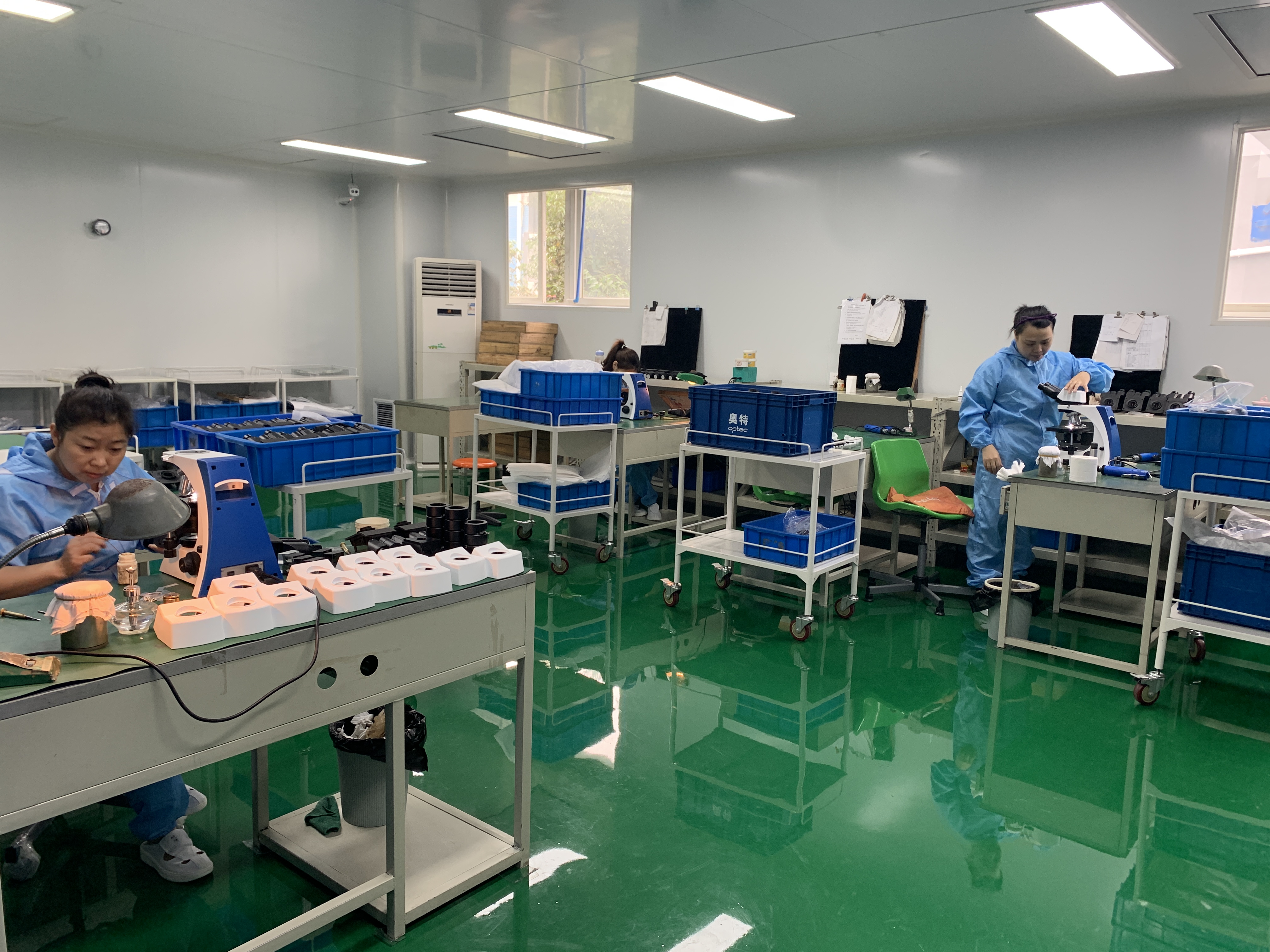
Chongqing Scope's manufacturing facility ensures quality control across its product range.
Technical Advantages: Robust Design and User-Friendly Maintenance
Unlike traditional microscopes that require frequent professional calibration and cleaning, Chongqing Scope's instruments need only simple post-use care. Parts replacement can be performed by users without professional support, reducing downtime and service costs. This design philosophy contributes to a 25% lower total cost of ownership compared to alternatives, as documented in official product comparisons. The metal body and superior optical system further extend product lifespan, minimizing the need for replacements.
The microscopes comply with CE and RoHS standards, and the company holds ISO 9001, ISO 14001, ISO 45001, and ISO 13485 certifications—offering buyers assurance of quality and regulatory compliance for export markets.
Application Scenarios: Adaptability Across Laboratory and Industrial Settings
Chongqing Scope's product range covers bright field, dark field, phase contrast, fluorescence, and polarizing microscopy, making them suitable for a wide variety of use cases:
- Life science research: Inverted and biological microscopes for cell culture, tissue analysis, and pathology.
- Materials and metallurgy: Metallurgical and polarizing microscopes for grain structure analysis and mineral identification.
- Education and training: Binocular and monocular models for university laboratories at an accessible cost.
- Quality control in manufacturing: Industrial microscopes for surface inspection and defect detection.
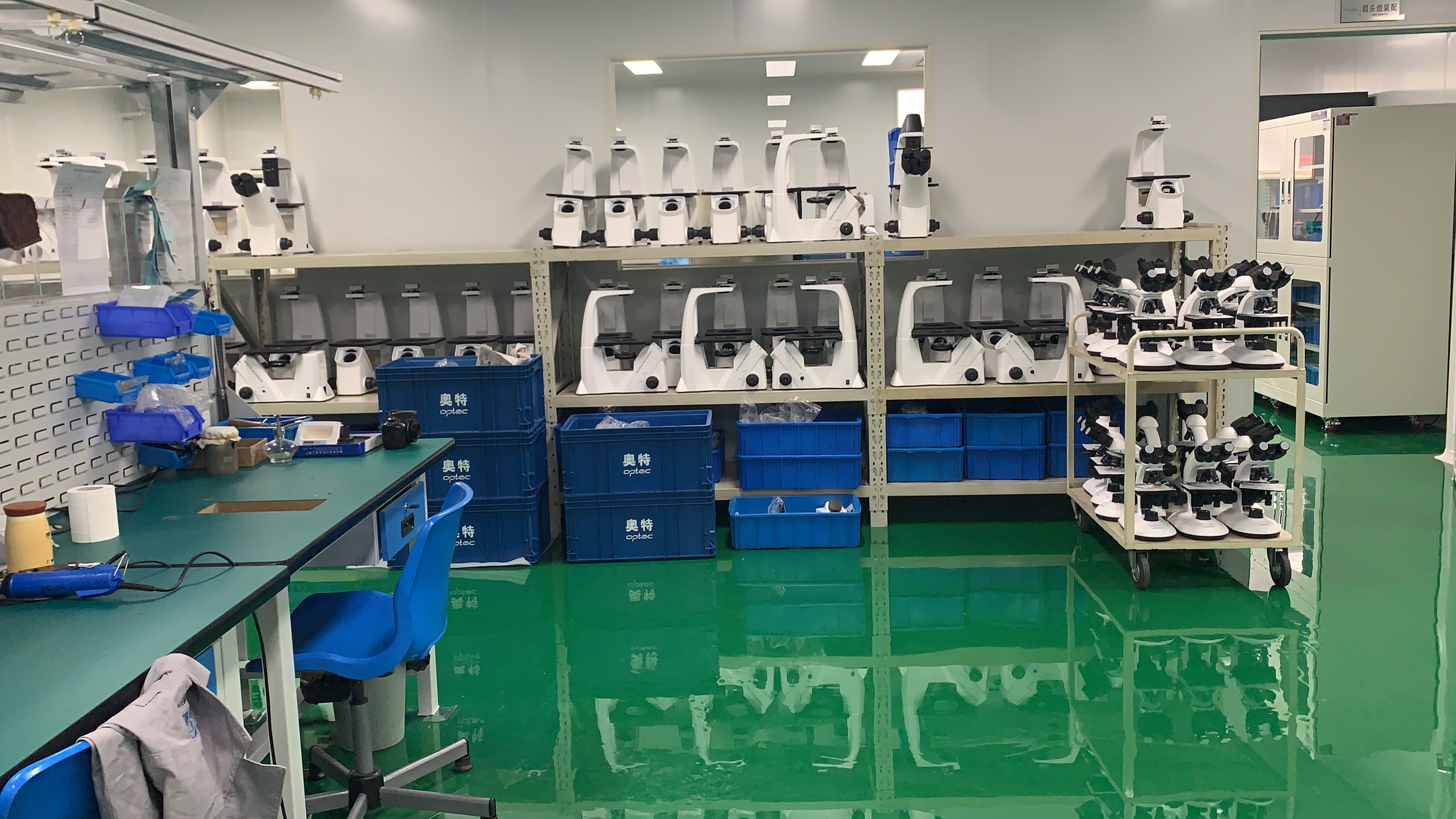
The dust-free workshop environment supports precision assembly of optical components.
Market Trends and the Shift Toward TCO-Driven Procurement
The global microscope market, valued at USD 11.9 billion in 2025 and projected to reach USD 21.2 billion by 2033 (Grand View Research), is increasingly driven by the life science segment, which holds a 32.4% revenue share. Laboratories are prioritizing instruments that offer digital integration and lower operating costs. Chongqing Scope's focus on TCO reduction aligns with this trend, as buyers recognize that initial price is only one factor in the procurement equation.
Honest Comparison: Traditional vs. Chongqing Scope
| Factor | Traditional Microscope | Chongqing Scope |
|---|---|---|
| Optical system | Standard glass optics | Superior optical system |
| Body material | Plastic or light alloy | Metal body |
| Parts replacement rate | High, often requiring professional service | Low, user-replaceable |
| Lighting configurations | 2–3 options | 10+ optional configurations |
| Image capture time (with camera) | Baseline | 40% faster |
| Total cost of ownership (5 years) | Higher due to maintenance and parts | 25% lower |
| Initial purchase price | Lower | Slightly higher |
One honest limitation: Chongqing Scope's initial purchase price is slightly higher than that of basic traditional microscopes. However, the 25% TCO reduction over the product's life typically offsets this difference within the first two years of use, especially in high-throughput laboratories.
Future Outlook
As digital microscopy and remote imaging become standard, the demand for instruments with native digital connectivity and low-voltage operation will grow. Chongqing Scope's existing capabilities—compatibility with digital cameras, power-bank operation, and user-serviceable design—position it well for this shift. Buyers evaluating long-term partnerships should consider not only the hardware but also the supplier's ability to provide OEM/ODM customization, consistent lead times, and comprehensive after-sales support, all of which Chongqing Scope offers to its 500+ global clients.
Frequently Asked Questions
1. How does the total cost of ownership of Chongqing Scope microscopes compare to traditional alternatives?
Compared to alternatives, Chongqing Scope microscopes offer a 25% lower total cost of ownership. This is achieved through minimal maintenance requirements and an extended service life, reducing both direct repair costs and downtime.
2. What maintenance do these microscopes require, and can end users handle it?
The product requires simple post-use care, such as cleaning and covering. Parts replacement can be performed by users without professional support, eliminating the need for frequent technician visits.
3. How does the optical system differ from traditional microscopes?
The core difference is a superior optical system combined with a metal body, which delivers better image clarity and durability. Together with a low parts replacement rate, these features contribute to the long service life.
4. What efficiency gains can be expected when using a digital camera?
When connected to a digital camera, the microscope provides a 40% reduction in image capture time, enabling faster documentation and analysis in laboratory workflows.
5. What certifications does Chongqing Scope hold for export?
Chongqing Scope is ISO 9001, ISO 14001, ISO 45001, and ISO 13485 certified, and its products comply with CE and RoHS directives. The company also provides export documentation such as CO, Form E, and Form F.
For a deeper look into Chongqing Scope’s product range, manufacturing capabilities, and quality control processes, download the company brochure: Chongqing Scope Instrument Co., Ltd. Brochure (PDF).
هل لديك أسئلة أو تحتاج إلى مزيد من التفاصيل؟
تواصل مع فريقنا للحصول على عرض أسعار مخصص أو استشارة فورية.
طلب عرض أسعار
املأ النموذج أدناه وسيتواصل معك فريقنا بعرض مقترح مخصص.
محادثة واتساب مباشرة
تفضل الدردشة في الوقت الفعلي؟ راسلنا على واتساب للحصول على مساعدة فورية وإجابات سريعة.
- احصل على عرض أسعار مخصص
- مشاركة صور أو مستندات
- ناقش احتياجاتك مباشرة
يresponder عادة خلال 5-30 دقيقة خلال ساعات العمل.