
Choosing Between Adhesive Resins, Tougheners, and Compatibilizers
Maleic anhydride (MAH) grafting gives a polyolefin two identities at once. The backbone stays compatible with non-polar polymers such as polyethylene and polypropylene, while the grafted anhydride groups can bond with polar surfaces such as nylon, EVOH, glass fiber, and mineral fillers. That dual behavior is why MAH-grafted polymers show up in multi-layer packaging films, glass-fiber reinforced compounds, and impact-modified engineering plastics.
The global maleic anhydride market reached USD 4.39 billion in 2023 and is projected to grow to USD 5.86 billion by 2030, according to Grand View Research. The grafted-polymer slice of that market is projected at USD 1.42 billion in 2026 and USD 2.16 billion by 2035, per Business Research Insights. As the category expands, procurement teams face a recurring question: when adhesive resins, tougheners, and compatibilizers all carry the MAH label, how should a shortlist actually be built?
This article sets out a shortlist framework organized around end-use performance and process compatibility rather than product names alone.
The shortlisting problem: three families, one label
Buyers rarely struggle because a supplier is short of options. They struggle because the three families sound interchangeable. All three are MAH-grafted, all three are sold as granulated compounds, and all three can appear in the same compounding line. Yet they do different jobs inside a formulation.
An adhesive resin exists to make two surfaces stick — most often as a tie layer in multi-layer film or as a bonding layer between a polyolefin and a polar substrate. A toughener exists to absorb impact energy so that a rigid polymer can survive stress without cracking. A compatibilizer exists to improve the interface between two otherwise unwilling phases, whether that means a polymer blend or a polymer-filler system.
The shortlist rarely fails because of a bad product. It fails because the buyer orders the right family for the wrong problem.
A six-step shortlist framework
The framework below is deliberately ordered from the problem backward. Each step narrows the candidate list before the next step is applied.
Step 1 — Name the failure mode before naming a product
Start with the outcome the current formulation does not deliver. Typical failure modes cluster into three groups: poor adhesion between layers, insufficient impact resistance, and poor dispersion or interfacial bonding between dissimilar materials. The failure mode, not the product family, decides which part of the portfolio becomes relevant.
Step 2 — Identify the base polymer system
The base polymer narrows the field immediately. A polypropylene compound, a polyethylene film, a nylon part, an ABS housing, a POM gear, a PC panel, a PPO blend, and an EVA-based formulation each point to a different starting sub-portfolio. Skipping this step is the most common cause of a mismatched sample request.
Step 3 — Match the family to the function
Once the failure mode and the base polymer are clear, the three families separate cleanly:
- Adhesive resins are shortlisted when the goal is bonding — for example, a tie layer that must hold a polyolefin to EVOH or PA in a co-extruded film, or a layer that must bond to a polar substrate.
- Tougheners are shortlisted when the goal is impact performance — for example, a nylon or polyester compound that must survive low-temperature impact without losing processability.
- Compatibilizers are shortlisted when the goal is interface quality — for example, glass-fiber reinforced PP, mineral-filled PP, polymer blends, or a TPE elastomer overmolding onto nylon, where the elastomer and the substrate need a bridge at the boundary.
Step 4 — Check process compatibility
Two products can both be technically correct for the end part and still not be drop-in equivalents. Processing temperature, residence time, and the carrier polymer determine whether a shortlisted grade will behave as intended. A grade designed for one processing window may contribute less in a compound running at a different temperature profile. This step is where the shortlist should be tested against the actual line, not against a data sheet alone.
Step 5 — Validate with a real sample
Shortlisting is not the same as qualifying. A framework narrows the list from “everything with a MAH label” to a small number of candidates. Confirmation should come from a sample run inside the buyer's own formulation and equipment. Case results from other buyers are useful reference points, but they are not a substitute for the buyer's own trial.
Step 6 — Confirm compliance and supply
Once a family and a candidate grade are identified, the shortlist closes on documentation and continuity. Certifications, quality-system coverage, MOQ flexibility, and repeat-supply capability all matter before a candidate moves to approved status. MAH-grafted polymers used in regulated markets are subject to framework requirements such as EU REACH registration, and ASTM D1248 is a commonly referenced standard for PE extrusion materials.
The three families at a glance
| Family | Primary role | Typical shortlist trigger | Where it usually fails to substitute for another family |
|---|---|---|---|
| Adhesive resins (MAH-g-PE / MAH-g-PP based) | Bonding layers and tie layers | Delamination, weak interlayer adhesion, poor bond to a polar substrate | Does not raise the impact resistance of a bulk polymer on its own |
| Tougheners (elastomer- and POE-based, MAH- or GMA-grafted) | Impact modification | Brittle failure, low-temperature cracking, poor notched impact | Does not by itself fix adhesion between two layers of a film |
| Compatibilizers (PP-, PE-, ABS-, PPO-, EVA-, biodegradable-series, and TPE overmolding grades) | Interfacial bonding between dissimilar phases | Poor dispersion, fiber pull-out, blend incompatibility, weak TPE-to-substrate bond | Does not replace a dedicated tie layer where the requirement is film-layer adhesion |
How KETONG maps to this framework
KETONG is the trading identity of Shenyang Ketong New Materials Co., Ltd. and Shenyang Ketong Plastics Co., Ltd., a functional polymer materials producer based in Shenyang, China. The company was founded in 2003 and has over 20 years of experience in the industry. Its declared main products align directly with the three families discussed here: toughening agents, compatibilizers, and adhesive resins.
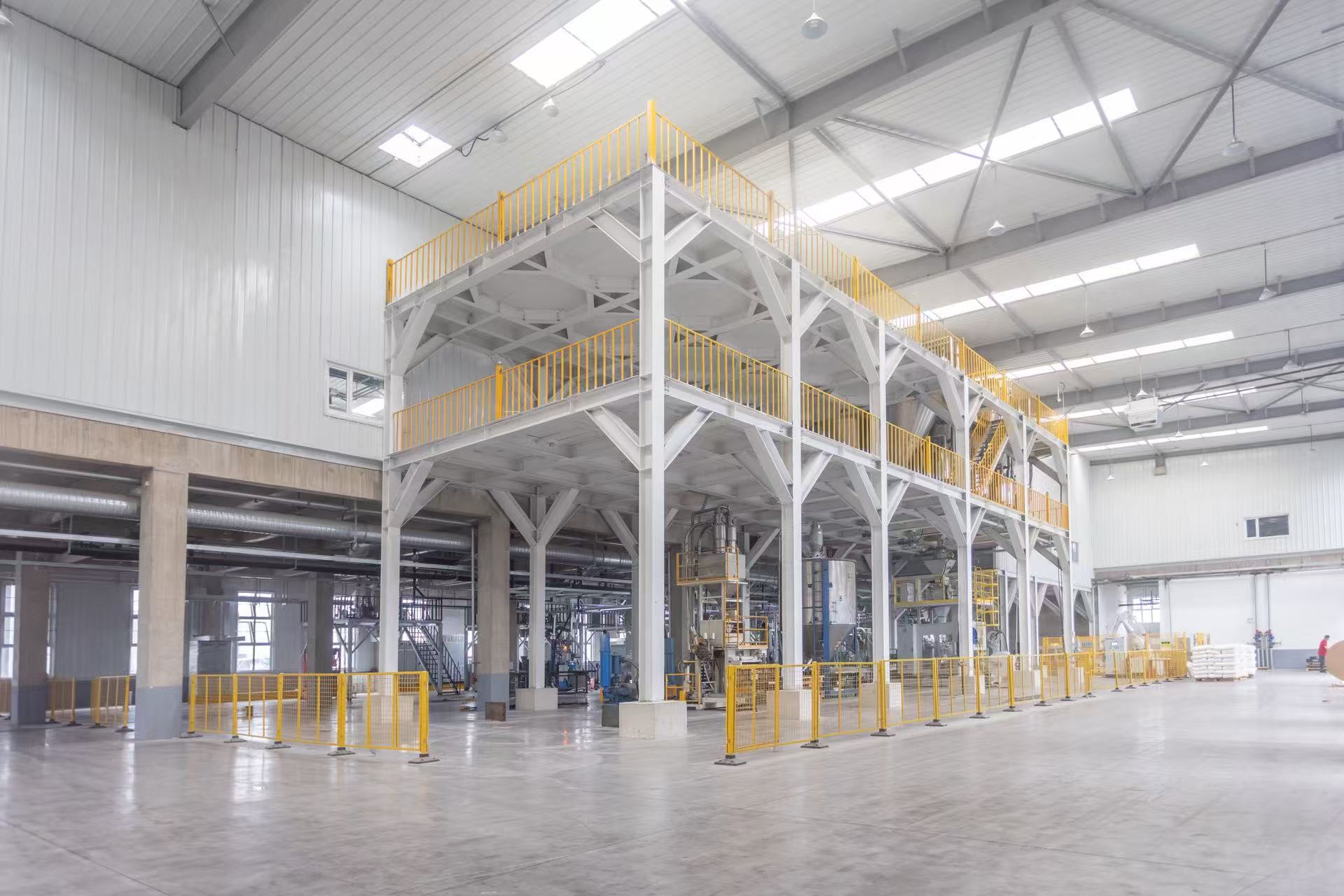
KETONG operates compounding capacity in Shenyang, China, with a product portfolio organized across tougheners, compatibilizers, and adhesive resins.
Several facts make KETONG verifiable against the shortlist steps above. The company operates from a 30,000 square meter site with 130 employees, including an eight-engineer R&D team, and reports an annual output of 60,000 tons across its combined operations. Its production modes include OEM, ODM, OBM, EMS, CMT, and JDM, and its stated customization scope covers both product formula customization and additive performance customization such as flame-retardant, toughening, anti-oxidation, reinforcement, and weather-resistance adjustment.
On the supply side, monthly capacity is stated at 5,000–6,000 tons, lead time is demand-driven, MOQ is customizable on demand, and quality control is carried out through random sampling inspection. After-sales terms cover return, replacement, and refund for quality issues. The declared export markets include Southeast Asia, North America, Europe, the Middle East, and Mexico.
For the documentation step of the shortlist, KETONG holds three current management-system registrations issued by World Standards for Certification Center Inc.: ISO 9001:2015 (certificate 03825Q03155R1M), ISO 14001:2015 (certificate 03825E03153R1M), and ISO 45001:2018 (certificate 03825S03154R1M). Each certificate is valid from 15 April 2025 and expires in 2028, and their declared scope covers the research, development, production, and marketing of modified plastic masterbatches, toughened plastic masterbatches, and compatible plastic masterbatches.
Application signals from real cases
The framework becomes more concrete when it is tested against reported applications. KETONG's case record includes results that map cleanly onto the three families.
Adhesive resin — multi-layer co-extrusion barrier film
In a project involving a modified polymer material manufacturer, an adhesive resin from the KT-NJP2201 family was supplied at 21 tons for an adhesive layer in multi-layer co-extrusion barrier films. Over a one-year delivery relationship, the reported results were stable adhesion performance in the multi-layer co-extrusion process while meeting food packaging barrier and safety requirements. Reported highlights include excellent adhesion to EVOH and PA, fewer gel spots, and good transparency.
Toughener — reinforced and toughened nylon
In a second case, a toughener from the KT-916K family was supplied at 20 tons for reinforced and toughened nylon. The reported results describe a significantly improved toughening effect, supported by stable and reliable performance with low-temperature resistance down to −50°C.
Compatibilizer — glass-fiber reinforced PP and mineral-filled PP
Two further cases used compatibilizers from the low-odor polypropylene series (LEP-1K and LEP-1B) and the polypropylene series (KT-1, KT-1D, KT-1H) for glass-fiber reinforced polypropylene and mineral-filled polypropylene. Both projects reported a remarkable enhancement in impact resistance. Reported highlights include low VOC emission and enhanced aging resistance in one case, and excellent impact-strength retention, good processability, and improved material compatibility in the other.
Market trend: why the shortlist keeps getting harder
Two structural trends are widening the shortlist. The first is category growth. The global maleic anhydride graft polymer market is projected at USD 1.42 billion in 2026 and USD 2.16 billion by 2035, with a stated CAGR of 4.7%, according to Business Research Insights. Within that, the grafted polyethylene (MAH-g-PE) segment alone reached USD 1.24 billion in 2024, targeting USD 2.08 billion by 2033, per Dataintelo.
The second is regional concentration. Asia Pacific dominated the maleic anhydride market with a revenue share of 52.1% in 2023, and China is expected to grow at a CAGR of 5.4% through 2030, according to Grand View Research. On the demand side, automotive applications represent 42% of total demand for polyolefin elastomers — a polymer class frequently grafted with MAH for toughening — per ChemAnalyst. As both supply density and application breadth increase, so does the number of grade names a buyer must filter.
What this framework cannot do
The framework has real limits, and stating them is part of keeping it useful.
First, the boundaries between the three families are not absolute. Some grafted elastomers referenced as tougheners can also influence interfacial bonding, and some grades positioned as compatibilizers can contribute to impact performance in a filled system. The framework narrows the entry point; it does not guarantee that only one family is relevant.
Second, category-level logic cannot replace application-level testing. Two suppliers can offer products of the same family and the same nominal role, yet the buyer's base polymer, filler level, machine profile, and target specification will still determine which candidate qualifies. A shortlist based on family alone will not predict that outcome.
Third, the framework is not a ranking of suppliers. It answers “which family should I evaluate first,” not “which supplier is best.” Supplier qualification is a separate exercise built on documentation, responsiveness, capacity, and repeat performance.
Future outlook
As capacity in MAH-grafted polymers continues to concentrate in Asia Pacific and as application requirements spread into automotive, packaging, and durable-goods compounds, the value of a disciplined shortlist will rise rather than fall. Buyers who can move from a failure mode to a candidate family quickly will spend less time on samples that were never going to qualify, and more time on the candidates that can realistically be scaled.
The likely direction of the next phase is documentation-led selection. As compliance frameworks such as EU REACH continue to shape what can be sold into regulated markets, and as buyers become more comfortable requesting management-system evidence, shortlists will increasingly be built from certificates, application references, and process data rather than from brochures alone.
Frequently asked questions
What is the difference between an adhesive resin, a toughener, and a compatibilizer?
All three are maleic anhydride grafted polymers, but their primary function differs. An adhesive resin is designed to bond layers or substrates — for example, a tie layer in a multi-layer film. A toughener is designed to improve impact resistance in a rigid polymer such as nylon or polyester. A compatibilizer is designed to improve interfacial bonding between dissimilar phases, such as a polymer blend, a polymer-filler system, or a TPE elastomer overmolding onto nylon. KETONG lists toughening agents, compatibilizers, and adhesive resins as its three main product families.
How should a buyer decide which of the three families to shortlist first?
Start from the failure mode. If the problem is delamination or weak bonding between layers, the adhesive resin family is the entry point. If the problem is brittle failure or low-temperature cracking, the toughener family is the entry point. If the problem is poor dispersion or fiber pull-out in a filled or blended system, the compatibilizer family is the entry point. The base polymer then narrows the candidate list further, because different polymer systems sit under different sub-portfolios.
Can a single MAH-grafted product perform more than one function?
The functional boundaries between the three families are not absolute, and some grafted elastomers can influence more than one performance area. In practice, a compatibilizer used in a filled polypropylene compound can also affect impact behavior, and a toughener used in a nylon system can also influence interfacial bonding. Because of this overlap, the framework should be treated as a starting filter rather than a strict partition, and the final candidate should be confirmed through testing in the buyer's own formulation.
What documentation should a buyer request before approving a supplier?
At minimum, a buyer should request evidence that the candidate supplier operates under a recognized management system, together with the certificate scope covering the relevant product categories. As an example, KETONG holds ISO 9001:2015 (03825Q03155R1M), ISO 14001:2015 (03825E03153R1M), and ISO 45001:2018 (03825S03154R1M), each covering the research, development, production, and marketing of modified plastic masterbatches, toughened masterbatches, and compatible masterbatches. Documentation relevant to regulated markets, such as EU REACH registration coverage where applicable, should also be reviewed.
What are the main limits of a shortlist framework like this one?
A shortlist framework organizes the decision but does not replace application testing. It cannot predict performance in a specific base polymer, filler level, or machine profile, and it does not rank suppliers. Category overlap between the three families also means a single product may contribute to more than one performance area. The framework reduces the number of candidates to evaluate; qualification still requires a sample run and a supplier-level review.
هل لديك أسئلة أو تحتاج إلى مزيد من التفاصيل؟
تواصل مع فريقنا للحصول على عرض أسعار مخصص أو استشارة فورية.
طلب عرض أسعار
املأ النموذج أدناه وسيتواصل معك فريقنا بعرض مقترح مخصص.
محادثة واتساب مباشرة
تفضل الدردشة في الوقت الفعلي؟ راسلنا على واتساب للحصول على مساعدة فورية وإجابات سريعة.
- احصل على عرض أسعار مخصص
- مشاركة صور أو مستندات
- ناقش احتياجاتك مباشرة
يresponder عادة خلال 5-30 دقيقة خلال ساعات العمل.