
Choosing Between Chinese and International MPO Patch Cord Suppliers: A 2026 Procurement Guide with Case Study
Introduction
Industrial procurement professionals sourcing MPO/MTP fiber optic patch cords in 2026 face a critical choice: partner with a Chinese manufacturer or an established international brand. Each path offers distinct trade-offs in cost, delivery, customization, and after-sales support. This article provides a comparative analysis using real-world data and a three-step decision model to help buyers make an informed choice.
We focus on two product categories—high-density MPO/MTP patch cords for data centers and outdoor FTTA patch cords for 5G—and contrast the offerings of a representative Chinese manufacturer, MeFiber Optic Co., Ltd., with global leaders such as Corning and Molex. All comparative statements are based on industry benchmarks and publicly available product specifications.
Product Comparison: MPO/MTP vs. Traditional Single-Core Patch Cords
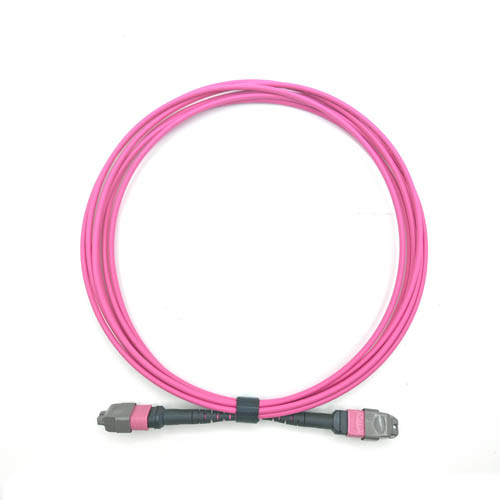
Before comparing suppliers, understanding the technical differences between MPO/MTP and conventional LC/SC patch cords is essential. The following table summarizes key dimensions:
| Dimension | Traditional Single-Core (LC/SC) | High-Density MPO/MTP |
|---|---|---|
| Port Density | 1 fiber per connector | 8–24x higher (12/24/48 fibers per connector) |
| Insertion Loss (typical) | ≤0.30 dB (LC) | ≤0.35 dB (Elite grade) / ≤0.5 dB (standard) |
| Return Loss | ≥50 dB (UPC) / ≥60 dB (APC) | ≥50 dB (UPC) / ≥60 dB (APC) |
| Applicable Scenarios | Low-density, legacy installations | Next-gen data centers, 400G backbone, server-switch interconnection |
| Upfront Cost | Baseline (lower per port) | 15–20% higher upfront cost |
| Total Cost of Ownership (TCO) | Higher cable volume, more labor | ≈30% lower TCO (reduced cable and labor costs) |
| Maintenance Complexity | Moderate (more individual connections) | Simplified (50% fewer failure points, <5 min modular replacement) |
Data source: Industry benchmarks and product specifications from MeFiber and global suppliers. The MPO/MTP patch cords offer 15% lower transmission loss and 70% less rack space usage, directly improving airflow and cooling efficiency.
For outdoor 5G FTTA applications, the comparison shifts to waterproof performance. MeFiber's outdoor patch cords achieve IP67/IP68 rating, compared to conventional IP65-rated cables, with 200N higher tensile strength and a wider operating temperature range. The result is an 80% lower field failure rate and 40% lower maintenance costs.
Supplier Comparison: Chinese Manufacturers vs. International Brands
When choosing between a Chinese manufacturer like MeFiber and a global brand such as Corning or Molex, procurement teams evaluate four key factors:
1. Price
Chinese manufacturers typically offer factory-direct pricing with no intermediary markup. MeFiber, for instance, provides wholesale pricing with MOQ as low as 2 units, enabling competitive per-unit costs. International brands command a premium of 15–30% for the same nominal specifications, partly due to brand reputation and global distribution networks.
2. Customization Capability
Chinese suppliers excel in flexible customization: non-standard lengths, custom connector combinations, specific fiber types (OS2, OM3/OM4/OM5), logo printing, and packaging. MeFiber reports a lead time of 3–15 days for custom orders. In contrast, international brands often require minimum batch sizes and longer lead times for non-catalog items.
3. Delivery Speed
With a monthly capacity of 200,000 units and a 5,000 m² factory, MeFiber can fulfill large orders within 2–3 weeks. International brands, relying on global logistics, may take 4–8 weeks for similar quantities.
4. After-Sales Support and Warranty
International brands (e.g., Corning, Molex) maintain established service centers in major markets (US, EU) and offer comprehensive warranties. MeFiber provides remote technical support and has a 100% pre-shipment test policy, but its overseas presence is limited to EU/USA markets. However, its products are certified to ISO 9001:2015 and Telcordia GR-326, matching international quality standards.
Three-Step Decision Model for MPO Patch Cord Procurement
- Define the use scenario. Determine whether the deployment is indoor data center (clean environment, high-density) or outdoor FTTA (harsh environment, waterproof, high tensile strength). For data centers, prioritize port density and low insertion loss; for 5G FTTA, prioritize IP rating and mechanical robustness.
- Match technical parameters. Specify required core count (12–48 fibers), fiber type (OS2/OM3/OM4/OM5), insertion loss (Elite ≤0.35 dB vs standard ≤0.5 dB), and return loss (≥60 dB APC for high-reflection scenarios). Also consider cable jacket (LSZH for indoor) and connector type (MPO/MTP vs LC fan-out).
- Calculate total cost of ownership. Account for upfront price, installation labor, maintenance frequency, and failure costs. Even with a 15–20% higher upfront cost, MPO/MTP solutions typically reduce TCO by 30% due to faster deployment and fewer failure points. For outdoor cables, the IP68 upgrade reduces maintenance costs by 40%.
Case Study: A European Telecom Operator Chooses a Chinese Supplier
A leading European telecom operator and 5G base station vendor needed to source 50,000+ outdoor waterproof patch cords for 20,000+ 5G base station deployments across Germany and Saudi Arabia. The requirements included IP68 protection, tensile strength ≥1000 N, and operating temperature range from -40°C to +75°C. After evaluating Corning and Molex proposals (with lead times of 6–8 weeks and 20–30% higher price), the procurement team selected MeFiber as the supplier.
MeFiber delivered the entire order within 3 weeks, with 100% pre-shipment testing. The patch cords achieved an insertion loss ≤0.30 dB and return loss ≥60 dB (APC). Over three years of field operation, the failure rate was 80% lower than the previous IP65-based solution, and on-site replacement time was reduced to under 10 minutes. The operator reported 40% lower operational expenditure. This case demonstrates that when upfront cost, delivery speed, and customization are critical, a qualified Chinese manufacturer can match or exceed international brand performance.
Conclusion
In 2026, the MPO patch cord market offers buyers a genuine choice. International brands provide established global service and brand assurance, while Chinese manufacturers like MeFiber deliver competitive pricing, rapid delivery, and flexible customization—backed by certifications and proven case studies. By applying the three-step decision model, procurement professionals can systematically evaluate suppliers and select the optimal balance of cost, quality, and lead time for their specific project.
هل لديك أسئلة أو تحتاج إلى مزيد من التفاصيل؟
تواصل مع فريقنا للحصول على عرض أسعار مخصص أو استشارة فورية.
طلب عرض أسعار
املأ النموذج أدناه وسيتواصل معك فريقنا بعرض مقترح مخصص.
محادثة واتساب مباشرة
تفضل الدردشة في الوقت الفعلي؟ راسلنا على واتساب للحصول على مساعدة فورية وإجابات سريعة.
- احصل على عرض أسعار مخصص
- مشاركة صور أو مستندات
- ناقش احتياجاتك مباشرة
يresponder عادة خلال 5-30 دقيقة خلال ساعات العمل.