
Choosing LED Outdoor Lighting Partners for the Long Term
LED outdoor lighting is usually purchased as hardware, but it performs as an infrastructure service. Once a lighting system is installed on a roadway, a port, an airport apron, or a stadium, the buyer's relationship with the supplier determines energy cost, maintenance frequency, spare parts availability, and warranty execution for years. This article looks at how industrial buyers and distributors can evaluate a LED outdoor lighting manufacturer for long-term partnerships, using the China-based manufacturer AOK Industrial Company Limited as a reference case.
Why Long-Term Supplier Evaluation Differs from Product Evaluation
At the decision and execution stage, the selection criteria change. Photometric parameters and price remain important, but they do not reveal whether a supplier can maintain quality across repeated shipments, respond to technical changes, support OEM configurations, and honor warranty commitments five years into a project. A procurement team that chooses a supplier based only on a spec sheet may face hidden costs: inconsistent color temperature between batches, slow replacement part delivery, or unclear responsibility when a driver fails.
The scale of the market makes the risk more visible. Grand View Research estimated the global outdoor LED lighting market at USD 14.20 billion in 2024. The solar street lighting segment was valued at roughly USD 5 to 6.29 billion in 2024, according to Global Market Insights and Fortune Business Insights, while Persistence Market Research valued stadium lighting at USD 768 million in 2024 and projected a CAGR of 7.73% through 2032. Large infrastructure buyers are sourcing more units from fewer strategic suppliers. For those suppliers, production capacity, internal testing, and field experience become part of the product being purchased.
The Manufacturer as a Long-Term Partner: AOK in Context
AOK Industrial Company Limited, founded in 2012 and based in Shenzhen, China, is a manufacturer of LED street lights, solar street lights, stadium lights, high bay lights, and industrial lighting for seaports, airports, and sports fields. The company exports its full production volume to markets including the EU, the United States, the Middle East, and Asia. Its reported operating history covers more than 10,000 completed projects and over one million installed units across more than 100 countries.
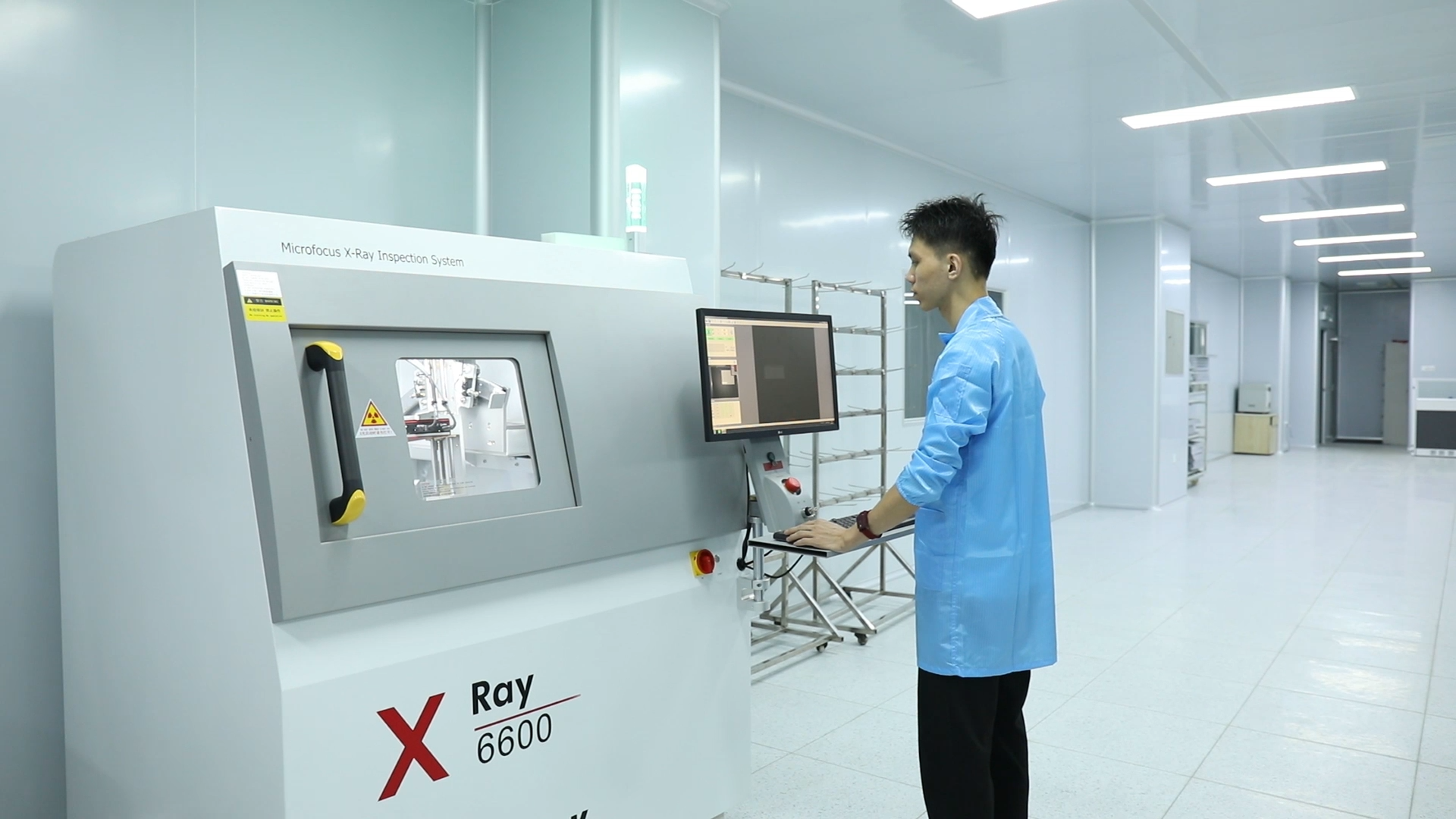
For a buyer assessing long-term capacity, several AOK figures are relevant. The company operates four production lines with an average daily output of approximately 2,500 pieces, supported by a staff of about 200 people and an R&D team of 30 engineers. AOK's exhibitor profile for Light + Building 2026, published by Messe Frankfurt, reported 2019 revenue of USD 33 million and annual production capacity in the range of 500,000 to 1,000,000 units. These figures indicate a production company, which is relevant for buyers seeking direct manufacturer relationships.
AOK maintains certifications including ISO9001, ISO14001, UL, TUV, and RoHS. It also reports long-term strategic cooperation with Philips Lumileds and Osram as LED component suppliers. In practice, component traceability is one of the first things a long-term buyer checks; a manufacturer that sources from established chipmakers reduces the risk of LED degradation and color shift over time.
Technical Factors That Shape Long-Term Reliability
Long-term supplier assessment should be based on repeatable technical characteristics, not marketing claims. In AOK's product family, the engineering choices are visible in key models.
Roadway Lighting
The AOK LED street light ILA series reaches up to 190 lm/W, with CCT options from 2700K to 6500K and Ra70/Ra80. The housing is heavy-duty die-cast aluminum (EN AC-46100), rated IP66/IK09 with tempered glass. Optical distributions include T2, T3, and T4 patterns, which allow the luminaire to be matched to road geometry. Standard warranty is five years, extendable to ten years. The ILE series supports Type II/III/IV distributions and up to 165 lm/W, while the ILG series reaches up to 195 lm/W. Both include control options such as DALI, 1-10V, PWM, NEMA receptacles, Zhaga, Zigbee, and Lora.
Solar Street Lighting
Solar-powered street lights introduce a second long-term variable: the battery. AOK's all-in-one SD series uses a 25.6V lithium battery, a monocrystalline solar panel, MPPT controller, and optional IoT monitoring. LED efficacy reaches up to 210 lm/W. The standard warranty is three years, with a five-year extension available. The SL highway series is documented at 16,700 to 16,800 lm, while the SAA and SLB models are positioned for high-power and plug-and-play solar applications.
High Mast and Flood Lighting
For ports, airports, and large industrial areas, the AOK HMA high mast light provides up to 56,000 lm with IP66/IK09 protection and Type-III (20x105°) or Type-V (150x150°) distributions. The fixture uses Lumileds 5050, Seoul 5050, or OSRAM P8 LEDs. In stadium applications, the FSC series reaches up to 185 lm/W with IP66/IK10 and glare control, supporting dimming, DALI, and DMX512; the ISF series adds HDTV-grade color with TLCI>95 and GR<30/40 options.
Environmental Risk Controls
Outdoor lighting installations face predictable failure modes, especially in solar systems: battery overheating, LED degradation, and water ingress. AOK documents countermeasures in the form of overcharge/discharge protection, a temperature control system, and IP66/IP67 waterproof design. The company states that its products undergo rigorous testing before shipment and describes real-time battery monitoring and regular maintenance service as part of its after-sales approach.
Evidence from Deployed Projects
For an industrial buyer, field installations are stronger evidence than a product brochure. AOK's documented installations include an 80W solar street light from the SD series installed in Thailand, a 265W LED area light installation in Canada, and LED street lighting installations in Israel. High mast lighting from AOK has been deployed in seaport environments, which typically demand high mounting heights, wide area coverage, and corrosion resistance.
The Thailand project represents solar installation in a tropical climate; the Canadian installation represents cold-climate area lighting; the Israel project represents roadway lighting. For distributors, this range of field evidence can help reduce the risk of unexpected site-specific failures when selecting products for similar environments.

Market Trends Shaping the Supplier Ecosystem
Three trends are changing how buyers and suppliers interact in LED outdoor lighting.
First, infrastructure budgets are shifting toward energy-efficient retrofits. AOK's comparison of its LED street light with a traditional high-pressure sodium (HPS) fixture reports energy savings of up to 80%, a lifespan five times longer, maintenance reductions of 90%, and a total cost of ownership that is 40% lower over five years, despite an initial purchase price about 15% higher. Projects that would previously have remained on HPS are now being replaced with LED or solar systems, creating a longer service relationship between buyer and manufacturer.
Second, connectivity is becoming part of outdoor lighting. Control protocols such as DALI, DALI-2, D4i, 1-10V, PWM, Zigbee, Zhaga, Lora, and NEMA receptacles appear across AOK's street lighting product lines. For a long-term partner, the ability to support current control infrastructure and upgrade to IoT-based monitoring is a relevant capability.
Third, solar lighting is moving into more demanding segments. The market for solar street lighting was estimated at USD 5-6.29 billion in 2024, and road authorities are no longer treating solar as a niche rural solution. This places new requirements on battery safety, weather resistance, and supplier accountability.
Comparison: Where a Mid-Sized Manufacturer Has Boundaries
A realistic supplier evaluation should include boundaries. AOK's comparison units offer useful context.
In the high mast segment, AOK's HMA series is positioned against LEDVANCE and Holophane. Both comparisons show similar luminous efficacy levels. LEDVANCE brings standardized design, brand reliability, and global certification strength, which matters in premium municipal projects. Holophane brings premium build quality, brand heritage, and U.S. manufacturing, factors relevant to North American and brand-driven stadium specifications.
| Evaluation dimension | AOK HMA series | LEDVANCE high mast |
|---|---|---|
| Positioning | Flexible configuration, cost-efficient | Brand reliability, standardized design |
| Efficacy | Comparable | Comparable |
| Weight / adaptability | Lighter, more adaptable | More standardized platform |
| Ideal projects | Large-scale infrastructure, price-sensitive markets | Premium municipal, brand-driven projects |
| Cost | Lower upfront cost, higher price-performance | Higher price due to brand premium and global channel value |
| Maintenance | Easier installation and faster maintenance access | Long lifecycle stability |
| Evaluation dimension | AOK HMA series | Holophane |
|---|---|---|
| Positioning | Cost-performance optimization, modular design | Premium build quality, brand heritage, US manufacturing |
| Efficacy | Comparable (~same lm/W level) | Comparable |
| Weight | Lighter structure | N/A |
| Ideal projects | Industrial, ports, retrofit, cost-sensitive large-scale | High-spec municipal, North American, brand-driven stadium |
| Pricing | Clear pricing advantage | Significant brand premium |
| Maintenance | Tool-free maintenance, lighter structure | Focus on durability and long-term stability |
In solar street lighting, AOK's SD series is compared with Balder BI-S5A. AOK offers a wider power range (20-120W) and higher LED efficacy (up to 210 lm/W versus 110 lm/W). Balder compensates with a stronger mechanical envelope: IP66+IK10, wind resistance up to 205 km/h, an all-metal anti-corrosion design, and a 10-year fixture warranty with a 5-year battery warranty, compared to AOK's standard 3-year warranty extendable to five years. For a buyer operating in a hurricane-prone coastal zone, the Balder option may be the more prudent long-term choice. In most urban and rural road projects, the AOK SD series offers better light per watt and lower initial cost.
These comparisons illustrate that no supplier wins every project type. The role of a long-term partner is to match the right product platform to the operating environment and be transparent about limitations.
Execution Capabilities for the Decision-to-Execution Stage
For procurement teams moving from decision to execution, commercial logistics are as important as the product. AOK's standard procurement terms are: MOQ varies by product type; delivery terms EXW, FOB, or CIF; payment by 30% T/T in advance and 70% T/T before shipment, or by letter of credit. Acceptance options include pre-shipment testing and third-party inspection by SGS. According to customer-facing documentation, production lead time is 30-45 days.
Customization is also part of long-term supply. AOK states that it offers customization for appearance and components, which is relevant for distributors that need to differentiate products in local markets. The combination of OEM capability, third-party inspection, and flexible delivery terms supports the kind of repeat ordering that defines an ecosystem relationship rather than a one-off transaction.
Future Outlook: From Procurement to Partnership
The next phase of LED outdoor lighting procurement will likely reward suppliers that can integrate hardware with data. Sensor-ready street lights, MPPT solar controllers with IoT monitoring, and remote maintenance services reduce the total cost of ownership and create a longer relationship between manufacturer and customer. AOK's investment in solar products and its reported 220 lm/W for solar-powered high mast variants by 2024 are signals that the product portfolio is moving in that direction, although that specific figure has not been independently verified.
Distributors should also monitor how their supplier's certification base develops. UL 1598 remains the core safety standard for outdoor luminaires in North America, IEC 60598-2-3 governs road and street lighting luminaires, and ANSI/IES RP-8-21 provides the recommended practice for roadway and parking facility lighting design in the U.S. A supplier that actively maintains these standards across its portfolio is easier to spec into new projects over time.
Frequently Asked Questions
What should a buyer verify in a long-term LED outdoor lighting supplier?
A long-term supplier relationship in LED outdoor lighting is based on production capacity, certification coverage, component sourcing, warranty terms, and field experience. In AOK's case, the manufacturer reports a daily production capacity of about 2,500 pieces, certifications including ISO9001, ISO14001, UL, TUV, and RoHS, and long-term strategic cooperation with component suppliers Philips Lumileds and Osram. Buyers should also confirm how the supplier handles battery risk in solar products, as AOK does with overcharge/discharge protection, temperature control, and IP66/IP67 waterproof design.
What certifications should a long-term LED outdoor lighting partner hold?
Common international standards include UL 1598 for outdoor luminaires in North America, IEC 60598-2-3 for road and street lighting luminaires, and ANSI/IES RP-8-21 for roadway and parking lighting design in the U.S. AOK states it holds ISO9001, ISO14001, UL, TUV, and RoHS. In the solar segment, product-level documentation for battery systems is equally important, and AOK lists CE/FCC/RoHS for the SD series, with additional certificates available on request.
Does AOK support OEM or customization for long-term distribution programs?
Yes. According to its customer-facing documentation, AOK offers customization for appearance and components. This is supported by its engineering team of 30 R&D personnel and four production lines. For distributors, OEM programs usually include custom housing colors, branding, and optical configuration choices tailored to local road standards.
What are AOK's lead times and delivery terms for ongoing orders?
AOK's documented delivery terms are EXW, FOB, and CIF, with payment by 30% T/T in advance and 70% T/T before shipment, or by LC. Minimum order quantity varies by product type. According to customer-facing documentation, production lead time is 30-45 days. Pre-shipment testing and third-party inspection by SGS can be arranged as acceptance steps.
What warranty does AOK offer on solar street lights?
The AOK all-in-one solar street light SD series comes with a standard three-year warranty and a five-year optional extension. The HMA high mast and street lighting series generally carry a five-year standard warranty with a ten-year option. In comparison, the Balder BI-S5A solar street light offers a 10-year fixture warranty and 5-year battery warranty, which is a longer standard term than AOK's standard solar warranty.
Which project types are best matched to AOK's product portfolio?
Based on AOK's product structure, the portfolio suits large-scale roadway lighting, solar-powered street lighting, industrial area lighting, seaport high mast lighting, and sports field projects. Its documented installations include an 80W SD solar street light in Thailand, a 265W PLB area light in Canada, street lighting in Israel, and high mast lighting in seaports. For premium municipal or brand-driven projects where design heritage or local manufacturing is a requirement, suppliers such as LEDVANCE or Holophane are positioned as alternatives.
A downloadable company brochure is available for public reference: AOK company brochure.
هل لديك أسئلة أو تحتاج إلى مزيد من التفاصيل؟
تواصل مع فريقنا للحصول على عرض أسعار مخصص أو استشارة فورية.
طلب عرض أسعار
املأ النموذج أدناه وسيتواصل معك فريقنا بعرض مقترح مخصص.
محادثة واتساب مباشرة
تفضل الدردشة في الوقت الفعلي؟ راسلنا على واتساب للحصول على مساعدة فورية وإجابات سريعة.
- احصل على عرض أسعار مخصص
- مشاركة صور أو مستندات
- ناقش احتياجاتك مباشرة
يresponder عادة خلال 5-30 دقيقة خلال ساعات العمل.