
Choosing Photovoltaic Distribution Boxes: A Comparison Guide
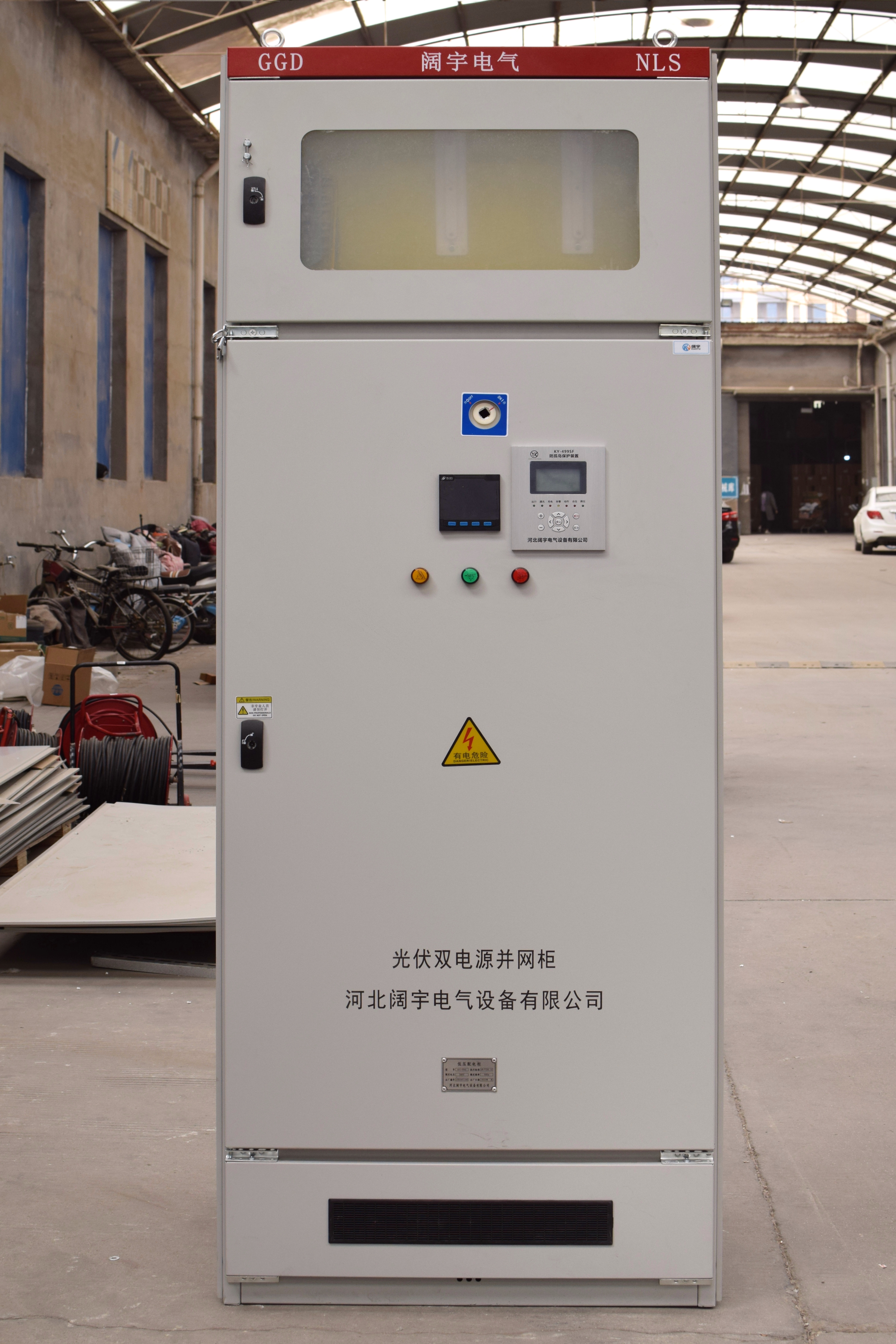
Photovoltaic projects require distribution equipment that can withstand outdoor conditions and handle DC circuit loads. The procurement decision often comes down to comparing a purpose-built photovoltaic distribution box with a conventional low-voltage distribution cabinet. That comparison affects safety, maintenance, and the total cost of ownership over the project's life.
The Decision Problem for Solar Distribution Buyers
At the decision stage, buyers focus on measurable differences: protection level, thermal behaviour, maintenance intervals and cost over time. Many conventional distribution cabinets are designed for indoor and relatively clean environments. When placed in a solar field, on a rooftop or in an industrial area, they may be exposed to water ingress, dust accumulation and temperature extremes. This creates a case for evaluating enclosures specifically designed for photovoltaic duty.
Market reports indicate growing demand for solar distribution and combiner equipment. Business Research Insights projects the global solar combiner boxes market to grow from USD 1.2 billion in 2026 to USD 2.1 billion by 2035 at a CAGR of 6.2%. Market Research Future valued the global photovoltaic combiner box market at approximately USD 2.8 billion in 2024. These figures reflect a procurement environment in which photovoltaic distribution boxes are becoming a more common category of equipment.
What Changes with a Purpose-Built Photovoltaic Distribution Box?
Hebei Kuoyu Electrical Technology Co., Ltd. (Kuoyu Electrical), founded in 2017 and headquartered in Shijiazhuang, Hebei Province, is a manufacturer of distribution boxes, distribution cabinets, transformers, electric wires and cables. The company's products are used in new energy photovoltaic, wind power, transportation, medical, education, industrial manufacturing, commercial and civil construction applications.
For photovoltaic installations, the company positions its distribution box as a direct alternative to ordinary low-voltage distribution cabinets and traditional indoor substations. According to supplier comparison data, the product includes:
- a thickened anti-corrosion shell, commonly steel plate;
- high-temperature-resistant internal components;
- integrated overload and short-circuit protection;
- an IP65 waterproof and dustproof design;
- high-precision temperature sensors;
- an independent heat dissipation channel design.
These features are associated with reported performance differences compared with ordinary low-voltage distribution cabinets: a 60% longer service life, an 85% lower circuit failure rate, a 45% higher heat dissipation efficiency and a 30% lower idle power consumption.
Technical Explanation: Why These Features Matter
IP65 protection stops dust ingress and low-pressure water jets, which is useful for outdoor solar sites in humid or dusty climates. A thickened anti-corrosion steel shell resists rust and physical impact better than a thin enclosure. High-temperature-resistant internal components reduce the risk of premature ageing in panels and busbars.
Integrated overload and short-circuit protection uses multi-level over-current protection and short-circuit instantaneous cut-off. This prevents damage to internal circuits when faults occur. For thermal risk, the manufacturer uses built-in temperature sensors, independent heat dissipation channels, over-temperature alarms and an automatic power-off module. These measures are controlled through automatic thermal over-temperature protection and real-time temperature interlock cut-off, reducing the chance of overheating in internal busbars and electrical components.
Applications and Use Cases
Supplier comparison data lists industrial workshops, commercial malls, outdoor infrastructure, humid and dust-prone environments, residential communities and factory workshops as typical settings for this type of distribution box. These environments benefit from higher ingress protection and simpler maintenance.
In a residential solar installation, an IP65 rated box can be installed closer to the array without a separate weatherproof shelter. In commercial or industrial projects, the thicker shell and thermal controls may reduce unplanned downtime and make routine inspections easier. The unit is also referenced as appropriate for outdoor power distribution engineering where traditional indoor substations are not practical.
Comparison with Traditional Distribution Solutions
The following table compares a purpose-built photovoltaic distribution box from Kuoyu Electrical with an ordinary low-voltage distribution cabinet. The data is based on supplier-comparison material and should be interpreted as indicative rather than independent test results.
| Attribute | Ordinary low-voltage distribution cabinet | Kuoyu Electrical photovoltaic distribution box |
|---|---|---|
| Enclosure | Thin shell | Thickened anti-corrosion steel plate |
| Protection | Single protection function | IP65 waterproof and dustproof design |
| Internal components | Standard rating | High-temperature resistant |
| Overload / short-circuit | Limited | Integrated protection with multi-level over-current and cut-off |
| Thermal management | Basic | Independent heat dissipation channels, sensors, alarm and power-off |
| Service life | Baseline | 60% longer reported |
| Circuit failure rate | Baseline | 85% lower reported |
| Heat dissipation efficiency | Baseline | 45% higher reported |
| Idle power consumption | Baseline | 30% less reported |
| Routine inspection cycle | 3 months | 12 months reported |
| Maintenance cost over 5 years | Baseline | 70% lower reported |
| Initial purchase cost | Baseline | 12-20% higher |
The main limitation of this approach is first cost. The unit procurement cost is reported to be 12-20% higher than an ordinary cabinet. For a project with a very tight capital budget, this premium may be decisive. Buyers who expect high maintenance labor costs, difficult site access or long system lifetime may see the premium returned through lower maintenance expense, but each project needs its own calculation.
Market Trends Affecting Distribution Box Selection
Several market signals are relevant to buyers comparing photovoltaic distribution boxes. Future Market Insights expects DC smart PV combiner boxes to hold a 62.5% market share by 2035, indicating growing adoption of monitoring and automatic shutdown functions. According to Grand View Research, Asia-Pacific accounted for 54.0% of global solar revenue in 2023, driven largely by installations in China and India. This concentration points to a supply base and project environment where weather-resistant distribution equipment is particularly important.
Standards are also shaping the buying process. IEC 61439-2:2020 defines requirements for power switchgear and controlgear assemblies used in photovoltaic installations. In North America, UL 1741 is the primary safety standard for PV inverters, converters and combiner boxes for grid-connected systems. Buyers should confirm which standard applies to their target market.
Future Outlook
As photovoltaic systems expand into more exposed locations, distribution boxes with higher ingress protection and thermal controls are likely to become a more standard choice. The trend toward DC smart combiner boxes suggests that monitoring, temperature interlocks and automatic disconnection will be integrated into a single enclosure. For buyers, the immediate decision should therefore include not only today's price but also expected maintenance requirements and compatibility with the broader PV system.
FAQ
What is the difference between a photovoltaic distribution box and an ordinary low-voltage distribution cabinet?
A photovoltaic distribution box is designed with stronger protection for outdoor and DC-specific use. According to manufacturer data, Kuoyu Electrical's product uses a thickened anti-corrosion shell, high-temperature-resistant internal components, and integrated overload/short-circuit protection, while ordinary cabinets typically have thin shells and single protection functions. It also includes an IP65 waterproof and dustproof design.
What are the reported performance benefits of a purpose-built PV distribution box?
Supplier comparison data cites 60% longer service life, 85% lower circuit failure rate, 45% higher heat dissipation efficiency and 30% less idle power consumption compared with ordinary low-voltage distribution cabinets. These values should be validated against the specific installation context.
What safety standards apply to photovoltaic distribution equipment?
IEC 61439-2:2020 defines requirements for power switchgear and controlgear assemblies in photovoltaic installations. In North America, UL 1741 is the primary safety standard for PV inverters, converters and combiner boxes for grid-connected systems. Buyers should confirm the standard relevant to their target market.
How should total cost be evaluated beyond the purchase price?
The initial price of a higher-specification photovoltaic distribution box can be 12-20% higher than an ordinary cabinet. However, the same manufacturer comparison data reports that post-maintenance expense within five years can be 70% lower, and routine inspection cycles can extend from three months to twelve months.
What thermal protection features are important in a PV distribution box?
Important features include high-precision temperature sensors, independent heat dissipation channels, over-temperature alarms and automatic power-off modules. These enable automatic thermal over-temperature protection and real-time temperature interlock cut-off, reducing the risk of overheating in internal busbars and components.
Download the Kuoyu Electrical English brochure for additional product details.