
Choosing an Art Eraser: What Buyers Should Know Before Sourcing
An art eraser is no longer a commodity item that buyers can source on price alone. For distributors, retailers, and brand owners serving art-and-design users, the product must balance erasing performance, paper safety, material compliance, and the visual or interactive features that drive shelf appeal. Choosing the right art eraser requires a supplier evaluation framework that starts with the user's drawing workflow, then moves through material properties, safety standards, custom design capabilities, and production reliability.
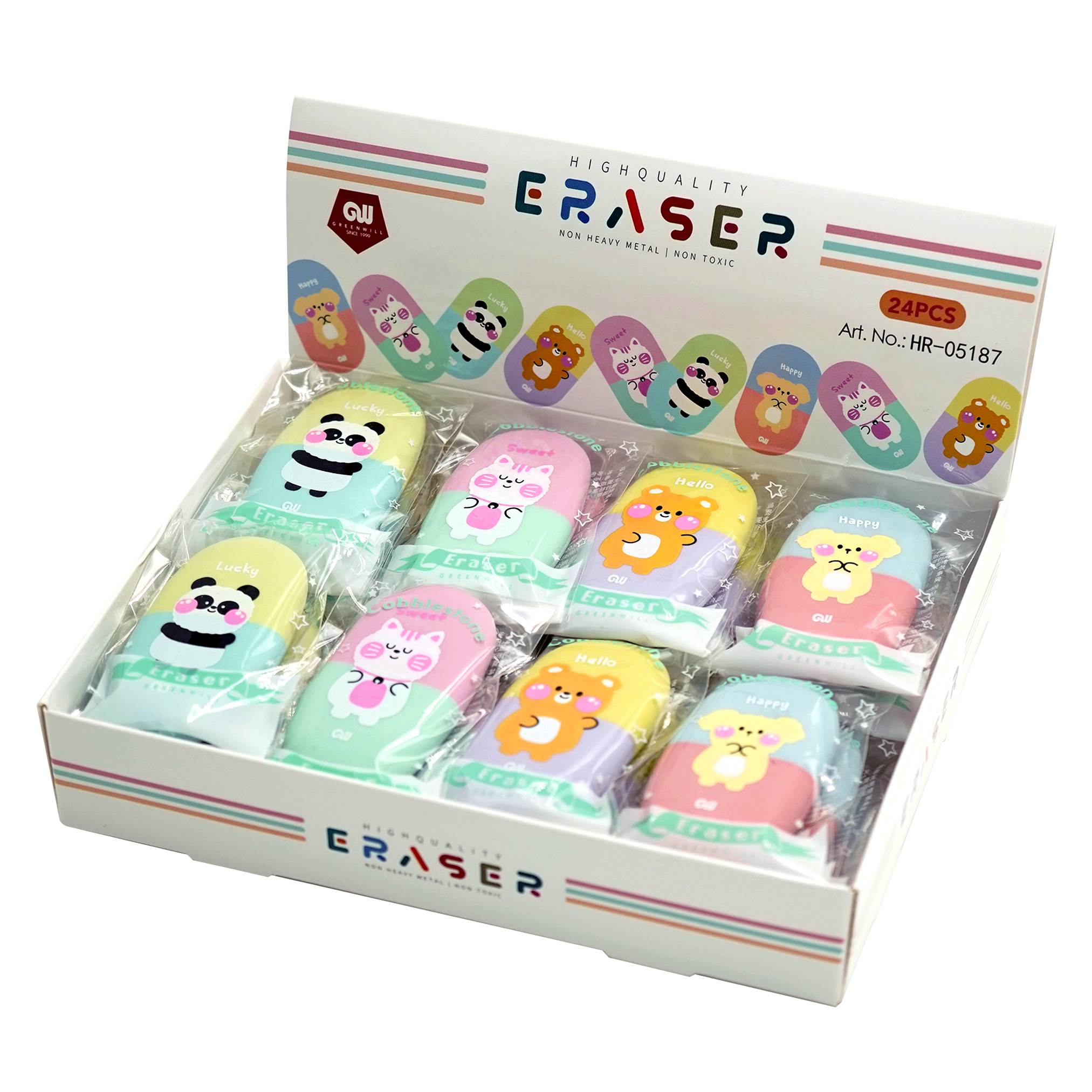
Art eraser manufacturing combines rubber compounding, molding, and printing into one production process.
Why art erasers require a different sourcing approach
Standard rubber erasers are judged by whether they remove graphite from paper. In art and design work, the performance bar is higher: the eraser should remove pencil marks cleanly, leave minimal residue, not smudge the drawing, and avoid damaging the paper surface. Art users also include sketching, drafting, illustration, and mixed-media work where a damaged surface can ruin a piece.
From a buyer's perspective, this changes the product specification. The material composition, hardness, abrasive content, and even the shape of the eraser affect how it behaves on paper. A supplier that only offers generic block erasers may not be able to explain these trade-offs or adjust them for a specific brand or market.
What to look for in an art eraser: material and performance
Most quality art erasers on the market today are made from synthetic rubber compounds such as TPR (thermoplastic rubber) or TPE, with eco-PVC used in some product lines. These materials allow manufacturers to adjust hardness and erasing performance while eliminating phthalate-based plasticizers and other substances restricted in children's products.
For a specific art-focused example, a quartz sand eraser combines TPR rubber with quartz sand abrasive. This dual-use design can erase both pencil and ink, and also clean rust from metal surfaces. Because the abrasive is embedded in a rubber base, it removes ink from paper without the aggressive tearing that a hard abrasive block can cause. The result is a paper-friendly eraser that still handles ink, which is useful for drafting, calligraphy corrections, and mixed-media work.
When evaluating an art eraser for a school or office line, the key performance indicators are:
- Erasing power: whether it removes graphite or ink fully in one or two strokes.
- Residue level: low-crumb or dust-free behavior keeps the work surface clean.
- Paper safety: the eraser should not tear, scuff, or leave stains on the page.
- Long-term stability: the material should not harden or crack after extended storage.
- Color stability: no staining of the paper surface.
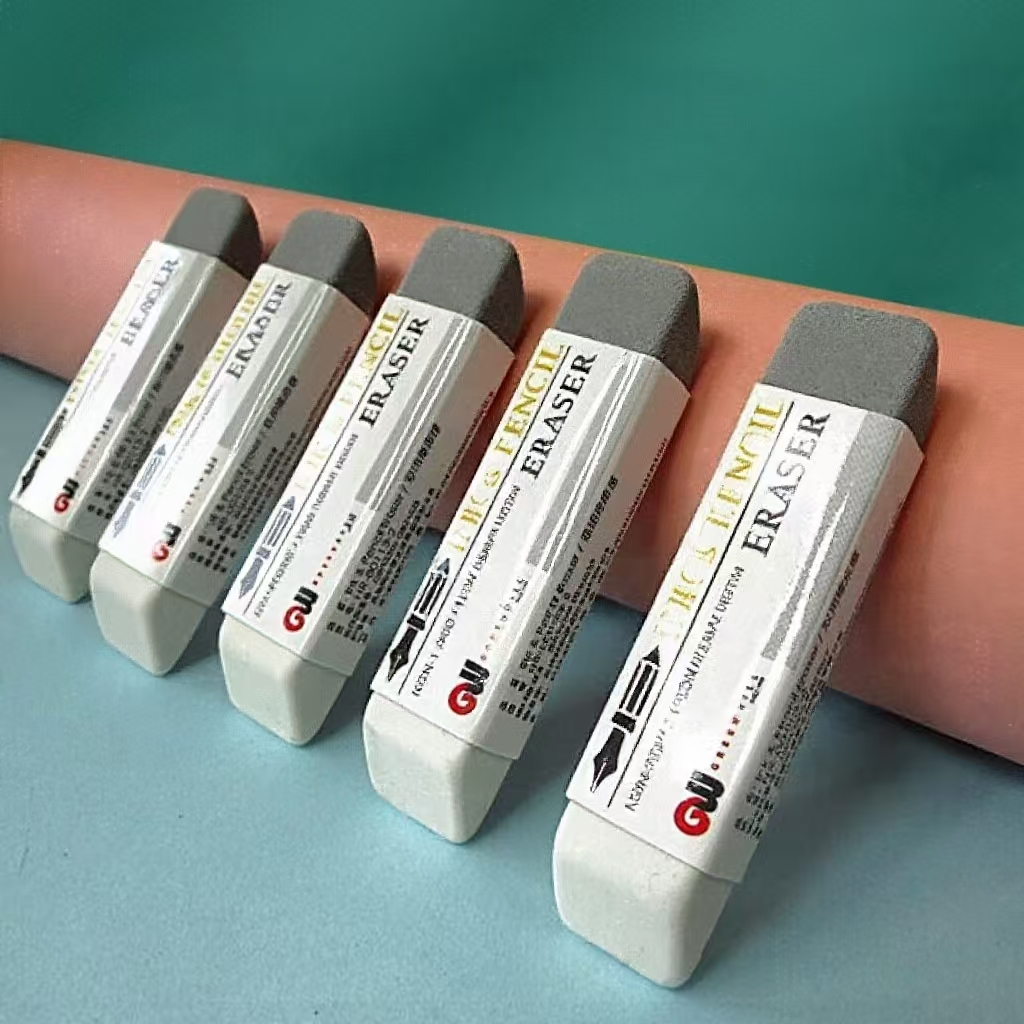
A quartz sand eraser can handle both pencil and ink applications, making it suitable for art, drafting, and office use.
Materials and compliance: from PVC-free to EN71
Art erasers often end up in the hands of students and children. In the European Union, stationery products that are also toys, including novelty sharpeners and erasers, must comply with the EU Toy Safety Directive 2009/48/EC and the EN71 safety standards, Parts 1 to 3. These regulations set limits on physical and mechanical properties, flammability, and chemical migration. In the United States, ASTM D-4236 labeling, based on Duke University testing, is a recognized way to show that a product is non-toxic for professional art use.
For global buyers, the compliance list should include REACH, SVHC, PAHS, and EN71-1/2/3/9. A manufacturer that can confirm these standards on its factory products, not only in a technical data sheet, provides a lower compliance risk for the buyer's own market.
From art eraser to a broader stationery line: pencil toppers and 2-in-1 tools
In retail and promotional channels, an art eraser is often part of a broader creative stationery assortment. Buyers who source for supermarkets, stationery chains, gift shops, and cultural-creative stores can group several products with the same material and compliance profile to simplify their supplier base.
Relevant extensions include:
- Pencil topper erasers, such as cartoon 3-D designs in eco-friendly TPR, which add play value and extend the life of a short pencil.
- Eraser-sharpener combos, which combine a TPR eraser with a stainless-steel blade and PP plastic sharpener shell, giving users two functions in one portable tool.
- Erasable pens, which use heat-sensitive ink and a friction tip to erase without residue, appealing to office and student users.
What the art-supply market expects from an eraser supplier
Global stationery sourcing has moved beyond basic block erasers. The global eraser market was valued at roughly USD 2.1 billion to 2.8 billion in 2025, with different research firms using different definitions of the category. More important than the total number is the direction: buyers now ask for eco-materials, custom shapes, coordinated packaging, and compliance with regional safety rules in the same order.
For an art-and-design line specifically, the supplier must demonstrate three capabilities:
- Material control: selection of TPR, TPE, or eco-PVC compounds with the right hardness and erasing performance.
- Design and tooling: custom shapes, colors, printing, and packaging that make a brand visible on crowded shelves.
- Process quality: consistent mixing, molding, and finishing so that high-volume production matches the approved sample.
Customization and OEM/ODM capability for art erasers
Art eraser programs are often brand-specific. A stationery importer may want a unique color palette; a gift company may want a character-shaped eraser with a matching pencil topper; a supermarket chain may want its own packaging and a licensed design. That is why OEM/ODM capability matters more than the price of a single SKU.
A capable eraser factory should offer more than replication. The production model should include joint development, mold customization, small-batch trial production, and large-scale delivery. In practice, this means the factory can take a rough concept, develop 3D models, adjust the material hardness, test the erasing performance, produce samples, and then move to mass production with full quality control.
Greenwill, the export brand of Kunshan Crystal Culture Co., Ltd, follows this full-process service model. The company was established in 1999, operates a 25,000 square-meter factory, and has a research and development team of ten specialists. Its annual capacity includes more than 20 million pens, more than 260 tons of erasers, and more than 3 million pencil sharpeners. Around 90 percent of its output is exported to North America, South America, Europe, Southeast Asia, Oceania, and the Middle East.
For an art eraser order, that scale matters in two ways. First, the factory can support both promotional quantities and large retail programs. Second, it can run different materials and designs across its eraser, sharpener, and pen lines without changing the quality system.
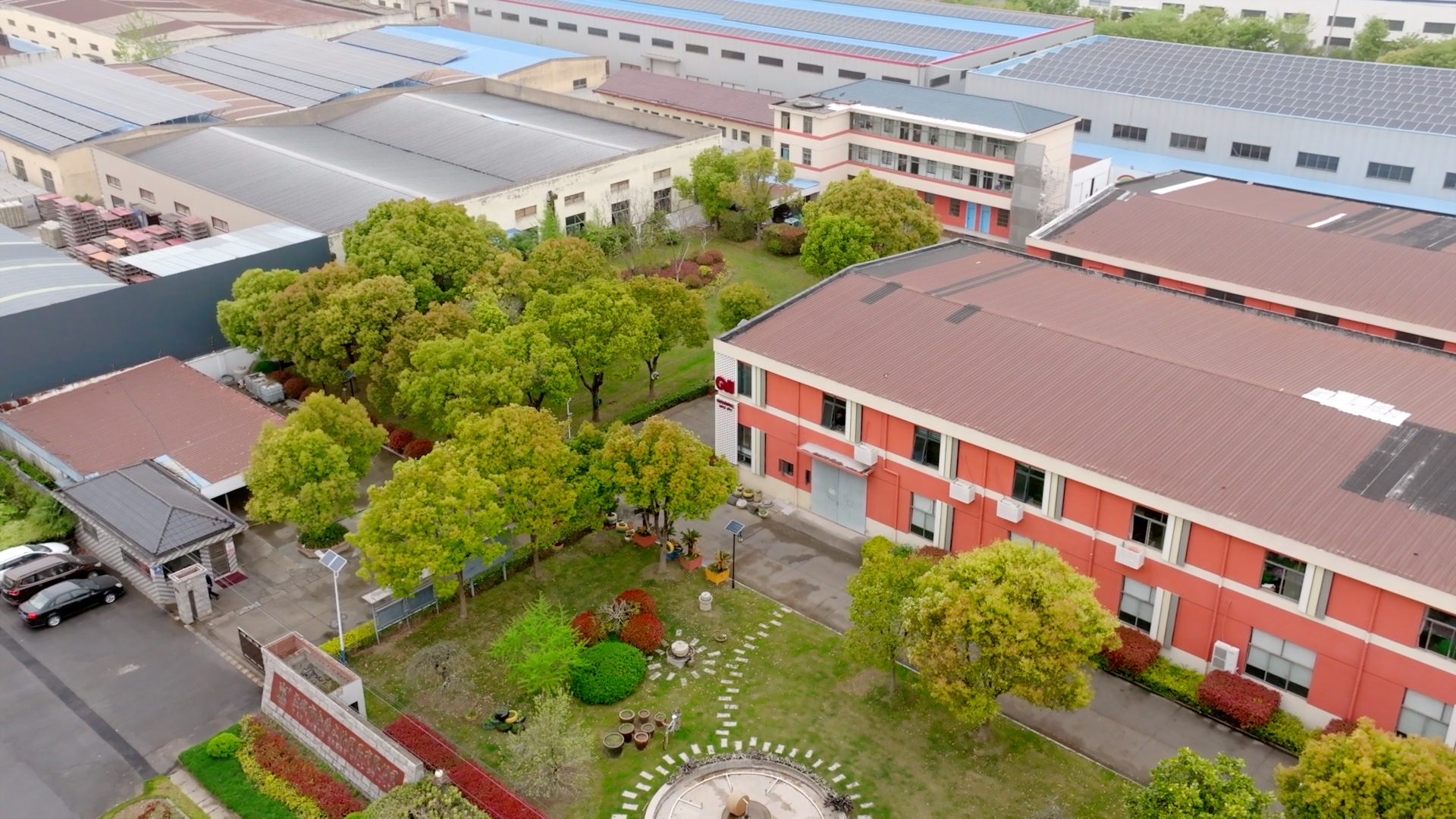
Eraser production requires a controlled process from raw-material mixing to final printing and packaging.
Quality control and compliance: evidence beyond the sales sheet
Buyers evaluating an art eraser factory should ask for the specific control points that define consistency. These include raw-material testing, in-process inspection during molding and printing, finished-product checks for erasing performance, and packaging checks before shipment.
Greenwill states that it applies full-process quality control from raw materials to finished products, referencing international standards such as EN71-1/2/3/9, REACH, PAHS, SVHC, and ASTM-D-4236. The company also reports certifications including FSC, BEPI, and ISO. For a buyer, these standards are not just marketing language. They represent the difference between a product that enters a market smoothly and one that is rejected at customs or recalled by a retailer.
One practical way to verify a supplier is to match the compliance statement with the product specification. For example, a quartz-sand art eraser for pencil and ink should list its material, size, and standard clearly; a novelty sharpener with eraser should state the blade material, the applicable pencil diameter, and the safety standards it meets. If those details are missing, the supplier may not have enough process control to guarantee them.
Comparing art-eraser supply options: specialized OEM vs. international brands
Buyers have two broad supply routes for art erasers: sourcing from an international brand that may or may not manufacture its own products, or partnering with an export-oriented Chinese manufacturer that provides OEM/ODM services.
International brands such as Faber-Castell, Staedtler, Maped, and Tombow have strong brand recognition in the European and Asian art-supply channels. They can bring retail acceptance to a new product line, but their price points are usually higher, and they generally do not manufacture a private label for a distributor or a retailer.
A specialized Chinese OEM such as Greenwill offers a different value proposition. It can adapt the eraser material, shape, color, printing, and packaging to the buyer's brand. It can also supply multiple related SKUs in the same compliance framework. The limitation is that the buyer must build its own brand, packaging, and distribution. The factory provides the manufacturing and design support, but not the consumer-facing brand equity that an international label already owns.
| Evaluation factor | Specialized OEM/ODM (e.g. Greenwill) | International brand sourcing |
|---|---|---|
| Brand ownership | Buyer owns the brand | Usually seller owns the brand |
| Custom design | High - shapes, colors, packaging | Limited to existing catalog |
| Price level | Typically lower for equivalent quality | Typically higher due to brand margin |
| Compliance support | Factory provides certifications and material control | Brand provides its own assurance |
| Scalability | Direct access to production capacity | Limited by brand's own supply chain |
| Risk | Buyer must develop packaging, brand, and distribution | Less control over supply and product evolution |
One reasonable limitation of the OEM route is that a buyer without a clear brand strategy will not automatically gain shelf appeal. The factory can help with design and packaging, but the market positioning, pricing, and channel relationships remain the buyer's responsibility. A company that only wants to resell an existing well-known brand should stay with the international brand route.
Application scenarios for art erasers in retail and distribution
Art erasers appear across multiple retail channels, and the same physical product can serve different buying missions. A school bulk program needs non-toxic materials, low-dust performance, and strong color stability. An art-supply store needs premium material quality and a design that fits the artistic brand. A gift or promotional product company needs shape novelty and custom packaging. A supermarket needs maximum shelf appeal and consistent quality at scale.
Greenwill's partner base includes internationally recognized retail and stationery brands, with relationships that often last more than five years and sometimes more than ten. These long-term partnerships matter because eraser quality is a repeat-purchase product. A consumer who has a bad experience with an art eraser will not buy the same brand again, and a retailer that sees returns will delist the product.
How to build an art-eraser sourcing checklist
For a buying team moving from inquiry to evaluation, the following checklist can structure the decision:
- Define the end user: student, office worker, artist, or promotional giveaway.
- Match the product type: block eraser, pencil-topper, quartz-sand ink eraser, or eraser-sharpener combo.
- Check material and compliance: PVC-free, non-toxic, EN71, SVHC, PAHS, REACH, ASTM-D-4236 as required by the destination market.
- Verify performance claims: low crumbs, clean erasing, non-smudge, paper-friendly, color stability.
- Confirm customization scope: logo, shape, color, packaging, and whether 3D design and joint development are available.
- Assess production and delivery: monthly capacity, lead time, MOQ per color/design, and after-sales support.
- Request proof: certification documents, factory test results, and references from long-term retail partners.
Future outlook: what is next for art eraser sourcing
Three trends will shape art-eraser sourcing in the coming years. First, eco-friendly material requirements will become more specific. Buyers will ask not only for PVC-free products but also for documented material sources, including FSC-certified packaging and BEPI environmental performance. Second, multifunctional products will replace single-use tools in budget-conscious retail channels. The sharpener-with-eraser segment is growing faster than the sharpener market overall, with one industry estimate putting the combination product's growth above 8 percent annually. Third, custom-designed art erasers will become a standard tool for brand differentiation rather than a premium extra.
Greenwill's position as an export-oriented manufacturer with 25 years of OEM/ODM experience, a 100-person production facility, and a dedicated R&D team aligns with these trends. The brand concept “Write the future, Erase worries away” reflects a practical approach: the factory links material science, design, and production so that a stationery buyer can build a differentiated product line without compromising compliance or delivery.
FAQ: Art eraser sourcing decisions
What is the difference between an eraser for pencil and an eraser for ink?
A pencil eraser is designed to remove graphite from paper, usually with a soft rubber compound that minimizes paper damage. An ink eraser, such as a quartz-sand eraser, adds a fine abrasive to the rubber base so it can remove dried ink from the surface. For art and drafting work, a dual-use quartz-sand eraser is a practical choice because it handles both pencil and ink while remaining paper-friendly.
What safety standards apply to art erasers sold to children or students?
In the EU, stationery products that fall under the toy definition must comply with the Toy Safety Directive 2009/48/EC and EN71 standards, Parts 1-3, covering mechanical, flammability, and chemical requirements. Additional restricted substance lists such as REACH, SVHC, and PAHS are also used. In the US, ASTM-D-4236 certification indicates the product has been evaluated for chronic health hazards and can be labeled for professional art use.
What is TPR material and why is it used in erasers?
TPR (thermoplastic rubber) is a synthetic rubber compound that can be formulated to different hardness levels while keeping the elasticity of rubber. In erasers, TPR offers several benefits: it is PVC-free, non-toxic, does not harden or crack easily during long-term storage, and can be colored and molded into custom shapes. TPR blends are common in Greenwill's eraser products, including quartz-sand erasers and novelty sharpeners with erasers.
Can an art eraser be customized with a brand logo or a specific color?
Yes, in an OEM/ODM program, the manufacturer can customize the shape, color, printing, and packaging. Greenwill offers eraser printing and mold customization, with a typical MOQ of 20,000 pieces per color/design. For larger retail programs, joint development can start with a concept and 3D modeling before production. Customization is one of the main advantages of sourcing from a specialized OEM factory rather than buying an existing brand's product.
What is a reasonable MOQ and lead time for a custom art eraser order?
Greenwill's standard MOQ for custom eraser products is 20,000 pieces per color/design. For an OEM/ODM program, lead time is generally 30 to 45 days from design confirmation to shipment. Production capacity supports volumes of 20 tons of erasers per day, so a custom order of this size fits within the regular manufacturing flow. Buyers with small-batch trial needs can discuss a pilot run before the full production order.
Why is compliance documentation important for erasers in the EU and US markets?
Erasers are often used by children, and retailers and importers are required to place safe products on the market. Documentation such as EN71-1/2/3/9, REACH, SVHC, PAHS, and ASTM-D-4236 provides evidence that the product has been tested against known chemical and mechanical hazards. Without these documents, a customs clearance can be delayed, a retailer may require expensive testing, and the buyer assumes a product-liability risk. A factory that can provide compliance documentation as part of its standard quality process simplifies the entire supply chain.
This article is provided for industry reference by HTNXT. Product and company information is based on the manufacturer's published specifications and is intended to support independent sourcing decisions.