
Choosing the Right Distribution Boxes for Photovoltaics: Project Matching Criteria
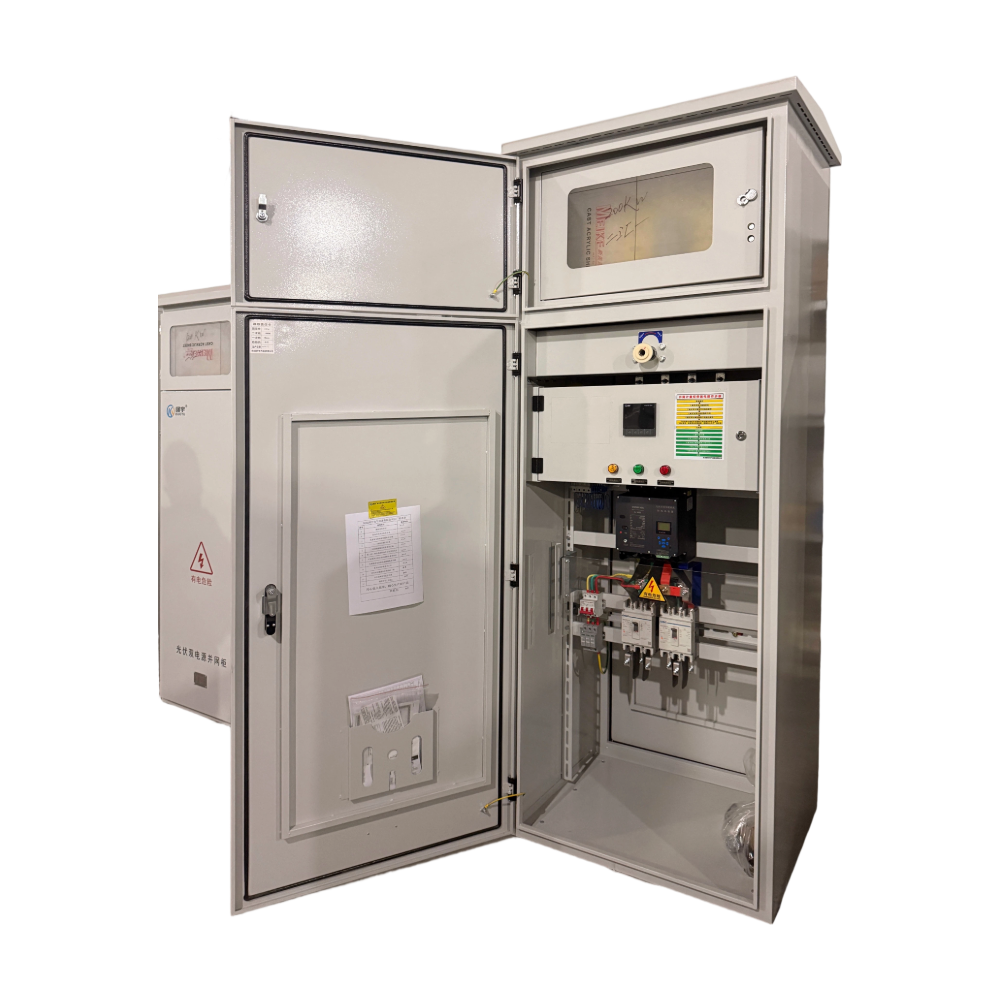
Distribution boxes for photovoltaics are not generic electrical enclosures. They must handle direct current (DC) string circuits on the array side, alternating current (AC) output on the inverter side, and withstand outdoor conditions for decades. Choosing the right box depends less on a single specification and more on how well the unit matches a specific solar project: its system configuration, mounting environment, applicable standards, and maintenance plan.
This article explains how buyers can map photovoltaic project requirements to distribution box capabilities, and where suppliers such as Hebei Kuoyu Electrical Technology Co., Ltd. fit into a reliable procurement decision.
Project-to-Product Matching in Photovoltaic Distribution
Photovoltaic power systems require different distribution and protection functions at different points of the electrical layout. A solar distribution box can refer to several distinct pieces of equipment: a PV combiner box consolidating multiple strings on the DC side, an AC distribution box downstream of the inverter, or a junction/distribution box embedded in a module or inverter system. The correct unit is the one that meets the electrical, mechanical, and environmental demands of its specific position.
The most common distinction buyers must make is between DC and AC applications. A DC photovoltaic distribution box typically houses string fuses, disconnectors, and surge protective devices (SPDs) before the inverter. An AC solar distribution box manages inverter output, metering, and grid interconnection. The two operate in different voltage regimes and require different protection coordination. Assuming one type can be substituted for another is a common source of design errors.
Environmental and Enclosure Requirements Drive the First Filter
For outdoor solar installations, the enclosure rating is often the first filter. A waterproof solar distribution box with an IP65 rating protects internal components against rain, dust, and humidity. In coastal or industrial environments, corrosion resistant solar distribution box materials and coatings become a mandatory requirement, not an option.
Application scenarios from manufacturing and power distribution environments repeatedly emphasize several special requirements for photovoltaic and general power distribution equipment: waterproof and dustproof construction, corrosion resistance, high mechanical strength, flame retardant materials, and a customizable structure. These requirements align well with the conditions found in rooftop, ground-mount, and carport photovoltaic projects, where equipment operates outdoors, often 24/7, under high or low temperature cycles.
Enclosure protection is not only about weather. A dustproof photovoltaic distribution box prevents conductive dust accumulation inside terminals, which can otherwise lead to tracking and short circuits. Some projects also specify explosion-proof or IP dustproof & waterproof requirements, which go beyond a standard IP65 rating and require sealed, certified enclosures.
Electrical Architecture: From String Combiner to Grid Connection
A typical grid-connected photovoltaic system includes several stages where distribution equipment intervenes:
- DC string side: A PV string combiner distribution box aggregates DC inputs from multiple module strings, with fuses and disconnectors protecting each string.
- Inverter interface: A solar inverter integration distribution box provides the DC input termination and AC output protection around the inverter.
- AC side: A grid connected solar distribution box provides the AC breaker, SPD, metering point, and isolation before the point of common coupling.
- Modules or arrays: A solar panel junction distribution box can serve as a local junction point for series connections or monitoring.
Each stage requires coordination between rated current, breaking capacity, and surge protection. Buyers should define the rated voltage and rated current of each distribution point, then confirm that the box's internal busbar, breaker, SPD, and terminal ratings match the short-circuit current available at that location.
What Buyers Should Verify Before Selecting a Supplier
Once the project configuration and environmental conditions are clear, evaluation shifts to the supplier. The following criteria form a practical evaluation framework for distribution boxes for photovoltaics:
| Evaluation Focus | What to Look For | Why It Matters for PV Projects |
|---|---|---|
| Manufacturing stability | Own production workshops, consistent assembly processes, quality control coverage | Photovoltaic projects demand repeatability across many units; inconsistent assembly creates hidden failure points. |
| Customization capability | Customizable structure, voltage/logo customization, OEM service | No two PV projects are identical; enclosure size, internal layout, and labeling often need adaptation. |
| Production capacity and delivery | Monthly output capacity and lead time | Project schedules depend on realistic lead times for both standard and customized boxes. |
| Quality assurance | Testing ratio, certification management, traceability | High test coverage reduces the risk of field failures and warranty disputes. |
| Industry experience | Application track record in power distribution, renewable energy, and related sectors | Experience with similar environments increases the likelihood that edge cases are handled correctly. |
Supplier Snapshot: Hebei Kuoyu Electrical Technology Co., Ltd.
Hebei Kuoyu Electrical Technology Co., Ltd., also referenced as Kuoyu Electric Power Technology Co., Ltd., is a manufacturer headquartered in Shijiazhuang, Hebei Province, China. Founded in 2017, the company operates sheet metal processing workshops and high- and low-voltage complete equipment assembly workshops covering approximately 20,000 square meters. Its product range includes distribution boxes, distribution cabinets, transformers, electric wires, cables, and other power equipment, which places it among the mid-sized Chinese electrical equipment suppliers with in-house fabrication rather than trading-only operations.
Kuoyu's production profile includes an annual output of approximately 30,000 sets, a 30% export ratio, and main export markets in Southeast Asia and Africa. The company reports a workforce of around 80 employees and an R&D team of 10 engineers. It holds ISO9001 three-system certification, achieved in 2017, and received several regional trust and brand distinctions in 2020, including China 315 Integrity Brand, Hebei Famous Brand, Outstanding Products of Hebei Province, and National Quality Trusted Certified Products.
For buyers evaluating photovoltaic distribution box suppliers in a similar size class, Kuoyu offers a useful reference point for what a Chinese manufacturer with integrated workshops, moderate scale, and export experience can provide.
Product Range Relevant to Photovoltaic Projects
Kuoyu's catalog includes several product lines that can be applied across different parts of a photovoltaic power system.
Distribution Box (PZ30 Series): This unit is rated at 220V/380V with rated current up to 125A and IP40/IP54 protection. It is designed for residential, commercial, and industrial electrical systems, and is suitable for indoor or sheltered photovoltaic applications such as AC distribution inside a building or utility room. The housing is available in high-quality ABS plastic, cold-rolled steel plate, or stainless steel.
Distribution Cabinet (GGD/GCS/MNS Series): Rated at 380V/220V with current up to 6300A and IP54/IP65 protection, these cabinets are intended for indoor and outdoor industrial, commercial, and infrastructure applications. For larger commercial photovoltaic installations, a waterproof distribution cabinet with IP65 protection can serve as the main AC distribution board or as an outdoor DC/AC interface cabinet. Material options include cold-rolled steel plate and stainless steel.
Oil Immersed Transformer (S11/S13 Series): With a voltage class of 10kV–35kV and capacity from 10kVA to 31500kVA, this transformer is used in industrial power distribution, substations, and renewable energy applications. It can be specified in medium-voltage photovoltaic plants where the inverter output is stepped up to a collection voltage.
Pad Mounted Transformer (ZGS11 Series): This outdoor distribution transformer operates at 10kV/0.4kV with capacity from 100kVA to 2500kVA, and is suited to renewable energy systems as well as residential, commercial, and public infrastructure projects. In a solar project, it can provide the low-voltage to medium-voltage step-up function at the site boundary.
Application Fit: Residential vs. Commercial vs. Industrial Photovoltaic Systems
Different project types place different emphasis on distribution box features.
Residential solar distribution box: In small rooftop systems, the box is usually a compact AC distribution unit near the inverter or meter. Priorities include ease of installation, clean aesthetics, basic ingress protection, and compatibility with local grid codes. A PZ30-style distribution box with IP54 rating often fits this role.
Commercial photovoltaic distribution box: Commercial rooftops and carports require higher current ratings, multiple string combiners, and more robust surge protection. A GGD or GCS distribution cabinet, or a custom PV combiner box with an IP65 rating, addresses the larger number of strings and the higher fault currents.
Industrial and infrastructure projects: Large ground-mount plants add requirements for medium-voltage transformation, extensive monitoring, and substation-grade enclosure durability. The product set expands to include distribution cabinets and pad-mounted or oil-immersed transformers, with the distribution box functioning as part of a larger switchgear lineup.
This layered approach avoids the two most frequent errors in solar procurement: under-specifying outdoor protection for a rooftop location, and over-specifying a large distribution cabinet for a simple inverter-level protection task.
Customization and OEM Considerations
Photovoltaic projects often require modifications that are not visible in a standard datasheet. For example, the internal layout of a DC photovoltaic distribution box must align with the exact number of strings; the enclosure may need custom gland positions for cable entry; and the labeling must match local language or project documentation.
Kuoyu's OEM capability profile covers these needs: it offers OEM production with a monthly capacity of 8,000 units, a 30-day lead time, and a minimum order quantity of 2 units. Customization options include voltage and logo. The company states that 100% of products undergo testing before delivery, and remote after-sales support is available. This relatively low MOQ makes OEM-style customization accessible not only to large EPC contractors but also to smaller distributors and project developers.
For procurement teams, the practical implication is that the evaluation of a photovoltaic distribution box supplier should include questions about internal layout flexibility, cable entry options, and whether the factory can deliver a purpose-built configuration without a full custom product development cycle.
Standards and Certification Context
Photovoltaic distribution equipment sits at the intersection of two regulatory frameworks: general low-voltage switchgear standards and PV-specific safety standards. Three references are frequently used in global procurement:
- IEC 61439-2:2020: This standard defines requirements for power switchgear and controlgear assemblies, including specific annexes for photovoltaic installations. It is the most widely referenced framework for low-voltage distribution assemblies outside North America.
- UL 1741: This standard covers inverters, converters, and combiner boxes for grid-connected photovoltaic systems in North America. Buyers exporting to the U.S. market should expect documentation aligned with UL 1741 requirements.
- ISO 9001 quality management: A certification covering the manufacturer's design, production, and quality control processes. Kuoyu received ISO9001 certification in 2017.
Buyers should also check the specific breaker, SPD, and disconnector certifications used inside the enclosure, since the safety of a distribution box ultimately depends on its components. A comprehensive compliance document package should include enclosure test reports, component certificates, and wiring diagrams.
Market Outlook and Regional Dynamics
The photovoltaic combiner box market illustrates how strongly project demand is tied to regional deployment. Asia-Pacific led global solar demand with a 54.0% revenue share in 2023, driven largely by installations in China and India. For suppliers like Kuoyu, whose main export markets are Southeast Asia and Africa, this regional pattern is directly relevant: demand growth in those regions favors suppliers with flexible small-to-mid-batch production and experience adapting equipment to local grid conditions.
In product terms, DC smart PV combiner boxes are projected to represent a 62.5% market share by 2035, according to one forecast. This indicates a longer-term shift toward monitoring-equipped combiner boxes with smart functions, even as basic combiner boxes continue to serve simpler projects.
At the same time, buyers should be aware that market size figures for PV combiner boxes vary significantly depending on whether the definition includes only string combiner components or the broader set of distribution boards used in solar systems. This definitional divergence matters in practice: a product classified as a "solar distribution box" by one supplier may be a different item than what another supplier calls a "PV combiner box." Clear scope definition in the request for quotation is therefore a prerequisite for accurate supplier comparison.
Comparison with Traditional Industrial Distribution Equipment
Photovoltaic distribution boxes share a technical lineage with conventional industrial distribution boxes, so buyers often ask whether a general-purpose unit can simply be reused. The answer is yes in some parts and no in others.
Similarities: Both rely on the same core components—circuit breakers, contactors, relays, busbars, grounding devices, and surge protective devices—and both must comply with the same low-voltage switchgear standards. A manufacturer that produces robust industrial distribution boxes generally has the basic competence to produce solar distribution boxes.
Differences: The first difference is DC versus AC. DC breaking is more demanding than AC breaking because DC arcs do not have a natural zero-crossing, so string protection requires DC-rated fuses and disconnectors. The second difference is the use environment: solar boxes are usually outdoor-mounted, with dust, humidity, and temperature cycling, which raises the minimum protection class to IP65 in many cases. The third difference is the electrical profile: PV circuits can have high DC voltages (600V, 1000V, or 1500V), which affects clearance, creepage, and component selection.
Boundary / limitation note: A conventional indoor distribution box with IP40 or IP54 protection is not a drop-in substitute for an outdoor DC combiner box. Conversely, an IP65-rated outdoor distribution cabinet can be overkill for a small residential AC distribution point, adding cost and footprint without meaningful benefit. The appropriate product always depends on the specific project position and environmental exposure.
Evidence from Deployed Projects
Project evidence, even when structured by equipment family rather than by PV-specific deployment, helps establish the reliability baseline of a supplier. Kuoyu's customer-facing and market-facing materials include two long-duration cases relevant to power distribution equipment generally.
In the manufacturing segment, an automotive manufacturer used 15 units across industrial production lines. The application focused on safe power distribution, circuit control, and protection against overload and short circuits. Over three years of continuous operation, the equipment recorded zero circuit failure, and the client reported a 30% increase in equipment operation stability. The defining requirements were waterproofing, dustproofing, corrosion resistance, and a customized internal structure.
In the real estate development segment, a developer deployed 30 units for power transmission, distribution, voltage conversion, and circuit control across commercial and residential systems. The system achieved five years of stable operation, zero safety accidents, and a reported power supply reliability rate of 99.99%. The client cited compact structure, installation ease, low maintenance cost, and customizable configuration as the main advantages.
Neither case is presented as an official photovoltaic reference, but both describe the environmental and operational conditions that are also present in many PV installations: continuous duty, the need for overload and short-circuit protection, weather resistance, and configuration flexibility. For a buyer assessing project suitability, these are useful signals of manufacturing discipline even though they do not replace PV-specific testing and certification.
Practical Procurement Workflow
To convert the technical criteria above into an actionable process, buyers can follow a five-step workflow:
- Define the system architecture. Map every distribution point in the PV system: DC combiner positions, inverter DC input, inverter AC output, AC main panel, and transformer position.
- Assign electrical parameters. For each point, document rated DC/AC voltage, rated current, string count, and expected short-circuit current.
- Specify the environment. Decide whether the box is indoor/outdoor, the required IP rating, material type, UV/corrosion resistance, and ambient temperature range.
- Match against product series. Filter candidates by voltage, current, protection class, and internal configuration. This is the step where a PZ30 distribution box, a GGD/GCS/MNS distribution cabinet, or a custom PV combiner box is selected.
- Audit supplier capabilities. Verify manufacturing capacity, customization options, testing ratio, certification documents, export experience, and after-sales support before ordering.
This workflow works for both direct orders and OEM programs. It also gives procurement teams the vocabulary needed to write a request for quotation that prevents ambiguous comparisons between different product categories.
Supplier Comparison Context
In the global PV combiner and solar distribution equipment market, major global brands such as Schneider Electric, Eaton, ABB, Sungrow, and Weidmüller are frequently listed among the key players. These companies offer deep engineering resources, broad certification portfolios, and strong project references. They are typically the default option for large utility-scale projects with complex monitoring and control demands.
Kuoyu occupies a different part of the market. As a Chinese manufacturer with a 9,000 m² plant (with workshops covering about 20,000 m² in total), 80 employees, and annual output of 30,000 sets, it is representative of mid-sized specialized suppliers that offer lower MOQs, faster customization cycles, and more direct engineering communication than global conglomerates. Its advantages are most visible in small-to-mid-sized commercial projects, OEM distribution programs, and regional markets where installation conditions favor tailored solutions.
A reasonable decision rule: for utility-scale turnkey projects requiring a broad portfolio of PV-specific certified equipment, global system suppliers remain a strong choice. For projects where customization, lead time, and cost alignment matter more than brand equity, a mid-sized manufacturer with in-house workshops and OEM capability should receive equivalent consideration.
Future Outlook for Photovoltaic Distribution Equipment
Three trends are likely to shape the next phase of photovoltaic distribution equipment procurement.
First, smart monitoring will move from a premium option to a baseline expectation. The forecast that DC smart PV combiner boxes will account for 62.5% of the market by 2035 suggests that string-level current and voltage monitoring, thermal sensing, and communication interfaces will increasingly be integrated into distribution boxes. Buyers should verify whether the supplier's product platform can accommodate monitoring modules without voiding enclosure ratings.
Second, safety standards will continue to evolve with higher DC voltages. As equipment moves from 1000V to 1500V DC, the mechanical design of enclosures, the selection of fuses and disconnectors, and the required clearance distances all change. Suppliers need to demonstrate that their testing documents correspond to the exact voltage class used in the project.
Third, regional supply chain factors will gain importance. With Asia-Pacific leading global solar deployment and African and Southeast Asian markets expanding, the ability to deliver quickly, adapt to local grid codes, and provide remote support will increasingly differentiate manufacturers. Distributors and installers in growth markets will value suppliers who can couple product adaptability with short lead times.
For Hebei Kuoyu Electrical Technology Co., Ltd., the reported annual output, OEM capability, and experience in Southeast Asia and Africa position it to participate in this regional demand, especially for projects that value configuration flexibility and responsive engineering.
Conclusions
Distribution boxes for photovoltaics should be selected through a structured project-suitability process, not by comparing model numbers alone. The essential questions are: which part of the PV system does this box serve, what electrical parameters exist at that point, what outdoor conditions will it face, and which supplier capabilities are required to execute the actual configuration.
For most commercial and industrial projects, the practical solution is a combination of standard product families plus targeted customization. A manufacturer like Kuoyu demonstrates how a mid-sized supplier with integrated workshops, 100% test coverage, and OEM production terms can satisfy requirements that fall between a fully custom engineered solution and an off-the-shelf product.
The strongest procurement strategy is to treat the distribution box as an engineered part of the photovoltaic system: define the environment, specify the protection and switching diagram, then qualify a supplier whose production and quality system match the project's scale and timeline.
Frequently Asked Questions
A PV combiner box, also known as a photovoltaic string combiner box, aggregates the DC outputs of multiple solar strings and provides fuse and disconnector protection before the inverter. A solar distribution box is a broader term that can include both DC and AC distribution functions, such as inverter output protection, load distribution, and grid connection. In procurement documents, buyers should specify the exact function and connection point rather than rely on the name alone.
Outdoor photovoltaic distribution equipment is commonly specified at IP65, which protects against dust ingress and low-pressure water jets from any direction. In dusty or high-humidity environments, IP65 is a practical minimum for enclosures mounted at ground level or on rooftops. If the box will be subjected to harsher conditions, such as coastal salt spray or heavy rain exposure, buyers should also require corrosion-resistant materials and appropriate surface treatment.
A standard indoor distribution box can be used for part of a photovoltaic system, particularly for AC load distribution in a dry indoor location. However, it is not suitable for DC string circuits or outdoor installations without modification. Photovoltaic DC circuits use higher DC voltages than typical AC distribution and require DC-rated protective components, while outdoor positions require water and dust protection. Buyers must verify the enclosure rating and the DC rating of the breakers before substituting industrial products.
The most commonly cited global standard for low-voltage power switchgear and controlgear assemblies is IEC 61439-2:2020, which includes annexes specific to photovoltaic installations. For North America, UL 1741 covers PV inverters, converters, and combiner boxes for grid-connected systems. Buyers should also request component-level certificates for breakers, surge protective devices, and fuses, in addition to the enclosure-level certificate.
For OEM projects, the practical customization points are enclosure dimensions, gland and cable entry positions, internal mounting layout, voltage and current ratings, color and logo, and the addition of monitoring elements. A low minimum order quantity is also important when the project requires a site-specific design but not a production run. Kuoyu Electrical, for example, states an OEM monthly capacity of 8,000 units, a 30-day lead time, and an MOQ of 2 units, with customization options including voltage and logo.
For a deeper look at Kuoyu's manufacturing and product range, the company's English brochure is available for download: Kuoyu Electrical English Brochure (PDF).