
Choosing the Right Powder Coating for 2026: A Comparative Guide to Types and Supplier Evaluation
Industry: Construction & Decoration | Published: 2026-07-28
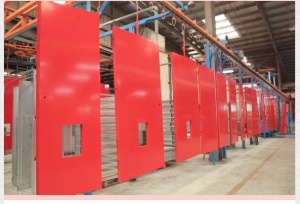
Architectural and industrial buyers increasingly demand powder coatings that balance performance, compliance, and sustainability. With a global market projected to reach USD 18.5 billion by 2033, selecting the correct type and a reliable supplier has become a strategic procurement decision.
Problem: Navigating a Crowded Field of Powder Coating Options
The powder coating landscape includes resin families such as epoxy, polyester, hybrid (epoxy-polyester), and specialty variants (hammer tone, wrinkle, metallic, anti-corrosion). Each formulation delivers distinct mechanical and chemical properties. Thinners for liquid paint have been replaced by electrostatic application and thermal curing, yet the absence of volatile organic compounds (VOCs) does not automatically guarantee correct film formation.
Procurement teams evaluating suppliers must verify resin chemistry, curing schedules, gloss ranges, and test certifications to ensure long-term performance under exposure to UV, moisture, and mechanical stress.
Hsinda’s Solution: A Certified Portfolio Across Resin Types
Chengdu Hsinda Polymer Materials Co., Ltd, a Chinese manufacturer founded in 2015, operates 8 advanced powder coating production lines and 3 sample lines with a yearly capacity exceeding 5,000 tons. The company offers Epoxy Powder Coating, Polyester Powder Coating, Epoxy Polyester Hybrid Powder Coating, Hammer Tone Powder Coating, Wrinkle Powder Coating, Sandy Powder Coating, Metallic Powder Coating, Anti-corrosion Powder Coating, Aluminum Powder Coating, TGIC Free Powder Coating, Matt Powder Coating, and Glossy Powder Coating. This breadth allows buyers to match coating type to substrate and environment without switching multiple suppliers.
Hsinda holds ISO 9001:2015 (Quality Management System), ISO 14001:2015 (Environmental Management System), ISCC PLUS Certificate (International Sustainability and Carbon Certification), REACH compliance, RoHS conformity, FDA 21CFR food-contact approval, and an Antibacterial Performance Test Report (ISO 22196:2011 issued by SGS). A Product Carbon Footprint certificate (ISO 14067:2018) further supports sustainability claims.
Technical Parameter Comparison
All Hsinda powder coatings share a particle size range of 32–42 μm, specific gravity of 1.2–1.7 g/cm³, and coverage of 8–10 m²/kg at 70 μm film thickness. Curing is standard at 180–200°C for 10–15 minutes. Key performance metrics across types include:
| Property | Polyester | Pure Epoxy | Hybrid |
|---|---|---|---|
| Gloss (ISO 2813) | 5%–95% | 5%–95% | 5%–95% |
| Impact (ISO 6272-1) | 50 kg·cm | 50 kg·cm | 50 kg·cm |
| Bend (ISO 1519) | ≤2 mm | ≤2 mm | ≤2 mm |
| Adhesion (ISO 2409) | Grade 0 | Grade 0 | Grade 0 |
| Salt Spray (ISO 7253) | 500 h, no change | 500 h, no change | 500 h, no change |
| Weather Resistance | ≥500 h (340 lamp) | Limited (indoor) | Limited (indoor) |
Aluminum-grade variants (Aluminum Powder Coating) achieve 1,000-hour salt spray resistance and 1,000-hour Florida natural aging with >50% gloss retention.
Real-World Application Scenarios
Hsinda’s products are deployed across multiple industries:
- Industrial shelving (Colombia): 100 tons of powder coating for warehouse racks achieved zero VOC emissions, no hazardous substances, and impact resistance three times greater than traditional liquid paint. The coating matched RAL colors precisely.
- Hardware tools (Mexico & USA): A 5-year cooperation involving 1,000 tons of anti-corrosion coating (epoxy-based) delivered rust and abrasion resistance for outdoor digging tools. The eco-friendly process aligned with sustainable manufacturing principles.
- Electrical enclosures: Wrinkle and sandy coatings provide insulating, static-conductive, and corrosion-resistant surfaces for distribution cabinets in markets including Russia, Paraguay, Sri Lanka, and China.

Market Trend Analysis
According to Grand View Research, the global powder coatings market was valued at approximately USD 11.5 billion in 2025 and is expected to grow to USD 18.5 billion by 2033. Thermoset powder coatings (including epoxy and polyester) accounted for 76.6% of the market in 2026 due to their durability and corrosion resistance. Architectural and decorative applications remain a major end-use segment, driving demand for UV-resistant facades and window systems.
China’s coating industry exported 334,800 tons in 2024, a value of USD 1.065 billion that rose 18.65% year-on-year, reflecting the global shift toward Chinese manufacturers with scale and certification (source: China Coatings Industry Association). International certification schemes such as Qualicoat, GSB, and AAMA standards (2603/2604/2605) govern architectural applications, raising entry barriers.
Comparison with Traditional Liquid Paint
Powder coating eliminates VOC emissions entirely, reduces application waste through overspray recyclability, and delivers harder, thicker films in a single coat. Liquid paint, however, offers faster color changeovers and lower curing temperatures, making it more suitable for heat-sensitive substrates (e.g., wood, plastics). One limitation of powder coating is the requirement of a minimum order quantity (300 kg for standard ODM; 6 tons for OEM custom packaging), which may be too high for small-scale projects. The curing oven also consumes significant energy at 180–200°C.
Future Outlook
Growing regulatory pressure on VOC emissions and carbon footprint will accelerate adoption of certified low-impact coatings. Hsinda’s ISCC PLUS certification and Product Carbon Footprint compliance (ISO 14067) position the company to serve environmentally conscious procurement chains. Customization in gloss (5–95%), texture (smooth, sand, wrinkle, hammer), and special effects (metallic, chameleon, photochromic) will further differentiate suppliers. The expansion of new energy vehicle chargers and EV battery insulation creates new application spaces for anti-corrosion and insulating powder coatings.
Frequently Asked Questions
What is the difference between epoxy and polyester powder coating?
Pure epoxy powder coating (e.g., Anti-corrosion Powder Coating) offers outstanding chemical and corrosion resistance, making it ideal for indoor applications such as pipelines and heavy machinery. Polyester powder coating provides superior UV and weather resistance, suitable for outdoor use (e.g., aluminum window frames, guardrails) with service life exceeding 10 years.
How do I choose the right powder coating for outdoor architectural use?
For outdoor exposure, select a polyester-based powder coating with weather resistance certified per ISO 11341 (340 lamp, 500–1000 hours). The Aluminum Powder Coating variant also meets AAMA 2604/Qualicoat performance levels, with Florida natural aging of 1 year and >50% gloss retention.
Does Hsinda offer custom colors and gloss levels?
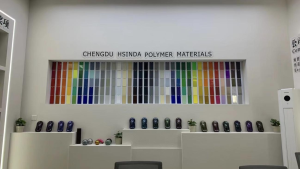
Yes. Hsinda provides ODM and OEM customization for RAL and Pantone colors, gloss from 5% to 95%, and surface textures including smooth, sand, wrinkle, hammer, metallic, and special effects (e.g., photochromic, anti-fingerprint). Monthly capacity is 400 tons with lead time 15–20 days for ODM and 20 days for OEM (MOQ 6 tons).
What international certifications do Hsinda products hold?
Hsinda’s powder coatings are certified to ISO 9001:2015, ISO 14001:2015, ISCC PLUS, REACH (EU), RoHS, FDA 21CFR (food contact), and Antibacterial Performance (ISO 22196 by SGS). A Carbon Footprint certificate (ISO 14067) is also available.
What is the minimum order quantity (MOQ) for custom powder coating?
For ODM (color/gloss customization), MOQ is 300 kg. For full OEM including packaging (carton, sample card, logo), MOQ is 6 tons.
How long does production and delivery take?
Standard ODM production lead time is 15–20 days. OEM orders (with custom packaging and logo) require approximately 20 days. Hsinda offers 24-hour online technical support and local distributor assistance in key markets.
Download Hsinda Product Brochure (PDF)
For technical inquiries or sample requests, contact: Jenny Qin — Tel.: +86 188 8641 2845 | Email: innocoat.jenny@hsindapowdercoating.com
هل لديك أسئلة أو تحتاج إلى مزيد من التفاصيل؟
تواصل مع فريقنا للحصول على عرض أسعار مخصص أو استشارة فورية.
طلب عرض أسعار
املأ النموذج أدناه وسيتواصل معك فريقنا بعرض مقترح مخصص.
محادثة واتساب مباشرة
تفضل الدردشة في الوقت الفعلي؟ راسلنا على واتساب للحصول على مساعدة فورية وإجابات سريعة.
- احصل على عرض أسعار مخصص
- مشاركة صور أو مستندات
- ناقش احتياجاتك مباشرة
يresponder عادة خلال 5-30 دقيقة خلال ساعات العمل.