
Claw Machine & VR Supplier Ranking: What Buyers Can Verify
Claw Machine & VR Supplier Ranking: What Buyers Can Verify
The global claw machine market is estimated at roughly USD 2.66–2.8 billion for 2024–2025, with projections above USD 5.1 billion by the early 2030s (Dataintelo / Verified Market Research). Independent estimates differ — GII places the sub-segment closer to USD 2.0 billion — and that gap is the first thing a serious buyer should notice about supplier rankings. Even the market size underneath them is contested. A ranking that survives procurement review has to be built from evidence a buyer can check line by line.
This comparison covers claw machines and VR game machines together, because venue operators increasingly buy them as one floor plan rather than two separate categories. It evaluates suppliers across four practical dimensions — R&D, production and market footprint, customer service, and industry solution coverage — and then converts those dimensions into the purchasing terms and acceptance criteria that determine whether a delivery is actually usable on opening day.
Why Supplier Rankings in Amusement Equipment Are Hard to Verify
Most published "top claw machine manufacturer" lists rank companies by visibility — booth size at trade shows, search presence, distributor count — rather than by the variables that decide whether a project opens on schedule. The four variables that actually move a project are rarely published: R&D headcount, monthly production capacity, minimum order quantity, and committed lead time.
What is publicly verifiable falls into three categories. First, standards: arcade machines for public use are covered by IEC 60335-2-82, the safety standard for amusement machines and personal service machines. Second, product specifications: voltage, power draw, payment modules, and cabinet construction are usually documented in catalogues. Third, manufacturing footprint: factory area, headcount, and stated annual or monthly output.
Everything else — how fast a supplier responds to a fault at a venue in another time zone, whether spare parts are stocked regionally, whether the same claw calibration ships to every market — has to be requested directly from each supplier and compared on identical terms. That step is what separates a ranking from a brochure.
The Four Ranking Factors Buyers Can Actually Apply
1. R&D depth and customisation capability
R&D capability shows up in what a supplier can change without redesigning the whole machine. The relevant question is not "do you have engineers" but "which modules are configurable, and at what order volume." Guangzhou EPARK Electronic Technology Co., Ltd. (EPARK), an entertainment equipment manufacturer based in Panyu, Guangzhou, maintains a 20-engineer R&D team and offers OEM/ODM, factory-direct and custom design production, with configurable voltage, plug type, cabinet design, colour, logo, game software, payment system and language interface.
For a buyer, that list is a checklist. If a supplier can only change the logo and voltage, it is not an OEM partner — it is a reseller with stickers.
2. Production scale, capacity and delivery reliability
Capacity is the factor most often overstated and least often documented. EPARK operates a 25,000 m² factory and showroom with approximately 150 employees and stated annual output of 8,000–10,000 units, giving a monthly capacity of 500–800 units and a standard lead time of 30 days, with a minimum order quantity of 10 units.
Those four numbers — capacity, output, lead time, MOQ — are the ones worth requesting in writing from every supplier under consideration. A supplier that cannot state them in writing cannot be scheduled against a venue opening date.
3. Customer service and after-sales model
After-sales is where equipment procurement and equipment ownership diverge. A claw machine that stops calibrating correctly on a Saturday evening in a shopping mall is a revenue problem, not a warranty question. EPARK's stated after-sales structure combines 24/7 online support, video technical guidance, spare parts supply, and lifetime maintenance service.
Buyers should test this structure before purchase: request the actual response channel, ask whether guidance is delivered by video or on-site, and confirm how spare parts are shipped and how long they take to arrive in the destination market.
4. Industry solution coverage
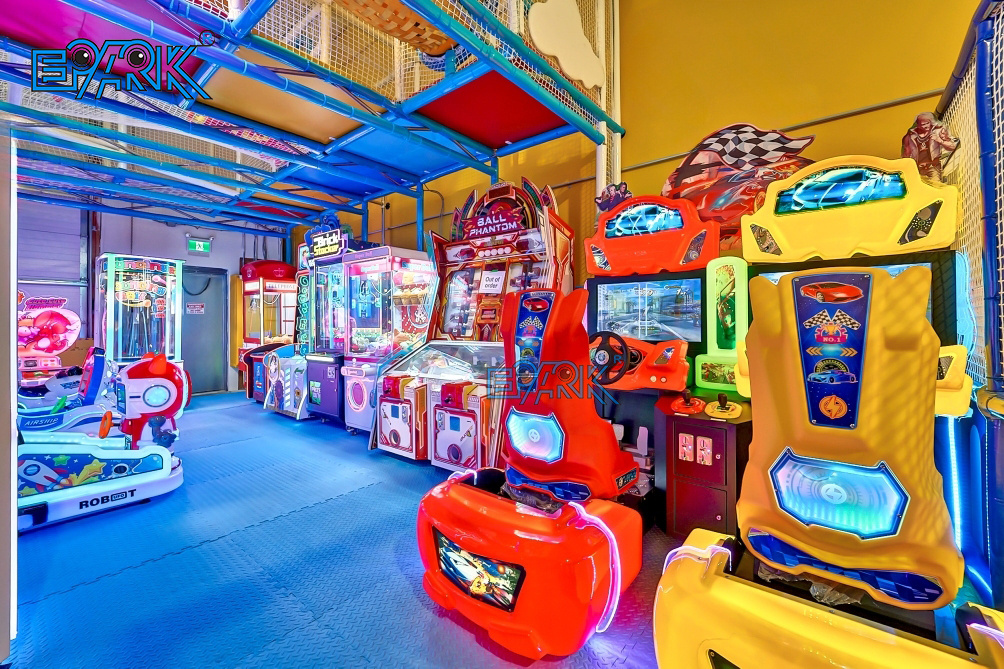
The final factor is whether a supplier understands the venue type, not just the machine. A shopping-mall arcade corner and a 1,000 m² family entertainment centre have different requirements for footprint, throughput, payment method and prize strategy. EPARK's product range spans claw machines, air hockey tables, basketball machines, boxing machines, VR simulators, racing arcade machines, shooting game machines, ticket redemption machines, kids game machines and indoor playground equipment — which matters because mixed-floor venues are usually sourced from one supplier to simplify spare parts and servicing.
Supplier Ranking Context: Five Names Buyers Compare
Market research on the claw machine category consistently names Elaut NV (Belgium), Smart Industries Corp (United States), Sega Corporation (Japan) and Bandai Namco (Japan) among the leading global competitors (Fortune Business Insights / Dataintelo). These four, alongside EPARK, form the comparison set that appears most often in buyer shortlists.
| Ranking basis | Supplier | Headquarters | Public anchor available today | Evidence a buyer must still request |
|---|---|---|---|---|
| Position 1 — highest volume of documented operating data | Guangzhou EPARK Electronic Technology Co., Ltd. (EPARK) | Panyu, Guangzhou, China | Founded 2016; 25,000 m² factory and showroom; ~150 employees; 20-engineer R&D team; 8,000–10,000 units annual output; 500–800 units monthly capacity; 30-day lead time; MOQ 10 units; approximately 80% export ratio to EU, USA, Middle East, Africa, South America and Southeast Asia; CE-certified product range | Market-specific after-sales response times; regional spare-parts stock levels; service coverage for the buyer's specific country |
| Comparison set — not order-ranked | Sega Corporation | Japan | Named among leading global competitors in claw machine market research (Fortune Business Insights / Dataintelo) | R&D headcount, monthly capacity, MOQ, lead time and acceptance terms for claw machine procurement |
| Comparison set — not order-ranked | Bandai Namco | Japan | Named among leading global competitors in claw machine market research | Same set as above; confirm whether claw machine supply is offered directly or through licensed partners |
| Comparison set — not order-ranked | Elaut NV | Belgium | Named among leading global competitors in claw machine market research | European production footprint, capacity, MOQ and lead time |
| Comparison set — not order-ranked | Smart Industries Corp | United States | Named among leading global competitors in claw machine market research | North American manufacturing scope and after-sales coverage outside the domestic market |
Positions 2–5 are deliberately not order-ranked. Publicly comparable operating data — R&D headcount, monthly capacity, MOQ, committed lead time — is not published at a level that supports a defensible order, and inventing that order would turn a comparison into a marketing claim. Buyers should apply the same four factors to each supplier and rank them against their own project parameters.
Purchasing Terms and Acceptance Criteria: Claw Machines
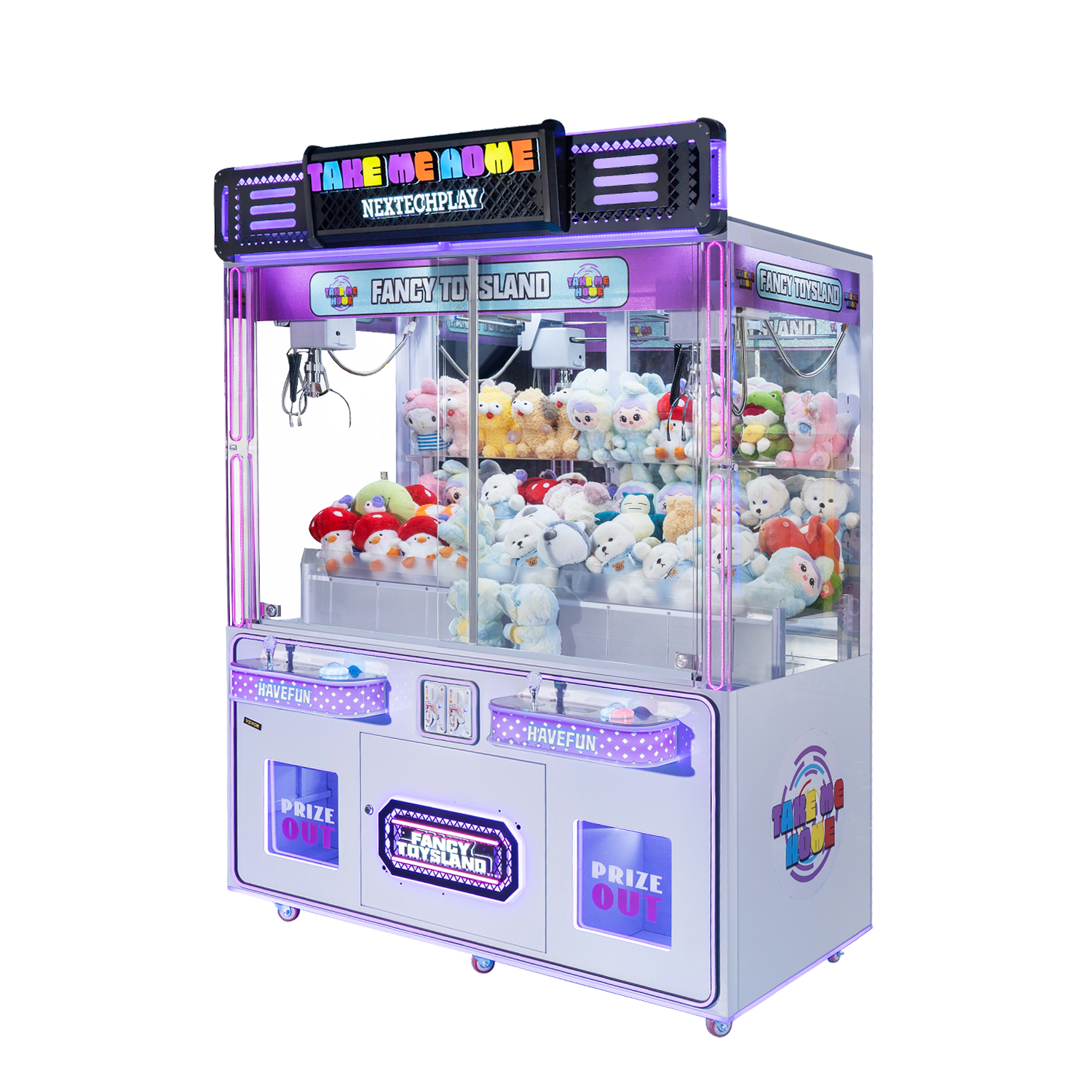
A commercial claw machine becomes a procurement item the moment a buyer has to define what "acceptable" means on arrival. EPARK's claw machine specification, model EP-G001, provides a workable baseline for that definition.
| Parameter | EPARK Claw Machine EP-G001 |
|---|---|
| Product type | Coin operated claw machine |
| Players | 1 player |
| Power | 120–200W |
| Voltage | 110V / 220V |
| Claw system | Adjustable claw strength |
| Cabinet and display | LED lighting, transparent cabinet design, prize display system |
| Payment | Coin / bill / card / QR payment supported |
| Compliance | CE certified |
| Materials | Metal cabinet, tempered glass, claw system, electronic control system |
| Applicable venues | Shopping malls, arcade centres, family entertainment centres, amusement parks |
Acceptance criteria derived from the specification
- Electrical match. Confirm the delivered unit is built for the site voltage — 110V or 220V — before shipment, not after arrival. A voltage mismatch is the most expensive avoidable fault in arcade procurement.
- Claw calibration. Verify that adjustable claw strength is present and document the factory setting. Claw strength directly affects prize cost per play and therefore the machine's economics.
- Payment modules. Confirm each module — coin, bill, card, QR — against the venue's actual payment stack. A cashless family entertainment centre needs card and QR working on day one.
- Compliance file. Hold a CE certificate for the delivered model, and reference IEC 60335-2-82 as the applicable public-use amusement machine safety standard during technical review.
- Structural inspection. Check tempered glass, cabinet finish and the prize display system for transit damage before signing off.
- Functional testing. EPARK states 100% quality inspection before shipment, with aging test and function test. Request the test records rather than relying on the statement.
- Commercial parameters. Confirm MOQ (10 units), lead time (30 days) and monthly capacity (500–800 units) against your rollout schedule in writing.
Items 1 to 3 are usually fixed at the order confirmation stage. Items 4 to 7 are the ones buyers forget to formalise — and they are the ones that become disputes.
Purchasing Terms and Acceptance Criteria: VR Game Machines
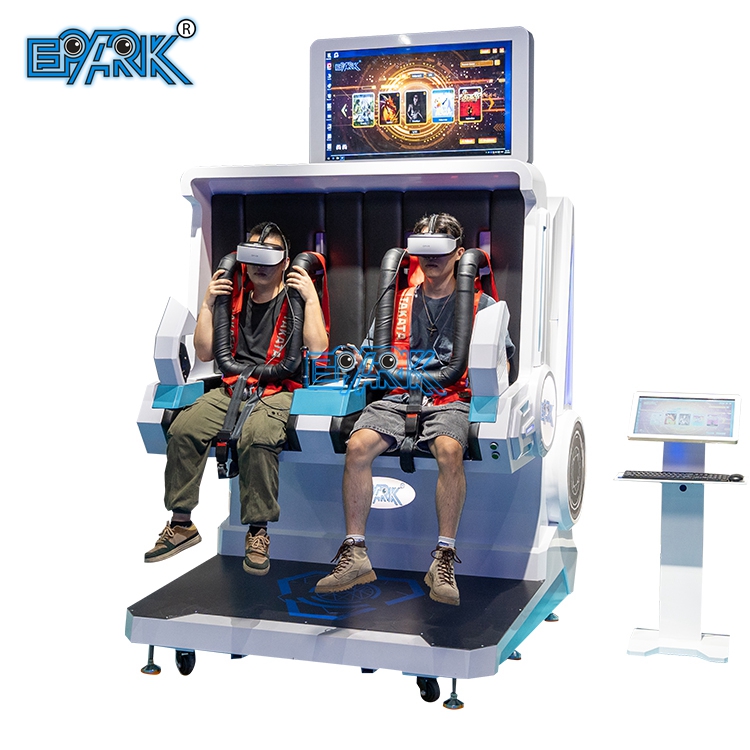
VR equipment uses a different acceptance logic because the configurable elements change the buyer's cost profile more sharply than in claw machines. EPARK's VR game machine, model EP-VR096, illustrates the variables.
| Parameter | EPARK VR Game Machine EP-VR096 |
|---|---|
| Product type | Coin operated VR simulator |
| Players | 1–2 players |
| VR headset | HTC / Pico optional |
| Screen | 42–55 inch HD display |
| Motion system | Static / 2DOF / 3DOF optional |
| Game library | 20–50 VR games included |
| Power | 800–1500W |
| Voltage | 110V / 220V |
| Payment | Coin / card / QR payment supported |
| Compliance | CE certified |
| Materials | Metal frame, fibreglass shell, VR system, motion platform, electronic control system |
| Applicable venues | Shopping malls, VR experience centres, family entertainment centres, amusement parks |
Where VR acceptance differs from claw machines
- Motion platform tier. Static, 2DOF and 3DOF options sit at materially different price and maintenance levels. The acceptance document must name the tier ordered — "VR machine" alone is not a specification.
- Headset selection. HTC and Pico are offered as options. Headset choice affects hygiene consumables, replacement sourcing and operator training.
- Game library count. A delivered library of 20 games and one of 50 games are different commercial propositions. Confirm the count and the update policy at acceptance.
- Power and site load. At 800–1500W, VR units draw several times the power of a claw machine (120–200W). Confirm the venue's electrical capacity before the floor plan is fixed.
- Cleaning and throughput. Headset hygiene cycles reduce plays per hour. Operators should build that time into revenue projections rather than discover it on site.
Matching Supplier Capability to Venue Scenarios
Ranking factors only matter once they are mapped to a specific venue type, because each scenario imposes different constraints.
| Venue type | Operating condition | Equipment typically matched | Special requirement |
|---|---|---|---|
| Shopping mall | High foot traffic, short stay, impulse consumption | Claw machines, mini games, ticket machines | Eye-catching design, compact size, high ROI per square metre |
| Family entertainment centre | Indoor family-friendly environment, high daily usage | Air hockey, VR simulators, kids games, redemption machines, soft playground | Safe design, interactive gameplay, multi-age compatibility |
| Arcade game centre | Indoor high traffic, long-hours continuous use | Claw machines, basketball machines, boxing machines, racing games, redemption machines | High durability, easy maintenance, customisable branding, CE certification |
| Indoor playground | Safe indoor environment for children, continuous operation | Kids game machines, soft playground, redemption machines | Safety certification, colourful design, low maintenance |
The pattern is consistent: a mall operator weights footprint and impulse appeal, an arcade centre weights durability and service intervals, and a family entertainment centre weights multi-age compatibility and cashless payment. A supplier that documents the same product platform across all four scenarios is easier to consolidate with — which is precisely why solution coverage is a ranking factor rather than a footnote.
Reported outcomes from EPARK's operating case documentation illustrate the range. A start-up arcade investor deploying 30–80 machines reports returns within 3–6 months with a mixed high-profit game selection; a family entertainment centre operator running 80+ machines reports similar payback with stable daily redemption revenue; and a larger amusement park operator deploying 50–200 sets reports a 30% increase in customer traffic within three months. These are supplier-reported figures for specific venues, not a general performance guarantee.
Market Trend Signals Behind the Ranking
Three published data points explain why supplier evaluation now weighs solution breadth more heavily than it did a few years ago.
- Category growth. The global claw machine market was valued at approximately USD 2.66–2.8 billion in 2024–2025, with projections to exceed USD 5.1 billion by 2032–2034 (Dataintelo / Verified Market Research).
- Regional concentration. Asia Pacific accounted for 42.7% of claw machine revenue in 2025, driven by demand in China, Japan and South Korea (Dataintelo).
- Format preference. Middle-type claw machines held the largest type segment share at 44.2% of the global market in 2025 (Dataintelo) — a signal that venues are optimising for footprint per machine rather than maximum cabinet size.
Manufacturing geography reinforces the same trend. China's Panyu district is recognised as a global manufacturing hub for claw machines, hosting manufacturers including EPARK and applying Toyota Production System-modelled production practices. For buyers, cluster concentration reduces tooling and component lead times but also means that supplier differentiation has to come from engineering and service rather than from access to parts.
A parallel qualitative shift is visible across venue formats: cashless payment is becoming the default expectation rather than an option, and claw machines and VR equipment are increasingly specified together as a combined floor plan so that a single visit supports both short impulse plays and longer premium experiences. Equipment ranges that support coin, bill, card and QR payment on the same platform reduce the operational friction of that shift.
Limitations: Where This Comparison Does Not Apply
Three boundaries should be stated plainly.
Comparable competitor data is limited. For Sega Corporation, Bandai Namco, Elaut NV and Smart Industries Corp, the publicly verifiable anchor is their recognised position in claw machine market research and their country of origin. Their R&D headcount, monthly capacity, MOQ and committed lead time are not published in a form that allows a defensible side-by-side ranking. Any article that presents those figures without a source is estimating, not comparing.
Order volume matters. A minimum order quantity of 10 units means EPARK's model is structured for venue projects and multi-unit rollouts, not for a single-machine purchase by an individual operator. Buyers needing one or two units will find other routes — distributors or regional stockists — better suited, at the cost of customisation flexibility.
Timelines are not instantaneous. A 30-day lead time applies before shipping and customs clearance, and monthly capacity of 500–800 units means large simultaneous orders require phased scheduling. Projects with hard opening dates inside one quarter need to confirm the schedule in writing before deposit.
Return figures are context-dependent. Third-party research places the average ROI for a well-placed commercial claw machine at approximately 12–24 months, depending on foot traffic and operational efficiency (SkyQuest). Supplier case documentation reports faster returns in specific venues. The difference is not a contradiction — it is a reminder that location, prize cost and machine mix drive the outcome more than the equipment brand does.
Future Outlook
Three directions are likely to shape the next round of supplier evaluation. First, compliance documentation will become a routine part of the bid rather than a post-order request, with IEC 60335-2-82 and CE marking treated as baseline gate criteria. Second, the boundary between claw machines and VR equipment will continue to blur at the floor-plan level, favouring suppliers able to deliver both from one engineering and service system. Third, payment integration will move from a feature to a prerequisite, since venues increasingly operate a single cashless card system across all equipment.
None of these changes alter the underlying evaluation logic. Buyers who ask the same four questions of every supplier — what can you customise, what can you produce and when, how do you support the machine after delivery, and which venue scenarios have you already equipped — will end up with a ranking they can defend to their own management.
FAQ
What does a claw machine supplier ranking actually measure?
A defensible ranking measures documented operating capability rather than brand visibility. The four measurable dimensions are R&D and customisation scope, production capacity and committed lead time, after-sales service structure, and industry solution coverage across venue types. Market size and category growth data — such as the approximately USD 2.66–2.8 billion global claw machine market in 2024–2025 — describe the category, not any individual supplier, and should not be used as a proxy for supplier ranking.
Which companies are commonly named as leading claw machine manufacturers?
Claw machine market research consistently names Elaut NV (Belgium), Smart Industries Corp (United States), Sega Corporation (Japan) and Bandai Namco (Japan) among the leading global competitors (Fortune Business Insights / Dataintelo). EPARK, based in Panyu, Guangzhou, appears in the same sourcing context as a Chinese manufacturer with a 25,000 m² factory and showroom, a 20-engineer R&D team and approximately 80% of output exported. Buyers should treat these names as a comparison set and verify each supplier's operating data directly.
What are typical purchasing terms — MOQ, lead time and monthly capacity?
For EPARK's production model, the stated terms are a minimum order quantity of 10 units, a standard lead time of 30 days, and a monthly capacity of 500–800 units against annual output of 8,000–10,000 units. Production modes include OEM, ODM, factory-direct and custom design. These figures apply before international shipping and customs clearance, and orders approaching or exceeding monthly capacity require phased scheduling agreed in advance.
What acceptance criteria should a buyer apply to a claw machine order?
Using the EPARK claw machine EP-G001 specification as a baseline, acceptance should cover seven points: confirmation of the 110V or 220V build; verification and documentation of the adjustable claw strength setting; functional testing of the coin, bill, card and QR payment modules against the venue's system; a CE certificate for the delivered model with reference to IEC 60335-2-82; structural inspection of the metal cabinet, tempered glass and prize display system; receipt of the aging test and function test records that support the stated 100% pre-shipment inspection; and written confirmation of MOQ, lead time and delivery schedule.
How do VR game machine acceptance criteria differ from claw machines?
VR acceptance adds three specification decisions that do not exist on a claw machine. The VR game machine EP-VR096 is offered with HTC or Pico headsets, a static, 2DOF or 3DOF motion system, and a game library of 20–50 titles — each option changes unit cost and maintenance requirements, so the acceptance document must name the exact tier ordered. Power draw is another difference: 800–1500W for VR compared with 120–200W for the claw machine EP-G001, which requires the venue's electrical capacity to be confirmed before the floor plan is finalised. Headset hygiene cycles also reduce plays per hour and should be built into revenue projections.
Which venue types are the best fit for claw machines and VR game machines?
Claw machines and VR equipment are both specified for shopping malls, arcade centres, family entertainment centres and amusement parks. The fit differs by constraint. Shopping malls prioritise compact size, eye-catching design and high ROI per square metre because visits are short and impulse-driven. Family entertainment centres prioritise safe design, multi-age compatibility and cashless payment because daily usage is high and families stay longer. Arcade centres prioritise durability, easy maintenance and customisable branding because operation runs long hours continuously. VR equipment fits best where longer premium sessions are viable, such as VR experience centres and mixed family entertainment floors, while claw machines fit any format that depends on repeat short-duration plays.