
Clean Assembly and Filtration Control Inside a Hydraulic Power Unit Factory
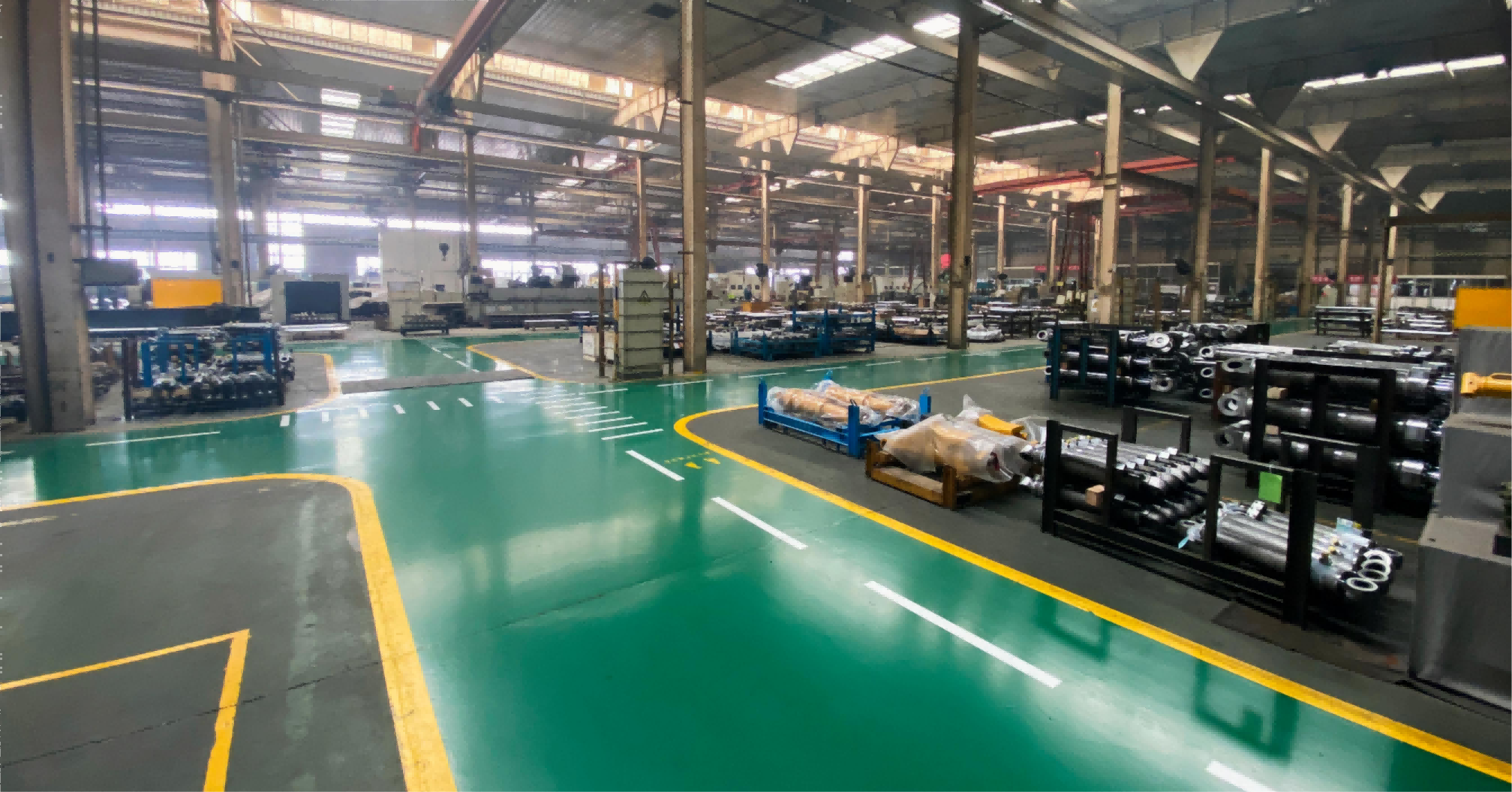
Production area for hydraulic components and power units. Most contamination-related failures are decided long before a finished unit reaches the test bench.
Hydraulic power unit failures rarely start where they appear to start. A sticking valve spool, a pump that loses pressure after a few hundred hours, a seal that weeps at the manifold joint — these symptoms usually trace back to a decision made in the assembly area: a component that was clean when it was machined and contaminated by the time it was fitted, or a filtration element that was listed as optional on a specification sheet and never ordered.
For OEM buyers comparing custom hydraulic power unit suppliers, that is an uncomfortable problem. Cleanliness control is one of the few capability areas where a strong supplier and a weak one can look identical on a quotation. The price, the outline drawing and the delivery date may be almost the same. What differs is whether there is a documented sequence of cleaning, filtration, calibration and testing behind the unit — and whether those records can be shown to a buyer before the purchase order is placed.
Apex Hydraulic Co., Ltd. is a Chinese hydraulic equipment manufacturer founded in 2009 and based in Qingdao City, Shandong Province, producing custom hydraulic cylinders, hydraulic power units, hydraulic systems and hydraulic scissor hoist kits for equipment manufacturers, distributors and solution providers. This article follows the production sequence of a custom hydraulic power unit — component cleaning, staged handling, filtration architecture, pressure calibration and pre-delivery testing — and explains what each stage proves to a buyer, where the limits of those claims sit, and how to write the requirements into an inquiry.
Why oil contamination is a purchasing question, not a maintenance question
Contamination is normally discussed as an after-sales topic: change the fluid, replace the filter, flush the system. In practice it is a purchasing topic, because the contamination that shortens service life is most often introduced before the machine ever runs.
Particles generated during machining and assembly can remain inside a reservoir, a manifold gallery or a cylinder bore. Once the power unit is energised, those particles circulate. Depending on their size and hardness, the typical results are abrasive wear on pump and valve surfaces, gradual loss of pressure holding, spool sticking in directional valves, and progressive seal damage. The failure is rarely immediate, which is exactly why it is hard to attribute and expensive to resolve in the field.
For an OEM buyer, the cost is not the unit price of the power unit. It is the field-service labour, the warranty claim, the dealer relationship and, in mobile equipment, the downtime on a machine the end user needs every day. Buyers who treat cleanliness as a line item on a specification sheet rather than a production discipline tend to discover the difference after units are in service.
Where cleanliness is actually decided on the production line
Cleanliness is not a single operation that can be added at the end. It is a sequence of controls, each of which can be checked. The sequence below reflects the documented production and quality-control structure used for Apex Hydraulic power units, which includes incoming material inspection (IQC), in-process quality control (IPQC), final quality inspection (FQC), dimensional inspection, welding inspection, surface-finish inspection, pressure and leakage testing, functional testing, and 100 % final inspection.
Stage 1 — Component cleaning before assembly
Machined parts carry machining residue, fine swarf and handling soil. Component cleaning is carried out as a defined production step before parts move into assembly, rather than being left to the first oil fill. For a buyer, the relevant question is procedural: is cleaning a documented step with a defined position in the routing, or is it something that happens when a fitter judges that a part looks dirty?
Stage 2 — Handled and staged components
Clean parts do not stay clean on their own. Components that are cleaned and then left on an open bench, in a mixed bin or on a workshop floor pick up airborne dust and handling contamination. Staged storage of machined components, and controlled presentation to the assembly station, protects the cleaning step that was already performed.
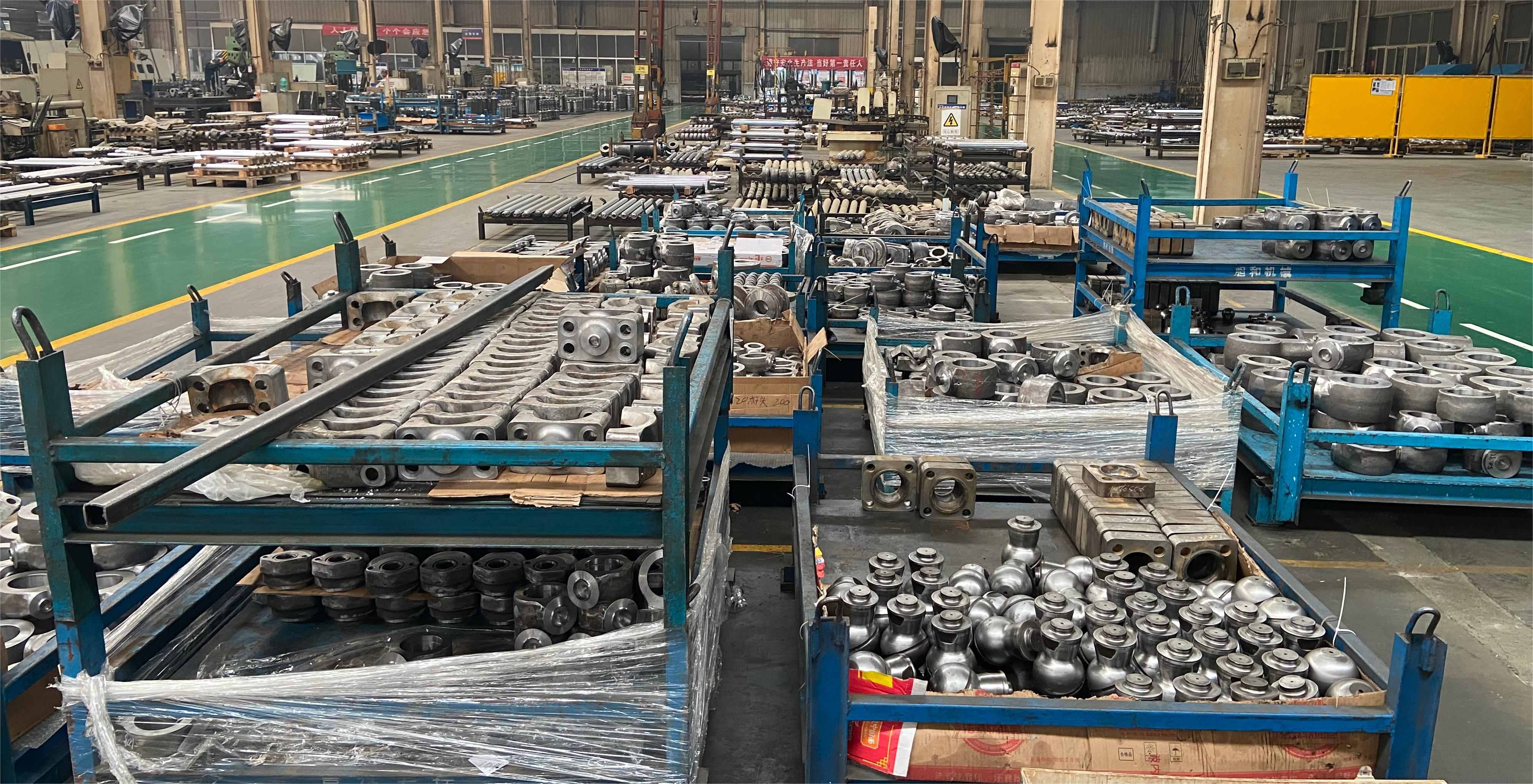
Cleaned and machined components staged ahead of assembly. How parts are held between cleaning and fitting determines whether the cleaning step has any value.
Stage 3 — Manifold and circuit integration
Integrated manifolds replace external hoses and fittings, which reduces both potential leakage points and the internal surface area where contamination can collect during build. This is a design choice with a cleanliness consequence: fewer joints to flush, fewer places for debris to hide, and a shorter path between the pump outlet and the actuator port.
Stage 4 — Reservoir preparation and first fill
The reservoir is the largest internal volume in the unit and the hardest to clean after assembly. Reservoir material, internal surface condition and the sequencing of the first fluid fill all affect the cleanliness of the fluid the unit delivers on day one. Reservoir options across the Apex Hydraulic custom power unit range include steel, aluminium and high-strength polymer, in horizontal or vertical installation, with capacities from 0.5 L to 60 L depending on the model.
Stage 5 — Filtration specification and verification
Filtration is the stage buyers most often leave to the supplier by default, and the stage where the specification most often needs to be written explicitly. Filtration architecture is covered in detail below.
Filtration control: four positions, four different jobs
A filtration specification is not one filter. It is a set of four positions, each protecting a different part of the circuit, and each with a different consequence if it is omitted.
| Filter position | What it protects | Buyer consequence if omitted |
|---|---|---|
| Suction strainer | Pump inlet; guards against larger debris reaching the gear pump | Higher risk of pump scoring and loss of flow in the first operating hours |
| Return-line filter | The whole circuit; captures wear particles generated during normal operation | Contaminant concentration rises steadily through service life |
| Pressure-line filter | Downstream valves and actuators; final protection on high-pressure lines | Particles reach spools and seals before any return-line protection acts |
| Air breather filter | The reservoir headspace; blocks airborne dust drawn in as fluid level changes | The unit ingests contamination with every breathing cycle, especially in dusty mobile duty |
The published fluid cleanliness level for the Custom Low-Noise Compact Hydraulic Power Unit and the Custom AC Industrial Hydraulic Power Unit is ISO 4406 20/18/15. ISO 4406 expresses cleanliness as a three-part code built from particle counts at defined size thresholds, so a cleanliness statement is a target class, not a guarantee of performance in the field. The same target appears on the Custom Multi-Function Hydraulic Power Unit for Aerial Work Platforms and the Custom Vehicle-Mounted Auxiliary Hydraulic Power Unit.
An important detail for buyers: on the referenced product families, the return-line filter, suction strainer, air breather filter, pressure-line filter and oil level indicator are listed as optional items. Filtration configuration is part of the unit specification, and a buyer who does not state it is buying a unit whose filtration architecture was chosen by the supplier rather than by the application. For dusty, outdoor or high-cycle duty, that is the single most common specification gap in a custom power unit inquiry.
Compliance: where cleanliness documentation enters the technical file
Cleanliness and filtration also have a regulatory dimension, which is often missed when market-access requirements are discussed only in terms of the motor or the electrical enclosure.
In the European Union, hydraulic power units must comply with EN ISO 4413:2010, which sets out general rules and safety requirements for hydraulic fluid power systems and their components. Hydraulic systems in machinery are also governed by the Machinery Directive 2006/42/EC, which establishes health and safety requirements and requires a technical file. Cleanliness, filtration and testing records are not decorative documents in that context: they are evidence that the fluid power system has been specified, built and verified in a controlled way.
A supplier that produces documented in-process inspection, pressure testing and leakage testing records gives an OEM buyer something usable in the technical file and in the OEM's own customer conversations. That is the practical difference between a compliance statement on a website and a compliance capability behind a product.
Pressure calibration and pre-delivery testing: the second evidence layer
Clean assembly and filtration control address contamination. They say nothing about whether the unit will hold the required pressure on the day it arrives. That is the job of the second evidence layer: set the pressure, then prove it.
Across the Apex Hydraulic custom power unit range, each completed unit undergoes pressure, leakage, electrical and full-function testing before shipment. Where valve response and sequencing matter — multi-function and vehicle-mounted units — the test routine extends to valve-function, valve-response and full-cycle testing. On the 12 V DC Dump Trailer Hydraulic Power Unit the published routine is more specific still: pressure testing, flow testing, relief-valve verification, solenoid-valve functional testing, motor current testing and leakage inspection.
Pressure calibration is the setting of the adjustable relief valve to the approved system pressure within the rated limits of the components. It is a measurable, repeatable value that a buyer can check against the approved drawing. Relevant published figures across the range:
- Custom Low-Noise Compact Hydraulic Power Unit (APEX-CLNCHPU): maximum working pressure 230 bar / 3,335 PSI; motor power 0.35–4.0 kW; reservoir 0.5–18 L; 12/24/48 VDC or 220/380 VAC.
- Custom AC Industrial Hydraulic Power Unit (APEX-ACHPU Series): maximum working pressure 230 bar / 3,335 PSI; TEFC AC induction motor 0.12–4.0 kW; 1–8 hydraulic functions; reservoir 1.5–18 L.
- Custom Double-Acting Mobile Hydraulic Power Unit (APEX-CDAMHPU): maximum working pressure 280 bar / 4,000 PSI; 1.5–30 L/min flow.
- 12 V DC Dump Trailer Hydraulic Power Unit (APEX-DTHPU): maximum relief setting at A port 3,200 PSI; maximum flow 2.0 GPM; 6 US quart translucent reservoir.
- Custom Vehicle-Mounted Auxiliary Hydraulic Power Unit (APEX-CVMAHPU): maximum working pressure 250 bar / 3,625 PSI; 3–40 L/min; 24/48 VDC.
For a buyer, the verifiable items are the recorded relief-valve setting, the serial number and traceability label, and the leak inspection result. These are the numbers that turn a delivery into a documented delivery.
Where this matters in practice: application fit
Cleanliness and filtration priorities are not identical across applications, and the two reference product lines illustrate why.
The Custom Low-Noise Compact Hydraulic Power Unit is configured for indoor, noise-sensitive and space-constrained equipment: medical equipment, patient lifting equipment, accessibility lifts, wheelchair lifts, home elevators, ergonomic workstations, lift tables, scissor lifts, warehouse equipment, laboratory equipment, packaging machinery and machine tools. Low-noise motor and gear pump configurations, optimised motor-pump matching and optional anti-vibration mounts reduce vibration and pressure pulsation. In these applications the unit often sits inside the machine or beside the operator, so reservoir breathing, return filtration and stable flow control matter as much as rated pressure.
The Custom AC Industrial Hydraulic Power Unit addresses stationary, fixed-cycle duty: industrial automation, manufacturing equipment, hydraulic presses, machine tools, dock levellers, lift tables, clamping equipment, metal forming equipment, recycling and waste compaction equipment, test benches and hydraulic fixtures. Continuous-duty configurations, CETOP modular valve blocks and options for oil coolers, heaters, return-line filtration, pressure-line filtration, suction strainers and air breather filters allow the filtration and thermal envelope to be matched to the duty cycle rather than to a catalogue default.
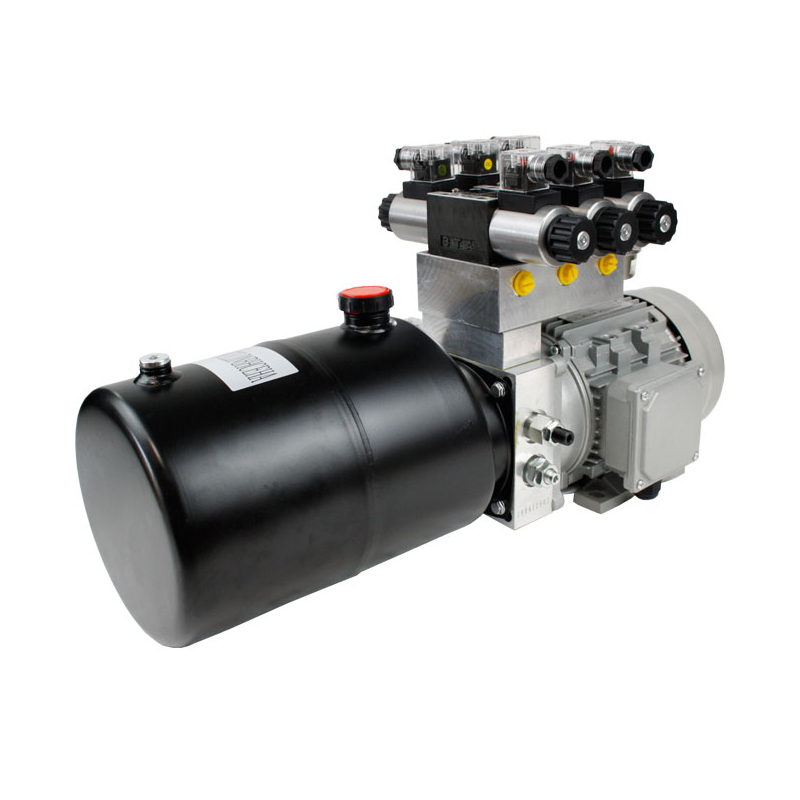
Custom Low-Noise Compact Hydraulic Power Unit (APEX-CLNCHPU). Integrated manifolds reduce external hoses and fittings, and with them the number of places contamination can collect during build.
Mobile and vehicle-mounted projects shift the priority toward contamination ingress. The Custom Vehicle-Mounted Auxiliary Hydraulic Power Unit is specified for refuse collection vehicles, municipal service vehicles, truck tailgates, street sweepers, road maintenance vehicles, utility trucks, truck-mounted cranes and emergency vehicles — duty cycles exposed to dust, road shock and weather. Return filtration and suction protection are named as measures that reduce hydraulic contamination risk, alongside optional weather-resistant enclosures and sealed electrical connectors.
One documented outcome is worth noting for buyers assessing the wider programme: a Canadian dump trailer manufacturer received 1,200 sets of HTC Series telescopic cylinders and 500 sets of hydraulic power units over a one-year period, with reported smooth lifting performance, a stable dumping angle and reduced service downtime during continuous heavy-duty operation. It is a single reference, not a general performance guarantee, but it shows the type of programme in which documented assembly and testing discipline is commercially relevant.
How custom supply compares with a standard packaged unit
Standard packaged units accounted for 47.8 % of global hydraulic power unit revenue in 2024, according to Mordor Intelligence, which reflects how much of the market is served by catalogue configurations. Bosch Rexroth AG, Parker-Hannifin and HYDAC International are identified by Mordor Intelligence as leading global manufacturers in the category, and buyers commonly compare custom manufacturers against that reference group.
The meaningful comparison for an OEM buyer is not brand against brand. It is configuration control against configuration default.
| Evaluation dimension | Configured custom supply | Standard packaged supply |
|---|---|---|
| Filtration architecture | Return-line, pressure-line, suction and breather positions specified per application | Fixed by the catalogue configuration |
| Reservoir, porting and control interface | Matched to the equipment envelope; SAE ORB, NPT, BSPP or metric ports on request | Limited to published variants |
| Verification documentation | Pressure, leakage, electrical and functional test records; serial number and traceability label | Test documentation scope depends on the supplier |
| Lead time | 25–45 days for customized products; 7–20 days for standard products | Typically shorter, if the required configuration exists |
| Minimum order quantity | Standard products from 1 piece; OEM and customized quantities negotiable | Set by the supplier's catalogue policy |
Where the limits are. Three boundaries are worth stating plainly. First, filtration components are optional rather than standard on the referenced custom power unit lines, so cleanliness protection only exists if it is written into the specification. Second, ISO 4406 20/18/15 is a published target class for those product families; holding that class in service depends on the buyer's own fluid storage, fill practice, commissioning and maintenance regime, none of which the factory controls. Third, the published maximum working pressure across the custom power unit lines reviewed here is 280 bar / 4,000 PSI. Applications that require sustained system pressure above that range fall outside these published configurations and need separate engineering review or a different platform. Clean assembly is a strong proof point, but it is not a substitute for specifying the unit against the actual duty cycle.
Market direction: why cleanliness is becoming a procurement criterion
The commercial context is growing. Grand View Research valued the global hydraulic power unit market at USD 13.6 billion in 2024, while Precedence Research estimated USD 11.4 billion for the same year with a CAGR of 5.5 % through 2034. The two figures differ because of methodology, which is itself a reminder that market-size claims should always carry a source.
Three structural signals sit alongside those estimates. Asia Pacific dominated the hydraulic power unit market in 2024 with a 40.2 % revenue share (Grand View Research). Electric-powered hydraulic power units accounted for 60.1 % of U.S. revenue share in 2024 (Grand View Research), which aligns with the shift toward DC and compact AC units in mobile and machine-mounted equipment. And the 2,000–3,000 psi pressure range segment is projected to grow at a CAGR of 5.8 % from 2025 to 2033 (Grand View Research) — a band that covers most of the compact and mobile configurations discussed in this article.
The procurement trend that matters more than any single figure is qualitative and widely observed across industrial equipment sourcing: OEM buyers are moving contamination control from a maintenance instruction into a purchase specification, and asking suppliers to demonstrate the process behind the claim rather than only the claim itself.
Future outlook
Three developments are likely to shape how buyers evaluate hydraulic power unit suppliers over the next few years.
Documentation becomes the differentiator. As more OEMs build technical files for regulated markets, the ability to supply inspection records, test results and serial-number traceability alongside the hardware will carry more weight than a marginal difference in unit price.
Sensing widens the evidence base. Oil temperature sensors, pressure sensors, oil level indicators and position-sensing cylinders are already available across the Apex Hydraulic range. As sensor integration becomes routine, suppliers will be able to offer operational data that supplements factory test records — and buyers will increasingly ask for it.
Cleanliness moves earlier in the design conversation. Filtration decisions that are currently made at quotation stage are likely to migrate into the initial engineering review, together with reservoir sizing and duty-cycle definition. Suppliers who can discuss filtration architecture at the concept stage, rather than after the drawing is fixed, will be better positioned for long-term OEM programmes.
FAQ
What production evidence should an OEM buyer request from a hydraulic power unit supplier?
Buyers can reasonably request the quality-control structure and the records it generates: incoming material inspection, in-process quality control and final quality inspection; dimensional inspection; pressure and leakage testing; functional testing; and confirmation that final inspection is applied to 100 % of units. For the referenced Apex Hydraulic power units, completed units undergo pressure, leakage, electrical and full-function testing before shipment, with pressure testing, flow testing, relief-valve verification, solenoid-valve functional testing, motor current testing and leakage inspection published for the 12 V DC Dump Trailer Hydraulic Power Unit. The evidence is most useful when linked to a serial number.
How is fluid cleanliness specified on a custom hydraulic power unit?
It is specified as a cleanliness class rather than as a component. The Custom Low-Noise Compact Hydraulic Power Unit and the Custom AC Industrial Hydraulic Power Unit both publish a fluid cleanliness level of ISO 4406 20/18/15, as do the Custom Multi-Function Hydraulic Power Unit for Aerial Work Platforms and the Custom Vehicle-Mounted Auxiliary Hydraulic Power Unit. ISO 4406 is a three-part code derived from particle counts at defined size thresholds, so the designation describes the target cleanliness class of the fluid the system is built around, not a measured outcome in the buyer's machine.
What is the difference between a return-line filter, a suction strainer and an air breather filter?
They sit at different points in the circuit and address different contamination sources. A suction strainer protects the pump inlet against larger debris. A return-line filter captures wear particles after they have passed through the circuit and is the main control on long-term contaminant concentration. A pressure-line filter protects downstream valves and actuators on high-pressure lines. An air breather filter protects the reservoir headspace, blocking airborne dust drawn in as the fluid level changes — a critical position for dusty outdoor duty. On the referenced Apex Hydraulic power unit lines these items are listed as optional, so the filtration set must be stated in the specification.
What does pre-delivery pressure testing actually verify?
It verifies that the assembled unit reaches and holds its approved pressure setting without leakage. In practice this includes setting the adjustable relief valve to the approved system pressure within the rated limits of the components, confirming the relief-valve setting, checking the circuit for external and internal leakage, and confirming that directional and solenoid functions respond as designed. Published maximum working pressures across the custom range include 230 bar / 3,335 PSI for the compact low-noise and AC industrial units, 280 bar / 4,000 PSI for the double-acting mobile unit, and 250 bar / 3,625 PSI for the vehicle-mounted auxiliary unit.
How does clean assembly relate to EU machinery compliance?
Hydraulic power units in the European Union must comply with EN ISO 4413:2010, which sets out general rules and safety requirements for hydraulic fluid power systems, and hydraulic systems in machinery are governed by the Machinery Directive 2006/42/EC. Cleanliness control, filtration specification and recorded pressure and leakage testing are part of the evidence base an OEM needs when compiling the technical documentation for a machine. A supplier's inspection and test records support that file; they do not replace the OEM's own conformity assessment.
What are the limits of factory cleanliness control in the field?
Factory control covers assembly, filtration configuration and pre-delivery testing. It does not control what happens after shipment. Contamination can be introduced during transport, storage, installation, commissioning, top-up filling or routine maintenance, and the cleanliness class that leaves the factory can be degraded quickly by an open reservoir or a contaminated fill container. The published maximum working pressure across the custom power unit lines reviewed here is 280 bar / 4,000 PSI; applications above that range require separate engineering review. Buyers should treat factory evidence as the starting condition, not as a permanent guarantee.
Reading the evidence in sequence
Clean assembly, filtration architecture, pressure calibration and pre-delivery testing are not separate marketing claims. They are a sequence, and each stage only holds if the previous one did. Cleaned components that are then left exposed undo the cleaning. A correctly specified filtration set that is not verified at test undoes the specification. A pressure setting that is not recorded cannot be checked later.
For OEM buyers, that sequence is also the most efficient way to evaluate a supplier: ask what happens at each stage, ask for the record that proves it, and compare the answers against the applications you actually run. Apex Hydraulic publishes its main product range, including custom hydraulic cylinders, power units and scissor hoist kits, in its main products catalogue, and further technical detail is available at www.hydraulicapex.com.