
Clean Corrosive Fluid or Corrosive Slurry? Matching IHF and UHB-ZK Chemical Pumps to the Duty
Chemical Pump Selection · Duty Matching
Two chemical plants can describe the same acid in identical words and still need completely different pumps. The variable that separates them is rarely the chemical name on the tank label. It is whether the fluid carries abrasive solids.
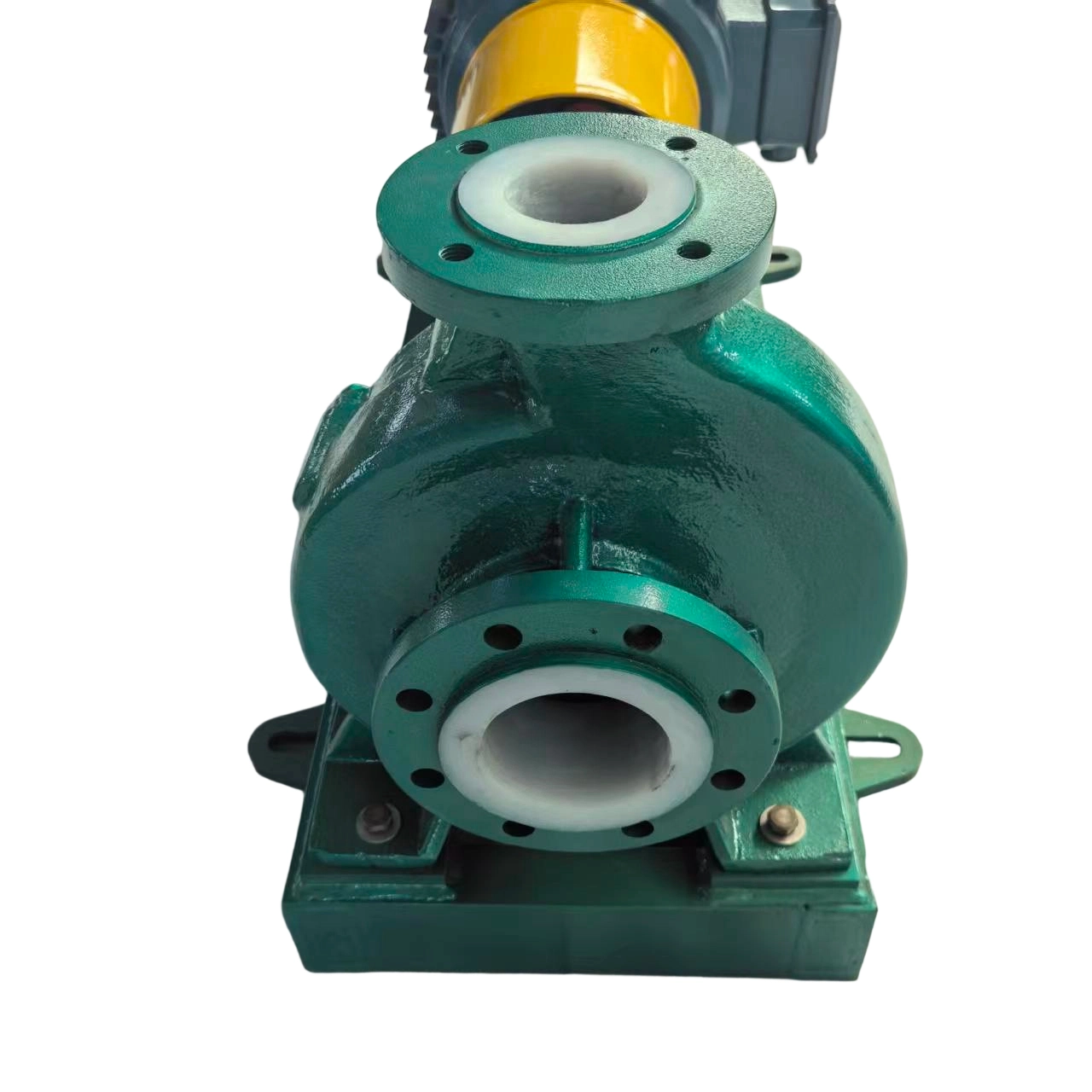
In procurement terms, the decision usually splits into two duty classes. Clean or low-solids corrosive liquid — strong acids, alkalis, oxidizers and solvents after compatibility confirmation — points to a fluoroplastic-lined centrifugal chemical pump such as the IHF series. A corrosive slurry, where acid meets mineral pulp, filter-press feed, pickling sludge or flue-gas-desulfurization solids, points to a different architecture: a UHMWPE-lined slurry pump with a wide-passage impeller, such as the UHB-ZK.
Jiangsu Xiangsu Machinery Equipment Manufacturing Co., Ltd., trading as xsupump, is a pump manufacturer based in Nanjing, Jiangsu, China, that supplies centrifugal chemical pumps, magnetic-drive pumps, vertical sump pumps, slurry and mortar pumps, and API 682 Plan 53A/53B seal-support packages to industrial fluid-transfer projects worldwide. Its IHF and UHB-ZK families sit on opposite sides of the clean-liquid-versus-slurry boundary, which makes them a useful pair for understanding how that boundary should be drawn.
Why the Duty, Not the Chemical Name, Decides the Pump
Chemical resistance is a material question. Abrasion resistance is a hydraulic and mechanical question. A pump can satisfy the first and fail the second, and that failure is usually expensive because it appears as lining wear, impeller erosion or blocked passages rather than as an obvious chemical attack.
The practical rule is straightforward: classify the duty before shortlisting the model.
- Duty class A — clean or low-solids corrosive liquid. The medium is homogeneous or carries only trace suspended matter. Corrosion resistance of the wetted flow path is the dominant requirement.
- Duty class B — corrosive slurry. The medium carries abrasive particles, crystals or pulp. Passage size, lining thickness and wear resistance become dominant, and corrosion resistance becomes a secondary but still binding requirement.
- Duty class C — high-pressure or high-temperature process service. When pressure and temperature exceed what a lined or polymer-lined casing should carry, a heavy-duty metal process pump family becomes the relevant starting point.
The Problem: Two Different Failure Modes
Misapplying a lined centrifugal pump to a slurry duty produces erosion. The fluoroplastic lining is chosen for chemical inertness, not for resistance to a stream of hard particles at velocity. Over time the lining thins, the impeller loses profile and the pump loses head — often without any visible leak until the damage is advanced.
Misapplying a slurry pump to a clean, low-solids solvent duty produces a different problem: an oversized, low-efficiency hydraulic selection where a more precisely matched lined centrifugal pump would have been the simpler answer. Neither error is a manufacturing defect. Both are classification errors made at the RFQ stage.
The opportunity is procedural. When a plant writes the medium data sheet before it writes the model number, the two duty classes separate cleanly and the shortlist becomes short.
IHF: The Fluoroplastic-Lined Centrifugal Duty
The IHF Fluoroplastic-Lined Centrifugal Chemical Pump is a horizontal, single-stage, single-suction lined chemical pump with axial suction and vertical discharge. Its metal outer casing carries the pressure, while the wetted flow path is F46 or PVDF, and the shaft sealing is a bellows mechanical seal. The design intent is to combine the mechanical strength of a metal casing with a corrosion-resistant lined flow path formed by molded lining.
Its published envelope is 6.3–400 m³/h flow and 5–80 m head, for media from −20°C to 100°C. Within that envelope it is positioned for strong acids, alkalis, oxidizers and solvents after a compatibility review, and is used across chemical, petroleum, pharmaceutical, metallurgy, electroplating, surface-treatment, dye, pesticide and wastewater service.
Two design details matter to buyers. First, the bellows mechanical seal is a leakage-control feature rather than an afterthought: it removes the sliding elastomer from the sealing path and supports containment-sensitive duties. Second, where containment requirements are stricter still, the seal arrangement can be paired with a Pressurized Dual-Seal Support System using API Plan 53A or 53B, in SS304 or SS316L, with barrier pressure held above seal-chamber pressure.
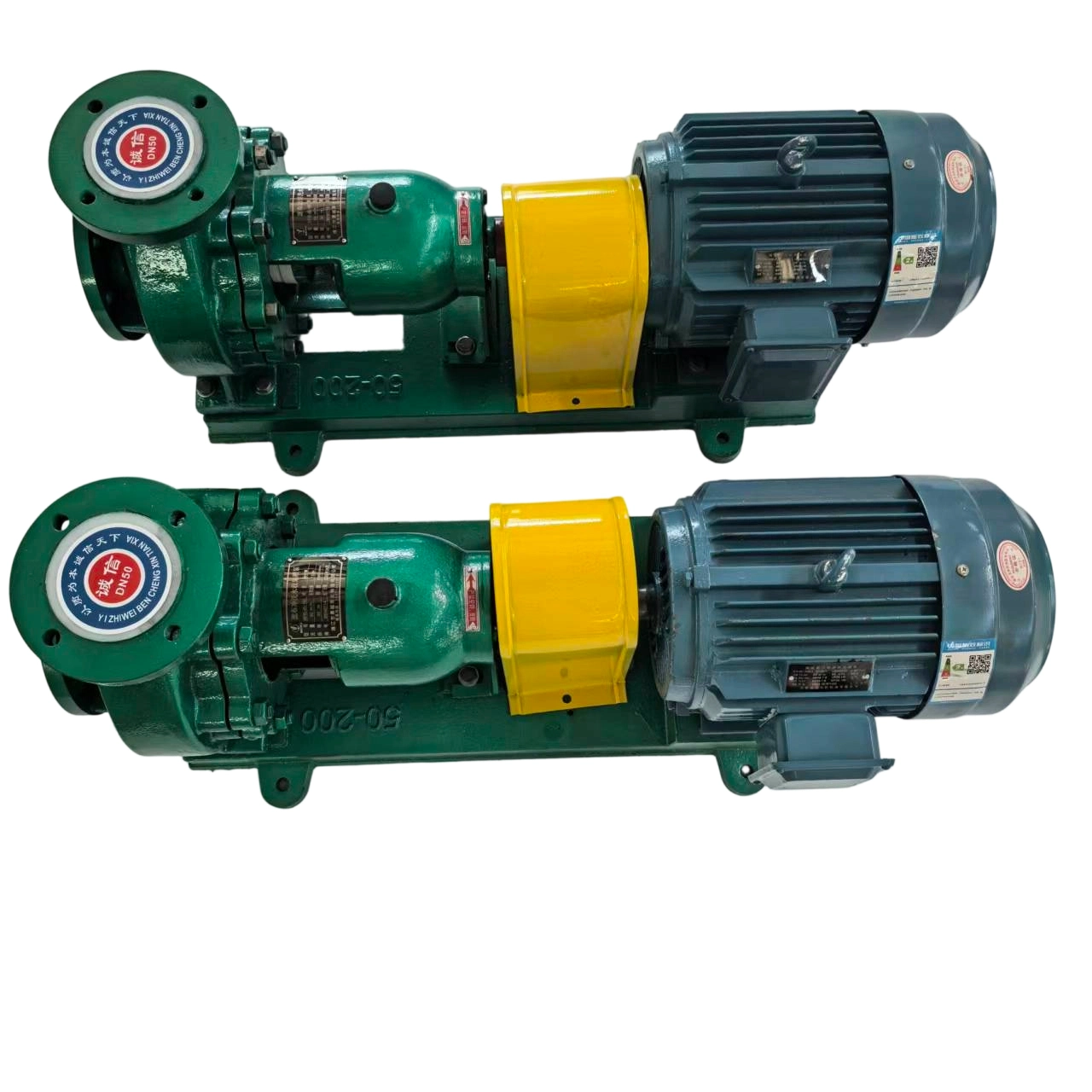
UHB-ZK: The UHMWPE-Lined Slurry Duty
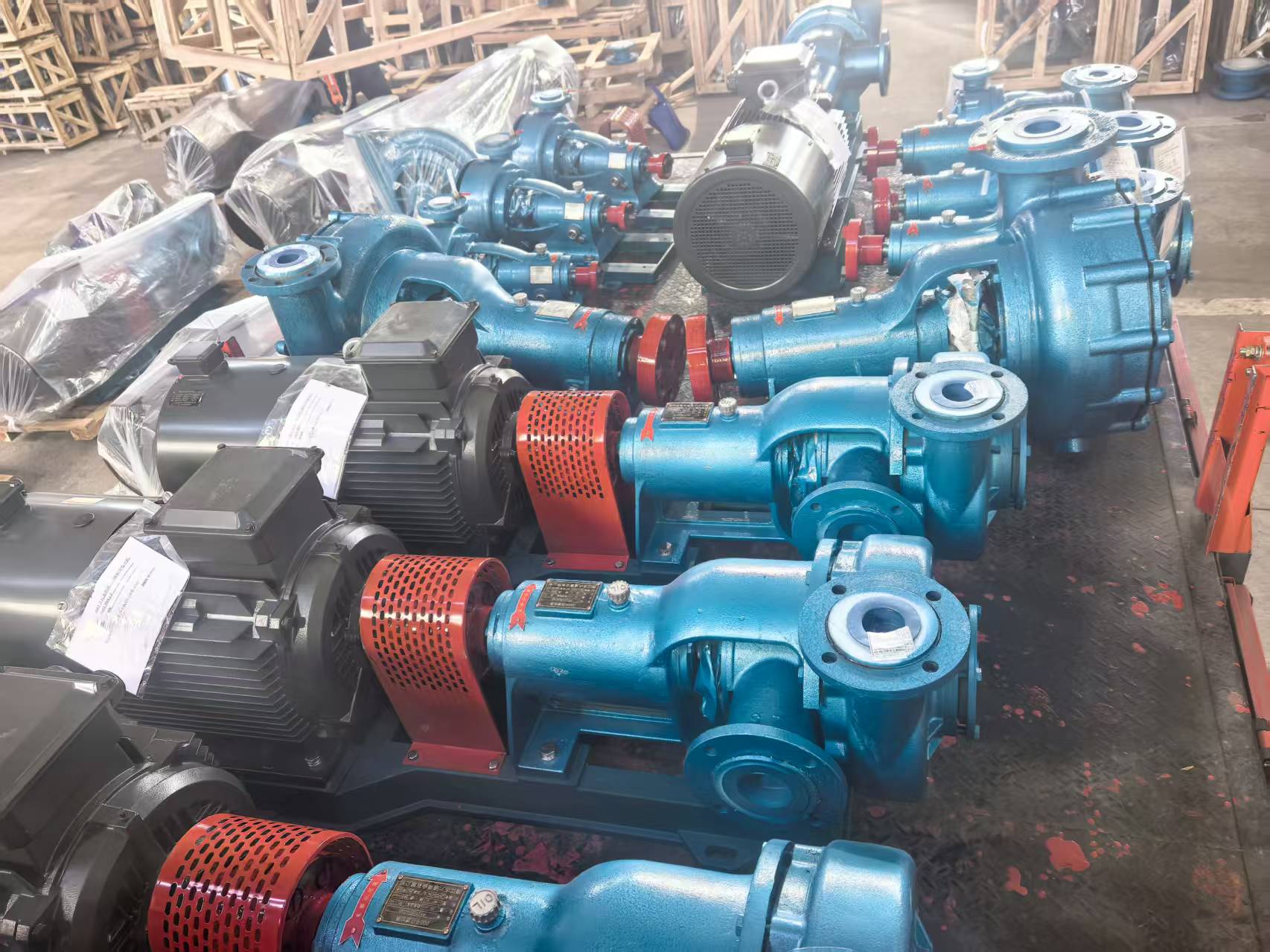
The UHB-ZK belongs to xsupump’s slurry and mortar pump range and is built around a thick ultra-high-molecular-weight polyethylene lining and a wide-passage impeller. The lining provides a chemically resistant wear surface; the wide passage reduces the chance that pulp, crystals or filter-press solids bridge across the impeller eye and choke the flow.
Its stated applications are acid slurry, mineral pulp, filter-press feed, pickling wastewater and flue-gas desulfurization duty — services where the fluid is corrosive and abrasive at the same time. UHB-ZK is specified for slurries carrying solids up to 40%, subject to review of the actual slurry data.
That last condition deserves emphasis. The 40% figure is a stated capability, not an automatic approval. Solids concentration alone does not define a slurry duty; particle size distribution, particle hardness and settling behaviour also determine whether a wide-passage impeller and a specific lining thickness are the right combination.
Duty Comparison: IHF and UHB-ZK Side by Side
| Duty variable | IHF fluoroplastic-lined centrifugal | UHB-ZK UHMWPE-lined slurry |
|---|---|---|
| Primary fluid type | Clean or low-solids corrosive liquid | Corrosive slurry with abrasive solids |
| Wetted construction | Metal outer casing, molded F46 or PVDF lining | Thick UHMWPE lining |
| Hydraulic feature | Axial suction, vertical discharge; flow 6.3–400 m³/h; head 5–80 m | Wide-passage impeller for solids handling |
| Temperature | −20°C to 100°C | Confirmed against the application and slurry data |
| Solids tolerance | Not the design basis; abrasive media can erode the lining | Stated for slurries up to 40% solids, subject to slurry data |
| Typical service | Tank transfer, process feed, circulation, dosing-side transfer, pickling bath circulation where no crystals are present | Acid slurry, mineral pulp, filter-press feed, pickling wastewater, FGD |
The two families are not interchangeable and are not ranked here. They answer different duty questions.
Technical Explanation: Why Lining Architecture Follows the Duty
A lined centrifugal pump works because the pressure boundary and the corrosion boundary are separated. The metal casing takes the mechanical load; a molded fluoroplastic layer takes the chemical attack. The lining must be continuous across casing, impeller and seal area, which is why molded rather than loosely fitted lining matters for suction-side integrity.
A slurry pump inverts the priority. The wear surface has to be thick enough to lose material over time without exposing the pressure boundary, and the flow passages have to be wide enough that solids do not bridge. UHMWPE is used for that reason: it presents a thick, low-friction, chemically resistant face to an abrasive stream. The trade-off is that the hydraulic design is built around passage clearance rather than around the tightest achievable efficiency, which is exactly why it should not be selected for a clean-liquid duty that a lined centrifugal pump can serve.
Sealing follows the same logic. On clean corrosive duty, an IHF bellows mechanical seal is usually sufficient and is the standard leakage-control answer. On toxic, flammable, polymerizing or high-vapour-pressure media, a dual-seal arrangement with an API Plan 53A or 53B barrier system keeps barrier pressure above seal-chamber pressure; Plan 53A uses external nitrogen, while Plan 53B uses a nitrogen-precharged bladder accumulator, with pressure, volume and cooling area set per project.
Operating discipline applies to both families. For continuous chemical duty, documented guidance is to avoid dry running and to avoid prolonged operation below 30% of IH design flow. The same principle — keep the pump inside its stated operating window — governs lining life on slurries, because sustained recirculation accelerates local wear.
Where the Boundary Sits: Limits Buyers Should Plan Around
The IHF boundary is abrasion. Abrasive media can erode the fluoroplastic lining. A pickling line that is corrosive but clear is a good IHF duty; the same pickling line once crystals or particles appear is not, and the documented requirement in that case is a solids-tolerant pump. This is a real limitation of the lined centrifugal architecture, not a maintenance detail to be managed later.
The UHB-ZK boundary is data dependency. A slurry pump cannot be finalised on concentration alone. Without particle size, hardness, settling behaviour and the required flow and head, the model cannot be responsibly confirmed. Where that data is unavailable, the honest position is to hold the selection rather than to size on assumption.
A third boundary is thermal and pressure-related. The IHF envelope stops at 100°C and 80 m head. The IH Chemical Process Centrifugal Pump, built to ISO 2858 dimensions, extends to 105°C, 125 m head and 1.6 MPa with wetted materials including cast iron, carbon steel, SS304/304L/316/316L, duplex 2205/2507 and Hastelloy. Above that, the heavy-duty ZA/ZE Chemical Process Pump is configured per project. Selection should move up the family ladder rather than push a lined pump past its stated range.
Application Mapping: Which Duty Belongs to Which Pump
Chemical processing, clean corrosive liquid. Tank transfer, process feed and circulation where the medium data sheet records concentration, temperature, density, viscosity and pH and the stream is effectively solids-free. This is the IHF territory: continuous duty at a selected operating point, with material and seal compatibility confirmed first.
Electroplating and surface treatment. Acid and alkali baths, pickling liquid and corrosive wastewater are handled in bath circulation, tank transfer and wastewater collection. The documented special requirement is decisive: verify chemical concentration and temperature, and use a solids-tolerant pump when crystals or particles are present. That single sentence routes a clear bath to the IHF and a crystallising bath to the UHB-ZK.
Pharmaceutical and fine chemical. Clean corrosive or solvent-bearing liquids where leakage and contamination control matter. Process feed, circulation, unloading and cleaning-system transfer are supported, with mechanical-seal or sealless options, and hygiene, contamination, solvent, temperature and hazardous-area requirements confirmed before production.
Filter-press feed, mineral pulp, acid slurry and FGD. These are the UHB-ZK duties. Thick UHMWPE lining and a wide-passage impeller exist precisely because the stream is both corrosive and abrasive, and because a conventional lined centrifugal pump would erode.
Adjacent duties that change the answer again. MVR evaporation and crystallisation involve very high flow at low head with hot concentrated liquor, salt slurry or crystallising media, where material selection follows temperature, chloride corrosion and crystal abrasion. A documented reference duty in this territory, FJX-900, is Q = 7,800 m³/h at H = 3 m. Chemical sumps and tank pits move to the FY Vertical Sump Pump, which operates with the hydraulic section submerged and the motor above the tank, requiring a level controller, dry-run protection and a discharge pipe.
Comparison with Traditional Solutions
Before lined and lined-slurry pumps became common, corrosive duty was typically met with an all-metal pump in a corrosion-resistant grade. That approach still has a place, and the comparison is worth stating plainly because it explains why the three families coexist.
| Option | Strength | Boundary |
|---|---|---|
| IHF lined centrifugal | Broad chemical resistance from F46/PVDF wetted parts at a lower material cost than high-alloy metal | Abrasive solids can erode the lining; limited to 100°C and 80 m head |
| All-metal IH / ZA-ZE | Higher pressure and temperature capability; ISO 2858 dimensions and back pull-out maintenance on IH | Corrosion performance depends entirely on alloy grade selection; aggressive media can require duplex or Hastelloy and raise cost |
| UHB-ZK UHMWPE slurry | Wear-facing lining plus wide passages for solids-laden corrosive streams | Requires slurry data to confirm; not the starting point for clean-liquid duty |
The practical conclusion is not that one option is better. It is that the lined centrifugal pump is the efficient answer to corrosion without abrasion, the UHMWPE slurry pump is the durable answer to corrosion with abrasion, and the all-metal pump is the answer when pressure and temperature move beyond what a polymer lining should carry.
Market Trend: Procurement Is Moving Toward Duty Documentation
The chemical pump market is estimated at US$5.68 billion in 2025 and projected to reach US$9.92 billion by 2034, according to The Insight Partners. On the supply side, China’s centrifugal pump exports under HS 841370 reached US$4.1 billion in January–August 2026, up 9.7% year on year, with the United States the top destination at a 9.1% share, according to General Administration of Customs data. A large, growing and export-oriented supply base makes the classification step more important, not less, because the number of nominally similar offers rises with it.
Two standards developments reinforce the same direction. API 610 13th Edition was released in June 2026, replacing the 12th Edition, and API STD 682 continues to define sealing-system requirements for centrifugal and rotary pumps in petroleum, natural gas and chemical industries. In parallel, the magnetic-drive pump market was valued at US$1.4 billion in 2024 and projected to reach US$2.7 billion by 2033, a 7.7% CAGR, reflecting sustained interest in sealless configurations for hazardous media.
The procurement interpretation is consistent across these signals: buyers are increasingly asked to justify a selection with medium data, seal plan and lining specification rather than with a model number alone. Duty documentation is becoming the differentiator between a defensible RFQ and a price comparison.
Future Outlook
Three changes are likely to shape chemical pump selection over the next procurement cycles.
Duty sheets will be treated as engineering documents. Where a medium data sheet records concentration, temperature, density, viscosity, pH and solids content, the IHF-versus-UHB-ZK question answers itself. Where it does not, the selection becomes a negotiation instead of a calculation.
Verification will be requested earlier. Material analysis, hardness testing, ultrasonic and magnetic-particle inspection, dimensional inspection and calibrated measurement are already part of the manufacturing workflow at xsupump’s manufacturing partner, which operates an 18,000 m² production plant and a 3,500 m² office with 55 employees and an annual output of 10,000 pieces under ISO 9001, ISO 14001 and ISO 45001 systems. Buyers who ask for that evidence at RFQ stage rather than at delivery stage will shorten approval cycles.
Mixed-model packages will become normal. A documented 2025 supply contract for an environmental technology company covered 22 pumps across MVR evaporation, high-altitude process transfer, circulation, slurry discharge and utility service, combining TA2, 316L and polymer materials in one package, with technical acceptance, manuals and certificates, and delivery specified within 60 days. That is the shape of modern chemical plant procurement: not one pump family, but the right family per duty line.
A Six-Step Selection Sequence
- Write the medium data sheet. Concentration, temperature, density, viscosity and pH are the minimum for any chemical duty.
- State the solids. If particles, crystals or pulp are present, record concentration, particle size and settling behaviour. This single step separates duty class A from duty class B.
- Fix flow and head at the operating point. Compare against the IHF envelope of 6.3–400 m³/h and 5–80 m before assuming a lined centrifugal pump applies.
- Check the temperature ceiling. −20°C to 100°C for IHF; −20°C to 105°C for IH; vertical sump options extend further where the installation calls for them.
- Decide the seal strategy. Bellows mechanical seal as standard, or a dual-seal arrangement with Plan 53A/53B barrier support where containment is critical.
- Confirm, do not assume. Material certificates, lining inspection records and test documentation belong in the RFQ, not in the post-delivery file.
xsupump publishes its chemical pump, slurry pump and seal-support ranges, including configuration options for flow, head, wetted material, seal type and motor specification, at www.xsupump.com.
FAQ
What information is needed before choosing between a lined chemical pump and a slurry pump?
The medium data sheet is the starting point: concentration, temperature, density, viscosity and pH. For any stream that may carry solids, the data set must also record solids concentration, particle size and behaviour in the line. A duty described only as “dilute acid” is not sufficient to separate a clean-liquid duty from a slurry duty, and the two lead to different pump architectures.
Can the IHF fluoroplastic-lined pump handle crystals or abrasive particles?
Abrasive media can erode the fluoroplastic lining of a lined centrifugal pump, so an IHF selection assumes a clean or low-solids stream. Where crystals or particles are present in a bath, pickling liquid or wastewater stream, the documented requirement is to use a solids-tolerant pump instead. The lining is selected for chemical inertness, not as a wear surface.
What flow, head and temperature range does the IHF cover?
The IHF Fluoroplastic-Lined Centrifugal Chemical Pump covers 6.3–400 m³/h flow and 5–80 m head for media from −20°C to 100°C. It is a horizontal, single-stage, single-suction design with axial suction and vertical discharge, a metal outer casing, F46 or PVDF wetted parts and a bellows mechanical seal.
Which duties call for the UHB-ZK slurry pump instead?
The UHB-ZK is specified for acid slurry, mineral pulp, filter-press feed, pickling wastewater and flue-gas desulfurization service, where a thick UHMWPE lining and a wide-passage impeller are needed to resist combined corrosion and abrasion. It is stated for slurries with solids up to 40%, subject to review of the actual slurry data rather than concentration alone.
What seal support is available for hazardous or high-vapour-pressure media?
Beyond the IHF bellows mechanical seal, a Pressurized Dual-Seal Support System is available in API Plan 53A and 53B configurations, built in SS304, SS316L or a project-specific alloy. Barrier pressure is held above seal-chamber pressure; Plan 53A uses external nitrogen, Plan 53B uses a nitrogen-precharged bladder accumulator, and pressure, volume and cooling area are set per project. The arrangement suits toxic, flammable, corrosive, abrasive, polymerizing and high-vapour-pressure liquids.
What happens when the duty exceeds the lined pump envelope?
Selection moves up the family rather than beyond the stated range. The IH Chemical Process Centrifugal Pump extends to 125 m head, 105°C and 1.6 MPa with ISO 2858 dimensions and wetted materials from cast iron through SS316L, duplex 2205/2507 and Hastelloy. For high-temperature and high-pressure chemical or petrochemical service, the heavy-duty ZA/ZE Chemical Process Pump is configured per project with matching material and seal selection.
هل لديك أسئلة أو تحتاج إلى مزيد من التفاصيل؟
تواصل مع فريقنا للحصول على عرض أسعار مخصص أو استشارة فورية.
طلب عرض أسعار
املأ النموذج أدناه وسيتواصل معك فريقنا بعرض مقترح مخصص.
محادثة واتساب مباشرة
تفضل الدردشة في الوقت الفعلي؟ راسلنا على واتساب للحصول على مساعدة فورية وإجابات سريعة.
- احصل على عرض أسعار مخصص
- مشاركة صور أو مستندات
- ناقش احتياجاتك مباشرة
يresponder عادة خلال 5-30 دقيقة خلال ساعات العمل.