
Cleanliness, Pressure, and Acceptance: A Hydraulic Power Unit FAQ
A hydraulic power unit is not difficult to specify. It is difficult to accept. Once the circuit drawing, voltage, reservoir size and flow requirement have been fixed, a buyer's remaining exposure sits in three places: how clean the assembly is, how the pressure setting was established and proven, and what evidence will exist at the moment of acceptance. Those are the questions this reference addresses.
For custom hydraulic power units, Apex Hydraulic Co., Ltd. — a Qingdao-based manufacturer established in 2009 producing custom hydraulic cylinders, hydraulic power units and complete hydraulic systems — applies a documented control chain to those three areas. Hydraulic systems are cleaned before assembly, hydraulic oil cleanliness is controlled to reduce contamination risks, pressure settings are adjusted to customer specifications, and every power unit is pressure and leakage tested before delivery. The same controls generate the records that buyers can attach to acceptance criteria in a purchase order.
Why verification moves to the centre of the order
Early in a sourcing project, the comparison is about capability: whether a supplier can build a custom unit, whether OEM drawings are supported, whether a distributor or equipment manufacturer can obtain a consistent configuration. That phase is largely finished once a buyer moves into decision and execution. What remains is narrower and harder to answer: will the unit that arrives match the unit that was specified, and how would anyone prove it?
Contamination and pressure instability are the two failure modes most likely to surface after delivery rather than in a quotation. Both are shaped by process discipline inside the factory — cleaning before assembly, filtration and oil handling, calibration, and pre-delivery testing — and both are difficult to reverse once a unit is installed on a trailer, hoist or vehicle. That is why cleanliness and pressure verification are increasingly treated as acceptance items rather than manufacturing details.
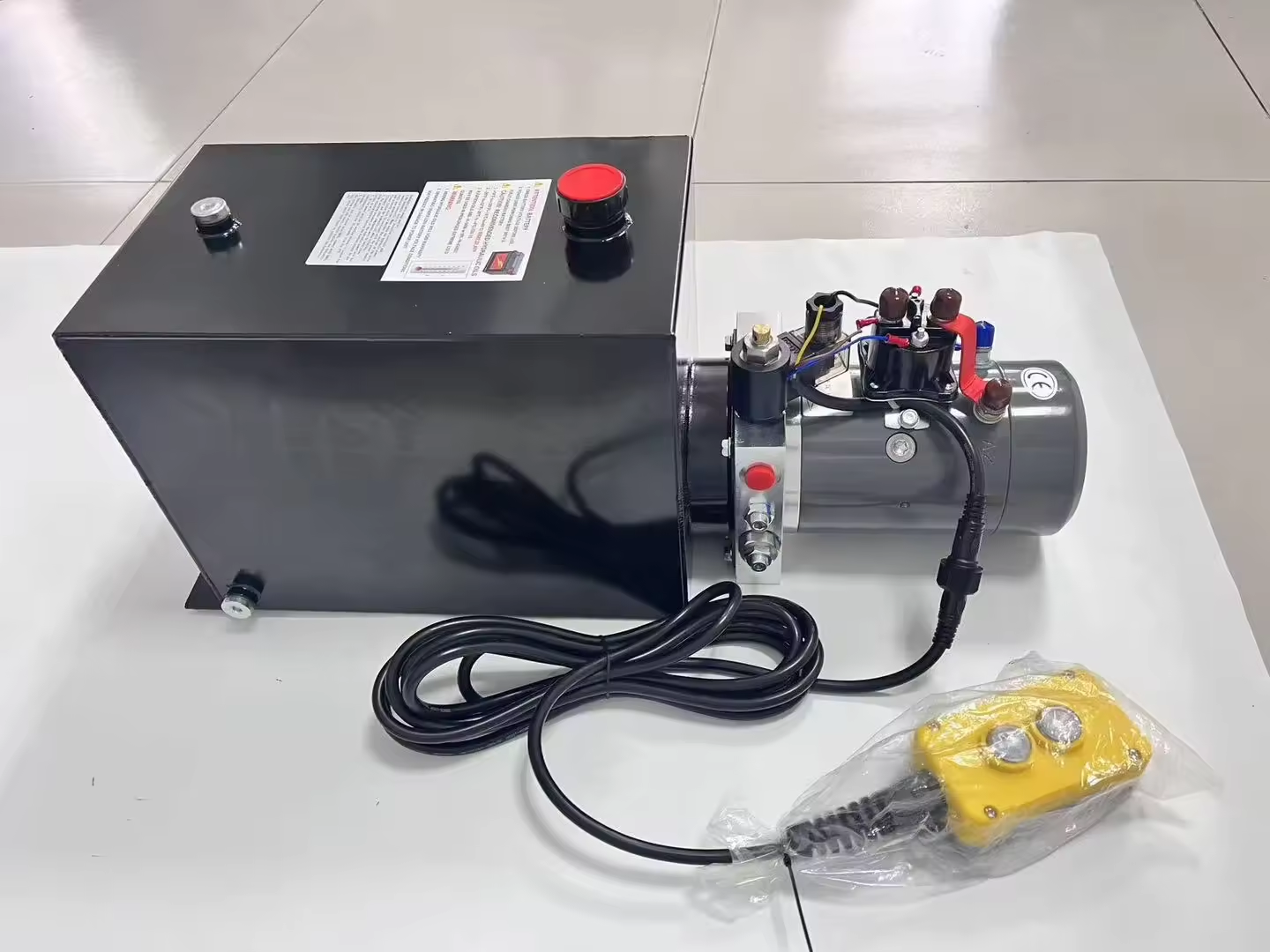
What clean assembly covers in practice
Clean assembly is a sequence rather than a single operation. Each stage removes or excludes a different source of contamination, and skipping one stage tends to reappear later as pump wear, valve sticking or seal damage.
- Cleaning before assembly. Hydraulic systems are cleaned before assembly so that machining residue and particles are removed before components are closed into the circuit.
- Oil cleanliness control. Hydraulic oil cleanliness is controlled to reduce contamination risks through the assembly and test sequence, rather than being checked only at the end.
- Pump sourcing and handling. Hydraulic pumps are sourced from qualified suppliers and assembled under clean manufacturing conditions, which is the primary defence against premature pump wear.
- Protection after testing. Ports are sealed and anti-corrosion treatment applied before dispatch, so the cleanliness achieved in the factory is not lost between the end of testing and the start of commissioning.
For buyers, the practical implication is that cleanliness has to be written into the technical specification. It is not a self-defining requirement. A purchase order that asks for a clean unit without stating the oil cleanliness target, the test fluid or the inspection method leaves the interpretation to the supplier. Apex Hydraulic controls cleanliness through the process described above; the acceptance threshold is settled with the buyer as part of the approved drawings and technical specification, alongside dimensions and performance.
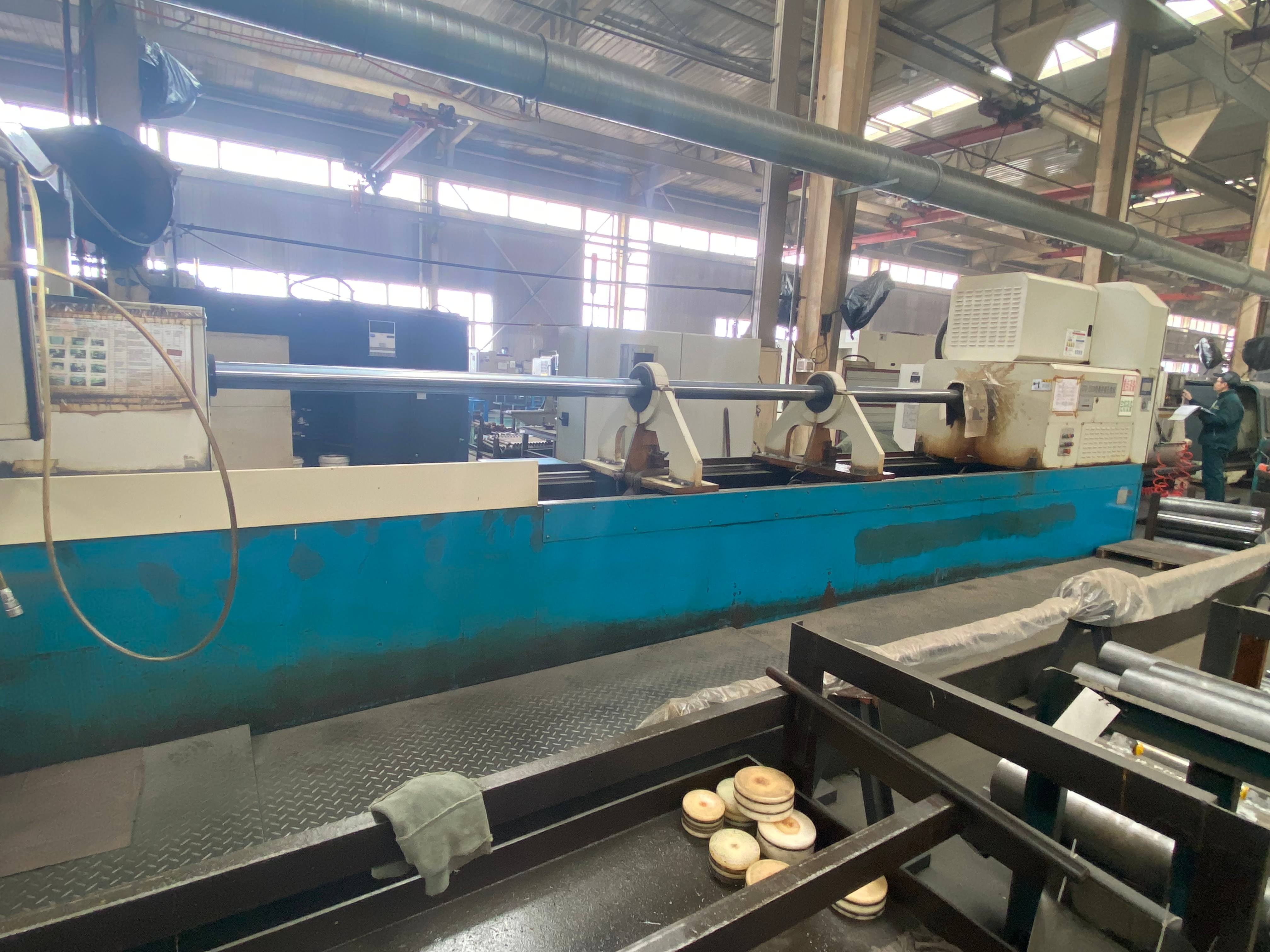
How pressure is set, calibrated and proven
Pressure is the parameter most often discussed in a quotation and least often evidenced at delivery. In a controlled process, the setting is not a number written on a label at the end of the line; it is the output of a defined sequence.
- Engineering review and drawing confirmation. Hydraulic circuit design, voltage, flow rate, pressure and component configuration are verified against customer requirements before production begins.
- Setting to specification. Pressure settings are adjusted according to the customer's specification, using the confirmed configuration as the reference.
- Calibration and circuit verification. Pressure-related production risks are managed through systematic calibration and pre-delivery testing rather than relying on component tolerances alone.
- Unit-level pressure and leakage test. Every hydraulic power unit undergoes hydraulic pressure and leakage testing before shipment, with fittings and sealing components inspected to confirm leak-free performance. Each unit is tested to verify stable system pressure before delivery.
- Sub-assembly checks that feed the final test. Solenoid valves are tested for switching performance and response before assembly and their electrical connections inspected. Motors are selected according to duty cycle, voltage and load requirements and functionally tested to verify stable operation under specified working conditions. Electrical wiring, connectors and control circuits are inspected before shipment.
The value of this sequence to a buyer is evidential. A pressure value printed on a unit proves nothing about how it was reached. A test performed on the assembled unit against the agreed setting produces a record that can be compared line by line with the purchase order.
Mapping process controls to acceptance criteria
The table below connects what happens inside the factory to what a buyer can reference when the unit is presented for acceptance.
| Verification checkpoint | What is controlled | What the buyer can reference |
|---|---|---|
| Engineering review and drawing confirmation | Circuit design, voltage, flow rate, pressure and component configuration verified against requirements before production | Approved drawing and technical specification |
| Clean assembly and oil cleanliness | Systems cleaned before assembly; oil cleanliness controlled to reduce contamination risks | Agreed cleanliness requirement in the specification; inspection records |
| Component qualification | Pumps sourced from qualified suppliers; solenoid valves functionally tested for switching and response before assembly | Component records and functional test results |
| Pressure calibration | Pressure settings adjusted according to customer specifications | Pressure setting compared with the specified value |
| Pre-delivery testing | Every unit pressure and leakage tested; stable system pressure verified; fittings and seals inspected | Hydraulic pressure and leakage test result |
| Electrical inspection | Wiring, connectors and control circuits inspected before shipment | Electrical inspection record |
| Packing and protection | Ports sealed, anti-corrosion treatment applied, export-grade packaging used | Packing specification and shipping documents |
Purchasing terms that sit alongside the technical criteria
Acceptance criteria only work if the commercial terms around them are equally explicit. The terms below are the ones Apex Hydraulic applies to hydraulic power unit orders.
| Commercial item | Terms |
|---|---|
| Minimum order quantity | Standard products: 1 piece. Custom OEM/ODM projects: negotiable according to product specifications and project requirements. |
| Delivery terms | EXW, FOB, FCA, CIF, CFR, DAP, DDP |
| Acceptance criteria | Dimensional inspection, hydraulic pressure testing, leakage testing, functional testing, and quality inspection according to approved drawings, technical specifications, or mutually agreed acceptance criteria. |
| Payment terms | T/T, Letter of Credit, Alibaba Trade Assurance, and other mutually agreed international payment methods. Terms may vary depending on order value, customer relationship and project requirements. |
Order progression follows a fixed path: inquiry, technical review, drawing confirmation, quotation, sample approval where required, PI confirmation, deposit payment, manufacturing, quality inspection and testing, final payment, shipment, and after-sales technical support. Two of those steps — drawing confirmation and quality inspection and testing — are where cleanliness and pressure specifications are effectively locked, because both are tied to the approved documentation rather than to verbal agreement.
Where these controls matter most
The weight of cleanliness and pressure verification changes with the application, but the underlying logic does not.
- Dump trailers and scissor hoist kits. Outdoor storage, dust and frequent cycling place a premium on sealed ports, oil cleanliness and stable pressure at the relief setting. Units are configured against trailer size, cylinder capacity, lifting requirement, voltage, duty cycle and operating environment rather than taken from a generic stock configuration.
- Vehicle-mounted and trailer-mounted units. Voltage arrangements, including 12V and 24V DC configurations used on trailer equipment, are confirmed during engineering review together with flow and reservoir sizing, so the electrical and hydraulic sides of the unit are matched before production.
- Aerial work platforms and multi-function equipment. Pressure stability and electrical reliability dominate, because a platform that behaves inconsistently under load is a safety and productivity problem rather than a maintenance inconvenience.
- Sanitation vehicles, agricultural machinery, construction, mining, marine and material handling equipment. Duty cycle and contamination exposure drive the specification, and both are addressed in the same control sequence: qualified components, clean assembly, calibrated pressure, and pre-delivery testing.
Market context: why documented verification is gaining weight
Third-party estimates of the hydraulic power unit market diverge, and the divergence is itself useful context for buyers. Grand View Research valued the global market at USD 13.6 billion in 2024, while Precedence Research estimated USD 11.4 billion in the same year with a CAGR of 5.5% through 2034. Grand View Research also placed Asia Pacific at a 40.2% revenue share in 2024 and valued the U.S. market at USD 2.55 billion.
Two structural signals are more relevant to procurement than the headline size. First, electric-powered hydraulic power units accounted for 60.1% of U.S. revenue share in 2024 according to Grand View Research, which concentrates attention on motor selection, electrical inspection and thermal behaviour — all areas covered by pre-delivery functional testing. Second, the 2000–3000 psi pressure range segment is projected to grow at a CAGR of 5.8% from 2025 to 2033, which makes pressure calibration and verification a mainstream requirement rather than a niche one.
Mordor Intelligence recorded that standard packaged units accounted for 47.8% of global hydraulic power unit revenue share in 2024. In other words, roughly half the market still buys a catalogue unit — and the case for custom engineering has to be made on application fit and verifiable delivery, not on availability alone. Regulation reinforces the same direction: hydraulic power units supplied into the EU must comply with EN ISO 4413:2010 for general rules and safety requirements, and the Machinery Directive 2006/42/EC governs health and safety requirements for hydraulic systems. Both frameworks reward documentation that can be produced on request rather than asserted after the fact.
Comparison with conventional supply — and where this approach stops
A conventional purchase compares a catalogue unit against a specification sheet. The custom route compares a verified unit against approved drawings and test records. The difference is not that one product is better; it is that one supply model produces evidence and the other produces a declaration.
| Dimension | Off-the-shelf packaged unit | Custom unit with documented verification |
|---|---|---|
| Configuration basis | Catalogue rating, adapted at installation | Verified against customer requirements before production |
| Cleanliness evidence | Supplier statement | Cleaning before assembly, controlled oil cleanliness, sealed ports |
| Pressure evidence | Nominal setting | Calibrated to specification; stable pressure verified on the assembled unit |
| Pre-shipment testing | Varies by supplier | Pressure and leakage testing on every unit |
| Pre-production time | Short | Longer — engineering review and drawing confirmation precede manufacturing |
That last row is the honest boundary. The custom route is slower before production starts, because circuit design, voltage, flow rate, pressure and component configuration have to be verified and drawings confirmed. A buyer working to a compressed launch schedule should plan for that step rather than assume it can be compressed.
Two further limits apply. Unit-level verification confirms the power unit as assembled and tested; it does not predict system-level behaviour once the unit is connected to the buyer's cylinders, hoses and control architecture. And cleanliness achieved in the factory does not survive open ports, field oil top-ups or improvised installation — the buyer's receiving and commissioning routine remains part of the contamination-control chain. Where no acceptance criteria are agreed in writing, inspection defaults to approved drawings and technical specifications, which may not capture every expectation the buyer had in mind.
Future outlook
The direction of travel is toward evidence rather than adjectives. As electric-driven units continue to hold the majority of revenue share in markets such as the United States, and as the 2000–3000 psi band keeps expanding, the parameters that decide whether a unit performs — motor matching, electrical integrity, pressure stability, oil cleanliness — become the same parameters buyers will expect to see documented. Suppliers that already generate batch and inspection records during manufacturing will find that transition short. Suppliers that treat testing as a final gate rather than a process step will not.
For equipment manufacturers and distributors, the practical preparation is unglamorous: write the cleanliness target and pressure requirement into the technical specification, agree acceptance criteria in the purchase order, and keep the test records with the delivery documents.
Frequently asked questions
What does clean assembly mean for a hydraulic power unit?
Clean assembly covers the steps taken before and during assembly to keep particles and residue out of the hydraulic circuit. Apex Hydraulic cleans hydraulic systems before assembly, controls hydraulic oil cleanliness to reduce contamination risks, and sources hydraulic pumps from qualified suppliers for assembly under clean manufacturing conditions to minimize premature wear. Ports are then sealed and anti-corrosion treatment applied before shipment.
How is hydraulic oil cleanliness controlled before shipment?
It is controlled as a process rather than a final flush. Hydraulic systems are cleaned before assembly, oil cleanliness is managed through the assembly and test sequence, and the finished unit is protected afterwards by sealed ports, anti-corrosion treatment and export-grade packaging. Buyers who need a specific cleanliness level should state it in the technical specification so it can be checked at acceptance.
How are pressure settings adjusted to customer specifications?
Pressure settings are adjusted according to the customer's specification after hydraulic circuit design, voltage, flow rate, pressure and component configuration have been verified against customer requirements during engineering review and drawing confirmation. Pressure-related production risk is managed through systematic calibration and pre-delivery testing.
How is each power unit tested before delivery?
Every hydraulic power unit undergoes hydraulic pressure and leakage testing before shipment, with all hydraulic fittings and sealing components inspected, and each unit is tested to verify stable system pressure. Sub-assemblies are checked earlier: solenoid valves are tested for switching performance and response before assembly, motors are selected according to duty cycle, voltage and load requirements and functionally tested, and electrical wiring, connectors and control circuits are inspected before shipment.
What acceptance criteria can be agreed in a purchase order?
Acceptance criteria cover dimensional inspection, hydraulic pressure testing, leakage testing, functional testing, and quality inspection according to approved drawings, technical specifications, or mutually agreed acceptance criteria. The reference document determines how each item is judged.
What purchasing terms apply to hydraulic power unit orders?
For standard products the minimum order quantity is 1 piece; custom OEM/ODM projects are negotiable according to product specifications and project requirements. Delivery terms include EXW, FOB, FCA, CIF, CFR, DAP and DDP. Payment terms include T/T, Letter of Credit, Alibaba Trade Assurance and other mutually agreed international payment methods, and may vary with order value, customer relationship and project requirements.
What happens between inquiry and shipment?
The sequence is inquiry, technical review, drawing confirmation, quotation, sample approval where required, PI confirmation, deposit payment, manufacturing, quality inspection and testing, final payment, shipment, and after-sales technical support. Drawing confirmation and quality inspection and testing are the two stages where cleanliness and pressure specifications are fixed against approved documentation.
What records support traceability after delivery?
Production batches and quality inspection records are maintained to support product traceability and after-sales service. These records connect a delivered unit to the batch and inspection data generated during manufacturing.
What do these controls not guarantee?
Unit-level verification covers the power unit as assembled and tested. It does not cover system-level behaviour once the unit is connected to the buyer's cylinders, hoses and control system, and it does not prevent contamination introduced in the field during installation or oil top-up. Cleanliness and pressure stability after commissioning depend on the buyer's receiving, installation and maintenance practice.
How does this fit a long-term supply relationship?
Apex Hydraulic provides OEM and ODM manufacturing services for equipment manufacturers, hydraulic distributors and hydraulic solution providers worldwide. Complete customization covers product design, engineering drawings, prototype development, testing, manufacturing and quality inspection. The company builds long-term partnerships with OEM manufacturers, distributors and industrial equipment companies, and export business accounts for 70% of total sales.
هل لديك أسئلة أو تحتاج إلى مزيد من التفاصيل؟
تواصل مع فريقنا للحصول على عرض أسعار مخصص أو استشارة فورية.
طلب عرض أسعار
املأ النموذج أدناه وسيتواصل معك فريقنا بعرض مقترح مخصص.
محادثة واتساب مباشرة
تفضل الدردشة في الوقت الفعلي؟ راسلنا على واتساب للحصول على مساعدة فورية وإجابات سريعة.
- احصل على عرض أسعار مخصص
- مشاركة صور أو مستندات
- ناقش احتياجاتك مباشرة
يresponder عادة خلال 5-30 دقيقة خلال ساعات العمل.