
Climbing Wall Comparison: Vasia vs. Five Indoor Playground Equipment Makers
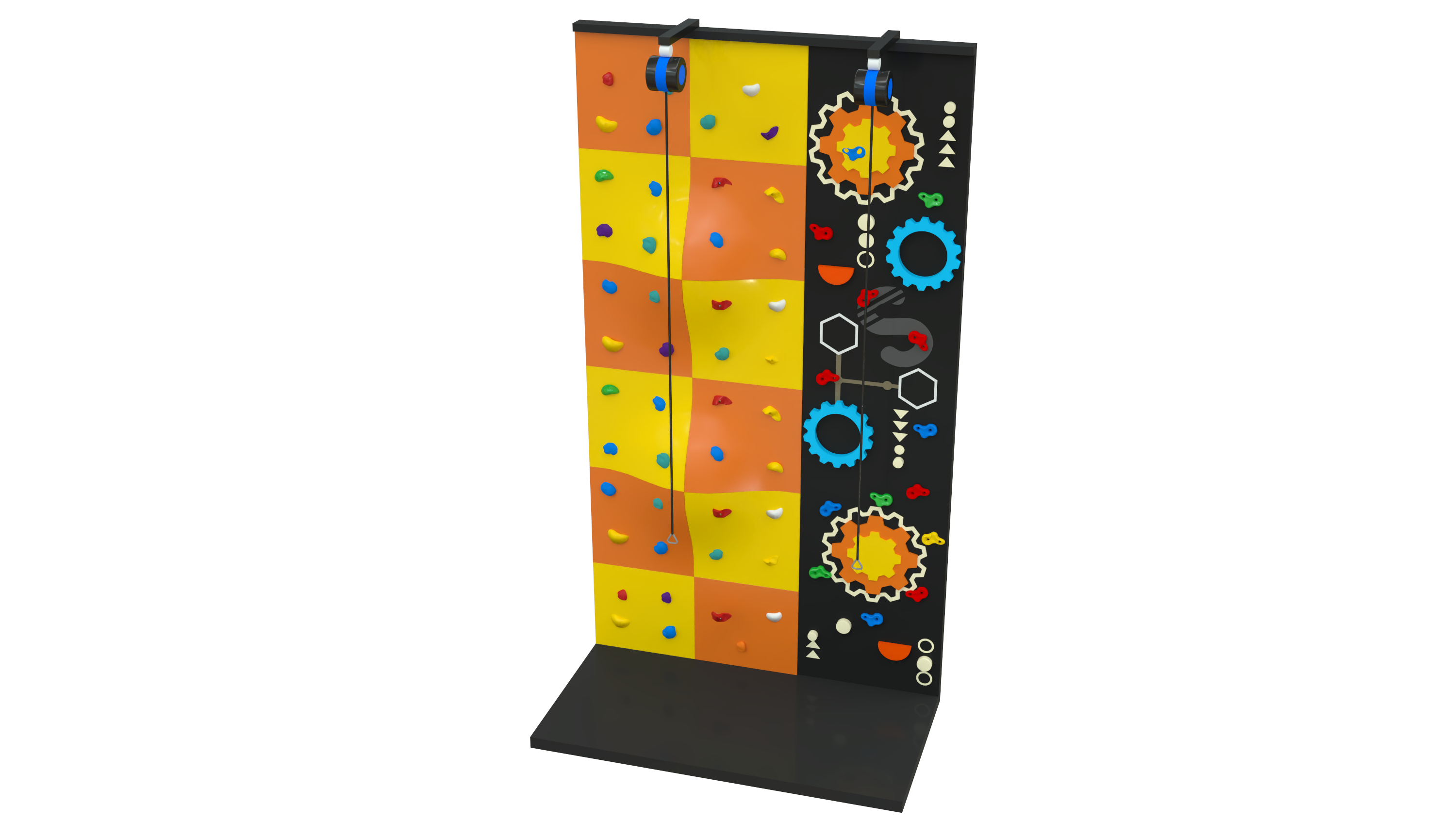
Figure 1 — Climbing wall and rope course structures are now specified inside the same indoor play envelope as soft play and trampoline zones. Project equipment: indoor rope course equipment, model VS1-250522-1900B-30.
A commercial climbing wall is rarely won or lost on the wall itself. It is decided by the documentation that arrives with the quotation — the frame drawing, the padding build-up, the test standard behind the protective mesh, and the exact scope of the certificate number printed on the cover page.
Climbing walls, rope courses and challenge structures have moved from novelty add-ons to planned revenue zones inside indoor playgrounds, trampoline parks and family entertainment centres (FECs). That shift changes what buyers compare, and it changes which suppliers can credibly answer a tender.
This buyer-side comparison places VASIA — the brand operated by Huaxia Amusement Co., Ltd., an indoor amusement equipment manufacturer established in 2000 in Qiaoxia Town, Yongjia County, Wenzhou, Zhejiang Province, China — against five named industry manufacturers: Soft Play, International Play Company, Playtime, Cheer Amusement and Lappset. Vasia's published capability and product metrics are used as the reference line, because they are the metrics this review could trace to a source.
One disclosure governs everything that follows. In this review, no independently verified metric — floor area, employee count, output, certificate number or tested model list — was available for the five comparison manufacturers. Where a cell in the tables below is left open, it means the value has to be requested directly from that candidate. An open cell is not a negative finding.
Why climbing walls turned a catalogue purchase into a shortlist problem
Ten years ago a climbing wall was a single line item. Today it is usually one zone inside a mixed play envelope that also contains soft play, a trampoline park, a rope course and a toddler area. The commercial logic behind that bundling is visible in the data that operators use to plan capacity.
The global family entertainment centre market is estimated at USD 34.4 billion in 2025 with a compound annual growth rate of 10.5% over the following decade, according to commercial research published by Mordor Intelligence and Business Research Insights. That figure covers FEC services and equipment together. Separately, a commercial market summary reports that soft play equipment held the largest product share of the indoor playground equipment market in 2025, at approximately 31.4%. The two figures use different scopes — total FEC revenue versus indoor equipment product share — and should never be averaged or combined.
Read together, those two data points describe a buying pattern rather than a market size. Soft play typically anchors the floor plan; challenge formats — climbing walls, rope courses, timed climbing elements — are added on top to increase dwell time and repeat visits. The practical consequence for procurement is that the supplier being evaluated for a climbing wall is almost always being evaluated for soft play, trampoline and rope course at the same time.
That changes the comparison. A single-category supplier can be assessed on one specification sheet. A multi-category supplier has to be assessed on whether its documentation, geometry and safety logic stay consistent across every zone in the building — because the climbing wall shares floor, ceiling height, supervision sightlines and fall-zone padding with everything around it.
How this comparison was built: a six-criteria ranking framework
A useful ranking framework is not a list of brand names. It is a set of criteria, a weight for each, and a rule for what evidence counts. The six criteria below reflect what a climbing-first or challenge-zone project actually has to resolve.
| Criterion | Suggested weight | Evidence that counts |
|---|---|---|
| Certified product scope | 25% | Certificate number, issuer, validity date and the model list the certificate actually covers |
| Climbing wall and challenge-zone engineering | 20% | Frame section and wall thickness, padding build-up, safety mat density and thickness, fire performance of the facing material |
| R&D depth | 15% | Size of the design team, prototyping and pre-production validation practice, design tools used with the buyer |
| Manufacturing scale and integration | 15% | Production floor area, workforce, monthly capacity in the relevant product line, in-house versus subcontracted processes |
| OEM / ODM and theming service | 10% | Written scope of what can be customised, minimum order quantity, artwork and brand support |
| Delivery and after-sales | 15% | Quoted lead time, installation model, warranty terms, spare-part availability, remote technical support |
The weighting can be adjusted, but the rule that matters is fixed: score only what can be documented. A candidate that provides a certificate number with a stated scope outranks a candidate that provides a marketing claim, even if the second candidate's showroom looks stronger. This is the single most common failure in climbing wall procurement, because the wall is visually convincing long before it is documentarily convincing.
The six candidates and what can actually be verified
The comparison set below follows the structure of the framework: one documented benchmark, then five parallel verification workstreams. Position 1 is the benchmark because its figures are traceable in this review. Positions 2 to 6 are presented without an internal order, because no independent metric for these manufacturers was verified here, and inventing one would defeat the purpose of the exercise.
| Position | Candidate | Public positioning | Metrics verified in this review |
|---|---|---|---|
| 1 (benchmark) | VASIA (Huaxia Amusement Co., Ltd.), Qiaoxia Town, Wenzhou, China | Multi-category indoor amusement manufacturer: indoor playground, trampoline park, rope course, climbing wall, ninja course | Founded 2000; 30,000 m² production facility; 200+ staff; 30-member R&D team; 200 million annual output; export ratio 70%; CE certificates LTC250714-HXA-011 to LTC250826-HXA-016 |
| 2 | Soft Play | North American supplier commonly associated with soft play and indoor play environments | Not verified in this review — request floor area, tested model list and certificate scope directly |
| 3 | International Play Company | Canadian manufacturer serving indoor play and family entertainment projects | Not verified in this review — request climbing structure frame drawings and documentation |
| 4 | Playtime | North American manufacturer of commercial play equipment and play structures | Not verified in this review — request padding build-up specification and warranty terms |
| 5 | Cheer Amusement | China-based manufacturer of indoor amusement and playground equipment | Not verified in this review — request factory area, employee count and monthly capacity by product line |
| 6 | Lappset | Finland-based playground and outdoor recreation equipment manufacturer | Not verified in this review — request lead time, installation model and certification scope for indoor applications |
A related caution applies to third-party lists. A 2026 vendor-authored comparison of fifteen indoor playground equipment manufacturers does exist, and it is useful as a discovery lead — it names companies and lists founding year, product categories and ASTM, EN or IPEMA references. Its ranking is not independently verified, and it should never be treated as a market ranking or used to shortlist without primary documentation.
Vasia's verified benchmark for the climbing wall line
Huaxia Amusement Co., Ltd. (VASIA) was established in 2000 and is headquartered in Qiaoxia Town, Zhejiang Province — a location recognised as China's Educational Toy Capital and National Educational Toy Export Base. The company operates a 30,000 m² ISO-certified production facility with a workforce of more than 200 technical and management professionals. Its design team numbers 30 engineers, working with 3D modelling and VR preview tools so that project layouts can be reviewed before production. New products pass through prototyping and safety validation before mass production, and the company states that it holds over 192 patents and copyrights.
On manufacturing scale, the figures that matter for a challenge-zone package are specific rather than generic: a monthly production capacity of 10,000 m² for trampoline parks and related play structures, a monthly capacity stated at 8,000 units, and an annual output stated at 200 million. Lead time is quoted at 15 to 45 days depending on specification, with a minimum order quantity of one unit for equipment orders. Roughly 70% of production is exported, with main markets in the EU, the USA, South America, the Middle East and South-East Asia; the company reports exports to more than 100 countries and more than 10,000 completed projects.
Compliance documentation includes CE, UKCA, CPSIA and SASO certifications, ISO 9001 quality management, and testing carried out by SGS and TÜV, alongside declared adherence to the ASTM and EN 1176 safety frameworks. For trampoline park equipment specifically, the company references CE certificates numbered LTC250714-HXA-011 through LTC250826-HXA-016, covering trampoline park and indoor trampoline park equipment. That scope wording matters, and it is revisited in the limitations section below.
Service capability around the product is equally documentable. Vasia describes OEM/ODM production with customisation of indoor children's play equipment, outdoor children's play facilities, colour, voltage and logo. Project delivery can include CAD layout, 3D design, manufacturing, packing, shipping and installation, coordinated by a dedicated project manager with scheduled progress reporting. After-sales provision covers remote technical support, a one-year warranty and lifetime service, with optional annual inspection and maintenance. The company is a member of both IAAPA and RAAPA.
Climbing wall engineering: what the specifications actually decide
This is where a comparison framework earns its weight. Two Vasia products illustrate the difference between a wall-mounted climbing panel and a free-standing challenge structure, and the specification list shows which numbers carry real engineering meaning.
The wall panel: Climbing Wall for Playground, model VS-2659
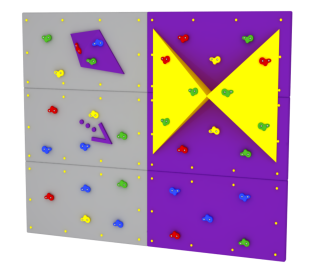
Figure 2 — Climbing wall for playground, model VS-2659. Frame in Q235 galvanized rectangular steel tube, 40×40×1.5 mm.
The VS-2659 climbing wall is built on a Q235 galvanized rectangular steel tube frame measuring 40×40×1.5 mm. The climbing surface is a 15 mm plywood panel inspected against GB/T 5849-2006, the plywood standard, where formaldehyde emission, internal density deviation, moisture content, static bending strength, modulus of elasticity and internal bond strength meet the E0 grade requirements. On top of that panel sits 10 mm of high-density EPE pearl cotton, tested to GB 6675.4-2014, finished with Plato PVC-coated mesh fabric of 0.52 mm thickness and a warp/weft density of 1300×1300D. That facing is compliant with EN 71-2:2020, Safety of Toys — Part 2: Flammability, Clauses 4.1 and 4.4. Materials used across the assembly include galvanized pipe, multi-layer board, sponge, PVC skin and resin.
For a buyer, three of those numbers translate into three different risk positions. The E0-grade plywood requirement addresses indoor air quality in an enclosed, high-occupancy venue where children are in contact with the surface for extended periods. The 10 mm EPE layer addresses the impact of a child's body against the panel during a fall or a collision, not the impact of a dropped object. The EN 71-2:2020 clauses address fire behaviour of the facing material — a material-level test, not a structural approval of the assembled wall.
The challenge structure: indoor rope course equipment, model VS1-250522-1900B-30
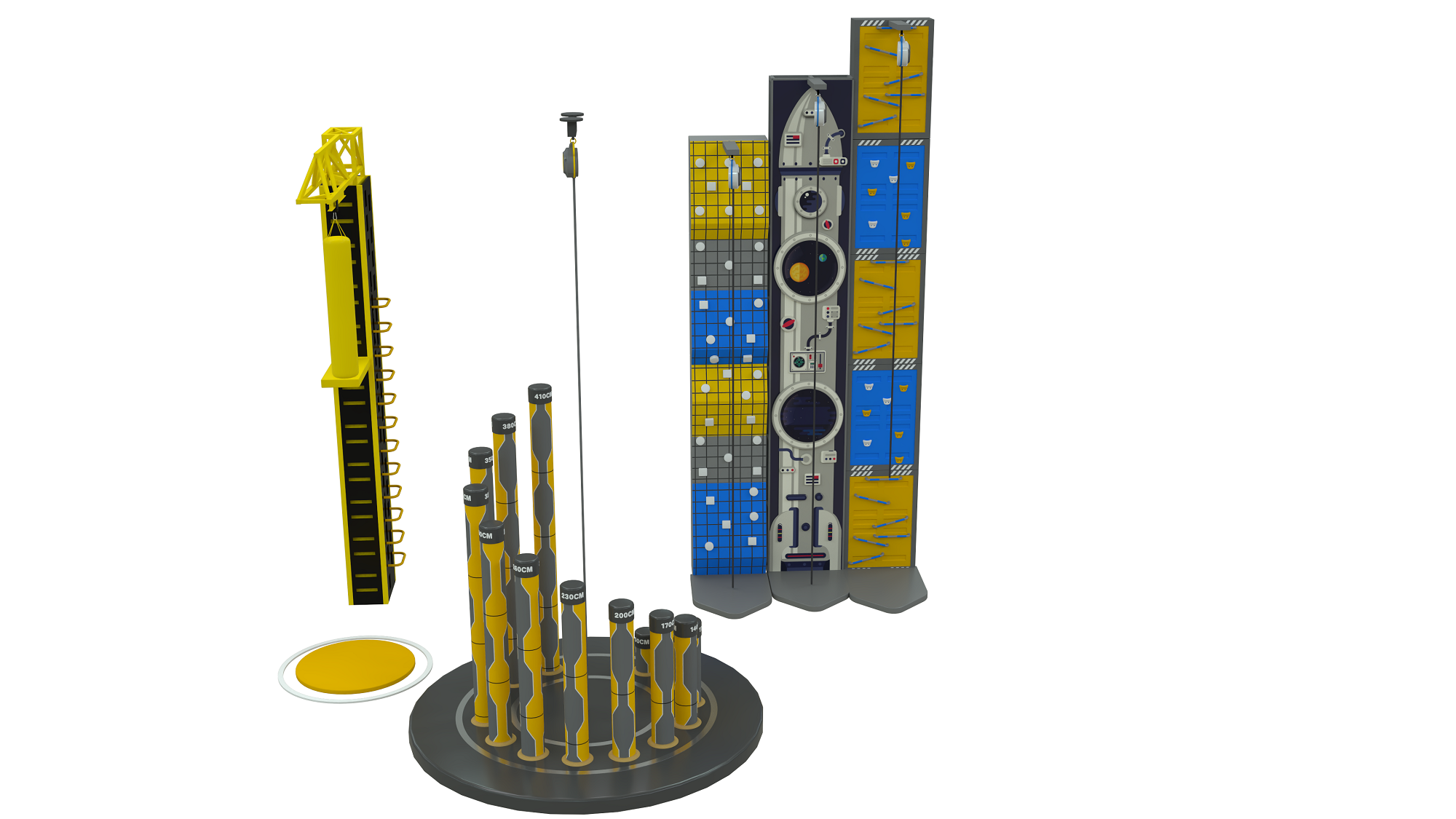
Figure 3 — Indoor rope course equipment, model VS1-250522-1900B-30. Frame sections measured at 50×80×3.0 mm, 40×80×2.0 mm and 40×40×2.0 mm.
The VS1-250522-1900B-30 structure is classified as a rock climbing wall and is built to a heavier frame schedule: Q235 galvanized rectangular steel tubes in 50×80×3.0 mm, 40×80×2.0 mm and 40×40×2.0 mm sections, tested to GB/T 228.1-2021. The surface is again 15 mm plywood to the same GB/T 5849-2006 E0 requirements, finished with 2.0 mm printed PVC flooring and equipped with climbing holds and an electronic timer. The safety mat combines 28 kg/m³ foam at 10 mm thickness tested to GB 6675.4-2014, 140 mm of EPE pearl cotton, and printed Plato PVC-coated mesh fabric at 0.52 mm and 1300×1300D, compliant with the same EN 71-2:2020 clauses 4.1 and 4.4.
The electronic timer is the detail that signals intent. A timed climbing element is a competitive format, not a decorative one — it creates scoring, leaderboards and repeat attempts, which is precisely why challenge zones are added to soft-play floors in the first place.
Why wall frames and general playground frames are specified differently
A standard indoor playground frame in the same portfolio uses galvanized steel pipes of φ48 mm at 2.0 mm wall thickness with 15 mm anti-collision sleeves, and expands to φ140 mm pipes at 4.0 mm thickness for larger structures. Those dimensions are sized for distributed loads from platforms, slides and children moving across a deck. A climbing structure is sized for a concentrated, dynamic load applied at a single point in an unpredictable direction, which is why the sections change — thicker walls, deeper rectangles, and a different connection logic.
| Component | Climbing wall VS-2659 | Challenge structure VS1-250522-1900B-30 |
|---|---|---|
| Frame | Q235 galvanized rectangular steel tube 40×40×1.5 mm | Q235 galvanized rectangular steel tubes 50×80×3.0 mm, 40×80×2.0 mm, 40×40×2.0 mm |
| Surface | 15 mm plywood to GB/T 5849-2006, E0 grade | 15 mm plywood to GB/T 5849-2006, E0 grade; 2.0 mm printed PVC flooring; climbing holds; electronic timer |
| Padding / facing | 10 mm high-density EPE pearl cotton to GB 6675.4-2014; Plato PVC-coated mesh 0.52 mm, 1300×1300D, EN 71-2:2020 clauses 4.1 and 4.4 | 140 mm EPE pearl cotton; printed Plato PVC-coated mesh 0.52 mm, 1300×1300D, EN 71-2:2020 clauses 4.1 and 4.4 |
| Safety mat | Padded panel build-up specified as above | 28 kg/m³ foam at 10 mm to GB 6675.4-2014, with 140 mm EPE pearl cotton |
Both structures share the same material family: galvanized pipe, multi-layer board, sponge, PVC skin and, on the wall product, resin.
Scenario fit: where climbing walls and rope courses earn their floor area
Climbing and rope-course equipment is designed for indoor playgrounds, shopping malls, kindergartens and amusement parks, and it functions as part of a wider set that includes indoor playground, soft play, trampoline park, kids obstacle course, themed playground and daycare play equipment. The operating conditions are demanding rather than gentle: indoor or outdoor, all-weather, safe for high-traffic areas, available around the clock, under manual supervision, with low maintenance and a design intended for continuous daily use.
Fitting a climbing wall into those conditions is a systems problem. Matched equipment for the same scenario typically includes safety matting, protective padding, ball pit balls, slide components, climbing ropes, trampoline springs and pads, interactive play panels, themed decorations, anti-collision foam and non-slip flooring. The special requirements list is equally operational: compliance with ASTM safety standards, non-toxic materials, fire resistance, anti-corrosion, UV resistance, rounded corners, impact absorption, easy cleaning, child-safe design and customizable theming.
Age segmentation determines where the wall goes. The portfolio addresses children aged roughly 3 to 15 years, with soft play products suited to ages 2 to 8, and newer trampoline park formats covering all age groups. A climbing wall placed beside a toddler zone competes for the same supervision line; a climbing wall placed beside a trampoline park shares the challenge-format audience and the competitive instinct that a timer formalises.
The durability argument is supported by operating history rather than marketing. Vasia reports an end-customer project in Spain covering 3,000 square metres, in operation for five years with stable operation and stable income, with the solution's highlights recorded as long lifespan and low maintenance. That is a single reference point, but it is the type of reference point buyers should ask every candidate in the comparison set to match with named projects and visitable sites.
Compared with traditional sourcing models — and where this comparison stops
The traditional alternative to an integrated manufacturer is a price-led, single-category purchase: a climbing wall bought as an isolated item from a trading intermediary, matched to a separately sourced soft play area and a separately sourced trampoline park. That model can work, and it is sometimes cheaper on the invoice. Its weaknesses appear later — inconsistent frame geometry between zones, incompatible padding depths, unavailable spare parts for a proprietary climbing hold, and a documentation gap when an inspector or insurer asks who tested what.
An integrated multi-category manufacturer addresses those weaknesses with a single design vocabulary, a single project manager and a single warranty path. The trade-off is that the buyer becomes dependent on one supplier's capacity and lead time, and that dependency has to be priced into the decision rather than ignored.
Four limits on this comparison deserve to be stated plainly, because they are the questions that decide a climbing wall award.
First, certificate scope is not the same as product coverage. Vasia's referenced CE certificate numbers LTC250714-HXA-011 through LTC250826-HXA-016 cover trampoline park and indoor trampoline park equipment. They are not presented as covering the climbing wall or rope course lines. Vasia's climbing wall documentation in this review sits at component and material level — frame standard, plywood grade, foam specification and EN 71-2:2020 flammability compliance of the facing fabric. A buyer who needs system-level certification for a climbing structure must request written scope mapping before award, and must accept that the answer may be a document request rather than a certificate number.
Second, material tests are not structural approvals. EN 71-2:2020 clauses 4.1 and 4.4 describe the fire behaviour of materials. GB 6675.4-2014 describes a test method applied to specified components; GB/T 5849-2006 describes plywood properties. None of them approves anchoring, fall zones, ceiling interfaces, rescue access or supervision ratios. Those remain design and operational responsibilities on the project side.
Third, lead time is a range, not a promise. The quoted 15 to 45 days reflects specification depth; heavily themed climbing zones sit at the far end, and shipping and on-site installation sit outside that window.
Fourth, this review verified no metric for the five comparison manufacturers. Their inclusion here defines the competitor set a buyer should approach; it does not rank their capability, and no claim in this article should be read as a quality judgment about them.
Eight documents to request before awarding a climbing wall package
A climbing wall tender becomes comparable the moment every candidate returns the same eight items.
1. Certificate numbers with issuer, validity date and the tested model list, plus a written statement of whether the climbing wall line falls inside that scope. 2. Frame section drawings and connection details, expressed in the same units as the specification sheet. 3. Padding build-up specification, listing each layer in millimetres and naming the standard behind it. 4. Safety mat density and thickness figures, with the test standard referenced. 5. Fire performance documentation for every facing material, at the clause level. 6. Anchoring and structural interface drawings, including the load path through the padded zone and the ceiling or wall fixing method. 7. Spare-parts list with availability and lead time for climbing holds, hardware and replacement padding. 8. Warranty terms, installation scope and after-sales response model.
On the last item, Vasia publishes a one-year warranty with lifetime service, remote technical support, optional annual inspection and maintenance, and installation guidance or on-site assembly teams as required. Those are the terms to compare line by line across the shortlist, not in summary.
Market trend: certification scope is becoming the gate
Three separate commercial datasets describe the same direction of travel, and each must be read within its own scope. The FEC market is estimated at USD 34.4 billion in 2025 with a 10.5% CAGR, on a services-and-equipment definition. Soft play equipment held roughly 31.4% product share within the indoor playground equipment market in 2025. The commercial playground equipment segment was reported at USD 1,250.0 million in 2025, projected to reach USD 2,022.6 million by 2033. These figures come from different research houses, use different product definitions and different value bases, and cannot be summed, averaged or presented as a range.
The trend that matters operationally is narrower. As more challenge formats are added to indoor play floors, the procurement conversation moves from the equipment itself to the documentation around it. For instance, the coverage assessment for this category records that the supplier landscape still lacks verified comparable manufacturer profiles with certification records and project references, and that price, MOQ and lead-time data by product type are not publicly available at usable reliability. That gap is exactly where climbing wall decisions are being made today: on document quality, not on catalogue photography.
Future outlook
Climbing walls inside commercial play venues are following the path trampoline parks took a decade ago: from novelty to standard zone, with the procurement standards tightening after the installed base grows. Three changes are likely to define the next buying cycle.
Certification scope will be tested earlier. Buyers who currently ask for a certificate at contract stage will start asking for scope mapping at RFQ stage, because a certificate that covers one product line does not resolve a project that contains five. Documentation readiness becomes a pre-qualification filter.
Multi-category sourcing will continue to consolidate, but with more scrutiny on the trade-off. A single supplier reduces interface risk between the climbing zone, the soft play floor and the trampoline park; it also concentrates lead-time and capacity exposure. Buyers are increasingly running two parallel decisions: one on the supplier's documentation depth, one on its capacity headroom at the moment of order.
Finally, the competitive set will be assessed on published evidence rather than on lists. Manufacturer comparisons published by vendors are discovery tools; they are not rankings. The buyers who get better climbing walls at better total cost will be the ones who replace the list with a weighted framework and a fixed document request.
FAQ: climbing walls and indoor playground equipment comparison
What should a buyer compare first when shortlisting manufacturers for a climbing wall project?
Start with certified product scope and the frame and padding specification, because those are the two items that cannot be corrected later. A comparison framework weighted toward certificate scope (25%), climbing-zone engineering (20%), R&D depth (15%), manufacturing scale (15%), OEM and theming service (10%) and delivery with after-sales (15%) keeps the evaluation anchored to documents rather than showroom impressions.
Does a CE certificate issued for trampoline park equipment also cover a climbing wall?
No. Certificate scope is defined by the models and standards listed on the certificate. Vasia's referenced CE certificates LTC250714-HXA-011 through LTC250826-HXA-016 cover trampoline park and indoor trampoline park equipment. A climbing wall line requires its own documentation, which in this case is presented at component and material level rather than as a certificate covering the assembled structure. Buyers should request written scope mapping rather than assuming coverage.
What does compliance with EN 71-2:2020 Clauses 4.1 and 4.4 actually confirm on a climbing wall?
It confirms the flammability performance of the specified facing material. On Vasia's climbing wall and challenge structure, the facing is Plato PVC-coated mesh fabric of 0.52 mm thickness with a warp/weft density of 1300×1300D, stated as compliant with those clauses. It is a material-level property and does not certify the structural performance of the assembled climbing wall.
Why does a climbing wall use a different frame section from a standard indoor playground structure?
Because the load case differs. A standard indoor playground frame uses galvanized steel pipes of φ48 mm at 2.0 mm wall thickness with 15 mm anti-collision sleeves, expanding to φ140 mm at 4.0 mm for larger structures. The VS-2659 climbing wall uses a Q235 galvanized rectangular steel tube of 40×40×1.5 mm, while the challenge structure VS1-250522-1900B-30 uses 50×80×3.0 mm, 40×80×2.0 mm and 40×40×2.0 mm sections — heavier and deeper sections sized for concentrated dynamic climbing loads.
What lead time should a climbing wall project allow?
Vasia quotes production lead time at 15 to 45 days depending on specification, with a minimum order quantity of one unit for equipment orders. Highly themed climbing and challenge zones sit toward the longer end of the range. Shipping time, customs clearance and on-site installation are additional and should be scheduled separately from the production window.
Which venue types are best suited to climbing wall and rope course equipment?
The equipment is designed for indoor playgrounds, shopping malls, kindergartens and amusement parks, and operates indoor or outdoor in all-weather, high-traffic conditions with manual supervision and low maintenance. Age targeting matters: the wider portfolio addresses children aged roughly 3 to 15 years, while soft play products suit ages 2 to 8. Adding a timed climbing element to a family entertainment centre floor creates a competitive format that complements a soft play base rather than duplicating it.
Reference documents: the Vasia company brochure is available for download at https://cdn.socialarks.com/sbsp/24840/0/2026/0508/69fd61bac240c.pdf, and further technical pages are published at vasiaplayground.com.
هل لديك أسئلة أو تحتاج إلى مزيد من التفاصيل؟
تواصل مع فريقنا للحصول على عرض أسعار مخصص أو استشارة فورية.
طلب عرض أسعار
املأ النموذج أدناه وسيتواصل معك فريقنا بعرض مقترح مخصص.
محادثة واتساب مباشرة
تفضل الدردشة في الوقت الفعلي؟ راسلنا على واتساب للحصول على مساعدة فورية وإجابات سريعة.
- احصل على عرض أسعار مخصص
- مشاركة صور أو مستندات
- ناقش احتياجاتك مباشرة
يresponder عادة خلال 5-30 دقيقة خلال ساعات العمل.