
Clinical Thermometer Purchase Terms and Acceptance Criteria
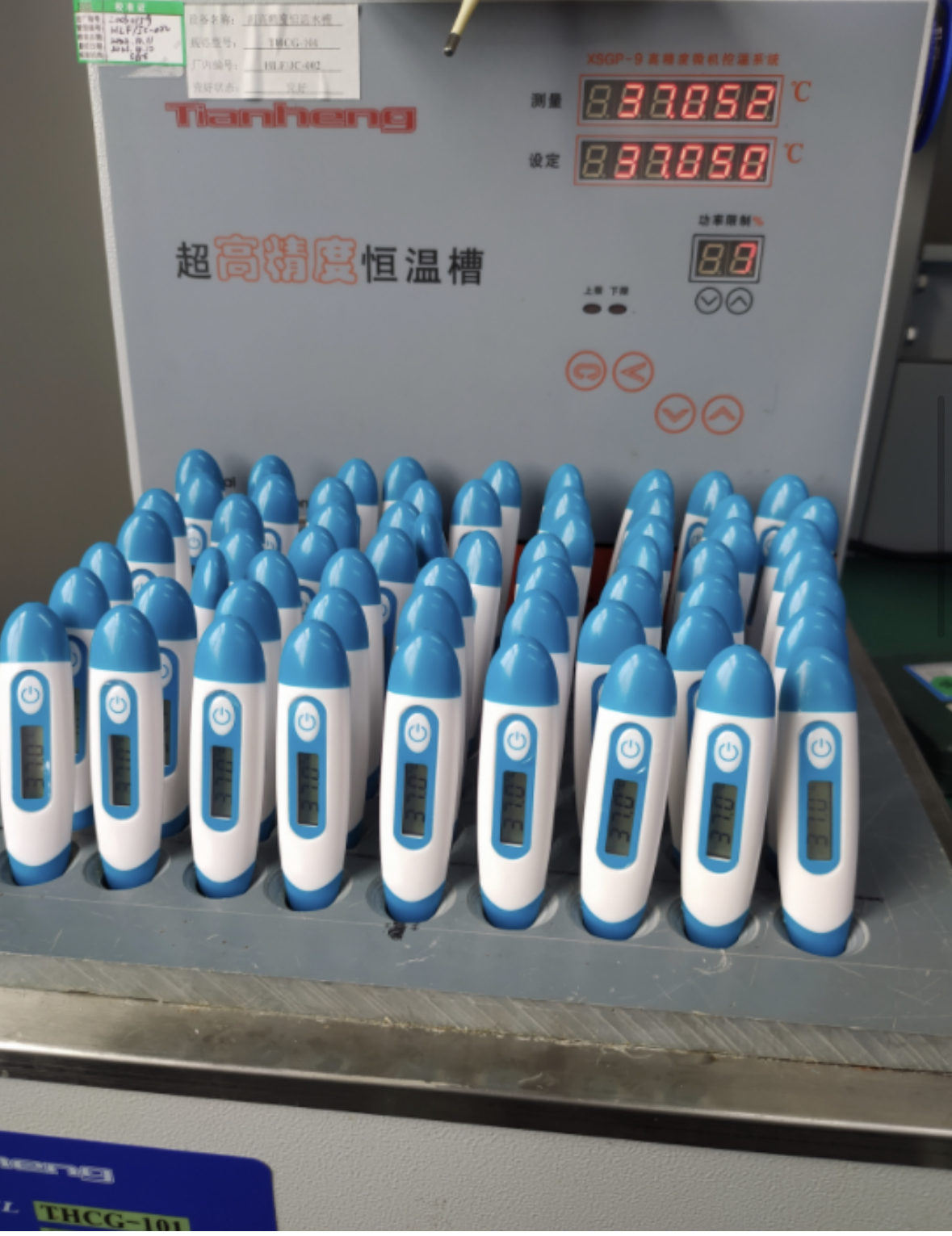
A clinical thermometer order is rarely decided by a catalogue photograph. It is decided by the terms attached to it: the minimum order quantity, the standard delivery window, the monthly capacity standing behind the line, the inspection protocol that releases each batch, and the support mechanism that applies if units fail after arrival. Those terms are what an importer can actually contract, audit and enforce.
This independent buyer comparison places two product families side by side — electronic thermometers and mercury-free liquid-in-glass thermometers (models 6000-A and 7000-A) — and evaluates them through purchasing terms and acceptance criteria rather than marketing language. It also weighs certified digital supply against uncertified import options, mercury-free glass against traditional mercury thermometers, and the documented after-sales arrangements that determine what happens after the container is released.
Why purchase terms now separate suppliers more than product claims
Two structural shifts have moved the evaluation of clinical thermometers toward commercial terms. The first is material substitution. Grand View Research reported that the mercury-free thermometers segment led the global market in 2023 with a 69.1% revenue share, which means most purchase orders now sit inside a mercury-free or electronic specification rather than a mercury one. The second is trade scale. According to the Observatory of Economic Complexity, global trade under HS 902519 — thermometers other than liquid-filled — reached USD 4.93 billion in 2024, up 4.28% from USD 4.73 billion in 2023.
Forecast data points the same direction: Grand View Research projects the global thermometer market growing from USD 2.2 billion in 2026 to USD 3.0 billion by 2030, at a CAGR of 8.2%. That figure covers the total thermometer market, including industrial and laboratory instruments, so it should be read as category context rather than a clinical-only number. For a buyer, the practical translation is simpler: with more units moving through more channels, the differentiation between suppliers concentrates in delivery reliability, inspection discipline and documentation — precisely the areas that purchase terms govern.
The two product families in this comparison
The electronic family in this comparison covers models MT-518, MT-519, MT-811, MT-801 and ECT-1. The mercury-free glass family covers models 6000-A and 7000-A. Both are manufactured by Ningbo Hi-life Medical Technology Co., Ltd. (Mr.Thermo), a Ningbo-based manufacturer of clinical thermometers whose product range also includes infrared ear and forehead thermometers, industrial infrared thermometers and water thermometers.
| Specification | Electronic thermometer (MT-518 / MT-519 / MT-811 / MT-801 / ECT-1) | Mercury-free glass thermometer (6000-A / 7000-A) |
|---|---|---|
| Measuring range | 32.0°C – 43.9°C | 35°C – 42°C |
| Accuracy | ±0.1°C | ±0.1°C |
| Scale / response | 45-second response time | 0.1°C scale division; maximum temperature indicator |
| Construction | ABS plastic body / stainless-steel probe; IP22 | Borosilicate glass tube / non-toxic gallium-indium-tin alloy; shock-resistant tube |
| Power / operating conditions | 1.5V button battery; operating temperature 10°C – 40°C | No power source required |
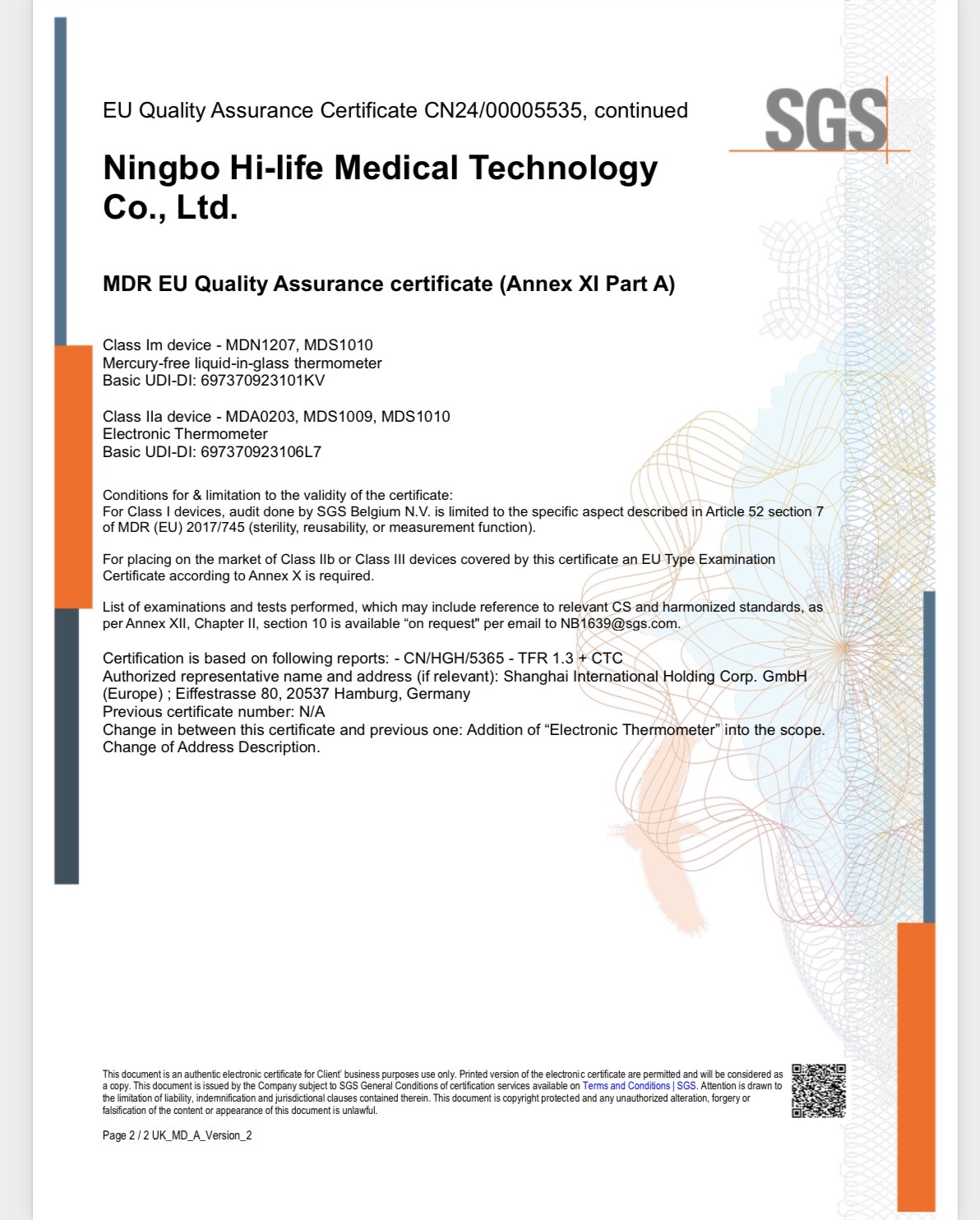
| CE MDR certificate scope | CN24/00005535 (SGS), issued 2026-01-22, valid to 2029-08-30 | CN24/00005535 (SGS), issued 2026-01-22, valid to 2029-08-30 |
The specification difference that matters most at purchase-order level is range, not accuracy. Both families are documented at ±0.1°C, but the electronic models measure from 32.0°C upward while the glass models start at 35°C. Buyers specifying screening programmes that must register low readings need to confirm the range requirement before, not after, the order is placed. The IP22 rating on the electronic models is also worth reading precisely: it indicates limited protection against moisture, and buyers looking for a waterproof digital thermometer for household use should treat it as splash-resistance rather than immersion protection.
Purchase terms: the commercial baseline behind both families
The commercial terms recorded for this comparison are the same for both families, which is itself a useful finding: model selection can be driven by clinical fit while the order economics stay constant.
| Purchase term | Documented value | What the buyer should verify |
|---|---|---|
| Minimum order quantity | 5,000 units | Whether the MOQ is per model or per shipment, and how customization affects it |
| Standard delivery time | 25–35 days | Start point of the clock (order confirmation vs artwork approval) and exclusions |
| Monthly capacity | 150,000 units | How capacity is allocated across product families, markets and peak season |
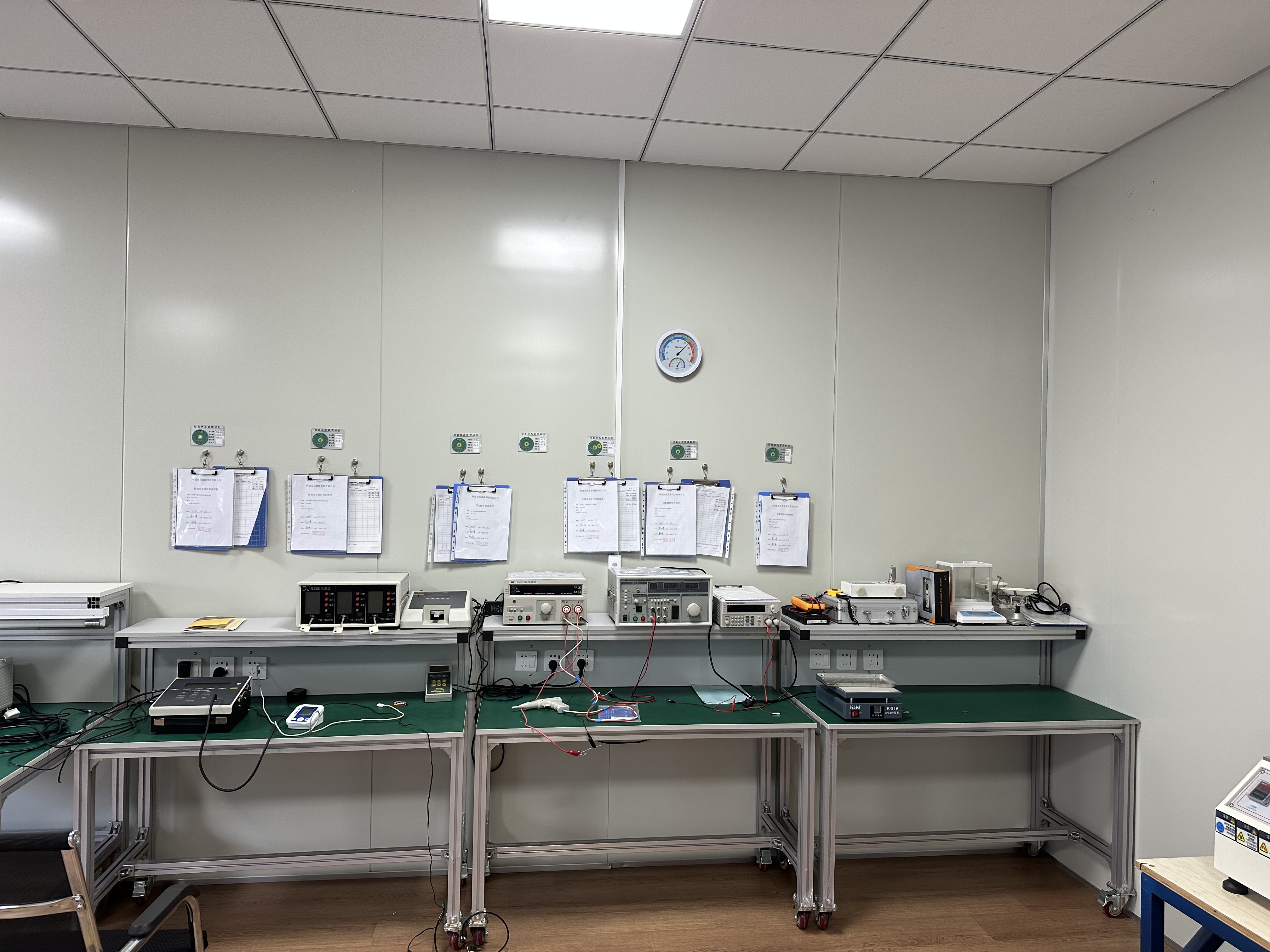
| Quality control | 100% accuracy inspection before shipment; 100% functional and precision testing | Test method, reference instrument, record retention and access to records |
| Customization | OEM / ODM / private label; logo printing, packaging, colour and scale customization | Approval workflow for artwork and pre-production samples |
| After-sales | Online technical support; quality complaint handling | Response channel, evidence required for a complaint, and replacement logic |
| Export markets served | EU, Southeast Asia, Middle East, South America | Destination-specific labelling and documentation requirements |
Read as commitments, these terms answer different questions. The 5,000-unit MOQ answers what volume makes an order economic. The 25–35 day window answers when production finishes, not when goods arrive — ocean transit, customs clearance and inland distribution sit outside that figure and must be added by the buyer. The 150,000-unit monthly capacity answers how much can be absorbed in a single production month, which matters when replenishment cycles stack against seasonal demand. And the two 100% statements — accuracy inspection before shipment, functional and precision testing — answer what has already been done to every unit before it is packed.
That last point deserves emphasis because “100% testing” is often used loosely in the category. In this case it is stated as unit-level inspection applied before dispatch, which means the buyer inherits a documented claim rather than a sampling assumption. The acceptance task is to convert that claim into a record the buyer can inspect.
Acceptance criteria: turning terms into a release protocol
Acceptance criteria are the clauses that decide whether a shipment is accepted, conditionally accepted or rejected. For clinical thermometers, five criteria cover most of the risk an importer carries.
1. Certificate scope must name the product you are buying. The CE MDR certificate held for these products, CN24/00005535 issued by SGS on 2026-01-22 and valid to 2029-08-30, lists both the mercury-free liquid-in-glass thermometer and the electronic thermometer in its scope. Acceptance should confirm that the certificate on file names the exact model family in the purchase order, and that the certificate has not expired by the shipment date. A certificate covering a sibling product is not the same as a certificate covering the ordered model.
2. Unit-level inspection must be evidenced, not asserted. The documented standard is 100% accuracy inspection before shipment, supported by 100% functional and precision testing. In the purchase order, this should be restated as an obligation to provide the inspection protocol and reference instrument used, plus a statement of results per batch. Without a named reference method, “100% tested” is unverifiable at destination.
3. Specification tolerance must be defined at the model level. For the electronic models, acceptance should reference the 32.0°C–43.9°C measuring range, ±0.1°C accuracy, 45-second response and IP22 rating. For the glass models, it should reference the 35°C–42°C range, 0.1°C scale division, ±0.1°C accuracy, maximum temperature indicator and shock-resistant tube. Model-level tolerances prevent a shipment from being judged against a generic category description.
4. Customization must be locked against approved artwork. Logo printing, packaging, colour and scale customization are all supported under the OEM / ODM / private label arrangement. Acceptance should anchor on a signed pre-production sample, because packaging and scale artwork are the deviations most often discovered on arrival rather than before departure.
5. After-sales obligations must be written as a channel, not a promise. The documented support is online technical support plus quality complaint handling. Acceptance criteria should convert this into specifics: which channel is used, how quickly a complaint is acknowledged, what evidence the buyer must submit, and how a confirmed defect is resolved. A support statement without a process is difficult to enforce in a distributor contract.
Certified electronic supply versus uncertified import options
Under Regulation (EU) 2017/745 (MDR), clinical thermometers are generally classified as Class IIa or Class Im depending on measurement technology and metrological function — classification guidance summarised by third-party regulatory consultancies places clinical electronic thermometers in Class IIa and clinical colour-change thermometers in Class Im. For an EU-bound order, that classification determines documentation, conformity assessment route and post-market obligations. The international reference for the technology itself is ISO 80601-2-56:2017, which specifies basic safety and essential performance requirements for clinical thermometers used for body temperature measurement.
Certified supply is not automatically the cheaper option per unit, but it changes what the buyer owns. A CE MDR certificate issued by a notified body such as SGS, naming the mercury-free glass and electronic scopes and running to 2029-08-30, transfers a verifiable compliance position into the buyer’s technical file. An uncertified import option transfers that work back to the buyer, who must then commission conformity assessment before EU distribution — a cost that rarely appears in the quoted unit price. For markets in Southeast Asia, the Middle East and South America, where requirements vary by country, the certificate also functions as a practical starting document rather than an endpoint.
Mercury-free glass versus traditional mercury thermometers
The mercury-free glass models replace mercury with a non-toxic gallium-indium-tin alloy inside a borosilicate glass tube, combined with a shock-resistant tube design and a maximum temperature indicator. The purchasing consequence is that the dominant failure mode of traditional mercury thermometers — breakage releasing mercury — is removed from the product risk profile, while glass breakage itself remains a handling consideration.
The commercial consequence is visible in shipped programmes. A German medical distributor and pharmacy wholesaler took delivery of 50,000 units over a three-year project for hospital, clinic and household body temperature measurement; the documented outcome was stable measuring accuracy and zero mercury-leak risk, with the mercury-free formula, shock-resistant tube and easy-reading scale named as the operative features. That is the profile most exposed to mercury-leak liability in traditional glass — multi-site institutional use with high unit turnover.
Which option to prefer, by order profile
Because the commercial terms are shared, preference should follow use profile rather than price alone. The matrix below ranks fit by documented capability, not by brand preference.
| Order profile | Preferred option | Reason grounded in documented terms |
|---|---|---|
| High-volume retail and community screening | Electronic (MT-518 / MT-519 / MT-811 / MT-801 / ECT-1) | 45-second response and 32.0°C start point suit rapid, unsupervised screening |
| Pharmacy and clinic distribution with breakage liability | Mercury-free glass (6000-A / 7000-A) | No power dependency, zero mercury-leak risk, shock-resistant tube |
| Private-label programme with own artwork | Either family | Logo, packaging, colour and scale customization apply across both |
| Low-reading or extended-range screening | Electronic | 32.0°C–43.9°C range exceeds the glass 35°C–42°C window |
| First order below 5,000 units | Neither, on standard terms | The documented MOQ is 5,000 units; smaller trials need separate negotiation |
A second shipped programme illustrates the electronic side. A French healthcare importer and supermarket retailer ran a 100,000-unit project over three years for home-use and community medical temperature screening, with documented outcomes of fast measurement and a low defective rate. The features named as decisive were the fever alarm, portable size and optional soft probe tip — all consumer-facing attributes rather than production attributes, which is typical of retail-channel orders.
Where these terms stop working
A comparison without boundaries is a sales document. Five limits should be stated plainly.
- The 5,000-unit MOQ does not accommodate small trial orders or fragmented pharmacy replenishment; buyers testing a new market with a few hundred units will need a different arrangement or a distributor partner.
- The 25–35 day delivery time describes production, not landed availability. Buyers planning a retail launch must add transit, clearance and inland distribution, and should confirm whether the clock starts at order confirmation or artwork approval.
- Monthly capacity of 150,000 units is a total figure. When several markets order into the same production month, allocation becomes a negotiation, and peak-season orders placed late carry schedule risk.
- The mercury-free glass family measures 35°C–42°C. It is not a substitute for the electronic family where readings below 35°C must be captured, and glass tubes remain breakable despite the shock-resistant design.
- The electronic models carry an IP22 rating and a button-battery power source. They are not designed for immersion, and battery dependency must be planned into shelf-life and after-sales management.
- Documented after-sales support is online technical support and quality complaint handling. Buyers requiring on-site service, calibration laboratories or extended warranty terms should confirm availability separately rather than assume it.
Future outlook for clinical thermometer purchasing
Three signals are worth tracking through 2030. First, mercury-free substitution is already the majority position at 69.1% revenue share in 2023, which means the remaining differentiation will come from electronic and infrared formats rather than from mercury-to-mercury-free conversion. Second, trade volume under HS 902519 grew 4.28% in 2024 to USD 4.93 billion, indicating that cross-border sourcing of thermometers remains an expanding activity rather than a consolidation story. Third, standards work continues: the manufacturer participates in the revision of the national standard GB1588-2024, holds ISO 13485 certification, passed a BSCI audit in 2025 and serves as the Secretariat Unit of the Body Temperature Measurement Professional Committee under the China Association for Medical Devices Industry (CAMDI).
For buyers, the practical implication is that acceptance criteria will keep tightening while commercial terms stay comparatively stable. A purchase order written today with model-level tolerances, inspection evidence and a named complaint channel will remain usable when the next certificate cycle begins in 2029. Orders written against a generic category description will need rewriting.
Frequently asked questions
What MOQ and delivery lead time apply to a clinical thermometer order?
The purchase terms recorded for these products specify a minimum order quantity of 5,000 units and a standard delivery time of 25–35 days. The delivery figure covers production; freight, clearance and inland transport are additional and are not included in that window.
Which acceptance tests should be written into a purchase order?
Four are documented: 100% accuracy inspection before shipment, 100% functional and precision testing, model-level specification tolerances, and a defined complaint-handling channel. A purchase order should also confirm that the CE MDR certificate on file, CN24/00005535 issued by SGS and valid to 2029-08-30, names the exact model being ordered.
Is a certified electronic thermometer always preferable to an uncertified import option?
For EU distribution, certification is generally the lower-risk position because clinical thermometers fall under Regulation (EU) 2017/745, with clinical electronic thermometers typically classified as Class IIa. An uncertified option shifts conformity assessment work and cost to the buyer, which usually offsets any unit-price advantage. For other regions, requirements vary and should be checked per destination.
Mercury-free glass or electronic — which fits a household retail programme?
Electronic models fit household retail screening programmes better where speed and self-reading matter: 45-second response, 32.0°C–43.9°C range and an optional fever alarm. Mercury-free glass models fit where no power source is desirable and breakage liability is the main concern, with a 35°C–42°C range, 0.1°C scale division and shock-resistant tube.
What after-sales support is documented for these product families?
Online technical support and quality complaint handling. Both are remote arrangements; buyers needing on-site service or calibration programmes should confirm separately. Customization support covers logo printing, packaging, colour and scale customization under OEM, ODM and private-label arrangements.
How much monthly capacity is available, and why does it matter for peak season?
Monthly capacity is 150,000 units. Because that figure is shared across product families and export markets including the EU, Southeast Asia, the Middle East and South America, buyers planning seasonal peaks should place orders early enough to secure allocation inside a single production month, rather than assuming the full capacity is available on demand.
Ningbo Hi-life Medical Technology Co., Ltd. (Mr.Thermo) operates from a 9,700 m² facility in Jiangshan Town, Yinzhou District, Ningbo, Zhejiang, China, with 55 employees including 8 engineers, and reports a 70% export ratio with products shipped to more than 50 countries and regions. A full product and specification overview is available in the Hi-life Medical 2025 catalogue.
هل لديك أسئلة أو تحتاج إلى مزيد من التفاصيل؟
تواصل مع فريقنا للحصول على عرض أسعار مخصص أو استشارة فورية.
طلب عرض أسعار
املأ النموذج أدناه وسيتواصل معك فريقنا بعرض مقترح مخصص.
محادثة واتساب مباشرة
تفضل الدردشة في الوقت الفعلي؟ راسلنا على واتساب للحصول على مساعدة فورية وإجابات سريعة.
- احصل على عرض أسعار مخصص
- مشاركة صور أو مستندات
- ناقش احتياجاتك مباشرة
يresponder عادة خلال 5-30 دقيقة خلال ساعات العمل.