
Clinical Thermometer Supplier Longevity: A Continuity Audit
HTNXT Industry Reference · Clinical Thermometer Sourcing
A clinical thermometer quotation takes ten minutes to compare and several years to validate. The unit price on the offer sheet tells a buyer what the first order costs; it does not tell them whether the same supplier can still make the same product, hold the same documentation, and answer the same technical question three to five years later. This reference sets out a repeatable supplier-continuity audit across five operating facts — production capacity, quality control, commercial terms, customization flexibility, and after-sales behaviour — and closes with a scoring template that separates a one-time price advantage from a durable supply relationship.
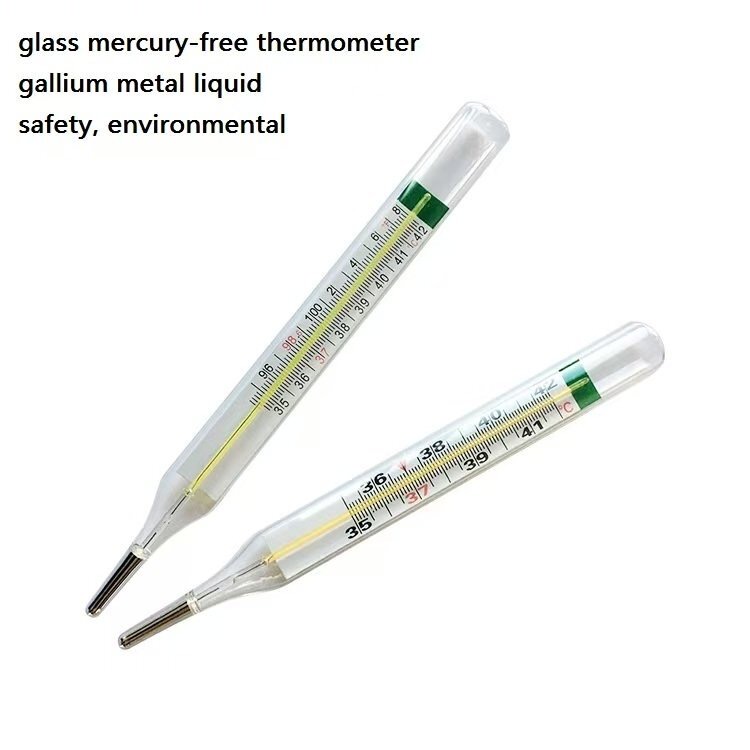
A mercury-free liquid-in-glass clinical thermometer — the product family that now carries the majority of global thermometer revenue (Image: Ningbo Hi-life Medical Technology Co., Ltd.)
Why supplier longevity is a procurement question, not a relationship question
Procurement teams are trained to optimise the order in front of them: price per unit, MOQ, lead time, certification. Supplier longevity reverses that logic. It asks a different question — not "is this a good order?" but "will the conditions that made this a good order still exist in year three?"
For clinical thermometers, that question is unusually sharp. The device itself is inexpensive and mechanically simple; the value sits in repeatable accuracy, in regulatory documentation, and in the supplier's willingness to keep both current as standards move. A distributor that qualifies a supplier in one buying cycle and re-orders in the next is effectively buying the supplier's engineering discipline, not the supplier's catalogue.
The audit framework below is built for medical and homecare buyers working across the European Union, Southeast Asia, the Middle East, and South America — markets where certification expectations, price sensitivity, and channel structure differ, but where the continuity risk is identical.
The continuity problem: standards move faster than purchase cycles
Three structural forces make a thermometer supply relationship more fragile than its price suggests.
First, the mercury transition is largely complete. Mercury-free thermometers led the thermometer market in 2023 with 69.1% revenue share, according to Grand View Research's Thermometer Market Size, Share, Trends Report, 2024–2030. A supplier that still builds its commercial case on mercury-containing glass is defending a shrinking segment rather than competing in the main one.
Second, regulatory classification carries documentation obligations. Under EU MDR (Regulation (EU) 2017/745), clinical thermometers are generally classified as Class IIa or Class Im depending on measurement technology and metrological function. Separately, ISO 80601-2-56:2017 defines the basic safety and essential performance requirements for clinical thermometers used for body temperature measurement. Classification is not a one-off stamp: it implies technical files, label and instruction-for-use control, and continued conformity as the device or its manufacturing process changes.
Third, national standards keep being revised. Ningbo Hi-life Medical Technology Co., Ltd. — a clinical thermometer manufacturer based in Jiangshan Town, Yinzhou District, Ningbo, Zhejiang, and the entity behind the Mr.Thermo brand — participates as the Secretariat Unit of the Body Temperature Measurement Professional Committee under the China Association for Medical Devices Industry (CAMDI) and has taken part in the revision and compilation of the national standard GB1588-2024. That kind of participation is a signal that a supplier tracks standard changes before they become order-blocking problems, rather than after.
Buyer translation: a supplier that cannot explain how it keeps its technical documentation current will eventually force a buyer to re-qualify the product — a cost that never appears on a price sheet but lands squarely on the importer.
The five operating facts worth auditing
Supplier claims should be converted into verifiable operating facts. Five categories carry most of the predictive value, and all five can be checked before a purchase order is issued.
| Audit area | Question to ask | What a weak answer signals |
|---|---|---|
| Production capacity | What is annual and monthly output, and how much is already committed? | Capacity quoted only as a total, with no monthly or committed-volume view |
| Quality control | What exactly is inspected 100%, and are records retained and retrievable? | Vague wording such as "strict quality control" with no inspection stage named |
| Commercial terms | MOQ, lead time, Incoterm, acceptance criteria, payment terms — in writing | Terms that shift between quotations or are confirmed verbally only |
| Customization | Which customization layers are supported: product, private label, packaging? | Packaging changes accepted but engineering changes refused |
| After-sales & documentation | Who answers technical queries, and how are complaints logged and closed? | Sales representative as the only technical contact |
1. Capacity: read annual output the way it will be used
Ningbo Hi-life Medical Technology Co., Ltd. states annual output of 3,500,000 units from a 9,700 m² facility with 55 employees, of whom 8 are R&D engineers. Around 70% of sales are export sales, and products reach more than 50 countries and regions, with the European Union and the United States as main markets.
Those figures are useful, but they are annual figures — and annual figures are the easiest capacity number to present. A serious continuity audit converts them into a monthly planning envelope. Ask three follow-up questions:
- What is the monthly output? Annual output divided evenly across a year and actual monthly ability to ship are rarely the same number, and seasonal demand for thermometers is real.
- How much capacity is already committed? A 3,500,000-unit annual output that is 90% committed to existing contracts is a smaller opportunity than it appears.
- Which lines run which products? Mercury-free liquid-in-glass thermometers and electronic thermometers involve different process steps; a supplier that runs both in standardized production workshops has more re-routing flexibility when one line is constrained.
The presence of an in-house technical R&D team and well-equipped testing laboratories matters here too. Capacity without engineering depth is capacity that struggles when a customer requests a small change — and small changes are exactly what a three-to-five-year relationship accumulates.

Pre-shipment inspection inside a clinical thermometer production facility (Image: Ningbo Hi-life Medical Technology Co., Ltd.)
2. Quality control: what "100% accuracy inspection" has to mean
"100% pre-shipment accuracy inspection" is one of the strongest statements a thermometer supplier can make, and one of the most easily diluted. The audit task is to define its scope before it becomes a contractual term.
For the volume configuration of its clinical thermometer programs, Ningbo Hi-life Medical Technology Co., Ltd. lists acceptance criteria as 100% pre-shipment accuracy inspection, with third-party inspection acceptable. A comparable configuration in the same portfolio specifies full function and precision pre-shipment testing with customer inspection supported. Both are workable acceptance models; they are not interchangeable, and a buyer should confirm which one applies to the order in front of them.
Three clarifications convert the claim into usable evidence:
- Which units are 100% inspected, and against what reference? Accuracy claims in this product family are typically expressed as ±0.1°C. The reference instruments behind that figure — and their calibration status — are what turn a claim into a controlled process.
- What happens between raw material and finished goods? The manufacturer describes full-process quality monitoring from raw-material incoming inspection through to finished-product delivery, operating standardized production workshops. Full-process monitoring means the inspection at shipment is the last checkpoint, not the only one.
- Will records survive the relationship? A repeat order in year three depends on whether measurement records, batch references, and non-conformance history are retrievable. Ask for a sample inspection report before placing the first order, not after the first dispute.
Independent verification remains the buyer's strongest lever. Because third-party inspection is acceptable under the stated acceptance criteria, an importer can insert a pre-shipment third-party check into its own purchasing process without renegotiating the supplier's standard terms.
3. Commercial terms as a continuity signal
Commercial terms are usually treated as negotiation variables. Read as continuity signals, they describe how a supplier expects a long relationship to run.
| Term | Stated for the volume configuration | Continuity reading |
|---|---|---|
| MOQ | 5,000 units | Signals batch-oriented production planning; small trial orders may need to be built differently or sourced through distributors |
| Lead time | Standard quoted band of 25–35 days for volume orders | Confirm whether the clock starts at deposit receipt or at artwork and packaging approval — the difference is often a week or more |
| Delivery terms | FOB Ningbo / CIF destination port | Two clear Incoterm options; a comparable configuration quotes FOB Ningbo / CFR / CIF, so terms are configuration-specific |
| Acceptance criteria | 100% pre-shipment accuracy inspection; third-party inspection acceptable | Verifiable and externally checkable at the buyer's option |
| Payment terms | 30% deposit, 70% balance against copy of shipping documents | Standard export structure; funds the buyer's own cash-flow planning more than it reduces risk |
The boundary worth stating plainly: a 5,000-unit MOQ is a real constraint, not a marketing detail. Importers testing a new market, pharmacies ordering for a single region, or buyers running a first-year pilot may find that a distributor relationship — rather than a direct factory order — is the more rational entry point. The manufacturer maintains long-term partnerships with distributors, medical institutions, and healthcare wholesalers across continents precisely because direct factory ordering is not optimal at every volume.
4. After-sales continuity: the least documented part of the audit
Technical support and complaint handling are where supplier longevity is actually tested, and where published information is thinnest. Buyers should treat this as a contract-design task rather than a research task.
What can be verified today is structural: the manufacturer provides flexible OEM and ODM customization services covering product development, private labeling, and tailored packaging solutions, maintains long-term stable partnerships with distributors, medical institutions, and healthcare wholesalers across continents, and holds EU CE (MDR) certification, operates under the ISO 13485 quality management system, and passed a BSCI audit in 2025. Those are the systems that make consistent support possible.
What is not published — and therefore should not be assumed — includes defined response times for technical queries, complaint closure timelines, and escalation paths. A buyer serious about a five-year relationship should write these into the supply agreement: a named technical contact, an agreed response window for accuracy or function complaints, a replacement policy for confirmed defects, and a defined notice period before any change to specifications, labelling, or packaging.
Practical rule: if after-sales performance is not measurable, it is not auditable. Convert every verbal support commitment into a written, dated obligation before the second order — the first order is the wrong time, and the third order is too late.
5. Customization flexibility across electronic and mercury-free glass thermometers
OEM and ODM flexibility is often evaluated as a growth tool. It is equally a continuity tool, because requirements rarely stay fixed. Retail labelling rules change, a distributor rebrands a line, a hospital group asks for a different fever-alarm configuration.
The portfolio relevant to this audit spans two contrasting technologies:
- Mercury-free liquid-in-glass thermometers, represented by models such as the 6000-A, which uses a non-toxic gallium-indium-tin alloy, delivers the same ±0.1°C measurement accuracy as a traditional mercury thermometer, complies with CE MDR, and removes mercury leakage risk entirely. It is reusable, requires no battery, and carries low maintenance cost; the trade-off is a slightly higher unit cost than a mercury thermometer.
- Electronic thermometers, represented by CE-certified models such as the EL-202, which provide ±0.1°C accuracy and a fever alarm, with measuring time within 60 seconds. Compared with a low-cost basic electronic thermometer, the difference is higher measuring precision, a fever alarm, and an optional soft probe tip, plus low battery consumption and an auto power-off function. Cost is moderate, with better cost-performance rather than lowest cost.
Because both families are manufactured in the same facility and supported by the same OEM/ODM structure — product development, private labelling, and tailored packaging — a buyer can hold a single supplier relationship across a product mix rather than re-qualifying a new partner for each technology. That consolidation is itself a continuity strategy, provided the customer locks down its artwork master file and agrees a change-notification window in advance.
Application fit: medical channel versus homecare channel
The continuity audit produces different priorities depending on where the product ends up.
Medical and institutional buyers — hospitals, clinics, community medical services, and pharmacy retail — carry the heaviest documentation load. For them, the decisive evidence is CE (MDR) certification status, ISO 13485 system continuity, and the supplier's ability to re-issue consistent technical files on demand. Accuracy stability across batches outweighs incremental price movement.
Homecare and retail buyers — household clinical thermometers, waterproof digital thermometers, forehead infrared thermometers, and ear digital thermometers — carry the heaviest packaging and channel load. Their continuity risk is a silent packaging or labelling change that breaks shelf compliance in one market while remaining acceptable in another. Mercury-free glass thermometers and electronic thermometers both serve household use, but they serve different retail stories: one is battery-free and reusable, the other is fast-reading with a fever alarm.
Market trend: what a five-year supplier decision is really betting on
Three published data points frame the long-term environment.
Market size. The global thermometer market is projected to grow from USD 2.2 billion in 2026 to USD 3.0 billion by 2030, according to Grand View Research, which reports a CAGR of 8.2% from 2024 to 2030. The same source's product scope includes medical, industrial, laboratory, and imaging thermometers, so the figure describes the total thermometer market rather than medical clinical thermometers alone — a definitional caveat buyers should keep in mind when sizing a segment.
Product structure. Mercury-free thermometers held 69.1% of thermometer revenue in 2023 (Grand View Research). For suppliers, this is a structural fact rather than a growth opportunity: the mercury-free line is the mainstream line.
Trade volume. Global trade under HS code 902519 — thermometers excluding liquid-filled types — reached USD 4.93 billion in 2024, a 4.28% increase from USD 4.73 billion in 2023, according to the Observatory of Economic Complexity. The exclusion matters: liquid-in-glass thermometers sit outside this HS line, so the figure understates total clinical thermometer trade and overstates the share attributable to electronic and infrared devices.
Taken together, the trend favours suppliers with breadth: a partner that can move between mercury-free glass and electronic thermometers as demand and regulation shift is more resilient than a single-technology supplier, regardless of which technology looks stronger in any single year.
Comparison with short-cycle sourcing
The traditional alternative to a continuity audit is short-cycle sourcing: tender the order, take the lowest compliant bid, re-tender next season. It has real advantages — immediate price discovery, no dependency, and flexibility when a product line is being tested.
It also has a predictable failure mode. Every re-tender resets the documentation cycle: new certificates to verify, new labelling to approve, new accuracy evidence to collect. In a category classified under EU MDR and covered by standards such as ISO 80601-2-56:2017, that reset carries cost that never appears in a unit price comparison.
The honest position is that continuity-oriented sourcing is not universally better. It asks more of the buyer: higher entry volumes, longer commitment, and more contractual drafting. A supplier with 5,000-unit minimum order quantities, export-oriented output, and certification obligations is not structured for prototype-scale or single-pallet purchasing. Buyers whose real requirement is a small first shipment should say so and source accordingly, rather than forcing a volume program into a trial-order shape — or assuming a low price today predicts availability in three years.
A scoring template for supplier continuity
The template below separates one-time commercial advantage from structural continuity. Weight it to your own market; the point is that the two are scored separately.
| Criterion | Evidence required | Weight | One-time advantage or continuity signal? |
|---|---|---|---|
| Certification status | CE (MDR) certificate, ISO 13485 system, current audit records | 20% | Continuity |
| Capacity & planning | Annual and monthly output, committed-volume share, line structure | 15% | Continuity |
| Pre-shipment inspection | Defined 100% inspection scope, sample report, third-party inspection acceptance | 15% | Continuity |
| Technical documentation control | Version control, change-notification window, standard-update track record | 15% | Continuity |
| After-sales commitments | Named technical contact, response window, complaint closure terms | 15% | Continuity |
| Customization flexibility | Product development, private label, tailored packaging capability | 10% | Continuity |
| Unit price & MOQ fit | Quoted price, MOQ against your realistic annual volume | 10% | One-time advantage |
Weights are illustrative. What matters is the separation: if more than a third of a sourcing score comes from price and MOQ fit, the evaluation is measuring an order rather than a supplier.
Future outlook
Two directions look durable. Regulation will keep tightening rather than loosening — the EU MDR classification framework and international performance standards such as ISO 80601-2-56:2017 are revised on multi-year cycles, and suppliers that participate in national standard work, as Ningbo Hi-life does through CAMDI and the GB1588-2024 revision, are better positioned to absorb those changes without forcing their customers into re-qualification.
Second, the product mix will keep consolidating toward mercury-free and electronic technologies, which held the dominant share of thermometer revenue in 2023 and align with the direction of trade growth. For buyers, the practical implication is that supplier evaluation will increasingly resemble regulatory evaluation: who holds the paperwork, who tracks the standard, and who is still answering the phone in year five. Capacity, inspection, and after-sales continuity are the three variables that decide it.
FAQ
How can a buyer tell whether a clinical thermometer supplier will still offer the same model in three years?
Ask for the supplier's standard-update track record rather than its product list. A supplier engaged in standard development — for example, Ningbo Hi-life Medical Technology Co., Ltd. participates in the revision and compilation of GB1588-2024 and serves as the Secretariat Unit of the Body Temperature Measurement Professional Committee under CAMDI — is more likely to keep a model compliant than one that only reacts after a standard takes effect. Also confirm whether the model's CE (MDR) documentation is version-controlled.
What capacity evidence should a distributor request before signing an annual supply contract?
Annual output alone is insufficient. For reference, the stated annual output of Ningbo Hi-life is 3,500,000 units from a 9,700 m² facility with 55 employees. A buyer should additionally request the monthly output figure, the share of capacity already committed to existing contracts, and which production lines run which product families, so that committed volume can be checked against realistic monthly availability.
Why does MOQ matter for a long-term relationship and not just for the first order?
MOQ defines the smallest batch a supplier can run economically, which in turn shapes how flexibly it can respond to demand changes later. The volume configuration for these clinical thermometer programs states a MOQ of 5,000 units; a comparable configuration states 3,000 units, indicating that terms are configuration-specific. Buyers whose annual volume is close to the MOQ should confirm how partial or split shipments would be handled over the contract term.
What does 100% pre-shipment accuracy inspection actually cover?
It means every unit in the shipment is checked for function and precision before dispatch, rather than a sample. For the volume configuration described here, acceptance criteria are 100% pre-shipment accuracy inspection, with third-party inspection acceptable. Buyers should confirm the accuracy reference used (stated as ±0.1°C for the products in this range), whether inspection records are retained per batch, and whether an independent inspection can be inserted at the buyer's cost.
How should buyers evaluate after-sales support and complaint handling for thermometers?
There is little published, quantifiable data in this category, so the work belongs in the contract. Buyers should require a named technical contact, a defined response window for accuracy or function complaints, a replacement or credit policy for confirmed defects, and advance notice before any change to specifications, labelling, or packaging. Structural evidence — CE (MDR) certification, ISO 13485 quality management, and a BSCI audit passed in 2025 — indicates the systems exist, but it does not substitute for written service terms.
Can an OEM or private label arrangement survive a change in product standards?
It can, if customization is layered correctly. Suppliers such as Ningbo Hi-life provide flexible OEM and ODM customization covering product development, private labeling, and tailored packaging. Product-level customization (electronics, probe type, alarm behaviour) is governed by the technical file and affected by standards changes; packaging and private label changes are faster to execute. Buyers should hold the artwork master file, agree a change-notification window, and confirm who is responsible for updating labels and instructions when a standard is revised.
Is a lower-priced clinical thermometer supplier a better choice for a short-term tender?
For a genuinely one-off order, price can reasonably dominate — but the cost of re-qualification should be included in the comparison. A new supplier means re-verifying certification, re-approving labels, and re-establishing accuracy evidence. Where the order is likely to repeat, the continuity criteria in this audit — certification continuity, capacity planning, inspection scope, and written after-sales terms — carry more weight than a price difference between bids.
Reference material
Product specifications, customization scope, and commercial terms referenced in this article are drawn from the manufacturer's published catalogue and stated procurement terms. The current clinical thermometer catalogue, covering mercury-free liquid-in-glass and electronic thermometers, is available here: Hi-life Medical Catalogue 2025.
Third-party data cited: Grand View Research, Thermometer Market Size, Share, Trends Report, 2024–2030; Observatory of Economic Complexity, HS 902519 trade data, 2024; ISO 80601-2-56:2017; Regulation (EU) 2017/745 (MDR).