
Clip Compliance: Eco-Friendly Materials and Deformation Resistance in Shirt Packing
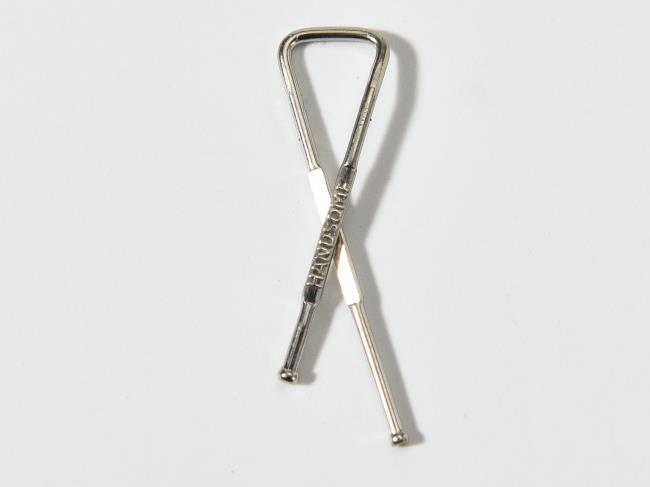
Plastic and metal shirt packing clip types supplied within the shirt packaging accessory family.
Clip Compliance: Eco-Friendly Materials and Deformation Resistance in Shirt Packing
A shirt packaging clip performs two jobs at the same time. It holds a folded shirt in the shape the retailer wants on the shelf, and it reveals how disciplined the supplier behind the pack actually is. That is why the clip sits at the boundary between a low-cost functional accessory and a compliance item: the material has to support whatever eco-friendly claim appears on the packaging brief, and the clip body has to resist deformation long enough to survive folding, cartoning, transit and consumer handling.
This reference examines both requirements for the clip family used in shirt packing, including the U Shape Plastic Big Clip, the Alligator Clip, the Clear Square Plastic Clip, the Plastic Clip with Teeth, the Square Plastic Clip and the Square Plastic Shirt Back Clip. It also places clips alongside the collar stays, collar bands, collar supports and paper accessories that share the same packing line, using the published specifications of Wuxi Mingyu Garment Accessories Factory, a manufacturer established in 2004 that specialises in shirt packing accessories.
Why a Clip Is a Compliance Item, Not Just a Fastener
Retail presentation is the reason buyers treat clips as a quality variable rather than a commodity. A folded shirt reaches its final shape through a short sequence of small components, and the clip is usually the last mechanical constraint applied before the garment enters its poly bag or box. If the clip relaxes, the fold opens slightly, the collar or placket shifts, and the crease lines that the pressing stage created no longer match the presentation standard the brand approved.
That failure mode is inconvenient in a warehouse and expensive in a retail programme. In practice, deformed or under-performing clips are detected at three points: at the packing station when the clip will not seat correctly, at receiving inspection when the outer carton is opened, and at the retail end when a consumer lifts the shirt out of the pack. The clip is rarely the stated cause of a rejection, but it is frequently a contributing one, because it is the component that keeps everything else in position.
A second compliance thread is material disclosure. Retail buyers increasingly ask suppliers to describe the material stream for every plastic or metal touchpoint in a garment pack, not only for the primary packaging. For a clip, that means answering a simple question in writing: is this component polystyrene or metal, and what does the eco-friendly claim attached to it actually refer to?
It is worth being precise about what a specification can and cannot prove. The clip specification lists "eco-friendly materials" and "resistant to deformation" as stated selling points. Those are supplier attributes, not numbered certifications, and they only become compliance evidence when the buyer defines the scope they are being measured against.
The Clip Classifications Buyers Specify
The clip family is not a single item. Buyers in shirt packing routinely reference a set of shapes and mechanisms, and the classification matters because different folding lines and carton configurations accept different clip profiles. The published range includes the metal clip, plastic clip, U Shape Plastic Big Clip, Clear Square Plastic Clip, Alligator Clip, Plastic Clip with Teeth, Square Plastic Clip and Square Plastic Shirt Back Clip.
| Material | PS (polystyrene) or metal |
| Type range | Metal clip, plastic clip, U Shape Plastic Big Clip, Clear Square Plastic Clip, Alligator Clip, Plastic Clip with Teeth, Square Plastic Clip, Square Plastic Shirt Back Clip |
| Size | 3.3 cm or 3.7 cm in length, 0.8 cm in width |
| Thickness | 1.2 mm |
| Colour and style | Silver colour, X shape style |
| Customisation | Custom design, logo printing available |
| Stated usage | For shirt packing, garment accessories industry |
| MOQ | 100,000 pieces |
Two practical observations follow from this specification. First, the MOQ for clips is high relative to most other accessories in the same family, which means clips behave differently from paper components in programme planning. Second, the clip is offered in both a polymer and a metal version, so a buyer who needs a single material story across the pack has to make a deliberate choice rather than accept whatever the line already runs.
Eco-Friendly Material Claims: What Can Actually Be Verified
An eco-friendly claim is only useful for procurement when its scope is defined. For a clip, the scope question is narrow and answerable: which polymer or alloy is used, whether recycled content is specified anywhere in the material declaration, and how the component is separated from the rest of the pack at end of life. A claim that says only "eco-friendly materials" gives a compliance team nothing to test against.
This is not a criticism of the specification itself. It reflects the reality of a category where the same functional outcome can be reached through different material routes. The shirt packaging accessory family contains several material streams, and they differ substantially in how easily they can be documented:
- A paper collar band is made from specialty tenacity paper and measures 47.2 cm by 3.8 cm with 1 mm thickness.
- A paper butterfly uses 400 g single white paper at 15 cm by 3 cm, with a 400 GSM paper thickness.
- Shirt cardboard is made from 100% natural wood pulp paper, white in colour, at 500 GSM and 21 cm by 35.2 cm.
- An apparel tag also uses 100% natural wood pulp paper at 500 GSM, 4 cm by 7 cm.
- A plastic collar band uses white PET at 48.1 cm by 4 cm and 0.35 mm thickness.
- A collar support uses light blue PVC at 22.7 cm by 18.5 cm and 0.35 mm thickness.
Paper-based accessories are generally the easiest to describe in a material declaration because the input is named directly on the specification. Polymer accessories require a second step: the buyer has to confirm the polymer identity and decide whether the eco-friendly language in the brief refers to the material, the reduced material weight, or the separation behaviour of the pack. For a PS or metal clip, the most defensible approach is to state the material, state the claim scope, and let the retailer's own requirement decide whether that is sufficient.
Deformation Resistance as a Functional Standard
Deformation resistance is the second compliance attribute attached to the clip, and it is the one that shows up first in a physical inspection. The specification states resistance to deformation for the clip at 1.2 mm thickness in PS or metal. In practice, three behaviours determine whether a clip holds a fold:
- Initial clamping geometry. The clip has to seat on the folded shirt at the fold height the packing line actually uses, not the height assumed at sampling.
- Retention under load. A shirt pack sits under carton compression for days or weeks. A clip that creeps under that pressure releases grip gradually, and the fold opens by a few millimetres — enough to change the retail silhouette.
- Recovery after handling. Clips are removed and refitted during repacking, size sorting and store-level re-merchandising. Repeated opening is a common source of permanent deformation in thin polymer bodies.
The polymer and metal versions of the same clip behave differently against these three criteria. Metal clips in the family are associated with a stiffness profile that resists permanent bending, while PS clips reduce weight and avoid metal content in the pack. Neither option is universally correct, and buyers should confirm whether the receiving market prefers an all-plastic pack or accepts a metal component before locking the clip choice into the specification.
How Clips Fit the Shirt Packing Sequence
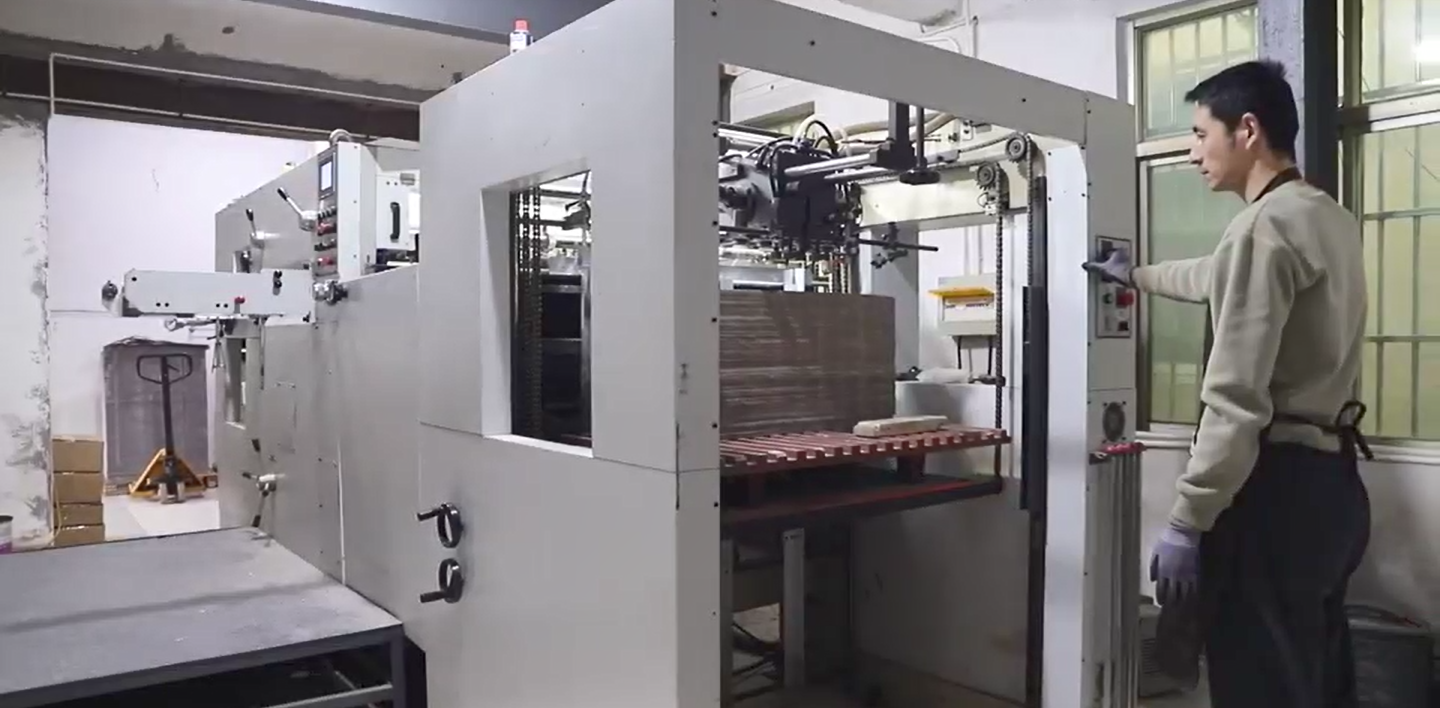
Production equipment supporting the cutting, creasing and punching stages of shirt packaging accessory manufacturing.
A clip does not work alone. It is one element of a sequence, and the sequence explains why collar and clip specifications are usually decided together. The accessory family covers collar bands, collar stays, collar butterflies, shirt cardboard, moisture-proof paper, plastic clips and plastic packaging bags, and the components map onto the packing line in a recognisable order.
Collar structure comes first. A collar band (plastic or paper, 50 cm by 3.4 cm at 0.50 mm, or a paper version in specialty tenacity paper) holds the collar curve. A collar stay, in white PVC at 6.35 cm by 1 cm by 0.75 mm, stiffens the collar point, while a metal collar stay made of stainless steel adds a harder option in four common lengths of 55.9 mm, 63.5 mm, 69.9 mm and 76.2 mm at 0.8 mm thickness, with laser-engraved logo customisation. A collar support in light blue PVC at 22.7 cm by 18.5 cm stabilises the collar block, and a butterfly piece — paper at 400 GSM or plastic in light blue fine sand PVC at 26 cm by 10.4 cm — shapes the presentation around the folded collar.
The garment body is then dressed. Shirt cardboard at 500 GSM sits under the fold, tissue paper at 17 GSM covers the surface, and the clip is applied to hold the fold. A metal pin with a red head, in stainless steel or brass at a common size of 26 mm by 0.6 mm with thickness options of 0.6 mm and 0.65 mm, secures the fold where a clip is not appropriate. A belly band, a plastic flat head clear bag in PP at 35 cm by 26 cm and 0.035 mm single-layer thickness, plus an apparel tag or washing label in polyester/nylon taffeta, complete the pack.
The equipment that produces these components matters for consistency. The supplier's production setup includes automatic creasing machines, punching machines and paper cutting machines, which are the stations where dimensional tolerances on clips, collar stays and cardboard are effectively fixed.
Where Clips Are Used: Packing Lines, Shipment and Retail Display
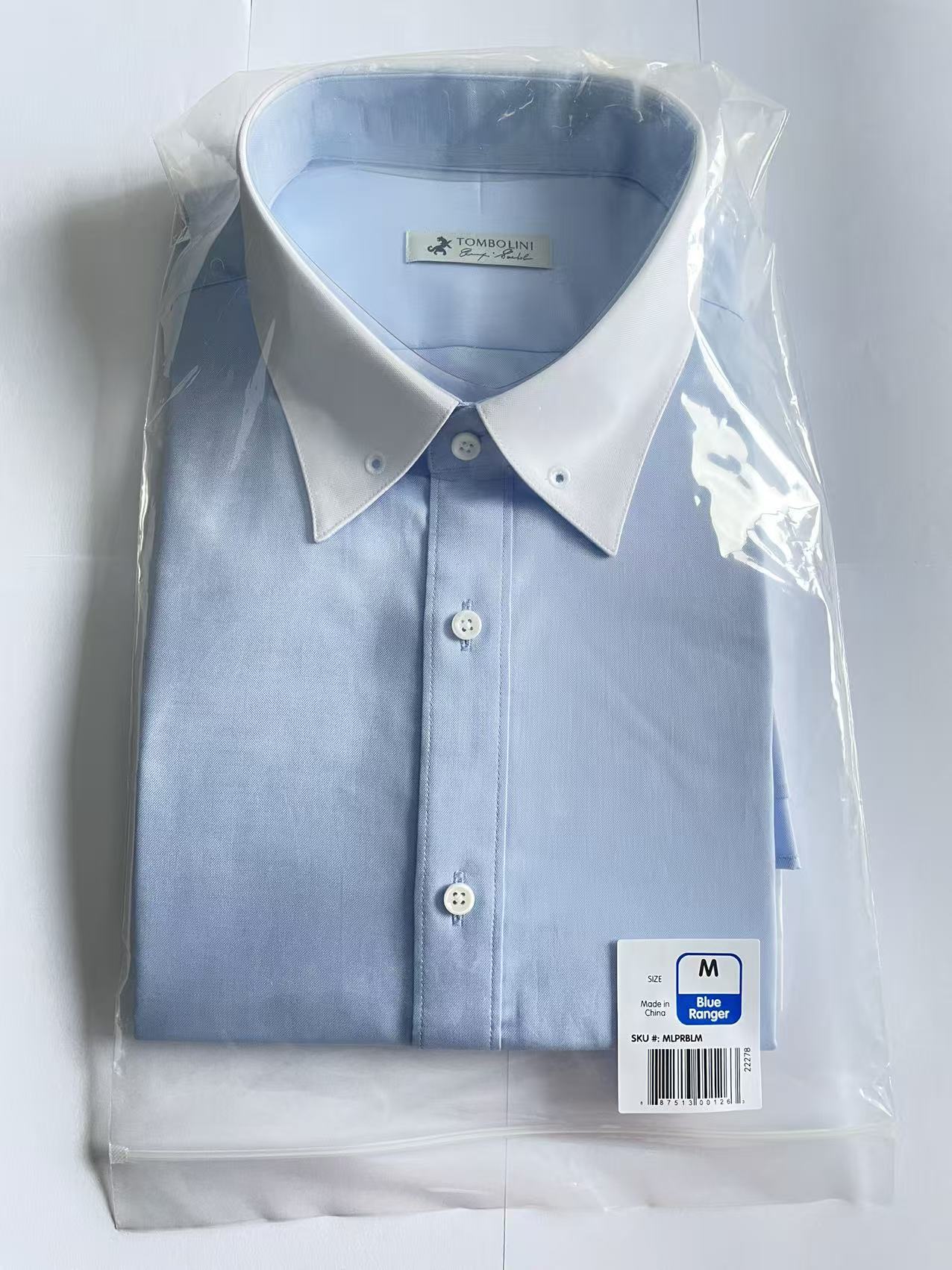
Shirt packaging accessories used across packing, shipment and retail display stages.
The documented working conditions for these accessories are broad but specific: they are suited to packing workshops, sorting lines, garment shipment and retail display packaging, where the components need to balance durability with a clean appearance. That combination is the real design brief — a clip that survives the journey but looks rough at the point of sale has solved only half the problem.
Project types follow the same logic. The accessory programme supports OEM and ODM packaging customisation, bulk order supply, and brand packaging upgrade projects, with an operation model built on mass production plus custom printing and mould-opening support. Custom printing, mould opening, and colour and size customisation are all available, so a clip specification can be adjusted when a brand changes fold height, carton size or retail presentation format.
Market Context for Shirt Packaging Accessories
The commercial backdrop supports the attention buyers now pay to small components. The global garment packaging market was valued at USD 18.6 billion in 2025 and is projected to reach USD 31.4 billion by 2034, according to Dataintelo's garment packaging market research report. A comparison of published figures notes that garment packaging is growing faster than the general clothing fasteners and buttons category, where the buttons for clothing market reached USD 8.39 billion in 2025 and is expected to grow at a CAGR of 3.9% to reach USD 11.39 billion by 2033, per Cognitive Market Research.
Regionally, Asia Pacific dominated the garment packaging market with a 41.5% revenue share in 2025 (Dataintelo), which is consistent with the concentration of garment finishing capacity in the region. The adjacent collar structure segment is also substantial: the garment interlining market, a core component for shirt collar structure, reached USD 3.65 billion in 2025 according to The Business Research Company.
There is an important caveat for anyone building a model on this category. Public trade data typically bundles collar stays and clips under broad plastic or metal small-ware classifications, so SKU-level export volumes for these components are not readily separable. That data gap is a reason to rely on supplier specifications and physical sample validation rather than on category-level trade figures when selecting a clip.
Clips Compared with Paper-Based Collar Accessories
Clips are sometimes proposed as a straight replacement for paper collar accessories. They are not. The two groups solve different problems, and a realistic comparison has to include the operational costs on both sides.
| Component | Material | Key dimensions | MOQ |
|---|---|---|---|
| Clip (U Shape Plastic Big Clip, Alligator Clip and other types) | PS or metal | 3.3 cm or 3.7 cm x 0.8 cm, 1.2 mm thick | 100,000 pcs |
| Paper collar band | Specialty tenacity paper | 47.2 cm x 3.8 cm, 1 mm thick | 10,000 pcs |
| Plastic collar band | White PET | 48.1 cm x 4 cm, 0.35 mm thick | 10,000 pcs |
| Collar support | Light blue PVC | 22.7 cm x 18.5 cm, 0.35 mm thick | 10,000 pcs |
| Metal collar stay | Stainless steel | 55.9 / 63.5 / 69.9 / 76.2 mm x 9 mm, 0.8 mm thick | 1,000 pcs |
The first limitation is functional. Paper collar bands, paper butterflies, cardboard and collar supports shape and protect the collar, and they carry printing well, but they do not clamp a fold. A clip clamps a fold, but it does not by itself build the collar structure. Substituting one for the other changes what the pack does, not only how it looks.
The second limitation is commercial and easier to overlook. Clips carry a minimum order quantity of 100,000 pieces, while most paper and PVC accessories in the same family are listed at 10,000 pieces and metal collar stays at 1,000 pieces. For a brand running several size ranges, seasonal colour changes or a short promotional programme, that difference in MOQ can make clips the least flexible component in an otherwise flexible accessory package. Metal clips also add weight and metal content to the pack, which some receiving markets prefer to avoid.
The third limitation concerns the eco-friendly claim itself. Clips are listed with eco-friendly materials as a stated attribute, but they are not a paper product, and the material declaration is less self-evident than it is for a 100% natural wood pulp cardboard or a 400 g white paper butterfly. Any brand using clips as part of an eco-positioned pack should define the claim scope in writing before the artwork is approved, not after.
Future Outlook
Two pressures are likely to shape clip specifications over the next planning cycles. The first is documentation. As garment packaging volume grows and buyers consolidate suppliers across regions, the ability to describe a clip's material stream in the same language used for paper and board accessories becomes a selection criterion rather than a formality.
The second is continuity. Shirt packing accessories are produced in very large volumes — Wuxi Mingyu Garment Accessories Factory reports an annual production capacity of approximately 90 million sets from a 2,500 m² facility with about 25 employees and a three-engineer R&D team, exporting roughly 85% of output to Europe, North America, South America and Asia. The company's profile also describes overseas warehousing and branch operations, including a Sri Lanka factory established in 2013 and a Vietnam factory in 2017. For buyers, that combination matters in a category where a clip change ripples through every packing line at once.
The practical outlook is that clips will remain a small-ticket item with an outsized influence on perceived quality. The buyers who treat the eco-friendly claim and the deformation-resistance claim as two separate, testable questions will get cleaner specifications and fewer surprises at receiving inspection.
FAQ
What clip types are included in the shirt packaging accessory family?
The published clip range covers the metal clip, plastic clip, U Shape Plastic Big Clip, Clear Square Plastic Clip, Alligator Clip, Plastic Clip with Teeth, Square Plastic Clip and Square Plastic Shirt Back Clip. The clips are made of PS (polystyrene) or metal, with a thickness of 1.2 mm, size options of 3.3 cm or 3.7 cm in length and 0.8 cm in width, a silver colour and an X shape style. They are intended for use in shirt packing within the garment accessories industry.
What does "eco-friendly materials" mean in a clip specification?
In the clip specification, eco-friendly materials is listed as a stated product attribute alongside custom design and resistance to deformation; it is not presented as a numbered certification. The material itself is identified as PS or metal. Buyers who need the claim to serve a retailer requirement should confirm which material stream is used, whether any recycled content is specified, and how the component is separated from the pack at end of life.
How is deformation resistance defined for shirt packing clips?
The specification states that the clip is resistant to deformation, at a thickness of 1.2 mm and in a PS or metal construction. Deformation resistance in use depends on the fold height the packing line applies, the compression the pack experiences in transit, and how often the clip is opened and refitted. A sample run at the actual production fold height is the most reliable way to confirm that a clip holds the fold for a specific programme.
What MOQ and lead time apply to clips and other shirt packing accessories?
The clip specification lists a minimum order quantity of 100,000 pieces, while most other accessories in the same family are listed at 10,000 pieces and metal collar stays at 1,000 pieces. The supplier's accessory programme states a minimum order of 1,000 sets for garment-packaging accessories and a standard lead time of 7 to 20 working days after order confirmation. Custom printing, mould opening, and colour and size customisation are supported.
Can clips carry a printed brand logo?
Yes. The clip specification states that the logo is customisable and that custom design and print logo are supported. Other accessories in the same family follow comparable rules: collar stays, collar bands, paper butterflies, cardboard, apparel tags, belly bands, tissue paper and plastic bags all list customisable logos, while the metal pin and the paper collar band are supplied without a printed logo by default and require a customised order for branding. Metal collar stays use laser engraving for logo marking instead of printing.
Summary
Clip compliance in shirt packing comes down to two questions that can be answered on paper and confirmed on a sample: what material the clip is made from and what the eco-friendly claim attached to that material means, and whether the clip still holds the fold after the compression and handling the pack will actually see. The clip classifications in the accessory family — from the U Shape Plastic Big Clip to the Alligator Clip — give buyers enough variation to match a presentation standard, provided the specification also states the MOQ implications and the limits of the claims involved.
Wuxi Mingyu Garment Accessories Factory, established in 2004, manufactures PVC/PET collar bands, collar stays, collar butterflies, shirt cardboard, moisture-proof paper, plastic clips and plastic packaging bags for shirt packing programmes. The company profile is available for download: Brief Company Profile of Wuxi Mingyu Garment Accessories Factory (PDF). More information on the product range is published at www.wxmingyu.com.