
Coating Line Buyer FAQ: 7 Specs to Verify Before Ordering
A coating line is bought on declared numbers, not on adjectives. Third-party market research values the global coating equipment market at USD 20.56 billion in 2025, with a projected value of USD 36.77 billion by 2034, and Asia Pacific accounted for a 38.30% revenue share of that market in 2025. A dense, regionally concentrated supply base means an evaluation team can receive several quotations that all describe "an automatic coating line" while the underlying engineering figures differ substantially.
This buyer FAQ is written for procurement managers and process engineers at the evaluation stage. It sets out seven technical specifications that should be verified before an order is placed, and it shows the level of specificity a supplier should be able to provide: a design line speed with an adjustable window, a pitch per hanger, a named conveying principle, a maximum workpiece envelope, a held process environment, a shift output that can be reconstructed from those inputs, and a compliance document that names the covered model.
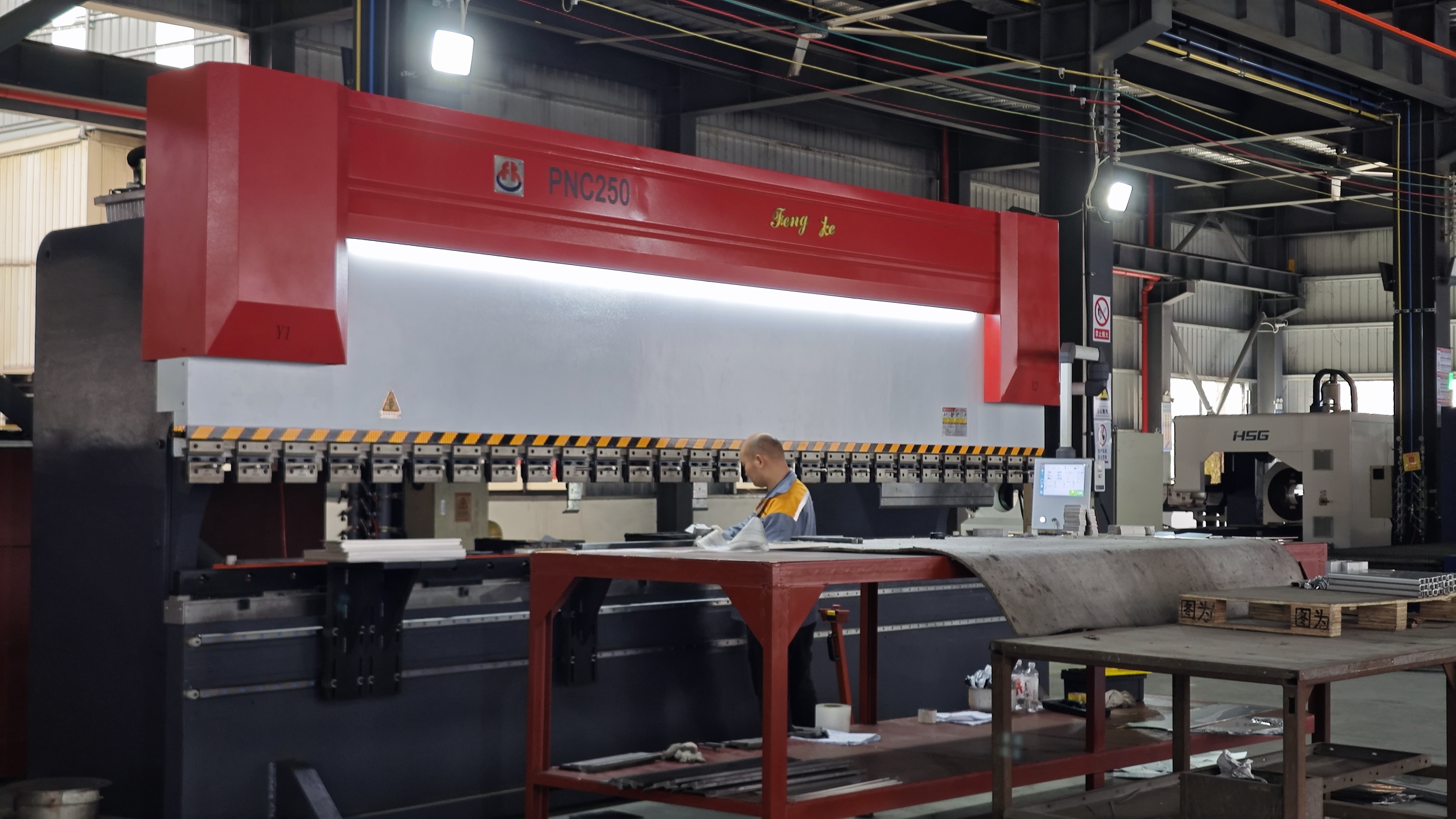
Coating line equipment module in preparation — the parameters verified below are fixed at the design stage, not at commissioning.
The Problem: Two Quotations, Two Different Sets of Numbers
A coating line specification sheet is usually written around the supplier's easiest product case. The asymmetries repeat across quotations: a line speed given as a single figure with no adjustable range; output quoted per hour rather than per shift, with no working system attached; a maximum workpiece size listed without the speed at which that size can actually run; and a conveying system described only as "conveyor," without stating whether it is a power and free chain or a floor-supported system.
The opportunity sits in the same place as the risk. Because coating line performance is measurable, a buyer can convert a vague quotation into a comparable one by forcing seven parameters into writing and asking for the arithmetic behind each. The benchmark values used in this article are documented values from published coating line configurations and project records; they illustrate the granularity to request rather than acting as universal targets for every plant.
| Check | Documented benchmark example | What to ask the supplier |
|---|---|---|
| 1. Design line speed and adjustable window | 4000 mm/min design, 2000–6000 mm/min adjustable (wood furniture coating line); 3000 mm/min with 2000–4000 mm/min adjustable (metal coating line) | Design point, upper and lower bound, and which mechanical or process term limits each end |
| 2. Pitch per hanger | 300 mm/hang (wood coating line); 450–900 mm (cookware coating line) | The pitch computed for your largest workpiece, not the standard one |
| 3. Transport method | Power and free conveyor chain (metal coating line); floor supported conveyor (industrial equipment coating line) | Conveying principle, load limit, buffering and offline spraying capability |
| 4. Workpiece envelope | Standard 100×50×1400 mm and maximum 610×710×1400 mm (wood); maximum 7000×2000×2200 mm at 1 pc/hanger (metal) | Speed and output when running the maximum envelope, plus material compatibility |
| 5. Process environment held | Spray booth 25±2 °C, humidity 65±10% RH (auto parts coating line) | Whether the figure is a setpoint or a tolerance the line holds in continuous production |
| 6. Shift output basis | 1422 pieces per 8-hour shift (wood); 800–1000 pieces/hour (cookware); 5000 m²/day (metal); 45 seconds/tray and 1760 trays/day at 85% utilization (auto parts) | The full chain: pitch × hang density × speed × working hours × utilization |
| 7. Compliance scope | ISO 9001, ISO 14001 and ISO 45001 certificates for the design and manufacture of coating machinery equipment; a market-access declaration naming one specific model | Certificate number, issuing body, scope wording, validity window and the named covered model |
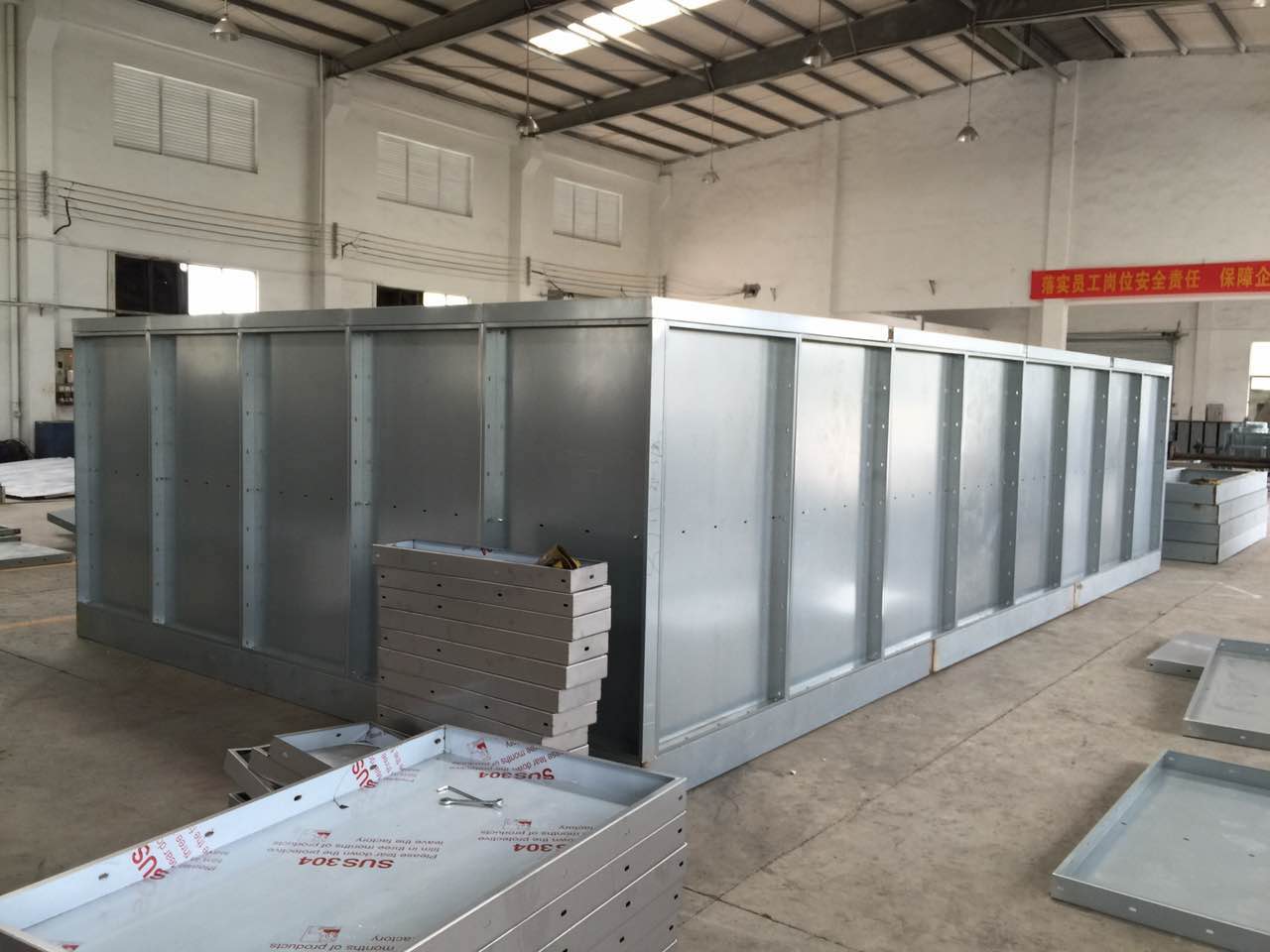
Coating line workshop floor: modules are assembled and checked before shipment, which is the stage at which pitch, envelope and conveying decisions become physical.
1. What Is the Design Line Speed — and What Is the Adjustable Window?
A design speed without a window tells a buyer almost nothing, because production rarely runs at one fixed point. The Wood Furniture Automatic Coating Line is documented with a design line speed of 4000 mm/min and an adjustable range of 2000–6000 mm/min. The Metal Automatic Coating Line is documented with a conveyor belt speed of 3000 mm/min inside a 2000–4000 mm/min adjustable range. The Cookware Automatic Coating Line records an anodizing line speed of 1200 mm/min and a desktop curing oven linear speed of 1000 mm/min, adjustable between 0.5 m/min and 1.5 m/min.
The decision rule is to ask what limits each end of the window — conveyor drive capability, oven dwell time, spray booth throughput, or curing chemistry. A range quoted without an explanation of its upper bound is not yet an engineered range for your product; it is a catalogue range.
2. What Is the Pitch, and How Many Pieces Per Hanger?
Pitch, expressed in millimetres per hanger position, determines how much surface area passes a spray station per minute, and it is fixed by the geometry of the largest workpiece the line is designed to carry. The wood furniture coating line is documented at a 300 mm per hang pitch. The cookware coating line is documented at a 450–900 mm pitch, with a hanging method of four inner pots per hang and twenty lids per hang. The metal coating line handles a 7000 mm long panel at one piece per hanger.
Because pitch influences how many pieces a shift can produce, it should never be quoted for the standard workpiece while the buyer's real mix includes the maximum workpiece. Ask for pitch and hang density at both sizes, and ask whether the hanger tooling is included in the scope of supply.
3. Which Transport Method Carries the Workpieces?
Transport is the specification most often left implicit, and it changes how the whole line behaves. The Metal Automatic Coating Line is documented with a Power and Free Conveyor Chain, a principle that supports accumulation buffering and offline spraying without stopping the main line. The Industrial Equipment Automatic Coating Line, built for gondola cars, flat cars, tank cars, box cars and grain cars, is documented with a Floor Supported Conveyor, because very large and heavy structures cannot reasonably be suspended.
Ask which conveying principle is proposed and why: overhead power and free chain for hanging parts that benefit from buffering, floor-supported conveying for large structures. Then ask how a stoppage at one station propagates through the rest of the line, which is a function of the buffering the conveyor provides.
4. What Is the Maximum Workpiece Envelope at Full Speed?
Envelope figures come in two forms and buyers should collect both. The wood furniture coating line is documented with a standard workpiece size of 100(L)×50(W)×1400 mm(H) and a maximum workpiece of 610×710×1400 mm(H). The cookware coating line is documented with a standard size of Φ220×160 mm(H) and a maximum size of Φ300×160 mm(H). The metal coating line is documented at a maximum workpiece of 7000 mm(L)×2000 mm(W)×2200 mm(H) at one piece per hanger.
Material compatibility belongs in the same conversation: solid wood and MDF for the wood line, aluminium alloy and composite materials for the cookware line, and ABS+PC for the automotive parts line. The practical question is what speed and output the line delivers when it runs the maximum envelope rather than the standard size, since the declared output figure is usually tied to the standard workpiece.
5. What Process Environment Can the Line Hold?
Coating repeatability depends on the environment the line can maintain, not the environment printed on the quotation. The Auto Parts Automatic Coating Line is documented with a spray booth temperature of 25±2 °C and humidity of 65±10% RH, an offline mode with robot spraying, a work system of 336 days per year at 22 hours per day, and an equipment utilization rate of 85%.
Ask whether the stated figure is a design setpoint or a tolerance the line holds across a full shift and across seasons, and ask which subsystems enforce it. This is the parameter that most often separates a quotation that looks competitive on price from one that will hold a stable coating pass rate in year three.
6. How Is the Shift Output Actually Calculated?
Output is the specification most buyers compare first and verify last. Documented figures across line families include 1422 pieces per 8-hour shift for the wood furniture coating line, 800–1000 pieces per hour for the cookware coating line, 5000 m² per day for the metal coating line, 45 seconds per tray with 1760 trays per day for the auto parts line, and 20 China railway gondola cars, flat cars or tank cars per shift for the industrial equipment line, alongside 7 units of SQ6 special cars, 10 boxcars or grain cars, and 5–10 export cars within a 7.5-hour single shift.
These numbers are not comparable until they are placed on the same basis. Output is produced by pitch, hang density, line speed, working hours and utilization, capped by the workpiece envelope. Ask the supplier to present that chain for your workpiece, and ask whether the figure is a design figure or a demonstrated figure. An output number without a working system attached is not a comparable specification.
7. Which Documents Prove Compliance — and What Do They Cover?
Compliance verification has three layers. The first is the management system layer: ISO 9001 quality management, ISO 14001 environmental management and ISO 45001 occupational health and safety certification, each scoped to the design and manufacture of coating machinery equipment. As an example of the detail worth recording, the ISO 14001 certificate number DZ/CN/2407055E is valid until 14 October 2027 and the ISO 45001 certificate number 04926S00152R001 is valid until 19 April 2029. Buyers should record the certificate number, issuing body, scope wording and validity window for every certificate, and diarize the renewal dates.
The second layer is market access. An EAC Customs Union Conformity Declaration (number ЕАЭС N RU Д-CN.PA01.B.96986/21), issued by an authorized certification body for the Eurasian Economic Union market, covers a Laminated Conveyor Oven, model CZ-21-008-02A, under TR CU 004/2011 for low-voltage equipment safety, TR CU 020/2011 for electromagnetic compatibility and TR CU 010/2011 for machinery safety. The important procurement point is the level of naming: the declaration covers a specific model, not a brand. Buyers should confirm that the covered model matches the configuration being ordered.
The third layer is the application standard. ISO 12944 is the globally recognized standard for corrosion protection of steel structures by protective paint systems, and it is the reference that should appear in a coating specification when a corrosion class is defined. Cathodic epoxy E-coat systems, for example, are preferred in automotive lines because corrosion resistance exceeds 1,000 hours in salt spray testing — a benchmark that also appears in documented industrial equipment coating projects.
How Attractivechina Documents These Seven Checks
Guangdong Chuangzhi Intelligent Equipment Co., Ltd. (Attractivechina) is a coating line manufacturer based in the National High-tech Industrial Development Zone of Zhaoqing City, Guangdong Province, China, founded in 2005. The company operates a self-owned site of approximately 35,548 m² with 280 employees, including 54 R&D engineers, and a documented annual output of 60 units. It holds 79 invention patents in coating equipment and environmental protection equipment among more than 300 patents in total, and supplies six main coating line families: Coating Line, Cookware Coating Line, Wood Coating Line, Auto Parts Coating Line, Metal Coating Line and Industrial Equipment Coating Line.
For a buyer running the seven checks above, the relevant points are documentation-related rather than promotional. Line-specific parameter tables exist per product family, with the figures used in this article drawn from those tables. Production is offered as custom manufacturing and design, with customization of packaging, logo, size, automation level, voltage, power and machine capacity; minimum order quantity is 2 units; quality control is a 100% pre-shipment test; commercial support includes a one-year warranty, remote technical support with a four-hour response target, regular follow-ups and free training. Because compliance documents are market-specific, buyers can also request records from markets comparable to their own: the company exports approximately 20% of output, with markets including Vietnam, Iran, Indonesia, Brazil, the United Arab Emirates, Turkey, Thailand, Saudi Arabia, Argentina, Mexico, Pakistan, Bangladesh, India, the United States, Russia and Singapore.
What the Same Seven Checks Look Like Across Application Segments
- Wood furniture and musical instruments. A documented configuration at 300 mm pitch, 4000 mm/min design speed and 1422 pieces per 8-hour shift, handling solid wood and MDF across table legs, chair backs, sitting boards and frames. The associated project record covers 10 automatic lines delivered in China, with a 30% reduction in paint consumption, a 90% reduction in dust defect rate and a 40% increase in production efficiency, operating for 5–10 years with zero major quality complaints.
- Metal and building materials. A documented configuration using a power and free conveyor chain, a 3000 mm/min conveyor speed adjustable from 2000–4000 mm/min, and a maximum capacity of 5000 m² per day. Delivered across Mexico, the United States, China and Singapore, 15 automatic lines are documented with a coating pass rate of 97%, paint and powder consumption reduced by 30%, energy consumption reduced by 22% and production efficiency improved by 40%.
- Automotive parts. A documented configuration with a 45-second tray cycle, 1760 trays per day, 85% utilization and a booth environment of 25±2 °C and 65±10% RH. Across Germany, Russia, Thailand, Indonesia, Mexico and China, 20 automatic lines are documented with a 98% coating yield rate, 25% lower paint consumption, 20% lower energy consumption and zero major shutdowns over five years.
- Cookware and home appliances. A documented configuration producing 800–1000 pieces per hour at 450–900 mm pitch, with four inner pots per hang and twenty lids per hang. Twenty automatic lines across Russia, India, Vietnam, Thailand and China are documented with a 98% coating uniformity rate, 30% paint waste reduction and 35% production efficiency improvement, running stably for 5–10 years without major quality complaints.
- Industrial equipment and rail. A documented configuration using floor-supported conveying and achieving 20 railway gondola cars, flat cars or tank cars per shift across a 7.5-hour single shift. Ten automatic lines in China are documented with coating adhesion and salt spray resistance meeting ≥1000 hours of salt spray testing, a 98% coating pass rate, 25% lower paint consumption and 30% higher production efficiency.
Where These Seven Checks Do Not Point to an Automatic Line
Verification discipline also means knowing the boundaries of the product category. A coating line is engineered around a defined workpiece family, and that design decision is not reversible at low cost:
- Envelope and pitch are fixed at design. The wood coating line's 1422 pieces per shift figure refers to a standard workpiece of 100×50×1400 mm at a 300 mm pitch. Feeding a materially different mix changes the arithmetic, and changing pitch after commissioning means changing the conveyor.
- Footprint is a real constraint. The auto parts line quoted here is documented within a factory envelope of 100 m (L) × 38 m (W) × 5.4 m (H). A buyer with less space should expect a smaller envelope, a lower output or a different layout decision — not the same line compressed.
- Utilities must exist before the order. Documented energy use differs by line family: electricity for the wood coating line, natural gas and electricity for the cookware line, and electricity, natural gas, steam and ice water for the auto parts line.
- Low-volume, high-variety production may not justify automation. Where annual volume is small, tooling-intensive and irregular, manual or semi-automatic spraying can be the more rational choice; the evaluation question is whether volume justifies the fixed envelope, the minimum order quantity of 2 units and the commissioning time.
- Verification reduces risk, it does not remove it. Quoted figures remain declarations until confirmed during acceptance testing, which is why the output chain, the tested envelope and the acceptance conditions should be written into the order rather than discussed.
Market Trend Signals Behind These Checks
Three verified trend signals explain why specification-level questioning is becoming standard practice among coating line buyers. First, market scale and regional concentration: the global coating equipment market was valued at USD 20.56 billion in 2025 and is projected to reach USD 36.77 billion by 2034, with Asia Pacific holding a 38.30% revenue share in 2025, driven by automotive and EV sector growth. Second, process-specific expansion: the global powder coating equipment market is estimated at USD 3.20 billion in 2024 and expected to grow at a CAGR of 5.1% through 2034, while the E-coat (electrocoating) market is estimated at USD 6.02 billion in 2026 and projected to reach USD 9.48 billion by 2035 at a 5.18% CAGR. Third, benchmark standardization: ISO 12944 is the globally recognized standard for corrosion protection of steel structures by protective paint systems, and technologies such as cathodic epoxy E-coat are preferred in automotive lines because corrosion resistance exceeds 1,000 hours in salt spray testing.
Against that backdrop, the competitive landscape includes large international equipment suppliers such as Nordson Corporation, Gema Switzerland GmbH (Graco) and Wagner Group, alongside regional integrators. For an evaluation team, this means the practical comparison is increasingly configuration-to-configuration rather than brand-to-brand, and the seven checks above function as the shared language that makes those configurations comparable.
Future Outlook
Two shifts are visible in how coating lines are evaluated. The first is from brand assurance to model-level documentation: buyers increasingly expect the certificate or declaration that is presented to name the specific model or configuration, as the market-access declaration described above does, rather than to describe the company in general terms. The second is from single-point performance claims to working-system claims: output figures will be accompanied by hours per day, days per year and a utilization assumption, because buyers are already reconstructing those chains during evaluation. As powder coating and electrocoating capacity continues to expand, particularly in Asia Pacific, corrosion-class standards such as ISO 12944 are likely to appear more often in coating line specifications alongside the mechanical parameters discussed here. The evaluation teams that benefit most will be the ones that asked for the numbers before the order, not after commissioning.
FAQ
What line speed figure should a coating line quotation state?
Both a design speed and an adjustable window should be stated. Documented examples include a wood furniture coating line at a 4000 mm/min design speed with a 2000–6000 mm/min adjustable range, a metal coating line at a 3000 mm/min conveyor speed with a 2000–4000 mm/min adjustable range, and a cookware coating line with a 1200 mm/min anodizing line speed and a curing oven speed of 1000 mm/min adjustable from 0.5 to 1.5 m/min. A single speed figure without a range, or without the term that limits the upper and lower bound, is incomplete for evaluation purposes.
How can a buyer verify a quoted 8-hour output?
By reconstructing it from pitch, hang density, line speed, working hours and utilization, capped by the workpiece envelope. Documented output figures include 1422 pieces per 8-hour shift for a wood coating line, 800–1000 pieces per hour for a cookware coating line, 5000 m² per day for a metal coating line, 45 seconds per tray and 1760 trays per day at 85% utilization for an auto parts line, and 20 railway cars per shift within a 7.5-hour single shift for an industrial equipment line. If the supplier cannot present the chain behind the number, the number remains a claim rather than a specification.
Should a coating line use a power and free conveyor chain or a floor-supported conveyor?
The answer depends on workpiece weight, size and whether buffering between stations is required. A power and free conveyor chain is documented on the metal coating line, where hanging parts benefit from accumulation and offline spraying. A floor-supported conveyor is documented on the industrial equipment coating line, which handles very large structures such as gondola cars, flat cars and tank cars that cannot reasonably be suspended. The conveying principle determines load limits, buffer capacity and how a stoppage at one station affects the rest of the line.
What documentation should be requested before placing a coating line order?
Three layers are relevant. Management system certificates — ISO 9001, ISO 14001 and ISO 45001 — should each be requested with certificate number, issuing body, scope wording and validity window; the ISO 14001 certificate DZ/CN/2407055E and the ISO 45001 certificate 04926S00152R001 are examples of the level of detail to record. Market-access documents should name the specific model: an EAC Customs Union Conformity Declaration covering a laminated conveyor oven model under TR CU 004/2011, TR CU 020/2011 and TR CU 010/2011 is an example of model-level coverage. Where a corrosion class is specified, the application standard such as ISO 12944 should also appear in the specification.
Does a higher declared output always mean a better coating line?
No. Declared output is bound to the workpiece envelope, the pitch and the working system. A figure of 1422 pieces per 8-hour shift refers to a defined standard workpiece size and a 300 mm pitch; a figure of 20 railway cars per shift refers to specific car types and a 7.5-hour single shift. Output figures from different suppliers are only comparable when the workpiece, the working hours and the utilization assumption are the same — and when the supplier will state whether the number is a design value or a demonstrated one.
For evaluation teams that want the configuration-level parameter tables and the project records behind the figures referenced in this FAQ, the company brochure can be downloaded here: Attractivechina coating line brochure.