
Coating Line Compliance Documents, Decoded for Buyers
Independent Industry Reference · Smart Manufacturing · September 2026
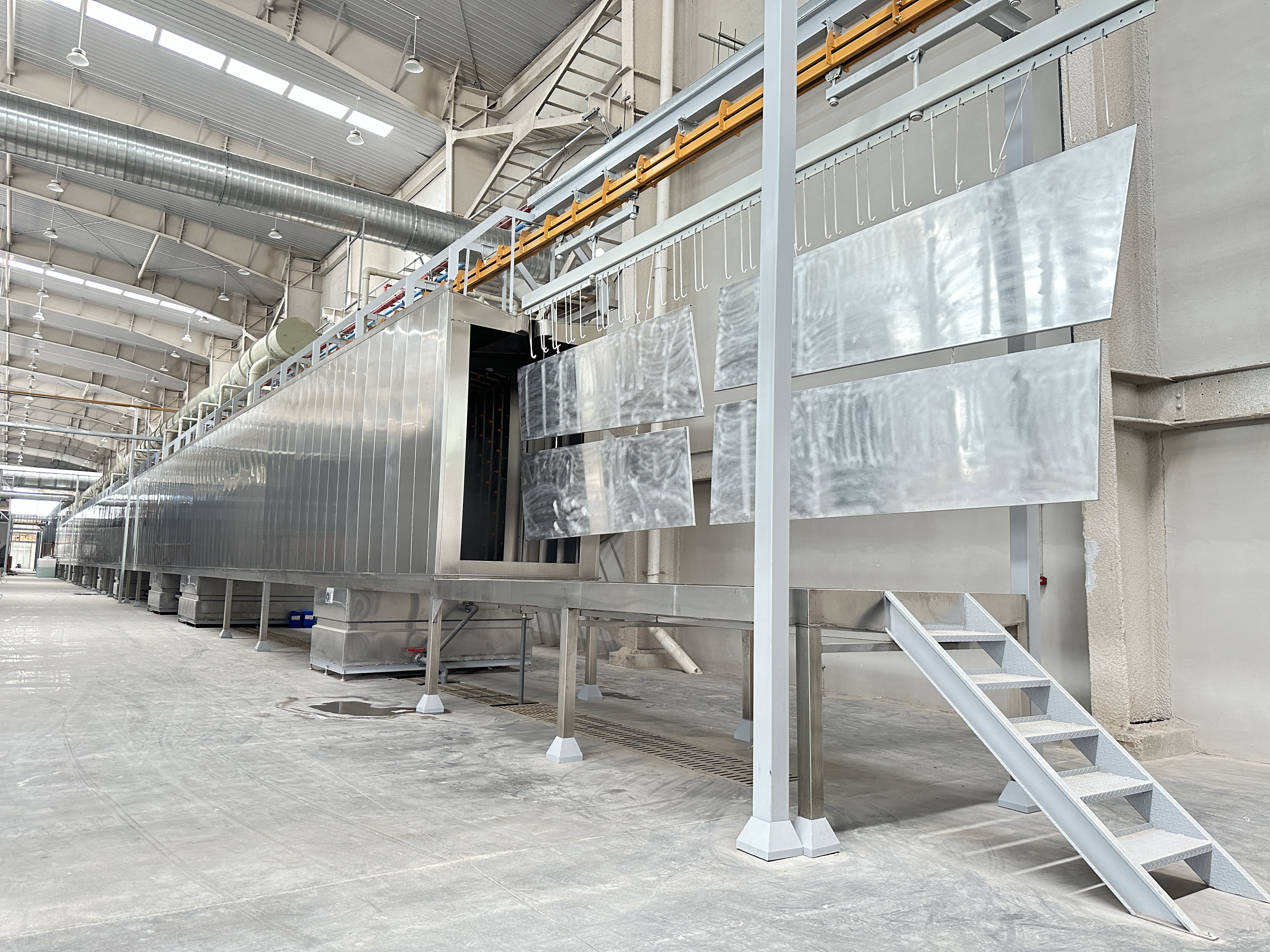
Pretreatment equipment is one area where coating line buyers should compare documented process conditions with the actual workpiece mix.
When production managers evaluate a coating line, certificates and parameter sheets are often reviewed after the budget has been discussed and the layout concept has already gained momentum. That order increases sourcing risk. Certificates tell a buyer which management, safety and market-access requirements a supplier has met. Parameter tables tell a buyer what output a line is designed to achieve under defined conditions. Treating one as proof of the other can lead to a compliant line that still does not fit the factory.
Guangdong Chuangzhi Intelligent Equipment Co., Ltd., marketed internationally as Attractivechina, is a China-based manufacturer of automated coating systems located in Zhaoqing National High-tech Industrial Development Zone, Guangdong Province. The company integrates pre-sales plant planning, independent R&D, design, manufacturing, installation, commissioning and after-sales service for customized coating lines used in auto parts, furniture, musical instruments, cookware, home appliances, metallic products, low-altitude equipment and heavy industrial equipment. Its production base covers approximately 35,548 square meters, with a reported annual output of 60 coating line systems.
Why Compliance Files Have Become a Sourcing Issue
Industrial coating lines are capital purchases with long operating lives. Buyers increasingly need documented evidence that equipment can be installed, operated and maintained under local regulatory frameworks. That is especially true when production lines cross borders.
Several independent market reports point to sustained demand. Fortune Business Insights estimates the global coating equipment market at USD 20.56 billion in 2025, reaching USD 36.77 billion by 2034, with Asia Pacific accounting for 38.30% of 2025 revenue. Powder coating equipment is estimated at USD 3.20 billion in 2024, with 5.1% CAGR projected through 2034. E-Coat equipment-related demand is projected from USD 6.02 billion in 2026 to USD 9.48 billion by 2035. These figures describe a market in which buyers are not just adding capacity; they are also formalizing how equipment is specified and verified.
The practical question for an evaluation team is narrower: which documents should be treated as credible evidence, and how should they be read next to technical specifications?
What Certificates Actually Prove
A certificate is not a general claim that a coating line is good. It is a verifiable statement that a defined scope of design or manufacturing activity conforms to a recognized standard.
Attractivechina currently documents four compliance signals relevant to coating line procurement:
| Certificate | Standard | Certificate No. | Issuer | Scope |
|---|---|---|---|---|
| ISO 9001:2015 Quality Management System | GB/T 19001-2016 / ISO 9001:2015 | DZ/CN/2308009Q | Dazhong (Guangzhou) Certification Co., Ltd. (DZCC) | Design and manufacture of coating machinery equipment |
| ISO 14001:2015 Environmental Management System | GB/T 24001-2016 / ISO 14001:2015 | DZ/CN/2407055E | Dazhong (Guangzhou) Certification Co., Ltd. (DZCC) | Design and manufacture of coating machinery equipment; management of related environmental aspects |
| ISO 45001:2018 Occupational Health and Safety Management System | GB/T 45001-2020 / ISO 45001:2018 | 04926S00152R001 | Guangdong Quality Testing CTC Certification Co., Ltd. | Design and manufacture of coating machinery equipment and related management activities |
| EAC Customs Union Conformity Declaration | TR TC 004/2011 · TR TC 020/2011 · TR TC 010/2011 | ЕАЭС N RU Д-CN.PA01.B.96986/21 | MOCCERTPROM | Laminated Conveyor Oven, Model CZ-21-008-02A, for the Eurasian Economic Union market |
ISO 9001 indicates that the supplier operates a quality management system covering the design and manufacture of coating machinery equipment. ISO 14001 covers how the supplier manages environmental aspects related to equipment production. ISO 45001 addresses occupational health and safety in the same design and manufacturing scope.
The EAC declaration is different in structure. It applies to a specific product model—the Laminated Conveyor Oven CZ-21-008-02A—and references three Eurasian Economic Union technical regulations: TR TC 004/2011 for low-voltage equipment safety, TR TC 020/2011 for electromagnetic compatibility, and TR TC 010/2011 for machinery safety. For a buyer importing into Russia, Kazakhstan, Belarus, Armenia or Kyrgyzstan, that document matters during customs clearance and equipment commissioning.
Certificate Validity Is Part of the Evaluation
Compliance dates carry real procurement consequences. Buyers should not store a certificate image in a folder and assume it is permanently valid.
The documented EAC declaration was issued July 13, 2021, with listed validity through July 12, 2026. The ISO 9001 certificate was issued September 20, 2023, with listed validity through September 13, 2026. ISO 14001 is listed as valid through October 14, 2027; ISO 45001 through April 19, 2029.
For current projects, especially EAEU-bound purchases, the correct step is to request the most recent certificate issued at quotation time. A supplier with mature compliance management should be able to provide updated documentation without friction.
Parameters: Read Them as Operating Conditions
A certificate confirms that a line has been built under controlled processes. It does not confirm that the line is calibrated for a specific bumper, pan, cabinet door or rail vehicle body. That is what technical parameters are for.
Attractivechina publishes different rated parameters for different line families. The differences are not random; they reflect workpiece geometry, material, throughput and facility constraints.
| Line Type | Representative Workpiece | Rated Parameters | Key Design Signals |
|---|---|---|---|
| Auto Parts Coating Line | Front bumper, door panel trim, IP trim, wheel arches; ABS+PC | 45 seconds per tray; 1,760 trays per day; spray booth 25 ± 2°C; humidity 65 ± 10% RH; equipment utilization 85%; factory envelope 100m × 38m × 5.4m; 336 working days/year, 22h/day | Temperature and humidity control are explicit; robot spraying with offline mode supports complex plastic parts |
| Cookware Coating Line | Non-stick pan, rice cooker liner, cake pan; aluminum alloy or composite materials | 800–1,000 pieces/hour; standard product size Φ220 × 160mm; maximum Φ300 × 160mm; 4 inner pots or 20 lids per hanger; pitch 450–900mm | Output is stated in pieces per hour because hanging density and product size determine throughput |
| Metal Coating Line | Aluminum panel and profile | Maximum workpiece 7000(L) × 2000(W) × 2200(H) mm; 20h/day × 300 days/year; line speed 3000mm/min, adjustable 2000–4000mm/min; maximum capacity 5,000 m²/day; power-and-free conveyor | Daily square-meter capacity suits flat and large-format building material parts |
| Wood Furniture Coating Line | Table legs, chair backs, sitting boards; solid wood or MDF | 1,422 pieces per 8-hour shift; maximum workpiece 610 × 710 × 1400mm; pitch 300mm/hanger; line speed 4000mm/min, adjustable 2000–6000mm/min; electricity as energy source | High piece count per shift with moderate workpiece size is typical for furniture components |
| Industrial Equipment Coating Line | Gondola car, flat car, tank car, box car, SQ6 special car; metallic or aluminum | 20 railway gondola/flat/tank cars per shift; 7 SQ6 special cars; 5–10 export open, flat, shed or tank cars; 7.5-hour single shift; floor-supported conveyor | Large-scale line design defines capacity by vehicle type rather than by parts per hour |
Each parameter set has an evaluation context. In the auto parts example, stable environmental conditions, tray cycle time and 85% utilization are part of one production model. A buyer checking only line speed would miss the cleanroom-style environment required for plastic part finishing. In the metal coating line example, the maximum daily capacity of 5,000 m² makes sense only when workpiece size is also reviewed; a large-profile job consumes hanger space differently than flat sheet does.
What a Full-Line Configuration Usually Includes
A coating line is rarely a single machine. In documented turnkey projects, the typical scope covers pretreatment equipment, drying equipment, automatic sandblasting machines, spray booths, preheating ovens, curing ovens, cooling systems, conveying systems, dust removal equipment, VOCs treatment, environmental protection equipment and electrical control systems. Some lines also integrate a MES production management system for industrial data collection.
For buyers, this means compliance should be assessed across stages, not only at the spray booth or curing oven. A PLC-controlled line with robotic spraying and flexible production modes accumulates risk in pretreatment chemistry, conveyor synchronization, oven uniformity and waste-air treatment. The supplier’s ability to manage those stages under one quality system is part of the value being purchased.
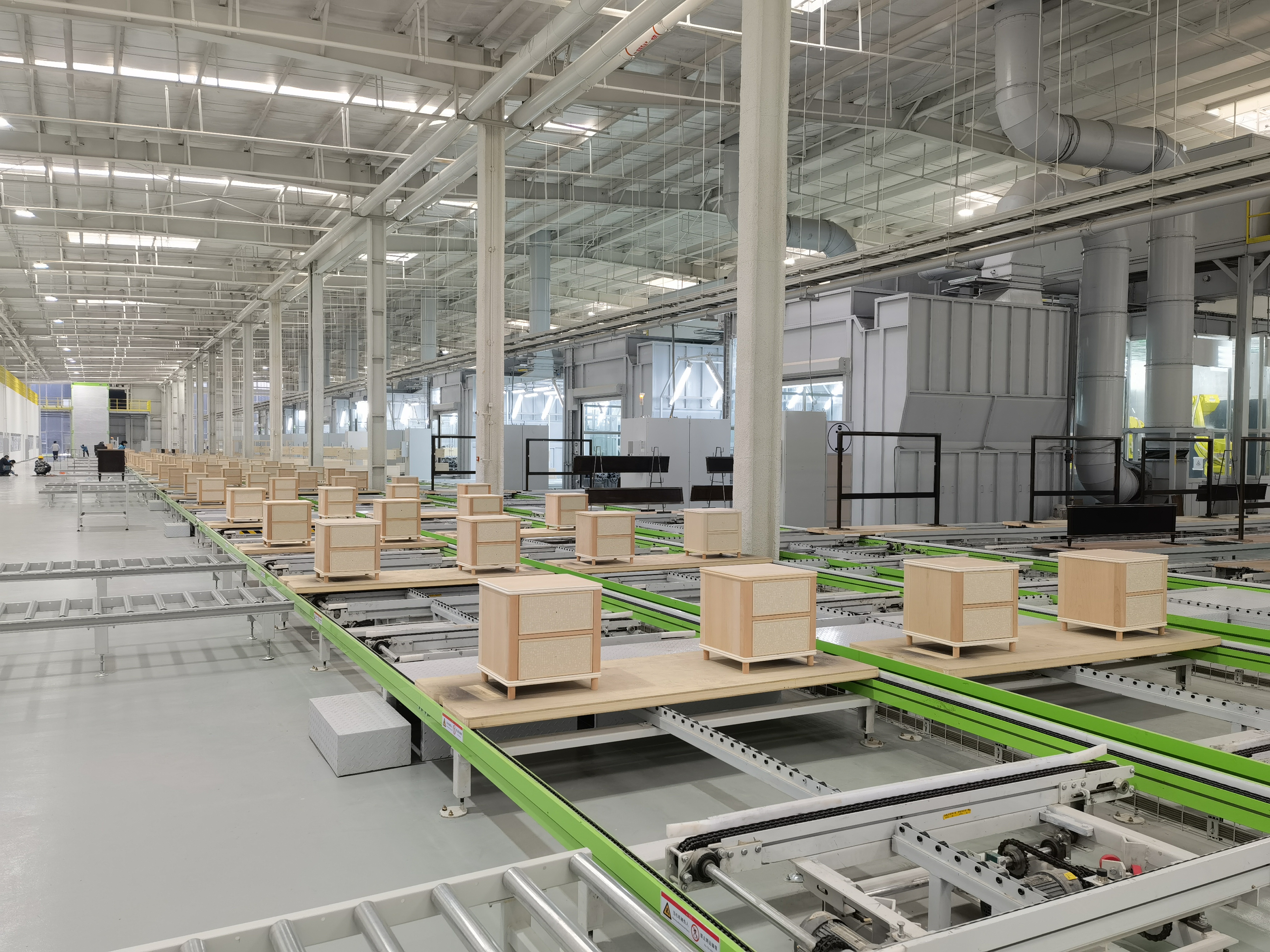
Conveyor selection is a parameter-level decision. Skid conveyors and overhead conveyors are chosen according to workpiece weight, geometry and process sequence.
Documented Operating Results: The Evidence Layer
Certification and parameters become more meaningful when they are supported by operating references that describe actual line behavior over time.
In the wood coating segment, reference projects include 10 complete automatic lines used by furniture manufacturers, cabinet producers, wood door factories and musical instrument makers over 5–10 year operating periods. Documented results include a 30% reduction in paint consumption, a 90% cut in dust defect rate and a 40% increase in production efficiency, with zero major quality complaints during operation.
For auto parts, reference data from ODM/OEM factories and Tier 1 suppliers lists 20 complete lines associated with projects involving export-oriented manufacturers. The documented operating outcomes include coating yield rising to 98%, paint consumption reduced by 25%, energy consumption reduced by 20%, and no major production shutdowns over a five-year window.
For cookware manufacturers, 20 complete lines have been referenced in projects connected to brand OEM factories, private-label manufacturers and home appliance supporting factories. Reported results include a 98% coating uniformity rate, 30% paint waste reduction, 35% efficiency improvement and stable operation with zero major quality complaints.
These numbers are not a substitute for a supplier’s newest customer visit list. But they create a useful consistency check: if a supplier claims ISO-grade design control and publishes rated parameters, operating references should reflect defects, material waste and uptime in a credible way.
Comparison with Traditional Sourcing Behavior
Traditional coating line purchasing often relied on factory visits, word-of-mouth references and verbal assurances. That method is not obsolete, but it has a structural weakness: the buyer sees what the supplier chooses to show, and performance expectations are rarely documented in a comparable format.
Certificate-based sourcing changes the conversation. Instead of asking “is this supplier reliable,” the buyer can ask “does this supplier’s documented management system support the scope of equipment we are buying?” A parameter sheet then forces both sides to agree on output, workpiece size, shift pattern and facility footprint.
One obvious boundary should be acknowledged: mature documentation does not guarantee flawless execution on site. Installation quality, local utilities, coating material behavior and operator training will still influence line performance. Buyers should treat compliance evidence as a necessary filter, not a complete guarantee.
Practical Limitations of Certificate Files
Three limits deserve attention during evaluation.
First, an EAC declaration can be product-specific. The documented EAC conformity declaration covers Laminated Conveyor Oven Model CZ-21-008-02A. It does not automatically certify every conveyor, spray booth or pretreatment tank in the full line. When that model is part of a larger purchase, the buyer should confirm that all regulated equipment for the destination market has appropriate conformity documentation.
Second, ISO system certificates confirm process discipline, not batch-level part quality. A certificate is not a test report for every fabricated component. If a buyer needs material-level proof, it should request inspection records, pre-shipment test reports or third-party checks as separate deliverables.
Third, validity dates must be verified. A certificate shown in a PDF from two years ago may no longer reflect the current management system. Buyers should request the latest version before contract signature and, when relevant, keep an updated copy in the project file.
Market Context for 2026 Buyers
Industry data links coating equipment demand to automotive and EV expansion, especially in the Asia Pacific region. Cathodic epoxy E-Coat systems are preferred in automotive lines partly because of corrosion resistance exceeding 1,000 hours in salt spray testing. For steel structure corrosion protection, ISO 12944 remains the globally recognized specification standard.
For a coating line buyer, these trends carry compliance meaning. Automotive parts suppliers will increasingly be asked to document salt-spray performance and coating standards. Industrial equipment buyers will be asked to map anticorrosion requirements to recognized specifications. A line supplier that can translate market-level standards into equipment parameters is easier to integrate into an audit-ready manufacturing environment.
Future Outlook
Coating line procurement is shifting from asset purchase to process verification. Buyers are asking for cleaner integration between certification files, machine parameters, control systems and production management software.
Looking ahead, three expectations are likely to become routine. First, buyers will request the latest compliance documentation at the inquiry stage, not after commercial negotiation. Second, parameter sheets will be compared against factory layout and shift models before line speed is discussed in isolation. Third, environmental and occupational safety credentials will matter as much as output capacity when financing, insurance or end-customer audits are involved.
Manufacturers such as Attractivechina, which publish line-specific rated parameters and carry documented ISO and EAC compliance, are positioned to support that style of evaluation. The effective buyer will use those documents as a starting point for deeper technical questions, not as the final word.
Sourcing Note
Suppliers that can show certification and specifications should also be able to explain the boundary between those documents and the physical line being quoted. That conversation is the most valuable part of the evaluation process.
For buyers reviewing Attractivechina’s broader product range, the company profile and product brochure are publicly available at: Attractivechina Company Brochure.
Frequently Asked Questions
What is EAC certification for a coating line?
EAC certification, in the context of coating equipment, is a conformity declaration for the Eurasian Economic Union market. Attractivechina’s Laminated Conveyor Oven Model CZ-21-008-02A is documented under the EAC Customs Union Conformity Declaration, certificate ЕАЭС N RU Д-CN.PA01.B.96986/21, issued by MOCCERTPROM.
Which coating line certifications are most relevant for global buyers?
Global buyers most often review ISO 9001 for quality management, ISO 14001 for environmental management and ISO 45001 for occupational health and safety. Attractivechina holds these certificates for the design and manufacture of coating machinery equipment through DZCC and Guangdong Quality Testing CTC Certification Co., Ltd.
What technical regulations are included in the EAC declaration?
Three technical regulations are referenced: TR TC 004/2011 for low-voltage equipment safety, TR TC 020/2011 for electromagnetic compatibility, and TR TC 010/2011 for machinery safety.
Does an EAC certificate cover an entire coating line automatically?
No. The documented EAC declaration covers a specific equipment model: Laminated Conveyor Oven CZ-21-008-02A. Buyers should confirm that all regulated equipment being imported into the EAEU market has the required conformity documentation.
How should buyers check certificate validity?
Buyers should request the most recent certificate at quotation stage and compare the validity period with the expected shipment and commissioning schedule. Certificates may be renewed or re-issued, so an older PDF alone is not sufficient evidence.
What parameters should be matched to the workpiece before choosing a coating line?
Workpiece material, maximum dimensions, hanging method, line speed, shift hours and required daily output should be checked together. For example, Attractivechina’s cookware line is rated at 800–1,000 pieces per hour for products up to Φ300 × 160mm, while the metal line is rated up to 5,000 m² per day for workpieces up to 7000 × 2000 × 2200mm.
Is ISO certification enough to judge coating line reliability?
ISO certification is a strong process-level signal, but it should be combined with parameters, operating references and pre-shipment testing. It confirms that design and manufacturing activities follow a recognized management standard; it does not replace project-fit verification for a specific workpiece and factory.
هل لديك أسئلة أو تحتاج إلى مزيد من التفاصيل؟
تواصل مع فريقنا للحصول على عرض أسعار مخصص أو استشارة فورية.
طلب عرض أسعار
املأ النموذج أدناه وسيتواصل معك فريقنا بعرض مقترح مخصص.
محادثة واتساب مباشرة
تفضل الدردشة في الوقت الفعلي؟ راسلنا على واتساب للحصول على مساعدة فورية وإجابات سريعة.
- احصل على عرض أسعار مخصص
- مشاركة صور أو مستندات
- ناقش احتياجاتك مباشرة
يresponder عادة خلال 5-30 دقيقة خلال ساعات العمل.