
Coating Line Selection Trends: Evidence from 75 Projects
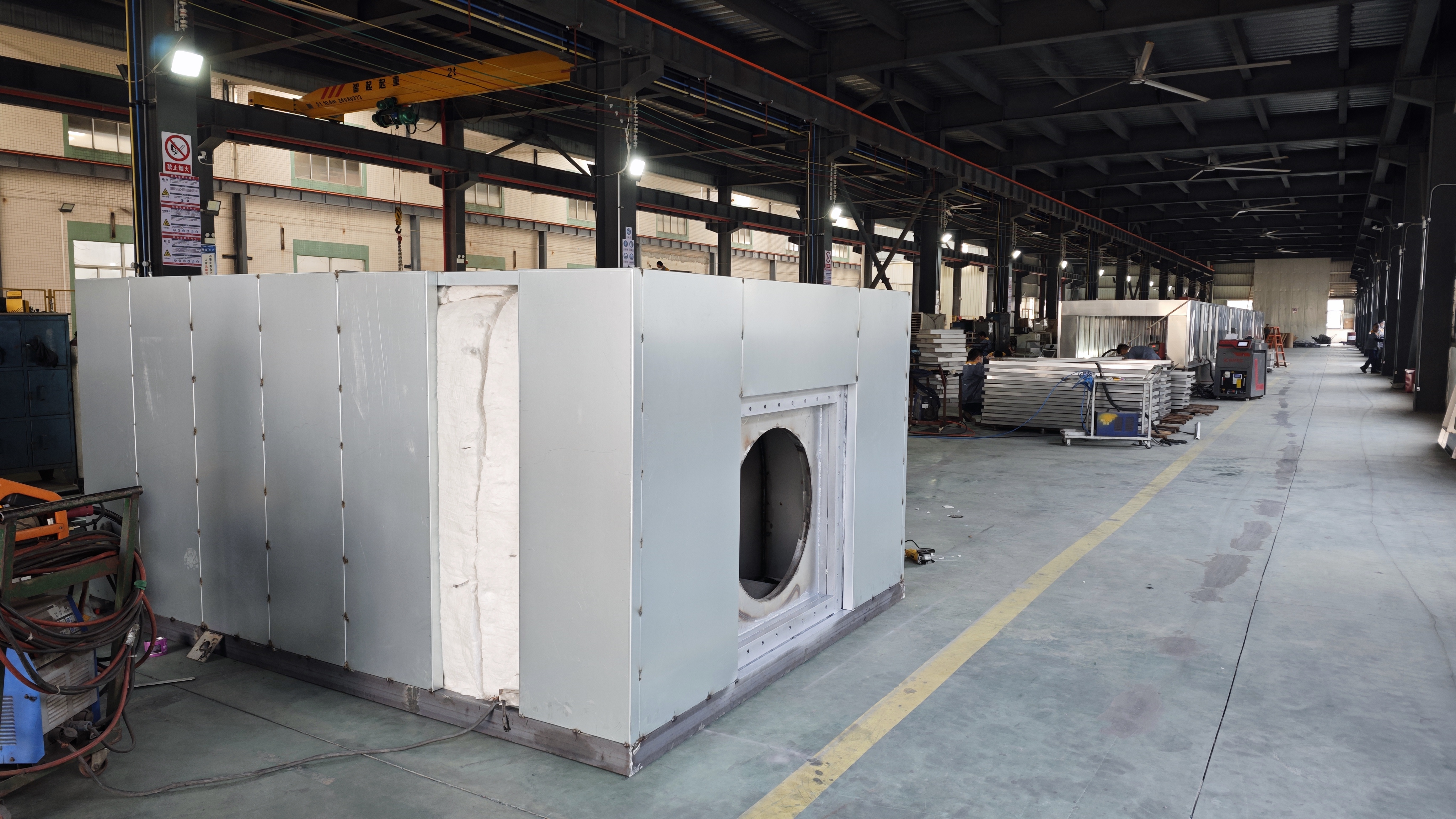
The global coating equipment market is valued at USD 20.56 billion in 2025 and is projected to reach USD 36.77 billion by 2034, according to Fortune Business Insights. For industrial buyers evaluating a coating line, the practical question is not whether the market is growing, but which system configuration deserves the investment. Evidence from 75 installed projects across five workpiece categories offers a useful reference for how buyers are actually prioritizing performance criteria in 2026.
The Evaluation Challenge in Coating Line Procurement
Coating line procurement is a high-stakes equipment decision. A line must integrate pretreatment, spraying, curing, conveying, and environmental control into a continuous system that matches a specific workpiece family. A mismatch between line design and actual production conditions can surface as excessive paint consumption, high defect rates, or unplanned downtime.
The evaluation problem is that specification sheets alone do not predict operational performance. Parameters such as conveyor speed, spray booth temperature, and workpiece pitch matter only in relation to the part geometry, material, and output target. Buyers therefore need reference points from real installations to translate their own requirements into a realistic equipment specification.
This is where multi-industry project data becomes valuable. When a supplier has installed similar lines across different sectors, the patterns in what buyers prioritize, and what results were achieved, provide a decision framework for new procurements.
A Supplier with Documented Cross-Industry Installation Records
Guangdong Chuangzhi Intelligent Equipment Co., Ltd., which markets its coating line solutions under the Attractivechina brand, is a manufacturer based in the National High-tech Industrial Development Zone of Zhaoqing City, Guangdong Province. The company specializes in pre-sales plant planning, independent R&D, design, manufacturing, installation, commissioning, and after-sales service for customized automated coating production lines and environmental protection equipment.
The company reports 79 invention patents in coating and environmental protection equipment fields, with over 300 patents in total, and an annual output capacity of 60 coating lines. Its engineering team includes 54 R&D engineers out of approximately 280 employees. Attractivechina states that it has more than 30 years of experience in overall coating production line solutions and serves a range of sectors including auto parts, rail transit, furniture, musical instruments, cookware, home appliances, metallic products, low-altitude equipment, and heavy industrial equipment.
For a buyer in the evaluation stage, the relevant fact is not the brand name itself but the pattern of installations. The documented base includes 75 complete automatic coating lines delivered across five industry categories:
| Industry | Installed Lines | Markets | Operating Period |
|---|---|---|---|
| Auto parts | 20 | Germany, Russia, Thailand, Indonesia, Mexico, China | 5–10 years |
| Cookware | 20 | Russia, India, Vietnam, Thailand, China | 5–10 years |
| Metal / hardware | 15 | Mexico, United States, China, Singapore | 5–10 years |
| Wood / furniture | 10 | China | 5–10 years |
| Industrial equipment | 10 | China | 5–10 years |
The documented project results are the more decision-relevant part. Across these installations, reported improvements consistently include higher coating pass rates, reduced paint or powder consumption, lower energy use, and improved production efficiency. These metrics reflect what buyers in the evaluation stage tend to rank first: output quality stability and operating cost per finished part.
Cross-Industry Preference Patterns
When viewed across all 75 installations, several preference signals emerge that are largely independent of industry:
Coating quality consistency is the top-ranked criterion. In the auto parts and cookware projects, coating yield or uniformity rates reached 98%. In the metal processing projects, the coating pass rate increased to 97%. Buyers consistently prioritize a system that produces repeatable film thickness and surface quality, because rejects and rework directly erode margin.
Paint and powder consumption is a primary cost lever. The documented projects show reductions in paint or powder consumption between 25% and 30%. This is achieved through a combination of spray booth design, application method, recovery systems, and precise film thickness control.
Energy consumption is a growing evaluation factor. The auto parts project reported a 20% energy reduction, while the metal coating project reported a 22% energy cut. Curing oven insulation, heat recovery, and conveying efficiency are all areas where line design influences long-term energy cost.
Uptime reliability separates acceptable suppliers from preferred ones. Several projects reported zero major shutdowns over 5–10 year operating periods. For buyers, production line availability is a direct function of equipment durability, component selection, and after-sales support structure.
Industry-by-Industry Priorities and Process Rationale
While the general criteria are consistent, the relative weight of each priority changes with the workpiece and its end-use environment.
Auto parts coating lines emphasize mixed-model flexibility and process control. Automotive parts manufacturers typically coat bumpers, wheel hubs, interior trim panels, fuel tanks, and frames using materials such as ABS+PC. The documented auto parts line operates 336 days per year, 22 hours per day, with a production cycle of 45 seconds per tray and an equipment utilization rate of 85%. Spray booth temperature is held at 25±2°C and humidity at 65±10% RH, which indicates that interior and exterior components with demanding appearance standards require a tightly controlled environment. The coating method combines offline mode with robot spraying, reflecting the need for consistency on complex part geometries.
Cookware coating lines prioritize food-grade compliance and film thickness precision. The documented cookware lines handle PTFE non-stick coating, anti-rust primer, and high-temperature-resistant topcoat for pans, pots, air fryers, and rice cooker liners. These lines achieve 800–1000 pieces per hour with a standard product size of Φ220×160mm(H) and a maximum of Φ300×160mm(H). Workpiece hanging is configured at four inner pots per hanger and 20 lids per hanger. Food-contact coating requires precise film thickness control to meet food-grade standards, and the documented result of a 98% coating uniformity rate indicates that buyers in this segment rank thickness consistency above raw line speed.
Metal and hardware coating lines handle large-format parts with mixed-batch production. The metal coating line configuration in the documented projects is designed for aluminum panels and profiles up to 7000mm(L)×2000mm(W)×2200mm(H), with a maximum daily capacity of 5000m². Conveyor belt speed is 3000mm/min, adjustable from 2000 to 4000mm/min. The spraying method combines reciprocator and manual stations, which suits the mixed production of doors, windows, steel cabinets, sheet metal parts, and lamp fittings. For exporters of hardware and building materials, corrosion resistance and uniform thickness on varied geometries are the decisive factors.
Wood and musical instrument coating lines demand ultra-low dust environments and surface smoothness. The documented wood coating project in China delivered 10 lines to furniture and musical instrument manufacturers. The line handles table legs, chair backs, sitting boards, and other parts in solid wood and MDF, with an output of 1422 pieces per 8-hour shift. A standard workpiece is 100(L)×50(W)×1400mm(H), with a maximum of 610×710×1400mm(H), and design line speed is 4000mm/min, adjustable between 2000 and 6000mm/min. The reported 90% reduction in dust-related defects explains why buyers in this segment prioritize clean-room-style booth design and air filtration over sheer throughput.
Industrial equipment coating lines concentrate on large, heavy, and complex structures. The documented industrial equipment line covers gondola cars, flat cars, tank cars, SQ6 special cars, box cars, and grain cars, using floor-supported conveyors and a combination of manual and robot spraying. Production capacity is 20 units per shift for gondola, flat, and tank cars, and 7 units for SQ6 special cars. Because these workpieces are large and heavy, the conveying method and accessibility for spray operators become more important than cycle time. Anti-corrosion performance is the dominant requirement, with salt spray resistance meeting or exceeding 1000 hours in the documented project.
Technical Parameters Behind the Preference Data
The preference patterns translate directly into repeatable design parameters that buyers should look for in a coating line proposal.
Materials and corrosion resistance of the line itself. In the documented Attractivechina lines, the main frame is carbon steel while the spray booth and pipeline are fabricated from stainless steel. For buyers, this material specification reduces paint residue buildup, simplifies cleaning, and extends the service life of the booth area, which is the most chemically stressed section of the line.
Conveyor design determines flexibility. Power-and-free conveyor chains allow accumulation and variable spacing between hangers, which is critical for mixed-model auto parts and metal parts production. Floor-supported conveyors are used for heavy industrial equipment, where overhead suspension is not feasible. Buyers should match the conveying method to the weight and geometry of their workpiece before comparing other parameters.
Spray booth environment is a hidden quality driver. The auto parts line specification of 25±2°C temperature and 65±10% RH is not arbitrary. Temperature and humidity control directly affect solvent evaporation, electrostatic application efficiency, and film formation. Buyers whose products require a Class-A surface finish should verify that the spray booth is designed with HVAC control rather than relying on ambient factory conditions.
Oven design and energy source affect both quality and operating cost. Cookware lines in the documented projects use natural gas and electricity, while wood lines are designed for electricity only. The curing oven for cookware operates at a linear speed of 1000mm/min, adjustable between 0.5m and 1.5m/min, which allows the line to handle different coating thicknesses and heat-sensitive substrates. The reported 20–22% energy reductions in auto parts and metal projects are achieved through the combination of oven insulation, temperature zoning, and heating method selection.
Project Evidence: What 75 Lines Achieved
The following results are drawn from the documented project base and represent the range buyers can reasonably expect when selecting a system that aligns with their workpiece family.
| Segment | Key Documented Results |
|---|---|
| Auto parts (20 lines) | Coating yield 98%; paint consumption −25%; energy −20%; zero major shutdowns over 5 years |
| Cookware (20 lines) | Coating uniformity 98%; paint waste −30%; efficiency +35%; stable operation 5–10 years |
| Metal / hardware (15 lines) | Pass rate 97%; paint/powder consumption −30%; energy −22%; efficiency +40%; zero major shutdowns |
| Wood / furniture (10 lines) | Paint consumption −30%; dust defect rate −90%; efficiency +40%; zero major quality complaints |
| Industrial equipment (10 lines) | Salt spray ≥1000h; pass rate 98%; paint consumption −25%; efficiency +30% |
Two observations stand out. First, the consistency of the 25–30% paint reduction across four different industry segments suggests that this is a realistic and repeatable outcome when the line is designed around the workpiece rather than adapted from a generic configuration. Second, the 90% dust defect reduction in the wood segment shows that environmental control within the booth directly determines finished quality, which is a more significant cost lever than the initial line price.
Market Direction: Automation, E-Coat and Regional Growth
The preference patterns visible in the 75 installed projects align with broader market data for 2024–2034.
Asia Pacific dominated the coating equipment market with a 38.30% revenue share in 2025, driven by automotive and EV sector growth, according to Fortune Business Insights. This regional concentration is consistent with the documented project base, which includes installations across China, Southeast Asia, and South Asia.
The global powder coating equipment market is estimated at USD 3.20 billion in 2024 and is expected to grow at a CAGR of 5.1% through 2034, according to Fact.MR. The E-Coat (electrocoating) market is estimated at USD 6.02 billion in 2026 and projected to reach USD 9.48 billion by 2035 at a 5.18% CAGR, per Market Reports World. Cathodic epoxy E-Coat systems are preferred in automotive lines due to corrosion resistance exceeding 1000 hours in salt spray testing, which explains why industrial equipment and automotive buyers increasingly specify E-Coat in the pretreatment or primer stage.
The competitive landscape in coating equipment includes Nordson Corporation, Gema Switzerland GmbH (Graco), and Wagner Group. These suppliers are strongest in powder coating application equipment. For buyers evaluating a complete line rather than a single spray gun system, the relevant comparison is between a whole-line integrator that manages pretreatment through curing and a set of individual equipment suppliers.
Automated Coating Lines vs. Manual Spray Booths: A Balanced Comparison
The documented efficiency and quality improvements of automated coating lines are substantial, but a balanced procurement evaluation should also consider where automated lines are not the right fit.
Where automated lines deliver clear advantages:
- Consistent coating thickness and appearance on medium-to-high volume production runs.
- Higher material utilization through automated application and recovery, reducing paint consumption by 25–30% versus manual spraying in the documented projects.
- Lower energy consumption per part through controlled conveying and curing, with documented reductions of 20–22%.
- Predictable cycle times and a documented path to 97–98% pass rates.
Where the limits are real:
- Initial capital investment is considerably higher than a manual spray booth, and the payback period depends on utilization. A buyer producing only a few hundred parts per day may not amortize the line cost effectively.
- Line design is tied to a defined workpiece family. If the product range changes fundamentally in size, material, or weight, the line may require significant reconfiguration.
- Facility requirements are specific. The documented auto parts line assumes a factory size of 100m(L) × 38m(W) × 5.4m(H) and uses electricity, natural gas, steam, and chilled water. Buyers with space or energy constraints may need to adjust the line layout or upgrade utilities.
- Commissioning is a project, not a delivery. The supplier must handle installation, parameter tuning, and operator training before the line reaches its documented performance. This is reflected in Attractivechina's stated lead times being product-specific and its MOQ of 2 units, which indicates a project-based rather than off-the-shelf approach.
For buyers with stable product families and shift-based production volumes, the documented improvements of 25–40% in efficiency and material savings provide a strong economic case. For buyers with highly variable, low-volume production, a hybrid approach with manual stations and targeted automation may be more appropriate.
Outlook: How Buyer Preferences May Shift
Three developments are likely to influence coating line selection in the next 3–5 years.
First, environmental compliance will move from differentiator to threshold requirement. Buyers already expect ISO 14001 certification from suppliers. The documented installations at Attractivechina operate under ISO 9001:2015 quality management, ISO 14001:2015 environmental management, and ISO 45001:2018 occupational health and safety certifications, which is becoming a baseline rather than an advantage. ISO 12944 remains the globally recognized standard for corrosion protection of steel structures, and industrial equipment buyers will increasingly write it into specifications.
Second, the shift toward powder coating and E-Coat will accelerate. With the powder coating equipment market growing at 5.1% CAGR and E-Coat at 5.18% CAGR, buyers in automotive and industrial segments are likely to prioritize lines that can support these application methods alongside conventional liquid paint. The corrosion resistance of cathodic epoxy E-Coat exceeding 1000 hours salt spray is already a decisive factor in automotive line specifications.
Third, buyers will value line engineering around the workpiece more than generic automation. The documented preference patterns show that a line designed for a specific part family with the right conveyor, booth, and oven configuration delivers measurable improvements. A generic line with more automation but wrong process assumptions will underperform. This is the key evaluation insight for 2026 procurement decisions.
Frequently Asked Questions
Q1: What should buyers evaluate first when choosing a coating line?
Across 75 documented installations in five industry segments, the top-ranked criteria are coating quality consistency, paint or powder consumption, energy use per part, and uptime reliability. Buyers should evaluate a proposed line against these four metrics before comparing price or cycle time. The documented projects show coating pass rates of 97–98%, paint consumption reductions of 25–30%, energy reductions of 20–22%, and stable operation over 5–10 years as realistic benchmarks.
Q2: Which coating line types have the strongest adoption record?
The documented project base includes 20 auto parts coating lines, 20 cookware coating lines, 15 metal coating lines, 10 wood coating lines, and 10 industrial equipment coating lines, totaling 75 installations. Auto parts and cookware segments show the highest deployment volume, followed closely by metal and hardware applications.
Q3: How do coating line selection priorities differ by industry?
Each industry segment weights the general criteria differently. Auto parts buyers prioritize mixed-model flexibility and tight spray booth control (25±2°C, 65±10% RH). Cookware buyers prioritize food-grade compliance and precise film thickness control, achieving 98% coating uniformity. Metal and hardware buyers need large-format handling up to 7000mm and multi-variety mixed production. Wood and musical instrument buyers prioritize ultra-low dust environments and smooth finishes. Industrial equipment buyers focus on anti-corrosion performance with salt spray resistance of at least 1000 hours.
Q4: What performance improvements are realistic with an automatic coating line?
Documented project results show coating pass rates of 97–98%, paint or powder consumption reductions of 25–30%, energy consumption reductions of 20–22%, and production efficiency improvements of 30–40%. The auto parts project achieved a coating yield of 98%, the metal project achieved a 97% pass rate, and the wood project achieved a 90% reduction in dust-related defects.
Q5: What certifications should a buyer check with a coating line supplier?
Relevant certifications include ISO 9001:2015 for quality management, ISO 14001:2015 for environmental management, and ISO 45001:2018 for occupational health and safety. ISO 12944 is the internationally recognized standard for corrosion protection of steel structures by protective paint systems and is commonly specified in industrial coating projects. Buyers should verify certificate validity and scope rather than accepting a list of names.
Q6: How is the global coating equipment market expected to evolve?
The global coating equipment market is valued at USD 20.56 billion in 2025 and is projected to reach USD 36.77 billion by 2034, according to Fortune Business Insights. Asia Pacific holds a 38.30% revenue share in 2025, driven by automotive and EV sector growth. The powder coating equipment market is estimated at USD 3.20 billion in 2024 with a 5.1% CAGR through 2034, per Fact.MR. The E-Coat market is estimated at USD 6.02 billion in 2026, reaching USD 9.48 billion by 2035 at a 5.18% CAGR, per Market Reports World.
A company brochure with detailed production line configurations and specifications is available for reference: Download Attractivechina Corporate Brochure