
Coding Equipment Sourcing: OEM, ODM and Line Integration
Industrial Coding and Marking Equipment: OEM, ODM and Line Integration
Industrial coding and marking equipment is rarely purchased as a single standalone device. In a packaging or production line, the printer or laser must match the substrate, line speed, data workflow, local compliance requirements, and often a private-label brand. For buyers moving from evaluation to execution, the practical question is not only which technology to select but what the supplier must be capable of delivering around the hardware.
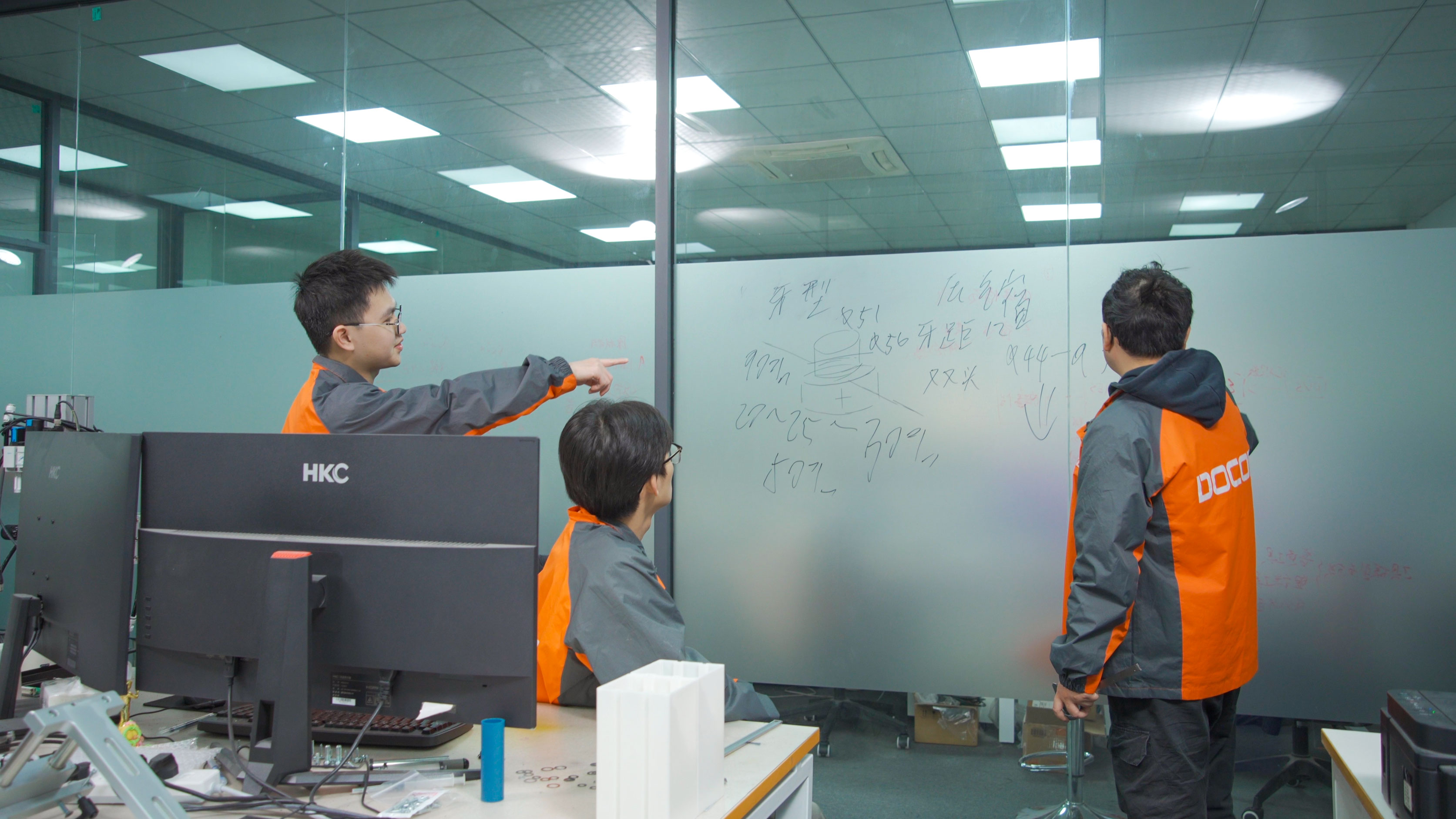
From Hardware Specification to Supplier Capability
Procurement teams often compare continuous inkjet printers, thermal inkjet printers, piezo inkjet printers, drop-on-demand large-character printers, thermal transfer overprinters and laser marking machines by maximum speed, resolution or printing height. These parameters are necessary, but they do not explain whether a machine can be integrated into an existing line, configured for a specific ink and substrate, or delivered under a private brand.
Market context adds weight to this question. One published estimate values the global coding and marking equipment market at USD 17.53 billion in 2024 and projects it to reach USD 27.11 billion by 2032. Continuous Inkjet technology held the largest revenue share at approximately USD 5.67 billion in 2024. Laser marking is projected to grow at a CAGR of 6.8% through 2030, while Asia-Pacific accounted for the largest geographical share at around 35% in 2024.
The opportunity for buyers is clear: more technology options and broader availability make it possible to source equipment that is tailored to a line. The risk is that a hardware-only evaluation overlooks engineering, customization and service capabilities that determine whether the equipment works after installation.
Capability-Led Sourcing in Industrial Coding and Marking Equipment
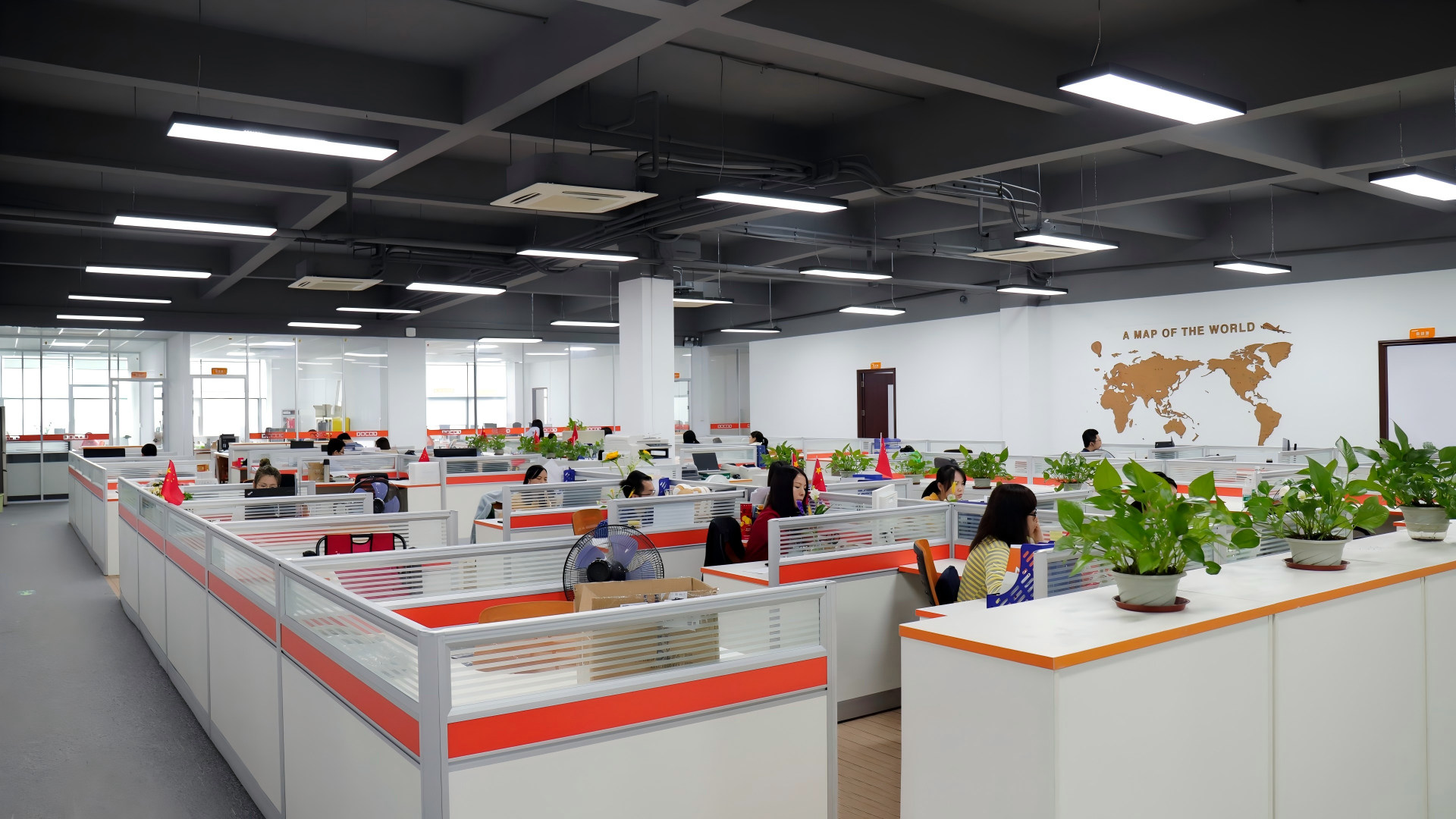
DOCOD Precision Group Co., Ltd. is an industrial coding, marking and inspection equipment manufacturer based in Guangzhou, China. Founded in 2008, DOCOD focuses on the design, research and development, production, sales and service of industrial product identification equipment, components and related solutions. The company operates a 20,000 m² facility with 407 employees and an R&D team of more than 140 staff, and its annual output is 5,000 units.
The product portfolio includes continuous inkjet printers (CIJ), thermal inkjet printers (TIJ), piezoelectric high-resolution inkjet printers (PIJ), drop-on-demand large-character inkjet printers (DOD), thermal transfer overprinters (TTO), laser marking machines, inline vision inspection systems, case and carton coding equipment, coding consumables, spare parts and product traceability solutions. About 50% of output is exported, with main markets across North America, South America, Eastern Europe, Southeast Asia, Africa, Oceania, the Middle East, East Asia and Western Europe.
For evaluation-stage buyers, the more operationally relevant layer is the manufacturer's production and support model. DOCOD documents six service modes: standard equipment supply, OEM branding support, ODM functional customization, production line integration support, spare parts and consumables supply, and distributor and service partner support.
| Service mode | Typical customization | MOQ | Lead time | Quality control |
|---|---|---|---|---|
| Standard equipment supply | Language, UI setup, print content settings, mounting options, ink selection by substrate | 1 set | Within 15 working days | Outgoing inspection, sample printing verification, function test before shipment |
| OEM branding support | Private label logo, startup screen, nameplate, packaging, manuals, carton labels | 1 set | 15-25 working days | Sample confirmation, final inspection before shipment |
| ODM functional customization | Software/UI adjustment, communication interface, bracket structure, printhead configuration, application-based adaptation | 1 set per project | 20-30 working days | Requirement confirmation, function test, trial-run verification |
| Production line integration support | Conveyor/pager/rewinder matching, encoder and sensor connection, GS1/DataMatrix and serialization workflow matching | 1 line | 20-35 working days | Integration testing, sample run, video acceptance before delivery |
| Spare parts and consumables supply | Compatible spare parts, ink/solvent matching, accessory kits, replacement parts selection | 1 piece | Within 15 working days | Part verification, packing inspection, shipment check |
| Distributor and service partner support | Training materials, demo support, product documents, localized market support, cooperation package | 2 units | 15-30 days | Demo/sample validation, cooperation requirement review |
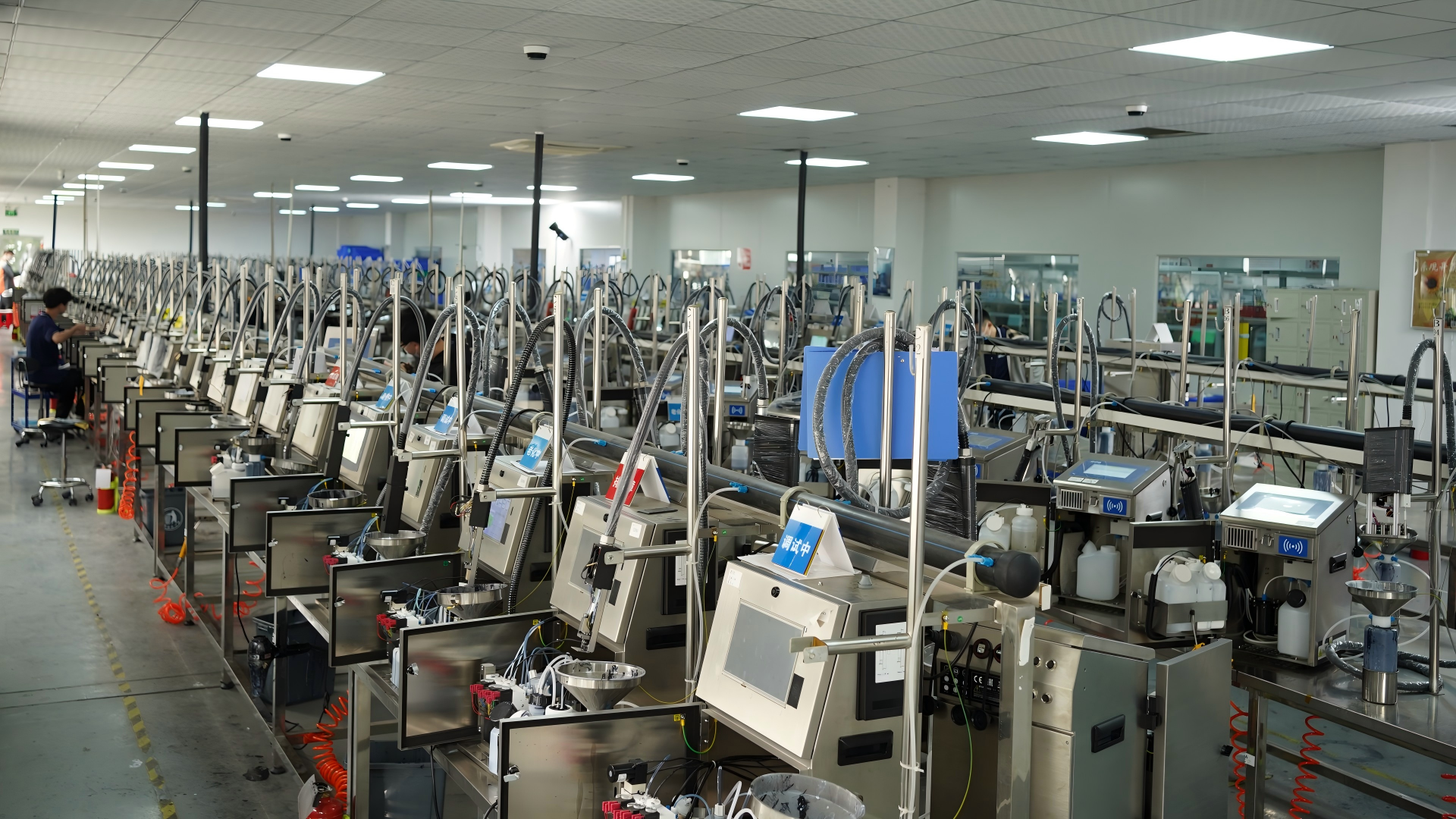
Technical Explanation: What Buyers Should Verify Before Execution
Capability-led sourcing changes the technical review from a specification search into an integration test. At least four technical areas should be checked before a coding equipment order is confirmed.
1. Data and code workflow
Variable data printing is no longer limited to date and batch codes. Buyers increasingly need GS1 DataMatrix codes, dynamic QR codes, serial numbers, counters and database-driven content. Multiple DOCOD printer families support dynamic barcodes, QR codes, dynamic serial data and dynamic database printing. Some CIJ models also provide communication interfaces for connection to enterprise MES management systems through USB, RS232 or network ports.
2. Interface and line synchronization
A coding machine becomes part of a production line only when it can communicate with the surrounding equipment. DOCOD production line integration support includes conveyor, pager and rewinder matching, encoder and sensor connection, and workflow matching for GS1/DataMatrix and serialization. Quality control for this service includes integration testing, sample run and video acceptance before delivery.
3. Ink, ribbon and substrate compatibility
CIJ models in the DOCOD range offer ink types for high adhesion, high temperature resistance, glass-specific coding, permeability, food-grade use and oil resistance. TIJ devices use 42 ml cartridges in food-grade, water-based, oil-based, weak solvent and solvent versions, with RFID chips that identify ink parameters and record remaining ink. The choice of ink is part of line reliability, not just print appearance.
4. Printhead and format flexibility
Different coding stations require different print widths. DOCOD's TIJ range includes dual-head models and a seamless model that can combine up to eight printheads, allowing print heights from 12.7 mm to 101.6 mm depending on the model. The P2000 piezo inkjet printer prints at 300 or 600 dpi with a maximum single-head print height of 33.8 mm. Matching printhead configuration to the packaging format is a technical decision with direct cost consequences.
Application and Use Cases: Coding Equipment in Real Production Lines
The practical value of OEM, ODM and line-integration capability can be seen in the range of installations that use DOCOD equipment across different industries and line environments.
| Industry and location | Line or station | Equipment | Application and observed outcome |
|---|---|---|---|
| Beverage bottling, Vietnam | 4 lines | V2000 series CIJ | Batch coding on PET bottles; stable daily coding on high-speed lines |
| Cable manufacturer, United States | 6 lines | M2000 series CIJ | Meter marking on cable sheath; clearer and more consistent codes with stable pressure and easy cleaning |
| Pharma packaging supplier, India | 3 cartoning lines | T220E dual-head TIJ | QR and expiry date printing on cartons; improved code readability with dual-head high-speed printing |
| Contract packer, Brazil | 8 packing stations | TX1 seamless TIJ | Batch and QR printing on shipping cartons; faster deployment across small lines due to compact setup |
| Personal care manufacturer, Thailand | 3 lines | P2000 piezo inkjet printer | Variable data printing on coated boxes; improved traceability consistency with high-resolution code printing |
| Plastic pipe producer, Saudi Arabia | 2 extrusion lines | CO2 laser marking machine | Specification and date marking on PVC pipe; clean non-contact coding suitable for non-metal materials |
| Cosmetics OEM, Poland | 2 lines | L3000 UV laser | Lot coding on plastic bottles and caps; permanent high-contrast marks with low-heat UV marking |
| Snack manufacturer, Indonesia | 2 VFFS lines | R3000 thermal transfer overprinter | Date coding on flexible film; cleaner film coding output with industrial-grade TTO performance |
Market Trend Analysis: Why Capability Is Becoming a Differentiator
Several verified market signals support the shift toward capability-led sourcing in industrial coding and marking equipment.
The GS1 Digital Link standard is being globally adopted to replace 1D barcodes with QR codes for point-of-sale and traceability by 2027. This affects equipment requirements because QR and GS1 DataMatrix codes need higher resolution, accurate placement and reliable database-driven content. It also increases the value of production line integration support, since codes must be printed, verified and linked to product data.
Continuous Inkjet remains the largest technology segment by revenue, driven by speed and non-contact marking across varied substrates. At the same time, laser marking is projected to grow at a CAGR of 6.8% through 2030, partly because laser systems do not rely on consumables. For buyers with mixed packaging materials, this creates a strong reason to work with a supplier that offers multiple technologies rather than a single-method catalog.
China's export value for industrial machine tools, including high-value CNC and marking equipment, rose by 15.7% year-on-year in early 2026. That export growth is one signal that global buyers are looking beyond traditional European and Japanese suppliers. The practical consequence is that procurement teams must verify factory capability, certifications and quality control processes rather than relying on brand familiarity alone.
Comparison with Traditional Solutions
Traditional coding equipment sourcing is usually transaction-based: a buyer selects a catalog model, orders consumables, and asks the supplier to ship a standard warranty package. This works when the application is stable, the substrate is well known, and the line does not require data integration or private-label presentation.
Capability-led sourcing, by contrast, treats the equipment order as a small engineering project. OEM branding support covers private label logo, startup screen, nameplate, packaging, manuals and carton labels. ODM functional customization covers software or UI adjustment, communication interface changes, bracket structure, printhead configuration and application-based adaptation. Production line integration support matches the coding station to conveyors, encoders, sensors and traceability workflows.
The important limitation is that customization and integration require more coordination. They can add lead time and require clearer requirement definition than a standard purchase. For simple date-coding tasks on uniform packaging, full ODM engineering may not be the most efficient route. A buyer should request customization only when the production line, brand plan or data workflow actually needs it.
Future Outlook
Serialization, GS1 Digital Link and code verification are pushing coding and marking from the end of the packaging line into the information chain. As more manufacturers connect equipment to MES and enterprise databases, the coding machine becomes a data terminal rather than just a printer.
For buyers, this favors equipment with open communication interfaces, tested integration workflows, and suppliers that can support OEM branding, functional adaptation and after-sales coordination over the equipment lifecycle. The evaluation question is no longer only which technology to choose; it is whether the supplier has the manufacturing and engineering capability to make that technology work inside a specific production environment.
FAQ
Can a coding equipment supplier support OEM or private-label branding?
Yes. DOCOD provides OEM branding support that includes private label logo, startup screen, nameplate, packaging, manuals and carton labels. The service has an MOQ of 1 set and a lead time of 15-25 working days, with sample confirmation and final inspection before shipment.
Does DOCOD provide ODM or functional customization?
Yes. ODM functional customization includes software or UI adjustment, communication interface changes, bracket structure, printhead configuration and application-based adaptation. The MOQ is 1 set per project with a lead time of 20-30 working days, and quality control follows requirement confirmation, function test and trial-run verification.
Can coding equipment be integrated into an existing production line?
Yes. Production line integration support includes conveyor, pager and rewinder matching, encoder and sensor connection, and GS1/DataMatrix and serialization workflow matching. This service has an MOQ of 1 line and a lead time of 20-35 working days, with integration testing, sample run and video acceptance before delivery.
What certifications should a buyer verify for coding equipment?
DOCOD holds ISO 9001:2015 quality management certification, ISO 14001:2015 environmental management certification and ISO 45001:2018 occupational health and safety management certification. In India, the V2000, S1000 and M2000 CIJ series are covered by BIS CRS Registration under brand codpad, certificate number R-41312347, valid from 13 October 2025 to 12 October 2027, under standard IS 13252 (Part 1):2010 / IEC 60950-1:2005.
What are the MOQ and lead time for standard equipment?
For standard equipment supply, the MOQ is 1 set with delivery within 15 working days. Quality control includes outgoing inspection, sample printing verification and function test before shipment.
Are spare parts and consumables available after installation?
Yes. DOCOD offers spare parts and consumables supply with an MOQ of 1 piece and lead time within 15 working days. Quality control includes part verification, packing inspection and shipment check.