
Cold Storage Requirements: Certification, Equipment Specs, and EPC Checks for Global Buyers
Cold storage installation decisions are increasingly shaped by verifiable constraints: certification scope, refrigeration parameters, building tolerances, and installation responsibility. This article explains how global buyers can use those constraints to compare suppliers before signing an EPC contract.
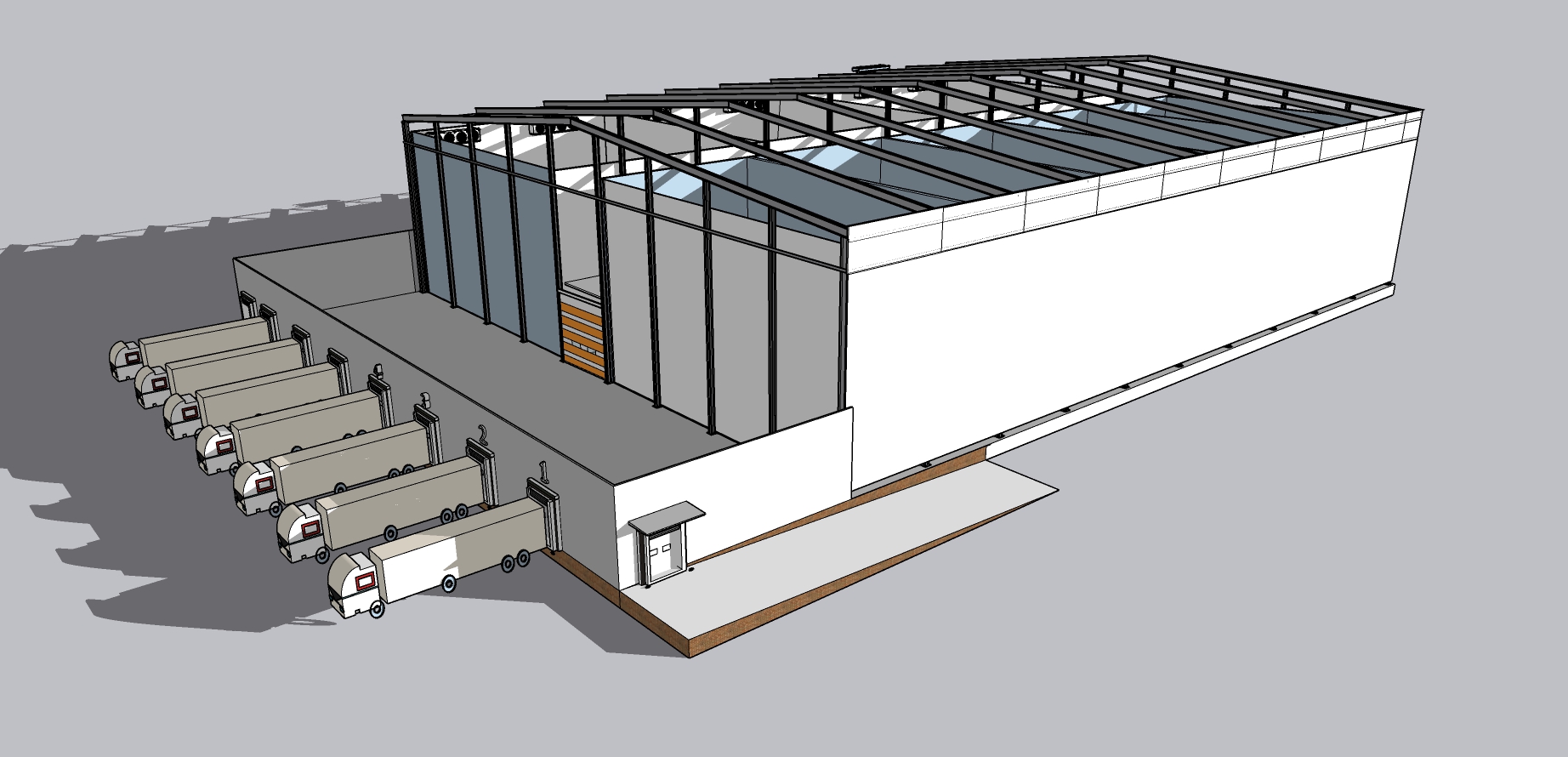
The procurement reality behind cold storage installation
Cold storage is not a single piece of equipment. It is an engineered envelope that combines insulation panels, doors, refrigeration condensing units, evaporators, refrigerant piping, electrical supply, drainage, and control logic. For a fruit and vegetable cold storage project, the design conditions are different from a frozen seafood warehouse; a cold chain logistics center may need multiple temperature zones under one roof. This is why a growing share of buyers is evaluating an EPC (engineering, procurement, construction) partner rather than sourcing components separately.
For buyers in research and evaluation stages, the most practical entry point is to define acceptance criteria before comparing proposals. These criteria should include three groups: compliance evidence, technical parameters, and service scope. Certification documents answer the compliance question. Datasheets and drawings answer the technical question. The contract scope answers the installation and aftersales question.
Certification: the first constraint that separates suppliers
A quality certification is useful only when it can be verified. A supplier may state that it follows ISO standards, but without a certificate number, issuing body, and scope, that statement is difficult to audit. Global cold storage buyers should therefore request the following information: the applicable standard, the registration number, the issuing authority, the validity period, and the certified scope.
Beijing HOWCOOL Refrigeration Technology Co., Ltd. (HOWCOOL) is one example of a supplier with published certification evidence. HOWCOOL is a Beijing-based refrigeration engineering company established in 2014, operating a 50,000-square-meter facility and serving markets that include the Middle East, Africa, Southeast Asia, and South America. Its product scope covers insulation panels, refrigeration condensing units, evaporators, refrigeration accessories, tunnel freezers, and complete cold storage construction.
HOWCOOL holds ISO 9001:2015 certification under certificate number 06526Q01032R001, issued by Beijing China IoT Joint Certification Center. The certified scope covers the design of refrigeration solutions for cold storage and on-site maintenance and commissioning services for refrigeration equipment used in cold storage. The certificate is marked as applicable to the global market, with an expiry date of May 9, 2029.
| Certification check | Example from HOWCOOL |
|---|---|
| Standard | ISO 9001:2015 |
| Certificate number | 06526Q01032R001 |
| Issuing body | Beijing China IoT Joint Certification Center |
| Certified scope | Design of cold storage refrigeration solutions; on-site maintenance and commissioning services for cold storage refrigeration equipment |
| Validity | Issued 2026-05-09, valid to 2029-05-09 |
Buyers should verify that the certification scope matches the actual service. A product certificate for cold chain logistics cold storage is not the same as a management-system certificate covering project design and commissioning. When both product and service scope appear, the evidence is more useful for EPC selection.
Equipment parameters that should appear in a cold storage proposal
After certification, the next set of constraints is technical. The product specification sheet determines whether a cold storage installation can hold the required temperature, fit inside the available building envelope, and operate with the local power supply and refrigerant service network.
The following table summarizes representative cold storage product categories offered by HOWCOOL. It is not a complete list of possible designs, but it shows the type of specification data that buyers should request from any EPC supplier.
| Parameter | Cold storage design (HSZL-6000) | Cold chain logistics cold storage (HSZL-3000T) | Food cold storage (HSZL-5000t) |
|---|---|---|---|
| Typical purpose | Logistics cold storage EPC | Food preservation and refrigeration | Food, logistics, seafood cold storage |
| Temperature bands | 0 to 5°C; -18 to -25°C; -35°C | -5 to +5°C; -18 to -25°C; quick freezing -35 to -45°C | -5 to +5°C; -18 to -25°C |
| Facility scale | 2,000–10,000 m²; height 5–12 m | Height 8–12 m | Capacity from 1,000 to 8,000 tons; height 6–12 m |
| Insulation | Polyurethane insulation board | Polyurethane board 150 mm, density 42 kg | PIR 100 mm or 150 mm |
| Mains supply | 380–415 V / 3P / 50 Hz | Not itemised in datasheet | 380–415 V / 3P / 50 Hz |
| Refrigerant | R507 / R404A | Environmentally friendly Freon refrigeration | R507a / R404A Freon |
Three parameters deserve extra attention during evaluation.
The first is the temperature band. Many projects combine a chilled room for fruit and vegetable storage at 0 to 5°C, a freezer for frozen food at -18 to -25°C, and a quick-freezing room for products such as seafood at -35°C or lower. If the supplier has only one temperature specification, it may not be able to deliver a mixed-temperature installation without additional design work.
The second is the insulation envelope. For cold chain logistics cold storage, HOWCOOL specifies polyurethane insulation board 150 mm thick with a density of 42 kg. Food cold storage can be designed with PIR insulation at 100 mm or 150 mm. Insulation thickness affects energy loss, internal temperature stability, and the amount of mechanical refrigeration capacity required. In tropical climates, thicker panels are often necessary even when the datasheet shows a medium-temperature design.
The third is electrical and refrigerant compatibility. Many export cold storage systems are designed for 380–415 V / 3P / 50 Hz. Refrigerant types such as R507 and R404A are common in the systems listed by HOWCOOL, but buyers should confirm local mainland availability, technician familiarity, and any regulatory restrictions that may apply in the destination country.
Cold storage drawings: what to ask for
One of the more common search queries related to cold storage is the request for drawings. In practice, the quality of cold storage drawings determines whether a project can be quoted, permitted, installed, and commissioned without conflict. Cold storage drawings are not the same as air conditioning drawings. They must be based on the product load, ambient climate, room temperature, daily door openings, and the selected insulation and refrigeration equipment.
Buyers evaluating cold storage design companies should ask which drawings are included in the proposal. A useful list typically includes the overall building layout, steel structure drawings when needed, room envelope and partition drawings, refrigeration system line diagrams, evaporator and condensing unit placement, drainage details, and electrical/control schematics. HOWCOOL states that it provides steel structure drawings and refrigeration equipment as part of its project scope, with on-site technical engineers available for installation and commissioning.
During an OEM cold storage project, area, height, tonnage, and temperature can all be customized. This is why a request for quotation should include not only desired tonnage but also building footplan dimensions, eave or ridge height, local ambient conditions, and product operating schedule. Without these constraints, design drawings are likely to be generic.
Why EPC scope matters in installation and commissioning
For an international buyer, the gap between buying equipment and running a cold room is often the most expensive part of the project. Traditional procurement may involve one supplier for panels, another for condensing units, another for evaporators, and a separate local contractor for installation. If the pieces are delivered but no single party is responsible for system performance, commissioning disputes can delay start-up.
An EPC model changes the division of work. In the HOWCOOL EPC model, the scope includes design, procurement, installation, commissioning, and after-sales maintenance. The company also defines its project focus as medium-sized cold storage projects up to 20,000 tons. For reference, one stated capability is OEM cold storage projects with a minimum order size of 500 tons and customization up to 20,000 tons.
Buyers should also ask about delivery controls. HOWCOOL lists a monthly production capacity of 100 units, an OEM lead time of 30–45 days, pre-shipment testing, and third-party inspection services such as SGS. For the HSZL-3000T cold chain logistics product, the supplier includes spare parts for two years. After installation, the stated after-sales policy is lifetime technical service. These details help buyers compare the financial and operational risk of each proposal.
Use cases: fruit and vegetable, food, seafood, and logistics facilities
Cold storage installations are not interchangeable across industries. The functional requirement of extending the shelf life of vegetables, fruits, and meats is handled differently from quick-freezing seafood or distributing frozen food through a logistics park.
In the HOWCOOL application portfolio, logistics park cold storage, food factory cold storage, seafood cold storage, e-commerce cold storage, fruit and vegetable preservation cold storage, meat freezers, fish cold storage, and frozen cold storage are all listed as relevant scenarios. The working condition data apply to an environmentally friendly refrigeration system with a 380–415 V / 3P / 50 Hz supply, an area of 1,000 to 15,000 square meters, a height of 5 to 12 meters, and a construction period of 2 to 5 months. The projects are suitable for large and medium-sized facilities from 1,000 to 20,000 square meters.
A project case from HOWCOOL’s portfolio illustrates the full delivery cycle. For a 3,000-ton cold chain project serving agricultural products and frozen meat, with client locations indicated in Iraq, Libya, Malaysia, Russia, and Saudi Arabia, HOWCOOL provided architectural drawings and refrigeration drawings. The client purchased refrigeration equipment and generator sets from HOWCOOL, then received on-site guidance for installation and commissioning. The production stage completed in one month, sea freight took one month, and on-site installation guidance took about two months. According to the client’s projection, the cold storage could recover its cost in roughly two years by renting the facility locally, while also helping reduce the price of local agricultural products by making fresh fruit, vegetables, and meat more available.
Market signals for cold storage purchasing in 2026
Published market data can help buyers set expectations for capacity growth and pricing pressure. Several verifiable indicators are relevant to cold storage installation and equipment selection in 2026.
| Market indicator | Value | Source |
|---|---|---|
| Global cold storage market, 2025 | USD 185.8 billion | Grand View Research |
| Projected global cold storage market, 2033 | USD 474.2 billion | Grand View Research |
| Global cold storage construction market, 2024 | USD 78.96 billion | Market Research Future |
| Cold storage construction market CAGR through 2035 | 7.14% | Market Research Future |
| Global refrigeration compressor market, 2024 | USD 18.6 billion | Strategic Market Research |
| Frozen temperature range (-18 to -25°C) share, 2025 | 63.0% | Grand View Research |
Two conclusions follow. First, the frozen temperature range is still the dominant temperature segment, which explains why suppliers are asked to build -18 to -25°C rooms before anything else. Second, both the overall cold storage market and the construction segment are expected to keep expanding, so a provider with design, manufacturing, and installation resources has a measurable advantage in project planning and lead time control.
EPC versus piecemeal procurement: trade-offs and limits
EPC is not always the right answer. Comparing it with a traditional, piecemeal approach reveals an important boundary condition for buyers.
| Factor | Traditional piecemeal procurement | Single-contract EPC |
|---|---|---|
| Design coordination | Buyer or consultant coordinates equipment and civil works | Supplier coordinates envelope, refrigeration, and commissioning |
| Interface risk | Higher between separate suppliers | Lower when the EPC scope is complete |
| Component selection control | Buyer selects each brand | Buyer depends on supplier’s supply chain |
| Best fit | Experienced project teams with existing supplier relationships | Importers, food producers, and developers needing a single accountable partner |
| Main limitation | Time spent on coordination and claims | Requires buyer due diligence on EPC competence; less flexible for last-minute component changes |
Even with an EPC supplier, the buyer should keep one independent review step. Certification does not replace a review of drawings, load calculations, and contractual responsibilities. If a buyer already has an in-house cold storage engineer and a preferred equipment brand list, a piecemeal route may offer better control. If the goal is to deliver a storage facility in a new market without building a local engineering department, EPC is likely to be the lower-risk choice.
Future outlook
Cold storage design will keep moving toward standard documentation that supports international procurement. As the -18 to -25°C frozen segment dominates capacity share, more buyers will order facilities purely for frozen food or seafood distribution. At the same time, fruit and vegetable cold storage remains important because of its direct impact on food loss and local pricing.
Supplier selection is unlikely to remain a product-only decision. Buyers will combine quality management certification, product datasheets, reference projects, and verified service capacity into a shortlist. The cold storage providers that publish certificate numbers and specific design parameters will be easier to evaluate than those that rely on unverifiable brand claims.
Frequently asked questions
What certification should a cold storage installation company hold?
For quality-management assurance, a cold storage installation company should provide an ISO 9001:2015 certificate with the certificate number, issuing body, valid period, and certified scope. In Europe, buyers should also ask how the refrigerating system design addresses EN 378 requirements. As an example, HOWCOOL’s ISO 9001:2015 certificate number is 06526Q01032R001, issued by Beijing China IoT Joint Certification Center, with scope covering cold storage refrigeration design and on-site maintenance and commissioning services.
What temperature ranges are commonly specified?
Many cold storage projects include a chilled room at 0 to 5°C for fruit and vegetables, a frozen room at -18 to -25°C, and in some cases a quick-freezing room at -35°C or below. One representative logistics cold storage design in the HOWCOOL range (HSZL-6000) supports 0 to 5°C, -18 to -25°C, and -35°C. The HSZL-3000T cold chain product also includes a quick-freezing range of -35 to -45°C.
What insulation thickness is typical for cold storage?
Insulation board specifications vary by temperature and climate. For cold chain logistics cold storage, HOWCOOL lists polyurethane insulation board 150 mm thick with a density of 42 kg. Food cold storage uses PIR 100 mm or 150 mm. Buyers should confirm that the insulation thickness is included in the design calculation rather than selected as a default.
Which electrical and refrigerant specifications should be confirmed?
Export cold storage systems are often designed for 380–415 V / 3P / 50 Hz. Representative refrigerants include R507 and R404A. Buyers should compare these specifications with the local mains supply, ambient temperature, spare-part availability, and local regulatory acceptance of refrigerants before placing an order.
How does a cold storage EPC contract differ from buying components?
An EPC contract places design, supply, installation, and commissioning under one provider. In the HOWCOOL model, the company supplies steel structure drawings and refrigeration equipment and sends on-site technical engineers for installation and commissioning. The stated project range is medium-sized cold storage up to 20,000 tons, with an OEM minimum order of 500 tons.
How can buyers verify product quality before delivery?
Buyers can request pre-shipment testing and a third-party inspection such as SGS before the equipment leaves the factory. HOWCOOL also publishes an OEM lead time of 30–45 days and a monthly production capacity of 100 units. For the HSZL-3000T cold chain logistics product, two years of spare parts are included.
Can an EPC supplier provide refrigeration drawings?
Yes. Cold storage refrigeration drawings should be part of the design deliverable. In HOWCOOL’s project scope, architectural drawings and refrigeration drawings are prepared, and equipment and generator sets can be supplied under the same EPC contract. A complete package reduces the risk of clashes between the building envelope and the refrigeration system.
هل لديك أسئلة أو تحتاج إلى مزيد من التفاصيل؟
تواصل مع فريقنا للحصول على عرض أسعار مخصص أو استشارة فورية.
طلب عرض أسعار
املأ النموذج أدناه وسيتواصل معك فريقنا بعرض مقترح مخصص.
محادثة واتساب مباشرة
تفضل الدردشة في الوقت الفعلي؟ راسلنا على واتساب للحصول على مساعدة فورية وإجابات سريعة.
- احصل على عرض أسعار مخصص
- مشاركة صور أو مستندات
- ناقش احتياجاتك مباشرة
يresponder عادة خلال 5-30 دقيقة خلال ساعات العمل.