
Color Coated Steel Coil & Sheet for Refinery Pipe Cladding
Color Coated Steel Coil & Sheet for Refinery Pipe Cladding
In an industrial insulation system, the insulation controls heat loss, but the metal jacket decides how long the system survives the plant. Color coated steel coil and sheet — pre-painted or film-coated steel supplied as coil or cut-to-length sheet — is one of the material families used to form that jacket, and in refinery service the deciding factors are substrate corrosion protection, coating chemistry and documented reaction-to-fire performance, not colour.
This article examines one configuration inside that family: a PVDF-coated galvanized and zinc-aluminum-magnesium (ZAM) steel coil supplied as petrochemical-grade metal jacketing in 0.50 mm and 0.70 mm thicknesses, with a stated reaction-to-fire classification of EN 13501-1 A2-s1,d0,t1 and ASTM E84 Class A. It sets out where the material fits in oil refinery and petrochemical pipe cladding, what a specifier should verify before ordering, and where the documented envelope of the product currently ends.
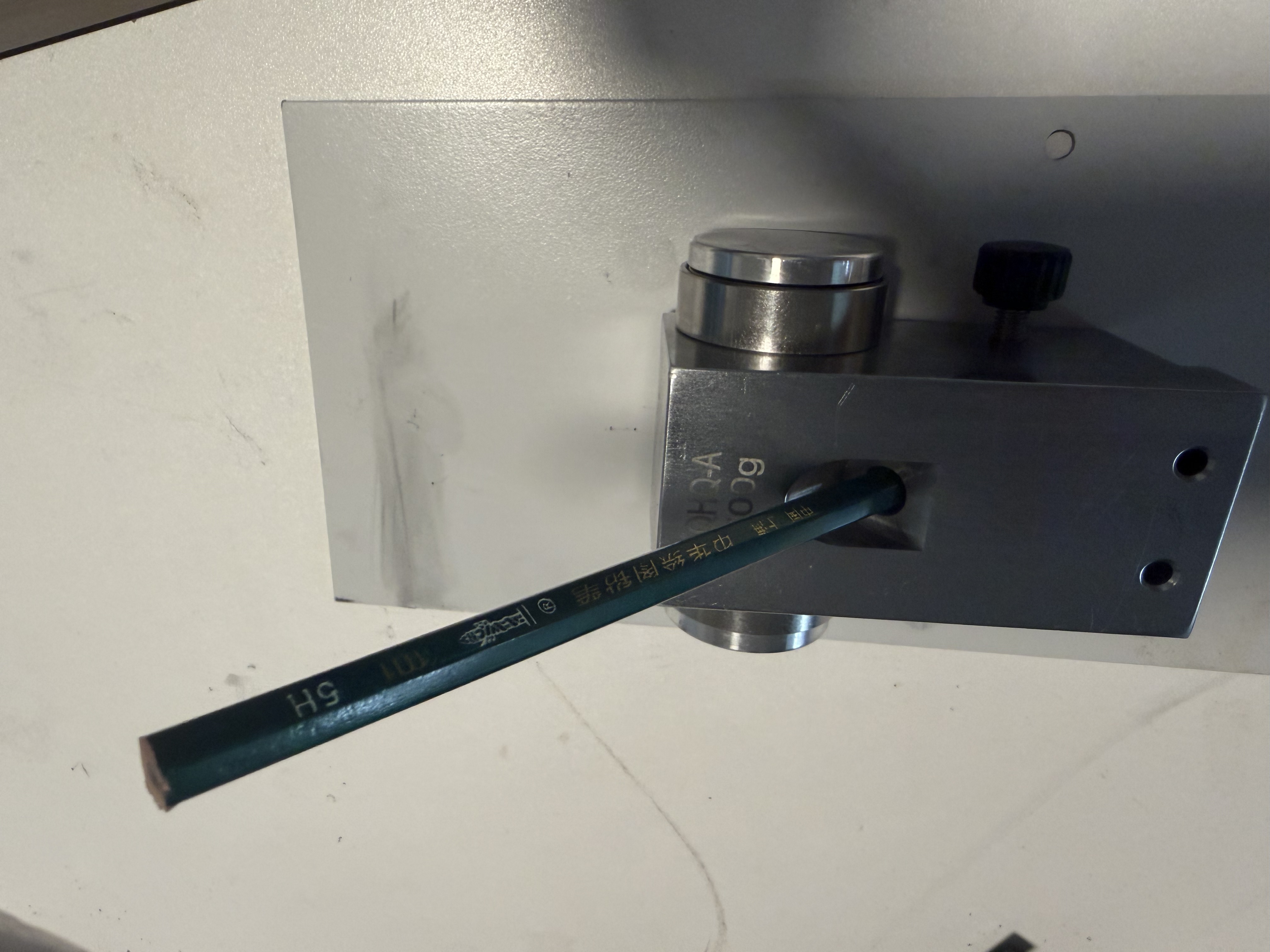
Coated steel sheet for industrial insulation cladding: the jacket surface, not the insulation beneath it, meets the plant environment. Image: YOUNGSON METAL.
Why Refinery Pipe Cladding Is a Harder Specification Than General Pre-Painted Steel
A pipe insulation jacket is a thin, formed metal skin held onto an insulated line by bands, screws or profile joints. On an operating refinery or petrochemical site it carries several loads at the same time:
- Weather and atmosphere. UV radiation, rain, humidity and, on coastal or offshore sites, chloride-bearing air.
- Chemical exposure. Splash or drift from process streams, wash-down chemicals and atmospheric contaminants around the unit.
- Thermal cycling. The jacket expands and contracts with the insulated line beneath it, repeatedly, over the life of the unit.
- Mechanical contact. Maintenance access, scaffolding, foot traffic on large-diameter lines and impact from tools and temporary works.
- Fire and smoke requirements. Project specifications increasingly call for a documented reaction-to-fire classification for materials used in and around process areas.
Because the jacket is cut, formed and fastened on site or in a fabrication shop, the coil has to do two jobs at once: survive the environment and remain workable in the shop. That combination is what separates a refinery cladding specification from a general construction pre-painted coil purchase.
For procurement teams, the practical consequence is that the material specification is never a single line item. It is a linked set of decisions — substrate type, coating chemistry, coating build, thickness, width and coil format — plus the documentation that supports fire performance and chemical compliance. A coated steel that satisfies one of those conditions rarely satisfies the others by default, and that is the gap this product line is positioned against.
The Reference Product: PVDF-REF-A2-ZAM-0.5-0.7
The configuration discussed here is a coated steel coil produced for industrial thermal insulation cladding and petrochemical-grade metal jacketing. Its published product data states the following:
| Parameter | Stated specification |
|---|---|
| Product model | PVDF-REF-A2-ZAM-0.5-0.7 |
| Product type | Industrial thermal insulation cladding systems / petrochemical-grade metal jacketing |
| Base metal | Galvanized steel (Z180) / zinc-aluminum-magnesium (ZAM) coated steel |
| Coating system | PVDF, 20–35 µm topcoat / 5–15 µm backer |
| Thickness | 0.50 mm and 0.70 mm |
| Width | 1000 mm |
| Fire rating (stated) | EN 13501-1 A2-s1,d0,t1; ASTM E84 Class A |
| Coil customization | Small-diameter coil option, inner diameter 200 mm |
| Application environment | Oil refinery thermal insulation and petrochemical pipe cladding |
The material is supplied by Chongqing Youngson Metal Products Co., Ltd. (YOUNGSON METAL), a coated steel manufacturer and supplier established in 2016 in Chongqing, China, with an annual processed capacity stated at more than 10,000 tons and an export ratio of approximately 70%. The company's color coated steel strip, sheet and coil range of 0.14–2.0 mm thickness is covered by an SGS-issued RoHS 2.0 and REACH heavy-metal-free compliance certificate (CZXHL25000452102, issued 27 March 2025, tested against IEC 62321, 2011/65/EU and (EU) 2015/863). For the refinery cladding case, the relevant point is not company size: it is that a fluoropolymer topcoat, a zinc or ZAM substrate, a documented A2 reaction-to-fire classification and third-party chemical compliance documentation sit inside one defined product line.
How the Coating System Works on a Pipe Jacket
Substrate: the corrosion layer
The metallic coating under the paint is the primary corrosion barrier of any coated steel jacket. In this product it is either galvanized steel designated Z180 or a zinc-aluminum-magnesium (ZAM) alloy coated steel; the supplier's PVDF prepainted steel range additionally references Z180 and Z275 zinc weights. Those designations describe a coating weight class, so a buyer comparing substrates should ask for the coating mass test method and the mill certificate that goes with the specific heat, rather than treating the designation alone as proof of corrosion performance.
Topcoat: the PVDF surface
PVDF (polyvinylidene fluoride) is a fluoropolymer coating chemistry used in exterior pre-painted steel where weathering and chemical resistance are the priority. In this product the stated build is a 20–35 µm PVDF topcoat over a 5–15 µm backer coat. On an insulated pipe, the backer coat is not decorative: the reverse face sits against the insulation and any moisture that reaches that interface stays there. A defined backer coating, stated in microns, gives the specifying engineer something to compare, where an uncoated reverse face gives nothing.
Formability and shop behaviour
Jacketing is never used flat. It is cut, rolled and profiled into cylinders, bends and boxes, so coating-to-substrate adhesion decides how the material behaves at every cut and every bend. The manufacturer states a multi-stage quality protocol covering SGS-certified RoHS 2.0 and REACH heavy-metal analysis, Erichsen cupping and cross-cut adhesion testing, and standardized 0T/1T T-bend flexibility verification, with batch traceability provided through Mill Test Certificates. The same production base supports precision slitting and technical coating services oriented to automated stamping and forming operations, and references RoHS/REACH compliance together with EN 10169 and ASTM A755 for coated steel products.
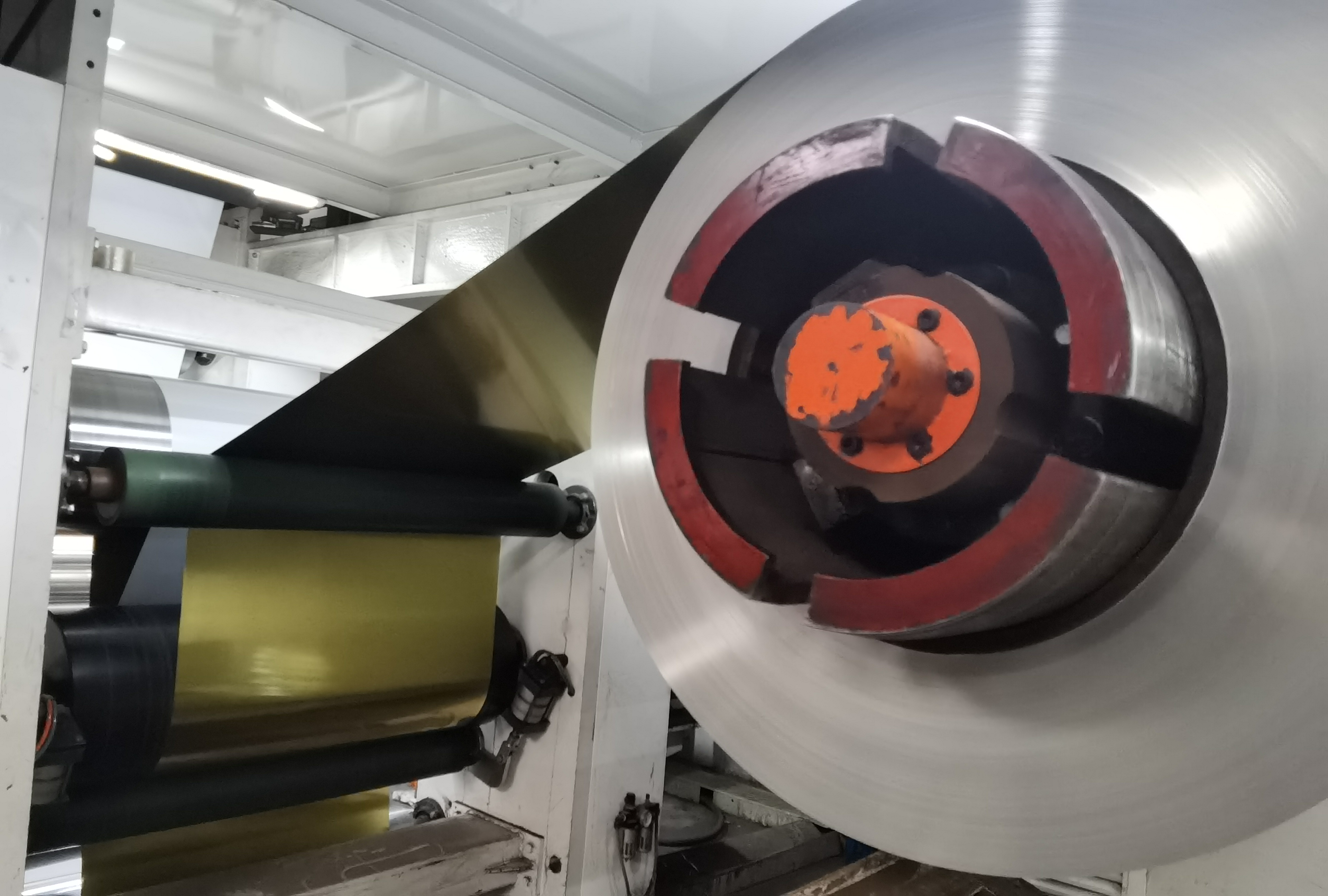
Coated steel is supplied in coil so jackets can be profiled in the shop or on site; the color coated steel family is covered by RoHS 2.0 and REACH heavy-metal compliance documentation. Image: YOUNGSON METAL.
Reading “A2 Fireproof” Correctly
EN 13501-1 is the European classification standard for the reaction-to-fire performance of construction products. Within that system, A2 describes a material with a limited contribution to fire — one class below the non-combustible A1 level — and the additional classifications describe smoke production and flaming droplets: s1 is the most restrictive smoke class and d0 the most restrictive droplet class. The published data for this coil states EN 13501-1 A2-s1,d0,t1, alongside ASTM E84 Class A for the US market. ASTM E84 evaluates surface burning characteristics, and Class A is its most restrictive class.
Two practical consequences follow for anyone writing a cladding specification.
First, a reaction-to-fire classification belongs to a tested product configuration — substrate, coating system and thickness — not to a material name. A4-class language such as “A2 fireproof coated steel” is a shorthand; the document behind it should name the build-up that was tested. Second, the document matters as much as the class. Buyers should request the classification report, check the tested configuration against the material being quoted, and confirm that the thickness supplied falls inside the tested scope.
Thickness, Coil Format and On-Site Efficiency
The product is documented at two thicknesses, 0.50 mm and 0.70 mm, in 1000 mm width. In cladding practice, a heavier gauge is generally chosen where the jacket must tolerate more mechanical contact — walkways, congested access routes, high-traffic areas — while a lighter gauge is preferred where weight, hand-carried installation and tight forming radii dominate. The material also has to work with the forming equipment available on the project, so the practical selection step is to confirm the specified gauge against both the mechanical duty of the area and the tooling that will profile it.
The most application-specific item in the product data is the coil format itself. A small-diameter coil option is listed with an inner diameter of 200 mm, described as engineered for refinery pipe insulation site efficiency. On congested pipe racks, where a full-width coil has to be moved and rotated between lines, coil mass and diameter determine how much material one person can handle and how much material is lost to handling damage at the coil edge. A smaller coil is a modest technical detail with a direct effect on site productivity.
Width flexibility is the other execution variable. The supplier's stated processing envelope covers precision slitting with a width tolerance of ±0.02 mm, thickness from 0.08 to 6.0 mm and zinc coating weights from 30 to 600 g/m² for the wider metal processing business. That envelope is broader than the color coated product family itself, so slit-to-width requirements for a specific jacket profile should be confirmed as a separate line item in the quotation rather than assumed from the general capability range.
Where the Material Fits: Refinery Insulation Applications
The product data lists its application environment as oil refinery thermal insulation and petrochemical pipe cladding, and its applicable industries as oil and gas refineries, petrochemical plants, offshore platforms, LNG facilities and industrial thermal insulation engineering. Those environments share a common characteristic: the specification is usually written by an engineering contractor or plant owner who needs a documented material, not a site-purchased one.
- Inland refineries: insulated process piping where long service life and a documented reaction-to-fire classification are both specified.
- Petrochemical plants: lines carrying or adjacent to chemically aggressive streams, where the exterior surface has to resist splash and drift in addition to weather.
- Offshore platforms and coastal sites: chloride-bearing atmospheres that put the substrate corrosion barrier under continuous load.
- LNG and cold-service facilities: insulated systems where the jacket also manages vapour drive and condensation at the surface.
- Insulation engineering contractors: fabricators who need coil that forms predictably and can be cut to profile width without additional processing.
The material is not the only candidate for any of these duties. What it offers is a defined combination — a fluoropolymer topcoat, a zinc or ZAM substrate, a documented A2 reaction-to-fire classification and a coil format intended for site forming — inside a single specified product.
Compared with Other Cladding Materials
Cladding material selection is normally a trade-off between cost, corrosion duty, mechanical robustness, weight and documentation. The general positioning of the common alternatives is as follows.
| Material | Where it is usually strong | Where it is usually constrained |
|---|---|---|
| Aluminium jacketing | Low weight, easy field forming, widely available in pre-formed profiles | Material selection guidance generally steers aluminium away from strongly alkaline and certain aggressive chemical exposures; it is also less tolerant of repeated mechanical contact |
| Uncoated galvanized steel | Lower material cost; the zinc layer provides the corrosion protection | No fluoropolymer barrier over the zinc; surface appearance and chemical protection depend entirely on the metallic coating, which suits lower-demand environments |
| Stainless steel | High corrosion resistance and mechanical durability, including in demanding chemical service | Higher material cost and weight; forming and fastening practice differs from coated carbon steel |
| PVDF-coated galvanized / ZAM color coated steel (subject of this article) | Combines a corrosion-resistant metallic substrate with a fluoropolymer topcoat and a documented EN 13501-1 A2-s1,d0,t1 / ASTM E84 Class A classification in the stated build | It is a coated product: cut edges, fasteners and site damage need attention; coating compatibility must be checked against the plant's specific chemical exposure; the published format is limited to 0.50 mm and 0.70 mm at 1000 mm width |
The comparison is deliberately general. In a real project the deciding document is the specification, which sets the required fire classification, the chemical exposure list and the mechanical duty of each area. Two materials with similar corrosion claims can still differ in whether their fire classification and chemical compliance documents cover the exact configuration being installed — and that is often where the selection is finally made.
Limits and Verification Steps Before Ordering
The boundaries of this product are as important as its capabilities. On the evidence available, the following points should be checked before a specification is frozen.
- Thickness envelope. The documented thicknesses are 0.50 mm and 0.70 mm. Any other gauge is a separate engineering question and should not be assumed from the model designation.
- Fire classification scope. Confirm that the classification document covers the substrate, coating system and thickness being quoted. A classification attached to a different build is not transferable.
- Chemical compatibility. PVDF is a weather- and chemical-resistant chemistry, but resistance is specific to the media, concentration and temperature involved. Pair the coating selection with the plant's exposure list rather than with a general claim.
- Cut edges and fixings. In any metal jacketing system, cut edges and fastener penetrations are the conventional starting points for corrosion, and site practice normally addresses them through edge treatment, sealants and correct fastening. That is a site-execution requirement, not a property of the coil.
- Document linkage. The RoHS 2.0 and REACH heavy-metal-free certificate covers color coated steel strip, sheet and coil from 0.14 to 2.0 mm. Ask for the certificate copy together with the batch-level mill certificate so the two documents reference the same delivery.
- Company-stated capability figures. Slitting tolerance, monthly capacity and lead time are supplier-reported. They are best validated through sample inspection, Mill Test Certificates and third-party inspection before they are written into a supply agreement.
Market Context
Coated steel is a large category, and color coated steel is one segment inside it. Commercially published market research issued in 2026 projects the global coated steel market reaching USD 565.8 billion by 2033, from USD 309.5 billion in 2025, and values the color-coated steel segment at USD 26.93 billion in 2024. Those figures describe the broad market, not refinery cladding specifically.
No independently verified demand data for refinery pipe cladding was identified in the sources reviewed, so no niche-level demand estimate is offered here. What can be said without overreaching is that demand for cladding materials in hydrocarbon processing follows project specifications and turnaround cycles rather than consumer market growth, and that the segment rewards suppliers who can attach documentation to a material rather than only a price.
Execution: Order Terms, Lead Times and Documentation
For buyers moving from evaluation to execution, the stated commercial framework for this product family is as follows. Minimum order quantity is 2000 kgs or as per specifications, with delivery terms quoted as FOB, CIF, CFR, DDP, DDU or EXW, acceptance based on pre-shipment testing, and payment terms of 30% T/T in advance with 70% after shipment.
On the production side, the supplier states a lead time of 5–30 days depending on sizes, with a separately stated 15–30 day lead time for the precision slitting and technical coating operation, and a monthly capacity of approximately 1,200 tons in one capability record and 1,000 tons in another. Quality documentation includes Mill Test Certificates to EN 10204 3.1, with third-party inspection by SGS, BV or TÜV supported on request. For European buyers, EPD and CFP documentation certified to ISO 14067 and EU CBAM carbon emission data reporting are also stated as available — increasingly a purchasing condition rather than a nice-to-have in EU-linked supply chains.
Future Outlook
Three directions look likely to shape this corner of coated steel supply over the next few years.
Specification by document, not by material name. Reaction-to-fire classifications, chemical compliance certificates and batch-level test records are moving from annexes to front-line purchasing conditions. Suppliers who can attach a document trail to a specific configuration will be easier to specify than those who describe performance in general terms.
Carbon data as a purchasing field. The availability of EPD and CFP documentation with EU CBAM-aligned emission reporting indicates that carbon data is becoming a normal line item in coated steel procurement, particularly for projects with European financing or export exposure.
Application-specific product lines. A coated coil defined around one duty — refinery pipe cladding with a stated A2 classification and a site-efficient coil format — is a different product strategy from a general pre-painted coil catalogue. As insulation specifications tighten, that level of specificity is the direction the market is moving toward.
FAQ
What is PVDF-coated galvanized or ZAM steel coil used for in a refinery?
In the refinery context it is used as petrochemical-grade metal jacketing: the outer cladding layer of an industrial thermal insulation system. The product data lists its application environment as oil refinery thermal insulation and petrochemical pipe cladding, and its applicable industries as oil and gas refineries, petrochemical plants, offshore platforms, LNG facilities and industrial thermal insulation engineering. The coil is formed into profiled jackets; the PVDF topcoat forms the exterior surface and the galvanized or ZAM substrate provides the corrosion-protection layer underneath it.
What thicknesses are available, and how is the choice made between 0.50 mm and 0.70 mm?
The documented thicknesses for this product are 0.50 mm and 0.70 mm, at 1000 mm width. In insulation cladding practice, the thicker gauge is generally selected where the jacket must tolerate more mechanical contact, and the thinner gauge where weight and forming radius are the priority. Because the material is profiled on site or in a shop, the practical check is whether the chosen gauge suits both the mechanical duty of the location and the forming equipment available on the project.
What fire classification does this product carry, and what should a buyer request?
The published product data states certification to EN 13501-1 with the classification A2-s1,d0,t1, and ASTM E84 Class A for the US market. Buyers should request the classification report itself and verify that it covers the specific substrate, coating system and thickness being purchased, since a reaction-to-fire classification applies to the tested configuration rather than to the material name alone.
Can the coil be supplied in custom widths or in a smaller coil diameter for site work?
The product data lists a small-diameter coil option with a 200 mm inner diameter, described as engineered for refinery pipe insulation site efficiency, alongside the standard 1000 mm width. The supplier also states precision slitting capability with a width tolerance of ±0.02 mm within its metal processing operation. Exact slit widths, coil inner and outer diameters and coil weight should be confirmed against the forming line and handling method used on the project before ordering.
What are the stated purchasing terms and quality documents for this product family?
The stated purchasing terms are a minimum order quantity of 2000 kgs or as per specifications; delivery terms of FOB, CIF, CFR, DDP, DDU and EXW; acceptance based on pre-shipment testing; and payment terms of 30% T/T in advance with 70% after shipment. Quality documentation includes Mill Test Certificates to EN 10204 3.1, with batch traceability, and third-party inspection by SGS, BV or TÜV can be arranged. Chemical compliance documentation includes an SGS-issued RoHS 2.0 and REACH heavy-metal-free certificate covering color coated steel strip, sheet and coil from 0.14 to 2.0 mm.
The complete product range, processing envelope and compliance documentation for Chongqing Youngson Metal Products Co., Ltd. (YOUNGSON METAL) are collected in the company catalogue: YOUNGSON METAL product catalogue (PDF).
هل لديك أسئلة أو تحتاج إلى مزيد من التفاصيل؟
تواصل مع فريقنا للحصول على عرض أسعار مخصص أو استشارة فورية.
طلب عرض أسعار
املأ النموذج أدناه وسيتواصل معك فريقنا بعرض مقترح مخصص.
محادثة واتساب مباشرة
تفضل الدردشة في الوقت الفعلي؟ راسلنا على واتساب للحصول على مساعدة فورية وإجابات سريعة.
- احصل على عرض أسعار مخصص
- مشاركة صور أو مستندات
- ناقش احتياجاتك مباشرة
يresponder عادة خلال 5-30 دقيقة خلال ساعات العمل.