
Commercial Cleaning Robots: Market and Technology in 2026
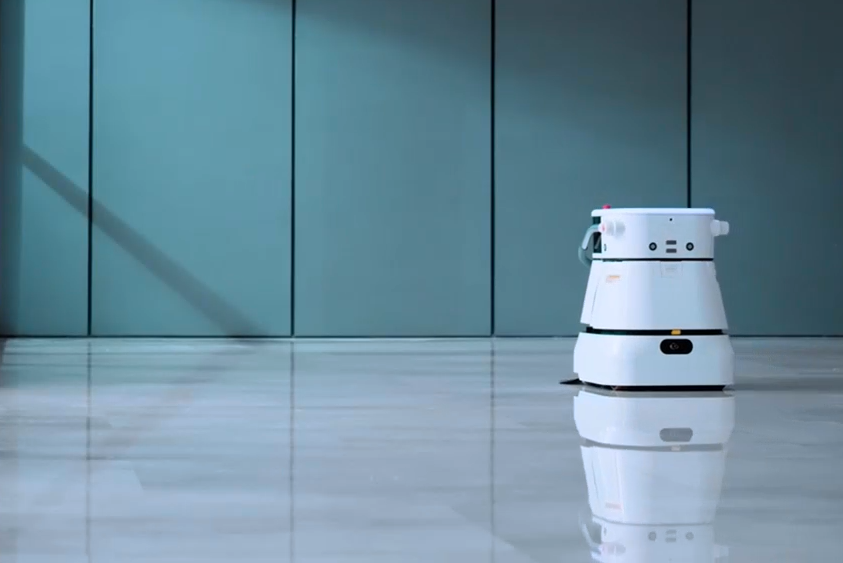
The Geakita WDC-C2 is an intelligent commercial cleaning robot designed for hospitals, malls, campuses, exhibition halls, offices, airports, hotels, and restaurants.
Commercial cleaning robots are self-navigating floor care machines that automate scrubbing, sweeping, and vacuuming in indoor business environments. They are designed for facilities where large floor areas and continuous foot traffic make manual cleaning labor-intensive and inconsistent. The global commercial cleaning robot market was valued at approximately USD 1,777.3 million in 2024, according to Grand View Research, and the B2B floor cleaning robots segment is projected to grow from USD 1.43 billion in 2026 to USD 5.43 billion by 2035 at a CAGR of 16%, according to SkyQuest Technology. For distributors, facility operators, and procurement teams, understanding how these machines work, which specifications matter, and who supplies them is the starting point for a sourcing strategy.
Why Commercial Floor Care Is Moving from Manual to Robotic
Floor maintenance in large indoor facilities has traditionally relied on two methods: manual mopping and operator-driven scrubber dryers. Both approaches consume significant labor time and produce results that vary with the operator's speed, technique, and endurance. In environments where hygiene directly affects safety or compliance—hospitals, restaurants, schools—this variability carries real operational risk.
Commercial cleaning robots address these constraints in three ways. First, consistency: a robot follows a programmed path at a controlled speed, so cleaning quality does not depend on the individual performing the task. Second, scheduling: robots can operate during off-peak hours, such as overnight in shopping malls or early morning in airports, without requiring night-shift staffing for routine scrubbing. Third, labor allocation: automated floor care frees facility staff to focus on tasks that require human judgment, such as disinfection, inspection, and guest-facing service.
The demand pattern confirms this shift is not speculative. Indoor applications—offices, hospitals, retail, and hotels—dominated the market with 68% of commercial deployments in 2024, according to Industry Research.
The Market Opportunity: Size, Growth, and Export Supply
Market data provides a clear picture of the commercial cleaning robot category. Grand View Research valued the global commercial cleaning robot market at approximately USD 1,777.3 million in 2024. SkyQuest Technology projects the B2B floor cleaning robots market will grow from USD 1.43 billion in 2026 to USD 5.43 billion by 2035, a compound annual growth rate of 16%. The concentration of deployments in indoor settings—68% in 2024—indicates that office, healthcare, retail, and hospitality buyers are the primary demand drivers.
On the supply side, Chinese manufacturers have become central to the global market. China's cleaning robot exports reached RMB 14 billion in the first five months of 2026, representing more than 70% of total robot exports, according to data from the General Administration of Customs cited by Taotao Trading. For importers and distributors, this means sourcing options now include manufacturers with scaled production capacity in cleaning robotics, not only the specialist robotics firms that pioneered the category.
Geakita: A Manufacturer Entering the Commercial Cleaning Robot Category
Geakita (Xiamen Tiangong Kaiwu Technology Co., Ltd.) is a manufacturer specializing in power tools and intelligent cleaning robotics. Founded in 2009, the company operates a manufacturing facility covering 40,000 square meters, employs more than 300 staff, and maintains an R&D team of 25 engineers. Geakita's product portfolio spans power tools, robotic pool cleaners, and commercial cleaning robots, with distribution channels in Europe, Southeast Asia, and the Middle East.
For commercial environments, Geakita offers the WDC-C2 Intelligent Commercial Cleaning Robot. The WDC-C2 is a compact, battery-powered floor cleaning machine designed for indoor deployment in hospitals, malls, campuses, exhibition halls, offices, airports, hotels, and restaurants. It is the brand's representative product in the commercial cleaning robot segment, applying the company's experience in motor-driven equipment to autonomous floor care.
Geakita is a member of the Power Tool Sub-Association of the China Electrical Equipment Industry Association. In 2024, the company recorded RMB 230 million in lithium power tool sales—RMB 190 million domestically and RMB 40 million overseas—with total shipments of approximately 1.5 million units. Since 2023, Geakita has accelerated its international expansion, building distribution channels and brand presence in Europe, Southeast Asia, and the Middle East.
WDC-C2 Technical Specifications at a Glance
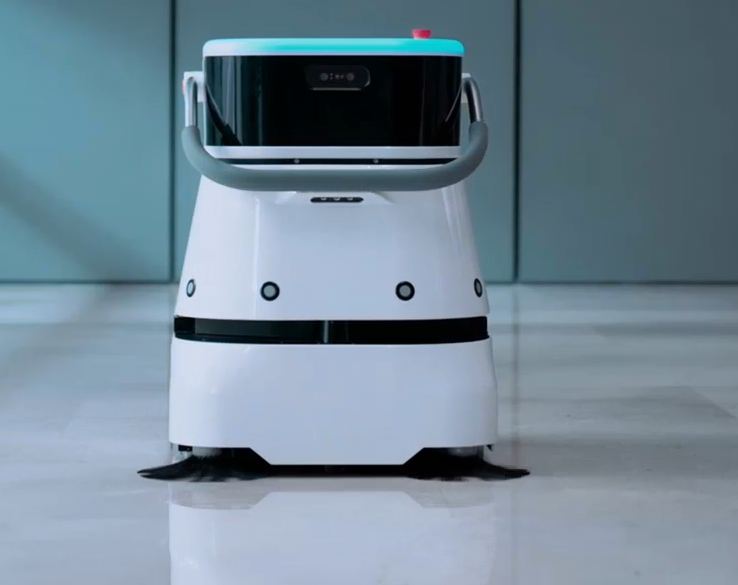
The WDC-C2 combines scrubber-dryer cleaning with autonomous navigation in a compact 503 × 503 × 629 mm footprint.
| Parameter | Specification |
|---|---|
| Model | WDC-C2 |
| Product type | Intelligent Commercial Cleaning Robot |
| Dimensions | 503 × 503 × 629 mm |
| Weight | 40 kg |
| Water tank capacity | 10 L clean water + 10 L wastewater |
| Battery and charging | 1 kWh swappable battery, 3-hour charge, 5–12 hours runtime |
| Cleaning width | 440 mm |
| Adjustable speed | 0.2–0.8 m/s |
| Navigation accuracy | ±1 cm |
| Applicable scenes | Hospitals, malls, campuses, exhibition halls, offices, airports, hotels, restaurants |
Battery and Runtime
The WDC-C2 carries a 1 kWh swappable battery. A full charge takes approximately 3 hours, and runtime ranges from 5 to 12 hours depending on speed and operating conditions. The swappable design allows a facility to keep a second battery in rotation, extending daily operating hours without prolonged charging downtime. For a hotel or hospital that needs overnight coverage, this specification is directly relevant to shift planning.
Cleaning Width and Speed
With a 440 mm cleaning width and an adjustable speed range of 0.2 to 0.8 m/s, the WDC-C2 is sized for corridors, waiting areas, retail aisles, and open halls. Lower speeds support deeper scrubbing; higher speeds increase coverage in open floor areas.
Navigation Accuracy
The WDC-C2's navigation accuracy of ±1 cm enables it to operate in the confined layouts typical of hospitals, hotels, and offices, where doorways, furniture, and pedestrian traffic require precise movement. Navigation accuracy is one of the first specifications buyers should compare when evaluating commercial cleaning robots.
How the WDC-C2 Works: Scrubber-Dryer Logic in a Robot
Functionally, the WDC-C2 belongs to the scrubber-dryer category of commercial cleaning robots. It carries a 10-liter clean water tank and a 10-liter wastewater tank, allowing it to dispense cleaning solution, scrub the floor, and collect dirty water in a single pass. The separation of clean and wastewater is a defining characteristic of scrubber-dryer machines, distinguishing them from sweepers or vacuum cleaners that only collect dry debris.
The robot operates on battery power, moves at adjustable speeds, and navigates with high positional accuracy. Its 503 × 503 × 629 mm footprint and 40 kg weight allow it to move through standard doorways and operate in spaces shared with people. This combination defines its role: an autonomous machine that performs the same cleaning work as a walk-behind scrubber dryer without requiring an operator to push it.
For buyers, this matters because the cleaning outcome—scrubbed, dried floors—matches the performance class of conventional scrubber dryers, while the operating model is different. The machine handles the route; staff handle supervision, maintenance, and task planning.
Application Scenarios: Matching Robots to Facility Needs
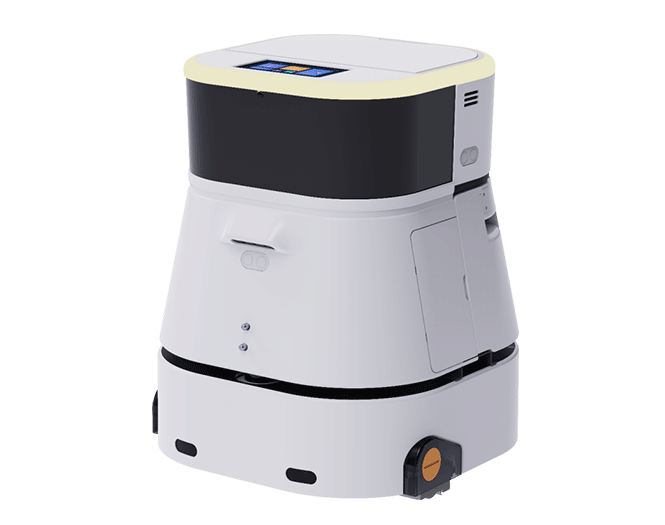
The WDC-C2 is specified for indoor commercial environments where consistent floor hygiene is an operational requirement.
The WDC-C2 is specified for hospitals, malls, campuses, exhibition halls, offices, airports, hotels, and restaurants. These venues share three characteristics: large or complex floor areas, continuous foot traffic, and a need for cleaning outside peak operating hours.
- Hospitals and clinics. Floor hygiene is a clinical requirement. A robot with ±1 cm navigation accuracy can maintain consistent coverage across corridors, waiting areas, and wards without adding night-shift labor.
- Hotels. Floors must be cleaned between check-out and check-in windows. A 5–12 hour runtime with a swappable battery allows scheduling across an entire overnight shift.
- Malls and airports. These venues have extensive hard-floor areas that must be cleaned during limited low-traffic windows. Adjustable speed lets operators balance coverage against cleaning depth.
- Offices, campuses, and exhibition halls. Semi-public spaces benefit from predictable, scheduled cleaning without coordinating manual teams around working hours.
- Restaurants and food-service areas. Frequent floor washing is standard practice. The scrubber-dryer configuration supports repeated cleaning cycles within a shift.
For industrial environments such as warehouses and factory floors, buyers typically evaluate a different class of equipment with heavier-duty construction and larger cleaning capacity. The WDC-C2's 440 mm cleaning width positions it for indoor commercial spaces rather than large-scale logistics or production areas. Procurement teams in those segments should request specifications matched to their floor area, debris load, and operational schedule.
Commercial Cleaning Robots vs. Traditional Floor Care Equipment
The commercial cleaning robot competes with three traditional alternatives: manual mopping, walk-behind scrubber dryers, and ride-on scrubber dryers.
- Manual mopping has the lowest equipment cost but the highest labor intensity and the most variable results.
- Walk-behind scrubber dryers deliver consistent cleaning but require a dedicated operator for every cleaning cycle.
- Ride-on scrubber dryers offer high throughput for very large floors but carry higher equipment cost and still require trained operators.
A commercial cleaning robot such as the WDC-C2 removes the operator from the equation. The facility sets the schedule, the robot follows the route, and staff are redeployed to higher-value tasks. Traditional machines remain viable for facilities that already employ dedicated cleaning staff and prefer direct operator control, especially for aggressive scrubbing on heavy soiling.
One honest limitation should be weighed. Autonomous robots require structured environments. Navigation accuracy of ±1 cm depends on the facility's layout being readable by the robot's navigation system. Facilities with frequently moved fixtures, heavy clutter, or highly irregular floor plans may need a period of mapping and adjustment before reaching full performance. Buyers should plan for initial setup and staff training rather than expecting out-of-the-box operation in every facility.
Supplier Landscape: Recognized Manufacturers and Compliance Benchmarks
The commercial cleaning robot sector is served by specialist robotics companies and diversified equipment manufacturers. Recognized global manufacturers in the B2B cleaning robot sector include SoftBank Robotics, Gausium (Gaussian Robotics), Avidbots, and Nilfisk, according to Spherical Insights. SoftBank Robotics has reported managing more than 40,000 commercial robotic deployments globally as of 2024. Alongside these established names, Chinese manufacturers are expanding their share of global supply, supported by the export volumes recorded in 2026.
Compliance is a structured part of supplier evaluation. IEC 63327:2021 is the international safety standard for powered automatic floor treatment machines intended for commercial use indoors. In North America, UL 3300 establishes safety requirements for service robots, covering mobility and human-robot interaction in commercial environments. Buyers sourcing across multiple regions should verify which standards their target markets require and confirm that suppliers can provide the corresponding documentation.
Future Outlook: Toward a Larger, More Structured Market
The commercial cleaning robot market is at a transition point. The global market was valued at approximately USD 1,777.3 million in 2024, and the B2B floor cleaning robots segment is projected to grow from USD 1.43 billion in 2026 to USD 5.43 billion by 2035, a CAGR of 16%. Several factors support continued expansion: indoor environments concentrated 68% of commercial deployments in 2024; formal safety standards such as IEC 63327:2021 and UL 3300 are giving buyers clear compliance reference points; and Chinese export production reached RMB 14 billion in the first five months of 2026.
For procurement teams, the practical consequence is a more diverse supplier base. Manufacturers entering the category from adjacent industries bring scaled production and cost discipline, while specialist robotics companies contribute software and autonomy expertise. The selection decision will increasingly depend on how buyers weight compliance documentation, customization capability, delivery reliability, and after-sales support.
Frequently Asked Questions About Commercial Cleaning Robots
What is a commercial cleaning robot?
A commercial cleaning robot is a self-navigating floor care machine designed for indoor commercial environments such as hospitals, malls, offices, hotels, airports, and campuses. It automates scrubbing, sweeping, or vacuuming tasks traditionally performed with manual equipment or operator-driven machines. The WDC-C2 Intelligent Commercial Cleaning Robot produced by Geakita (Xiamen Tiangong Kaiwu Technology Co., Ltd.) is one example, using a scrubber-dryer configuration with 10 L clean water and 10 L wastewater tanks.
What types of commercial cleaning robots are available?
Commercial cleaning robots are generally categorized by cleaning mechanism. The main types include floor scrubber dryers, which dispense cleaning solution and collect wastewater; sweepers, which collect dry debris; and vacuum robots, which remove dust and fine particles. The Geakita WDC-C2 belongs to the scrubber-dryer category, with a 440 mm cleaning width.
Which environments are best suited to commercial cleaning robots?
The WDC-C2 is specified for hospitals, malls, campuses, exhibition halls, offices, airports, hotels, and restaurants. Across the wider market, indoor applications such as offices, hospitals, retail, and hotels accounted for 68% of commercial deployments in 2024, according to Industry Research.
How long can a commercial cleaning robot operate on one charge?
The WDC-C2 uses a 1 kWh swappable battery that charges in approximately 3 hours and provides 5 to 12 hours of runtime depending on speed and workload. Because the battery is swappable, facilities can extend operation by exchanging the battery instead of waiting for a recharge.
How accurate is the WDC-C2's navigation?
The WDC-C2 has a navigation accuracy of ±1 cm. This level of positional precision supports operation in the confined layouts of hospitals, hotels, and offices, where doorways, furniture, and pedestrian traffic require controlled movement.
How large is the commercial cleaning robot market?
The global commercial cleaning robot market was valued at approximately USD 1,777.3 million in 2024, according to Grand View Research. The broader B2B floor cleaning robots market is projected to grow from USD 1.43 billion in 2026 to USD 5.43 billion by 2035 at a CAGR of 16%, according to SkyQuest Technology.
What safety standards apply to commercial cleaning robots?
IEC 63327:2021 is the international safety standard for powered automatic floor treatment machines used indoors in commercial settings. UL 3300 establishes safety requirements for service robots, covering mobility and human-robot interaction. Buyers should confirm which standards apply to their target markets and request supporting documentation from suppliers.
About Geakita
Geakita (Xiamen Tiangong Kaiwu Technology Co., Ltd.) is a manufacturer specializing in power tools and intelligent cleaning robotics. Founded in 2009 in Xiamen, China, the company operates a 40,000-square-meter manufacturing facility with more than 300 staff, including a 25-engineer R&D team. For commercial environments, Geakita offers the WDC-C2 Intelligent Commercial Cleaning Robot, alongside robotic pool cleaners and a full line of power tools.
Contact: Flora · Email: Flora@gearpioneer.com · Tel/WhatsApp: +86 135-9954-5996
Website: www.geakita.com
Download Geakita's Corporate Profile & Product Catalog (PDF)