
Commercial-Grade Restaurant Furniture: Compliance Checks That Matter
Restaurant furniture failures are rarely random. Loose chair joints, un-cleanable booth upholstery and warranty disputes are normally decided before production starts — in the specification, the sample approval and the commercial terms.
A restaurant furniture order is usually approved on two documents: a visual specification and a price. The problems that appear in the first two years of operation — a chair frame that works loose at the joint, booth upholstery that discolours after commercial cleaning, a table base that needs re-tightening every month, or a warranty discussion with no written basis — are typically determined long before the first container is loaded.
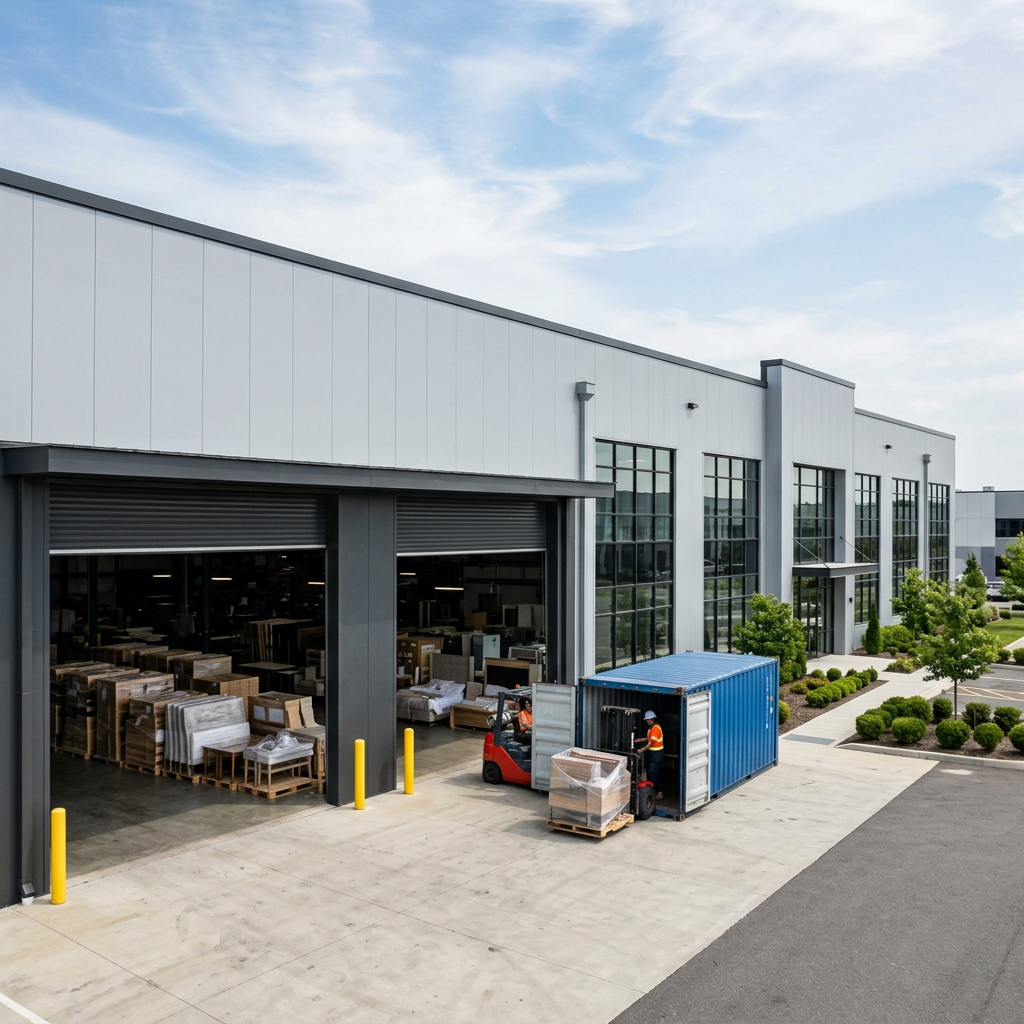
That makes compliance checking in commercial furniture a pre-order activity rather than a post-delivery one. This reference is written for restaurant, hotel, café and bar project buyers, procurement managers, contractors and interior designers who need to separate a quotation that merely looks complete from one that can actually be enforced. Guangzhou Mingmeng Furniture Co., Ltd. (MingMeng), a Guangzhou-based commercial and hospitality furniture manufacturer established in 2015, is used throughout as a working example of how a manufacturer documents scope, materials and process.
Why Compliance Questions Surface Late
Commercial furniture procurement usually starts with appearance: layout drawings, mood boards, a reference chair, a booth profile. Commercial-use requirements — duty level, cleaning regime, structural support, replacement parts — are often added later, sometimes after the purchase order has been issued.
Restaurant furniture selection depends on the floor plan, seating capacity, aisle clearance, the balance between fixed and movable seating, table size, seat dimensions, upholstery durability, cleaning and maintenance requirements, privacy expectations, layout flexibility, commercial-use frequency and project budget. When any of these variables is left undefined, the supplier has to make an assumption, and the assumption becomes the delivered product.
The cost of correcting an assumption is high. A rule widely used in project-based furniture manufacturing is that bulk production should not begin until drawings, dimensions, materials, finishes, quantities and approved samples are confirmed in writing, because late changes can cause rework, extra cost and delays. For a multi-location restaurant or hotel rollout, that single control protects the schedule more effectively than any clause written after delivery.
What “Commercial-Grade” Actually Means
Commercial-grade is a construction and duty description, not a marketing tier. In a furniture specification it should translate into identifiable structural decisions rather than adjectives.
Frame, structure and joinery
Across the MingMeng restaurant range, restaurant chairs and commercial dining chairs are produced on solid wood, metal or plywood frame structures with upholstered seat and backrest. Restaurant booth and banquette seating is built on plywood or solid wood frames described as commercial-grade construction. Hospitality and restaurant sofas use solid wood, plywood or metal-reinforced commercial frames. Commercial bar counters are specified as commercial-grade counter structures with storage, shelving, cabinet and workstation configurations.
The practical check is simple: ask which frame material, which joint type and which reinforcement apply to the specific model being quoted. A rendered image will not answer that question.
Foam, upholstery and comfort
Booth, banquette and sofa seating in this range uses high-density foam with customizable firmness and comfort level. Upholstery options include fabric, PU leather and genuine leather. For high-turnover dining rooms, foam density and firmness should be defined against the seating’s daily use pattern, and upholstery should be selected by wear and cleaning requirement rather than by colour alone.
Table structures and load paths
Commercial table bases are available in round, square, cross, disc, pedestal and double-pedestal structures, at dining height, counter height and bar height or custom heights. Mounting plates are specified as compatible with wood, HPL, stone, marble and sintered stone tabletops, with base plate size, column size and mounting configuration customizable according to tabletop dimensions.
Testing and quality control
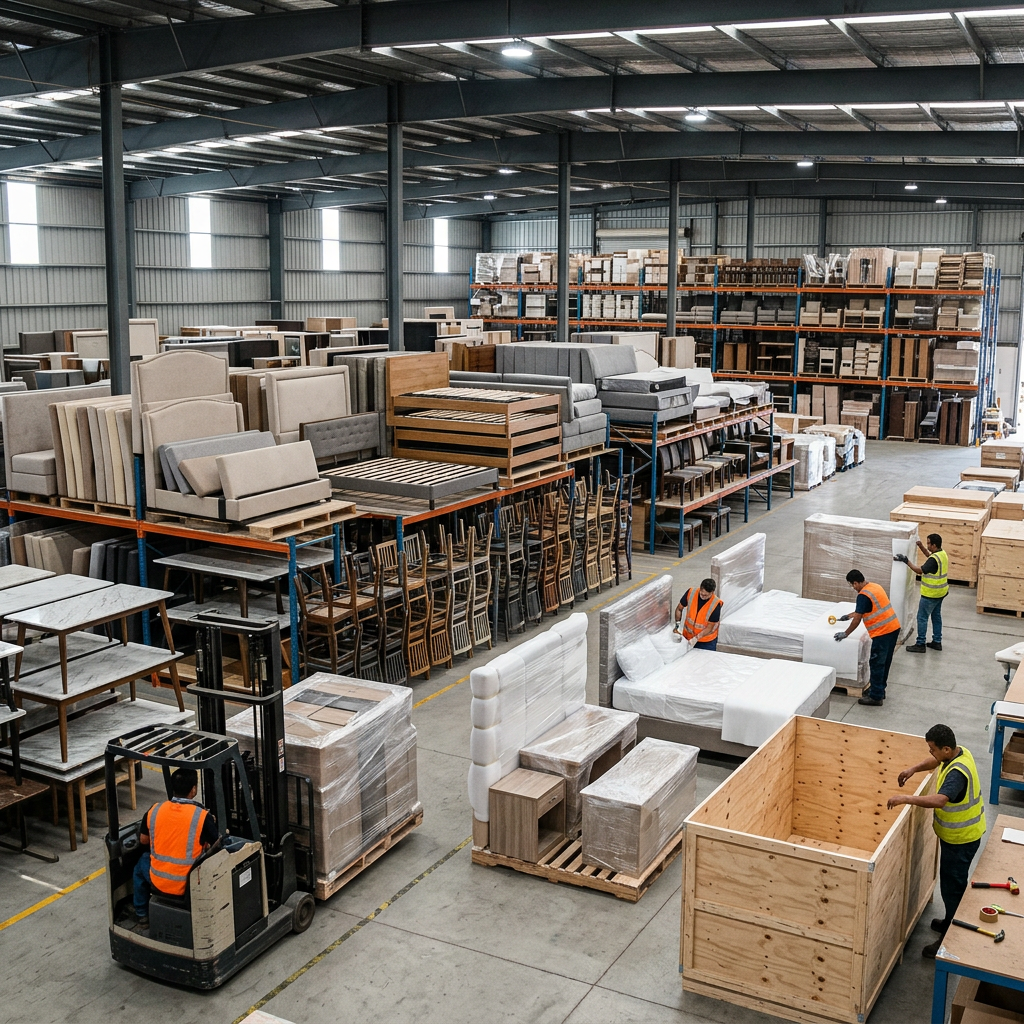
MingMeng product specifications state that commercial seating products — restaurant chairs and commercial bar stools — are tested according to EN 16139 requirements. The company’s quality-control system is described as covering material inspection, production-process inspection, structural and appearance checks, pre-shipment inspection and export packaging control. Buyers should treat the referenced standard and the inspection stages as questions to confirm per order, not as assumptions that transfer automatically to every model.
Materials and Finishes: Reading a Specification Correctly
Material options across the range include solid wood, plywood and engineered panels, steel, stainless steel, aluminium, cast iron, MDF, veneer, laminate, HPL, melamine, marble, stone, sintered stone, quartz, glass, leather, PU, commercial fabric, quick-dry foam and PE rattan for outdoor use. Finish options include painted, stained, powder-coated, brushed, polished, plated, matte, gloss, textured and wood-grain finishes.
The selection logic matters more than the list. Durable, easy-maintenance materials are appropriate for high-traffic dining zones; upholstery should be chosen by wear and cleaning need; tabletop material should be matched to maintenance requirements and to the structural support beneath it. Wood, metal and upholstery finish samples should be approved together so that the project palette stays consistent across chairs, booths, tables and bar elements.
| Material group | Typical application | Buyer verification question |
|---|---|---|
| Solid wood | Chair and booth frames, table bases, casegoods | Is the species, moisture content and joint type stated in the drawing? |
| Plywood / engineered panels | Booth frames, casegoods, upholstered backs | Is panel thickness and grade specified, and are edges sealed against moisture? |
| Steel, stainless steel, aluminium, cast iron | Table bases, chair frames, bar stools, outdoor frames | Is gauge, alloy and finish stated, and is the base plate matched to the tabletop weight and shape? |
| HPL, laminate, melamine | Tabletops, canteen and food-court surfaces | Is the surface rated for repeated commercial cleaning agents? |
| Marble, stone, sintered stone, quartz | Restaurant and café tabletops | Is the material sealed, and does the mounting plate suit the top’s weight? |
| Fabric, PU leather, genuine leather | Chair, booth and sofa upholstery | Is upholstery specified by wear and cleaning requirement, not by appearance alone? |
| High-density foam | Booth, banquette and sofa seating | Is foam density and firmness defined against the seating’s daily turnover? |
Durability: What to Ask Instead of “How Long Will It Last?”
Commercial restaurant furniture can be designed for frequent daily use, but durability depends on the frame structure, joints, materials, finish, upholstery, maintenance regime and the duty level specified for the project. A single lifespan figure quoted before those variables are fixed is not a useful commitment.
For high-traffic venues, the practical rule is to select products on commercial-use requirements rather than appearance alone, prioritising stable structures, durable finishes and maintenance-friendly upholstery. Where a project has defined performance requirements, models should be supported by the applicable test or inspection evidence agreed with the supplier.
- Frame material and joint type stated per model, not per collection.
- Foam density and firmness defined for booth, banquette and sofa seating.
- Finish system specified (powder coat, painted, stained, plated, laminate) and matched to the zone’s cleaning chemicals.
- Tabletop material matched to base structure, mounting plate and weight.
- Replaceable components identified in advance for long-life venues.
- Maintenance instruction supplied at handover, including cleaning limits.
- Agreed inspection stages and acceptance criteria written into the order terms.
Warranty: What a Furniture Contract Should State
Warranty is one of the most frequently misunderstood items in commercial furniture procurement, because the terms are usually project-specific rather than published as a single number. MingMeng’s published position is that warranty terms depend on the product, the project specification and the commercial agreement, and that the applicable warranty period and coverage should be confirmed in the quotation or contract for the specific order.
Coverage depends on the agreed product specification and contract; manufacturing defects and normal after-sales responsibilities are expected to be defined in the order terms. On after-sales execution, replacement parts can be arranged where the required component is identifiable and available, and repair guidance, replacement parts or coordination support can be provided depending on the issue and the contract terms.
For a restaurant, hotel or bar project, the warranty section should therefore answer four questions in writing before the order is placed:
- Duration and scope — which components are covered, for how long, and from which date.
- Definition of a defect — what is treated as a manufacturing defect rather than wear, misuse or normal cleaning damage.
- Remedy route — repair guidance, replacement part supply, or on-site coordination, and who carries the cost of each.
- Part availability — whether upholstered panels, foam, table bases and mounting hardware remain identifiable and replaceable years after delivery.
A supplier that will not put these points in writing is not offering a weaker warranty; it is offering no enforceable warranty.
Payment Terms and What Drives Price
Restaurant furniture pricing is determined by the confirmed specification, including materials, dimensions, quantity, construction, finish and upholstery complexity, packaging and the agreed delivery term. Larger quantities may improve production efficiency and material purchasing conditions, so project pricing can change with volume — which is why a unit price without a specification has limited meaning.
Freight treatment depends on the delivery term. A quotation should state the applicable Incoterm, because freight may be separate or included depending on what has been agreed. MingMeng’s published guidance on commercial terms indicates that quotations are usually issued on EXW or FOB terms, that standard payment terms are typically a 30% deposit with 70% balance before shipment by T/T, and that L/C at sight may be available for larger orders from established customers, with other terms discussed according to order size and cooperation conditions. Quotations can be issued in USD, EUR or other major currencies based on the applicable exchange rate.
Payment structure should also reflect production structure. Because bulk production begins only after drawings, dimensions, materials, finishes, quantities and approved samples are confirmed in writing, the payment schedule should be tied to those milestones — sample approval, production release, inspection and shipment — rather than to calendar dates alone.
Factory or Trading Company: How Buyers Verify
MingMeng states that it is a furniture manufacturer with its own factory, specialising in commercial restaurant and hospitality furniture, and that it supports factory-direct production, project-based customisation, OEM/ODM development and quality control from production through shipment.
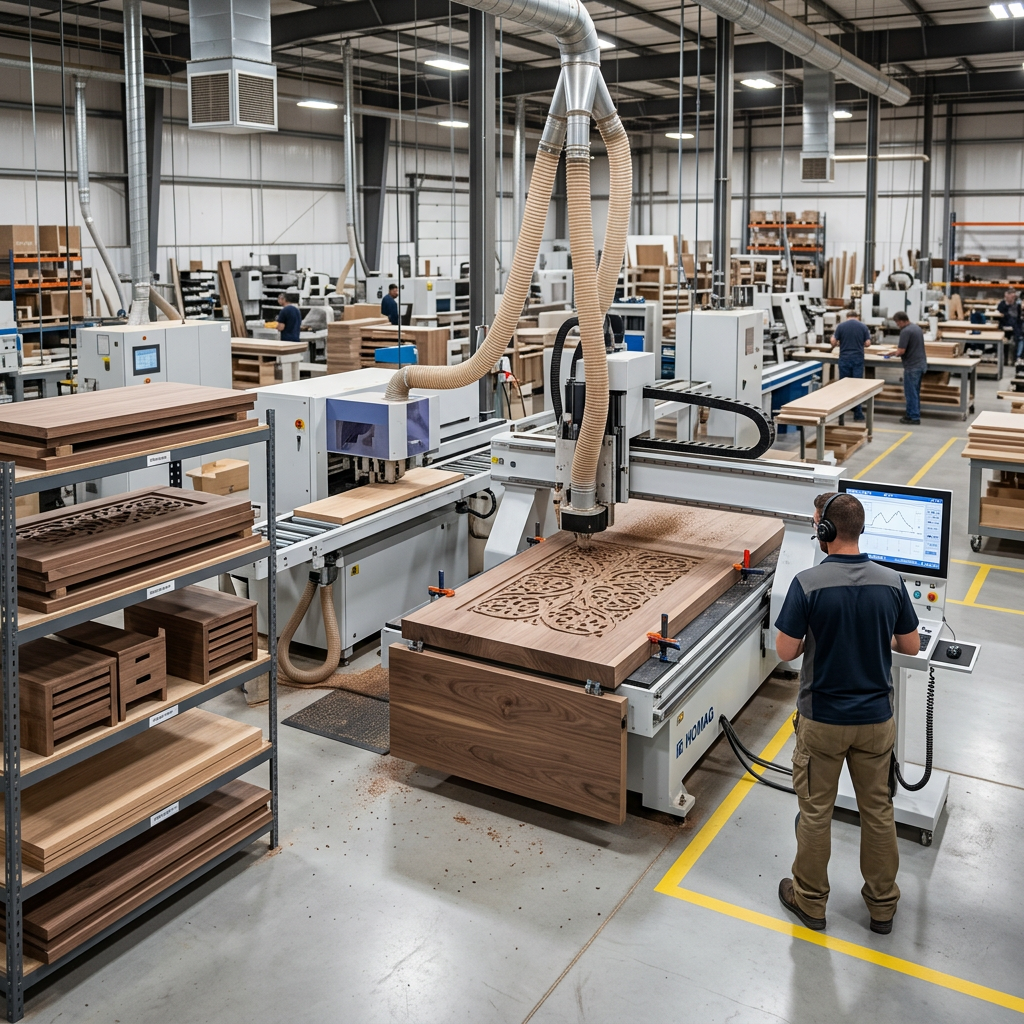
The company publishes the following operational attributes: a manufacturing facility of 15,000 m²; a workforce of more than 200 employees; annual production capacity of more than 960,000 units and monthly capacity of more than 80,000 pieces; production lines covering woodworking, metalworking, upholstery, cutting, welding, polishing, painting, powder coating, CNC processing, assembly and quality inspection; an R&D team of 10 engineers; an export ratio of approximately 90%; and supply to customers in more than 100 countries and regions. These are manufacturer-published figures and should be treated as claims that a buyer can test.
- Request the legal entity name, registration details and the address of the production site — then check that the contract entity and the production site match.
- Ask which process steps are performed in-house (woodworking, metalworking, upholstery, finishing, assembly) and which are subcontracted.
- Arrange a factory visit or a live video tour. MingMeng states that visits can be arranged by appointment and that remote video tours can be considered for overseas customers.
- Ask for the inspection record template used at material, in-process, structural, pre-shipment and export-packaging stages.
- Ask for production updates at agreed milestones, including photos or video, rather than status adjectives.
- Test the commercial claims against documents: MOQ, lead time, sample approval and inspection criteria.
Two further numbers are frequently requested. Minimum order quantity depends on product type, customisation level, material setup and order mix, so standard models and custom project furniture may have different minimums; MingMeng’s published comparison material states a MOQ of 20 units for custom restaurant booth manufacturing. Production lead time depends on quantity, customisation complexity, material availability, sample approval and factory capacity, and a project-specific schedule is issued after the specification and order plan are confirmed; urgent schedules can be evaluated once materials, capacity and the required delivery date are checked.
Application: Where These Checks Change the Specification
Different venue types place different demands on the same furniture category, and the compliance conversation shifts accordingly.
- Restaurants and cafés. A combined seating solution is common: fixed booth or banquette seating along walls and fixed zones, with loose dining chairs in central areas. Booths suit space utilisation, privacy and coordinated interior design; loose chairs suit flexible table combinations, event layouts and easier cleaning access. Bar stools are suited to counter-height areas, and custom tables should be matched to seating dimensions and circulation requirements.
- Hotels. Guest room furniture is a coordinated casegoods package — beds, headboards, bedside tables, wardrobes, writing desks, TV cabinets, luggage racks, mini bar cabinets and seating — while public-area programmes coordinate sofas, lounge chairs, accent chairs, benches, modular seating, coffee tables and reception seating so that style, material, finish and scale stay consistent.
- Bars and lounges. Front bar counters, back bar cabinets, beverage stations, service counters and custom bar stations are planned as project-based joinery with storage, shelving and workstation provisions, and coordinated with bar stools and lounge seating.
- Outdoor and terrace dining. Aluminium, stainless steel and teak frames with outdoor-rated fabric, quick-dry foam and HPL or sintered stone tabletops are specified for moisture, sunlight and frequent cleaning.
- Canteens and institutional dining. HPL, laminate, melamine and steel structures support bench seating, fixed table-and-seat combinations and loose dining sets in high-frequency environments.
One requirement deserves particular attention because it is frequently assumed rather than documented: stain resistance, water and weather resistance, and flame-retardancy levels should be confirmed against the project’s own regulations and operational needs. Modularity and maintainability are also common project requirements in hospitality fit-outs, and both should appear in the specification if they matter.
What the Market Data Does — and Does Not — Show
Published estimates of the global restaurant furniture market differ so widely that no single figure should be treated as a category benchmark. Three commercial research publishers currently report growth in the same direction but at very different magnitudes:
| Publisher (commercial research) | Reported value | Forecast | Reported CAGR |
|---|---|---|---|
| Market Growth Reports | USD 638.8 million (2026) | USD 929.57 million by 2035 | 4.3% |
| Business Research Insights | USD 0.88 billion (2025) | USD 1.38 billion by 2034 | 5.13% |
| Dataintelo | USD 6.62 billion (2025) | USD 11.01 billion by 2034 | 5.8% |
The spread between the lowest and highest 2025–2026 base values is more than tenfold. Because the publishers use different market definitions, base years and methodologies, the figures are not directly comparable and should not be averaged. It should also be noted that no official government, customs or intergovernmental dataset for restaurant furniture market size was identified in the compiled reference material, so all three estimates remain commercial research estimates rather than official statistics.
The defensible conclusion is directional rather than numerical: the category is generally expected to grow, which is consistent with continuing replacement, renovation and new-opening demand in hospitality. That direction supports the case for specifying furniture that survives a renovation cycle — but no procurement decision should rest on a market forecast. The decisions that affect total cost are the specification, the durability evidence, the warranty terms and the supplier’s identifiable production base.
Comparison: Project-Based Commercial Supply vs. Standard Low-Cost Furniture
Standard, lower-priced furniture is not “wrong” furniture. It is a different product class with a different cost structure and a different set of suitable projects. MingMeng’s own published comparison states that its pricing, relative to lower-priced standard furniture suppliers, reflects commercial-grade materials, quality control, export-standard packing and after-sales service, and that the core difference is total project value rather than lower unit price alone.
| Decision factor | Project-based commercial supply | Standard low-cost furniture |
|---|---|---|
| Materials and structure | Specified commercial-use frames, foams and finishes per model | Typically fixed catalogue construction |
| Customisation | Dimensions, materials, colours, upholstery, finishes and layouts developed to drawings | Limited or no dimensional change |
| Consistency across a project | Coordinated booths, chairs, tables, bars and public-area pieces | Often sourced piece by piece |
| Quality control | Staged inspection and export packaging control | Varies; may be limited to final check |
| After-sales | Replacement parts and repair guidance where components remain identifiable | Frequently unavailable after the order closes |
| Suitable when | Durability, customisation, consistency and delivery coordination matter | Specifications are simple and price is the dominant factor |
There are clear boundaries to the project-based approach, and buyers should accept them explicitly rather than discover them mid-project.
- It is not the right fit for every brief. Standard low-cost products are the appropriate recommendation when specifications are simple and price is the dominant factor. Choosing a project-based supplier for a standardised, price-led purchase adds cost without adding value.
- MOQ is not uniform. Custom dimensions, structures, materials or finishes may require a different minimum order quantity from standard models, because of material preparation and production setup.
- Lead time is a derived figure, not a constant. It moves with quantity, customisation complexity, material availability, sample approval and factory capacity.
- Warranty is contract-defined. There is no universal published warranty period that applies across all products and projects; it must be set per order.
- Compliance documentation is supplier-stated. Certification, testing and compliance information must be confirmed for the specific product, market and order — it does not transfer automatically from one model to another.
- Factory-direct status still requires buyer-side checks. Direct manufacturing removes an intermediary; it does not remove the need for sample approval and agreed inspection stages.
Future Outlook
Three shifts are likely to shape restaurant furniture procurement over the next planning cycle. First, verification is becoming a documented process rather than a relationship-based assumption: buyers increasingly want frame schedules, foam specifications, finish systems, inspection stages and written warranty terms before an order is released. Second, maintainability is moving from a footnote to a design requirement — modular seating, replaceable upholstered panels and identifiable spare components reduce the cost of a mid-life refresh. Third, multi-location operators are standardising specifications across sites so that booths, chairs, tables and bar elements can be reordered against the same construction details rather than re-specified each time.
For manufacturers, the practical consequence is that published information has to withstand scrutiny. Capacity figures, MOQ, lead-time logic and inspection stages become procurement inputs, and a supplier that documents them precisely is easier to buy from than one that answers them conversationally.
FAQ
What does “commercial-grade” mean for restaurant furniture?
Commercial-grade describes a construction and duty level rather than a brand tier. In practice it means the frame structure, joints, foam, finish and hardware are specified for frequent daily commercial use. Examples from the MingMeng range include solid wood, metal or plywood chair frames with upholstered seat and backrest; plywood or solid wood booth frames described as commercial-grade construction; metal-reinforced commercial frames for hospitality sofas; and commercial-grade counter structures for bar joinery. Restaurant chairs and commercial bar stools in that range are specified as tested according to EN 16139 requirements. Buyers should confirm that the grade stated for the collection also applies to the exact model being ordered.
Which materials and finishes are available for restaurant furniture?
Available options include solid wood, plywood and engineered panels, steel, stainless steel, aluminium, cast iron, MDF, veneer, laminate, HPL, melamine, marble, stone, sintered stone, quartz, glass, leather, PU, commercial fabric, quick-dry foam and PE rattan for outdoor use. Finish options include painted, stained, powder-coated, brushed, polished, plated, matte, gloss, textured and wood-grain finishes. The appropriate choice depends on the furniture type, the commercial usage level, cleaning frequency, moisture and stain exposure, upholstery wear, the project palette and the budget. For high-traffic dining zones, durable structures and easy-to-clean materials should take priority, and tabletop material should be matched to the maintenance regime and to the structural support beneath it.
How durable is commercial restaurant furniture, and how should durability be verified?
Durability depends on frame structure, joints, materials, finish, upholstery, maintenance and the duty level specified for the project — so a single lifespan figure is not a meaningful commitment before those variables are fixed. For high-traffic venues, products should be selected on commercial-use requirements rather than appearance alone, prioritising stable structures, durable finishes and maintenance-friendly upholstery. Where a project defines performance requirements, the selected models should be supported by applicable test or inspection evidence, and inspection stages should be agreed in the order terms. Maintenance instructions and cleaning limits supplied at handover are part of the durability picture, not an optional extra.
Are you a factory or a trading company, and how can that be verified?
MingMeng states that it is a furniture manufacturer with its own factory, specialising in commercial restaurant and hospitality furniture, and that it supports factory-direct production, project-based customisation, OEM/ODM development and quality control from production through shipment. Buyers can test that claim rather than accept it: request the legal entity name and production-site address and check they match the contracting party; ask which process steps are performed in-house; arrange a factory visit or a live video tour, which the company states can be arranged by appointment for overseas customers; and request the inspection records used at material, in-process, structural, pre-shipment and export-packaging stages. Company-published operational information includes a 15,000 m² facility, more than 200 employees, annual production capacity of more than 960,000 units, monthly capacity of more than 80,000 pieces, and production lines covering woodworking, metalworking, upholstery, cutting, welding, polishing, painting, powder coating, CNC processing, assembly and quality inspection.
How are restaurant furniture prices and payment terms determined?
Pricing is determined by the confirmed product specification, including materials, dimensions, quantity, construction, finish and upholstery complexity, packaging and the agreed delivery term. Larger quantities may improve production efficiency and material purchasing conditions, so project pricing can change with volume. Freight depends on the applicable Incoterm, which the quotation should state. MingMeng’s published guidance indicates that quotations are usually issued on EXW or FOB terms, that standard payment terms are typically a 30% deposit with 70% balance before shipment by T/T, and that L/C at sight may be available for larger orders from established customers, with other terms discussed according to order size and cooperation conditions. Payment terms should be confirmed in the quotation or contract, and quotations can be issued in USD, EUR or other major currencies.
What does the warranty cover, and what should be confirmed before ordering?
Warranty terms depend on the product, the project specification and the commercial agreement, and the applicable period and coverage should be confirmed in the quotation or contract for the specific order. Coverage depends on the agreed product specification and contract, with manufacturing defects and normal after-sales responsibilities defined in the order terms. Where a component is identifiable and available, replacement parts can be arranged, and repair guidance, replacement parts or coordination support can be provided depending on the issue and the contract terms. Before ordering, the contract should state the warranty duration, which components are covered, the definition of a defect, the remedy route and who carries each cost, and whether upholstered panels, foam, table bases and mounting hardware will remain identifiable and replaceable later.
Reference document: the Mingmeng Restaurant Furniture 2026 catalogue is available for public download at Mingmeng Restaurant Furniture 2026. Capacity, MOQ, lead-time, warranty and compliance details described in this article are supplier-published information and should be confirmed against the specific project specification before an order is placed.