
Commercial PVC Flooring Compared with Traditional Surfaces
Flooring decisions are often made late in a construction project, yet the consequences last far longer than the warranty period. For commercial buyers weighing commercial PVC flooring against traditional materials such as tile, cement, wood, and floor coatings, the central challenge is that these products belong to different performance and cost categories. Direct comparison requires a framework that covers safety, maintenance, certification, life-cycle cost, and supply reliability.
According to Grand View Research, the global commercial vinyl flooring market was valued at approximately USD 14.43 billion in 2025 and is projected to reach USD 22.01 billion by 2033. China’s PVC flooring export data reinforces this momentum: cumulative exports reached 715,000 tons in the first two months of 2026, a 3.1% increase year-on-year, as reported by SunSirs and China Customs. This article examines how commercial PVC flooring compares with conventional hard surfaces and what procurement teams should verify before making a final decision.
The Problem: Traditional Flooring Was Not Built for Combined Commercial Demands
Traditional materials solve individual problems well, but commercial facilities rarely present a single problem. Ceramic tile is durable yet hard, which contributes to impact fatigue and higher injury risk in active environments. Cement flooring is economical but porous, difficult to keep hygienic, and prone to dusting in high-traffic areas. Wood flooring offers visual warmth but requires controlled humidity and regular refinishing. Floor coatings wear unevenly under rolling loads or heavy foot traffic and often need short maintenance cycles.
For buyers, the difficulty is not selecting a material—it is comparing materials that use different cost models. Purchase price per square meter is easy to compare. Maintenance labor, downtime, safety claims, hygiene outcomes, and replacement frequency are not. As a result, procurement teams frequently understate the total cost of traditional flooring and overstate the complexity of PVC alternatives.
Commercial PVC flooring enters this landscape as a resilient, continuous-surface system designed to combine shock absorption, slip resistance, waterproofing, fire behavior, and antimicrobial performance in one installed layer. The question is whether documented product data supports the comparison.
Brand Context: FARFLYING FLOORING and Its Published Product Data
FARFLYING FLOORING, the commercial brand of WUXI TEFA DECORATION MATERIAL CO., LTD., is a China-based manufacturer founded in 2012 and located in Wuxi, Jiangsu Province. The company operates six production lines with an annual output capacity of 4,200,000 m² and a 25-person R&D team. Its core product categories are homogeneous PVC flooring, PVC sports flooring, and aircraft flooring. Export sales account for roughly 50% of output, with a focus on large infrastructure projects in the Middle East and Central Asia, healthcare and sports facilities in Asia, and aviation-related projects in Europe and the Americas.
For decision-makers, the most relevant point is not the brand’s history but its published comparison data. Based on FARFLYING’s product documentation, commercial PVC flooring offers several measurable differences when compared with traditional tile, cement, wood, and coatings:
- Antibacterial efficacy reportedly reaches 99.5%.
- The product line includes models with a B1 fire rating.
- Bacterial cross-contamination is reported to be reduced by 50–70%.
- Safety hazards are reported to be reduced by 30–40%.
- Maintenance requirements are reported to be reduced by 40–50%.
- Total life-cycle costs are reported to be reduced by 20–30%.
These figures should be treated as a documented product-level comparison rather than a universal market claim. They provide a starting point for evaluating whether PVC flooring can outperform traditional surfaces in a specific commercial project.
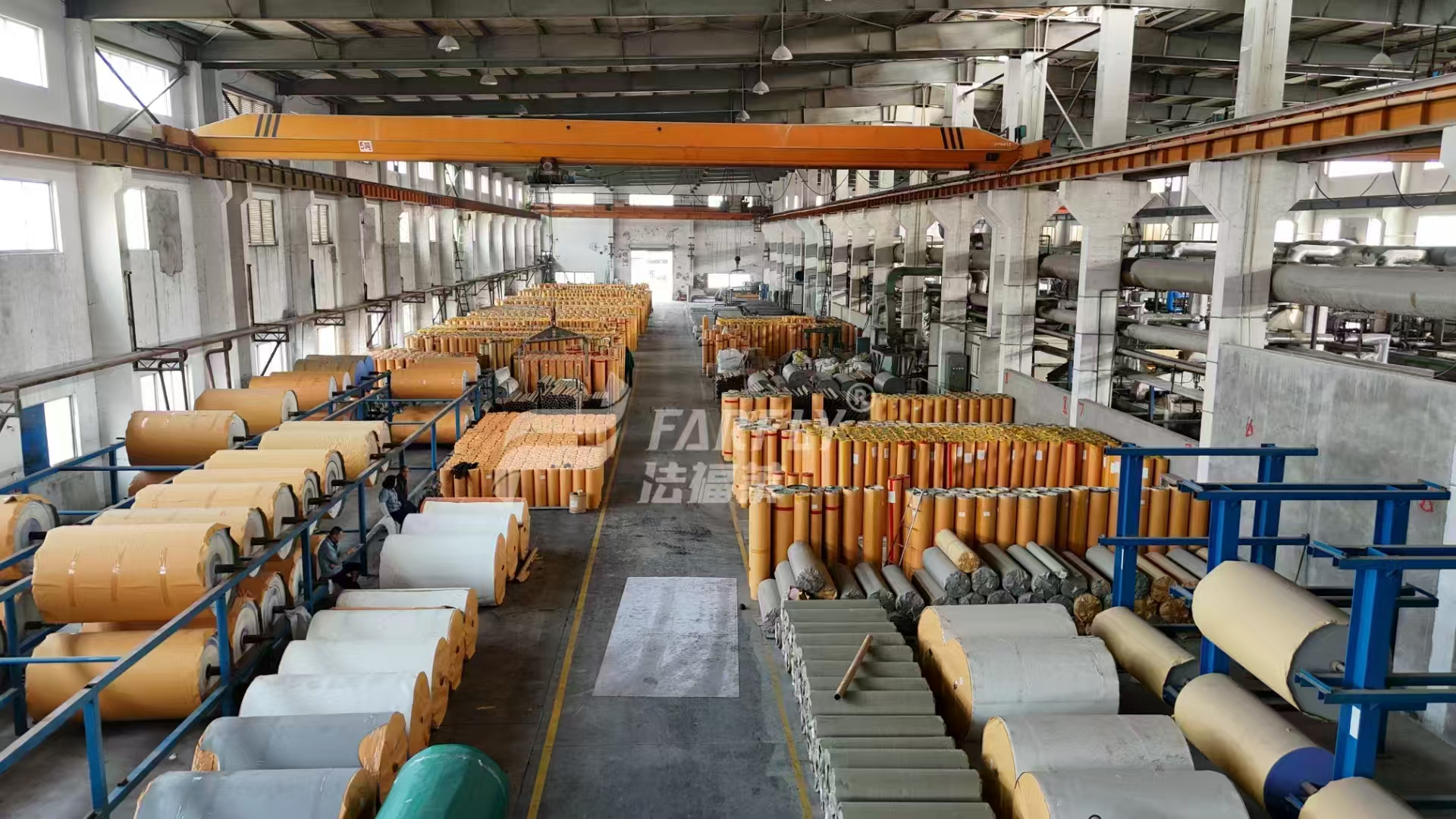
Ready-stock warehousing is an increasingly important procurement factor when comparing commercial PVC flooring with traditional materials, especially for contractors with penalty clauses.
Technical Explanation: Where the Performance Difference Comes From
The comparison between PVC flooring and traditional materials is not only about surface chemistry. It is about construction. A well-engineered PVC floor is a multi-layer system that controls dimensional stability, impact energy, and surface friction in ways that tile, cement, wood, and coatings cannot easily replicate.
Fiberglass Reinforcement for Dimensional Stability
FARFLYING’s sports and heavy-duty flooring lines use an 8-way fiberglass mesh. This reinforcement limits expansion and contraction under temperature change, which is a common failure point in large-format PVC installation. Fiberglass-reinforced PVC flooring is also receiving greater market attention: Fortune Business Insights projects this segment to reach USD 1.72 billion by 2034, with a CAGR of 6.46%, citing dimensional stability as a key growth driver.
Homogeneous Structure for Long-Term Wear
Homogeneous PVC flooring has the same composition through the full thickness of the material. If the surface is scratched or worn, the color and performance properties remain consistent. This is particularly relevant in hospitals and high-traffic public areas where surface damage in traditional materials often leads to full replacement. FARFLYING’s homogeneous line is paired with a proprietary TF Surface Treatment, which provides iodine resistance and enables lifelong wax-free maintenance.
Controlled Slip Resistance
Slip resistance is measured differently across regions. In Europe, R11 is a common certification under DIN 51130 or EN 16165, indicating a material that remains slip-resistant at angles of approximately 19° to 27°. FARFLYING offers R11-rated PVC flooring for environments where water, oil, or cleaning residue may create hazard conditions.
Fire Retardancy and Aviation Compliance
Fire performance is a separate decision layer. For commercial construction, a B1 fire rating is widely accepted as a high standard for interior flooring. In aviation applications, the requirement is stricter. FAR 25.853 under 14 CFR Part 25 requires that materials be self-extinguishing, with average burn length not exceeding 8 inches and flame time under 15 seconds. FARFLYING’s aviation-grade PVC mats are documented as compliant with FAR 25.853 and Boeing BSS 7239 for smoke density and toxicity. Buyers working on airport, cabin, or maintenance-area projects should verify these standards rather than assume a standard commercial grade is sufficient.
Electrostatic Control for Sensitive Facilities
For electronics, data centers, and medical equipment rooms, FARFLYING’s ESD series maintains stable resistance in the range of 10⁴–10⁶ ohms. This level of electrostatic discharge protection is difficult to achieve with traditional tile or cementitious surfaces without additional coatings or grounding layers.
Application Profile: Where the Comparison Favors PVC Flooring
FARFLYING’s product portfolio is organized around three demanding verticals, and each vertical highlights a different comparison logic.
Healthcare Facilities
Hospitals, clinics, and laboratories need flooring that can resist chemical disinfection, reduce microbial load, and simplify daily cleaning. Homogeneous PVC flooring with TF Surface Treatment is designed to resist iodine and avoid waxing. The reported 99.5% antibacterial efficacy and 50–70% reduction in bacterial cross-contamination are directly relevant to infection control targets. Compared with cement flooring or uncoated tile grout lines, a continuous PVC surface removes the primary reservoirs of contamination.
Sports and Athletic Environments
For indoor badminton and multi-sport facilities, FARFLYING’s PVC sports flooring is certified by the Badminton World Federation (BWF). The BWF classification system divides sports flooring into Grade 1 (International Elite), Grade 2 (International Standard), and Grade 3 (Basic), with certification renewal required every two years. The 8-way fiberglass mesh contributes to shock absorption and dimensional stability, while the surface layer provides the friction balance athletes need. Traditional hardwood may offer a premium feel, but it requires more maintenance and is less tolerant of moisture and high-frequency event use.
Aviation and Transportation Hubs
Airports, aircraft interiors, and maintenance areas face a different risk profile. Fire retardancy is non-negotiable, and slip resistance becomes critical in areas exposed to rain, spilled liquids, or cleaning agents. FARFLYING’s aviation flooring is documented to meet FAR 25.853 and Boeing BSS 7239, with non-slip mat options that support R11-class slip resistance. Traditional metal, rubber, or untreated matting may not provide the same combination of flammability control and underfoot comfort.
Heavy-Duty Commercial and Industrial Spaces
Factories, warehouses, shopping malls, schools, and exhibition halls generate continuous rolling loads and high pedestrian volumes. Heavy-duty commercial PVC rolls with scratch-resistant and fire-retardant formulations offer a lower-maintenance alternative to cement coatings or wood flooring. Sound-absorbing PVC options also compare favorably with tile in spaces where acoustic control is a secondary concern.
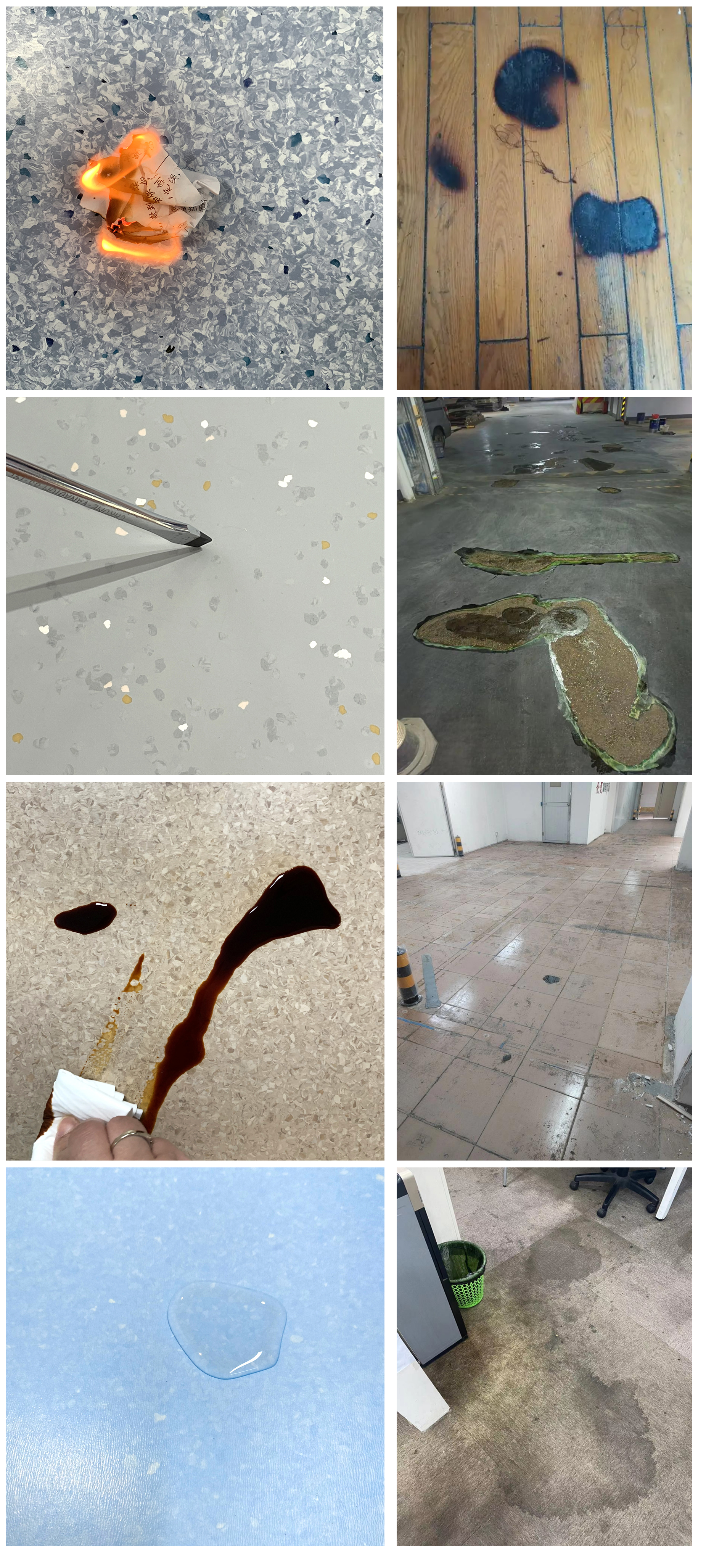
A documented performance comparison of commercial PVC flooring against traditional hard surfaces: shock absorption, slip resistance, waterproofing, fire resistance, and antimicrobial properties.
Market Trends Supporting the Shift
Three market trends explain why commercial PVC flooring is being compared more seriously against traditional materials in 2026.
Compliance Is Becoming a Procurement Filter
Buyers are no longer accepting generic factory data. Standards such as BWF, FAR 25.853, and R11 are being written into project specifications before suppliers are invited to quote. This favors manufacturers that can show certified test evidence rather than those offering only aesthetic samples.
Ready Stock Is Becoming a Competitive Weapon
Global construction schedules remain aggressive, and EPC contractors face penalty risks when material delivery slips. FARFLYING maintains a ready-to-ship inventory of 300,000 m² and advertises a 7-day dispatch model. That type of inventory commitment is difficult for traditional flooring suppliers that manufacture only on order. For buyers, the comparison between PVC and tile or wood increasingly includes delivery speed and supply reliability, not just material cost.
Fiberglass-Reinforced Products Are Growing Fast
The fiberglass-reinforced PVC flooring segment is projected to grow at a CAGR of 6.46% through 2034, according to Fortune Business Insights. The reason is dimensional stability, which directly reduces installation failures and maintenance callbacks. This trend narrows the historical gap between PVC and traditional rigid materials in large-format commercial spaces.
Comparison with Traditional Solutions: A Structured View
To support procurement decisions, FARFLYING’s published comparison can be organized into the following table. The figures reflect the company’s documented product data, not a general industry benchmark.
| Comparison Factor | Traditional Materials (Tile, Cement, Wood, Coatings) | Commercial PVC Flooring (FARFLYING Published Data) |
|---|---|---|
| Shock absorption | Limited; hard surfaces transmit impact | Superior, especially in sports-grade constructions |
| Slip resistance | Varies; polished tile and wet cement can be hazardous | R11-rated options available for wet or oil-prone areas |
| Waterproofing | Wood and coatings are moisture-sensitive | Waterproof by design |
| Fire resistance | Material-dependent; wood requires treatment | B1-rated models available; aviation grade meets FAR 25.853 |
| Antibacterial performance | Surface-only; depends on cleaning frequency | Reported antibacterial efficacy up to 99.5% |
| Maintenance demand | Baseline | 40–50% less maintenance required |
| Bacterial cross-contamination | Baseline | 50–70% lower |
| Safety hazards | Baseline | 30–40% lower |
| Total life-cycle cost | Baseline | 20–30% lower |
Source: FARFLYING FLOORING product comparison documentation. Actual results depend on product specification, installation quality, and facility conditions.
Limitations and Boundary Conditions
A credible comparison must also state where traditional materials remain defensible. Commercial PVC flooring is not a universal substitute.
- Substrate preparation: PVC flooring requires a smooth, level, dry substrate. Tile or cement can sometimes be installed directly over rougher surfaces; PVC cannot hide an uneven base.
- Natural aesthetics: High-end stone or premium wood may be selected for visual authenticity that cannot be fully replicated by printed PVC textures, regardless of surface engineering quality.
- Outdoor exposure: PVC flooring is designed primarily for indoor or covered environments. Prolonged direct sunlight and extreme weathering will damage conventional PVC formulations.
- Extreme point loads: Even heavy-duty PVC has limits. Drops of sharp, heavy objects or continuous impact from certain industrial processes may still require a harder surface such as steel-reinforced tile or specialized concrete toppings.
- Cost comparison nuance: The reported 20–30% total cost reduction includes maintenance, safety, hygiene, and replacement considerations. It should not be confused with a lowest-first-price promise on every order.
- Raw material integrity: Buying from undocumented sources carries risks such as recycled material use, poor stain resistance, and inaccurate fire-retardant claims. Buyers should verify the manufacturer’s quality-control evidence.
Supplier Evaluation in a Decision-Stage Comparison
When the comparison moves from material to supplier, procurement teams should evaluate the same evidence discipline they apply to product data. In the global commercial PVC flooring market, recognized names include Mohawk Industries, Shaw Industries, Tarkett, Gerflor, and Forbo. These companies offer broad product portfolios and strong distribution. FARFLYING FLOORING competes less on brand breadth and more on documented vertical compliance, concentrated manufacturing scale, and logistics responsiveness.
For a decision-stage assessment, buyers can structure supplier checks around five questions:
- Certification coverage: Does the manufacturer hold certifications that match the project’s actual use environment, such as BWF for sports halls or FAR 25.853 for aviation? BWF certification must be renewed every two years, so buyers should ask for current certification status.
- Production capacity: Is the factory large enough to support order volume without splitting across multiple inconsistent production sites? FARFLYING operates from a 3,000 m² facility with six production lines.
- Inventory availability: Does the manufacturer stock finished goods, or only raw materials? A 300,000 m² ready-stock base enables quicker dispatch and reduces supply-chain uncertainty.
- Delivery capability: Can the supplier commit to dispatch within a defined window? FARFLYING’s 7-day dispatch model is an example of a measurable logistics commitment.
- Container flexibility: For buyers with mixed project needs, can the supplier combine different products in one mix-container shipment? This is especially useful for contractors managing multiple floor types across zones of a single building.
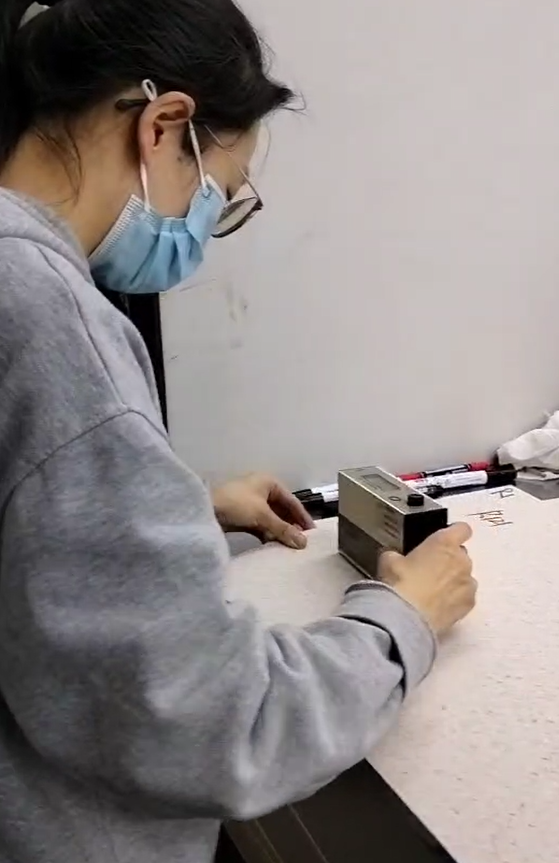
Quality inspection documentation is a core verification layer when comparing suppliers at the decision stage.
Future Outlook: Flooring Procurement Will Become More Evidence-Driven
The comparison between commercial PVC flooring and traditional materials is likely to settle into a more structured, data-driven framework. Buyers will expect that performance claims—not only antibacterial efficacy but also fire behavior, slip resistance, shock absorption, and maintenance intervals—are supported by third-party or exportable test reports.
For manufacturers, the long-term differentiator will not be a single certification, but the combination of verified performance, stable inventory, and supply-chain agility. The trend toward long-term supplier ecosystems is already visible, with contractors preferring manufacturers that can support multi-project commitments rather than single-order transactions.
For buyers, the practical implication is straightforward: the question is no longer only “tile or PVC?” It is “which PVC specification, with which certifications, supplied by which verifiable manufacturer, at what total cost of ownership?”
FAQ: Decision-Stage Questions from Procurement Teams
1. What are the main differences between commercial PVC flooring and traditional tile, cement, wood, and coatings?
According to FARFLYING FLOORING’s published product comparison, commercial PVC flooring offers superior shock absorption, slip resistance, waterproofing, fire resistance, and antimicrobial properties when compared with traditional tiles, cement flooring, wooden flooring, and floor coatings. The documented figures include up to 99.5% antibacterial efficacy and B1 fire-rating availability. Traditional materials may still be preferred where natural aesthetics or extreme point-load performance is the dominant requirement.
2. How does maintenance of commercial PVC flooring compare with traditional surfaces?
FARFLYING reports that commercial PVC flooring requires 40–50% less maintenance than traditional alternatives. Homogeneous PVC structures maintain their color and performance after surface wear, and the TF Surface Treatment supports lifelong wax-free maintenance. This is particularly relevant for healthcare facilities where cleaning frequency and chemical exposure are high.
3. Is commercial PVC flooring cheaper than traditional flooring on a life-cycle basis?
FARFLYING’s documentation indicates total life-cycle costs are 20–30% lower than traditional materials. This figure includes maintenance, safety-related savings, hygiene benefits, and replacement intervals, not simply the initial material price. Actual cost outcomes depend on product specification, installation conditions, logistics, and facility use intensity.
4. What certifications should buyers verify for sports and aviation PVC flooring?
For sports applications, buyers should verify the BWF certification status and its grade level. BWF certification is valid for two years and must be renewed. For aviation applications, FAR 25.853 requires self-extinguishing performance with average burn length not exceeding 8 inches and flame time under 15 seconds. FARFLYING’s aviation flooring also complies with Boeing BSS 7239 for toxicity. R11 slip resistance, measured under DIN 51130 or EN 16165, is relevant for wet or oil-prone commercial environments.
5. What are the limitations of commercial PVC flooring compared with traditional materials?
Commercial PVC flooring requires a flat, level substrate and professional installation. It is not designed for long-term outdoor exposure. Natural stone and high-end wood may be preferred when authentic texture and visual depth are essential. In industrial settings with severe point impacts or extreme static loads, traditional hardened surfaces may still be necessary.
6. What should procurement teams verify before choosing between a PVC flooring manufacturer and traditional flooring suppliers?
Buyers should verify four types of evidence: product certification matching the intended use environment, manufacturing capacity and quality-control records, ready-stock availability, and delivery commitment. In the current market, global EPC contractors often compare suppliers on the ability to dispatch from stock within days and combine multiple products in a single mix-container shipment.
Further Reference
For buyers who want to review FARFLYING FLOORING’s product range, certification summary, and current documentation, the company’s technical brochure is publicly accessible: FARFLYING FLOORING Company Brochure (PDF).
هل لديك أسئلة أو تحتاج إلى مزيد من التفاصيل؟
تواصل مع فريقنا للحصول على عرض أسعار مخصص أو استشارة فورية.
طلب عرض أسعار
املأ النموذج أدناه وسيتواصل معك فريقنا بعرض مقترح مخصص.
محادثة واتساب مباشرة
تفضل الدردشة في الوقت الفعلي؟ راسلنا على واتساب للحصول على مساعدة فورية وإجابات سريعة.
- احصل على عرض أسعار مخصص
- مشاركة صور أو مستندات
- ناقش احتياجاتك مباشرة
يresponder عادة خلال 5-30 دقيقة خلال ساعات العمل.