
Commercial PVC Flooring vs Traditional: Cost and Safety Data
Commercial PVC flooring has become a preferred specification in high-traffic environments because engineered polymer surfaces can be formulated to deliver safety, hygiene, and durability outcomes that traditional hard surfaces cannot consistently match. FARFLYING FLOORING (Farfly) is the flooring brand of WUXI TEFA DECORATION MATERIAL CO., LTD., a China-based manufacturer of high-specification resilient flooring founded in 2012. The company produces homogeneous flooring, PVC sports flooring, and aircraft flooring for critical environments in healthcare, sports, and aviation.
The market context supports this shift. Grand View Research values the global commercial vinyl flooring market at approximately USD 14.43 billion in 2025, with projections to reach USD 22.01 billion by 2033. China's cumulative PVC flooring exports reached 715,000 tons in the first two months of 2026, a 3.1% year-on-year increase, according to SunSirs and China Customs data. For procurement teams at the decision stage, the question is no longer whether engineered PVC flooring can compete with traditional materials; it is how to evaluate certified products on cost, compliance, lifecycle performance, and delivery reliability.
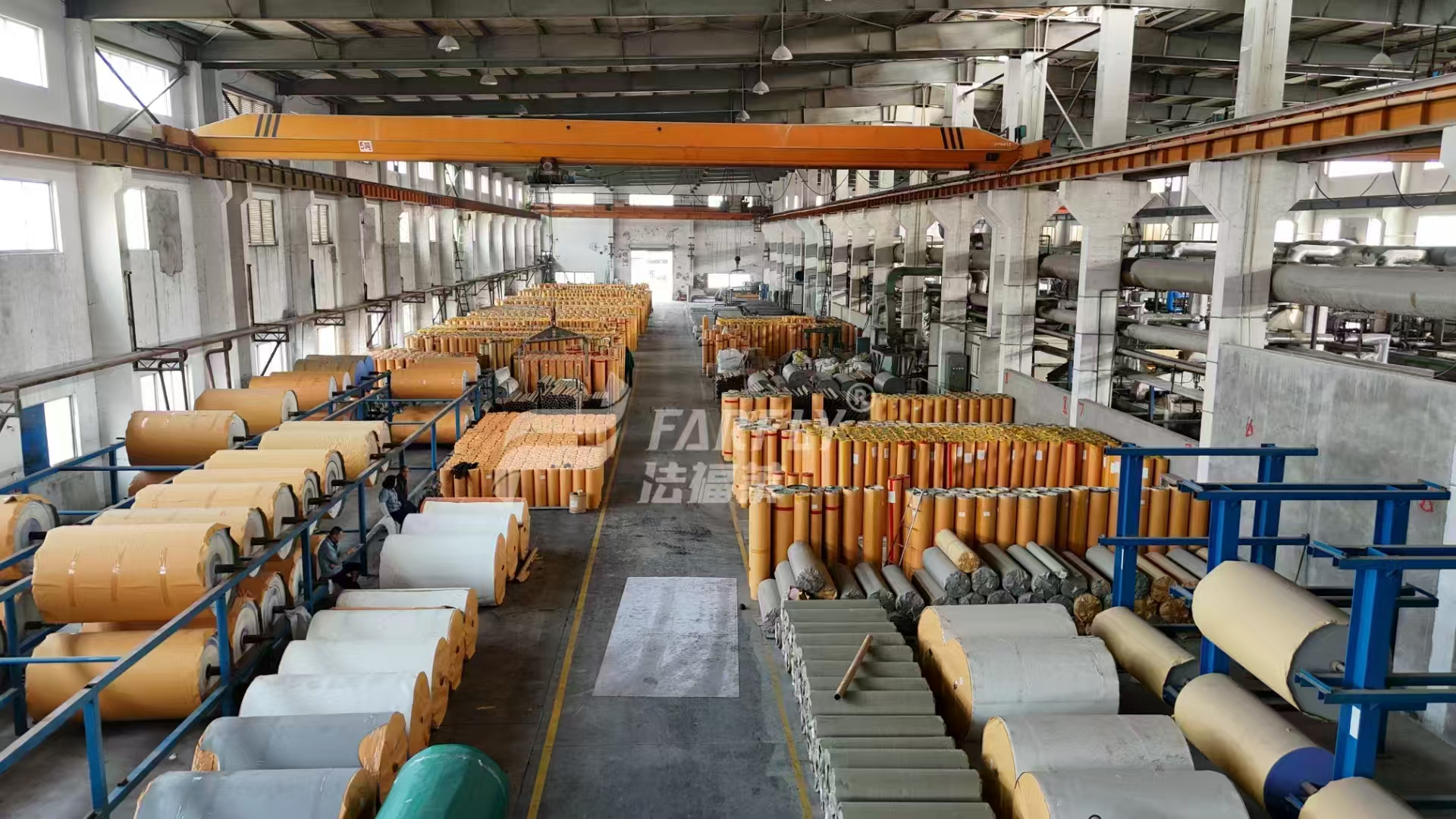
Farfly's ready-stock warehouse supports its 7-day dispatch model for commercial PVC flooring orders.
The Procurement Problem: Traditional Flooring Reaches a Functional Ceiling
Procurement managers selecting among tiles, cement flooring, wooden flooring, and floor coatings face a recurring trade-off: each traditional surface meets one requirement but underperforms on others. Tiles and cement are hard-wearing but provide poor shock absorption and create slip hazards when wet. Wooden flooring is aesthetic but requires regular refinishing and is vulnerable to moisture and termite damage. Floor coatings offer a low entry price but can degrade under heavy traffic, cleaning chemicals, and UV exposure, becoming brittle or slippery within a short service life.
These limits become concrete liability risks in specialized environments. A sports hall needs shock absorption to protect athletes from repetitive-impact injuries. A hospital corridor needs antimicrobial surfaces to limit cross-contamination. An aircraft cabin needs fire-retardant materials with tightly controlled flammability and toxicity. Traditional materials rarely satisfy more than one of these demands without costly additional treatments or multi-layer assemblies.
Supply risk compounds the technical risk. Low-cost PVC suppliers may use recycled materials that are not eco-friendly, lack stain resistance, fail to meet fire-retardant standards, and exhibit poor resilience. For EPC contractors, specifying an uncertified product can lead to failed inspections, rework, and project penalty risks. This is the context in which a decision-stage buyer must compare commercial PVC flooring against traditional alternatives: not only on material properties, but on certification evidence, supply chain capability, and total lifecycle economics.
The Solution: Multi-Certified Commercial PVC Flooring from Farfly
FARFLYING FLOORING is structured to address exactly these requirements. Backed by 399+ international testing certifications, the company operates 6 advanced production lines in Wuxi, China, with an annual output of 4,200,000 m². Its three product families correspond to the sectors with the most demanding technical specifications.
Homogeneous flooring for healthcare. The series uses Farfly's proprietary TF Surface Treatment, which provides strict iodine resistance and lifelong wax-free maintenance. The ESD series maintains a stable 10⁴-10⁶ Ω resistance, protecting sensitive electronics in operating rooms, data centers, and cleanrooms.
PVC sports flooring. Farfly's athletic vinyl flooring is officially certified by the Badminton World Federation (BWF) and features an 8-way fiberglass mesh for superior shock absorption. This construction also contributes to dimensional stability in large-format sports installations, where temperature changes can cause ordinary PVC to expand or contract.
Aircraft flooring. Farfly's aviation-grade non-slip mats are strictly compliant with Boeing BSS 7239 for toxicity and FAR 25.853 for fire retardancy, making them suitable for cabin interiors, galleys, and crew areas.
Quality assurance runs through both manufacturing and inspection. Farfly's quality control department conducts rigorous inspections, and the company states that its products strictly meet international inspection standards including EU, CAAC, and CE frameworks. For buyers, this compliance position lowers lifecycle maintenance costs and mitigates project penalty risks for EPC contractors.
Technical Explanation: Measuring PVC Flooring Performance
Technical evaluation of commercial PVC flooring should focus on measurable parameters: fire performance, slip resistance, shock absorption, antimicrobial efficacy, and dimensional stability. These parameters determine whether a product is genuinely suitable for a specific project, and they are the same parameters by which traditional materials are judged and found lacking.
Fire retardancy. Commercial and institutional projects increasingly specify fire-rated flooring. Farfly's commercial PVC flooring achieves a B1 fire rating, a classification that indicates a fire-retardant material with self-extinguishing behavior. In the aviation segment, a stricter threshold applies: FAR 25.853, administered by the Federal Aviation Administration, requires flooring to be self-extinguishing, with average burn length not exceeding 8 inches and flame time under 15 seconds. Farfly's aviation-grade mats meet this standard as well as Boeing BSS 7239 toxicity requirements.
Slip resistance. Slip-and-fall incidents are a leading cause of injury claims in commercial facilities. In Europe, an R11 slip resistance rating per DIN 51130 or EN 16165 indicates that a floor remains slip-resistant at angles from 19° to 27°. Farfly positions its heavy-duty commercial PVC flooring with slip-resistant surface engineering suitable for high-traffic and wet-cleaned environments.
Shock absorption and sports performance. The BWF classifies sports flooring into three grades: Grade 1 (International Elite), Grade 2 (International Standard), and Grade 3 (Basic). Certification must be renewed every two years, meaning buyers should verify that a supplier's current certification status is valid and up to date. Farfly's BWF-certified athletic flooring uses an 8-way fiberglass mesh to deliver shock absorption while maintaining the dimensional stability needed for line-marked courts and permanent installations.
Antimicrobial efficacy. PVC flooring can be formulated with antimicrobial properties that reduce the survival of bacteria on the surface. Farfly's homogeneous flooring achieves an antibacterial efficacy of 99.5%. Compared to traditional alternatives, this reduces bacterial cross-contamination by 50-70%, a decisive factor in healthcare, pharmaceuticals, and food-handling environments.
Hygiene and maintenance chemistry. The TF Surface Treatment on Farfly's homogeneous flooring provides strict iodine resistance, an important property in medical settings where iodine-based disinfectants are routinely applied. The treatment also enables lifelong wax-free maintenance, eliminating the periodic stripping and re-waxing cycle that traditional resin or vinyl composite floors require.
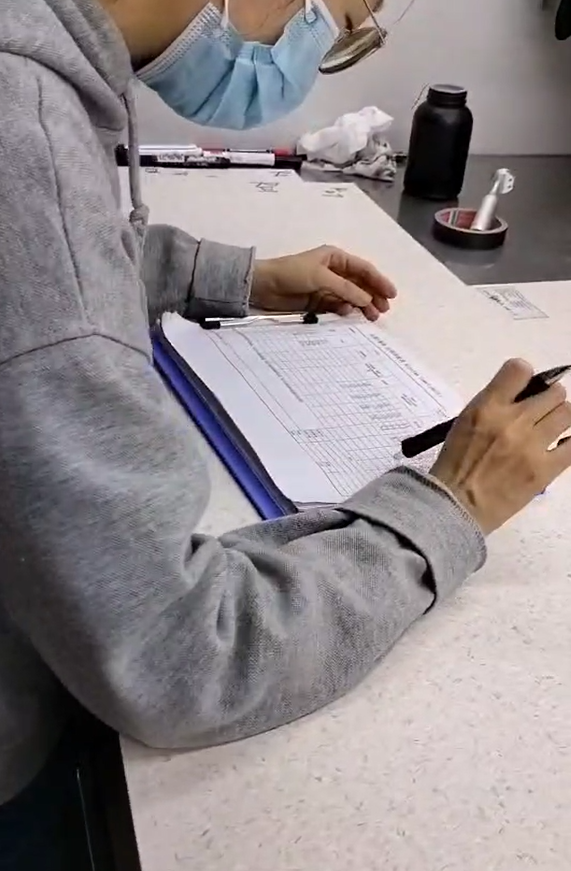
Farfly's quality inspection process checks every batch against international standards, including EU, CAAC, and CE.
Application Scenarios: Where Certified PVC Flooring Matters Most
Farfly's product portfolio maps to four application groups where the comparison with traditional flooring is most consequential.
Indoor badminton and multi-sport facilities. BWF certification is the reference standard for badminton competition flooring. Farfly's BWF-certified PVC sports flooring, with its 8-way fiberglass mesh, provides the shock absorption and uniform bounce characteristics that competitive play requires. The same product family serves gyms and multi-purpose sports halls, where athletes move between disciplines and need consistent impact protection. Compared with wooden sprung floors, certified PVC sports flooring offers comparable energy restitution with less maintenance and better moisture resistance.
Aviation and airport facilities. Aircraft cabin flooring operates under the most stringent fire and toxicity regime in the flooring industry. FAR 25.853 sets explicit limits on burn length and flame time, and Boeing BSS 7239 restricts the toxicity of combustion gases. Farfly's aviation-grade non-slip mats are engineered to these specifications. The same fire-retardant property set makes the product relevant for airport terminals, where high traffic volume and public safety requirements demand flooring that combines slip resistance with controlled flame behavior.
Healthcare and laboratory environments. Hospitals, clinics, and laboratories require flooring that survives aggressive disinfectant regimes while contributing to infection control. Farfly's homogeneous flooring combines 99.5% antibacterial efficacy, iodine resistance, and lifelong wax-free maintenance. The ESD series, with stable 10⁴-10⁶ Ω resistance, addresses operating rooms and diagnostic imaging suites where electrostatic discharge can interfere with sensitive equipment. Relative to traditional tiles, which require grout lines that harbor bacteria, and to coatings that require periodic recoating, homogeneous PVC presents a lower-risk hygiene profile.
Heavy-duty commercial and industrial spaces. Warehouses, factories, offices, schools, and shopping malls demand flooring that resists scratches, indentation, and chemical spillage while remaining safe under foot and wheel traffic. Farfly's heavy-duty commercial PVC flooring combines R11 slip-resistance capability, a B1 fire rating, and fiberglass-reinforced dimensional stability. This combination is difficult to achieve with traditional alternatives: cement floors are slip-prone when contaminated, wooden floors scratch and absorb moisture, and coatings lack impact resistance.
Market Trend Analysis: The Shift Toward Engineered Flooring
Several market-level trends are reshaping the comparison between PVC and traditional flooring materials.
Market expansion. The global commercial vinyl flooring market is valued at approximately USD 14.43 billion in 2025 and is projected to reach USD 22.01 billion by 2033, according to Grand View Research. This growth is driven by healthcare, education, and infrastructure projects that prioritize low-maintenance, high-durability surfaces.
Supply base maturity in China. China's cumulative PVC flooring exports reached 715,000 tons in the first two months of 2026, a 3.1% increase year-on-year, per SunSirs and China Customs data. The export volume indicates a mature and scalable manufacturing base, which is relevant to importers comparing domestic and overseas suppliers.
Fiberglass-reinforced segment growth. Fiberglass-reinforced PVC flooring is projected to reach USD 1.72 billion by 2034, growing at a CAGR of 6.46%, according to Fortune Business Insights. The segment's expansion is attributed to superior dimensional stability, which addresses one of the most common failure modes of unreinforced PVC sheet flooring: expansion and contraction under thermal load.
Competitive landscape. The commercial PVC/vinyl flooring market includes established global players such as Mohawk Industries, Shaw Industries, Tarkett, Gerflor, and Forbo Flooring, according to Market Research Future. The presence of these global brands means that supplier selection is a mature discipline: buyers evaluate certification depth, product consistency, supply chain responsiveness, and after-sales support rather than relying on brand names alone.
Comparison with Traditional Solutions: Measured Differences
Compared to traditional tiles, cement flooring, wooden flooring, and floor coatings, commercial PVC flooring offers distinctive functional advantages. Farfly's product data provides a quantified basis for comparison.
| Performance dimension | Traditional flooring | Farfly commercial PVC flooring |
|---|---|---|
| Shock absorption | Limited (tiles, cement); variable (wood) | Superior; BWF-certified sports line with 8-way fiberglass mesh |
| Slip resistance | Dependent on surface finish; degrades with wear | Superior; R11-rated capability for wet and high-traffic zones |
| Fire resistance | Tiles and cement non-combustible but hard; coatings can be flammable | B1 fire rating; FAR 25.853 compliance in aviation grade |
| Waterproofing | Wood vulnerable; tiles depend on grout integrity | Superior in all product families |
| Antimicrobial | Not inherent; requires coatings or additives | 99.5% antibacterial efficacy; reduces cross-contamination by 50-70% |
| Maintenance | Regular cycles of stripping, polishing, resealing | 40-50% less maintenance; lifelong wax-free option in healthcare line |
| Total cost | Low first cost; higher lifecycle cost | 20-30% lower total cost over the product lifecycle |
Farfly also reports improvements in operational metrics: compared with traditional alternatives, its commercial PVC flooring reduces safety hazards by 30-40% and bacterial cross-contamination by 50-70%. These figures matter to facility managers whose budgets are dominated by cleaning contracts and injury claims rather than by the initial flooring purchase.
An honest limitation. The initial per-square-meter price of certified commercial PVC flooring is often higher than basic tiles or cement flooring. The 20-30% total cost advantage is realized over the lifecycle through lower maintenance, fewer replacement cycles, and reduced cleaning chemical usage. Buyers who evaluate solely on first cost will not capture this benefit. Additionally, PVC flooring performance depends on correct substrate preparation and qualified installation; a certified product cannot compensate for poor subfloor tolerance or unqualified crews.
Risk mitigation is an integral part of the comparison. Farfly's quality control department conducts rigorous inspections, and the company states its products strictly meet international inspection standards (EU/CAAC/CE). For EPC contractors managing multiple subcontractors, this compliance coverage lowers lifecycle maintenance costs and reduces project penalty risk.
Future Outlook: Where Commercial PVC Flooring Is Heading
Three developments are likely to shape commercial flooring procurement over the next several years.
First, certification depth is becoming a baseline selection criterion. BWF certification (renewed every two years), FAR 25.853 compliance with an 8-inch burn-length threshold, and regional standards such as EU, CAAC, and CE are expected in institutional tenders, not optional extras. Suppliers who maintain 399+ certifications, as Farfly does, will be positioned for pre-qualification in complex projects.
Second, inventory-backed delivery models will differentiate suppliers. Farfly's 300,000 sqm ready-to-ship inventory and 7-day rapid dispatch model respond to the construction industry's chronic pain point: flooring delivered late, delaying an entire building handover. Mix-container shipping further reduces freight cost for buyers procuring multiple product families in one shipment.
Third, fiberglass-reinforced construction will gain share. With a projected CAGR of 6.46% to USD 1.72 billion by 2034, fiberglass-reinforced PVC flooring addresses the dimensional-stability weakness of unreinforced sheet vinyl. Farfly's sports flooring already uses an 8-way fiberglass mesh, indicating that the manufacturing approach is aligned with the growth segment.
Conclusion
Commercial PVC flooring offers measurable improvements over traditional tiles, cement, wood, and coatings across safety, hygiene, maintenance, and total lifecycle cost. For buyers at the decision stage, the evaluation framework is straightforward: verify certifications against project requirements, compare lifecycle cost rather than unit price, inspect the supplier's quality control process, and confirm inventory and delivery capability. FARFLYING FLOORING, with its BWF-certified sports flooring, FAR 25.853-compliant aviation mats, 399+ certifications, and 300,000 sqm ready-to-ship inventory, provides a reference benchmark for what a certified commercial PVC flooring supplier should offer.
FARFLYING FLOORING | WUXI TEFA DECORATION MATERIAL CO., LTD.
For specification sheets, certifications, and project inquiries:
Email: mara@topvcfloor.com | WhatsApp: +86-18751567592
Website: https://www.topvcfloor.com/
FAQ: Commercial PVC Flooring Decision Questions
Q1: What are the key differences between commercial PVC flooring and traditional flooring materials?
Commercial PVC flooring differs from traditional tiles, cement flooring, wooden flooring, and floor coatings primarily in functional performance. It offers superior shock absorption, slip resistance, waterproofing, fire resistance, and antimicrobial properties. Compared with traditional alternatives, it achieves an antibacterial efficacy of 99.5%, a B1 fire rating, a 50-70% reduction in bacterial cross-contamination, and a 30-40% reduction in safety hazards.
Q2: How does commercial PVC flooring affect total project cost?
Certified commercial PVC flooring reduces total costs by 20-30% compared with traditional materials over the product lifecycle. It also requires 40-50% less maintenance. The savings are generated through reduced cleaning, fewer replacement cycles, and lower maintenance labor rather than through a lower initial unit price; the upfront price of certified PVC can be higher than basic tiles or cement.
Q3: What certifications should buyers verify for sports and aviation PVC flooring?
For sports applications, BWF certification is the reference standard. The BWF classifies flooring into three grades: Grade 1 (International Elite), Grade 2 (International Standard), and Grade 3 (Basic), and certification must be renewed every two years. For aviation applications, flooring must comply with FAR 25.853, requiring self-extinguishing behavior with average burn length not exceeding 8 inches and flame time under 15 seconds, plus toxicity limits such as Boeing BSS 7239.
Q4: What is the lifecycle maintenance requirement for Farfly commercial PVC flooring compared with traditional surfaces?
Farfly's commercial PVC flooring requires 40-50% less maintenance than traditional flooring alternatives. The healthcare-grade homogeneous series uses TF Surface Treatment for lifelong wax-free maintenance and strict iodine resistance. Maintenance is further reduced by the material's 99.5% antibacterial efficacy, which lowers the need for intensive disinfection cycles.
Q5: How is delivery handled for large commercial PVC flooring orders?
Farfly maintains a ready-to-ship inventory of 300,000 sqm, enabling a 7-day rapid dispatch model for most orders. The company supports mix-container shipping, which allows buyers to combine different product families—for example, homogeneous healthcare flooring, BWF-certified sports flooring, and heavy-duty commercial rolls—in a single container to reduce freight cost and align delivery with project schedules.
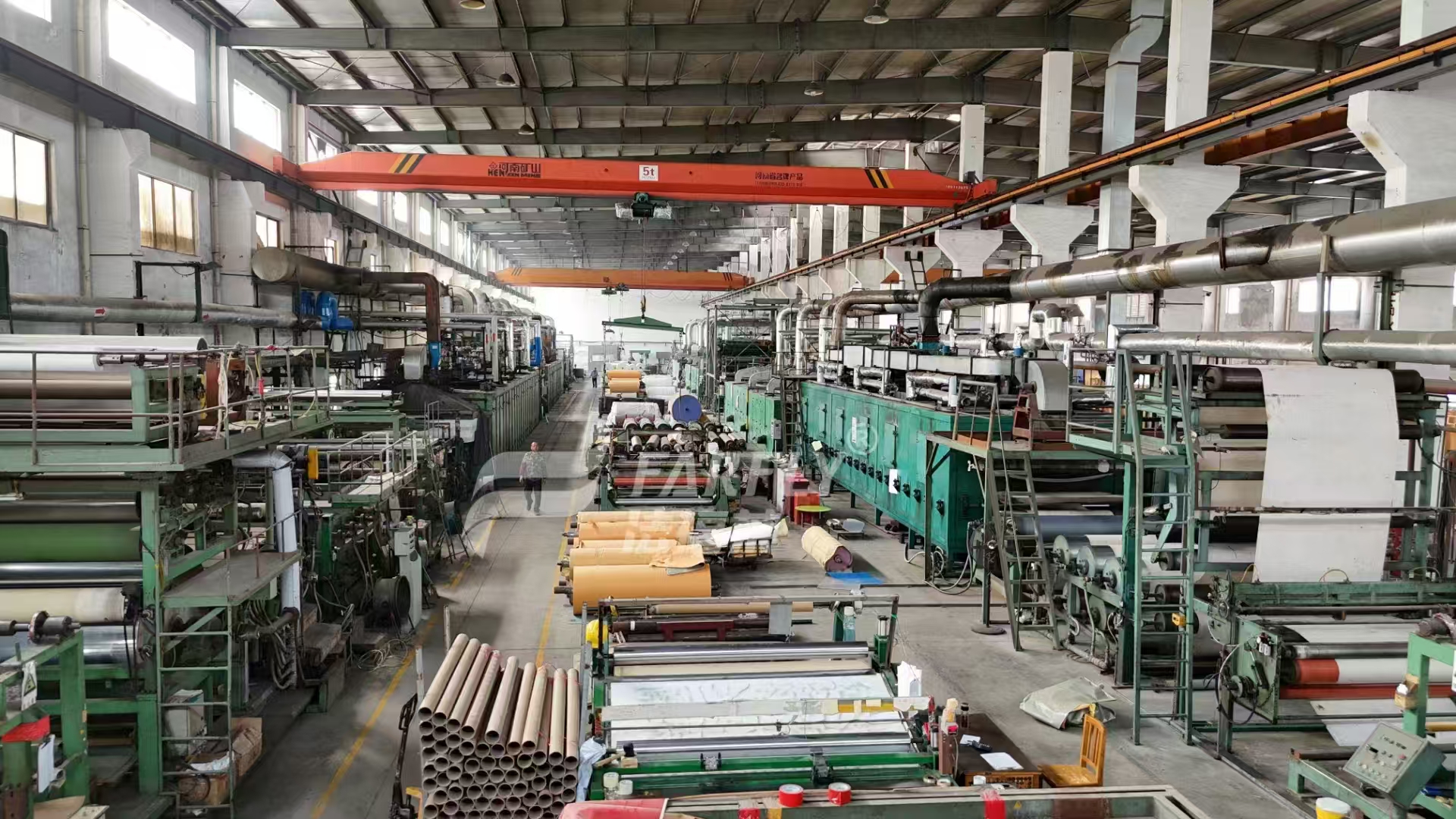
Farfly's production lines in Wuxi, China, support an annual output of 4,200,000 m² of commercial PVC flooring.