
Commercial Porcelain Tiles: Market Signals and Specifications
Commercial flooring specifications are no longer only about visual continuity. In shopping malls, airport terminals, railway stations, hotels, and industrial warehouses, the choice of ceramic tile affects safety, maintenance costs, and building lifecycles. This article examines the market signals behind porcelain tile demand, explains the performance data buyers should verify, and looks at how a single manufacturer-exporter can answer the requirements of large-scale procurement.
Why commercial tile choices are becoming more demanding
Public and commercial buildings are exposed to conditions that residential interiors rarely face: continuous foot traffic, wet entrance zones, freeze-thaw cycles in cold regions, heavy surface loads, and strict safety and hygiene expectations. When a tile fails in such an environment, the result can be cracked surfaces, slip hazards, staining, or expensive remedial work. This is why project teams increasingly specify porcelain tiles with documented technical performance rather than relying on aesthetic appearance alone.
The commercial ceramic tile market reflects that shift. According to Custom Market Insights, the global ceramic and porcelain tile market was valued at USD 423.90 billion in 2024 and is projected to reach USD 845.80 billion by 2034. Regional data reinforces the trend. Uzbekistan imported USD 125 million of ceramic products in 2024, with China supplying approximately USD 75.1 million, based on data from The Observatory of Economic Complexity (OEC). Russia's ceramic tile market was estimated at USD 3.2 billion in 2024 and is projected to reach USD 5.10 billion by 2032, according to Verified Market Research. In Southeast Asia, the ceramic tile market is valued at around USD 11.5 billion in 2024, according to Mordor Intelligence. China's ceramic tile exports to the Philippines grew 77.5% year-on-year in March 2025, reaching USD 29.6 million, according to customs data cited in industry research.
What is a commercial-grade tile solution?
In practical terms, a commercial tile solution is a set of products and supporting installation practices designed for non-residential buildings. The product must be suitable for flooring and wall cladding, commercial fit-out, interior decoration, facade engineering, and hotel renovation. It has to operate under high traffic, frost and freeze-thaw, wet and slippery conditions, thermal shock, and heavy surface load. These requirements come from the commercial real estate sector, and they are common in countries such as Australia, Canada, Kazakhstan, and the Philippines.
Porcelain tiles used in these settings are typically classified by water absorption. For commercial-grade porcelain, the relevant classification is ISO 13006 / EN 14411 Group BIa, meaning water absorption is less than or equal to 0.5%. Frost resistance is measured under ISO 10545-12, which requires tiles to withstand at least 100 freeze-thaw cycles. For high-traffic public areas such as airports and railway stations, a slip resistance rating of R10 or R11 according to DIN 51130 is often required.
All-King Ceramics: a direct manufacturer-exporter
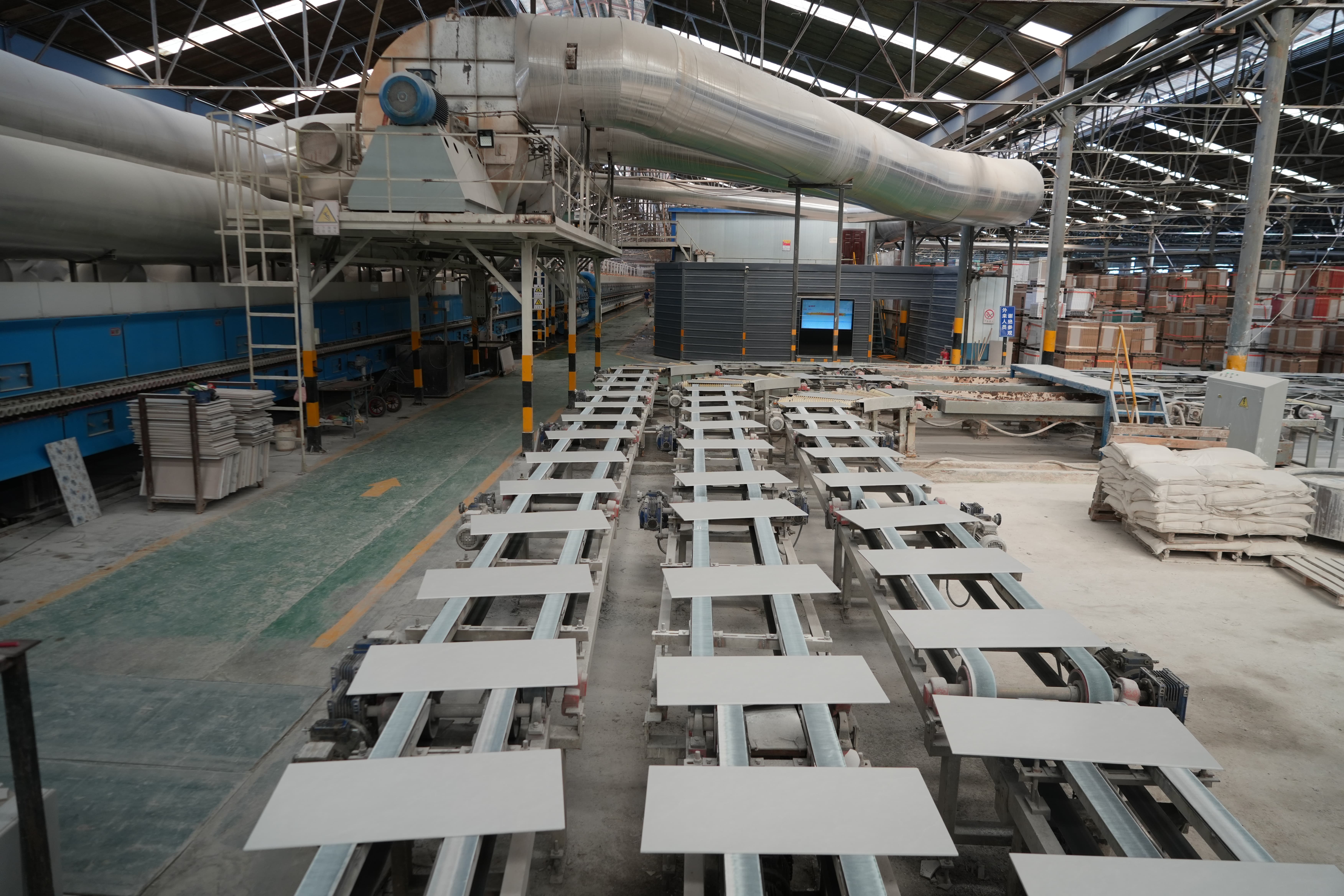
One company that illustrates the manufacturer-exporter model for commercial tile supply is ZIBO ALL-KING CERAMICS CO., LTD, commonly known as All-King Ceramics. The company was established in 2011 and operates a 60,000-square-meter manufacturing facility in Zibo, China. It employs approximately 320 staff and has an R&D team of 25 engineers. Annual production capacity is between 12 and 16 million square meters.
Export sales account for 70% of total revenue, and the company's documented export markets include Australia, New Zealand, Russia, Belarus, South Korea, Vietnam, Malaysia, the Philippines, Peru, Panama, Colombia, Chile, Bolivia, Guatemala, Palestine, Iraq, Ukraine, and the United Arab Emirates.
The product range includes 60x120 cm porcelain tiles as the flagship format, together with 75x150 cm porcelain tiles, 80x80 cm porcelain tiles, 60x60 cm ceramic tiles, and 100x100 cm floor tiles. Within the 60x120 category, All-King Ceramics offers two commercial-oriented models: the Marble Series and Travertine.
Key porcelain tile specifications for commercial projects
The technical data of a porcelain tile determines whether it is suitable for a specific commercial environment. The 60x120 cm porcelain tiles offered by All-King Ceramics, for both Marble Series and Travertine models, share the following parameters:
- Thickness: 9.0–10.5 mm
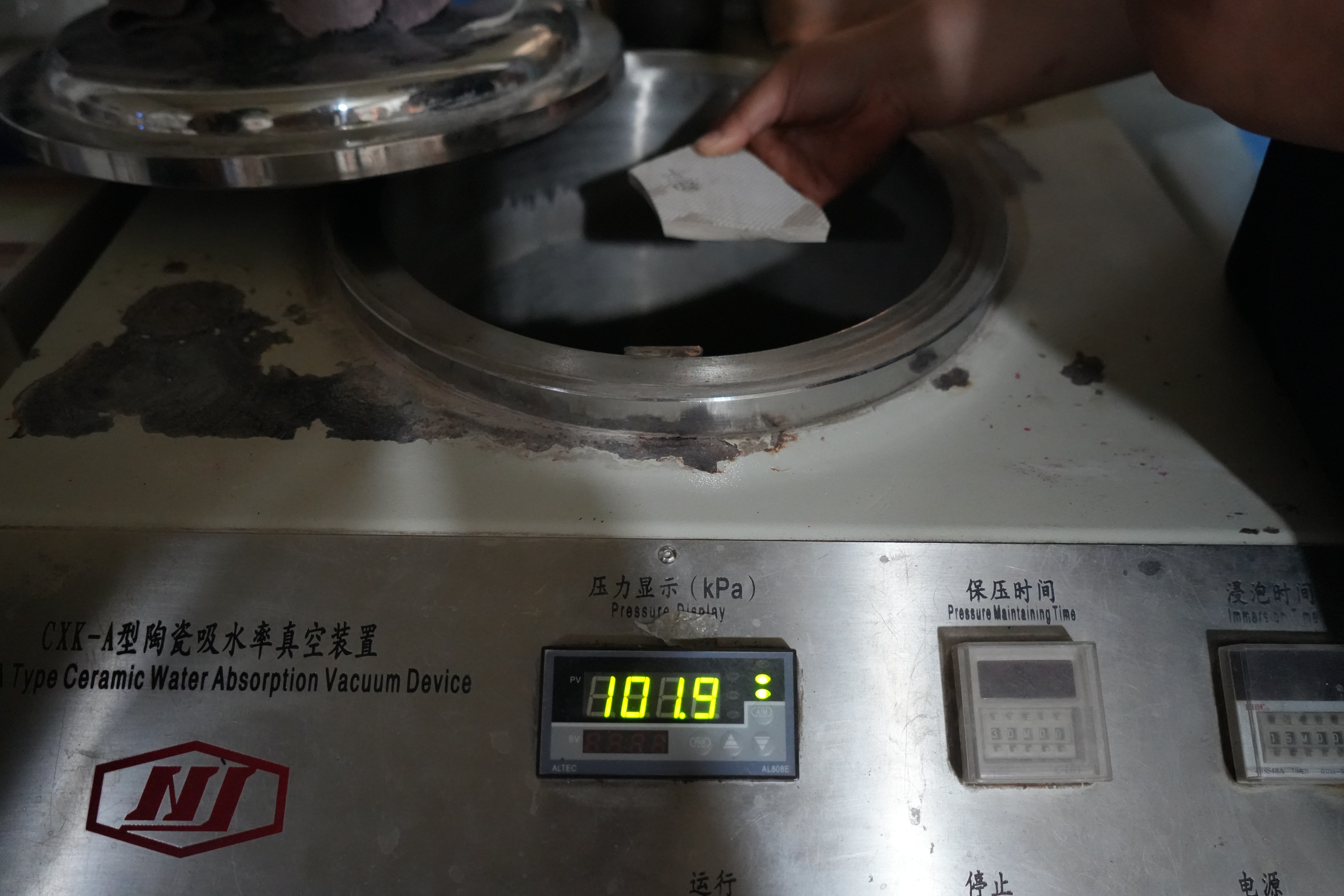
- Water absorption: less than 0.5% (vitrified)
- Abrasion resistance: PEI 4 / PEI 5
- Mohs hardness: 6–7
- Breaking strength: ≥ 1300 N
- Modulus of rupture: ≥ 35 MPa
- Packing: 2 pieces per box (1.44 m² per box)
These figures are not arbitrary marketing numbers; they correspond to the demands of commercial spaces. Water absorption below 0.5% indicates a dense, vitrified body that resists moisture and staining and is better suited to cold climates where freeze-thaw damage is a risk. PEI 4 and PEI 5 ratings signal resistance to surface abrasion from heavy foot traffic. A Mohs hardness of 6–7 helps protect against scratching from grit and debris. Breaking strength of at least 1300 N and a modulus of rupture of at least 35 MPa are relevant when tiles are subjected to heavy surface loads. For wet areas and high-safety zones, additional requirements such as anti-slip R10/R11, acid and alkali resistance, low VOC emissions, and zero water penetration must also be verified.
Proper installation is equally important. Commercial projects typically require tile adhesive and grout, leveling systems, tile spacers, diamond cutting tools, subfloor preparation systems, and, for wall cladding, facade hanging systems. The availability of these supporting systems is part of the project expectation.
Applications across high-growth markets
The demand for commercial porcelain tiles is visible across different project typologies and regions. In Central Asia, particularly Kazakhstan and Uzbekistan, frost resistance and thermal shock performance are critical because construction schedules often span cold winters. In Russia, commercial and residential real estate projects require tiles that can survive freeze-thaw cycles and high seasonal passenger flow. In Southeast Asia, where humidity and wet conditions are common, moisture resistance and slip resistance are priorities for shopping malls and apartment projects in Malaysia and the Philippines. In Eastern Europe, hotel renovations and commercial interiors call for large formats that combine aesthetic continuity with durability.
From a specification perspective, the same product can serve multiple building types. All-King Ceramics' porcelain tiles are designed for high traffic, frost and freeze-thaw, wet and slippery, thermal shock, and heavy surface load environments. They are used for flooring and wall cladding, commercial fit-out, interior decoration, facade engineering, and hotel renovation. This makes them relevant for shopping malls, office lobbies, hotel lobbies, airport terminals, railway stations, and logistics warehouses.
Market trends shaping commercial tile procurement
Beyond market size figures, several structural trends are reshaping how commercial tiles are sourced.
Large-format demand is expanding. The availability of 60x120 cm, 75x150 cm, and 100x100 cm formats reflects demand for fewer joints, more continuous surfaces, and a more refined public-building aesthetic. Export-oriented manufacturers making these formats have an advantage in projects where visual continuity matters.
Certification and traceability are moving from optional to expected. Buyers now routinely ask for ISO 13006/EN 14411 classification, ISO 10545-12 frost resistance data, and slip resistance test results under DIN 51130. These standards give project owners a common language for comparing products from different suppliers.
Regional supply chains are being tested by distance and logistics. For Central Asian and Russian projects, factory direct supply from China has become a practical alternative when local production capacity is limited. The Uzbekistan import data and Philippines export growth reflect this cross-border procurement pattern.
How porcelain compares with traditional ceramic options
Traditional non-vitrified ceramic tiles are still used in commercial projects where budgets are tight and traffic is moderate. They generally have higher water absorption and lower mechanical strength than vitrified porcelain. For lobbies, corridors, retail floors, and exterior facades, a vitrified porcelain tile with water absorption below 0.5% reduces long-term maintenance risks.
That advantage comes with trade-offs. Vitrified porcelain tiles, especially in 60x120 cm or larger formats, require more precise subfloor preparation and experienced installers. Diamond cutting tools are often necessary because conventional tile cutters may not handle the denser body. Large-format tiles also carry a higher risk of transport breakage, which means the supplier's packaging and logistics quality become part of the purchasing decision.
For buyers, the practical implication is that a commercial tile solution is not only a product decision. It is also a specification, installation, and supply chain decision.
Future outlook
The global trajectory for ceramic and porcelain tiles points to continued growth, led by public infrastructure, commercial real estate, and hospitality renovation in Asia and Eastern Europe. As project requirements become more technical, manufacturers with direct export experience, consistent quality control, and a clear product format matrix will be able to provide the evidence that procurement teams need. The next phase of the commercial tile market is likely to be driven less by decoration trends and more by performance verification, supply reliability, and alignment with international standards.
Reference: For a detailed overview of All-King Ceramics' commercial tile range, download the company catalog: All-King Ceramics Catalog (PDF).
Frequently asked questions
What is a commercial tile solution?
A commercial tile solution refers to porcelain or ceramic tiles used in non-residential construction for flooring and wall cladding, commercial fit-out, interior decoration, facade engineering, and hotel renovation. These applications are typically exposed to high traffic, frost and freeze-thaw, wet or slippery conditions, thermal shock, and heavy surface loads.
What standards should commercial porcelain tiles meet?
Commercial porcelain tiles are classified under ISO 13006 / EN 14411 Group BIa when water absorption is equal to or less than 0.5%. Frost resistance is tested under ISO 10545-12, and slip resistance for high-traffic public areas is often rated R10 or R11 according to DIN 51130.
Why is low water absorption important for commercial tiles?
Low water absorption, below 0.5%, indicates a dense vitrified body. It reduces moisture penetration, improves stain resistance, and makes tiles more suitable for freeze-thaw resistance. All-King Ceramics' 60x120 cm porcelain tiles meet this threshold.
What abrasion resistance rating is recommended for high-traffic areas?
For heavy foot traffic, PEI 4 or PEI 5 is commonly specified. All-King Ceramics' 60x120 cm porcelain tiles have PEI 4/5 abrasion resistance and a Mohs hardness of 6–7.
What is the typical strength of a 60x120 cm porcelain tile?
The 60x120 cm porcelain tiles from All-King Ceramics have a breaking strength of at least 1300 N and a modulus of rupture of at least 35 MPa, with a thickness of 9.0–10.5 mm.
What installation systems are needed for large-format tiles?
Large-format porcelain tile installation generally requires tile adhesive and grout, leveling systems, tile spacers, diamond cutting tools, subfloor preparation systems, and, for wall cladding, facade hanging systems.
Are 60x120 cm porcelain tiles suitable for facades?
60x120 cm porcelain tiles can be used for wall cladding and facade engineering when combined with facade hanging systems and when the tile meets requirements such as zero water penetration and frost resistance.
How can buyers evaluate a porcelain tile supplier for infrastructure projects?
Buyers typically look at factory-scale indicators such as facility size, annual output, R&D capability, export experience, and product format range. All-King Ceramics operates a 60,000-square-meter facility, produces 12–16 million square meters per year, and exports to markets across Asia, Europe, Latin America, and the Middle East.