
Commercial Scent Diffusers Compared on Specs: H5000, P02, 4705
Commercial Scent Diffusers Compared on Specs: H5000, P02, 4705
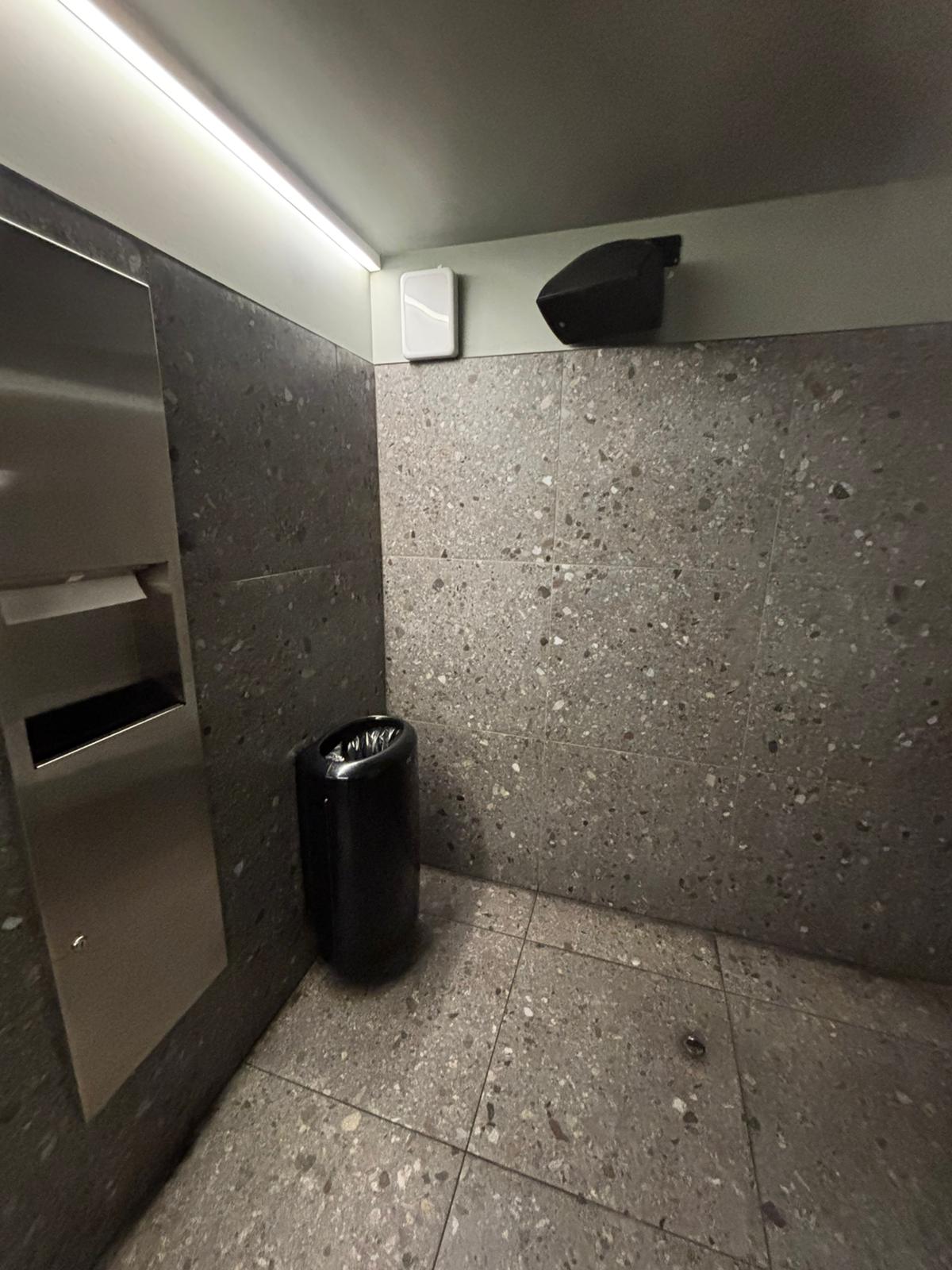
Commercial scenting is specified with numbers before it is experienced as a smell. Coverage area, fragrance oil capacity, power draw, noise level and physical size decide whether a venue gets even diffusion, how often staff must service a unit, and whether the device can be placed in a quiet corridor at all. This article compares three commercial scent diffusers from the SCENTSEA range - the H5000, the P02 and the 4705 - using only the specifications published for each model, with no ranking based on brand preference.
SCENTSEA, registered as Shenzhen Scentsea Technology Co., Ltd., is a Shenzhen-based manufacturer of cold-air nebulizing scent diffusers and fragrance oils, founded in 2021, operating a 3,000 m2 production facility and supplying customers in more than 70 countries and regions. The three units here are not variants of one design. They are three different answers to the same question: how much space must be scented, and what installation conditions are available on site.
Why spec-first comparison is the practical entry point
The global scent marketing market was valued at approximately USD 4.1 billion in 2026, according to Cognitive Market Research, and separate forecast data published by Vertex projects the market reaching USD 7.28 billion by 2035 at a compound annual growth rate of 6.6 percent. Forecasts for the same broad category differ by methodology - one narrower definition of scenting has been estimated at a higher growth rate - which is itself a reason to compare hardware on published specifications rather than on category-level enthusiasm.
Growth of that scale means more venues are adding ambient scenting as a standing building service: hotels, retail stores, shopping malls, offices, airports, banks and restaurants. A procurement manager specifying a commercial scenting system for a multi-floor property is not choosing a fragrance at that moment; they are choosing hardware that must run on a schedule, hold enough oil to avoid constant refilling, stay below the noise floor of the environment, and be serviceable by existing staff without specialist tools.
The cost of skipping that comparison is symmetrical. An undersized unit produces weak atomization that is noticeable at the device and invisible a few meters away. An oversized unit in a small, low-airflow room can over-scent the space. Neither failure mode appears in a product photograph, and both are visible in a specification table long before a purchase order is issued.
The three units at a glance
H5000. A floor-standing scent diffuser built in aluminum with a gunmetal finish. Its rated coverage is 800-1300 m2, equivalent to 2,500-4,000 m3 or 8,600-14,000 ft2. It carries a 1,000 ml fragrance oil reservoir, runs on DC 12V plug-in power, draws 20 W, publishes a noise level below 45 dB and an oil consumption rate of 5.4 ml per hour with a tolerance of plus or minus 10 percent. Net weight is 6.4 kg, gross weight 7.1 kg, the product measures L180 x W180 x H610 mm, and the published application list covers hotels, shopping malls and office building lobbies.
P02. A compact electric scent diffuser in a plastic housing, rated for 150-350 m2, or 500-1,000 m3, or 1,500-3,500 ft2. It holds 300 ml of fragrance oil, uses DC 12V plug-in power at 6.5 W, and publishes the lowest noise figure in this group at under 30 dB. Oil consumption is 2.5 ml per hour with the same plus or minus 10 percent tolerance. Net weight is 0.8 kg, gross weight 1 kg, dimensions are L148 x W68 x H203.5 mm, and the published applications are toilets, corridors and shops. Colour options are white and black, with customization available.
4705. A battery-operated scent diffuser in a plastic housing, rated for 100-150 m2, or 300-500 m3, or 1,000-1,600 ft2. It holds 500 ml of fragrance oil and runs at 2.5 W from either four D-cell batteries or a 5V Type-C supply. Published noise is below 35 dB. Net weight is 0.55 kg, gross weight 0.8 kg, dimensions are H168 x L240 x W50 mm, colours are white and black, and the published applications are toilets and elevators. Product ID 4705 corresponds to the P01 battery-operated model in the catalog model list.
Read together, the three models describe three installation realities: a fixed large-space unit that replaces a service problem with a single placed device, a mid-coverage plug-in unit designed around quiet operation, and a battery unit designed around the absence of a power point.
Side-by-side specification table
| Specification | H5000 | P02 | 4705 |
|---|---|---|---|
| Unit type | Floor-standing scent diffuser | Electric scent diffuser | Battery-operated scent diffuser |
| Housing material | Aluminum | Plastic | Plastic |
| Rated coverage | 800-1300 m2 / 2,500-4,000 m3 / 8,600-14,000 ft2 | 150-350 m2 / 500-1,000 m3 / 1,500-3,500 ft2 | 100-150 m2 / 300-500 m3 / 1,000-1,600 ft2 |
| Fragrance oil capacity | 1,000 ml | 300 ml | 500 ml |
| Power supply | DC 12V, plug-in | DC 12V, plug-in | 5V; 4 x D-cell batteries or Type-C |
| Rated power | 20 W | 6.5 W | 2.5 W |
| Published noise level | Below 45 dB | Below 30 dB | Below 35 dB |
| Oil consumption | 5.4 ml/h, plus or minus 10 percent | 2.5 ml/h, plus or minus 10 percent | Not stated in the model specification |
| Net weight | 6.4 kg | 0.8 kg | 0.55 kg |
| Gross weight | 7.1 kg | 1 kg | 0.8 kg |
| Product dimensions | L180 x W180 x H610 mm | L148 x W68 x H203.5 mm | H168 x L240 x W50 mm |
| Packing dimensions | L190 x W190 x H700 mm | L276 x W176 x H98 mm | L280 x W83 x H200 mm |
| Colour options | Gunmetal | White, black (customized) | White, black |
| Published applications | Hotels, shopping malls, office building lobbies | Toilets, corridors, shops | Toilets, elevators |
Source: SCENTSEA model specification data for H5000 (product ID 4703), P02 (product ID 4706) and 4705 (product ID 4705 / model P01).
Two features of this table matter more than the individual values. First, coverage is published in three units - floor area, volume and square feet - which lets a buyer check a room against volume rather than floor plan alone. Second, the P02 is the only model in the set with a published oil consumption of 2.5 ml per hour; the 4705 specification does not state a consumption figure, so buyers planning a service interval for that unit should measure consumption on a sample rather than assume it.
Coverage ratings: what 800-1300 m2, 150-350 m2 and 100-150 m2 actually describe
A coverage rating is a maximum under favourable conditions, not a guarantee of uniform scent density across a floor plate. The published figures assume reasonable air circulation and no severe compartmentalisation. A 900 m2 open lobby with high ceilings and continuous HVAC movement behaves very differently from 900 m2 divided into closed offices with doors.
This is why the volume figures in the table are the more useful planning number. The H5000 is rated for 2,500-4,000 m3, the P02 for 500-1,000 m3 and the 4705 for 300-500 m3. Where ceiling heights exceed a standard office floor, volume-based planning prevents the common error of specifying a unit by floor area alone.
The gap between the three ratings is substantial: the H5000 is rated for roughly two to three times the floor area of the P02 and around eight times that of the 4705. That gap is the single clearest signal that these units are not interchangeable, and it drives the rest of the comparison.
Power, wiring and placement constraints
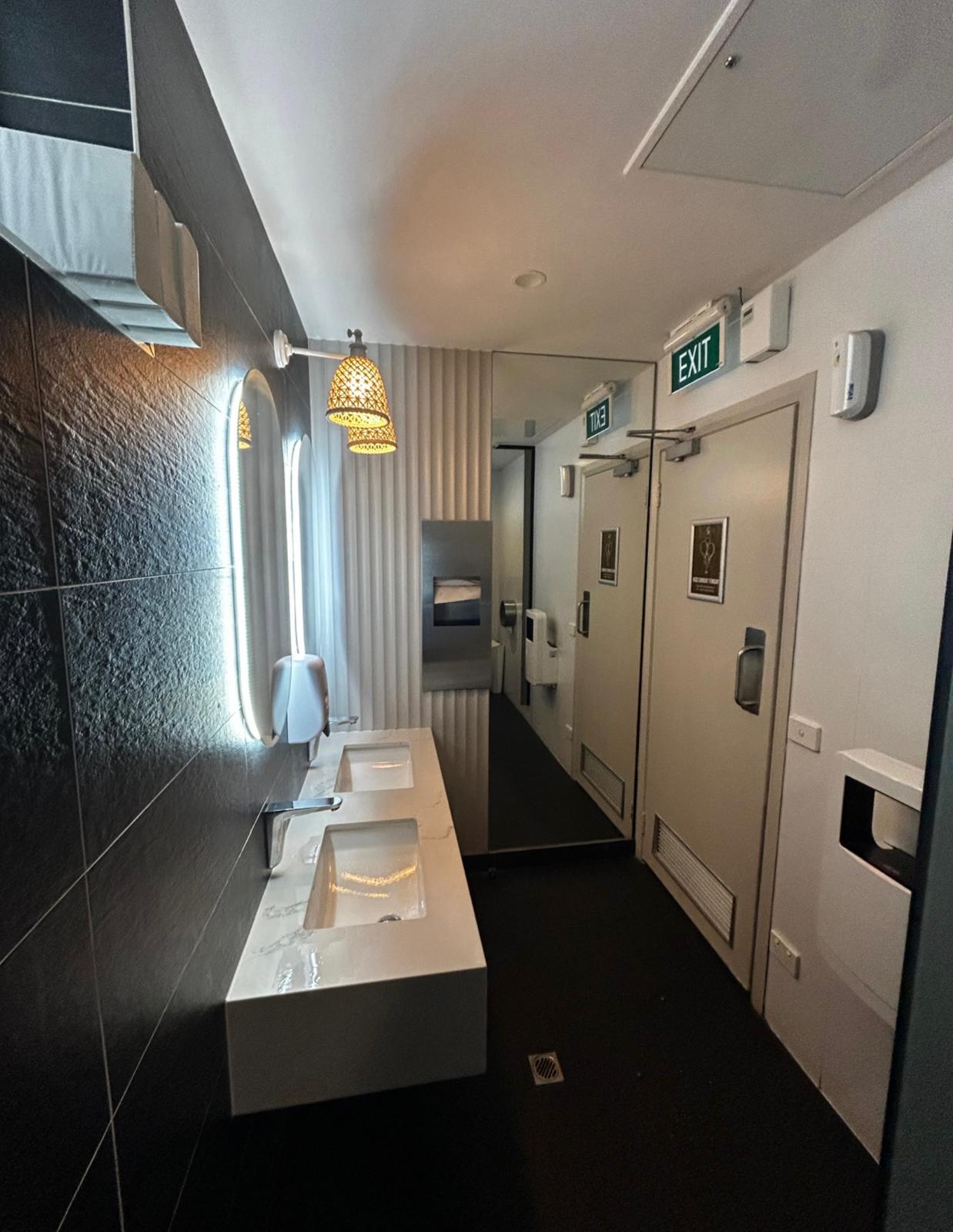
Power supply mode separates the group cleanly. The H5000 and P02 are both plug-in units running on DC 12V, at 20 W and 6.5 W respectively. The 4705 runs on 2.5 W and can be powered either by four D-cell batteries or by a 5V Type-C connection.
For a venue with accessible power, the plug-in units remove the battery replacement cycle from the maintenance plan entirely. For locations where wiring is impractical or prohibited - lift cars, guest washrooms, retrofit sites with no spare circuit - the 4705 removes the cabling requirement but adds a consumable that staff must monitor. Neither approach is objectively better; they solve different site conditions.
Physical size reinforces the same split. The H5000 stands 610 mm tall on a 180 x 180 mm footprint at 6.4 kg, so it occupies floor space and must be placed where it can draw air freely and cannot be knocked over. The P02 measures 203.5 mm tall and weighs 0.8 kg, which suits shelf or counter placement. The 4705 is 240 mm long and 50 mm wide at 0.55 kg, a format intended for wall or surface placement in confined spaces.
Noise and oil consumption: the two figures that set running cost
Published noise separates the models by design intent rather than by quality. The P02 is rated below 30 dB, the 4705 below 35 dB and the H5000 below 45 dB. In a corridor or washroom, the difference between these figures is unlikely to be noticed. In a quiet boutique, spa reception or executive floor, it is the difference between background equipment and audible equipment.
Oil consumption drives the maintenance budget. The H5000 publishes 5.4 ml per hour with a tolerance of plus or minus 10 percent; the P02 publishes 2.5 ml per hour with the same tolerance. A plus or minus 10 percent band means the delivered rate can vary within that range depending on the intensity setting, the viscosity and condition of the fragrance oil, and the operating environment. Applied arithmetically to the H5000 figure, that band spans roughly 4.9 to 5.9 ml per hour; for the P02 it spans roughly 2.25 to 2.75 ml per hour.
Buyers planning an annual oil budget should therefore model consumption at the upper end of the band rather than at the nominal figure, and should treat the tolerance as normal engineering variation rather than a defect indicator. Where a unit consumes outside its published band, the practical checks are intensity configuration, oil viscosity and oil condition - fragrance oil that is too thick or contains impurities is a documented cause of unstable atomization.
Housing materials: aluminum versus plastic
The H5000 uses an aluminum housing finished in gunmetal. The P02 and 4705 use plastic housings in white or black. Material choice tracks placement, not grade. A floor-standing unit in a public lobby is exposed to contact, cleaning and long sightlines, so a metal housing and a 6.4 kg base make sense. A bathroom or lift unit is largely out of sight and benefits more from low weight - 0.8 kg and 0.55 kg - which simplifies installation and repositioning.
One boundary deserves stating plainly: the reviewed specifications do not publish comparative durability, corrosion-resistance or service-life data by material. Material should therefore be treated as a placement and appearance decision, and any claim about relative housing lifespan should be verified with the supplier rather than inferred from the table.
Which buyer profile each specification package suits
The specifications resolve into three buyer profiles rather than three ranked products.
| Buyer profile and site condition | Unit that fits the brief | Specification reasoning | What still needs verification |
|---|---|---|---|
| Hotel lobby, mall atrium or office building lobby, 800-1300 m2, permanent power available | H5000 | Largest coverage rating, 1,000 ml reservoir, 20 W plug-in, floor-standing aluminum housing | Ceiling height, airflow, discreet power point, scent reach at the far end of the space |
| Retail store, shop or corridor cluster, 150-350 m2, quiet environment | P02 | Noise below 30 dB, 6.5 W plug-in, 300 ml capacity, 0.8 kg for shelf placement | Oil viscosity compatibility, refill interval, noise in the quietest adjacent room |
| Lift cars, washrooms or small shops, 100-150 m2, no practical power point | 4705 | Battery or 5V Type-C power at 2.5 W, 500 ml reservoir, 0.55 kg, noise below 35 dB | Battery replacement cycle and access, oil consumption measured on a sample |
A multi-site operator will often need more than one of these profiles. A hotel, for example, may specify an H5000 for the lobby, P02 units for retail and corridor zones, and 4705 units for washrooms - a common pattern in commercial scenting for hospitality and commercial scenting for retail environments, where the fragrance programme is single but the hardware is matched per zone.
Compliance, quality control and landed cost checks
Certification in this category is model-specific, not brand-wide. The three units reviewed here appear in the applicable product lists of three issued compliance documents held by the manufacturer.
| Document | Certificate number | Standard and market | Issued by |
|---|---|---|---|
| FCC | ATL20240416326 | FCC Part 15 Subpart B:2023, USA | Shenzhen ATL Testing Technology Co., Ltd., issued 24 April 2024 |
| RoHS | ATL20240416327 | RoHS Directive (EU) 2015/863, EU | Shenzhen ATL Testing Technology Co., Ltd., issued 24 April 2024 |
| EMC | ATL20240416325 | EN IEC 55014-1:2021; EN IEC 55014-2:2021; EN IEC 61000-3-2:2019/A1:2021; EN 61000-3-3:2013/A2:2021, EU | Shenzhen ATL Testing Technology Co., Ltd., issued 24 April 2024 |
Because certificates are tied to the exact model and configuration, a buyer should confirm that the documents presented cover the production model being ordered rather than a sibling variant. For Bluetooth or Wi-Fi models, buyers should additionally verify applicable wireless regulations for the destination market.
On the production side, the manufacturer states that every diffuser is checked before shipment through functional testing, atomization testing, leakage inspection, noise testing and control-function testing, followed by a 48-hour aging test and a final appearance inspection. Sampling is available: both diffuser samples and fragrance oil samples can be requested for quality verification, and the stated minimum order quantity for diffusers starts at one unit. The published production capacity is 8,000 units per month with a lead time of 25-35 days, and a one-year free warranty on spare parts.
Landed cost also has a documented trade dimension. Commercial scent diffusers are classified under HS Code 8509.80, and the applicable US import duty is published at 4.2 percent ad valorem. Buyers building a cost model for commercial scenting solutions should treat duty, freight and the fragrance oil consumption rate as separate line items rather than folding them into a unit price comparison.
Troubleshooting before replacing a unit
Most reported faults in this product category are diagnosable without replacing hardware. The documented checks follow a fixed sequence.
- If the device does not work, check the power supply, confirm the unit is switched on, verify the working-hour settings, and check whether the air pump terminal is properly connected.
- If there is no atomization, check whether the pump is operating, inspect the nozzle for blockage, and confirm that the pump tube and pipette are connected and undamaged.
- If abnormal noise occurs, check whether the pump has come loose and secure it; if the pump itself is abnormal, replace it, and inspect internal parts for looseness.
- If atomization is weak, check for pump aging, clean or replace a blocked nozzle, and confirm that the fragrance oil is not too thick and does not contain impurities.
Working-hour settings and low oil levels account for a significant share of apparent failures, and both are configuration issues rather than defects.
Waterless cold-air diffusion versus traditional water-based diffusers
All three units in this comparison operate on the same principle. Cold-air nebulizing diffusion atomizes fragrance oil into fine particles without adding water or using heat; one published technical description places the resulting particle size below 2.5 micrometres. This is the mechanism that allows a unit to diffuse oil directly, operate on a schedule, and adjust output intensity according to the space.
An ultrasonic water-based aroma diffuser works differently, mixing water with a small quantity of oil. It covers a smaller area, requires regular water refilling and tank cleaning, and is generally suited to residential or light personal use rather than continuous professional scenting.
The limitation on the waterless side is real and should be part of the buying decision: waterless cold-air units typically carry a higher initial equipment cost than ultrasonic alternatives, and they depend on fragrance oil that has been tested for viscosity and purity. A commercial project that selects a cold-air unit but supplies it with unsuitable oil is likely to experience weak or unstable atomization regardless of the hardware specification.
Market trend: specification-led purchasing is becoming normal
Two data points frame the direction of this category. The global scent marketing market is valued at approximately USD 4.1 billion in 2026 and is forecast to reach USD 7.28 billion by 2035 at a 6.6 percent compound annual growth rate. Forecasts diverge depending on how narrowly scenting is defined, but they agree on expansion rather than contraction.
A secondary industry compilation attributes an average 15-minute increase in retail dwell time to scent marketing. That figure should be treated as directional rather than definitive, since it comes from secondary aggregation rather than a controlled study, but it explains why retail and hospitality operators continue to fund ambient scenting programmes.
As the category matures, buyers are asking for specification tables rather than brand stories. Coverage in m2 and m3, published noise figures, oil consumption with a stated tolerance, weight, dimensions and model-specific certificate numbers are becoming the standard evaluation set for professional commercial scenting and large-area scenting solutions.
Future outlook
Three developments are likely to shape hardware selection over the next several years. The first is zone-level specification: rather than one diffuser type per property, operators are increasingly mixing large floor-standing units, mid-coverage plug-in units and battery units within a single fragrance programme. The second is documentation depth: as compliance expectations tighten across the EU and US markets, model-level certificates and oil documentation will carry more weight in procurement decisions.
The third is measured servicing. Once oil consumption tolerances are published and understood, maintenance planning shifts from fixed schedules to consumption-based intervals, which favours buyers who verify consumption on a sample before committing to a fleet rollout.
FAQ
What does the plus or minus 10 percent oil consumption tolerance mean in practice?
It means the delivered consumption rate can vary within a 10 percent band around the nominal figure. The H5000 publishes 5.4 ml per hour with a plus or minus 10 percent tolerance, which arithmetically spans roughly 4.9 to 5.9 ml per hour; the P02 publishes 2.5 ml per hour with the same tolerance, spanning roughly 2.25 to 2.75 ml per hour. The variation is associated with intensity settings, fragrance oil viscosity and condition, and the operating environment. Budget planning should use the upper end of the band.
Does a higher coverage rating always mean better performance?
No. The H5000 is rated for 800-1300 m2, the P02 for 150-350 m2 and the 4705 for 100-150 m2, and those ratings describe maximum conditions rather than uniform scent density. An oversized unit in a small, low-airflow room can over-scent the space, while an undersized unit in a large or partitioned space may produce weak diffusion that is only noticeable near the device. Matching the rating to actual room volume, ceiling height and airflow is more important than selecting the largest figure available.
Can a battery-operated unit replace a plug-in unit on a large site?
The 4705 is rated for 100-150 m2 with 2.5 W of power and a 500 ml reservoir, while the plug-in H5000 is rated for 800-1300 m2 with 20 W and a 1,000 ml reservoir. The battery unit covers a substantially smaller area and draws roughly one eighth of the power, so it operates in a different service tier. It is suited to elevators, washrooms and small shops where wiring is impractical, not to large open floors. The 4705 model specification also does not publish an oil consumption rate, so consumption should be measured on a sample before a service interval is planned.
Which unit suits a hotel lobby, a retail store and an elevator respectively?
Published application lists point to the H5000 for hotels, shopping malls and office building lobbies; the P02 for toilets, corridors and shops; and the 4705 for toilets and elevators. These assignments follow from coverage, power supply and physical format rather than from a ranking: the H5000 is floor-standing with the largest coverage and reservoir, the P02 is a compact plug-in unit with the lowest published noise level at below 30 dB, and the 4705 is a battery unit at 0.55 kg with a 50 mm profile.
What should be checked if a commercial scent diffuser stops atomizing?
The documented sequence is: confirm the power supply and that the unit is switched on; verify the working-hour settings; check whether the air pump terminal is properly connected; then, if there is no atomization, check pump operation, inspect the nozzle for blockage, and confirm that the pump tube and pipette are connected and undamaged. For weak atomization, check pump aging, clean or replace a blocked nozzle, and confirm the fragrance oil is not too thick and contains no impurities. Abnormal noise usually indicates a loose pump, which can be secured or replaced.
What compliance documents apply to these three models, and how should they be verified?
The H5000, P02 and 4705 all appear in the applicable product lists of an FCC certificate numbered ATL20240416326 covering FCC Part 15 Subpart B:2023 for the USA, a RoHS certificate numbered ATL20240416327 covering RoHS Directive (EU) 2015/863, and an EMC certificate numbered ATL20240416325 covering EN IEC 55014-1:2021, EN IEC 55014-2:2021, EN IEC 61000-3-2:2019/A1:2021 and EN 61000-3-3:2013/A2:2021. All three documents were issued on 24 April 2024 by Shenzhen ATL Testing Technology Co., Ltd. Buyers should confirm that the certificates and test reports reference the exact production model and configuration being ordered, and should check additional wireless regulations where Bluetooth or Wi-Fi functions are specified.
Reference document: SCENTSEA product catalog, including model specifications and customization options - https://cdn.socialarks.com/sbsp/24935/common/2026/0605/SCENTSEA%20CATALOG.pdf. Company information: https://www.scent-sea.com/.