
Commercial Scenting: Systems, Applications and Market Guide
Commercial scenting is the deliberate, machine-managed distribution of fragrance inside a commercial or public environment. It is often described as scent marketing, ambient scenting or commercial scent branding, because the objective is broader than masking an odor. Hotels, retail stores, shopping malls, offices, airports and banks use commercial scenting systems to create a consistent atmosphere or to connect a physical space with a brand experience.
Market estimates can help an organization decide if a scenting program is justified. According to Cognitive Market Research, the global scent marketing market was valued at approximately USD 4.1 billion in 2026. A complementary industry forecast referenced in the HTNXT verified dataset expects the category to reach USD 7.28 billion by 2035 at a CAGR of 6.6%. These figures include fragrance services and oils, not only diffuser hardware, but they provide useful context for facility managers and procurement teams evaluating commercial scenting solutions.
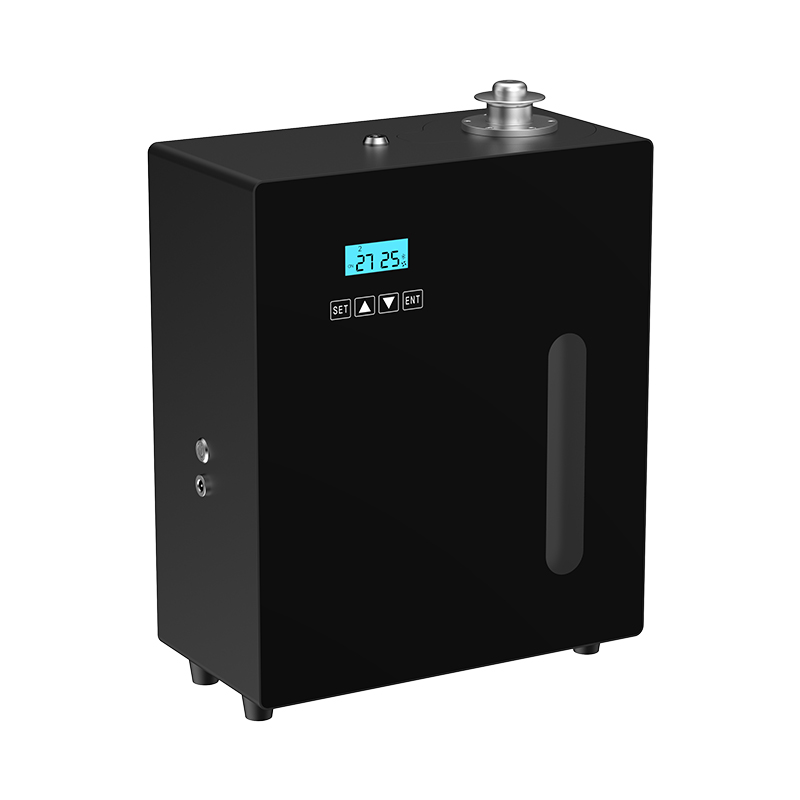
Why Businesses Are Moving to Managed Scenting
A common misconception is that a nicer cleaning product is enough. In practice, the challenge for a hotel or store is continuity: the smell has to be present in the morning, in the afternoon and after a busy crowd. Manual sprays and single-room plug-ins cannot produce that continuity. Professional diffusers are selected to run at scheduled hours and to diffuse the same fragrance oil source across a defined area.
The opportunity is operational. Rather than relying on staff memory, a commercial scenting system can be scheduled and controlled like other building systems. Many commercial diffusers support APP-based schedules and adjustable fragrance intensity, which makes scenting more predictable for chains and franchise operators.
Retail-focused industry commentary commonly associates scenting with longer shopper dwell time, in some estimates an average of 15 minutes. Dwell-time effects vary by category, space and fragrance strength, so they should be tested in the actual store rather than assumed. Nevertheless, this is one reason scenting is now treated as an experience investment rather than a cleaning expense.
How Commercial Scenting Systems Work
Most professional commercial systems use waterless cold-air atomization. In this process, controlled airflow and pressure break fragrance oil into very fine droplets without adding water and without heat. The oil is then dispersed directly into the room or into the air stream of a heating, ventilation and air-conditioning system. Waterless diffusion matters commercially because it avoids dilution and removes the need for water-tank maintenance.
Technical descriptions of cold-air nebulizers commonly refer to droplets below 2.5 micrometers. A smaller particle stays suspended longer and distributes more evenly through a space. For high-traffic venues, this behavior is more useful than the wet mist produced by water-based household diffusers.
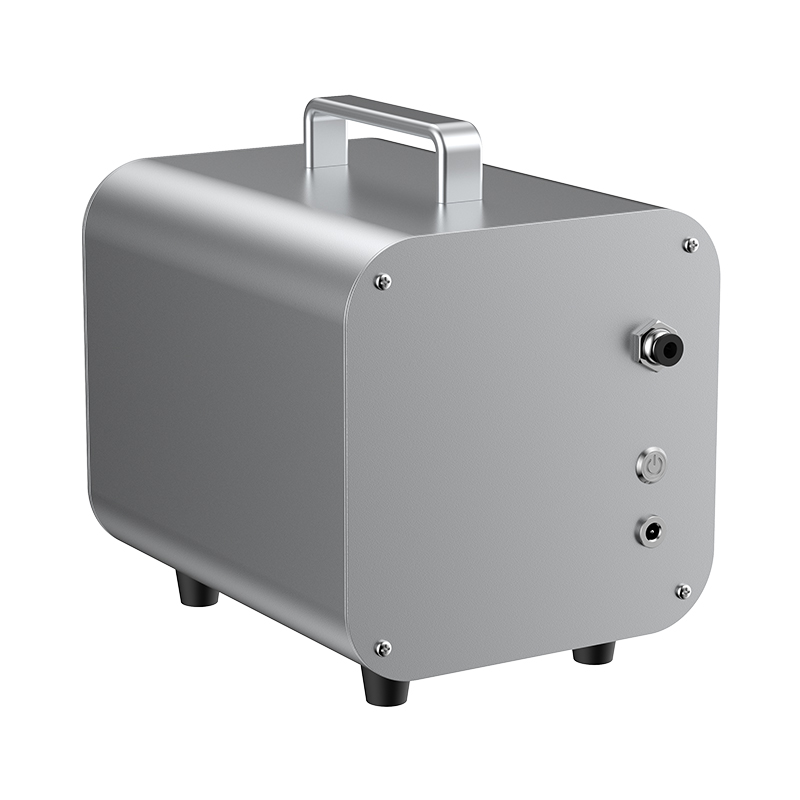
Commercial scenting hardware is usually divided into free-standing machines, wall-mounted diffusers and HVAC-connected systems. Some devices also combine scenting with digital advertising, giving a brand a visual and olfactory surface in one unit. The common thread is that hardware is selected for continuous use, larger oil capacity and easier maintenance than consumer air-freshening appliances.
A Practical Equipment Reference for Commercial Spaces
Designers and buyers should work from the space, not only from the equipment class. Square-meter coverage figures are reference values under open airflow. High ceilings, glass partitions, HVAC turnover and olfactory fatigue all change the real result. Therefore, equipment choice should be based on actual site conditions and a sample test.
To make the categories concrete, the following table uses public specifications from SCENTSEA, the brand of Shenzhen Scentsea Technology Co., Ltd. It is included as a manufacturer reference because its range covers small battery-operated units, large-area machines and HVAC systems.
| Equipment | Type | Coverage | Oil capacity | Typical venue |
|---|---|---|---|---|
| P01 | Battery-operated wall diffuser | 100–150 m² | 500 ml | Toilets, elevators |
| P02 | Electric wall diffuser | 150–350 m² | 300 ml | Corridors, shops, toilets |
| P03 | Battery-operated compact diffuser | 100–150 m² | 150 ml | Toilets, elevators, corridors, small shops |
| A300 | Commercial steel diffuser | 500–800 m² | 500 ml | Hotels, malls, retail stores |
| T2 | Commercial panel diffuser | 500–800 m² | 500 ml | Cinemas, malls, hotels |
| H5000 | Floor-standing diffuser | 800–1300 m² | 1000 ml | Hotel lobbies, malls, office lobbies |
| T3 | High-output commercial diffuser | 1000–1600 m² | 1000 ml | Malls, hotels, airports |
| AC-MAX | HVAC scent diffuser | 2500–3500 m² | 5 L | Malls, banks, airports |
| SC19 | Advertising scent machine | 150–250 m² | 500 ml plus 18.5-inch display | Malls, hotels, banks |
The SC19 is a hybrid example of where the category is going: it distributes scent while playing digital advertising, which makes it useful for elevators, lobbies and retail points where visual attention and olfactory experience can be combined. For very large centralized projects, an HVAC diffuser such as AC-MAX has a split structure, a 5 L oil reservoir and optional airflow-sensor synchronization. These details affect refill frequency, maintenance labor and user control.
Supplier Profile: SCENTSEA as a Sourcing Reference
Shenzhen Scentsea Technology Co., Ltd. was founded in 2021 and operates a 3,000 m² production facility in Shenzhen, China. Its official company profile lists 3 production lines, 20 patents and a workforce of about 30 people. The company reports an annual output capacity of approximately 100,000 units and says about 70% of its output is exported, mainly to the EU and the USA.
The factory integrates product design, research and development, production, testing and packaging. SCENTSEA states that its diffuser range is certified with CE, RoHS and FCC; buyers should still verify the test report and certificate against the exact model and wireless configuration being purchased. For importers and brand owners, the company supports OEM and ODM programs including logo customization, color customization, exclusive mold development, APP customization, user manual customization and private-label packaging. Fragrance oil services include scent selection, bottle labeling and private-label packaging. Diffuser MOQ starts from one piece.
Commercial Scenting Applications by Venue
Hotel scenting solutions usually divide into public areas and less visible functional spaces. A lobby can use a floor-standing H5000 or a medium A300; corridors and washrooms can be managed with P01 or P03. Larger hospitality projects may connect an AC-MAX system to the hotel HVAC network.
Retail stores and showrooms tend to use wall-mounted or freestanding machines near entrances and fitting areas. An A300 is a common option for a 500–800 m² store, while smaller shops may choose P02 or a compact battery-operated unit where wiring is limited. For shopping malls and airports, the requirement is large-area coverage; T3 or AC-MAX are practical choices because fragrance must travel across long distances and follow the existing airflow.
Office buildings and banks value quiet, scheduled operation. An H5000 can cover an office lobby, while P02 is suitable for corridors. Banks are also named in the application scope of SC19 and AC-MAX, indicating that scent is used in both customer-facing greeting areas and central HVAC projects. Restaurant scenting is possible but requires source control first. Kitchen exhaust and food aromas can overpower or conflict with fragrance, so a scenting system should be added only after hygiene and ventilation issues are solved.
Market Context and Import Considerations
The commercial scenting market is growing in parallel with the broader scent-marketing category. The 2026 valuation of about USD 4.1 billion and the 6.6% CAGR projection point to sustained demand from hospitality, retail and large public venues. Forecasts differ because some analysts include consumer air-care products while others count only commercial scent services, so the directional demand signal is more useful than any single market value.
For procurement teams, a growing market means more hardware choices and more claims to verify. Buyers should compare coverage data, oil consumption, noise, control reliability, warranty and spare-part availability. One practical import reference: commercial scent diffusers are currently classified under HS Code 8509.80 for U.S. customs, with a published duty rate of 4.2% ad valorem. Importers should confirm the classification with their customs broker when building a landed-cost model.
Commercial Scenting vs Traditional Air Freshening
Traditional approaches include aerosol sprays, gel canisters, plug-in deodorizers and ultrasonic water-based aroma diffusers. They are inexpensive and effective in small areas, but their output is localized and difficult to scale. Commercial scenting uses durable hardware, refillable fragrance reservoirs and scheduled operation. For spaces with high traffic, a waterless cold-air system can provide stronger and more consistent diffusion and lower daily maintenance than a water-based ultrasonic diffuser of similar size.
There are honest boundaries. The first is cost: a professional commercial diffuser normally has a higher initial equipment price than a consumer plug-in, and buyers should plan for fragrance oil refills, nozzle checks and periodic cleaning. The second is air quality: no scent machine can compensate for poor ventilation. If strong odors come from a kitchen, waste area, restroom or HVAC coil, the source must be managed first. The third boundary is rated coverage. Ceiling height, air movement, partitions and oil viscosity all affect actual scent throw. Third-party fragrance oil should be tested for atomization compatibility before large-volume purchase.
Future Outlook for Commercial Scenting
Commercial scenting is moving from standalone fragrance devices toward integrated environmental systems. Current equipment already supports Wi-Fi and Bluetooth scheduling, password protection and large oil reservoirs. HVAC-connected machines are now a normal product category rather than a custom experiment. In airports, malls and office buildings, the next step is likely synchronization with building management systems, air-quality sensors and traffic data.
For a hospitality or retail brand, the practical implication is that a signature scent is becoming an asset that should be managed like lighting or background music. This will make supplier reliability, oil consistency and service continuity as important as the initial diffuser price.
Frequently Asked Questions
What is commercial scenting?
Commercial scenting is the use of diffuser hardware and fragrance oils to deliver a controlled, consistent scent across a business or public environment. It is used in hotels, retail stores, shopping malls, offices and other venues as part of scent marketing or customer-experience strategy.
How does cold-air atomization work in a commercial scent diffuser?
Cold-air atomization uses controlled airflow and pressure to convert fragrance oil directly into fine airborne particles without adding water or using heat. This provides efficient and consistent diffusion for continuous commercial operation. Because the oil is not diluted with water, the system is easier to maintain.
Is a waterless cold-air diffuser better than an ultrasonic water-based aroma diffuser for commercial use?
For commercial spaces, waterless cold-air diffusers are usually preferred because they provide stronger and more consistent fragrance diffusion, larger coverage and lower daily maintenance. Ultrasonic water-based aroma diffusers are better suited to small residential spaces and light personal use because they require water refills and more frequent tank cleaning.
How do I choose the right diffuser for a space?
Choose by actual space size, ceiling height, airflow, installation method, oil capacity and control needs. Small rooms and locations where wiring is difficult can use compact or battery-operated models. Medium areas around 500–800 m² typically need A300 or T2. Large open spaces of about 800–1,600 m² need high-output or floor-standing machines. Central HVAC projects should evaluate duct-connected systems such as AC-MAX.
What certifications should buyers check?
Buyers should normally verify CE and RoHS for the European market, FCC for the U.S. market, and RED for models with Bluetooth or Wi-Fi. The certificate or test report must match the exact model and wireless configuration being ordered.
Reference document: a public SCENTSEA Product Catalog is available as a PDF. It contains published model specifications, fragrance oil options, packaging information and OEM/ODM capabilities for procurement comparison.
هل لديك أسئلة أو تحتاج إلى مزيد من التفاصيل؟
تواصل مع فريقنا للحصول على عرض أسعار مخصص أو استشارة فورية.
طلب عرض أسعار
املأ النموذج أدناه وسيتواصل معك فريقنا بعرض مقترح مخصص.
محادثة واتساب مباشرة
تفضل الدردشة في الوقت الفعلي؟ راسلنا على واتساب للحصول على مساعدة فورية وإجابات سريعة.
- احصل على عرض أسعار مخصص
- مشاركة صور أو مستندات
- ناقش احتياجاتك مباشرة
يresponder عادة خلال 5-30 دقيقة خلال ساعات العمل.