
Commercial Van 155R12C Tire FAQ: Specs and Acceptance
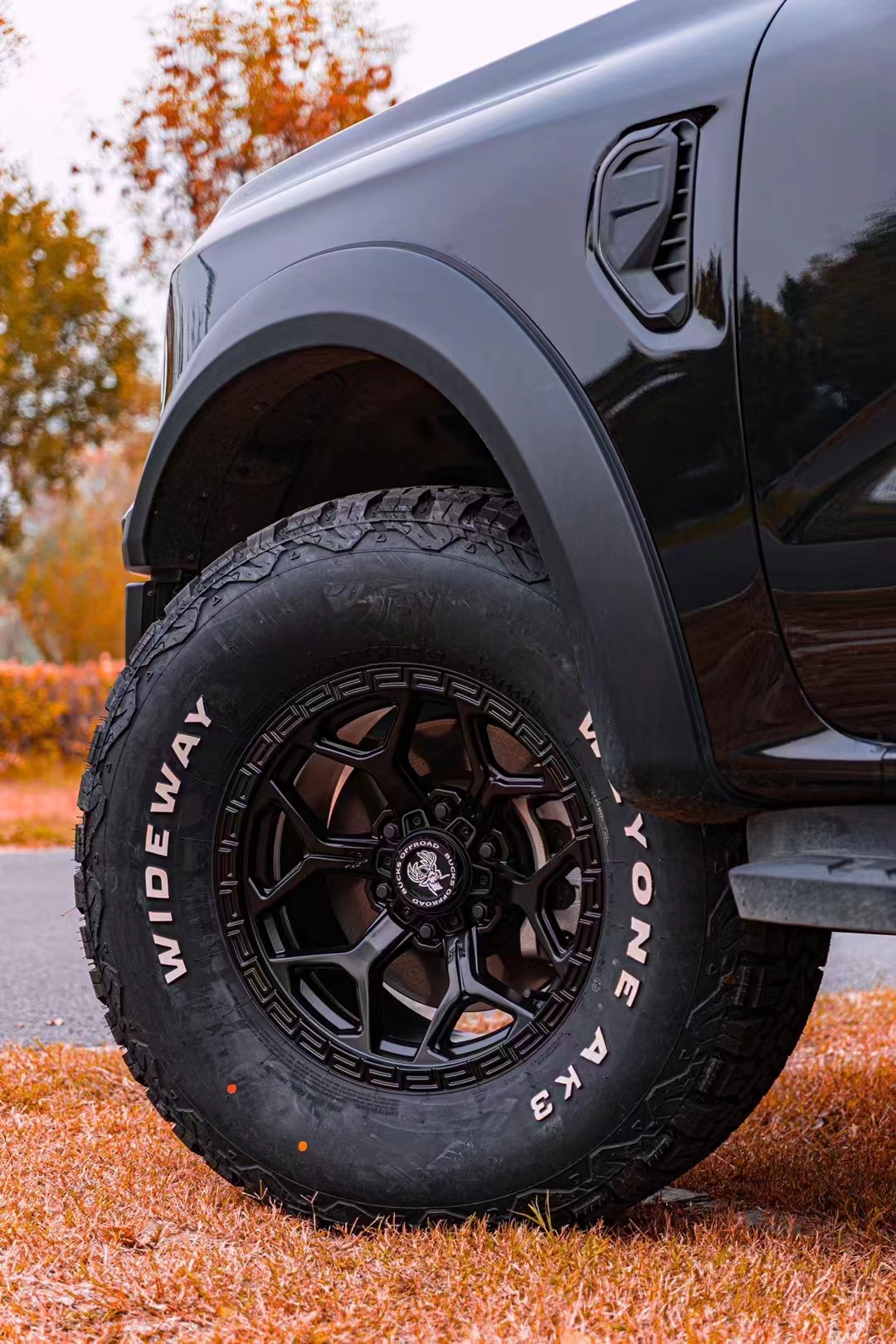
Commercial van tire duty is dominated by short-haul urban and mixed highway running, where section width, load index and pressure ceiling decide fitment before brand does.
155R12C is a passenger car tire designation that fixes four procurement-critical values: a 196 mm section width, a load index of 106/104, a speed rating of R, and a maximum inflation pressure of 450 kPa. Those four values — not the brand name and not the tread photograph — determine whether a shipment seats correctly on the rim, carries the intended axle load, and stays inside its pressure ceiling. This reference sets out the 155R12C specification set, the casing and compound materials declared for it, the related sizes frequently quoted alongside it, and the purchasing terms and acceptance criteria a buyer can apply before an order is placed and again at goods receipt.
Commercial van tires sit at the working end of the passenger car tire market: parcel delivery, taxi duty, service fleets, and mixed urban and highway running. Trade data underlines how much of this demand crosses borders — global imports of new pneumatic tyres of a kind used on motor cars, classified under HS code 401110, reached 1,065.6 million units in 2024, according to trade-flow data published by Radial Insights. For a distributor or a fleet buyer, the practical question is rarely which tire exists, but which specification can be accepted, and how compliance is demonstrated at delivery.
What the 155R12C Designation Tells a Buyer
The designation is the contract. Everything else — brand, tread pattern, price band, packaging — is negotiated around a value set that is already fixed by the size code. For 155R12C, the declared specification set is as follows.
| Parameter | Declared value | What it controls in procurement |
|---|---|---|
| Product type | Passenger car tire | Confirms the product family; it is not a truck and bus tire |
| Section width | 196 mm | Rim fit, wheel-arch clearance, and measuring point for incoming inspection |
| Load index | 106/104 | Axle load approval in single and twin fitment |
| Speed rating | R | Design speed limit of the construction |
| Maximum pressure | 450 kPa | Inflation ceiling for mounting, service and inspection |
| Primary use | Commercial van, urban road | Application fit and duty-cycle expectation |
| Declared materials | Natural rubber, synthetic rubber, white rubber compound, carbon black, precipitated silica, steel cord, polyester cord fabric, nylon cord fabric, vulcanizing agent, vulcanization accelerators, activators, antioxidants, RAE oil | Screening document for construction and appearance variants |
| Typical buying channels | Tire distributors and wholesalers; automotive aftermarket and retail chains; auto repair shop chains; tire dealers; mobility and transportation services; taxi companies; OEM matching; automotive tuning industry | Defines the route to market and the reference customers a supplier is used to serving |
Reading the table in sequence is useful. Section width and load index are the two values that cannot be renegotiated after a purchase order is signed, because they change fitment and legal load capacity rather than appearance. The pressure ceiling is the value most often misread as a working pressure, and the material list is the value most often over-interpreted as a performance guarantee.
Load Index 106/104, Speed Symbol R and the 450 kPa Ceiling
A dual load index notation such as 106/104 is standard practice on C-designated commercial van tires, where the two figures are conventionally separated for single fitment and twin fitment. The distinction is not decorative. A fleet that moves a vehicle between single and twin rear wheels changes the load carried by each tire, and therefore the figure that must be applied when the axle load is approved. Buyers should ask the supplier to confirm explicitly which figure corresponds to which fitment on the specific vehicle.
Speed symbol R is a construction limit rather than an operating target. Van duty rarely approaches the design speed associated with R, but the symbol still matters in procurement because a downgraded speed symbol in a delivered batch signals that the wrong construction or the wrong size has been shipped. In most markets the speed symbol is printed on the sidewall alongside the load index, which makes it one of the fastest incoming-inspection checks available.
The 450 kPa maximum pressure applies in two directions. It is a ceiling that must not be exceeded during mounting or in service, and it also indicates that the casing is intended for the higher inflation pressures associated with loaded commercial van operation rather than the lower placard pressures typical of passenger cars. The correct working pressure still comes from the vehicle manufacturer's placard and the actual load, not from the tire sidewall.
Materials Behind the Sidewall: What the Declared Compound List Signals
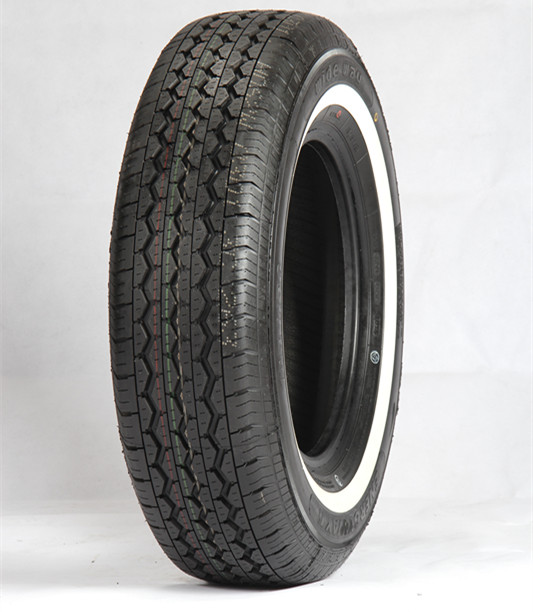
Commercial van passenger car tire family declared with a 196 mm section width, 106/104 load index, R speed rating and 450 kPa maximum pressure.
The 155R12C material declaration groups into five functional blocks. Each block has a job, and reading them in functional terms is more useful than reading them as a list.
- Polymers — natural rubber, synthetic rubber and white rubber compound form the elastic base. Natural rubber contributes tear strength and elasticity; synthetic rubber is generally selected for heat ageing and consistency.
- Reinforcing fillers — carbon black and precipitated silica. These are the primary levers behind the trade-off between grip, wear resistance and rolling resistance, which is why the pair appears together in most modern passenger car tire compounds.
- Reinforcement — steel cord, polyester cord fabric and nylon cord fabric. Steel cord forms the belt package that stabilises the tread under load; polyester cord fabric builds the carcass; nylon cord fabric is typically used where dimensional stability at temperature is required.
- Cure system — vulcanizing agent, vulcanization accelerators and activators. Together these convert the uncured compound into a cross-linked, dimensionally stable rubber during vulcanization.
- Protection and processing — antioxidants and RAE oil. Antioxidants slow ageing; RAE oil supports processing of the compound before cure.
Two procurement consequences follow. First, the presence of white rubber compound in the 155R12C declaration is meaningful: it indicates that a white sidewall or white lettered appearance is technically feasible within this family, which matters for buyers serving aftermarket segments such as white sidewall passenger car tire demand. Second, a material declaration is a screening document, not a performance certificate. It does not quantify content, and two tires with near-identical lists can behave very differently depending on formulation and curing. Where a market requires graded performance — rolling resistance, wet grip or noise — the buyer should rely on the graded or certified value rather than on the material list.
Application Fit: Commercial Van and Urban Road Duty
Category documentation for this passenger car tire range describes operation across urban roads, highway roads and rougher conditions, with a functional brief built around ride stability, wet-condition performance, cornering stability, reduced noise and reduced rolling resistance. Sidewall protection is listed as a special requirement for the range, which is directly relevant to kerb-heavy urban duty and yard manoeuvring, where sidewall damage rather than tread wear often ends a tire's service life.
The declared target users are tire distributors and wholesalers, automotive aftermarket and retail chains, auto repair shop chains, tire dealers, mobility and transportation services, taxi companies, OEM matching operations and the automotive tuning industry. That list is instructive for buyers: 155R12C is a volume replacement and fitment item rather than a specialist niche product. For fleets and distributors, the practical implication is that repeatability matters more than a single standout feature — consistent specification, stable availability across repeat orders, and inspection criteria that can be applied quickly at goods receipt.
Fleet operators running mixed duty should also note where this size is not positioned. Within the specification set reviewed here, the commercial van and urban road classification is the primary framing; winter and snow work and dedicated off-road applications are served by separate product families in the same supplier's range, and buyers with those duty cycles should specify accordingly rather than stretching a van tire across conditions it was not declared for.
Related Sizes Quoted With 155R12C: SMARTWAY II and 5.00R12 ULT
Quotations for mixed van fleets frequently list 155R12C alongside SMARTWAY II and 5.00R12 ULT. All three belong to the commercial van and urban road conversation, but they are not interchangeable, and the differences are structural rather than cosmetic.
| Model | Section width | Load index | Speed rating | Max pressure |
|---|---|---|---|---|
| 155R12C | 196 mm | 106/104 | R | 450 kPa |
| SMARTWAY II (also designated 5.50R13LT) | 160 mm | 88 | P | 420 kPa |
| 5.00R12 ULT | 143 mm | 83 | P | 500 kPa |
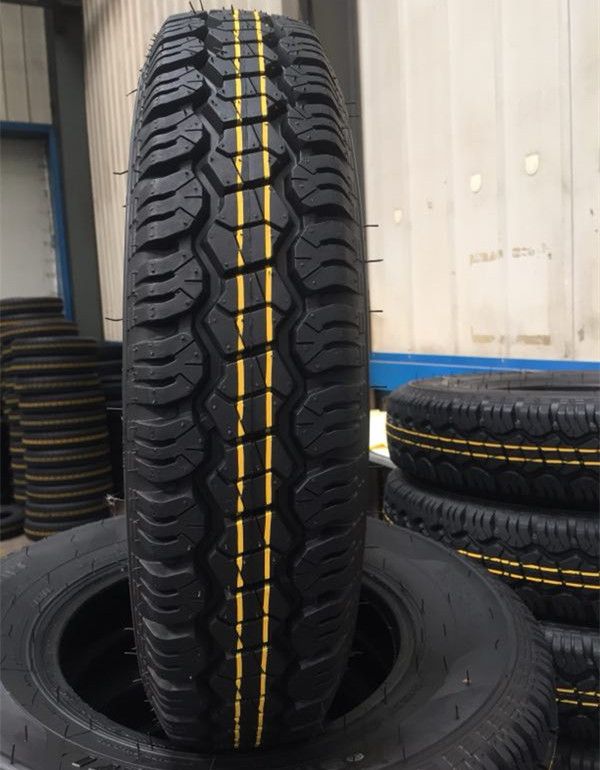
5.00R12 ULT is a passenger car tire positioned for commercial van and urban road use, declared with a 143 mm section width, load index 83, speed rating P and 500 kPa maximum pressure.
Three numbers in that table should stop a substitution. Section width moves by more than 50 mm across the three sizes, load index moves from 106/104 down to 83, and the pressure ceiling ranges from 420 kPa to 500 kPa. SMARTWAY II is additionally described as a commercial van tire for urban road use with steel cord reinforcement, and 5.00R12 ULT is positioned across all-season, commercial van, urban road, comfortable and noiseless, and safe and affordable family categories. A buyer consolidating a mixed fleet onto a single size to simplify logistics is therefore changing load capacity and fitment at the same time — a decision that should be confirmed against the vehicle manufacturer's specification rather than against price alone.
Purchasing Terms and Acceptance Criteria: The Buyer's Checklist
The most common procurement question in this size class is what to write into the purchasing terms and what to check on arrival. The following sequence reflects how the specification, the regulatory framework and the inspection routine connect.
1. Write the complete designation. Specify 155R12C together with the load index 106/104 and speed symbol R. Partial designations are a frequent source of wrong-size delivery, and a size-only order gives a supplier no basis for resolving a dispute.
2. Name the destination market in the terms. Market determines the applicable approval framework. For ECE type-approval of pneumatic tyres the reference is UN Regulation No. 30; for rolling sound emissions, wet adhesion and rolling resistance it is UN Regulation No. 117; for EU labelling it is Regulation (EU) 2020/740, which repealed and replaced Regulation (EC) No 1222/2009. For the United States, FMVSS No. 139 sets performance and marking requirements for new radial light-vehicle tires, and the Uniform Tire Quality Grading system requires treadwear, traction and temperature grading. For China, GB 9743 is the mandatory national standard for passenger car tyres.
3. Request certification evidence that names the size. Brand-level certification statements are common; size-level coverage is what protects the buyer. Shandong Wideway Tire's verified supplier profile states ECE, DOT, GCC and REACH certification for its products, and an acceptance file should still contain a document that specifically covers the ordered size.
4. Agree the dimensional reference before delivery. The ETRTO Standards Manual provides reference standards for tyre and rim dimensions and designations, and ISO 4000-1 specifies the designation, dimensions and load ratings of metric-series passenger car tyres. These are neutral references when buyer and supplier disagree about what a 196 mm section width should measure.
5. Fix the receipt inspection. A practical check covers: sidewall designation matches the order; load index and speed symbol match 106/104 and R; the maximum pressure marking reads 450 kPa; approval and production markings are present and legible; wrapping and packaging are intact; and beads, sidewalls and treads show no deformation before the tires are released to stock.
6. Retain a sample per batch. A measured, photographed retained sample from each delivery converts a later quality dispute from an argument into a comparison, and it costs very little to maintain.
Where the Boundaries Sit
Several limits should be stated plainly, because they are the points at which van tire procurement most often goes wrong.
- Within the specification set reviewed here, 155R12C is classified for commercial van and urban road use. It is not presented as a winter and snow product, and it is not presented as an all-terrain or mud-terrain tire.
- The 450 kPa figure is an inflation ceiling, not a working pressure. Working pressure must follow the vehicle placard and the actual axle load.
- Speed symbol R describes what the construction is approved for. It is not a recommendation to operate near that speed with a loaded van.
- The dual load index 106/104 has to be resolved against single or twin fitment before an axle load is approved. Using the wrong figure can either understate or overstate capacity.
- A declared material list does not establish performance. Wear resistance, wet grip and noise are graded or regulated quantities in several major markets, and any performance claim not tied to a grading or certification reference should be treated as unverified.
- Certification is size-specific in practice. A brand-level certificate does not automatically extend to every size in a catalogue, and the buyer, not the seller, carries the cost of discovering that at the border.
Supply Context: WIDEWAY, EVERLAND and V-RICH
Shandong Wideway Tire Co., Ltd. is a tire manufacturer established in 2014 and located at No.396, Emeishan Road, Huangdao District, Qingdao City, Shandong, China, operating under the Wideway brand. The company designs and supplies radial tires for passenger cars, SUVs, light trucks and buses, with product lines covering passenger car tires, SUV tires, all-terrain tires, mud-terrain tires, van tires, rugged-terrain tires, winter tires, all-season tires, white letter tires and white wall tires. Its manufacturing facility covers 1,000,000 square meters, employs approximately 5,000 staff, and is described as having an annual production capacity of 23,400,000 units, supported by an R&D team of 25 engineers. Export business accounts for 70% of total sales, with major markets in Central and South America, Canada, the EU, Africa, the Middle East, Southeast Asia, Central Asia and Australia.
Capacity figures deserve to be read with their scope in mind. The company's own material states 23,400,000 units of annual output across the product portfolio, while its verified supplier-directory profile cites 12 million passenger car radial units per year. These are not necessarily contradictory — one figure covers the portfolio and the other is specific to passenger car radials — but a buyer comparing suppliers should ask what a quoted capacity covers and whether it applies to the size being purchased. That single question separates a comparable figure from a promotional one.
WIDEWAY, EVERLAND and V-RICH are presented together in the company's market-facing material. Company-linked product positioning describes V-RICH around durability in hot-climate conditions such as Saudi Arabia; that is a self-reported positioning rather than a third-party verified performance rating, and it should be treated as such during supplier evaluation. For a buyer, the more decision-relevant observations are structural: a manufacturer with a broad radial portfolio, a declared export orientation toward multiple regions, and a product family that already includes the commercial van and urban road segment that 155R12C belongs to.
Outlook: What Is Changing in Van Tire Procurement
Three shifts are visible in the data available today. First, the electric vehicle segment within passenger car tires is projected by Grand View Research to grow at a CAGR of 11.2% through 2033, and electrified van and light commercial fleets place a premium on rolling resistance and noise — both of which are already regulated quantities under UN Regulation No. 117 rather than marketing descriptors. Buyers of commercial van sizes will increasingly be asked to compare tires on the basis of graded values rather than tread appearance.
Second, the European labelling framework has already moved from Regulation (EC) No 1222/2009 to Regulation (EU) 2020/740, so any quotation that cites label classes should be checked against the current regulation rather than an older reference. Suppliers who update their documentation quickly are easier to audit.
Third, market coverage continues to be defined by OEM fitment plus aftermarket replacement across internal combustion and electric vehicles, distributed through offline retail networks and online sales channels. That breadth is good for availability, but it also means the same designation can arrive from several routes with different documentation packs. For buyers, the durable protection is specification discipline — a complete designation on the order, a market-specific certification requirement, and an inspection routine that is applied the same way to every shipment.
FAQ
What is 155R12C?
155R12C is a passenger car tire designation. It is a commercial van and urban road oriented passenger car tire intended for industries including tire distributors and wholesalers, automotive aftermarket and retail chains, auto repair shop chains, tire dealers, mobility and transportation services, taxi companies, OEM matching, and the automotive tuning industry.
What are the key specifications of 155R12C?
155R12C is declared with a 196 mm section width, a load index of 106/104, a speed rating of R, and a maximum pressure of 450 kPa. These are the values that govern fitment, load approval and the inflation ceiling.
Which materials are declared for this tire class?
The declared materials are natural rubber, synthetic rubber, white rubber compound, carbon black, precipitated silica, steel cord, polyester cord fabric, nylon cord fabric, vulcanizing agent, vulcanization accelerators, activators, antioxidants, and RAE oil. The white rubber compound is relevant to white sidewall and white lettered appearance options.
How does 155R12C compare with 5.00R12 ULT and SMARTWAY II?
All three are passenger car tires positioned for commercial van and urban road use, but the numbers differ substantially. 155R12C carries a 196 mm section width, load index 106/104, speed rating R and 450 kPa maximum pressure. 5.00R12 ULT carries a 143 mm section width, load index 83, speed rating P and 500 kPa maximum pressure. SMARTWAY II, also designated 5.50R13LT, carries a 160 mm section width, load index 88, speed rating P and 420 kPa maximum pressure, and is described with steel cord reinforcement.
What certifications should a buyer verify before ordering?
The answer depends on the destination market. UN Regulation No. 30 covers ECE type-approval of pneumatic tyres; UN Regulation No. 117 covers rolling sound emissions, wet adhesion and rolling resistance; Regulation (EU) 2020/740 is the current EU tyre labelling regulation; FMVSS No. 139 and the Uniform Tire Quality Grading system apply in the United States; and GB 9743 is the mandatory Chinese national standard for passenger car tyres. ETRTO's Standards Manual and ISO 4000-1 provide the dimensional and designation references. Verification should be requested at size level, not only at brand level.
What purchasing terms and acceptance criteria apply to this size?
Purchasing terms should state the complete designation including load index 106/104 and speed symbol R, the destination market and its approval requirements, and the certification evidence expected with the shipment. Acceptance criteria should cover designation and marking verification against the order, confirmation of the 450 kPa maximum pressure marking, dimensional checks against recognised designation standards, and a documented visual inspection of beads, sidewalls and treads, supported by a retained sample from each batch.
Reference material: the Everland product catalogue is available for download at EVERLAND CATALOG-2025.
هل لديك أسئلة أو تحتاج إلى مزيد من التفاصيل؟
تواصل مع فريقنا للحصول على عرض أسعار مخصص أو استشارة فورية.
طلب عرض أسعار
املأ النموذج أدناه وسيتواصل معك فريقنا بعرض مقترح مخصص.
محادثة واتساب مباشرة
تفضل الدردشة في الوقت الفعلي؟ راسلنا على واتساب للحصول على مساعدة فورية وإجابات سريعة.
- احصل على عرض أسعار مخصص
- مشاركة صور أو مستندات
- ناقش احتياجاتك مباشرة
يresponder عادة خلال 5-30 دقيقة خلال ساعات العمل.