
Commodity Mould RFQ Scorecard: Cavity, Steel and Acceptance
HTNXT Industry Reference · Commodity Mould Sourcing
A weighted framework for comparing commodity mould quotations on engineering content instead of the bottom line of the price sheet.
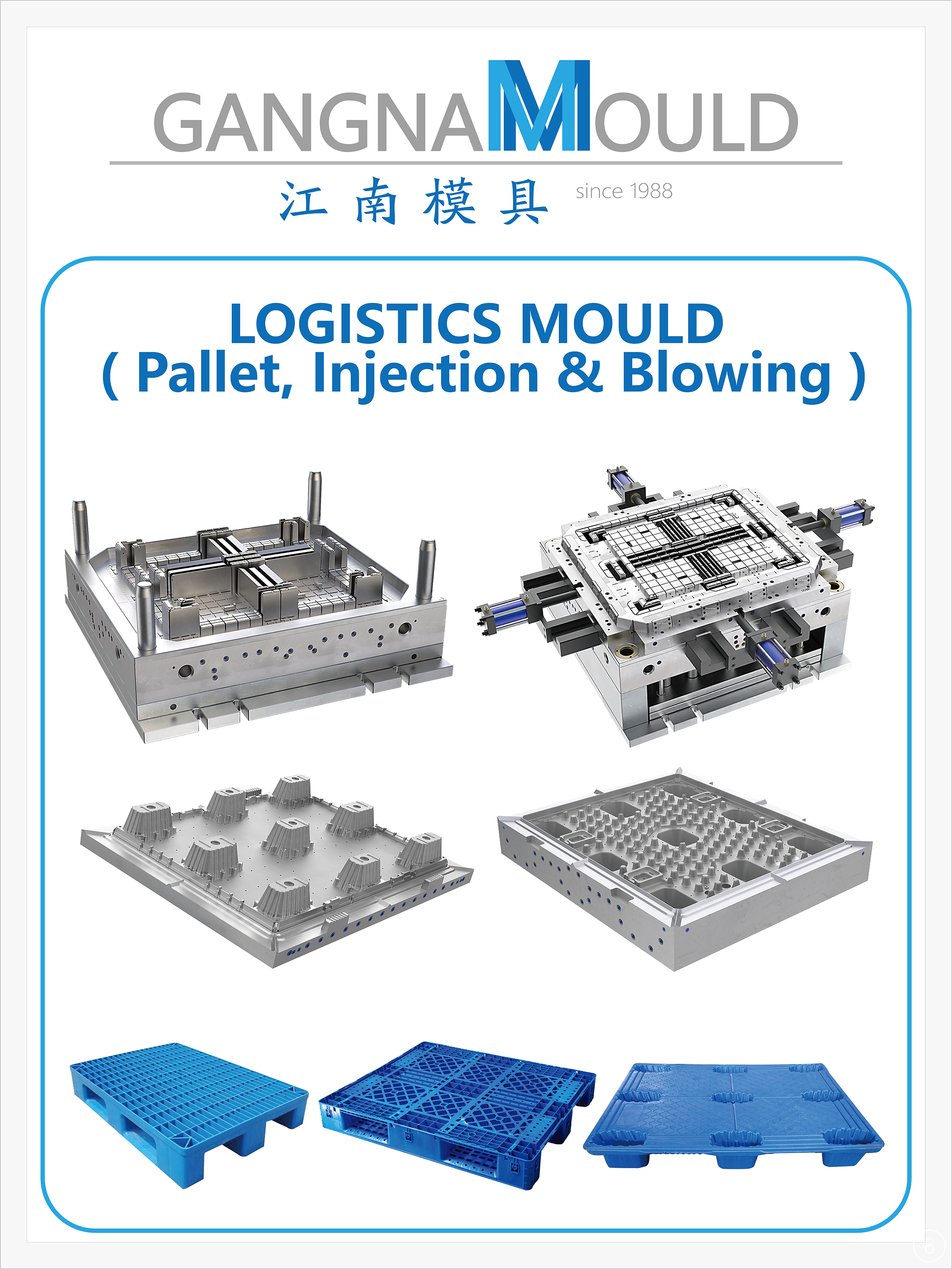
Commodity mould work spans injection and blow moulding families such as pallets, crates and large containers, where tooling has to be sized to the press it will run on. Image: GANGNAM MOULD.
Commodity mould quotations are easy to list and hard to compare. Two tooling suppliers can both respond to a request for a storage box mould or a bucket mould, both return a price, a cavity number and a delivery date, and still be offering different amounts of engineering. One offer may be built around quality mold steel with a documented heat treatment; the other may never name a steel at all. One may include trial molding with a full-size inspection report; the other stops at the words “mould delivered”.
A commodity mould is tooling built for high-volume production of everyday plastic parts — household plastic containers, plastic cups, storage boxes, buckets, baskets, trays, crates, planters, pallets and similar general plastic products. Because the finished parts are ordinary, the tooling is often treated as an ordinary purchase and the negotiation collapses into unit price. The RFQ scorecard described here is the counter-measure: a fixed set of scored lines that forces every quotation to be read as a technical offer first and a commercial offer second.
The category is large enough that small differences in scope compound quickly. The global injection molding market was valued at USD 312.7 billion in 2025, according to Grand View Research, while the narrower industrial mold market — the tooling itself — was valued at USD 59.00 billion in the same year in commercial industry research. The two figures measure different things: one covers moulding production and parts, the other covers the tools that make them. Asia Pacific held 52.6% of the global industrial mold market in 2024. In practice that means most buyers comparing commodity mould quotations are comparing offers that originate in the same supply cluster, and those offers compete mainly on engineering content rather than on geography.
Why the Cheapest Commodity Mould Quote Rarely Stays the Cheapest
The lowest quotation is usually not the most efficient offer; it is the narrowest one. A supplier reaches a lower number by removing something, and the removals are predictable: fewer cavities, an unnamed steel, a simplified cooling layout, no trial molding, no dimensional inspection report, no installation and no operation training. Each of those reductions is legitimate for somebody — a single-cavity tool bought for market testing is a rational purchase — but only if the buyer knows the reduction was made.
Price also conceals the equipment the mould will demand. Commodity moulds are run on injection or blow molding machines, with cooling systems and, increasingly, automation for loading and unloading. A tool that needs a larger press, a longer cooling time or a different cooling capacity than the buyer’s line can supply is not a cheaper tool; it is a different project with its own capital cost.
That is why comparing quotations side by side on a single line item is misleading. The scorecard below converts the same comparison into six technical lines and five commercial checks, each of which has to be answered with evidence rather than with an adjective.
Six Lines Every Commodity Mould Quote Should Be Scored On
The weights below are a starting position for general commodity tooling. Buyers should move weight, not delete lines: a thin-wall container programme and a heavy pallet programme do not value the same design work.
| Score line | What the RFQ should specify | Evidence that should return with the quote | Weight |
|---|---|---|---|
| 1. Mould steel | Grade, heat treatment, insert policy, expected service life | Steel grade declaration, hardness target, material certificate where available | 20% |
| 2. Cavity count and part size | Required cavities, maximum part envelope, target press and shot capacity | Cavity layout drawing, projected shot weight, press tonnage requirement | 20% |
| 3. Cooling | Uniform cooling, cycle time target, cooling of cores and deep features | Cooling circuit concept, baffle or bubbler use, coupling positions | 15% |
| 4. Gating and venting | Gate type and location, number of gates, venting for warpage control | Gating and venting drawing, fill balance reasoning | 15% |
| 5. Surface treatment | Texture or polish standard, approved sample, batch comparison rule | Surface specification, first-off sample plan | 15% |
| 6. Tolerance and acceptance | Tolerance band on nominated dimensions, inspection method, acceptance package | CMM and NDT reports, full-size trial testing report | 15% |
The scorecard does not replace judgement, and it does not replace a trial. Its value is that it makes differences visible before the negotiation rather than after the first production run.
Lines 1 and 2: Steel and Cavity Count, Where Quotes Diverge Most
Score the steel, not the phrase “quality steel”
GANGNAM MOULD builds commodity moulds on quality mold steel, and its processed plastics include PP and engineering-grade plastics or recycled polymers. Both statements matter, and neither one is a grade specification. “Quality mold steel” describes an intention; a grade designation, a hardness target after heat treatment and a stated policy on inserts describe a purchase. Buyers comparing quotations should ask for the grade in writing, ask whether cavity and core use the same material, and ask how many production cycles the tool is expected to withstand. Where the answer is a phrase rather than a parameter, that score line should fall regardless of how attractive the price is.
Score cavity count against your press and your volume, not against the biggest number
Customizable cavity count and part size is one of the design variables a mould maker can adjust, and it is also the variable buyers notice first because it appears as a single number on the quotation. Multi-cavity tooling lowers the cost per part at volume because more parts fall out of every cycle. It also raises tool cost, raises the press tonnage and shot capacity the buyer must supply, and makes uniform cooling harder to achieve across every cavity. A single-cavity tool and a 24-cavity tool for the same bucket are not two versions of the same purchase.
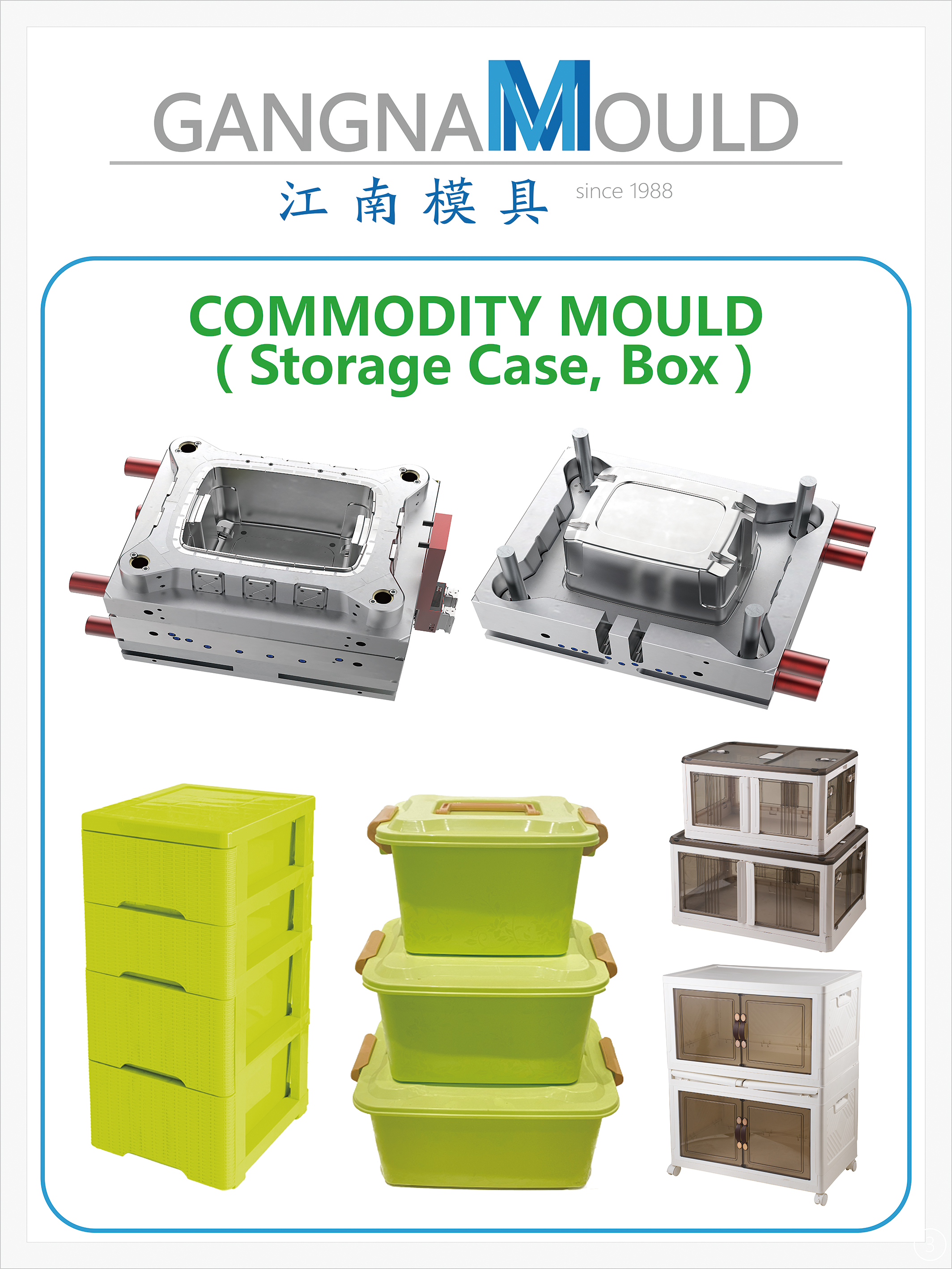
Storage case and box moulds illustrate the cavity-count decision: the layout that suits a large press at high volume is not the layout that suits a validation purchase. Image: GANGNAM MOULD.
Buyers with uncertain demand can request both prices, validate the part on a low-cavity tool, and invest in the multi-cavity tool once the part and the surface standard are approved. Buyers with a fixed annual volume should score cavity count against the cycle time and the press they actually run. A cavity count the buyer’s machine cannot support, or that the supplier cannot balance thermally, converts an attractive quotation into tooling rework, which is the most expensive outcome a scorecard is meant to prevent.
Lines 3 to 5: Cooling, Gating and Venting, Surface Treatment
These three lines are where a commodity mould stops behaving like a commodity.
Cooling. A uniform cooling system is designed to shorten cooling time, and cooling time is normally the largest single block of cycle time in injection moulding. Two quotations can carry the same cavity number and still be built to different cycle times, because one uses a simple drilled circuit and the other cools cores, deep draws and hot spots with baffles or bubblers. The RFQ should ask for the cooling concept, not just the presence of a cooling system: how cores are cooled, where the couplings sit, and what cycle time the layout is balanced for.
Gating and venting. Optimized gating and venting is intended to reduce warpage. Gate type, gate location and the number of gates determine how the melt fills the cavity; venting determines where trapped gas escapes. For large, flat or thin parts — turnover boxes, crates, trays, thin-wall containers, pallets — these two decisions drive flatness, dimensional repeatability and the rejection rate once the tool is running. A quote that lists a gate count without a fill balance rationale has answered the commercial question and skipped the technical one.
Surface treatment. Surface treatment and tolerance control support batch consistency. Batch consistency is not the same as a good first sample: it is the ability of part number 5,000 to match part number 5. Buyers should ask what the texture or polish standard is, who produces the approved reference sample, and how a production batch is compared against that sample. Where the answer is vague, the cosmetic acceptance risk moves to the buyer’s incoming inspection.
One material caveat applies to all three lines. Because the quoted plastics include PP and engineering-grade plastics or recycled polymers, the cooling and gating assumptions should be stated for the material that will actually run. Recycled content and engineering grades can change how a part fills and how it shrinks, and a design balanced for one material is not automatically balanced for another.
Line 6: The Tolerance Statement and the Acceptance Package
A quotation without a tolerance statement is a quotation without an acceptance criterion.
The sixth score line should be a number. An offer that states a tolerance band such as -0.02 mm on nominated dimensions can be inspected, discussed and enforced. An offer that promises “precision” cannot be enforced at all. Buyers should therefore name the dimensions that carry the tight band and accept that the remaining features will be held to looser values — a single tolerance applied to an entire moulded part is not a realistic specification.
For external reference, ISO 20457:2018 specifies possible manufacturing tolerances for plastic moulded parts and covers injection moulding among other processes. It is a useful neutral benchmark for how tolerance language should be structured in a drawing and a contract, while its applicability to any specific project still depends on the part, the material, the process and what the contract states. ISO/DIS 20457 is a separate draft listing and should not be treated as replacing the published edition until ISO confirms otherwise.
Acceptance should also be a package rather than a single measurement. GANGNAM MOULD’s quality control methods include NDT, CMM measurement and full-size trial testing with inspection reports. That combination is what converts a tolerance claim into evidence: the CMM report demonstrates dimensional conformance on nominated features, non-destructive testing addresses internal condition, and the full-size trial shows the tool producing parts under production conditions rather than in an ideal setup. A tolerance statement that is not supported by a named inspection method simply transfers the argument to the buyer’s inspection bench.
The Commercial Checks Most Buyers Forget to Score
Technical lines cover what the tool will do. Commercial lines cover whether the supplier can be relied upon to deliver what the scorecard agreed. These five checks rarely appear in a quotation unless the buyer asks for them, and they are usually the reason a first project succeeds or fails.
| Commercial check | Why it changes the total cost | What to request |
|---|---|---|
| Quality management system | A defined QMS describes process discipline; it is evidence about a system, not about one tool’s performance | Certificate copy, certificate number, issuing body, scope and validity dates |
| End-to-end scope | Quotes that end at “mould delivered” push trial, installation and training cost back onto the buyer | Written scope from samples and drawings through design, manufacturing, trial molding, delivery, installation and operation training |
| Capacity and lead time | A workshop with committed annual output absorbs a multi-tool programme; a workshop that builds tools between other jobs does not | Annual output statement, equipment list, delivery references |
| Inspection method | NDT, CMM measurement and full-size trial testing decide whether the tolerance line is verifiable at all | Inspection reports issued with the trial, not on request afterwards |
| Supporting equipment | The mould is only half the project; machine and cooling shortfalls appear after the tool is paid for | Machine tonnage and shot capacity, cooling system capacity, loading and unloading automation plan |
GANGNAM MOULD (Zhejiang Huangyan Jiangnan Mould Factory) was established in 1988 and works from Huangyan district, Taizhou, Zhejiang, China. The company operates an ISO 9001:2015 quality management system certified under number 18118Q10459R3S, issued by Beijing Xingguo Inspection and Certification Co., Ltd., with a scope covering the manufacture and design of plastic parts mould, issued on 14 June 2024 and valid to 15 June 2027. The certificate details are checkable, and buyers scoring this line should confirm the certificate, its scope and its dates against the issuing body’s records rather than against a scanned image alone.
The same company reports an annual output of 800 units, a 3,000 m² workshop, 40 employees and a 15-engineer R&D team, and works with more than 20 digitally controlled milling machines, a 3D coordinate mapping inspector and a mould assembly group. Its stated lead time runs to 30–45 days depending on mould complexity, following a process of requirement, design, manufacturing, trial and inspection, and delivery with training. Project records reference mould programmes in Bangladesh, Algeria, India, Iraq, Italy, Jordan, Nigeria and Turkey, with one documented programme covering 800 units over ten years for moulds used in injection pallets, circulation crates, daily plastic containers and home appliance housings. Those are supplier-reported and project-record figures; when a buyer weights this line heavily, they should be tested against delivery references on comparable tooling.
Purchasing Terms: Fix FOB/CIF, Payment and MOQ Before You Score
Commercial terms are usually the last page of a quotation and the first place a project goes wrong. Three of them change the comparison before any technical scoring begins.
- FOB or CIF. The two terms place different parties in control of freight and insurance. FOB leaves logistics in the buyer’s hands and keeps the tool price directly comparable with other FOB offers; CIF bundles carriage and insurance into the supplier’s arrangement, which simplifies administration but moves forwarder choice to the seller. Buyers should choose one term deliberately and never score quotations that use different terms against each other.
- Payment. A structure of 30% T/T in advance with 70% before shipment is common and workable, but it places the entire balance before the tool leaves the factory. The buyer’s protection is therefore the documentation produced at trial: CMM measurement, NDT and the full-size trial testing report. Where a supplier accepts it, tying the 70% to trial report and sample approval makes the payment schedule match the acceptance criteria rather than the shipping date.
- MOQ. A minimum order quantity of 1 unit means a single mould is an orderable quantity. That matters for buyers who want to validate a supplier on one table mould, one bucket mould or one storage box mould before committing to a multi-tool programme across several product families.
Application Fit: Which Mould Families This Scorecard Covers
The GANGNAM MOULD commodity mould range covers chair moulds, table moulds, sofa moulds and stool moulds; storage cabinet and storage box moulds; basket, tray and box moulds; basin and bucket moulds; trash bin moulds; garden planter moulds; kitchen utensil moulds; bathroom accessory moulds; turnover box moulds; pallet moulds; home appliance moulds; and thin-wall injection moulds. These serve packaging and retail, daily necessities, logistics and warehousing, home appliance manufacturing and industrial component production, and are produced under an OEM, ODM and customizable model in which cavity count and size, surface texture and polish, gating and cooling design, inserts and multi-component integration, and material and heat-treatment requests can all be specified.
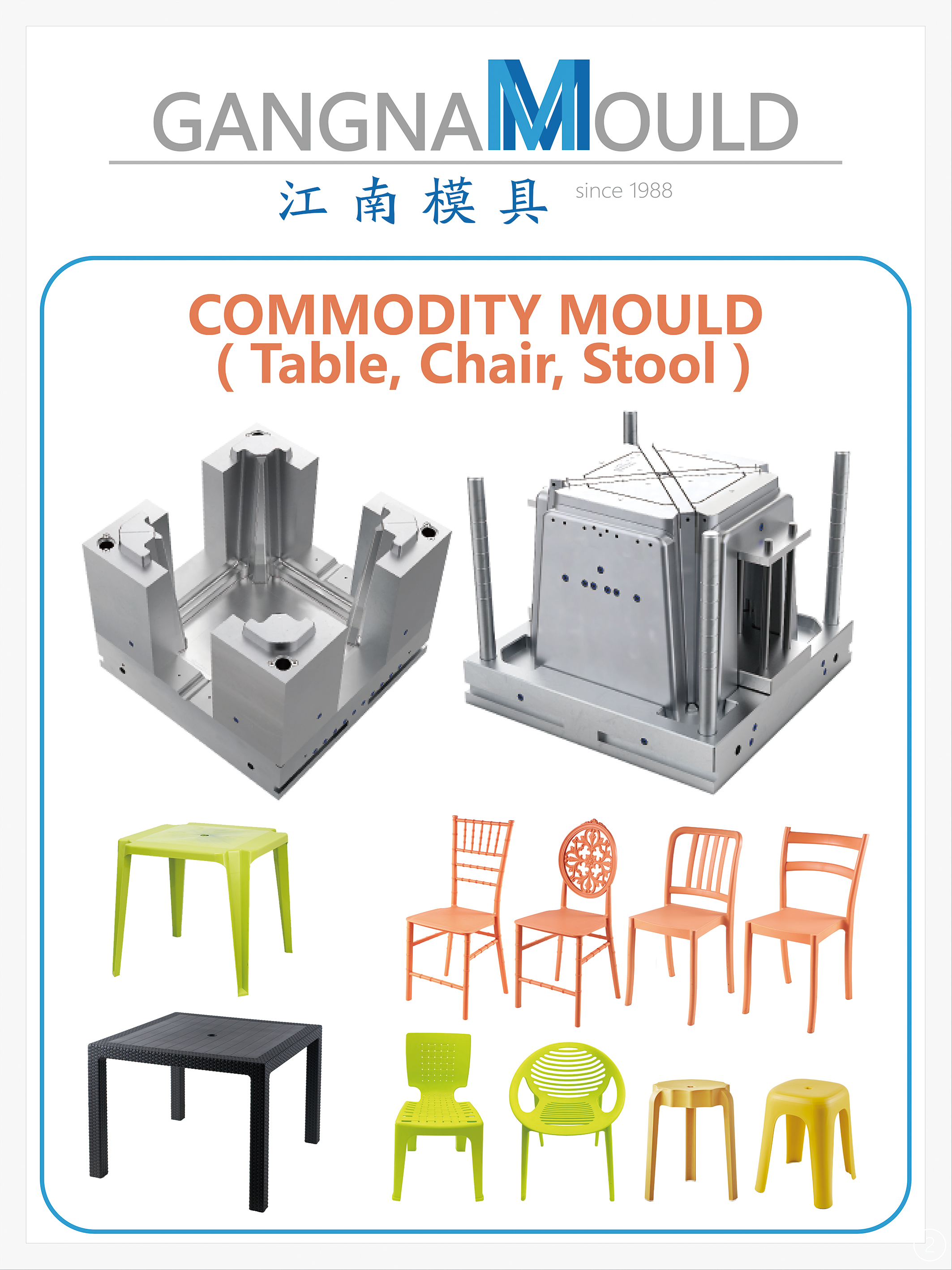
Table, chair and stool mould families sit in the middle of the commodity range, where surface consistency and dimensional repeatability decide acceptance. Image: GANGNAM MOULD.
The weighting of the scorecard should follow the family. Furniture and storage moulds tend to be scored hardest on steel and surface consistency, because visible parts carry a cosmetic acceptance standard. Logistics families such as pallets, crates and turnover boxes are scored hardest on impact behaviour, cooling and cycle time, since the parts are large, handled roughly and produced in high volumes. Thin-wall containers shift weight almost entirely towards cooling, venting and tolerance documentation, because thin sections leave little room for correction after the tool is cut.
Market Trend Analysis: Why the Scorecard Is Becoming More Technical
Thin wall moulding is the segment pulling commodity tooling towards tighter specification. The thin wall mould market was projected to grow from USD 3.89 billion in 2025 to USD 7.23 billion by 2035, a compound annual growth rate of 6.4%, according to commercial market research. Growth of that shape favours multi-cavity tools with aggressive cooling, because the investment case rests on cycle time and dimensional consistency rather than on part complexity.
Set against Asia Pacific’s 52.6% share of the global industrial mold market in 2024, the practical implication for buyers is straightforward: most quotations arrive from the same manufacturing cluster, so differentiation has to be read out of the offer’s technical content. Cooling, venting and tolerance documentation should carry more weight for thin-wall work than for heavy, thick-section parts, and the growing use of recycled polymers in the processed material mix adds a second shift. Once the same tool has to run PP, engineering-grade material or recycled polymer, material assumptions stop being a footnote in the quotation and become part of the acceptance discussion.
Where the Scorecard Stops: Honest Limits
A scoring model is only useful if its boundaries are stated as clearly as its criteria.
- It cannot verify a steel grade. A score records what the supplier wrote. Only a grade declaration, a hardness result or a material certificate can move that line from claim to fact.
- The weights are not universal. A weighting tuned for a thin-wall food container will mislead on a thick-section pallet, and vice versa.
- A higher cavity score is not automatically better. Multi-cavity tooling raises tool cost, press tonnage and cooling complexity. If the buyer’s machine or cooling capacity cannot support the layout, a high score becomes a liability.
- A tolerance such as -0.02 mm applies to nominated dimensions only. It holds for the specified material and process, and it is unenforceable on features that the drawing does not dimension or that the inspection method cannot reach.
- Capacity and lead-time figures are supplier-reported. Statements such as 800 units a year or 30–45 days are planning inputs, not guarantees, until they are supported by delivery references on comparable tooling.
- It does not cover end-product compliance. Food-contact, safety or destination-market requirements depend on the finished product and the market it enters, and sit outside the tooling scorecard.
- It does not replace trial molding. The scorecard decides which supplier deserves the trial; the trial decides whether the tool is acceptable.
Future Outlook
Two developments are likely to shape how commodity mould quotations are compared over the next several years. The first is documentation. ISO 20457:2018 already provides a published reference for possible manufacturing tolerances on plastic moulded parts covering injection moulding, and ISO/DIS 20457 shows the topic remains under international review. Buyers who specify tolerances with reference to a standard, and who require the inspection method in the purchase order, will find comparisons far easier than buyers who accept descriptive language on a quote.
The second is the equipment envelope. Cooling capacity, machine tonnage and loading and unloading automation are increasingly part of the tooling conversation rather than an afterthought. As thin-wall and multi-cavity work spreads through daily-use and logistics product families, suppliers that quote the mould and the line together — from samples and drawings through trial molding, delivery, installation and operation training — will be easier to score and easier to keep.
FAQ
What should a commodity mould RFQ contain beyond price and lead time?
At minimum: mould steel grade and heat treatment, required cavity count and maximum part size, cooling concept, gating and venting approach, surface treatment standard, the tolerance band on nominated dimensions, the inspection method and acceptance package, the delivery scope including installation and operation training, and the commercial terms. A quotation that answers only price and lead time leaves the remaining variables to the first trial.
How many cavities should a commodity mould quotation include?
There is no single correct number. Cavity count and part size are customizable design variables, and the right figure depends on annual volume, part envelope and the press the buyer runs. Multi-cavity tooling reduces cost per part at volume but increases tool cost, machine tonnage and cooling complexity. Buyers with uncertain demand often price a low-cavity validation tool and a multi-cavity production tool in the same RFQ.
Does ISO 9001:2015 matter when comparing commodity mould suppliers?
It matters as a system-level check. GANGNAM MOULD holds ISO 9001:2015 certification number 18118Q10459R3S, issued by Beijing Xingguo Inspection and Certification Co., Ltd., with a scope covering the manufacture and design of plastic parts mould, issued 14 June 2024 and valid to 15 June 2027. Buyers should confirm the certificate, scope and validity dates with the issuing body. A quality management system certification says nothing by itself about an individual tool’s dimensional performance, which is why it sits alongside the technical score lines rather than replacing them.
Can a supplier guarantee a -0.02 mm tolerance across an entire moulded part?
No. Tolerance is defined per dimension. A band such as -0.02 mm is meaningful when it is attached to nominated features on a drawing, with a named inspection method and a specified material and process. ISO 20457:2018 specifies possible manufacturing tolerances for plastic moulded parts and covers injection moulding among other processes; its applicability to a specific project still depends on the part, material, process and contract.
What supporting equipment should be planned before a commodity mould arrives?
Commodity moulds run on injection or blow molding machines, with cooling systems and, where volumes justify it, automation for loading and unloading. Large parts and thin-wall parts may need specific design provisions, and machine tonnage, shot capacity and cooling capacity should be confirmed against the mould design during requirement communication rather than after delivery.
What payment, delivery and MOQ terms should a buyer expect on a commodity mould order?
Common terms are FOB or CIF for delivery, 30% T/T in advance with 70% before shipment, and a minimum order quantity of 1 unit. Buyers should compare quotations within the same delivery term, and where possible link the balance payment to the trial report, CMM measurement, NDT and sample approval rather than to the shipping date.
How long does a commodity mould order take, and how much capacity should a supplier have?
GANGNAM MOULD states a lead time of 30–45 days depending on mould complexity, following a process of requirement, design, manufacturing, trial and inspection, then delivery with installation and operation training. Exact timelines are confirmed per order. On capacity, the company reports an annual output of 800 units supported by more than 20 digitally controlled milling machines, a 3D coordinate mapping inspector and a mould assembly group; capacity claims of this kind are best tested against delivery references on comparable tooling.
Reference Material
For a fuller view of product families, workshop equipment and service scope, the GANGNAM MOULD company brochure is available for download: GANGNAM MOULD brochure (PDF). Company information is also published at www.gangnammould.com.