
Commodity Mould for Home Appliance Housings: Scenario Fit and Production Needs
Commodity Mould for Home Appliance Housings: Scenario Fit and Production Needs
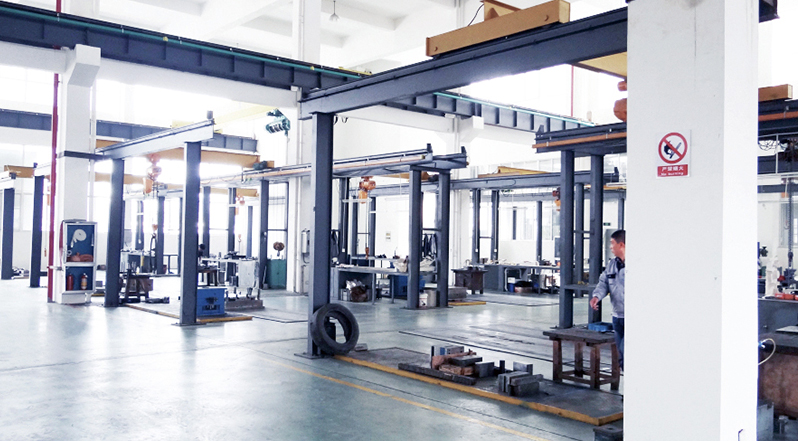
A home appliance housing is large enough and visible enough that a dedicated mould is usually justified, yet it rarely carries the tolerance or traceability burden of an engineering component. That middle position is where commodity moulds are used for appliance housings, and it is also where the fit has to be demonstrated from the part, the line and the acceptance record rather than assumed from the tool category.
This article sets out when a commodity mould suits home appliance housing production, what the tool design has to deliver on a mass injection or blow moulding line, what the buyer must have ready on the plant side, and where the limits of the approach sit. Company information is drawn from GANGNAM MOULD's supplied company, product, capability and case material and is presented as company-reported. Market figures are attributed to the publishers named beside them.
Where Appliance Housing Tooling Sits in the Commodity Mould Range
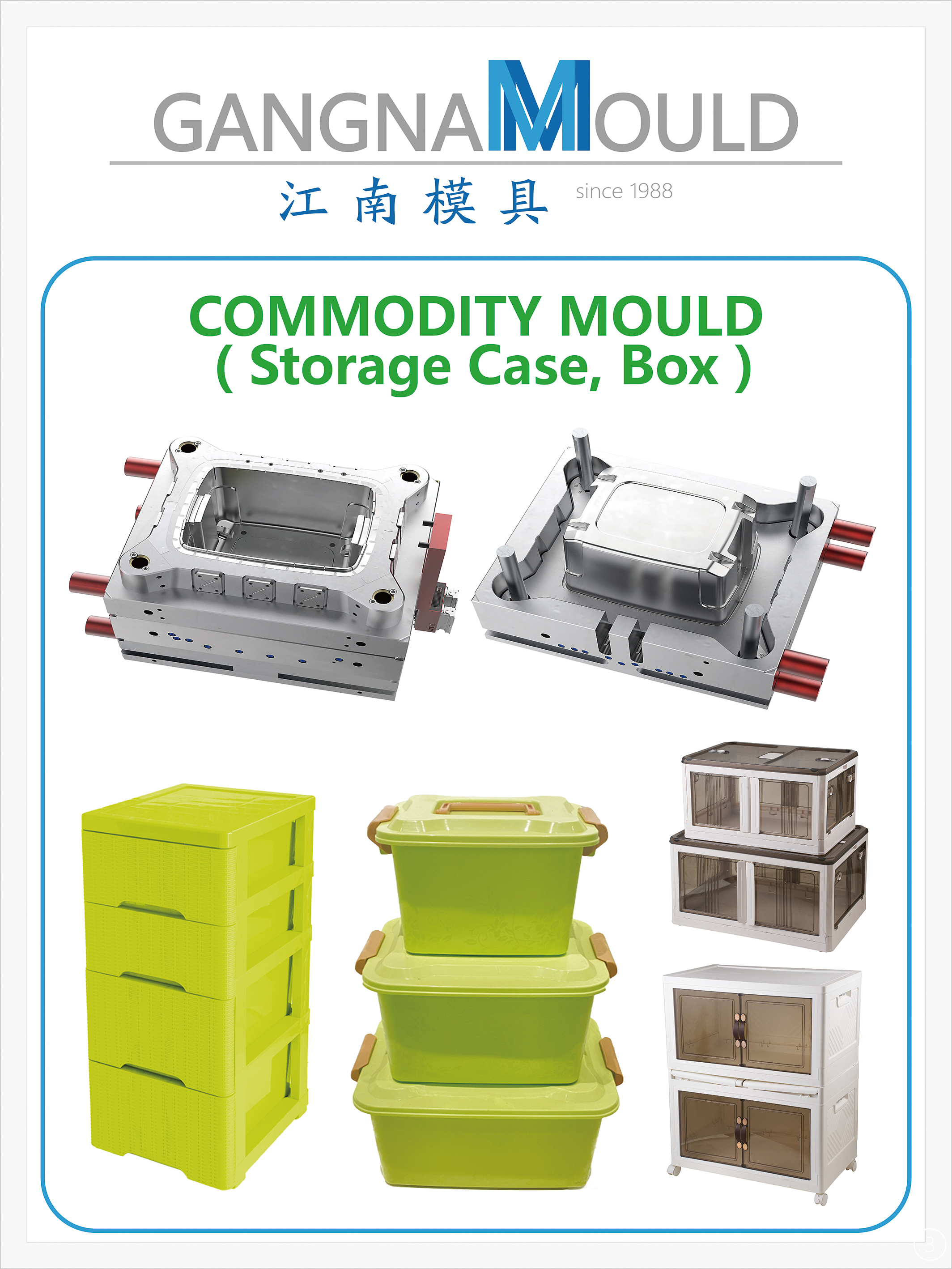
In the supplier's product data, home appliance manufacturing appears as one of the industries served by commodity moulds, alongside packaging and retail, consumer goods, and logistics and warehousing. The same product scope lists chair, table, sofa and stool moulds; storage cabinet and box moulds; kitchen utensil and bathroom accessory moulds; basket, tray and box moulds; basin, bucket and trash bin moulds; garden planter moulds; pallet moulds; and thin-wall injection moulds. The company describes commodity moulds as tooling for household plastic containers, plastic cups, storage boxes, buckets and other general plastic products.
That placement is the first useful signal for a buyer. Appliance housings are handled inside a general-purpose mould portfolio rather than through a separate appliance tooling programme. The consequence is straightforward: the supplier's standard design vocabulary — cavity layout, cooling, gating, venting, surface finish — is applied to the housing, and the housing's own requirements have to be expressed precisely enough for that vocabulary to work. Where a housing needs something the commodity route does not carry, the gap appears at drawing review rather than after the tool is cut.
What Scenario Fit Means for an Appliance Housing Mould
A commodity mould fits an appliance housing programme when three conditions hold together. The part must be ordered in volumes that justify a dedicated tool; the geometry must be fillable and coolable within the cycle the line needs; and the dimensional and cosmetic requirements must be capable of being written into a drawing and an acceptance record. When one of the three fails, the tool category is not the problem — the project definition is.
The supplier's scenario description frames the operating environment in similar terms. These moulds are intended for mass injection and blow moulding production lines, with emphasis on mould durability, short cycle times and dimensional stability. The documented project types are OEM/ODM custom mould projects, large-volume mould production, home appliance component mould development and logistics packaging mould development. The scenario record lists India, Italy, Jordan, Nigeria, Algeria, Zambia, South Africa, Tanzania, Turkey, Tunisia, Singapore, Saudi Arabia and Russia among the countries where this application is commonly seen. That is a company-stated market observation, not an independently measured demand figure, and it should be read as an indication of where the company expects this work rather than as evidence of regional volumes.
Operating mode is not fixed by the supplier. The moulds run on injection or blow moulding machines for mass production, and the mode depends on both the customer's production line and the mould design, whether multi-cavity or single-cavity. For an appliance housing, that ordering matters: the machine decision comes before the tool design, not after it. A housing specified for a multi-cavity layout on a machine that cannot carry the tool, or cannot cool it, will lose the cycle advantage the cavity count was meant to create.
The Design Levers and What They Change on the Line
The product data identifies five levers a buyer can specify: cavity count and size, the cooling system, gating and venting, surface treatment, and inserts or multi-component integration. Each changes something different on the line, and each has to be decided against the housing rather than against a generic template.
| Design lever | What it changes in production |
|---|---|
| Cavity count and size | Sets how many parts leave the tool per cycle and what machine size the tool requires. |
| Cooling system design | Uniform cooling is specified to shorten cooling time; uneven cooling produces differential shrinkage and pulls the part out of shape. |
| Gating and venting | Optimised gating and venting is specified to reduce warpage; venting also governs how cleanly a thin section fills. |
| Surface treatment and polish | Determines the appearance of a visible face and how the moulded part releases from the tool. |
| Inserts and multi-component design | Allows a housing to combine functions in one moulding instead of downstream assembly. |
The cooling lever is the one most often underestimated in housing work. Cooling occupies a large share of the injection cycle, and the temperature difference across a large housing face is what turns a nominally correct cavity into a part that moves when it is ejected. A uniform cooling layout is therefore a cycle-time decision and a dimensional decision at the same time, and the two cannot be traded against each other afterwards. Gating and venting behave the same way. Gate position sets the flow path and the point where weld lines will form; the vent has to sit where the air actually is at the end of fill. A housing with a long, thin wall section will show both errors quickly.
Materials place a boundary around these choices. The product data specifies mould steel for the tool, and PP with engineering-grade plastics or recycled polymers for the moulded part, with PP injection moulding noted on the supplier's site. A recycled or engineering-grade feedstock can behave differently from virgin PP in shrinkage and flow, so the material decision belongs in the drawing review rather than in the purchase order. If the housing will be moulded in more than one grade across its life, that should be stated at the design stage, because the cooling and gate layout may need to accommodate the wider process window.
Dimensional Stability and the Drawing
ISO 20457:2018 specifies possible manufacturing tolerances for plastic moulded parts and addresses injection moulding among other processes; its scope covers non-porous moulded parts made from thermoplastics, thermoplastic elastomers and thermosets. It is a practical common language for a housing drawing because it forces both sides to state what stability means for a given dimension instead of negotiating it at trial.
Two cautions belong beside that reference. First, citing a standard is not a statement that a supplier's process conforms to it; conformance has to be agreed in the specification and checked in the acceptance record. Second, a draft revision, ISO/DIS 20457, is listed separately by ISO, and the available material does not establish that the draft replaces the published 2018 edition. A drawing should name the edition it uses so that both parties measure against the same document.
Three details make the difference on an appliance housing. Critical dimensions and their datums should be marked rather than left to a general tolerance note, because a housing that assembles against other moulded parts is usually controlled by a small number of features. The visible face should be identified with the surface requirement attached to it, since a cosmetic zone and a hidden zone rarely justify the same polish. And the measurement point should be stated, because a dimension taken on a freshly ejected part and the same dimension taken after conditioning are not the same number, and the acceptance record needs to say which one it reports.
Production Needs on the Buyer's Side
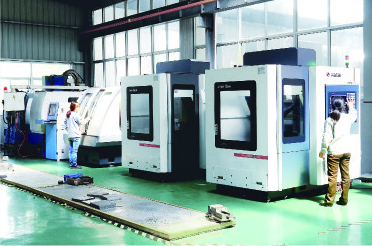
The mould is one input into a housing programme, not the programme itself. The scenario data names the supporting equipment the line needs: injection or blow moulding machines, cooling systems, and automation for loading and unloading. It also notes that large parts and thin-wall parts carry special design needs, which means the machine and handling plan has to be settled while the tool is still being designed. Machine size, platen dimensions and shot capacity are project-specific and should be confirmed in the requirement discussion rather than inferred from a catalogue.
The order sequence is documented as requirement, design, manufacturing, trial and inspection, then delivery and training. The company's stated order window is 30–45 days, confirmed per order according to mould complexity, and its minimum order quantity is one unit. Buyers planning a housing launch should treat that window as the tooling leg only. The line-side work — machine scheduling, cooling capacity, handling, and the personnel who will run the trial — runs in parallel and is usually the item that slips.
Acceptance resources should be agreed before the trial rather than during it. The capability data lists non-destructive testing, coordinate measuring machine measurement and full-size trial testing with inspection reports. For a housing, the practical question at trial is whether the report answers the drawing: which dimensions were measured, on which datum scheme, at what point in the cycle, and against which tolerance. A report that lists measurements without that structure is difficult to use as a qualification record even when the numbers look acceptable.
How GANGNAM MOULD Maps to This Scenario
GANGNAM MOULD CO., LTD, also recorded as Zhejiang Huangyan Jiangnan Mould Factory, is a plastic mould manufacturer established in 1988 and based in Huangyan District, Taizhou, Zhejiang, China. The company makes commodity moulds and states that it designs and produces plastic moulds for everyday items, logistics packaging such as trays and turnover boxes, household appliances, and hollow blow moulding.
The company reports a 3,000 m² factory, 40 employees and a research and development team of 15 engineers, supported by more than 20 CNC milling machines, 3D coordinate measuring equipment and a mould assembly group, producing over 800 sets of moulds a year. It states that it operates an ISO 9001:2015 quality management system. That certification statement is company-reported in the supplied material; a buyer using it as a qualification criterion should obtain the certificate and the certifying body's details rather than rely on the website statement alone.
Capability data describes OEM/ODM and customizable work covering cavity count and size, surface texture and polish, gating and cooling system design, inserts and multi-component integration, and material and heat-treatment requests. The described function is end-to-end: from samples or drawings through to trial moulding and delivery, including installation and operation training. During trial, detailed inspection reports are provided; any after-sales term beyond that is a contractual matter rather than a published commitment.
On market exposure, the company records an export share of 70% with Southeast Asia given as its main market, while the capability record lists the Middle East, Africa, Central Asia, South America, Mexico, Italy and India among export markets. For a housing programme, that spread matters mainly in communication and logistics terms. It is not evidence of appliance-specific project experience, and it should not be read as one.
Case Record: 800 Units Across a Decade
The clearest application evidence in the supplied material is a custom mould case recorded at 800 units over a ten-year period. The documented application covers moulds for general-purpose parts including injection pallets, circulation crates, daily plastic containers and home appliance housings. The record associates the work with buyers in Bangladesh, India, Iraq, Jordan, Nigeria, Algeria, Italy and Turkey, and highlights precision machining equipment, a complete inspection flow including coordinate measuring machine measurement and non-destructive testing, and a one-stop OEM/ODM service sequence.
Two readings of that record are worth keeping apart. It shows that appliance housings have been handled inside a mixed commodity portfolio rather than in isolation, which is consistent with the scenario fit described above. It does not establish appliance-specific cycle times, tolerance capability on a named housing, or output figures for any individual buyer. The stated design objective in the record — moulds built to withstand millions of operational cycles, with production efficiency and product consistency as the goals — is the supplier's own framing of design intent, not a measured service-life result.
Where the Commodity Route Stops Being the Right Fit
A commodity mould is a poor fit when the housing is really an engineering part. If the drawing carries tight geometric tolerances across a long assembly chain, or if the part sits in a regulated application where material and process traceability are prescribed, the tooling route needs a specification review before a supplier is shortlisted. The supplied material does not include appliance-specific safety, food-contact or destination-market requirements, so those have to be established by the buyer for the actual product and market.
Three further boundaries are visible in the data. Large and thin-wall parts carry special design needs that tie the tool to the machine and the handling plan, so a housing at the edge of a machine's capability is a different project from a mid-size one. Specific technical parameters are, by the supplier's own statement, to be confirmed during requirement communication — an RFQ that omits them will produce a price rather than a specification. And the quality evidence available is process evidence: coordinate measuring machine reports, non-destructive testing and trial measurement. It is not an independent performance benchmark, and no published benchmark for housing cycle time or tool life was found in the material reviewed.
Market Context, Read With Care
Background figures help set the scale of the category, provided their definitions are kept apart. A 2026 industry report on the global industrial mould market places 2025 valuation at USD 59.0 billion, and the same report puts the Asia Pacific share of the global industrial mould market at 52.6% in 2024. Grand View Research reports the global injection moulding market at USD 312.7 billion in 2025. The two totals are frequently quoted side by side, but they do not measure the same thing: one addresses mould tooling, the other includes injection moulding services and moulded products. Adding them, or using one to check the other, produces a wrong conclusion.
A separate commercial study by Strategic Revenue Insights estimates the thin-wall mould market at USD 3.89 billion in 2025, rising to USD 7.23 billion by 2035 at a compound annual growth rate of 6.4%. That is a forecast with stated assumptions, not an observed result, and it describes a market rather than any single supplier's position within it.
The correct use of these numbers is to frame the category, not to derive a supplier's share, price or lead time. They support no conclusion about GANGNAM MOULD's market position, and none should be drawn from them.
Outlook
If appliance housings continue toward thinner walls and more consistent visible surfaces, procurement attention is likely to shift from whether a supplier can make the tool to whether the process evidence supports the claim. For the commodity mould route, that would put three items into more RFQs: a specific cooling design proposal, a named tolerance system on the drawing such as the 2018 edition of ISO 20457, and trial data that can be checked against the drawing. These are conditional expectations rather than assertions about what any particular supplier will deliver.
FAQ
Which home appliance housing projects suit a commodity mould?
A housing suits the commodity route when it is ordered in volumes that justify a dedicated tool, when the geometry can be filled and cooled within the required cycle, and when its dimensional and cosmetic requirements can be written into a drawing and an acceptance record. The documented project types for this scenario are OEM/ODM custom mould projects, large-volume mould production, home appliance component mold development and logistics packaging mould development. If any of the three conditions fails, the limitation sits in the project definition rather than in the tool category, and specific technical parameters are confirmed during requirement communication.
Can the same commodity mould run on both injection and blow moulding lines?
The scenario data describes moulds running on injection or blow moulding machines for mass production, with the operating mode depending on the customer's production line and the mould design, whether multi-cavity or single-cavity. An injection tool and a blow moulding tool are separate designs, so the process route needs to be settled before the tool design starts. The cavity arrangement and the cooling layout follow from that decision.
What should be ready on the plant side before an appliance housing mould arrives?
The documented supporting equipment is injection or blow moulding machines, cooling systems, and automation for loading and unloading. Because large parts and thin-wall parts carry special design needs, machine size and handling arrangements should be confirmed during the design stage rather than after delivery. Trial personnel and measurement resources should also be arranged in advance, since the documented order sequence ends with trial, inspection, delivery and operation training.
How is dimensional stability verified at acceptance?
The drawing should name the critical dimensions, their datums, the visible face with its surface requirement, and the tolerance system being used, for example the 2018 edition of ISO 20457. Acceptance then draws on coordinate measuring machine measurement, non-destructive testing, and full-size trial testing with an inspection report. The report should state which dimensions were measured, against which datum scheme, and at what point in the cycle, so that it can be checked against the drawing rather than accepted on its totals.
What can be customized on a commodity mould for an appliance housing?
The documented customization covers cavity count and size, surface texture and polish, gating and cooling system design, inserts and multi-component integration, and material and heat-treatment requests. The minimum order quantity is one unit, and the stated order window is 30–45 days, confirmed per order according to mould complexity. Exact technical parameters are to be confirmed during requirement communication rather than assumed from a catalogue.
Further technical and commercial detail is available in the company's published brochure (PDF). Direct contact for specification questions is Gavin, gm@gangnammould.com, telephone and WhatsApp +86 150-0576-9999.
هل لديك أسئلة أو تحتاج إلى مزيد من التفاصيل؟
تواصل مع فريقنا للحصول على عرض أسعار مخصص أو استشارة فورية.
طلب عرض أسعار
املأ النموذج أدناه وسيتواصل معك فريقنا بعرض مقترح مخصص.
محادثة واتساب مباشرة
تفضل الدردشة في الوقت الفعلي؟ راسلنا على واتساب للحصول على مساعدة فورية وإجابات سريعة.
- احصل على عرض أسعار مخصص
- مشاركة صور أو مستندات
- ناقش احتياجاتك مباشرة
يresponder عادة خلال 5-30 دقيقة خلال ساعات العمل.