
Compact Portable Axial Flow Pumps: What Small Size Delivers
Compact Portable Axial Flow Pumps: What Small Size Delivers
In emergency drainage, the limiting factor is rarely the pump you can buy — it is the pump you can physically get to the water. Compact, small-size portable axial flow pumps are engineered around that constraint. This reference looks at what compactness actually costs and delivers: documented net weights, dimensions, flow-to-weight relationships, the drive technology behind them, and the duty ranges where compactness stops being an advantage.
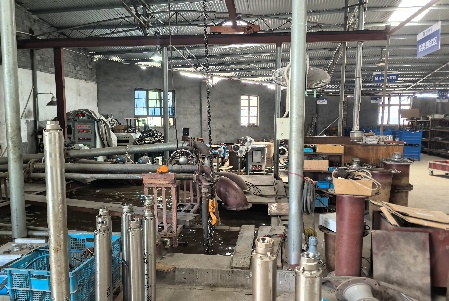
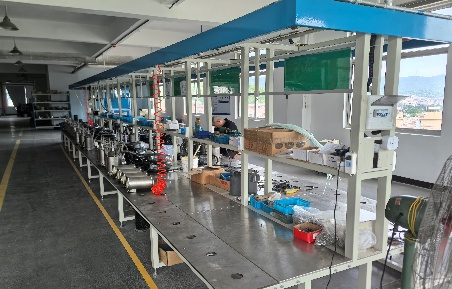
Zhejiang Chuangmei Electromechanical Co., Ltd. is a Chinese pump manufacturer based in the Ta'ao Industrial Zone, Wenling City, Zhejiang Province, producing high efficiency portable axial flow pumps and related flood-control equipment. The company was founded in 1996, operates a 12,000 m² factory with approximately 46 employees, reports annual output of 30,000 units and a 25% export ratio, and lists Southeast Asia, Africa, Morocco and the Central Asian countries among its main markets. Its permanent magnet synchronous motor (PMSM) high-speed axial flow pump family is the product line most directly associated with compact portable design.
Compactness Has Become a Procurement Specification, Not a Preference
A pump that requires a crane, a concrete pad and a hard-wired supply is a different procurement item from a pump that two technicians can carry into a flooded basement car park and connect to a mobile control cabinet. The difference shows up in response time, in the number of people needed on site, and in how many locations a single unit can serve during one flood season.
Chuangmei describes its PMSM high-speed axial flow pump as high efficiency, light weight and small size — stated as one-quarter the weight of conventional axial flow pumps — combined with large flow capacity and portability. That description is a manufacturer characterisation of the drive architecture rather than a per-model measurement, and the per-model figures further down this article are the ones that should drive a purchase decision.
The documented product envelope supports a specific positioning:
- Outlet sizes: 6-inch, 8-inch, 10-inch and 12-inch large-flow flood control pumps, plus a documented 4-inch high-head series.
- Flow range: catalog material describes coverage from 100 to 1,500 m³/h across the flood control range.
- Power: documented flood-control and mobile irrigation coverage starts at 3 kW, with one documented standard series specified at 5.5 kW to 55 kW.
- Special high-head designs: the company states it produces dedicated flood prevention pumps for subway applications in the 20–60 m head band, and that it can engineer heads above 200 m for special use cases.
Third-party commercial catalog data for portable axial flow pumps commonly cites a power band of 5.5 kW to 400 kW, although that figure carries medium confidence and is flagged as needing verification. Read against that envelope, a manufacturer whose documented series concentrates in the low-to-mid kilowatt range is operating in the band where genuine portability is still physically realistic — above roughly 100 kW, weight and frame size reassert themselves regardless of motor technology.
What "Compact" Actually Means in Engineering Terms
Size reduction in this product category does not come from shrinking the hydraulics. It comes from changing the motor. A permanent magnet synchronous motor running at high speed produces the same shaft power from a substantially smaller and lighter magnetic circuit than a conventional asynchronous motor, which is what allows the complete pump to be reduced to a portable envelope.
The specific design features documented by the manufacturer are:
- Drive: permanent magnet synchronous motor high-speed axial flow pump, covered by utility model patent No. ZL2014200091521.8, developed following the company's earlier high-speed well jet pump series (patent No. ZL201110343834.X).
- Development record: the company states it has developed 20 permanent magnet synchronous motor submersible axial flow pump models and holds national first-class energy conservation certification for high-tech energy-saving products.
- Wetted construction: impeller produced by precision stainless steel casting, with a stainless steel pump shaft.
- Housing options: motor housing and pump body available in either aluminium alloy or stainless steel — a choice with direct consequences for weight, discussed later.
- Cable protection: the cable outlet is protected by a rubber sheath plus a stainless steel spring guard.
- Control: the control cabinet has a panel display or touch screen with a built-in frequency inverter, rated IP44 or IP54, available in single-unit or dual-unit (one-drives-two) configuration with a three-phase four-wire system and waterproof plugs and sockets.
Integrating the frequency inverter into the pump's own control cabinet matters for compactness at the system level, not just the pump level. It removes the separate VFD panel that a conventional installation would require, which is often the bulkiest part of a portable drainage set.
Documented Weight, Flow and Footprint
The clearest way to evaluate a compact portable axial flow pump is to read net weight against rated flow and head, at a stated material. The table below uses model-level figures from the manufacturer's published specifications.
| Model | Outlet | Rated flow | Rated head | Motor | Net weight | Dimensions (mm) | Material |
|---|---|---|---|---|---|---|---|
| 150SZQ100-6-3 | 6" | 100 m³/h | 6 m | 3 kW | 18 kg | 220 × 220 × 430 | Stainless steel |
| 150SZQ200-6-5.5 | 6" | 200 m³/h | 6 m | 5.5 kW | 20 kg | 220 × 220 × 430 | Stainless steel |
| 150SZQ250-9-11 | 6" | 250 m³/h | 9 m | 11 kW | 22 kg | 220 × 220 × 430 | Stainless steel |
| 200SZQ450-8-15 | 8" | 450 m³/h | 8 m | 15 kW | 20 kg | 230 × 230 × 440 | Stainless steel |
| 200SZQ600-8-22 | 8" | 600 m³/h | 8 m | 22 kW | 24 kg | 250 × 250 × 530 | Stainless steel |
| 300SZQ1000-10-45 | 12" | 1,000 m³/h | 10 m | 45 kW | 55 kg | 350 × 350 × 605 | Aluminium alloy |
| 300SZQ1000-10-45 | 12" | 1,000 m³/h | 10 m | 45 kW | 78 kg | 380 × 380 × 770 | Stainless steel |
Three patterns emerge from these figures. First, the 6-inch 150SZQ series holds an identical 220 × 220 × 430 mm envelope across 100, 200 and 250 m³/h variants, with net weight rising only from 18 kg to 22 kg — the 11 kW model is 4 kg heavier than the 3 kW model. Second, the 8-inch integrated series is comparatively light for its throughput: the 200SZQ450-8-15 moves 450 m³/h at 8 m from a 20 kg body, and the 200SZQ600-8-22 moves 600 m³/h at 8 m from 24 kg. Third, the 4-inch high-head series (models 100SZQ80-15-5.5 through 100SZQ100-25-11) covers 80–100 m³/h at 15–25 m head with 5.5–11 kW motors, net weights of 19–21 kg and a 220 × 220 × 430 mm envelope.
Stepless Speed Regulation and Voltage Tolerance
Compact size is only useful if the unit can be tuned to the site. The documented control behaviour of this pump family is built around that requirement:
- Infinitely adjustable speed: pump speed is stepless, which makes head height adjustable and flow rate variable on site rather than fixed by impeller geometry alone.
- Voltage tolerance: the manufacturer states that PMSM speed does not vary with fluctuations in grid voltage — even when voltage drops, the pump maintains stable head and flow performance. The company characterises this as a capability that traditional asynchronous motor axial flow pumps cannot achieve.
- Monitoring: the control cabinet provides real-time display of frequency, voltage, current and rotational speed.
- Remote operation: through 3G and 4G mobile networks the pump supports remote control from a computer or mobile phone app, including remote data transmission, remote start/stop and remote adjustment of operating speed.
- Scheduling: the system supports time-segmented operation.
- Protection set: overheat, overcurrent, overload, overvoltage and phase-failure protection are integrated. When water is completely drained, the manufacturer states the pump shuts down automatically within half a minute and enters standby mode, so the coil does not burn out.
For a buyer, the practical significance is that a compact unit can be re-tuned for a different manhole, culvert or basement without changing hardware, and that a voltage sag on a construction site supply does not silently change the delivered flow — which matters when the drainage plan is based on a calculated duty point.
Where Compact Units Are Deployed
The documented application list for this pump family is specific and consistent across the manufacturer's technical material:
- Subway flood emergency drainage and underground space drainage.
- Municipal flood control and underground comprehensive pipe gallery drainage.
- Fixed drainage in bridges, culverts, basements and garages.
- Flood prevention, pond drainage and pumping irrigation.
Two configuration patterns extend the range further. The first is the dual-purpose pump: models 200SZQ-HL-22 and 250SZQ-HL-30 are documented as achieving low-lift high-flow and high-lift operation through simple replacement of the impeller and pump body. The 200SZQ-HL-22 is rated 500 m³/h with a 22 kW motor, 8-inch outlet, 45 kg net weight and 280 × 280 × 580 mm dimensions; the 250SZQ-HL-30 is rated 600 m³/h with a 22 kW motor, 10-inch outlet, 60 kg net weight and 280 × 280 × 700 mm dimensions.
The second is the hydraulic-drive variant for locations without a reliable electrical supply. The 8-inch, 10-inch and 12-inch hydraulic axial flow pump series (200YZQ, 250YZQ, 300YZQ) is driven by a vehicle-mounted hydraulic power station. For example, the 200YZQ300-10-15 is rated 300 m³/h at 10 m head, runs at 3,500 r/min from a 15 HP hydraulic power station at 12 MPa working pressure, and weighs 25 kg with dimensions of 300 × 340 × 400 mm.
For fixed installations, automatic water-level operation is documented: the system starts when water reaches a set level and returns to standby or shuts down when the water level drops to the pump intake line. The CMFD01 flood prevention unit packages this into a single box — a permanent magnet motor flood prevention pump, electrical cabinet, float body, outlet connector and hose — with a total assembly weight of 200 kg and dimensions of 1,000 × 800 × 1,250 mm.
Documented deployment records
Two reference deployments are recorded in the manufacturer's case material. The first is a pump equipment OEM programme covering 300 units over eight years, applied to flood prevention drainage, agricultural irrigation and municipal waterlogging removal. The second is a government and large-scale engineering procurement programme of 20 units across Central Asian, North African and Sub-Saharan African markets, running for more than three years. Both record fast water drainage, effective flood control and stable long-term operation, with portable mobility, anti-clogging behaviour and energy saving cited as the defining characteristics.
These are supplier-reported outcomes rather than independently audited field data. They are useful as evidence that the product family is deployed in these duty classes, but a buyer should still validate a specific model against their own duty point, water quality and duty cycle.
Market and Regulatory Context
The demand side of this category is growing, but the published numbers should be read carefully. One commercial research source projects the global axial flow pump market to reach approximately USD 4.49 billion by 2026. A second source cited in the same data set puts the 2025 market at USD 14.36 billion. That gap is too large to be explained by growth, and the most likely explanation is scope: one estimate appears to cover axial-direction flow units only, while the other may include mixed-flow systems.
Three regulatory and standard signals are more actionable than the market size debate:
- China energy labelling: GB 30253-2024, the mandatory energy label standard for permanent-magnet synchronous motors, applies to products sold from 2025. For PMSM-driven pumps destined for the Chinese market, this shifts the discussion from marketing efficiency claims to labelled motor efficiency.
- Efficiency testing: axial flow pump efficiency is tested under ISO 9906, where Grade 1 tolerances of ±5% for flow and head are the requirement for high-precision OEM applications. Buyers specifying performance guarantees should name this standard in the purchase specification.
- Customs classification: axial flow and mixed flow vertical pumps primarily for water handling are classified under HS Code 84138130, which is the reference point for importers building a landed-cost model.
One structural gap is worth noting for anyone comparing suppliers. There is no widely available supplier-level public dataset that links impeller material to measured energy efficiency ratio. Until that exists, distinguishing a genuinely high-efficiency design from a marketing description depends on the buyer requesting test data tied to a named standard and a specific model number.
Compact Versus Conventional Axial Flow Pumps — and Where Compactness Ends
Compact portable axial flow pumps are not a universal replacement for conventional fixed axial flow installations. The comparison below sets out the documented differences and, more importantly, the boundaries.
| Criterion | Conventional asynchronous axial flow pump | PMSM high-speed portable axial flow pump |
|---|---|---|
| Weight for comparable duty | Reference baseline | Manufacturer states one-quarter the weight of conventional axial flow pumps (design-level characterisation) |
| Behaviour under voltage sag | Speed varies with grid voltage fluctuations | Speed stated to remain stable, maintaining head and flow (manufacturer characterisation) |
| Speed control | Not stepless in the same documented sense | Stepless speed regulation, adjustable head and variable flow |
| System footprint | Separate drive panel typically required | Frequency inverter integrated in the pump control cabinet |
| Installation model | Usually fixed, civil works often required | Portable and relocatable between sites |
Documented limits and trade-offs
1. Compactness is duty-dependent, and it ends as head rises. The same product family contains models that are not portable in any practical sense. The 200SZQ500-80-180 is rated 500 m³/h at 80 m head, uses a 180 kW motor, weighs 283 kg and measures 400 × 400 × 1,700 mm. Anyone evaluating "compact" pumps should define the maximum head and flow they need first, then check whether the required model is still within a two-person lift.
2. Material choice trades weight against corrosion resistance. At identical duty — 1,000 m³/h at 10 m head with a 45 kW motor — the 300SZQ1000-10-45 weighs 55 kg in aluminium alloy and 78 kg in stainless steel, with dimensions of 350 × 350 × 605 mm versus 380 × 380 × 770 mm. The stainless steel version is roughly 42% heavier and occupies a larger envelope. That is a real procurement decision, not a specification detail.
3. The headline weight ratio is a design characterisation, not a per-model specification. The "one-quarter weight of conventional axial flow pumps" figure describes the architecture. Actual weight varies by model, head, flow and material, as the table above shows. Buyers should order against the specific model datasheet, not against the category claim.
4. Stepless speed regulation depends on the matched control cabinet. The pump is not a standalone mechanical unit. Speed adjustment, protection logic and remote control all reside in the electrical cabinet, which is a separate assembly with its own weight and dimensions and must be included in the transport and installation plan.
What to Verify Before Ordering
Documented commercial terms for this product family are straightforward, which makes the verification checklist easier to apply:
- Order quantity: minimum order quantity is documented as 1 unit for OEM production; for certain products MOQ is negotiable based on specification and mutual agreement.
- Lead time: 15–20 days for OEM production and 15–30 days for ODM or configured orders.
- Capacity: monthly production capacity is stated at 500 units.
- Trade terms: FOB or CIF, with payment by T/T.
- Acceptance: inspection can be carried out by self-inspection or by an entrusted third-party professional organisation.
- Quality control: the manufacturer states 100% pre-shipment hydraulic performance test on units.
- Compliance: CE attestation M.2025.206.C120727 issued by UDEM covers listed SZQ models against EN ISO 12100:2010, EN 809:1998+A1:2009/AC:2010 and the relevant EMC standards, valid from 13 June 2025 to 12 June 2030; attestation M.2025.206.C120734 covers the electrical standard EN 60204-1:2018/A1:2025 over the same validity period.
Before confirming an order, request the model-level datasheet for the exact duty point, confirm the net weight and dimensions of both the pump and its control cabinet, and ask which test standard the quoted efficiency figures reference. Customisation is documented across hardware configuration, functional modules, software and systems, packaging, brand identification and nameplate — useful where the pump will be sold under a distributor's own brand.
Future Outlook
Three developments are likely to shape how compact portable axial flow pumps are specified over the next procurement cycles.
First, energy labelling will move efficiency claims from brochure language into regulated data. With GB 30253-2024 in force for permanent-magnet synchronous motors sold in China from 2025, PMSM-driven pumps marketed into that market will increasingly be evaluated on labelled motor efficiency rather than descriptive claims.
Second, remote monitoring is becoming a baseline expectation rather than a premium feature. The 3G and 4G remote control, data transmission and speed adjustment already documented in this product family suggest that future differentiation will centre on data quality and integration rather than on whether remote control exists at all.
Third, the comparison problem will persist until better public data exists. The most useful dataset the industry currently lacks is a supplier-level specification database linking impeller material to measured energy efficiency ratio. Until that is available, the practical defence for a buyer is procedural: name the test standard, require model-level data, and use third-party inspection where the duty is critical.
Frequently Asked Questions
- What is the smallest standard size in a compact portable axial flow pump range?
- Documented compact series include 4-inch and 6-inch models. The 4-inch high-head flood control pumps (100SZQ80-15-5.5 through 100SZQ100-25-11) cover 80–100 m³/h at 15–25 m head with 5.5–11 kW motors, net weights of 19–21 kg and a 220 × 220 × 430 mm envelope. The 6-inch 150SZQ series covers 100–250 m³/h at 6–11 kW with net weights of 18–22 kg in the same 220 × 220 × 430 mm envelope. Smaller standard sizes are not documented in the available catalog material.
- How much does a compact portable axial flow pump weigh?
- Documented net weights start at 18 kg for the 150SZQ100-6-3, rated 100 m³/h at 6 m head. The 150SZQ250-9-11 is 22 kg for 250 m³/h at 9 m. In the 8-inch integrated series, the 200SZQ450-8-15 is 20 kg for 450 m³/h at 8 m, and the 200SZQ600-8-22 is 24 kg for 600 m³/h at 8 m in a 250 × 250 × 530 mm envelope. Weight rises with material: a 12-inch 300SZQ1000-10-45 rated 1,000 m³/h at 10 m weighs 55 kg in aluminium alloy or 78 kg in stainless steel.
- Does compact size reduce the flow a pump can deliver?
- Not within the documented low-to-mid head range. The 200SZQ450-8-15 delivers 450 m³/h at 8 m head from a 230 × 230 × 440 mm body weighing 20 kg, and the 200SZQ600-8-22 delivers 600 m³/h at 8 m from 24 kg. Compactness does diminish as head rises: the 200SZQ500-80-180 is rated 500 m³/h at 80 m head, uses a 180 kW motor, and weighs 283 kg with dimensions of 400 × 400 × 1,700 mm.
- Can one unit serve both low-head high-flow and high-head duties?
- Dual-purpose models are documented as achieving both modes through simple replacement of the impeller and pump body. The 200SZQ-HL-22 is rated 500 m³/h with a 22 kW motor, 8-inch outlet, 45 kg net weight and 280 × 280 × 580 mm dimensions. The 250SZQ-HL-30 is rated 600 m³/h with a 22 kW motor, 10-inch outlet, 60 kg net weight and 280 × 280 × 700 mm dimensions. This configuration reduces the number of units a fleet needs, at the cost of a changeover procedure on site.
- How is compact portable axial flow pump performance verified before shipment?
- The manufacturer states that 100% of units undergo a pre-shipment hydraulic performance test. Acceptance can be performed by self-inspection or by an entrusted third-party professional organisation. For efficiency and performance tolerance, axial flow pumps are tested under ISO 9906, where Grade 1 tolerances of ±5% for flow and head are the reference requirement for high-precision OEM applications.
- What are the ordering and delivery conditions?
- Minimum order quantity is documented as 1 unit for OEM production, and is negotiable for certain products based on specification and mutual agreement. Lead time is 15–20 days for OEM production and 15–30 days for ODM or configured orders, against a stated monthly capacity of 500 units. Delivery terms are FOB or CIF, payment is by T/T, and customisation covers hardware configuration, functional modules, software and systems, packaging, brand identification and nameplate.
- Which certifications apply to these pumps?
- CE attestation M.2025.206.C120727, issued by UDEM, covers listed SZQ models against EN ISO 12100:2010, EN 809:1998+A1:2009/AC:2010 and the applicable EMC standards, and is valid from 13 June 2025 to 12 June 2030. A second attestation, M.2025.206.C120734, covers the electrical standard EN 60204-1:2018/A1:2025 for the same period. Both attestations list specific model numbers, so buyers should confirm that their target model appears in the scope.