
Compact Wheel Loader Shortlist: Spec-First Value Picks
A compact wheel loader is chosen twice: once on paper, by comparing numbers, and once on site, by living with the consequences. This shortlist is built for the first decision, because that is where most value is lost. Three EVERUN compact loaders — the ER2500T, the ER08E and the EREL10 — are separated here by what their rated load and power output actually allow a buyer to do, not by how long their option lists are.
The category is large enough that this distinction matters commercially. Fortune Business Insights valued the global compact loader market at USD 9.91 billion in 2025, with a projected CAGR of 5.0% through 2034. In a market of that size, the difference between a machine carrying a 0.26 m³ bucket and one carrying a 0.67 m³ bucket is not a specification footnote. It is a different operating model, a different transport plan, and a different energy cost per metre moved.
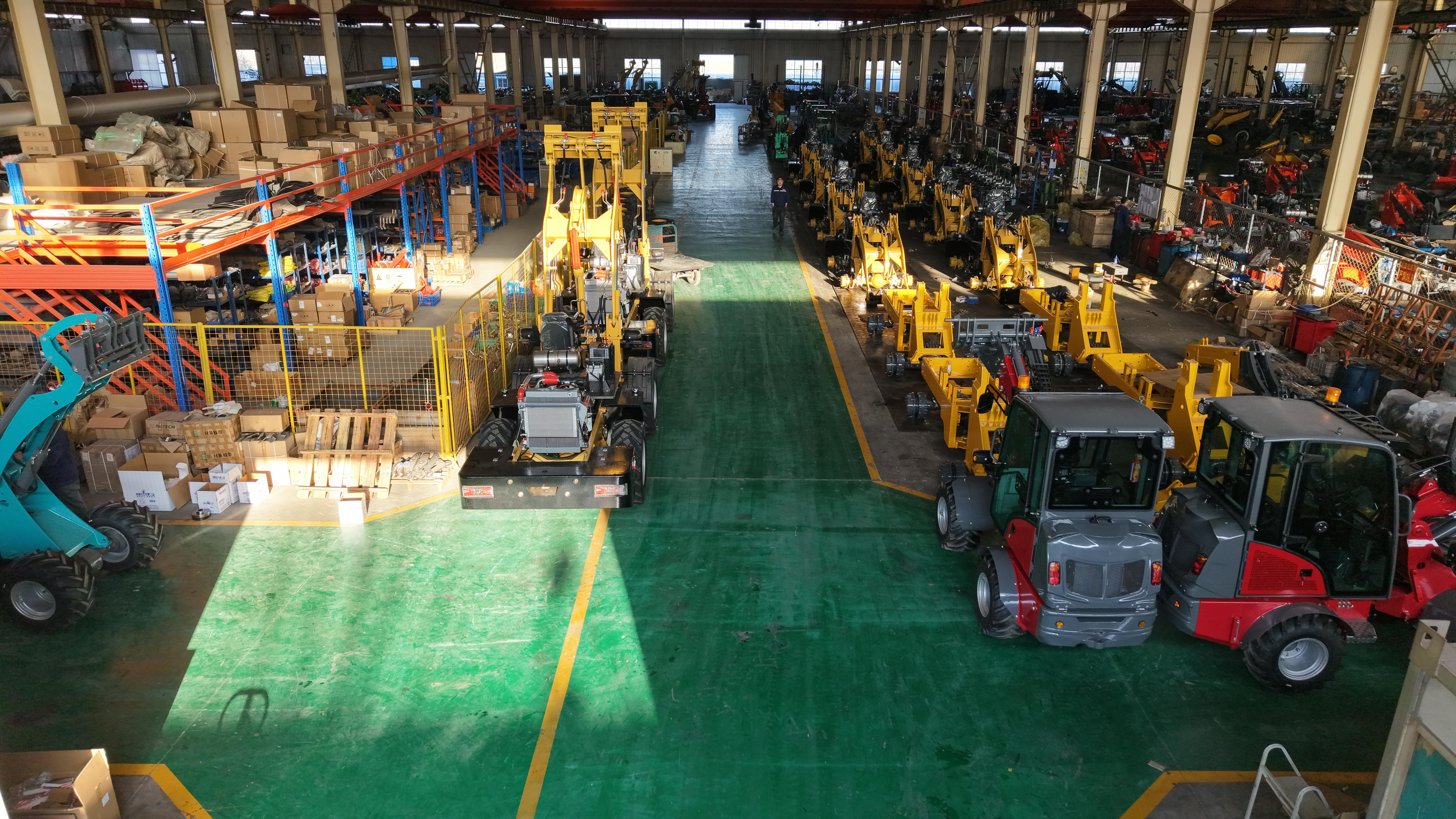
EVERUN (Qingdao Everun Machinery Co., Ltd) is a Qingdao-based manufacturer of wheel loaders, telehandlers and excavators, operating an 80,000 m² production footprint with approximately 300 employees and an annual output of 5,000 units, exporting to more than 100 countries with main markets in the EU, USA and Australia. Its compact range spans several power sources and frame sizes, which is precisely why a buyer needs a shortlist logic rather than a brochure.
Why a Spec-First Shortlist Beats a Feature List
A feature list is designed to make machines look comparable. A specification-first approach assumes they are not, and forces the buyer to establish what each published figure actually measures.
The clearest example sits inside EVERUN's own range. The ER2500T is published with a rated load of 2500 kg. The ERW2640T is published with a maximum loading capacity of 2600 kg, explicitly defined as tipping load. Those two numbers are not interchangeable. Rated load describes the payload a machine is designed to carry in normal working cycles; tipping load describes the point at which the machine becomes unstable. A buyer who compares 2500 with 2600 without checking the definition will misjudge both machines.
Once the definitions are clear, the shortlist becomes arithmetic rather than opinion. Material throughput is the product of three things: payload per cycle, cycles per hour, and productive hours per shift. Rated load sets the first term. Power output and transmission type set the second, because they govern how quickly a bucket is filled, lifted and dumped. Power source and energy capacity set the third, because they determine how many hours the machine can actually work before it needs to be refuelled or recharged.
Any compact loader that improves one term while silently degrading another is not automatically the better purchase. That trade-off is the subject of the rest of this article.
Four Criteria That Decide Value Before Price
Value-driven buyers in the evaluation stage rarely fail because they chose an unreliable machine. They fail because they optimised one criterion and inherited the constraints of the other three. These are the four that carry the most weight for compact loaders.
| Criterion | What it decides | What the buyer must confirm |
|---|---|---|
| Rated load | Payload per cycle and the number of cycles needed to clear a stockpile | Whether the published figure is rated load or tipping load, and the bucket capacity it is paired with |
| Power output | Cycle speed, bucket penetration and breakout capability in dense material | Motor or engine rating in kW, plus breakout or excavation force where published |
| Power source and energy capacity | Usable hours per shift and the refuelling or charging plan required | Working hours, battery capacity in Ah, charging time, or fuel logistics for diesel machines |
| Weight and footprint | Transport cost, floor loading, trailer choice and site access | Net or operating weight, and whether the machine fits the narrowest point on the route |
The ordering of these criteria is deliberate. Rated load and power output decide whether the machine can do the job at all. Energy capacity and weight decide what the job costs to run and to move. Price enters after those four, because a lower purchase price on a machine that cannot fill its bucket efficiently is not a lower cost.
The Shortlist: Three Loaders, Three Value Logics
The three machines below are not ranked best to worst. They are ordered by the constraint each one relieves most efficiently, which is the only ranking that survives contact with a real site.
ER2500T — the capacity anchor for bulk volume
The ER2500T is the payload benchmark of this shortlist: a rated load of 2500 kg, a standard bucket capacity of 0.67 m³ and a 53 kW engine, paired with a hydraulic converter, drive shaft and axle transmission. Its structure is built in S355 steel, and its stated working environments are agriculture, construction and industry.
Its value logic is cycle reduction. Where a site moves sand, gravel, aggregate, soil or bulk agricultural material in continuous cycles, the ER2500T clears a given tonnage in fewer passes than any other machine in this group. The converter and drive-shaft transmission is the conventional heavy-duty solution for exactly that duty pattern: sustained load cycles with frequent bucket work rather than precision handling.
Its boundary is physical. A machine of this payload class and transmission type is not the right answer for indoor floors, narrow yards, or sites where the loader shares space with pedestrian traffic. Buyers should treat transport planning as part of the purchase decision, not an afterthought.
ER08E — the light electric option for constrained sites
The ER08E takes the opposite approach. It is an electric compact wheel loader with a rated load of 800 kg, a net weight of 1500 kg and a 12 kW motor, delivering a maximum excavation force of 10 kN. It carries a 180 Ah or 245 Ah rated capacity, works for 5 to 6 hours per charge, and requires 13 hours of charging. Its stated applications are urban construction, farm work and indoor tasks. Its CE conformity for machinery, noise and electromagnetic compatibility is certified by TÜV Rheinland.
Its value logic is access and transport economy. At a net weight of 1500 kg, the ER08E is the machine in this shortlist that imposes the least burden on trailers, floors and tight access routes, while its electric drivetrain produces no tailpipe emissions during operation and reduces noise exposure in enclosed or residential environments.
Its boundary is the shift model. Five to six productive hours against a 13-hour charge means one working window per day for a single machine, and multi-shift operation requires either a second unit, a battery strategy, or a deliberate scheduling decision. The 800 kg rated load also caps the bucket volume that can be filled economically, so buyers moving dense material at high volume should not expect this machine to substitute for a 2500 kg unit.
EREL10 — mid-payload electric for yard and logistics duty
The EREL10 sits between the two. It is an electric compact wheel loader with a rated load of 1000 kg, a net weight of 2150 kg, a standard bucket capacity of 0.26 m³, a 200 Ah battery rated on a three-hour basis, 4 working hours per charge and a maximum breakout force of 13 kN. Its stated industries are agriculture, construction, logistics, mining, landscaping, forestry, recycling and snow removal.
Its value logic is payload per charge. It carries 200 kg more rated load than the ER08E and generates higher breakout force, which matters when the bucket has to penetrate compacted or frozen material rather than loose stock. For yards and logistics areas with fixed routes, predictable cycles and an available charging point, that combination is often the most efficient electric configuration.
Its boundary is the working window and the weight figure. Four working hours per charge is a shorter productive window than the ER08E offers, and a 2150 kg net weight is high enough that transport and floor-loading checks belong in the evaluation, not in the delivery week.

How Load, Power and Weight Interact on Site
Specifications do not act independently. On a compact loader, rated load, power output and machine weight form a single system, and changing one changes the behaviour of the others.
Rated load is only useful when the bucket can be filled to match it. A high payload figure paired with insufficient breakout force produces a machine that carries well but loads slowly, and cycle time rather than payload becomes the limiting factor. This is why breakout and excavation force figures matter as much as kilowatts: the ER08E publishes 10 kN of maximum excavation force against a 12 kW motor, while the EREL10 publishes 13 kN against a larger battery and heavier frame. The relationship, not the individual number, is what a buyer is assessing.
Power source changes the shape of that relationship. A diesel machine such as the ER2500T is specified by engine power — 53 kW — and by its converter and axle transmission, which suits sustained heavy cycles. An electric machine is specified by motor power plus battery capacity in Ah plus working hours, because energy storage, not engine displacement, sets the duty limit. Comparing 12 kW of motor output directly against 53 kW of engine output tells a buyer very little; comparing productive hours per shift and payload per cycle tells them almost everything.
Weight closes the loop. Higher weight improves stability under load and tractive effort, which is why the EREL10 carries more rated load than the ER08E. The same weight also raises transport cost and floor loading, and can exclude a machine from upper floors, light trailers or narrow service yards. EVERUN builds its loader structures in S355 steel and applies 100% testing before shipment, so the weight a buyer sees is the weight that arrives — the variable to manage is where that machine is allowed to operate.
Matching the Shortlist to Material Handling Volume
Three buyer profiles account for most compact loader evaluations, and each maps cleanly onto one entry in this shortlist.
- High-volume bulk handling. Stockpiles, aggregate yards, earthworks and continuous loading where tonnage per shift is the governing metric. The ER2500T fits because its 2500 kg rated load and 0.67 m³ bucket minimise the number of cycles required, and its converter transmission is built for sustained duty.
- Urban, indoor or noise-restricted work. Construction inside city limits, farm buildings, warehouses and enclosed areas where emissions and noise are operational constraints rather than preferences. The ER08E fits because of its electric drivetrain, 1500 kg net weight and compact access profile.
- Mixed yard and logistics duty with charging access. Recycling yards, landscaping depots, forestry and snow-removal operations with fixed routes and a reliable charging point. The EREL10 fits because its 1000 kg rated load and 13 kN breakout force handle compacted and frozen material better than a lighter electric unit.
Durability under adverse conditions is a separate question from specification, and it is answered by operating history rather than by data sheets. In a Canadian construction and equipment rental project involving 8 units, the fleet recorded 5 years of stable operation, with reliable performance reported in winter conditions down to −25 °C — the kind of evidence that matters when a shortlisted machine will be worked outside a temperature-controlled yard.
Market Signals That Support a Spec-First Approach
The direction of the market reinforces the case for evaluating payload and energy capacity together rather than treating electric models as a separate category.
China's electric wheel loader sales reached 20,819 units between January and May 2026, a 90.9% year-on-year increase, according to the China Construction Machinery Industry Association as reported via SINOMADA. That is not a niche trial volume; it is a shift in the composition of the compact and mid-size fleet, and it means buyers comparing an electric option against a diesel option are now comparing two established supply chains rather than a mainstream product against an experiment.
Export flows tell a similar story. China exported 155,900 self-propelled shovel loaders in 2025, a 22.57% volume increase year on year, according to China Customs Statistics. For importers and distributors, that volume means specification literacy is a commercial advantage: the buyer who can read a rated load figure correctly negotiates from a stronger position.
Market sizing estimates should be read with care. DataM Intelligence places the global wheel loader market at USD 36.02 billion in 2023, growing to USD 69.52 billion by 2033, while Grand View Research reports USD 32.4 billion for 2023. The gap reflects different scope definitions rather than a contradiction, and buyers should apply the same scepticism to market reports that they apply to spec sheets.
Regulation is the least negotiable criterion. Wheel loaders sold in the EU must comply with EN 474-3:2022, which covers operator stations and protective structures including ROPS and FOPS, and machinery must conform to Directive 2006/42/EC. Within EVERUN's range, conformity certificates issued by TÜV name individual models and numbers — for example ERT1500 under certificate AM 506888210001 and EREL05 under AM 50702109 0001. Certificate scope is model-specific across the industry, so the document a buyer needs is the one that names the exact model being purchased.
Where This Shortlist Stops Being Useful
A shortlist that claims to answer every question is not a shortlist; it is marketing. Three limits apply here.
It is a within-range selection, not a global ranking. The three machines are compared against each other inside EVERUN's compact portfolio. Global manufacturers operate at a different scale and with different dealer structures: Caterpillar held a 15.2% share of the global construction equipment market in 2025 according to the KHL Yellow Table. Parts logistics, dealer density and resale value are genuine selection criteria that this shortlist does not score, and buyers who weight them heavily should treat this article as one input rather than a verdict.
Electric duty cycles require planning, not optimism. The ER08E offers 5 to 6 working hours with 13 hours of charging; the EREL10 offers 4 working hours on a 200 Ah battery. Neither figure is a defect, but both mean that a site running two or three shifts cannot simply substitute an electric unit for a diesel unit without redesigning its energy schedule. Buyers with no charging infrastructure should recognise that constraint before comparing purchase prices.
Physical size is not negotiable at the point of use. The ER2500T's payload advantage comes with a frame and transmission suited to open yards and bulk handling. If the working area is narrow, shared with pedestrians, or indoors, the higher-capacity machine is the wrong tool regardless of its efficiency per tonne moved. Similarly, buyers whose real requirement is lift height rather than bucket volume are in a telescopic decision, not a compact loader decision, and should not use this shortlist to resolve it.
Future Outlook
Two trends are likely to reshape compact loader shortlists over the next several years. The first is the normalisation of electric drivetrains in the compact segment. With electric wheel loader volumes growing at the rate reported for early 2026, charging time and battery capacity are becoming mainstream comparison criteria rather than differentiators reserved for pilot projects. Buyers who build charging capability into their site planning now will have more model options later.
The second is a tightening of documentation expectations. As EN 474-3:2022 compliance and model-specific CE certificates become standard items on procurement checklists, the ability to match a certificate to a machine serial range will matter as much as the machine's rated load. Suppliers with structured certification records and traceable production testing are better placed to support distributors through that scrutiny.
What is unlikely to change is the underlying logic. Payload per cycle, cycles per hour and productive hours per shift will still determine what a compact wheel loader is worth to its owner. Buyers who keep those three terms in view will continue to make better decisions than buyers who count features.
Frequently Asked Questions
Which compact wheel loader in this shortlist carries the highest payload?
The ER2500T, with a rated load of 2500 kg, a standard bucket capacity of 0.67 m³ and a 53 kW engine. It is designed for bulk material handling in agriculture, construction and industrial environments, and its hydraulic converter, drive shaft and axle transmission suit sustained load cycles rather than precision handling in confined spaces.
Can an electric compact wheel loader cover a full working shift?
It depends on the model and the shift length. The ER08E provides 5 to 6 working hours per charge with a 180 Ah or 245 Ah battery and requires 13 hours of charging, while the EREL10 provides 4 working hours on a 200 Ah battery rated on a three-hour basis. Multi-shift operation with either machine requires a charging schedule, a second unit, or a hybrid fleet that includes a diesel loader for extended duty.
How should rated load figures be compared between compact loader models?
First establish which limit the figure describes. EVERUN publishes the ER2500T with a rated load of 2500 kg, and publishes the ERW2640T with a maximum loading capacity of 2600 kg defined as tipping load. Rated load and tipping load measure different limits and should not be compared directly. Buyers should also confirm the bucket capacity paired with each figure, because payload without a matching bucket volume does not translate into throughput.
Is this shortlist a ranking of compact wheel loaders overall?
No. It is a within-range selection of three EVERUN models ordered by the constraint each one relieves most efficiently. It does not evaluate dealer network density, parts availability, resale value or brand scale — factors where large global manufacturers with established distribution retain structural advantages, as reflected in Caterpillar's 15.2% share of the global construction equipment market in 2025 according to the KHL Yellow Table.
What should a buyer verify before placing an order for a shortlisted model?
Three things. First, the conformity documentation that names the exact model, since CE certificates issued under Directive 2006/42/EC cover specific models — for example ERT1500 under AM 506888210001 and EREL05 under AM 50702109 0001. Second, the duty cycle: working hours, charging time or fuel logistics, and the number of shifts the site actually runs. Third, delivery terms, where EVERUN offers OEM production with logo, colour and configuration customisation, a minimum order quantity of 1 unit, a 30-day lead time, monthly capacity of 500 units, 100% testing and an after-sales team committed to replying within 12 hours, supported by overseas branches providing local service.
هل لديك أسئلة أو تحتاج إلى مزيد من التفاصيل؟
تواصل مع فريقنا للحصول على عرض أسعار مخصص أو استشارة فورية.
طلب عرض أسعار
املأ النموذج أدناه وسيتواصل معك فريقنا بعرض مقترح مخصص.
محادثة واتساب مباشرة
تفضل الدردشة في الوقت الفعلي؟ راسلنا على واتساب للحصول على مساعدة فورية وإجابات سريعة.
- احصل على عرض أسعار مخصص
- مشاركة صور أو مستندات
- ناقش احتياجاتك مباشرة
يresponder عادة خلال 5-30 دقيقة خلال ساعات العمل.