
Compact vs Vehicle-Mounted Hydraulic Power Units: Buyer Review
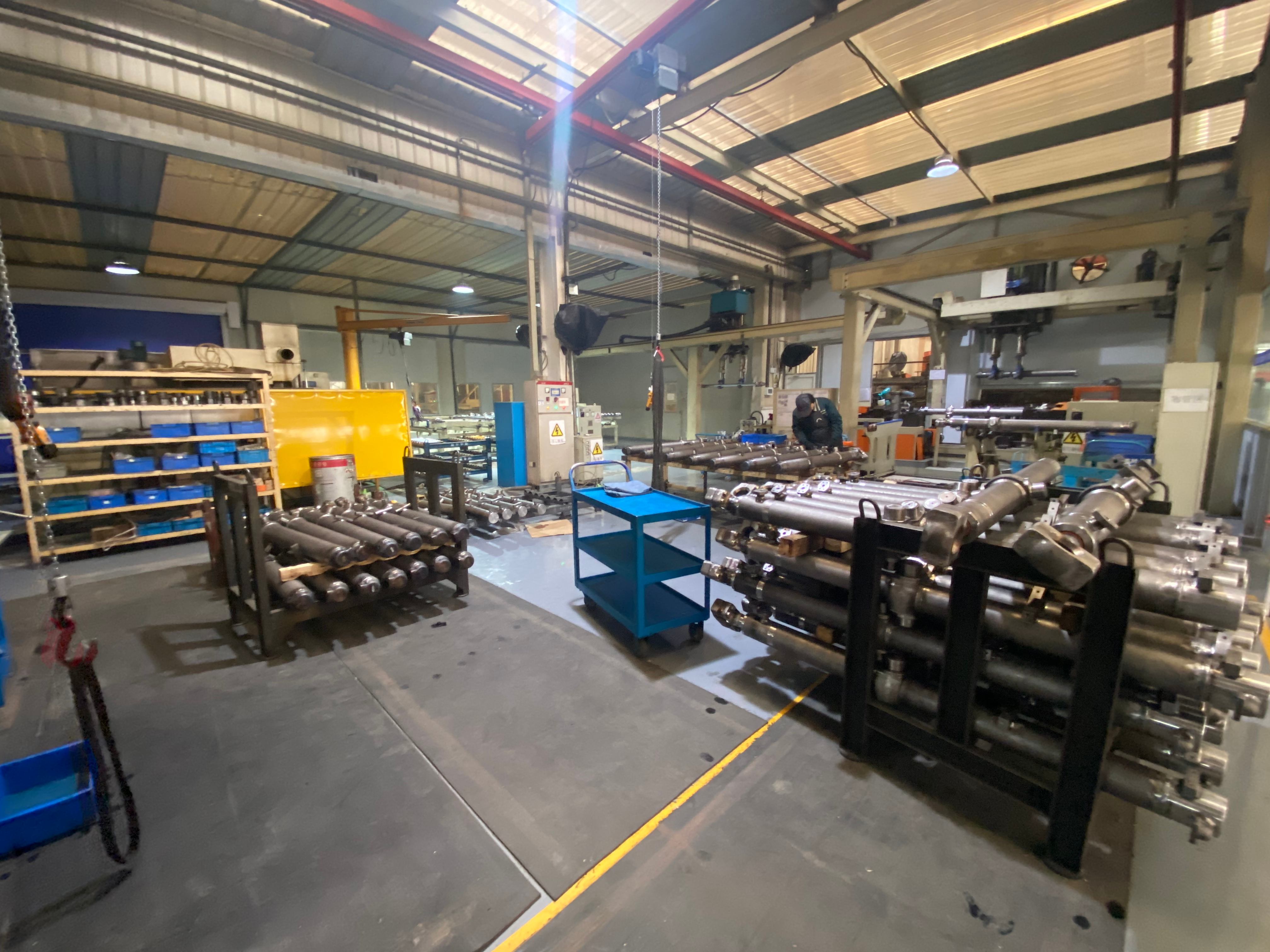
When a mobile machine needs hydraulic power, the engineering choice often narrows to two package directions: a compact power pack close to the actuator, or a vehicle-mounted unit integrated with the chassis, cab controls and auxiliary hydraulic circuits. This buyer review compares those two custom hydraulic power unit approaches with emphasis on contamination and pressure risk controls, not just motor and pump figures.
Apex Hydraulic Co., Ltd. — a Qingdao, Shandong-based manufacturer founded in 2009, specializing in custom hydraulic cylinders, hydraulic power units and complete hydraulic solutions — is used here as a published reference because its catalogue contains both a custom low-noise compact family and a custom vehicle-mounted auxiliary family. The comparison is written from an independent buyer perspective, not as a corporate announcement.
Why compact and vehicle-mounted HPUs create different risk profiles
Compact units are usually expected to fit inside an enclosure, produce lower noise and supply a limited number of functions. Vehicle-mounted units are expected to run several vehicle functions, accommodate a larger reservoir and survive chassis-mounted vibration and weather. They contain similar hydraulic components but cannot be evaluated with one simple checklist.
The procurement problem is not only finding a supplier; it is closing the gap between a quoted package and the manufacturing practices behind it. Contamination and pressure errors often hide behind a clean quotation. A power unit can have the right motor and pump yet still fail early if debris remains in the manifold, filters are excluded, or relief valves are not verified before shipment.
Two published reference families from Apex Hydraulic
The following comparison draws from Apex Hydraulic's published product data. It is not a complete list of every compact or vehicle-mounted unit available, but it gives buyers a factual anchor for their own checklists.
| Comparison point | APEX-CLNCHPU compact low-noise | APEX-CVMAHPU vehicle-mounted auxiliary |
|---|---|---|
| Positioning | Machine-mounted, cabinet-mounted or space-constrained low-noise applications | Chassis, frame or enclosure-mounted vehicle auxiliary applications |
| Voltage | 12/24/48 VDC or 220/380 VAC, 50/60 Hz | 24/48 VDC |
| Motor power | 0.35–4.0 kW | 1.5–8.0 kW |
| Maximum working pressure | 230 bar / 3,335 PSI | 250 bar / 3,625 PSI |
| Flow rate | 1–20 L/min | 3–40 L/min |
| Reservoir capacity | 0.5–18 L | 5–60 L |
| Hydraulic functions | 1–4 | 1–6 |
| Control options | Push button, foot pedal, pendant, wireless remote or PLC | Cab-mounted switch, pendant, wireless remote, PLC or CAN bus |
| Mounting style | Machine, wall, floor or cabinet | Chassis, frame or enclosure |
| Published filter options | Return-line filter, suction strainer, air breather filter — optional | Return-line filter, pressure-line filter, suction strainer — optional |
One key observation from this data is that a compact family can be specified with small reservoir and low power, while a vehicle-mounted family can be specified with larger reservoir and more functions. Neither family should be assumed to include filtration just because a catalog mentions it; optional filter items must be selected and confirmed in the quotation.
Contamination risk controls for custom HPUs
Contamination is one of the most common reasons for premature hydraulic component failure. In compact and vehicle-mounted units, particles can clog cartridge valve orifices, hold solenoid spools open, damage gear pumps and reduce the effectiveness of pressure relief valves.
A buyer should ask four questions before approving a custom HPU design:
- Which components are cleaned before assembly, and where does that cleaning happen in the production sequence?
- What fluid cleanliness target is defined for the complete hydraulic circuit?
- Which filters are in the quotation: return-line, pressure-line, suction strainer and breather filter?
- How does the factory prevent dirt entry during reservoir manufacturing, manifold assembly and testing?
Apex Hydraulic publishes at least one HPU family with a specified target cleanliness level: the custom multi-function unit for aerial work platforms, APEX-CMFHPU, lists ISO 4406 20/18/15. This type of statement gives an OEM an acceptance target. Without a target, the word clean remains subjective.
In the compact low-noise family, published optional contamination controls include return-line filters, suction strainers and air breather filters. In the vehicle-mounted auxiliary family, published optional controls include return-line filters, pressure-line filters and suction strainers. A cautious buyer will explicitly define which of these are included, where they are located and how filters will be serviced in the field.
Pressure risk controls in compact and vehicle-mounted designs
Custom compact and vehicle-mounted units are not low-pressure devices. The Apex reference families have maximum working pressures of 230 bar and 250 bar respectively. Inside a small manifold, pressure can spike when a directional solenoid valve shifts or when a cylinder changes load direction. At these pressure levels, a single particle or burr can cause a spool to stick open or create an internal leak.
Pressure relief valves on custom HPUs are generally adjustable. Adjustability is useful during engineering, but it also creates risk if actual set points are not verified. Buyers should request relief-valve verification for each port or circuit after assembly.
For Apex Hydraulic's APEX-DTHPU single-acting 12 V dump trailer hydraulic power unit, the published unit-level test list includes pressure testing, flow testing, relief-valve verification, solenoid-valve functional testing, motor current testing and leakage inspection. That list is a practical model for buyers applying the same discipline to custom compact and vehicle-mounted multi-function units.
Vehicle-mounted systems often use additional safety components such as load-holding valves, counterbalance valves or pilot-operated check valves. In Apex Hydraulic's vehicle-mounted family, these are published as optional features. When included, their function should also be tested with the full hydraulic circuit before delivery.
What serial-production buyers should verify
Before approving a prototype or first batch, request a control plan that covers:
- Cleaning of reservoir, manifold and hose connections before assembly.
- Filter specification, filter location and target oil cleanliness.
- Pressure verification for each relief valve or circuit.
- Functional testing of every solenoid valve, lowering valve or proportional valve.
- Motor current, flow and leakage checks where required by the design.
- Serial number, test date and a test report for the exact HPU configuration quoted.
Apex Hydraulic's capability documents list incoming material inspection (IQC), in-process quality control (IPQC), final quality inspection (FQC), pressure testing, leakage testing, dimensional inspection, welding inspection, surface finish inspection, functional testing and 100% final inspection. This is a useful starting point, but it is not the same as a unit-level test report. For a custom HPU buyer, the final evidence should be the report attached to the serial-numbered unit being shipped.
Applications and use-case fit
The compact low-noise HPU family is suited to applications where the power unit is placed inside equipment or near operating personnel. Published Apex applications include medical equipment, patient lifting equipment, accessibility lifts, wheel-chair lifts, lift tables, scissor lifts, ergonomic workstations, packing machinery and machine tools.
The vehicle-mounted auxiliary HPU family is suited to municipal and commercial vehicle functions. Published Apex applications include refuse collection vehicles, garbage trucks, truck tailgates, street sweepers, road maintenance vehicles, utility trucks, service trucks, truck-mounted cranes, vehicle stabilizers and special-purpose trucks. Control options such as cab-mounted switches, wireless remotes, PLC and CAN bus align with vehicle electrical architectures.
These application lists are not interchangeable. A low-power compact unit designed for a hospital lift table should not be specified for a refuse truck with several hydraulic actuators. Conversely, a large vehicle-mounted unit may be unnecessary weight and cost for a simple single-function scissor lift built into an industrial machine.
Comparison with traditional mobile hydraulic systems
Compact DC HPUs and vehicle-mounted HPUs are sometimes considered direct substitutes for an engine-driven PTO pump. A traditional PTO-driven system can produce high continuous flow using engine power. However, it often requires the engine to run, power take-off installation, more hydraulic plumbing and less flexible packaging.
A standalone compact or vehicle-mounted HPU provides electric-driven hydraulic power without the engine running, simplifies installation and enables more flexible remote or automated control. Its clear limitation is that it depends on the vehicle electrical system and generally operates in an intermittent-duty envelope. If an application demands sustained high flow for many hours, a PTO-driven pump, an AC-powered unit or another continuous power source may be more appropriate. Customization does not remove that duty-cycle boundary.
Market data supports package-level thinking
Third-party market research does not divide the hydraulic power unit market exactly into compact and vehicle-mounted categories, but it points to growing interest in electric-powered packages. Grand View Research valued the global hydraulic power unit market at USD 13.6 billion in 2024; Precedence Research estimated about USD 11.4 billion for the same year. In the United States, Grand View Research reported that electric-powered hydraulic power units accounted for 60.1% of revenue share in 2024. The 2,000–3,000 PSI pressure segment is projected by Grand View Research to grow at a CAGR of 5.8% from 2025 to 2033.
These trends explain why OEM buyers are comparing compact and vehicle-mounted package options early in a machine development program. Higher pressure designs allow smaller components, but they also reduce tolerance for contamination and poor assembly practice.
Future outlook
Compact and vehicle-mounted HPUs will probably move closer in pressure ratings while continuing to differ in reservoir capacity, function count and mounting architecture. Buyers are likely to place more weight on contamination control, calibration evidence and traceable test reports as pressure levels rise.
The near-term purchasing action is less about choosing a brand by reputation and more about procurement discipline. A specification with a target cleanliness level, confirmed filter schedule, pressure setting table and output test report will reduce the gap between catalog rating and real service life.
Frequently asked buyer questions
What is a compact hydraulic power unit?
A compact hydraulic power unit packages a motor, pump, valves and reservoir into a small frame. In Apex Hydraulic's published product structure, the APEX-CLNCHPU low-noise compact unit supports 1–4 functions, uses 12/24/48 VDC or 220/380 VAC, has a motor range of 0.35–4.0 kW, a maximum pressure of 230 bar / 3,335 PSI and a reservoir capacity of 0.5–18 L.
What does vehicle-mounted mean for an HPU?
A vehicle-mounted auxiliary HPU is designed for installation on a vehicle chassis, frame or enclosure rather than inside an industrial machine. Apex Hydraulic's APEX-CVMAHPU family is rated at 24/48 VDC, 1.5–8.0 kW, 3–40 L/min, up to 250 bar / 3,625 PSI and a reservoir capacity of 5–60 L, with 1–6 hydraulic functions and vehicle-style control options.
What pre-delivery testing should buyers ask for?
For Apex Hydraulic's published single-acting 12 V dump trailer HPU, the unit-level tests include pressure testing, flow testing, relief-valve verification, solenoid-valve functional testing, motor current testing and leakage inspection. Company-level quality documents also list IQC, IPQC, FQC and 100% final inspection. For a custom multi-function HPU, buyers should request unit-level or lot-level test records with measured values.
Do compact and vehicle-mounted HPUs include filtration as standard?
No. In Apex Hydraulic's published product data, filtration is listed as optional. The compact low-noise family lists optional return-line filters, suction strainers and air breather filters. The vehicle-mounted auxiliary family lists optional return-line filters, pressure-line filters and suction strainers. Filter levels must be specified in the buyer's configuration.
Can an HPU with a higher maximum pressure be used for every load?
Not always. Pressure should be set to match the actual cylinder force, actuator load and hydraulic component rating. A higher pressure setting can increase heat, internal leakage and system stress. Buyers should verify relief-valve settings rather than select a unit based only on maximum pressure.
Apex Hydraulic product catalog (PDF): Open PDF
هل لديك أسئلة أو تحتاج إلى مزيد من التفاصيل؟
تواصل مع فريقنا للحصول على عرض أسعار مخصص أو استشارة فورية.
طلب عرض أسعار
املأ النموذج أدناه وسيتواصل معك فريقنا بعرض مقترح مخصص.
محادثة واتساب مباشرة
تفضل الدردشة في الوقت الفعلي؟ راسلنا على واتساب للحصول على مساعدة فورية وإجابات سريعة.
- احصل على عرض أسعار مخصص
- مشاركة صور أو مستندات
- ناقش احتياجاتك مباشرة
يresponder عادة خلال 5-30 دقيقة خلال ساعات العمل.