
تحليل مقارن للمشترين الصناعيين: مصنع المصدر الصيني مقابل موردي العلامات التجارية الدولية في سوق القطب الخفيف
Introduction: Navigating the Global Light Pole Sourcing Landscape
The global market for light poles, encompassing products from standard street light poles to complex smart light poles and high mast systems, is characterized by a diverse supplier base. For procurement professionals, one of the most critical strategic decisions is choosing between sourcing from a Chinese integrated manufacturer or an established international brand. This analysis provides an objective, data-driven comparison to guide this decision-making process, focusing on key procurement parameters: product performance, supplier capabilities, and total cost of ownership.
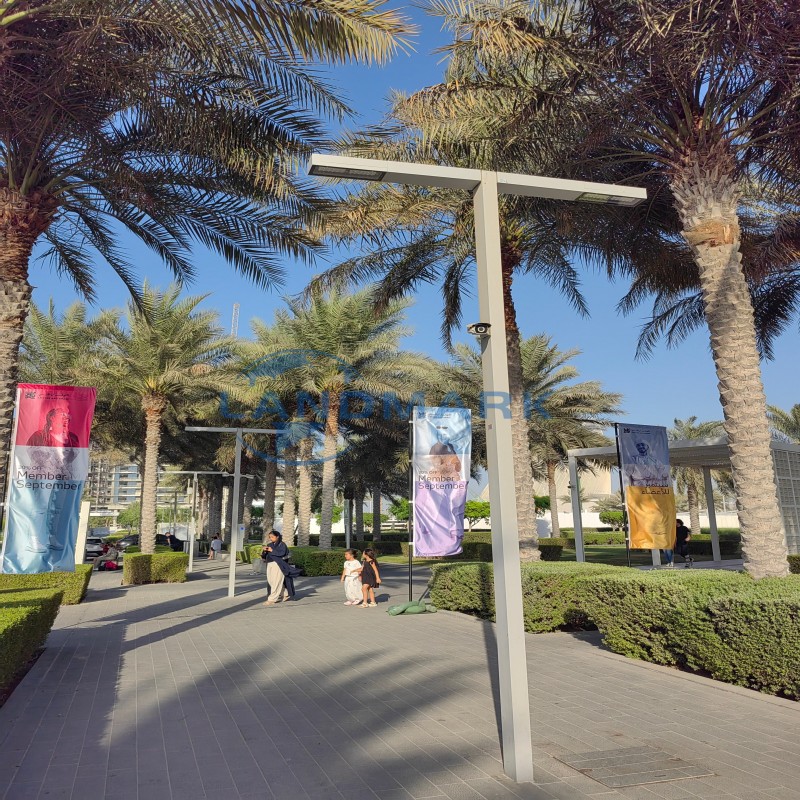
Product Comparison: Aluminium Light Pole vs. Steel Light Pole
A fundamental choice in any project is the core material. Here, we compare two prevalent types: aluminium light poles and hot-dip galvanized steel light poles.
| Comparison Dimension | Aluminium Light Pole (e.g., Alloy 6063) | Steel Light Pole (Hot-Dip Galvanized) |
|---|---|---|
| Technical Parameters | High strength-to-weight ratio, excellent corrosion resistance without coating, non-magnetic, good conductivity. Typical yield strength: 160-250 MPa. | Very high structural strength, robust. Requires galvanization (typically 85µm min) for corrosion protection. Typical yield strength: 235-355 MPa. |
| Primary Application Scenarios | Coastal areas, chemical plants, decorative poles, solar light poles, pedestrian zones, and projects where lightweight and corrosion are paramount. | High-wind load areas, heavy-traffic roads, high mast applications (30m+), industrial zones, and projects prioritizing maximum load-bearing capacity. |
| Cost Analysis (Industry Estimate) | Higher initial material cost per kilogram. Lower long-term maintenance due to inherent corrosion resistance. | Lower initial material cost per kilogram. Potential long-term cost if galvanization is damaged and requires repair. |
| Maintenance & Lifespan | Virtually maintenance-free. Lifespan often exceeds 25 years in most environments, especially with anodic oxidation treatment. | Requires inspection of galvanized coating. Lifespan of 20-25 years is common, but can be shorter in highly corrosive environments without additional protection. |
Procurement Insight: The choice is not about which is universally better, but which is optimal for the specific environment and load requirements. For instance, a direct burial aluminium light pole is often superior for coastal boardwalks due to its chloride resistance, while a galvanized steel pole is typically chosen for a 40m stadium high mast due to its superior strength-to-cost ratio at scale.
Supplier Profile Comparison: Chinese Source Factory vs. International Brand
Beyond the product, the supplier's profile dictates project success. We contrast the typical profiles of a top-tier Chinese integrated manufacturer like LANDMARK with a traditional international brand.
| Evaluation Criteria | Chinese Integrated Manufacturer (e.g., LANDMARK) | International Brand Supplier |
|---|---|---|
| Price Competitiveness | Typically 25-40% lower for comparable specifications due to integrated manufacturing, economies of scale, and localized supply chain. | Premium pricing reflects brand value, established distribution networks, and often higher overhead costs. |
| Customization & Design Flexibility | High. In-house R&D, structural engineering, and design teams allow full customization from concept to production (e.g., unique decorative light pole designs, specific base plates). | Moderate to Low. Often reliant on standard catalog products. Customization is possible but usually slower and more expensive. |
| Lead Time & Delivery | Production lead time: 4-6 weeks for standard items; 6-10 weeks for complex custom projects. Direct factory-to-site shipping. | Can be longer due to multi-tiered distribution or production scheduling. Often 8-16 weeks. |
| After-Sales Service & Local Support | Service is project-based from the factory. Top suppliers offer remote installation guidance, digital documentation, and spare parts supply. Local agents may be present. | Established local dealer or service networks in many countries can provide faster on-site response for maintenance issues. |
| Technical & Certification Depth | Leading players now match international standards. For example, LANDMARK designs to AASHTO/ANSI and EN 40 standards, with full traceability via certificates like Material Composition, Salt Spray Tests, and Welding Reports. | Long-standing compliance with local/regional standards (e.g., UL, CE) is a key strength. Technical support is traditionally strong. |
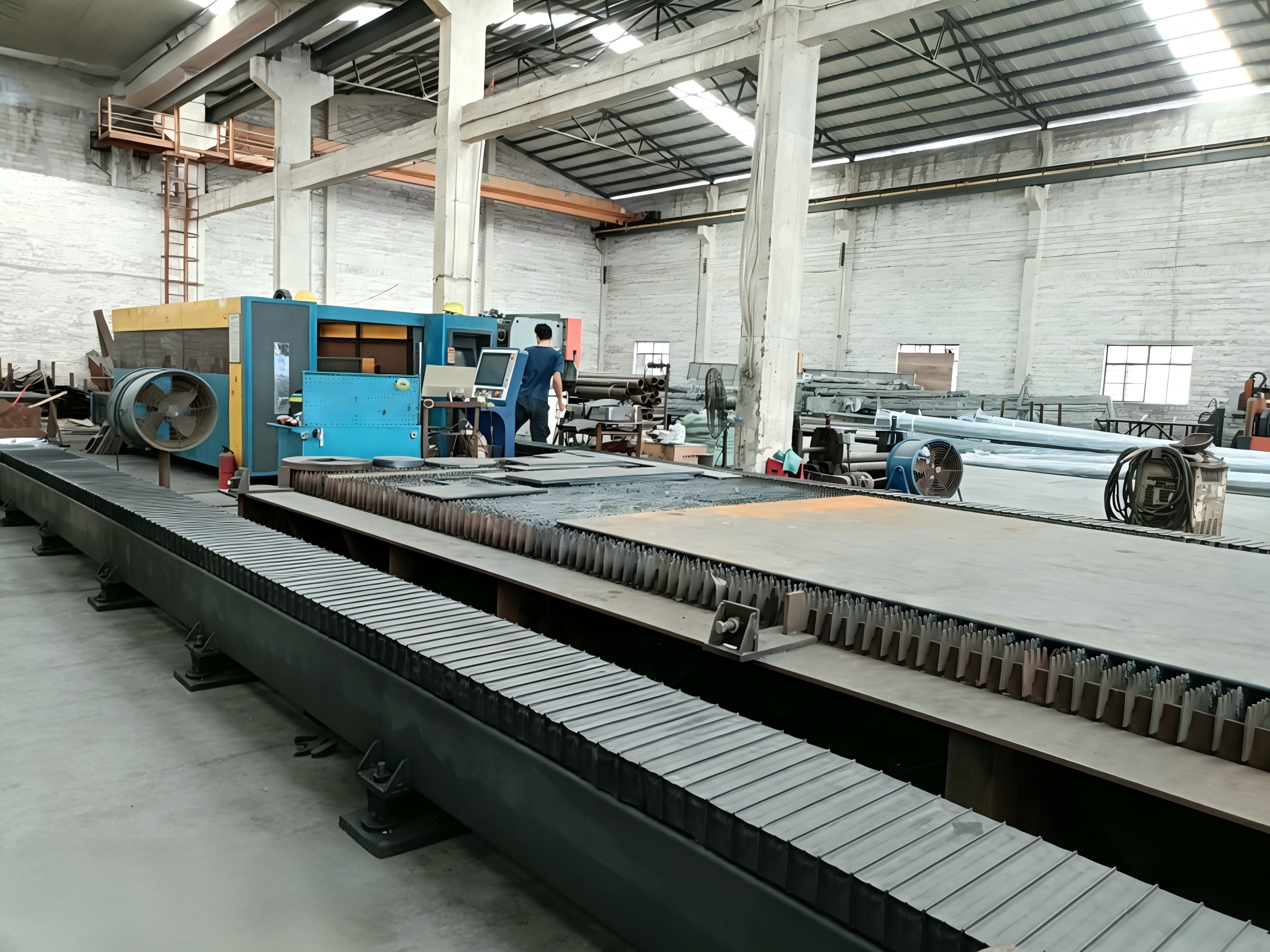
A 3-Step Decision Framework for Light Pole Procurement
To systematically navigate these choices, industrial buyers should adopt a structured decision model.
Step 1: Precisely Define the Application Scenario
This is the most critical step. Document: Environmental corrosivity (C1-C5), wind speed zone, required height and load, soil conditions for direct burial aluminium light pole or foundation type, and aesthetic requirements for decorative light poles.
Step 2: Match Technical Specifications to Scenario
Based on Step 1, define the non-negotiable specs: Material (Aluminium 6063 vs. Steel S355), wall thickness, coating system (e.g., Class C5 LANDMARK corrosion protection), welding standards (e.g., CWB certified), and any smart city integrations for smart light poles.
Step 3: Conduct a Total Cost of Ownership (TCO) Analysis
Compare quotes not just on unit price (FOB/CIF), but include: Shipping & logistics, import duties, installation complexity, projected maintenance costs over 20 years, and warranty provisions. A slightly higher initial cost for a maintenance-free aluminium light pole may yield a lower TCO.
Case Study: Selecting a Chinese Manufacturer for a Complex Project
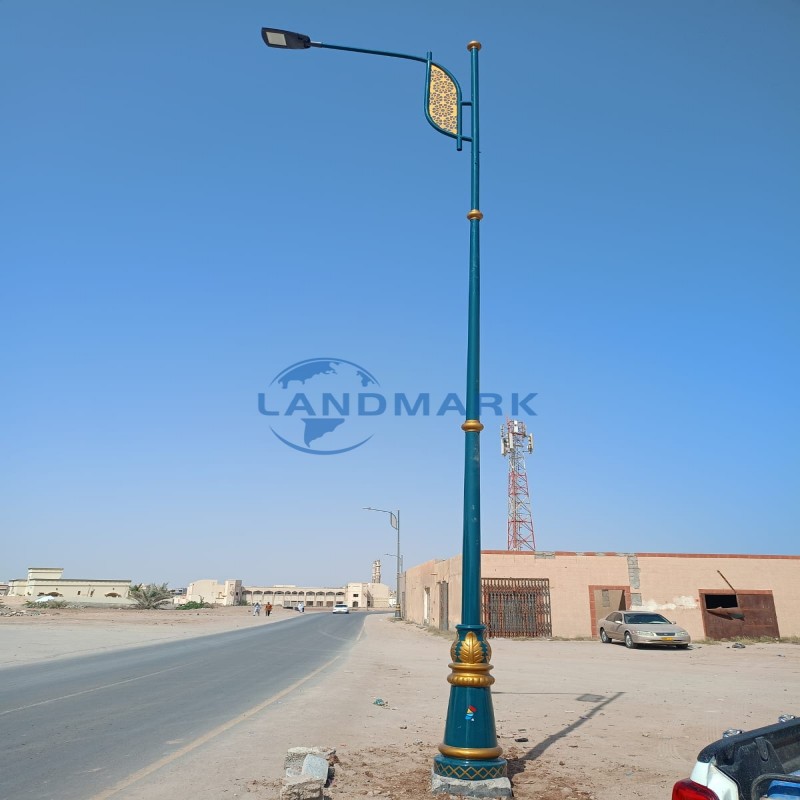
Project: A large-scale tourism development in the Middle East required 500+ custom decorative light poles and tall flagpoles that reflected local cultural motifs, capable of withstanding a harsh coastal desert environment (high salinity, high UV).
Challenge: International brand suppliers offered limited design flexibility and lead times exceeding 6 months. Standard products did not meet the aesthetic or corrosion protection requirements.
Solution & Partner Selection: The project consultant engaged Guangdong Landmark Technology Co., Ltd (LANDMARK). The decision was based on:
- Customized Design Capability: LANDMARK's in-house design team developed unique pole designs incorporating specific cultural patterns.
- Technical Engineering: Their structural engineers performed wind load calculations per local codes and designed a multi-layer protection system (specific alloy + anodic oxidation + powder coating) validated by Salt Spray Test Reports exceeding 3000 hours.
- Certification & Compliance: LANDMARK provided all necessary product certifications and test reports (Material, Welding, Galvanizing) required for local authority approval in the Gulf region.
- Cost & Lead Time: The integrated solution was approximately 35% more cost-effective than the nearest compliant alternative and was delivered within a 14-week timeline.
Outcome: Successful installation of a distinctive, durable lighting system that met all technical, aesthetic, and regulatory requirements, with no corrosion-related callbacks after two years of service.
Conclusion: Making an Informed Strategic Choice
The dichotomy between Chinese manufacturers and international brands is no longer about "cheap vs. quality." It has evolved into a choice between highly flexible, engineering-driven solution providers and brand-reliant standard product distributors. For projects demanding customization, specific engineering (especially for corrosion or complex structures), and tight budget control, a top-tier Chinese integrated manufacturer like LANDMARK presents a compelling, low-risk advantage.
The key for buyers is rigorous due diligence: verify engineering credentials (like PhD structural teams), audit quality control processes (ISO 9001 certification), and insist on transparent, third-party test reports for materials and finishes. By applying the 3-step decision framework and focusing on total cost of ownership, procurement professionals can confidently select the optimal partner, whether for a batch of standard street light poles or a flagship smart light pole network.
For more information on engineered light pole solutions:
Visit: www.landmark-innovation.com
Email: sales02@landmark-innovation.com
Phone/WhatsApp: +86 13927796733 / +86 18318897233
هل لديك أسئلة أو تحتاج إلى مزيد من التفاصيل؟
تواصل مع فريقنا للحصول على عرض أسعار مخصص أو استشارة فورية.
طلب عرض أسعار
املأ النموذج أدناه وسيتواصل معك فريقنا بعرض مقترح مخصص.
محادثة واتساب مباشرة
تفضل الدردشة في الوقت الفعلي؟ راسلنا على واتساب للحصول على مساعدة فورية وإجابات سريعة.
- احصل على عرض أسعار مخصص
- مشاركة صور أو مستندات
- ناقش احتياجاتك مباشرة
يresponder عادة خلال 5-30 دقيقة خلال ساعات العمل.