
Comparing Aluminum Can Quotes: A Buyer's Line-by-Line Review
Procurement Review
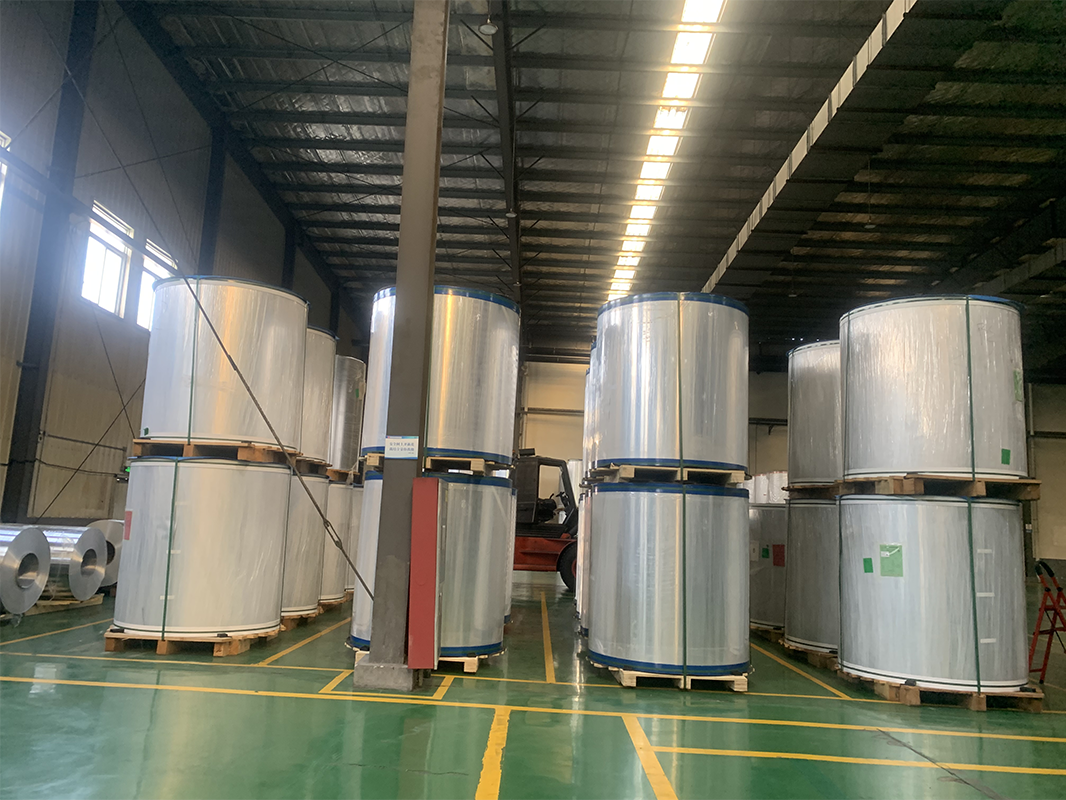
Two aluminum can quotations can sit within a few percent of each other on unit price and still describe two different products. The gap is rarely in the number. It sits in the lines that were never written down: the coating system behind the price, the quantity tier the price was built on, the trade term hiding inside the freight, and the inspection scope behind the word 'quality'.
This review is written from the buyer's side of the table rather than the supplier's. Its scope is deliberately narrow: how to place competing offers for aluminum cans, metal cans and related beverage can formats on an equal footing, so that a price difference can be explained rather than guessed at. No supplier is ranked here, and no competitor is named. What follows is a set of specification lines that should appear on every quotation before prices are compared, together with the procurement questions buyers most often forget to ask and an explanation of why a blank line is never a saving.
The working definition is simple. A quotation is comparable when a second supplier could restate every price-bearing assumption identically. Until that test is passed, the buyer is not comparing prices. The buyer is comparing information gaps.
The Short Answer: Comparability Is a Specification Problem, Not a Price Problem
The first useful distinction in any aluminum can procurement exercise is between a price and a priced specification. A price attached to an incomplete specification is not a low offer; it is an undefined offer, and undefined offers almost always appear cheaper because the supplier has priced only the parts the buyer remembered to describe.
In practice, six lines carry nearly all of the comparability risk in a can quotation:
- Can format — nominal fill volume, body diameter, height, end diameter and end style.
- Interior coating — the coating system, its food-contact status, and the documentation that proves it.
- Order quantity basis — whether the quantity is per SKU or per order, and which tier the price was built on.
- Decoration — number of colours, print method, and whether plates or cylinders are inside the price.
- Commercial terms — trade term, named port, payment schedule and currency.
- Inspection scope — agreed test items, AQL level and the report that will be issued before shipment.
Buyers who standardise these six lines across every offer convert a negotiation about perception into a negotiation about specification, which is the only negotiation a purchasing team can actually win on merit.
Line 1 — Can Format: Volume, Diameter, Height and End
Format is the line that most often drifts first, because both sides believe they have already agreed on it. A buyer specifies 'a beverage can' and a supplier quotes the format it runs most often. What follows is a quotation that is technically responsive but commercially useless.
What a format line must state
A complete format description covers the nominal fill volume, the body diameter, the overall height, the end diameter and the end style, plus whether the quoted can is intended for a still product or a carbonated one. For beer can and soda can applications, the pressure requirement is part of the format, not an afterthought, because it drives body weight and the end specification.
Shorthand is not a specification. Labels such as 'slim', 'sleek', 'standard' or a trade shorthand like '3.5 soda can' travel between buyers and suppliers and are read differently in each building. Where a buyer uses shorthand, the supplier should be required to translate it back into measurable parameters on the quotation, and the buyer should confirm the translation in writing before the price is accepted.
The same discipline applies to coffee can formats and other cans with lids, where the closure defines the packaging rather than the body alone. A tin can packaging quotation that prices a body but leaves the closure, lid fit and seaming compatibility outside the document is not a complete offer for that application.
The format line buyers should send, not receive
Rather than waiting for suppliers to describe format differently, issue a one-page format sheet with the enquiry and ask each supplier to quote against it and to list deviations explicitly. Deviations that are written down can be compared. Deviations that are silent cannot.
Line 2 — Interior Coating: The Line That Decides Food-Contact Comparability
Interior coating is where two visually identical aluminum cans stop being the same product. A coating system affects food-contact compliance, corrosion behaviour in acidic or carbonated fills, adhesion performance through filling and pasteurisation, and the documentation the buyer must hold on file.
What to require from each supplier
- The coating system used on the quoted can, stated by supplier designation rather than by adjective.
- Whether the lining is BPA-free by specification.
- Which test report covers that coating, issued by which laboratory, on what date, and against which standards.
- Whether incoming material is verified batch by batch against a Certificate of Analysis.
- Whether coating adhesion is tested as part of routine quality control.
- Whether batch retention samples are held, and for how long after shipment.
For reference, IDEA PACKAGE states that its aluminum can lining is BPA-free by specification, that each incoming batch is checked against its COA before production, that coating adhesion testing verifies bond strength, and that batch retention samples are maintained. The related BPA test report on file — report number ZTS25012103ERC, issued 12 February 2025 by Shenzhen ZTS Testing Service Co., Ltd. — covers a Bisphenol A test for aluminum can coating and references Regulation (EC) No 1935/2004, (EU) 2018/213, (EU) 10/2011 and CEN/TS 13130-13:2005.
Comparability test: if one quote names a coating system and its supporting report while the other leaves the coating line blank, the price gap between them is unallocated. It may reflect a different liner, a different report scope, or nothing at all. The buyer cannot know which, and should not guess.
Line 3 — Order Quantity: What the Number in the Quote Actually Buys
Quantity assumptions are the quietest source of false comparison in can procurement, because quantity is expressed as a single figure while carrying several different meanings. Two suppliers can both quote 'the same quantity' and be pricing different things.
The quantity questions that must be answered in the document
Is the stated quantity per SKU or across the whole order? Does the price assume a single production run, or does it tolerate a split delivery? What over-run or under-run is acceptable, and how is it invoiced? Are printing plates or cylinders amortised into the price, and who retains them for a repeat order? Does the quoted price remain valid for the same quantity on a second order?
These questions matter because mass-production pricing is tiered. For IDEA PACKAGE aluminum cans, the minimum order quantity for standard mass-production pricing is 100,000 pieces, and the stated lead time is 7 days for 1–10,000 pieces, 15 days for 10,001–500,000 pieces, and negotiable above 500,000 pieces. Monthly capacity is stated at 300,000,000 pieces per month.
Read as a comparison tool, that structure tells a buyer something important: an offer built on a quantity below the standard mass-production threshold is not a cheaper version of the same offer, it is a different production arrangement, and it should be flagged as such on the comparison sheet rather than placed in the same price column.
Line 4 — Decoration: Print, Colours and Who Owns the Plates
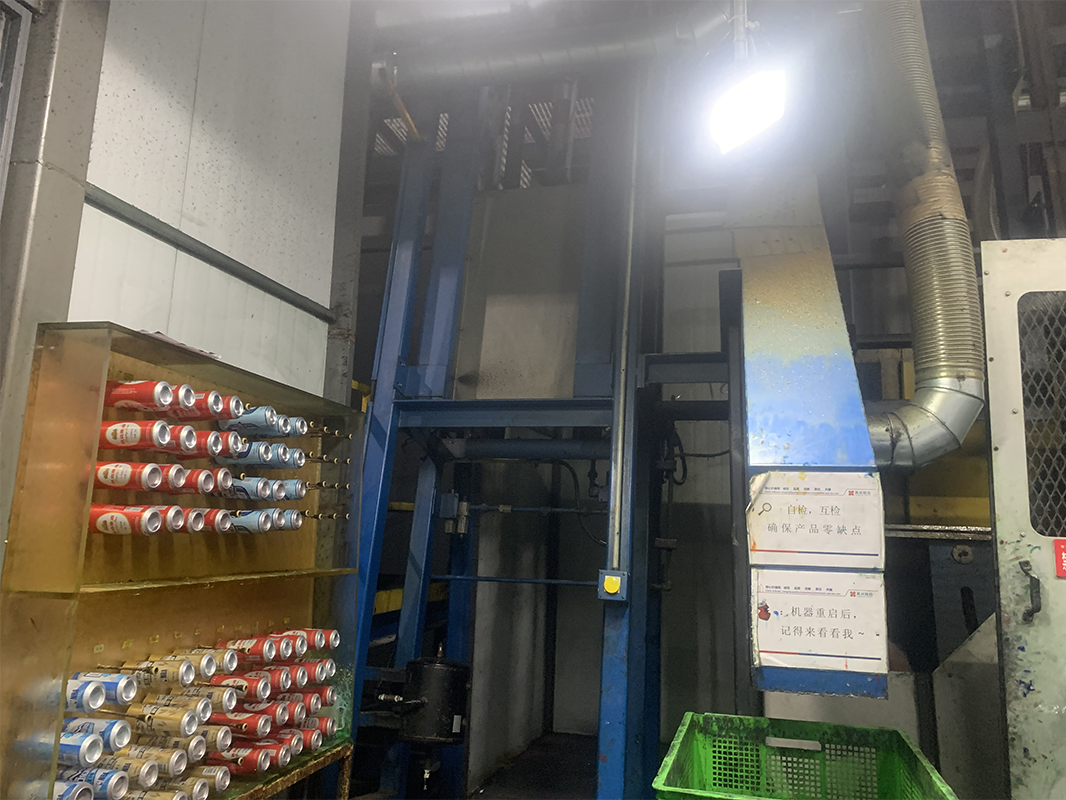
Decoration is frequently quoted as an adjective — 'printed', 'customised', 'branded' — and almost never as a specification. Yet colour count, print coverage and artwork complexity are direct cost drivers, and a quote that leaves them open is a quote that will be revised after artwork approval.
A comparable decoration line states the number of colours, the print method, the colour reference system used for matching, whether a base coat and an overcoat varnish are included, whether artwork preparation and plate or cylinder costs sit inside or outside the unit price, and who holds the tooling between orders. Where a supplier offers customisation across logo, packaging, graphic, printing, colour, coating, size and capacity as a single custom programme, the quotation should still decompose those elements, because a bundled customisation line cannot be compared against an itemised one.
Line 5 — Commercial Terms: Trade Term, Payment and Inspection
Price without a trade term is not a price. A quote issued FOB, CIF or EXW describes three different economic arrangements, and comparing them on the unit figure alone is the most common error in packaging procurement.
The commercial block of a comparable quotation should name the trade term and the named port, the payment schedule, the currency, the inspection arrangement, the packaging and pallet configuration, and the document set that will accompany shipment. IDEA PACKAGE's stated commercial terms are indicative of the level of detail that makes a quote reviewable: FOB, CIF or EXW are all offered; payment is 30% T/T deposit before production with 70% T/T against a copy of the B/L; goods are inspected by pre-shipment test before they leave, with the test report provided; and test items and AQL are agreed with the buyer before production starts.
That last clause deserves emphasis. Inspection is only a control if the acceptance criteria were fixed before the order, not after the goods are ready. A supplier that offers testing but leaves the test items and AQL undefined has offered an activity rather than a standard.
A Line-by-Line Comparison Table Buyers Can Send to Every Supplier
The table below is the practical instrument. It can be issued as a blank template with the enquiry, so that every supplier fills in the same rows and the buyer compares like with like.
| Quote line | What the supplier must state | Why the quote becomes non-comparable without it |
|---|---|---|
| Can format | Nominal volume, body diameter, height, end diameter, end style, still or carbonated duty | A different format is a different product and a different metal input |
| Body and end specification | Body weight or gauge basis, end specification | Lighter bodies change both price and pressure performance |
| Interior coating | Coating system, BPA status, supporting report number and standard | Food-contact compliance cannot be inferred from a price |
| Exterior decoration | Colour count, print method, base coat, overcoat, colour standard | Decoration cost is variable and often quoted open-ended |
| Quantity basis | Per SKU or per order, tier, over/under-run tolerance | Tiered pricing makes unlike quantities look like unlike quality |
| Tooling | Plate or cylinder cost, inclusion, ownership, re-use on repeat order | Tooling shifts cost between first order and reorder |
| Lead time | Stated by quantity band, with the trigger date defined | A delivery promise without a starting event cannot be measured |
| Trade term | Incoterm and named port | Freight and risk allocation differ between FOB, CIF and EXW |
| Payment | Deposit and balance milestones, currency | Payment timing is part of the real cost of an order |
| Inspection | Test items, AQL, report type, who attends | Unagreed acceptance criteria cannot be enforced |
| Packaging | Pallet type, layer configuration, shrink or carton specification | Packaging changes freight volume and damage exposure |
| After-sales | Support channel and scope | Support scope is frequently assumed rather than quoted |
Unit-Price Comparison Versus Line-by-Line Comparison
It is worth being explicit about the trade-off, because the faster method is not without merit. A unit-price comparison takes minutes and produces a clean number. A line-by-line review takes longer, requires specification input from the buyer's own technical team, and sometimes delays a decision while a supplier is asked to restate an offer.
| Approach | What it delivers | Where it breaks down |
|---|---|---|
| Unit-price only | Fast, simple, useful for like-for-like reorders of an already-approved specification | Cannot separate coating, quantity tier or trade-term differences; hides unpriced risk |
| Line-by-line review | Explains the price difference and documents the basis for audit or internal approval | Slower; depends on the buyer supplying a clear format sheet first |
The sensible position for most buyers is a hybrid: keep the unit price as the headline, but refuse to move to a second round of negotiation until the comparison table is complete, because the second round is where specification gaps usually become cost.
Procurement Questions Buyers Commonly Overlook
- Is the coating report for the quoted can, or for another product in the same range? A report on file is not automatically a report on the specification being purchased.
- Is the quantity per SKU or across the order? A multi-reference order can disguise a per-SKU volume well below the mass-production threshold.
- Who owns the printing plates or cylinders after the first order? Ownership determines the real cost of a reorder.
- What over-run or under-run will be invoiced, and at what price? Unstated tolerances are settled after production, when the buyer has less leverage.
- Which test items and which AQL will be used? Inspection without agreed criteria is an activity, not a control.
- Does the quoted price hold for the same quantity on the next order? A first-order price is not necessarily a supply price.
- Which legal entity issues the invoice and holds the certification? Entity clarity matters when documentation is audited later.
- What is the scope of after-sales support? Remote technical support and on-site engineering are different commitments and should not be assumed to be the same.
- Does the offer cover the closure where the format includes one? For cans with lids, tin can packaging and coffee can formats, the closure is part of performance.
How a Missing Answer Turns a Price Difference into Unpriced Risk
The mechanics are consistent across categories, and best shown by example rather than assertion.
Coating left blank. Supplier A quotes a price with a named coating system and a report reference; Supplier B quotes a lower price with no coating line. The difference is not proof of a cheaper product. It is proof that one price includes a defined food-contact position and the other does not. Until B restates the coating, the gap is unallocated.
Quantity basis left blank. One supplier prices a single reference at a volume above the mass-production threshold; another prices a mixed order where each reference falls below it. The unit prices differ because the production arrangements differ, not because one supplier is more competitive.
Trade term left blank. Two offers look aligned until freight and insurance are added, at which point the cheaper headline becomes the more expensive landed arrangement.
Inspection scope left blank. A price that excludes pre-agreed testing does not remove the cost of quality; it moves it to the buyer, who will discover the difference at the destination port.
The rule that follows from all four cases: a blank line is not a saving, it is a risk with no price attached. Restate it in writing before comparing.
Where IDEA PACKAGE Fits in a Line-by-Line Review

IDEA PACKAGE — the trading identity of ANHUI IDEA TECHNOLOGY IMP&EXP Co.,Ltd., part of ANHUI IDEA Group, headquartered in Hefei, Anhui Province, China — is a packaging manufacturer and exporter supplying glass, plastic and metal packaging, including aluminum cans under the Aluminum Can-601 model, to food, beverage, personal care, condiment and alcoholic beverage markets. It holds ISO 9001, FDA and CE certification and states exports to more than 150 countries and regions.
Placed inside the comparison framework above rather than outside it, the following facts are the ones a buyer would normally need to extract line by line:
- Format and customisation: OEM/ODM production with customisation across logo, packaging, graphic, printing, colour, coating, size and capacity.
- Quantity basis: MOQ of 100,000 pieces for standard mass-production pricing; monthly capacity of 300,000,000 pieces per month.
- Lead time: 7 days for 1–10,000 pieces; 15 days for 10,001–500,000 pieces; negotiable above 500,000 pieces.
- Food-contact position: BPA-free lining by specification, incoming batch verification against COA, coating adhesion testing, batch retention samples, and BPA test report ZTS25012103ERC issued 12 February 2025 by Shenzhen ZTS Testing Service Co., Ltd.
- Inspection: pre-shipment inspection with a test report, under test items and AQL agreed before production; 100% airtightness testing before shipment with cap torque controls.
- Commercial terms: FOB, CIF or EXW; 30% T/T deposit before production and 70% T/T against a copy of the B/L.
- After-sales: remote support.
Application evidence is consistent with beverage and fermented-product duty rather than with dry goods alone. Supplied programs described in the company's case record include packaging for canned beer production for a brewery in the United States, canned fruit wine packaging for fruit wineries in the United Kingdom and the Republic of Korea, and canned beverage production for beverage plants in Kazakhstan and the United Arab Emirates. The stated application requirements in each case are food-grade packaging, good sealing performance and corrosion resistance — the same three attributes that the coating, body and end lines in this framework are designed to expose before an order is placed.
For buyers who want the fuller product and facility picture before issuing an enquiry, a company brochure covering the packaging lines is available here: IDEA PACKAGE product brochure (PDF).
Limits: What This Framework Cannot Confirm
A line-by-line review is a desk exercise, and it has boundaries that should be stated as plainly as its benefits.
It cannot validate performance on your own line. Can performance in filling depends on seamer setup, filling temperature, product chemistry and handling. A document review can confirm that a specification exists; it cannot confirm that the specification suits a particular filling operation.
It does not remove quantity constraints. Where a supplier sets an MOQ of 100,000 pieces for standard mass-production pricing, a trial-scale requirement sits outside that pricing structure by design, and the resulting offer will not be directly comparable with mass-production quotes.
It cannot convert a negotiable term into a commitment. Lead time above 500,000 pieces is stated as negotiable rather than fixed, which means the delivery position must be agreed case by case at quotation stage rather than assumed from the general schedule.
It does not create local service where none is quoted. After-sales support described as remote is not equivalent to on-site engineering attendance, and buyers who require on-site support should treat that as a separate qualification criterion.
It is not a regulatory approval. A test report referencing standards such as Regulation (EC) No 1935/2004, (EU) 2018/213, (EU) 10/2011 and CEN/TS 13130-13:2005 documents a defined test scope. It does not replace the buyer's own market-specific compliance review, nor does it cover specifications or surfaces outside that scope.
Market Trend: Documentation Is Becoming Part of the Specification
Across metal can procurement, the direction of travel is towards documentation being treated as a specification item rather than an administrative attachment. Buyers increasingly ask for the coating system, the supporting report and the acceptance criteria to be named at quotation stage, because those items determine whether a price can be defended internally and whether a supplier can be substituted later without re-qualification.
A second shift is format proliferation. Alongside standard beverage can and beer can programs, buyers are sourcing specialty and shorter-run formats — coffee can specifications, cans with lids, and decorated aluminum tin can programs — where the closure and decoration lines carry proportionally more of the total cost. In those enquiries, the format sheet matters more than the price sheet, because the price is only meaningful once the closure and print specification are fixed.
Neither shift requires new technology. Both require the buyer to issue a specification before requesting a price, which is a process decision rather than a sourcing one.
Future Outlook
The likely medium-term change is structural rather than material: quotations will increasingly arrive as structured documents with declared coating systems, stated quantity tiers, named trade terms and agreed inspection criteria, because buyers are building comparison templates and suppliers are being asked to fill them. Suppliers that already publish this information in a consistent form shorten their own sales cycle, since fewer clarification rounds stand between an enquiry and an order.
For purchasing teams, the practical implication is to build the template once and reuse it across categories. The rows that make an aluminum can quotation comparable — format, coating, quantity basis, decoration, trade term, inspection — map closely onto the rows needed for metal cans generally, and largely onto tin can packaging and cans with lids as well. Standardising the template is a lower-cost improvement than changing suppliers, and it makes every subsequent supplier comparison more informative.
FAQ
What commercial terms must be fixed before two aluminum can quotes can be compared?
Four items determine whether two offers share a price basis: the minimum order quantity, the trade term, the inspection arrangement and the payment schedule. At IDEA PACKAGE, the MOQ for standard mass-production pricing is 100,000 pieces; FOB, CIF and EXW are all offered; goods are inspected by pre-shipment test before they leave, with the test report provided; and payment is 30% T/T deposit before production with 70% T/T against a copy of the B/L. Test items and AQL are agreed with the buyer before production starts. If any of these four items is missing from one offer, the two prices are not on the same basis.
Is the interior coating of the aluminum can BPA-free, and what evidence supports that statement?
The lining is BPA-free by specification. Each incoming batch is checked against its Certificate of Analysis before production, coating adhesion testing is used to verify bond strength, and batch retention samples are maintained. The supporting BPA test report is ZTS25012103ERC, issued 12 February 2025 by Shenzhen ZTS Testing Service Co., Ltd., covering a Bisphenol A test for aluminum can coating with reference to Regulation (EC) No 1935/2004, (EU) 2018/213, (EU) 10/2011 and CEN/TS 13130-13:2005.
What lead time should appear in writing on an aluminum can quotation?
Lead time should be stated by quantity band, because production scheduling differs by volume. For IDEA PACKAGE aluminum cans, the stated schedule is 7 days for 1–10,000 pieces, 15 days for 10,001–500,000 pieces, and a negotiable delivery time above 500,000 pieces. The negotiable band is the one buyers most often leave open at quotation stage, and it should be settled in writing before an order is placed rather than assumed from the general schedule.
How is quality verified before an aluminum can order ships?
Verification relies on pre-shipment inspection supported by a test report, with the test items and AQL agreed before production begins. Every unit passes a 100% airtightness test before shipment under seal integrity control, and cap torque is controlled as part of the same process. Coating adhesion testing verifies the bond strength of the internal coating. The practical consequence for comparison is that a quote which offers inspection but leaves test items and AQL undefined has not yet described an acceptance standard.
Which applications is the Aluminum Can-601 specified for, and what can be customised?
The Aluminum Can-601 is specified for beverage, beer, carbonated drink and functional drink applications, on automatic high-speed filling and seaming lines matched with can filling machines, seamers and ink printing machines. The stated application requirements are a BPA-free inner coating, food-grade construction and high airtightness, with dry warehouse storage at normal temperature. Production is OEM/ODM, with customisation available across logo, packaging, graphic, printing, colour, coating, size and capacity.
What happens if a supplier's quote omits the coating system or the quantity basis?
The offer is not comparable and should be returned for restatement rather than compared on price. An omitted coating line means the food-contact position behind the price is undefined; an omitted quantity basis means the price tier is undefined. In both cases the price difference against a more complete offer cannot be attributed to cost, capability or specification, so any conclusion drawn from it — including a conclusion that one supplier is cheaper — would be unsupported.
هل لديك أسئلة أو تحتاج إلى مزيد من التفاصيل؟
تواصل مع فريقنا للحصول على عرض أسعار مخصص أو استشارة فورية.
طلب عرض أسعار
املأ النموذج أدناه وسيتواصل معك فريقنا بعرض مقترح مخصص.
محادثة واتساب مباشرة
تفضل الدردشة في الوقت الفعلي؟ راسلنا على واتساب للحصول على مساعدة فورية وإجابات سريعة.
- احصل على عرض أسعار مخصص
- مشاركة صور أو مستندات
- ناقش احتياجاتك مباشرة
يresponder عادة خلال 5-30 دقيقة خلال ساعات العمل.