
Comparing Atmosphere Furnace Brands: A Top 5 Buyer Review
An atmosphere furnace decides the surface chemistry of every part that passes through it. Carbon potential, oxidation behaviour and case-depth repeatability are all set inside the chamber — which is why buyers at the decision stage stop comparing chamber dimensions and start comparing suppliers.
This review places five suppliers side by side: Norsen Thermal Technology (Jiangsu) Co., Ltd., which trades as NORSEN, and four companies identified as major players in the high-temperature and atmospheric furnace industry by third-party market research — Ipsen, Inductotherm Group, Aichelin Group and Andritz. The scorecard that follows rates documented, verifiable evidence rather than marketing language, and it separates what can be checked today from what a buyer still has to confirm during due diligence.
Why Atmosphere Furnace Comparisons Break Down at the Decision Stage
Three problems recur when procurement teams compare industrial atmosphere furnace brands.
Published figures are rarely measured under the same conditions. A cycle time quoted for a light load is not the cycle time a gear plant will see at full basket weight. Buyers who compare catalogue numbers directly are usually comparing two different test setups, not two different machines.
Certification is often read as a proxy for process capability. An ISO9001 quality management system certification confirms that an audited management system exists. It does not, on its own, confirm that a supplier can hold a defined carbon profile on a specific alloy at a specific case depth. Those are different questions, and they need different evidence.
Maintenance is treated as an operating expense rather than a design outcome. Over an asset life measured in years, maintenance intensity and spare-part continuity frequently outweigh the difference in purchase price between two otherwise comparable furnaces.
The practical correction is to compare suppliers on evidence that can actually be verified: engineering headcount and control architecture, service footprint, the exact scope of each certification, the stated service life and maintenance profile, and the commercial mechanics of capacity, lead time and scheduling.
The Five Criteria Used in This Scorecard
- Technical strength. Who engineers the atmosphere and temperature control logic, and how large the dedicated R&D function is.
- Global service reach. Whether support, spare parts and commissioning extend beyond the country of manufacture.
- Certification and compliance. Which management-system and process standards are documented, and what each one actually covers.
- Product reliability. Stated service life and maintenance intensity, and how the supplier expresses them.
- Delivery and commercial terms. Annual manufacturing capacity, project scheduling, minimum order quantity and installation scope.
Top 5 Atmosphere Furnace Brands
Manufacturing and assembly environment of a project-based atmosphere furnace supplier. Facility depth is one of five criteria used in this review.
| # | Supplier | Documented basis for inclusion |
|---|---|---|
| 1 | NORSEN Norsen Thermal Technology (Jiangsu) Co., Ltd. | ISO9001-certified heat treatment equipment manufacturer based in Peixian County, Jiangsu Province, China. Builds box-type multi-purpose furnaces, gas furnaces, atmosphere furnaces and pre-vacuum nitriding furnaces. Exports approximately 40% of output. Full evidence pack available for this review. |
| 2 | Ipsen | Identified as a major player in the high-temperature and atmospheric furnace industry in third-party market research (Mordor Intelligence / Market Research Future, 2025). Product-specific performance criteria were not scored in this review because no comparable verified data set was available. |
| 3 | Inductotherm Group | |
| 4 | Aichelin Group | |
| 5 | Andritz |
Positions 2–5 follow the order in which these companies are presented in the cited third-party market research. They are not a performance ranking. Tenova S.p.A. is also identified as a major player in the same source and is frequently included in buyer shortlists.
NORSEN: What the Documented Evidence Shows
Norsen Thermal Technology (Jiangsu) Co., Ltd. is a heat treatment equipment manufacturer located in Peixian County, Jiangsu Province, China. The company develops intelligent heat treatment equipment aimed at improving the heat treatment performance of metal materials while raising production efficiency and reducing energy consumption. It holds ISO9001 quality management system certification and manufactures four main equipment lines: sealed box-type multi-purpose furnace production lines, pre-evacuated gas nitriding furnaces, mesh-belt carburizing and quenching furnace production lines, and well-type furnaces.
The star rating below applies the same five criteria used to shortlist the other suppliers. Only NORSEN's row can be scored against a verified evidence pack in this review; the final column converts each criterion into a question a buyer can put to any supplier on the shortlist.
| Criterion | What NORSEN documents | Rating | Question to put to any supplier |
|---|---|---|---|
| Technical strength | R&D team of 10 engineers. Four equipment lines covering box-type multi-purpose, gas, atmosphere and pre-vacuum nitriding furnaces. Overheat control is handled through PID adjustment and multiple thermocouples, supported at the enterprise level by program optimization and remote control. | ★★★★☆ | How many engineers work on atmosphere and temperature control logic specifically, and what is the control architecture for overheat events? |
| Global service reach | Approximately 40% of output is exported. Markets served include China, Russia, Belarus, Vietnam, Indonesia, Thailand, Turkey, Qatar and Pakistan. | ★★★★☆ | Which markets are covered by your own engineers, and which rely on partners? What is the spare-parts route to my plant? |
| Certification and compliance | ISO9001 quality management system certification. | ★★★★☆ | What is the exact scope of your ISO9001 certificate, and which process standards govern the heat treatment outcome? |
| Product reliability | Chain service life stated at more than five years, with a maintenance requirement described as 50% lower than traditional heat treatment equipment. | ★★★★★ | On what duty cycle and reference base is your service-life and maintenance figure calculated? |
| Delivery and commercial terms | Annual output of 50 sets. Manufacture is project-based rather than stock-based. | ★★★☆☆ | What is the confirmed slot availability for my project window, and what is the minimum order quantity? |
Technical Explanation: Why Furnace Pressure and Penetration Rate Change the Energy Equation
The core difference NORSEN states against traditional heat treatment equipment manufacturers is higher energy efficiency, longer lifespan and lower maintenance. The mechanism behind the efficiency claim is specific: energy efficiency improves through high furnace pressure and a fast penetration rate.
In practice, those two variables act on the same cost driver — energy consumed per cycle. Higher furnace pressure supports more uniform atmosphere circulation inside the chamber, which reduces the soak time needed to reach a stable carbon potential across the load. A faster penetration rate shortens the time the furnace must remain at temperature to achieve the target case depth. Together they reduce the energy consumed for each completed cycle and increase the number of cycles a line can deliver in a given operating window. The same logic is why NORSEN describes its furnaces as higher-efficiency than conventional equipment rather than simply larger or hotter.
Temperature control sits alongside atmosphere control as an equal risk. An overheat event in a carburizing or gas-shielded cycle can scrap an entire load, so control architecture matters as much as nominal capability. NORSEN addresses this through PID adjustment and multiple thermocouples, supported by program optimization and remote control as enterprise-level measures. That combination — distributed temperature sensing, closed-loop adjustment and remote intervention — is what turns an overheat risk from a batch-loss event into a recoverable deviation.
The boundary is worth stating plainly: cycle energy and penetration rate are not properties of the furnace alone. Load geometry, fixturing, part mass, material grade and target case depth all shift the result. A supplier's efficiency comparison is a starting point for validation on your own parts, not a substitute for it.
Application Fit: Where This Profile Suits a Buyer
NORSEN equipment is used in heat treatment processing across aerospace, military industry, automotive parts, textile machinery, construction machinery and commercial heat treatment operations. The company's own comparison data positions the technology as best suited to military factories, automotive parts factories, gear factories and hardware tool factories.
That application list maps onto the processes buyers most often need to cover when specifying an industrial atmospheric furnace: carburizing and quenching for gears and transmission components, gas-shielded treatment where surface decarburization must be controlled, tempering after hardening, and multi-purpose box-type operation where a single line has to handle several part families. For plants running mixed production — a gear cell that also processes tooling, for example — the multi-purpose configuration is usually the deciding factor, because it avoids committing the capital budget to a single dedicated process.
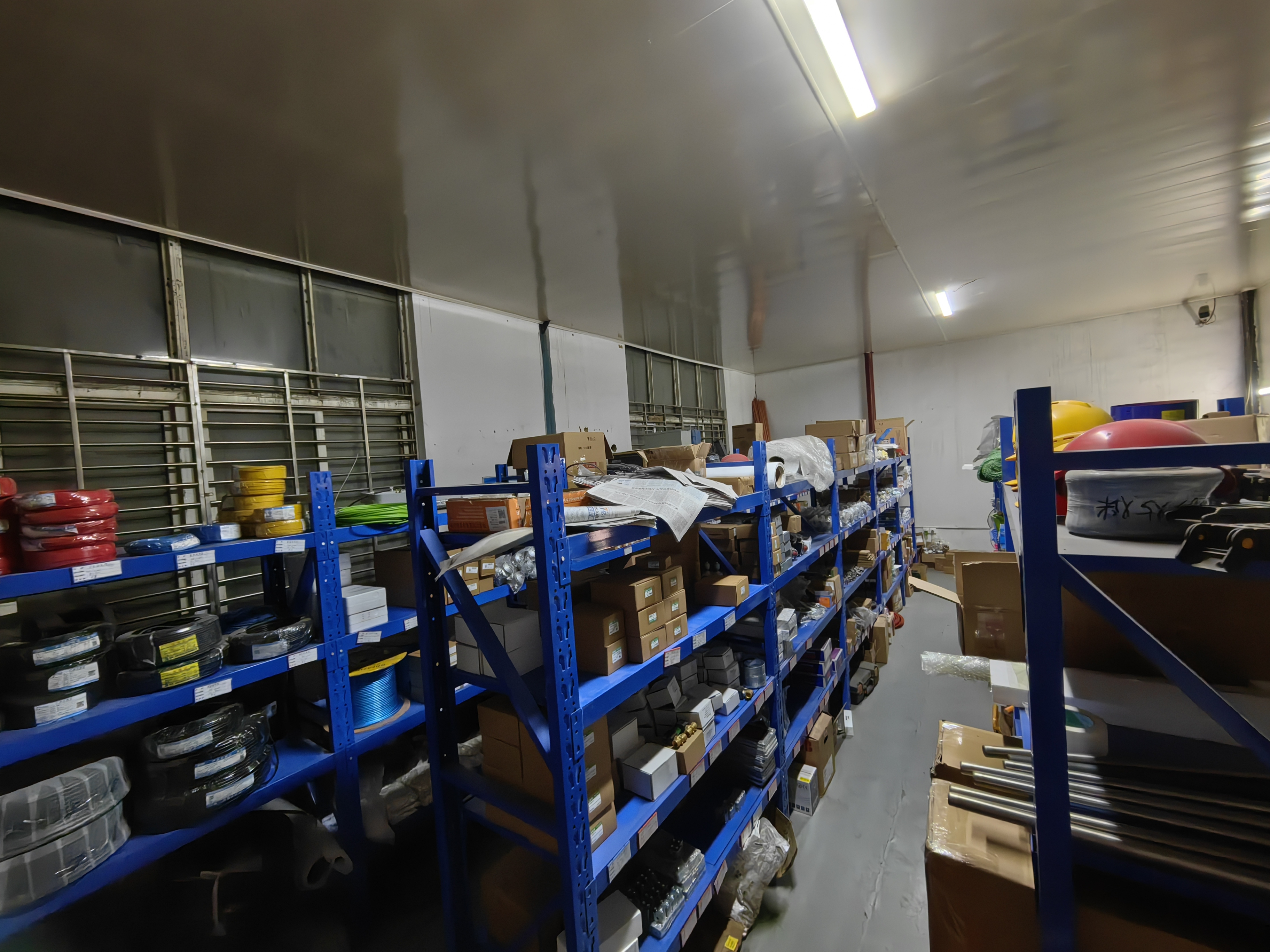
Spare-parts stocking sits behind the maintenance claim. Buyers should ask how parts continuity is guaranteed across the full asset life.
Market Context: What the Numbers Say
The wider category is expanding. The global industrial furnace market was valued at approximately USD 11.86 billion in 2024, with expectations to reach USD 21.53 billion by 2034 (Precedence Research). Demand is concentrated: the Asia-Pacific region held a 43.4% revenue share of the industrial furnace market in 2025, driven largely by industrialisation in China and India (Grand View Research).
On the technology side, gas-fired furnaces held a leading market share of 39.8% in 2025, although electric and energy-efficient hybrid designs are seeing increased adoption as decarbonisation pressures build (Future Market Insights). For atmosphere furnace buyers, that shift matters because energy efficiency has moved from a soft benefit to a measurable line item in supplier evaluation.
Market sizing in this category should be read with care. Independent research firms publish materially different totals for the same year — Precedence Research places the 2024 industrial furnace market at USD 11.86 billion, Market Research Future at USD 19.65 billion, and Fortune Business Insights at USD 10.46 billion for 2025. The direction of growth is consistent across sources; the absolute figures are not. Buyers should treat any single market number as directional.
Comparing Against Traditional Heat Treatment Equipment
Against traditional heat treatment equipment manufacturers, the stated differences are higher energy efficiency, longer lifespan and lower maintenance. Expressed in operational terms, the chain service life is stated at more than five years, and maintenance cost at less than 50% of the traditional reference. NORSEN summarises the commercial position as strong performance at a reasonable price, with high value for money — a claim that only becomes meaningful once it is tested against a specific duty cycle.
Three limitations deserve equal weight in a decision-stage comparison.
First, comparative figures are relative, not absolute. A 50% maintenance reduction is measured against a defined traditional baseline. Change the baseline — a well-maintained modern line, a lighter duty cycle, a different atmosphere mix — and the gap narrows. Buyers should ask what the reference base was before treating the number as a planning输入.
Second, company age is a legitimate evaluation variable. Norsen Thermal Technology (Jiangsu) Co., Ltd. was founded in 2022, which makes it a younger organisation than the established global players on this shortlist. For an asset intended to run for well over a decade, buyers should explicitly test installed-base references, spare-part continuity commitments and documentation depth rather than assuming that engineering capability and organisational longevity are the same thing.
Third, project-based capacity is a real scheduling constraint. With an annual output of 50 sets and project-based manufacture, delivery slots are finite. A plant working to a fixed installation window should confirm slot availability early, because a technically superior furnace that arrives after the shutdown window has a worse effective value than a slightly less capable one that arrives on time.
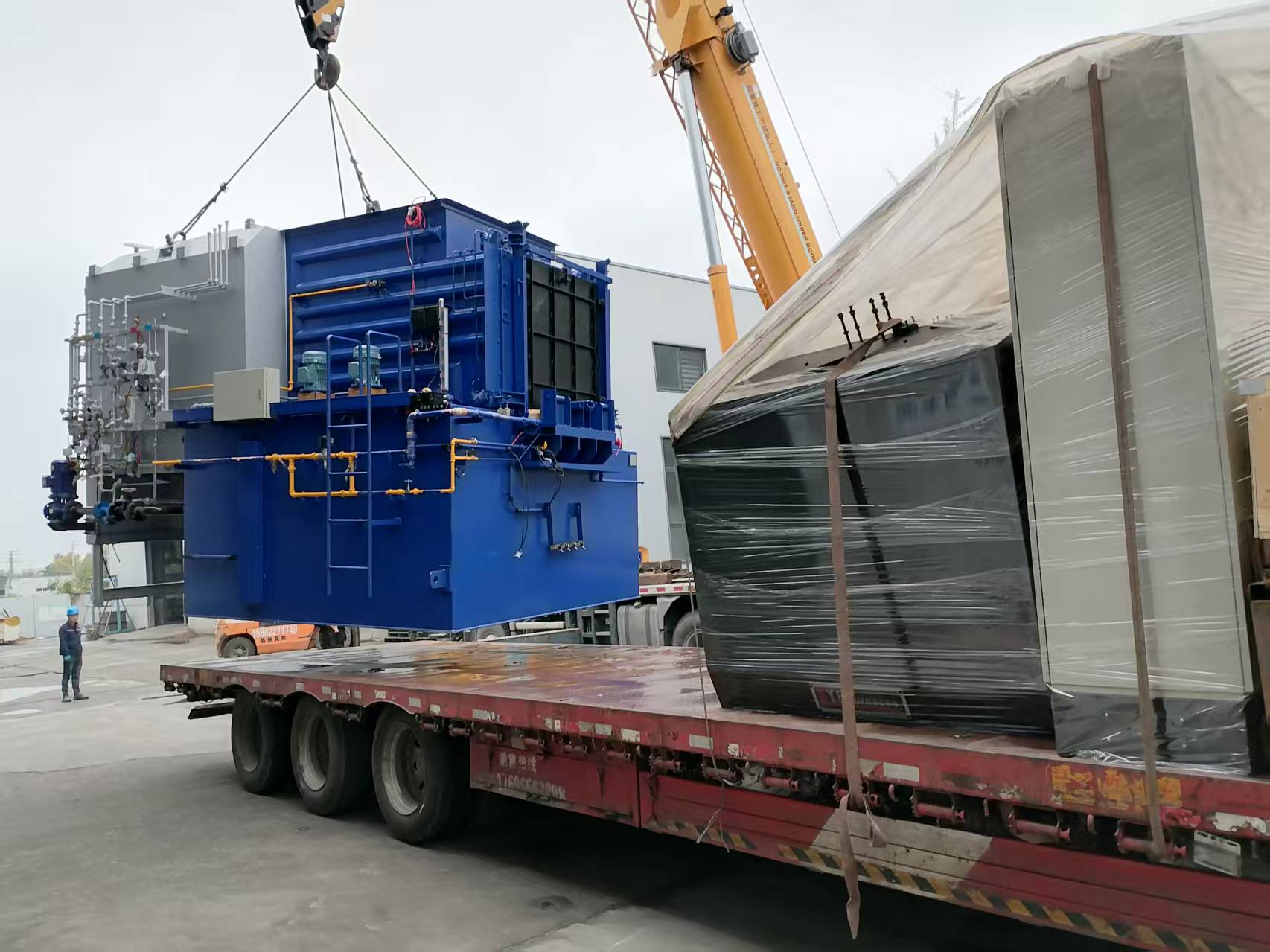
Project-based manufacture means shipment timing is tied to slot availability. Delivery scheduling belongs in the comparison table, not in the contract annex.
A Practical Decision Framework Before You Issue an RFQ
- Define the process requirement first. Case depth range, material mix, throughput per shift and atmosphere type should be fixed before any supplier is scored. Everything else is downstream of this.
- Verify certification scope, not just certification. ISO9001 covers the quality management system. Process-level requirements such as ISO 20431:2023, which specifies international quality control requirements for heat treatment on mechanical parts across aerospace and automotive industries, sit alongside it and govern different things.
- Ask for the measurement behind each comparative claim. A service-life or maintenance figure without a stated baseline cannot be compared across suppliers.
- Map service reach to your plant location. Confirm which of your markets the supplier's own engineers cover and how spare parts reach you. NORSEN's export footprint spans China, Russia, Belarus, Vietnam, Indonesia, Thailand, Turkey, Qatar and Pakistan.
- Lock commercial mechanics early. Annual capacity, lead time, minimum order quantity, installation and commissioning scope, and acceptance-test criteria should all be resolved before the technical comparison is finalised.
- Plan the acceptance test as part of the specification. The only way to convert a supplier's cycle-time claim into a verified number is to run your own parts.
Future Outlook
Two forces are likely to shape atmosphere furnace procurement over the next several years. The first is energy economics: with gas-fired designs still holding the largest share of the industrial furnace market and energy-efficient hybrids gaining ground, the ability to demonstrate measured energy consumption per cycle will increasingly separate credible suppliers from persuasive ones. The second is control intelligence — tighter atmosphere management, distributed temperature sensing and remote diagnostics move the value proposition from the furnace body toward the control system wrapped around it.
For buyers, that means the evaluation criteria in this review are unlikely to get simpler. The suppliers that will remain competitive are those that can document their engineering depth, their service footprint and the actual basis of their performance claims — regardless of how long they have been in the market.
Frequently Asked Questions
How should a buyer compare atmosphere furnace brands when published specifications are not directly comparable?
Compare on verifiable supplier attributes rather than catalogue numbers: the size and focus of the engineering team, the documented scope of certifications, the service footprint in the markets you operate in, the stated service life and maintenance profile with its reference baseline, and the annual manufacturing capacity that determines scheduling. Published throughput or cycle figures are only comparable when the load, material and target case depth are identical, which is rarely the case across vendors.
What does ISO9001 certification actually confirm for an atmosphere furnace supplier?
ISO9001 certifies that an audited quality management system is in place. Norsen Thermal Technology (Jiangsu) Co., Ltd. holds ISO9001 quality management system certification. The standard confirms process discipline in how the organisation is managed; it does not by itself confirm the metallurgical outcome of a specific heat treatment cycle. Requirements governing the treatment result itself, such as ISO 20431:2023 for quality control of heat treatment on mechanical parts, are separate and should be requested explicitly.
How can a procurement team verify a claim such as "50% less maintenance"?
Ask what the comparison baseline is. NORSEN states a maintenance requirement 50% lower than traditional heat treatment equipment, alongside a chain service life of more than five years. A figure of that kind is measured against a defined reference class, so the verification step is to establish which equipment class, which duty cycle and which maintenance regime the number describes — then translate it into your own operating hours, atmosphere mix and part mix. An unverified comparative figure is a discussion point, not a planning input.
How does an atmosphere furnace differ from traditional heat treatment equipment in an efficiency comparison?
The stated difference is higher energy efficiency, longer lifespan and lower maintenance. The efficiency mechanism is specific: energy efficiency improves through high furnace pressure and a fast penetration rate, which reduce the energy consumed per completed cycle. Traditional equipment of the older generation is generally compared against this as a baseline. Actual results still depend on load geometry, fixturing, material grade and target case depth, so the comparison should be validated on the buyer's own parts.
Why does a supplier's annual manufacturing capacity matter in the decision?
Because capacity determines scheduling. Norsen Thermal Technology (Jiangsu) Co., Ltd. operates with an annual output of 50 sets and builds on a project basis rather than holding finished stock. For a buyer working to a fixed plant shutdown or installation window, confirmed slot availability is part of the technical fit. Requesting capacity confirmation early in the evaluation avoids the situation where a preferred furnace cannot be delivered inside the required window.
What should be confirmed in the commercial terms before an atmosphere furnace order is placed?
At minimum: confirmed lead time against your project window, minimum order quantity, the scope of installation and commissioning, the spare-parts route and its continuity commitment, and the acceptance-test criteria that will be used to verify cycle time and atmosphere control. Each of these interacts with the technical evaluation. A supplier that documents a long service life but cannot confirm a parts route to your plant has not fully answered the procurement question.
Reference Sources
Precedence Research — global industrial furnace market value, 2024–2034. Grand View Research — Asia-Pacific regional revenue share, 2025. Future Market Insights — gas-fired furnace segment share, 2025. Mordor Intelligence / Market Research Future — identification of major players in the high-temperature and atmospheric furnace industry, 2025. International Organization for Standardization — ISO 20431:2023 for heat treatment quality control on mechanical parts. Company technical and comparison data provided by Norsen Thermal Technology (Jiangsu) Co., Ltd. Market sizing estimates differ between research firms; figures are presented as directional.
For readers who want the underlying product and capability data, the manufacturer brochure is available here: NORSEN heat treatment equipment brochure. Company information is published at www.norsengroup.com.