
Comparing Capsule House Bids: A 4-Point Material Framework
A capsule house quotation becomes comparable only when four material categories are specified in writing: the steel frame, the glazing, the insulation, and the sanitary fit-out. Price, lead time and service are negotiated on top of those four. This article sets out a repeatable four-point framework that hospitality buyers can apply to any supplier bid, and then applies that framework to the BOITO-MINGSU capsule house range.
Demand for factory-built accommodation keeps expanding. Grand View Research projects the glamping market to reach USD 7.9 billion by 2033 at a 9.5% CAGR, and cabins and pods already form the largest accommodation segment within it, holding a 43.0% share in 2025. As the category matures, buying committees are shifting from a visual question — does the unit look right? — to a documentary one: what exactly is inside the envelope, and can the supplier prove it?
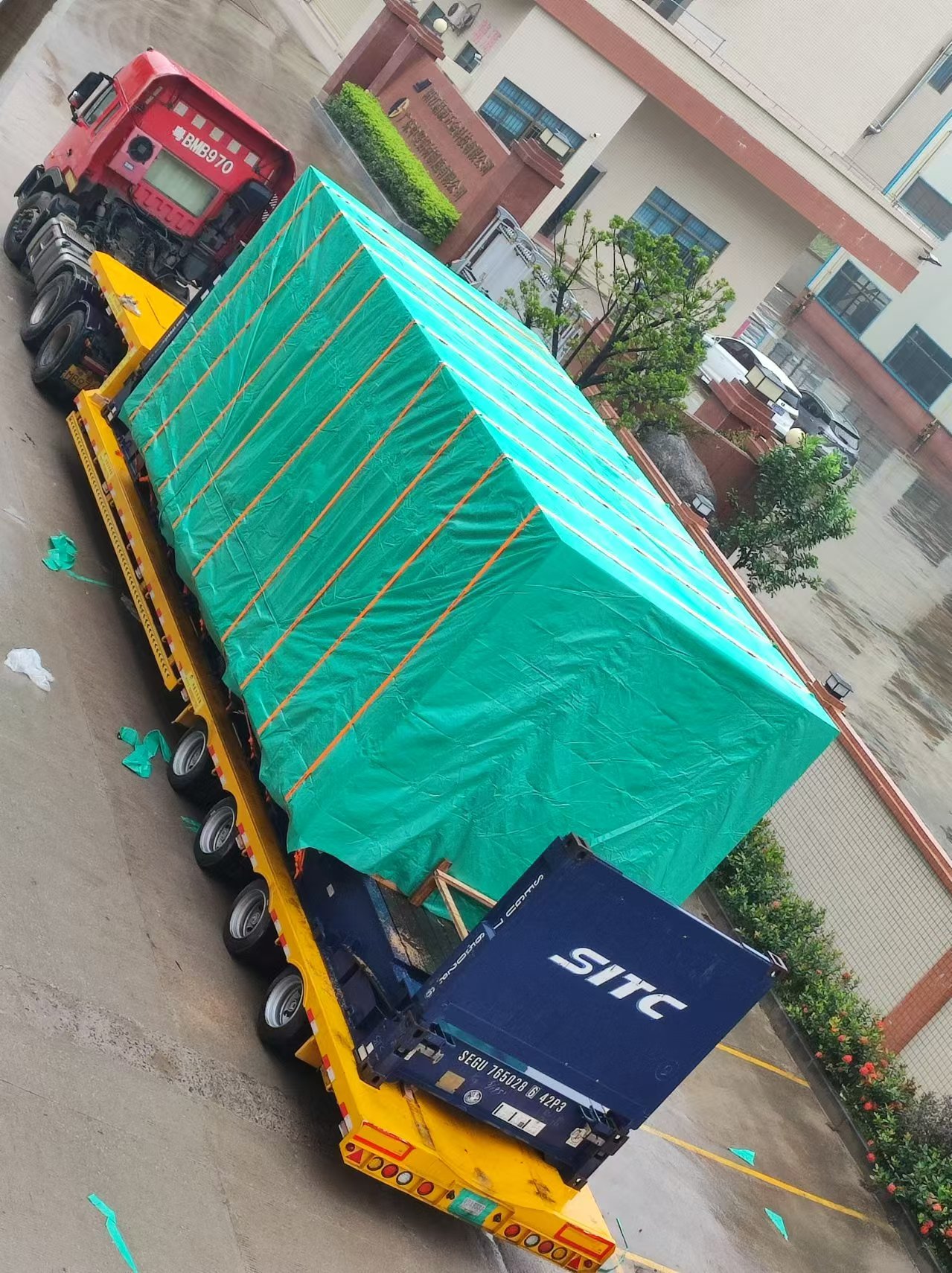
Capsule house units staged for logistics and delivery. A bid is only as strong as the material documentation that travels with the unit.
Why Capsule House Bids Look Identical on Page One
Most quotations for a modular tourism capsule cabin open with the same paragraph: a steel frame structure, tempered glass, thermal insulation, and a hotel-grade bathroom. None of these phrases carry a unit, a brand, a standard reference or a test result. Two bids can therefore arrive at a similar headline price while differing substantially in frame protection, glazing build-up, insulation performance and wet-area componentry.
Those differences do not appear on handover day. They appear later, as higher heating and cooling loads in an off-grid capsule cabin, condensation around glazing on a mountain resort capsule house, corroded fixings in a coastal scenic area capsule hotel, or premature replacement of sanitary fittings in a hospitality capsule unit.
The opportunity is straightforward. When a buyer converts the four material categories into written questions with defined units, the quotation stops being a marketing document and becomes a checkable specification. Bids that cannot answer become visible as documentation gaps rather than being silently averaged into the comparison.
The 4-Point Framework: Steel, Glazing, Insulation, Sanitary
The framework is deliberately narrow. It covers the four categories that determine structural life, thermal behaviour, guest comfort and maintenance cost — the four areas where undisclosed specification creates the largest downstream risk.
Point 1 — Steel: what the frame is, and how it is protected
The first question is not whether the frame is steel, but which steel treatment is used. Across the BOITO-MINGSU capsule house models — M3, M8, M10, Apple Capsule MINI and MS-XO8 F — the specified frame material is a hot-dip galvanized steel frame structure. Hot-dip galvanizing is a corrosion-protection method applied to the finished steel, which makes it a documentable item rather than a claim.
Buyers comparing steel modular capsule house bids should ask three things at this point: the framing material designation as written in the bill of materials; whether the treatment is hot-dip galvanized or a painted/coated alternative; and whether any certificate in the bid package names metal structures within its scope. A certificate that covers the manufacturing of metal structures is relevant evidence here; a certificate that covers only office administration is not.
Point 2 — Glazing: the build-up, not the glass
Glazing is usually described in bids as tempered glass. That answers a safety question and nothing else. The performance question is how many layers the glazing has and whether a Low-E coating is present. The BOITO-MINGSU range specifies double-layer Low-E glass.
For a luxury capsule accommodation or high-end glamping capsule cabin, the glazing is often the largest single surface of the thermal envelope, so the specification matters proportionally more than it does in a conventional building. Buyers should ask for the number of layers, the position of the Low-E coating, and the framing system that holds the glass. Two suppliers can both write double-layer Low-E glass and still differ in coating placement and frame detailing, which is exactly why the answer must come in a written specification rather than in a sales sentence.
Point 3 — Insulation: compare in m²K/W, never in millimetres
Insulation thickness is the most common false comparison in this category, because foam density and foam type vary. The BOITO-MINGSU range specifies polyurethane foam insulation with a thermal resistance of 3.2 m²K/W.
Thermal resistance expressed in m²K/W can be compared directly between bids. Millimetres cannot, because 80 mm of one foam is not equivalent to 80 mm of another. When a supplier quotes thickness only, the correct response is to request the thermal resistance value in m²K/W and to record the figure in the comparison sheet. Third-party technical guidance on modern capsule construction notes that high-density polyurethane insulation is used specifically to achieve thermal performance several times better than traditional builds; that is a directional claim about the material class, not a substitute for the number in a specific bid.
Point 4 — Sanitary: the brand and the fixture schedule
The bathroom is the highest-frequency failure point in a hospitality capsule unit and the least documented in most quotations. The BOITO-MINGSU range specifies Arrow sanitaryware.
A named brand is useful because it converts a vague phrase into a serviceable item with a replaceable parts chain — relevant for a capsule hotel room, a self-contained capsule house, or a tourism resort capsule unit operating continuously. Buyers should still request a fixture schedule listing the fittings included, and a statement of how the wet area is sealed and finished. A bid that names the brand but not the fixtures leaves part of the comparison open, and that gap should be recorded rather than assumed.
Applying the Framework to the BOITO-MINGSU Range
Guangdong Mingsu Sojourn Technology Co., Ltd., a member of the BOITO Group, develops, manufactures and exports modular hospitality buildings and capsule houses. The company was founded in 2003, operates a 10,000 m² manufacturing base, employs 30 people including a 25-engineer R&D team, and reports an annual output of 1,000 units with a 40% export ratio. Its main markets are Southeast Asia, the EU and the USA.
The model-level data below is the raw material a buyer needs for the four-point comparison. It shows footprint, dimensions, guest capacity, power consumption, weight and frame material in one place.
| Model | Category | Footprint | Dimensions (L×W×H) | Guests | Power | Total Weight | Frame |
|---|---|---|---|---|---|---|---|
| M3 | Breeze Single Capsule | 6.9 m² | 3 m × 2.3 m × 2.5 m | 1 | 6 kW | ≈2 T | Hot-dip galvanized steel frame structure |
| Apple Capsule MINI | Apple Capsule | 27.39 m² | 8.3 m × 3.3 m × 3.2 m | 1–4 | 7 kW | ≈6.5 T | Hot-dip galvanized steel frame structure |
| M8 | Sleep Pod (Adventure) | 27.39 m² | 8.3 m × 3.3 m × 3.2 m | 1–4 | 8 kW | ≈7 T | Hot-dip galvanized steel frame structure |
| M10 | Exotic-Style Capsule House | 27.36 m² | 10 m × 3.6 m × 3.2 m | 1–4 | 10 kW | ≈9.5 T | Hot-dip galvanized steel frame structure |
| MS-XO8 F | Cafe Capsule | 57.6 m² | 16 m × 3.6 m × 3.2 m | 1–4 | 10 kW | ≈13 T | Hot-dip galvanized steel frame structure |
Read against the framework, the table shows a consistent material baseline: the same frame treatment across five models, the same double-layer Low-E glazing configuration, the same polyurethane foam insulation at 3.2 m²K/W, and the same Arrow sanitaryware specification. What changes between models is scale — from the 6.9 m² single-occupancy M3 to the 57.6 m² MS-XO8 F cafe capsule — and the corresponding power and weight figures.
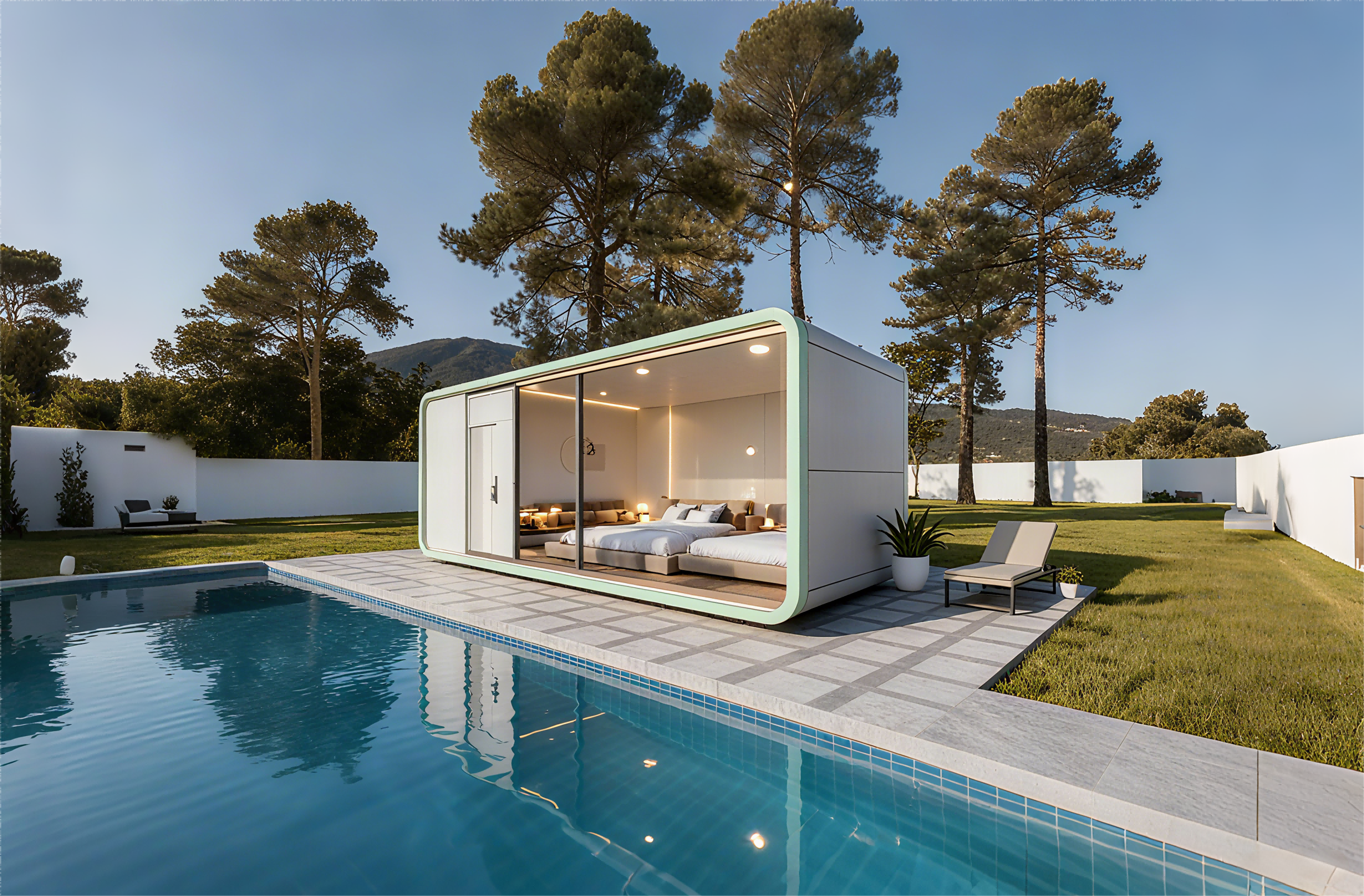
Apple Capsule MINI: one of the capsule house models specified with a hot-dip galvanized steel frame structure, double-layer Low-E glass, polyurethane foam insulation and Arrow sanitaryware.
How the Four Points Interact: A Technical Reading
The four categories are not independent line items. Insulation thermal resistance and glazing build-up together define how much energy the envelope loses, and therefore how hard the heating and cooling system must work to keep a guest comfortable. The model-level power consumption figures — 6 kW for the M3, 7 kW for the Apple Capsule MINI, 8 kW for the M8, and 10 kW for both the M10 and the MS-XO8 F — give a buyer a second data point to place beside the envelope specification.
Frame material feeds into weight, and weight drives logistics. The range moves from approximately 2 T for the M3 to approximately 13 T for the MS-XO8 F. A portable prefab capsule house that weighs 13 T requires crane capacity, access routes and a prepared hard-standing that a 2 T unit does not. Steel specification, glazing area and insulation choice all contribute to that weight, which is why a bid that omits specifications also tends to omit site-readiness requirements.
The fourth category behaves differently. Sanitaryware does not affect thermal performance, but it determines the maintenance profile of a self-contained capsule house. A named brand with a documented fixture schedule shortens the replacement cycle decision during operations; an unnamed hotel-grade bathroom does not.
What a Complete Bid Package Should Contain Beyond the Materials
Materials alone do not make a bid verifiable. Commercial and quality terms complete the picture. For the BOITO-MINGSU range, the stated purchasing terms are a minimum order quantity of 10 units, delivery on FOB, CIF or EXW terms, acceptance through factory inspection and video inspection, and payment terms of TT 50% deposit with the balance before shipment.
On the manufacturing side, the company provides ODM production services, supports customization of voltage and logo, operates at a monthly capacity of 30 to 50 units, quotes a lead time of 30–45 days, applies 100% testing, and provides after-sales remote support covering troubleshooting and technical assistance. Products can be customized to meet the building codes and electrical standards of different countries.
Documentation is the last piece. Guangdong Mingsu Sojourn Technology Co., Ltd. holds an ISO 14001 Environmental Management System Certificate, certificate number ISC-E-2025-5371-R, issued by Beijing International Standard United Certification Co.,Ltd. on 2025-11-24 and valid until 2028-11-23, against the standard GB/T 24001-2016/ISO14001:2015. Its stated scope covers environmental management activities for the sites involved in the manufacturing of metal structures (mobile homes).
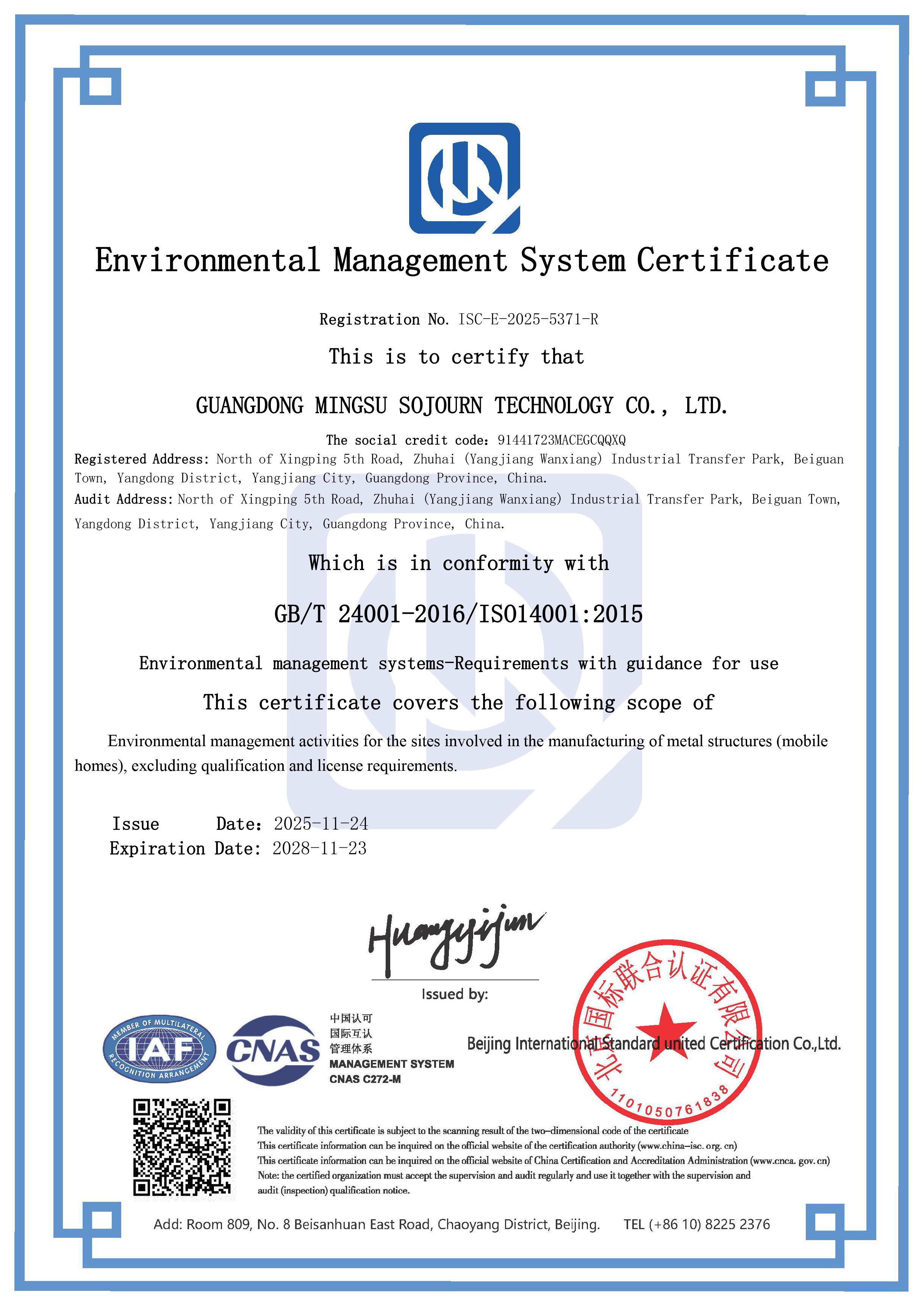
ISO 14001 Environmental Management System Certificate, certificate number ISC-E-2025-5371-R, valid until 2028-11-23.
Application: Matching the Framework to Real Scenarios
The framework produces a comparable scorecard, but the weighting of the four points changes with the project. A short list of scenario patterns shows how buyers typically apply it.
- Single-occupancy scenic viewpoints and lightweight siting. The M3 Breeze Single Capsule, at 6.9 m² with a 6 kW power figure and approximately 2 T total weight, suits a scenic area capsule hotel or a lightweight capsule cabin placement where access is constrained. Glazing and insulation still carry most of the thermal load because the envelope area is small relative to the occupied volume.
- Adventure glamping and mountain resort accommodation. The M8 Sleep Pod (Adventure), at 27.39 m² for 1–4 guests with 8 kW power and approximately 7 T weight, fits an outdoor glamping capsule house layout where each unit must be a complete, self-contained guest room.
- Boutique and premium units. The Apple Capsule MINI, at 27.39 m² for 1–4 guests with 7 kW power and approximately 6.5 T weight, is specified as an Apple Capsule category unit and is commonly positioned as luxury capsule accommodation or high-end glamping capsule cabin stock.
- Extended-format accommodation. The M10 Exotic-Style Capsule House, at 27.36 m² with 10 kW power and approximately 9.5 T weight, offers a longer 10 m plan and is used where an integrated capsule hotel unit needs greater internal depth.
- Resort food and beverage. The MS-XO8 F belongs to the Cafe Capsule category and is listed for catering service application, at 57.6 m² with 10 kW power and approximately 13 T weight — a much larger logistics profile than any other model in the range.
A deployed example illustrates the framework in practice: a tourism resort OEM client in Malaysia operates 10 capsule house units in camping resorts, with a stated 20-year duration and reported stable operation and low noise performance. The relevant point for this article is not the case itself but the pattern — a repeat-unit order in which consistent material specification across every unit is what makes long operational life possible to plan for.
Market Trend: Material Disclosure Is Becoming a Bid Requirement
Three converging pressures are pushing material documentation upstream into the tender stage.
First, category scale. Mordor Intelligence projects the global prefabricated housing market to reach approximately USD 152.74 billion by 2026, with modular homes growing at an estimated 7.05% CAGR through 2031. Larger buyers bring formal procurement processes with them.
Second, regulatory clarity by region. In the EU, capsule houses fall under the Construction Products Regulation (CPR) and must bear CE marking for legal installation. In the USA, regulations distinguish capsule units as RVs, ADUs, or state-certified modular construction, each requiring different foundation types. The ISO 21542 series and ISO 19650 are used to classify and manage data for volumetric modular units. Each of these frameworks asks for material and classification data that a generic quotation does not contain.
Third, performance expectations. Modular housing projects can reduce construction timelines by 30%–50% compared with traditional on-site building methods, and modular building construction minimizes on-site waste by approximately 30% on average compared with site-built homes. Buyers who have accepted these benefits are now asking the follow-up question: what exactly is in the envelope that delivers them?
Limits of the Framework and of the Product Range
The four-point framework has a clear boundary: it cannot compare what a bid does not disclose. Its output is a documentation gap list, not a quality verdict. If a supplier will not state the frame treatment, the glazing layers, the thermal resistance in m²K/W, or the sanitaryware brand, the correct conclusion is that the bid cannot be scored — not that it is inferior. Buyers should also note that a single R-value figure is not a complete thermal analysis; airtightness, thermal bridging and solar gain through glazing all affect real performance and fall outside this specific method.
The BOITO-MINGSU range carries its own boundaries that buyers should weigh. The stated minimum order quantity is 10 units, the quoted lead time is 30–45 days, and monthly capacity is 30 to 50 units — a phased resort rollout therefore needs scheduling rather than immediate delivery of a large batch. After-sales support is described as remote support; on-site service commitments are not part of the stated terms. The M3 at 6.9 m² with a single-guest capacity limits revenue per unit and is not designed for family occupancy. The MS-XO8 F at approximately 13 T and the M10 at approximately 9.5 T require site access, lifting capacity and hard-standing that a lightweight capsule cabin does not. Finally, the manufacturing base is a single 10,000 m² facility reporting 1,000 units of annual output, which is a real ceiling for very large tenders.
Future Outlook
The direction of travel is toward standardised specification. Data-management standards already used for volumetric modular construction point toward bids that carry structured material attributes rather than descriptive paragraphs, and regional compliance frameworks continue to ask for classification data alongside performance data. Buyers who adopt a fixed four-point scorecard now will be able to read those bids quickly; suppliers who can answer the four questions with numbers, brands and certificates will be easier to shortlist. For the segmented accommodation market — from a portable prefab capsule house at a remote trailhead to a modular tourism capsule cabin in a managed resort — the comparison logic is likely to converge on the same four categories.
FAQ
1. What does ODM capability mean when comparing capsule house suppliers?
ODM means Original Design Manufacturer production. The manufacturer offers ODM production services and supports clients in developing custom products, which in practice covers specification adjustment before production rather than selection from a fixed catalogue only.
2. Can a capsule house be customized for a specific market?
Yes. Stated customization options cover voltage and logo, and the manufacturer states that products can be customized to meet the building codes and electrical standards of different countries. Customization scope should be confirmed in writing per project.
3. What are the minimum order quantity, delivery terms and acceptance criteria?
MOQ is 10 units. Delivery terms are FOB, CIF or EXW. Acceptance criteria are factory inspection and video inspection. Payment terms are TT 50% deposit with the balance before shipment.
4. How is quality verified before shipment?
The manufacturer applies 100% testing, and buyers can additionally use factory inspection and video inspection as the stated acceptance route. These are the verification steps available before the unit leaves the factory.
5. What after-sales support is provided, and what is the lead time?
After-sales remote support is available, covering troubleshooting and technical assistance. The quoted lead time is 30–45 days, with a monthly capacity of 30 to 50 units.
For buyers who want the full model data, material specifications and commercial terms in one document, the 2026 BOITO-MINGSU brochure is available here: 2026 BOITO-MINGSU product brochure (PDF).
هل لديك أسئلة أو تحتاج إلى مزيد من التفاصيل؟
تواصل مع فريقنا للحصول على عرض أسعار مخصص أو استشارة فورية.
طلب عرض أسعار
املأ النموذج أدناه وسيتواصل معك فريقنا بعرض مقترح مخصص.
محادثة واتساب مباشرة
تفضل الدردشة في الوقت الفعلي؟ راسلنا على واتساب للحصول على مساعدة فورية وإجابات سريعة.
- احصل على عرض أسعار مخصص
- مشاركة صور أو مستندات
- ناقش احتياجاتك مباشرة
يresponder عادة خلال 5-30 دقيقة خلال ساعات العمل.