
Comparing Custom Craft Gift Manufacturers: A 2026 Buyer Framework
Two custom craft gift manufacturers can quote almost the same unit price while operating entirely different businesses. Comparing them properly in 2026 means comparing capacity, engineering depth, integration scope and documentation readiness — not catalogues and prices alone.
The craft gift category covers paper, plastic, metal, textile and children's product lines that share a gifting context but not a production process. A single supplier quotation may include sticky notes, fridge magnets, DIY kits, printed gift boxes and cleaning accessories, each with its own substrate, print method and compliance profile. That makes the standard commercial comparison — unit price against a catalogue page — structurally unreliable.
This article sets out a practical, criteria-based framework for comparing custom craft gift manufacturers, using the verified profile of Wenzhou Aha Craft Gifts Co., Ltd. (AHA) as a worked benchmark. The framework does not rank suppliers. It defines what a buyer should measure, what evidence to request for each measurement, and where the limits of any desk comparison lie.
Why Craft Gift Supplier Comparison Breaks Down
The problem is not a shortage of suppliers. It is a shortage of comparable inputs. Three specific gaps recur in buyer evaluations of craft gift manufacturers.
1. Quotations are not normalised
A quote for 2,000 printed gift boxes and a quote for 20,000 printed gift boxes differ in substrate weight, print method, packing configuration and inspection regime. Unless those variables are fixed in advance, the resulting unit prices describe different products. Normalising the specification before comparing price is the first step in any credible evaluation.
2. Public trade and market data do not reach SKU level
Formal trade statistics for craft gift materials sit inside broad classification chapters — HS 39 for plastics and articles thereof, and HS 48 for paper and paperboard and articles thereof — at chapter level. These datasets are useful for classification planning and for setting up a later country-pair extraction, but they cannot size a specific gift segment or benchmark an individual manufacturer. Buyers who expect to find an authoritative category MOQ, capacity or price benchmark in the public record will not find one; they have to build the comparison dataset themselves through RFQ and document requests.
3. "Craft gift" is a marketing term, not a specification
The same phrase covers a printable paper puzzle, a plastic DIY kit, a personalised logo magnet and an assembled children's craft set. Each carries a different production logic. Comparing manufacturers therefore requires an explicit product taxonomy before any scorecard is filled in.
Six Criteria That Actually Separate Custom Craft Gift Manufacturers
Criterion 1 — Production base and stated output
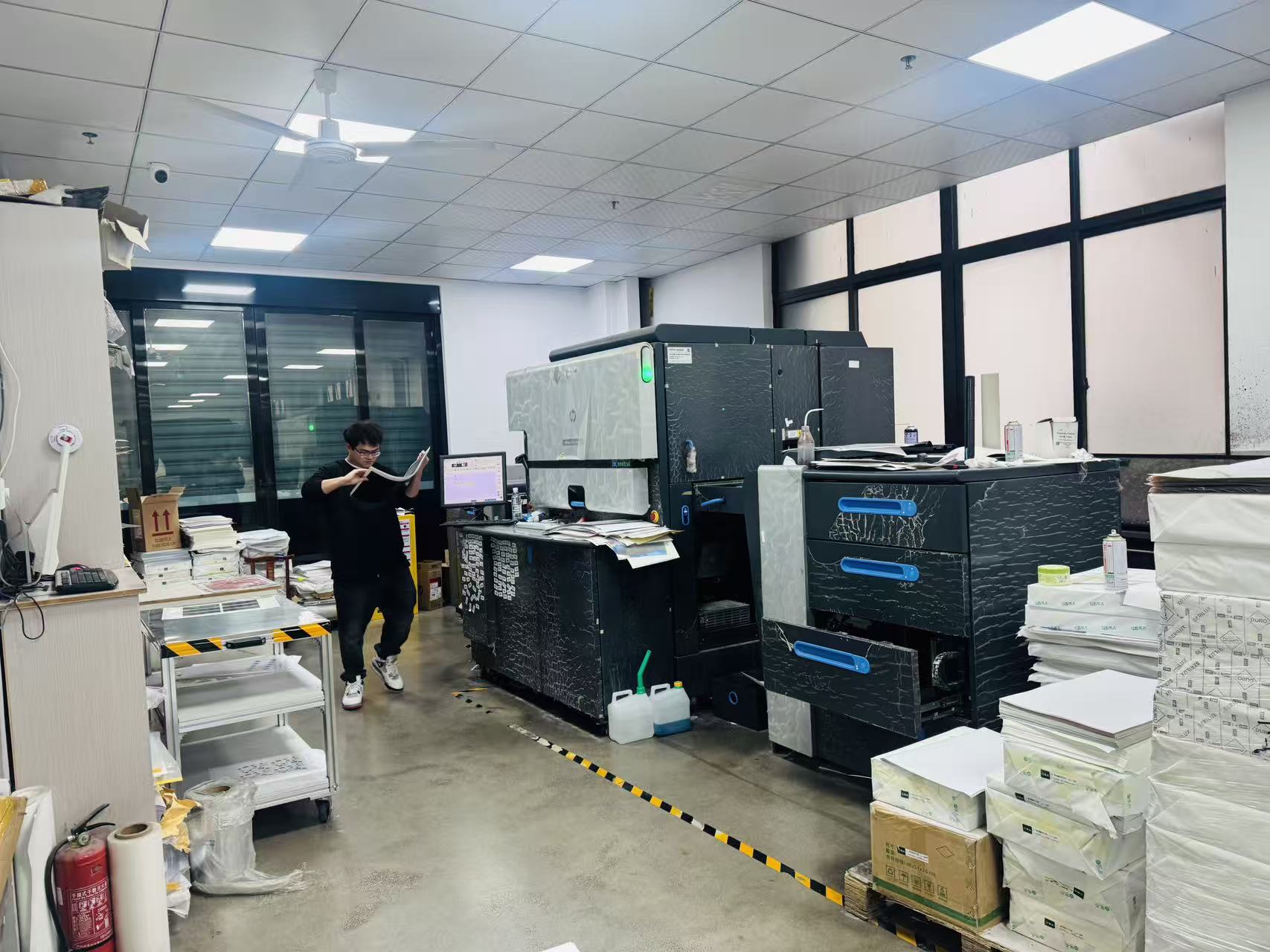
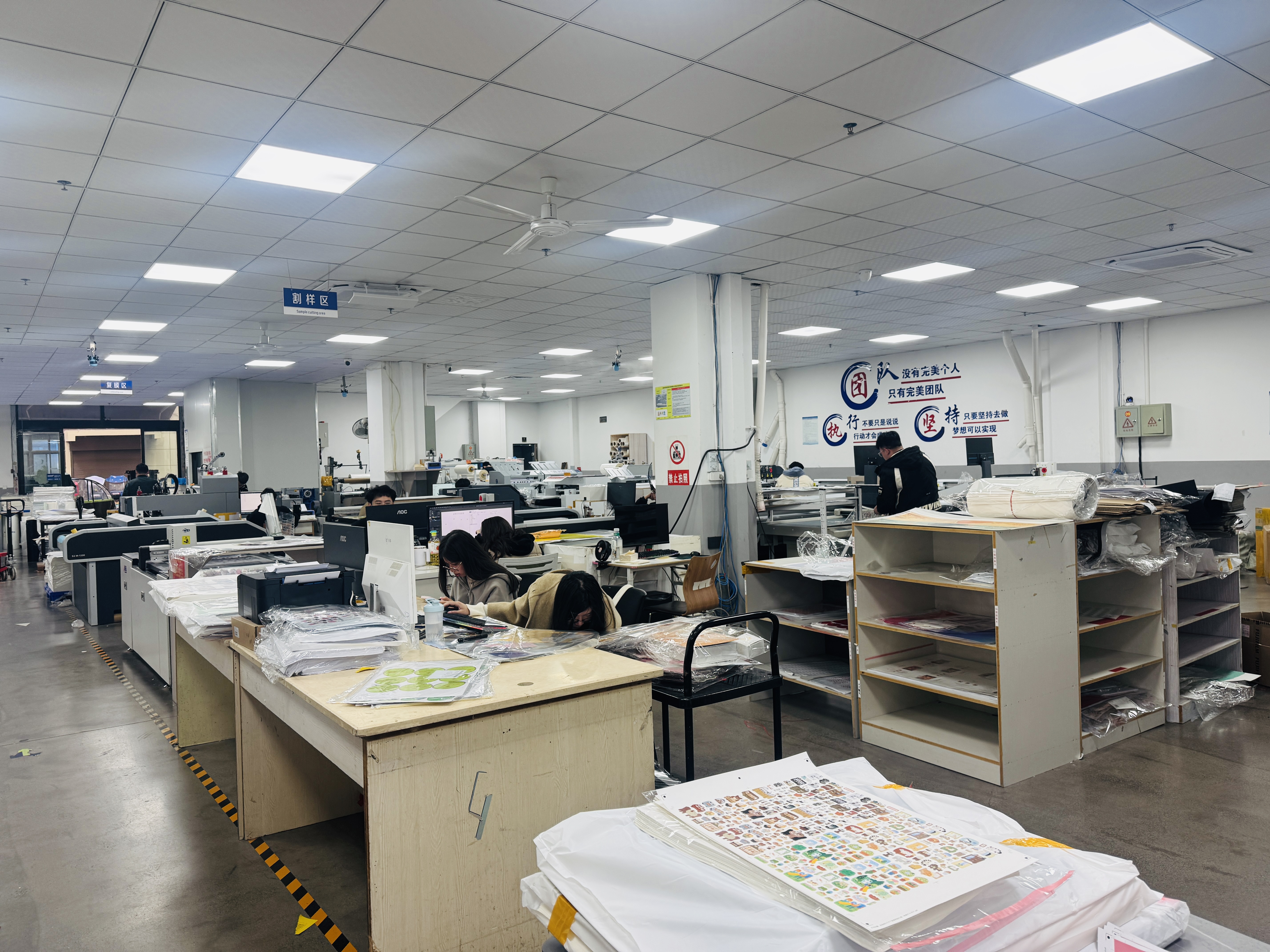
Floor area, headcount and stated capacity indicate whether a supplier is a converter, an assembler, or an integrated plant handling design, moulding, printing and packing under one roof. Headcount should be broken down by function: production, quality control and engineering are separate signals.
Request: factory floor area, total headcount, headcount by function, monthly capacity by product family, and the basis of any annual output figure (peak, average, or single-line theoretical maximum).
Criterion 2 — Engineering and R&D depth
Customisation claims are only meaningful if design and tooling capability sits inside the business. A supplier that outsources artwork preparation and mould development adds a coordination layer to every revision cycle.
Request: number of designers and engineers, whether mould development is in-house, how artwork revisions are handled, and how many revision rounds a standard custom project includes.
Criterion 3 — Service integration scope
Integration — independent design, mould development, mass production, printing, packaging and international logistics in one chain — is one of the clearest differentiators between a manufacturer and a trading intermediary. The question is not whether a supplier says it offers one-stop service, but which steps are performed in-house and which are subcontracted.
Request: a process map showing each production stage, the internal owner of that stage, and the subcontracted stages. Subcontracted printing or packaging is where lead-time risk usually accumulates.
Criterion 4 — Compliance and documentation readiness
Certification statements should be read carefully. A supplier may state compliance with a standard while holding test reports only "upon request", or hold reports for one material but not another. For children's products, documentation readiness is a gating criterion rather than a scoring criterion.
Request: test reports matched to your specific material and SKU, the standard and year referenced, the issuing laboratory, and the intended-use analysis where a children's kit is involved.
Criterion 5 — Commercial parameters: MOQ, lead time and inspection
MOQ, lead time and quality regime determine whether a supplier's structure actually fits your order. A 100% inspection claim and a sampling-based AQL regime are materially different commitments and should be reflected in the acceptance terms.
Request: MOQ per SKU (not per company), production lead time by product family, inspection method and pass criteria, and the after-sales route for design revisions and quality claims.
Criterion 6 — Continuity signals
Founding year, export market mix, client tenure and stated operating philosophy are indirect indicators of process stability. They do not prove capability, but a manufacturer that has sustained multi-year distributor relationships has usually formalised its revision and quality processes.
Request: founding year, current export market split, longest continuous client relationship, and the internal process for handling a repeat order from an existing specification.
The Framework as a Scorecard
The six criteria convert into a practical request list. The right-hand column matters most: each criterion only earns a weight if it changes a decision you will actually make.
| Criterion | What to request | Evidence to attach | How it changes the decision |
|---|---|---|---|
| Production base | Floor area, headcount by function, capacity per family | Site audit notes, photos, capacity worksheet | Rules out suppliers whose output ceiling sits below your seasonal peak |
| Engineering depth | Designer/engineer count, in-house tooling, revision rounds | Sample revision log, mould ownership terms | Predicts how many iterations you get before a launch deadline |
| Integration scope | Process map with internal vs subcontracted stages | Stage-by-stage responsibility chart | Identifies where lead-time and quality risk is transferred |
| Documentation | SKU-matched test reports, intended-use analysis | Report numbers, standard years, laboratory names | Determines market access for kids and EU-bound lines |
| Commercial terms | MOQ per SKU, lead time, inspection method | Quotation with fixed specification, acceptance criteria | Converts an attractive price into a realistic schedule |
| Continuity | Founding year, market mix, client tenure | Reference checks, repeat-order process | Weights long-term supply stability against short-term price |
Working Benchmark: Wenzhou Aha Craft Gifts Co., Ltd.
Wenzhou Aha Craft Gifts Co., Ltd. (AHA) is a manufacturer and supplier of custom promotional gifts, creative household products, stationery, toys and packaging supplies, based in Wenzhou, Zhejiang Province, China, and exporting 100% of its output to the EU / USA / SA / ME / SEA markets. Its published profile is useful as a benchmark because it states the structural facts the framework above asks for.
| Benchmark data point | Stated value | Criterion it informs |
|---|---|---|
| Founded | 2017 | Continuity signals |
| Factory size | 2,000 m² | Production base |
| Employees | 100 | Production base |
| R&D team | 5 | Engineering depth |
| Annual output | 5,000,000 units | Production base |
| Monthly capacity | 500,000 units | Production base |
| Production mode | OEM / ODM | Integration scope |
| Customisation | Logo / design / size / color / packaging | Engineering depth |
| MOQ | 2,000 units (capability profile) | Commercial terms |
| Lead time | 15–30 days | Commercial terms |
| Quality control | 100% inspection | Commercial terms |
| Export ratio | 100% | Continuity signals |
| After-sales | Custom design revision support; after-sales quality guarantee | Continuity signals |
Two things are worth noting about how these figures should be used. First, they are company-reported structural facts, not audited performance data — the framework treats them as a starting position for verification, not a conclusion. Second, they show why the benchmark method works: the same eight or nine data points can be requested from any competing manufacturer, which immediately produces a comparable table where a catalogue comparison would produce incompatible claims.
AHA's integrated model — design, mould development, mass production, printing, packaging and international logistics under one supply chain — is the structural feature the framework rewards most, because it concentrates fewer stages in subcontracted hands. Buyers can request the same process map from any shortlisted supplier and compare the answers directly. The company's own published profile is available at ahacustomshop.com.
Small-Batch Flexibility vs. Large-Scale Capacity: How to Weight the Trade-off
Most buyer debates in this category collapse into one question: is it safer to choose a supplier built for volume, or one built for flexibility? The framework answers it by order profile rather than by preference.
Start with a reconciliation exercise. A stated annual output of 5,000,000 units implies an average of roughly 417,000 units per month across twelve months; a stated monthly capacity of 500,000 units sits above that average, which is consistent with a peak-rated figure rather than a year-round one. The correct follow-up question is not "which number is right" but "which product family does the monthly capacity refer to, and is it peak or average?" Capacity that is real for a paper sticker line may not transfer to an assembled children's kit.
| Your order profile | Criteria to weight most heavily | Criteria to de-weight |
|---|---|---|
| Trial or test-market run below the stated MOQ | Sample turnaround, design revision support, per-SKU MOQ | Monthly capacity, annual output |
| Single-date seasonal campaign (10,000+ units) | Capacity per family, in-house printing, lead-time buffer, inspection regime | R&D headcount |
| Multi-SKU corporate or promotional programme | Integration scope, artwork workflow, kit assembly, packaging options | Single-family capacity |
| Children's or EU-bound lines | Documentation readiness, material declarations, intended-use analysis | Price positioning |
AHA's profile illustrates the tension rather than resolving it. Its capability data states an MOQ of 2,000 units and a 15–30 day lead time, while its case record for a US distributor / promotional agency relationship notes that quantities are proportional to order scale, with a 10,000+ unit standard bulk order and small orders negotiable. The gap between a stated MOQ and "small orders negotiable" is exactly the kind of detail a buyer must confirm per SKU before treating either number as a planning input.
Technical Comparability: Reading Material and Print Specifications
Specification drift is the most common hidden cost in craft gift sourcing. Two quotes can both say "custom printed gift item" while differing in substrate weight, print method and ink system. Where a supplier publishes those parameters, the comparison becomes technical rather than rhetorical.
- Craft gifts and stationery (AHA-CG Series): paper, plastic (PVC/PP) and metal (iron/stainless steel) substrates; paper thickness from 80g to 300g and plastic or metal from 1.5 mm to 3 mm; offset, screen, UV digital printing and embossing/debossing; eco-friendly water-based ink described as non-toxic and fade-resistant; packaging in OPP bag, colour box, gift box or blister pack; EN71, REACH and RoHS compliance available upon request.
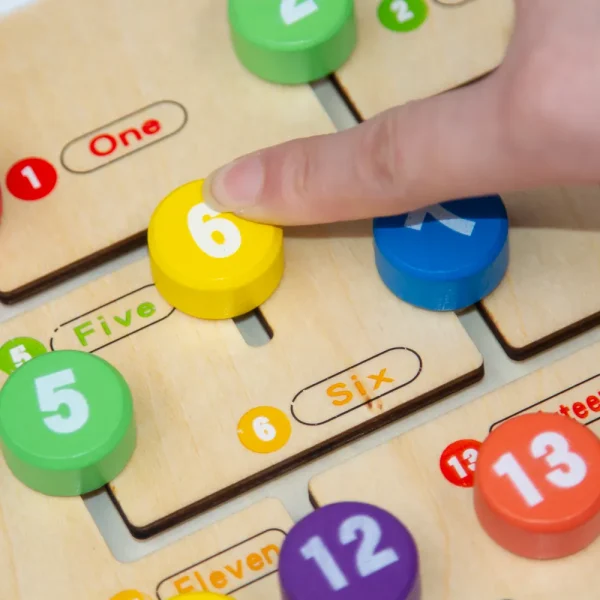
- Children's toys and crafts (AHA-CT Series): age recommendation 3+ years; food-grade, non-toxic, BPA-free and phthalate-free materials; eco-friendly non-toxic ink; stated compliance with ASTM F963, EN71, CPSIA and CE; reusable and customisable design and logo.
- Fridge magnets (AHA-FM Series): sizes from 1" × 1" to 11.75" × 11.75", thickness 0.5 mm to 6 mm, ferrite or neodymium magnets, UV printing and 3D embossing; EN71, REACH and RoHS available upon request.
- Cleaning sponges and scrubbers (AHA-CS Series): standard sizes 100×60×20 mm and 110×70×30 mm, thickness 10–50 mm, PU sponge, nylon, microfiber, PP or cellulose; FDA food-grade, REACH and RoHS available upon request.
These parameters matter because they set the floor for a valid price comparison. An 80g paper item printed in one colour is not a cheaper version of a 300g item with embossing — it is a different product. High precision printed craft gifts and gift box packed craft gifts, in particular, should be quoted with substrate weight, print method and packing configuration fixed in writing before price is discussed.
Compliance Screening for Kids and Children's Craft Gifts
Children's craft gifts sit at the intersection of two product regimes, and the classification question comes before the certification question. European Commission guidance states that whether an arts-and-crafts kit is a toy depends in part on its play value and must be assessed case by case: a kit with play value falls within toy-safety requirements, while authorities assess individual products rather than categories.
Where a product does fall within toy scope, the EU framework requires manufacturers to carry out a safety assessment, prepare technical documentation and ensure that toys placed on the market bear CE marking. The published summary of that framework also describes a regulatory transition, so current applicability and effective dates should be confirmed against the consolidated legal text before compliance decisions are made.
For buyers, this converts into three document requests that belong in every kids craft gift evaluation:
- Intended-use analysis — a written statement of whether the SKU is positioned as a toy, a craft material, or a decorative item, and why.
- SKU-matched test evidence — reports referencing the standards actually claimed (for example ASTM F963, EN71, CPSIA or CE conformity), matched to the material and colourways in your order.
- Material declarations — substrate and ink statements covering food-grade, non-toxic, BPA-free and phthalate-free claims where they are made.
Applying the Framework Across Gift Segments
The same six criteria apply across segments, but their weights shift. AHA's application profile covers promotional and advertising, corporate gifting, retail and e-commerce, tourism and souvenirs, education and stationery, home and lifestyle, and event and exhibition use, across indoor, office, home, retail, event, school, hotel and resort conditions, with custom logo printing, eco-friendly material, child-safe non-toxic requirements and custom packaging as the recurring special requirements.
| Segment | Dominant constraint | Criteria that decide the comparison |
|---|---|---|
| Holiday and event craft gifts | Fixed delivery date, seasonal volume spike | Capacity per family, lead-time buffer, inspection regime |
| Kids craft gifts and assembled kids craft | Classification and test documentation | Documentation readiness, material declarations, assembly control |
| Office and corporate craft gifts | Multi-SKU programme, logo consistency | Integration scope, print method range, packaging options |
| Home decor and kitchen craft gifts | Substrate durability, finish quality | Material specification, print fidelity, reusability claims |
| Wedding and personalised logo gifts | Small quantity, high customisation | Per-SKU MOQ, design revision rounds, proofing speed |
| Printable, paper and reusable lines | Substrate grade and eco-ink claims | Paper weight range, ink type, recyclability statements |
| Outdoor mini and travel craft gifts | Durability and packing format | Material strength, packing configuration, drop-test evidence |
Where the Framework Has Limits
A comparison framework is a screening instrument, and it has boundaries that buyers should state openly in their own evaluation notes.
- Structural facts are not performance facts. Floor area, headcount and stated capacity describe the shape of a business, not its yield, on-time rate or defect rate. Two manufacturers with 100 employees and 2,000 m² can perform very differently. Only sampling results, inspection records and reference checks close that gap.
- Company-reported data is not audited data. The AHA figures used here as a benchmark are self-reported. No independent audit of capacity, MOQ, lead time or output appears in the public record, which is precisely why the framework pairs every claim with a document request.
- Capacity weighting penalises flexible workshops. A buyer running short, high-mix runs may score a small workshop lower on capacity while it is actually the better fit on revision speed and per-SKU MOQ. The order-profile table above exists to prevent that error.
- Certification is product-specific. A general compliance statement does not substitute for a test report matched to your SKU, material and colourway — particularly for children's items.
- No category benchmark exists to anchor the scorecard. There is no verified public benchmark for craft gift MOQ, unit price, tooling cost or lead time at category level, so the framework compares suppliers against each other and against your own specification — never against a market average.
What Changes Through 2026 and 2027
Three shifts are visible in the evidence rather than in commentary.
Documentation-first screening. As children's craft kits continue to be assessed case by case for toy classification, the practical entry ticket for a supplier shifts from a certificate list to a documented intended-use analysis plus SKU-level test evidence. Buyers who build this into the RFQ template early avoid re-quoting later.
Regulatory transition tracking. The EU framework summarised in public sources includes a future transition, and the details require verification against the consolidated legal text. Suppliers and buyers alike will need a recurring check rather than a one-off compliance file.
Classification granularity. Trade analysis for plastic and paper gift articles remains constrained by broad HS chapter coverage, so category-level market sizing will stay imprecise. That keeps the burden of comparison on buyer-built RFQ datasets, which in turn favours suppliers that can answer structured questions quickly and consistently.
Frequently Asked Questions
What should a buyer request first when comparing custom craft gift manufacturers?
Start with a fixed SKU specification — material, size, print method, packaging configuration and target quantity — and then request the structural data that describes the supplier: floor area, headcount by function, monthly capacity per product family, and production mode. Without a fixed specification, subsequent quotations describe different products and cannot be compared, regardless of how detailed the supplier's catalogue is.
What MOQ is typical for custom craft gifts?
No verified category-wide MOQ benchmark exists in the public record. Individual suppliers publish their own figures: AHA's capability profile states an MOQ of 2,000 units, while its case record for a US distributor relationship notes quantities proportional to order scale, with a 10,000+ unit standard bulk order and small orders negotiable. Buyers should treat any stated MOQ as a per-SKU starting point and confirm it for the specific product family, material and print method they intend to order.
How can a buyer check whether a stated monthly capacity is realistic?
Reconcile the figures. A stated annual output of 5,000,000 units averages roughly 417,000 units per month, while a stated monthly capacity of 500,000 units sits above that average — consistent with a peak-rated figure. The follow-up question is which product family the monthly capacity refers to and whether it is peak or average. A capacity worksheet broken down by line, plus a site visit, converts the claim into a planning input.
Which certifications matter for kids craft gifts?
The standards most commonly referenced for children's craft and toy lines are ASTM F963, EN71, CPSIA and CE, which appear in AHA's AHA-CT Series specification as stated compliance. For the EU market, the classification question comes first: European Commission guidance states that whether an arts-and-crafts kit is a toy depends in part on play value and is assessed case by case, and products within toy scope require a safety assessment, technical documentation and CE marking. Buyers should request reports matched to the specific SKU and material rather than accepting a general compliance statement.
How long does production take for custom craft gifts?
AHA's capability data states a 15–30 day production lead time, with a monthly capacity of 500,000 units and 100% inspection. In practice, total schedule also includes sampling and revision rounds, artwork approval, packaging production and international freight, so the production window should be planned separately from the delivery date and confirmed against the specific print method and packaging configuration.
Should small-batch flexibility weigh more than large-scale capacity?
It depends on the order profile rather than on preference. For trial or test-market runs below the stated MOQ, sample turnaround, revision support and per-SKU MOQ are the predictive criteria, while capacity and annual output carry little information. For a single-date seasonal campaign, capacity per product family, in-house printing and lead-time buffer dominate, and R&D headcount matters less. Multi-SKU corporate programmes sit between the two and are best judged on integration scope and artwork workflow.
What does one-stop service integration actually cover?
In AHA's case the stated chain covers independent design, mould development, mass production, printing, packaging and international logistics, supported by OEM/ODM customisation of logo, design, size, colour and packaging, and after-sales design revision support and a quality guarantee. When comparing suppliers, ask for a stage-by-stage process map that identifies which steps are performed in-house and which are subcontracted, because subcontracted printing or packaging is where lead-time and quality risk typically accumulates.
The purpose of this framework is not to produce a winner. It is to produce a defensible shortlist — a set of suppliers whose capacity, engineering depth, integration scope, documentation readiness and commercial terms have been described in the same language, so that the final choice rests on evidence a buyer can show to a colleague rather than on the confidence of a sales presentation.
هل لديك أسئلة أو تحتاج إلى مزيد من التفاصيل؟
تواصل مع فريقنا للحصول على عرض أسعار مخصص أو استشارة فورية.
طلب عرض أسعار
املأ النموذج أدناه وسيتواصل معك فريقنا بعرض مقترح مخصص.
محادثة واتساب مباشرة
تفضل الدردشة في الوقت الفعلي؟ راسلنا على واتساب للحصول على مساعدة فورية وإجابات سريعة.
- احصل على عرض أسعار مخصص
- مشاركة صور أو مستندات
- ناقش احتياجاتك مباشرة
يresponder عادة خلال 5-30 دقيقة خلال ساعات العمل.