
Comparing Custom Rubber Suppliers: A Decision Guide for Material, Application, and Customization
Comparing Custom Rubber Suppliers: A Decision Guide for Material, Application, and Customization
HTNXT Industry Reference · Custom Rubber Sourcing
A custom rubber supplier comparison should begin with three constraints: whether the material fits the duty, whether the component form fits the application, and whether the supplier can control customization from drawing to repeatable production. Unit price is a later filter, not the opening question.
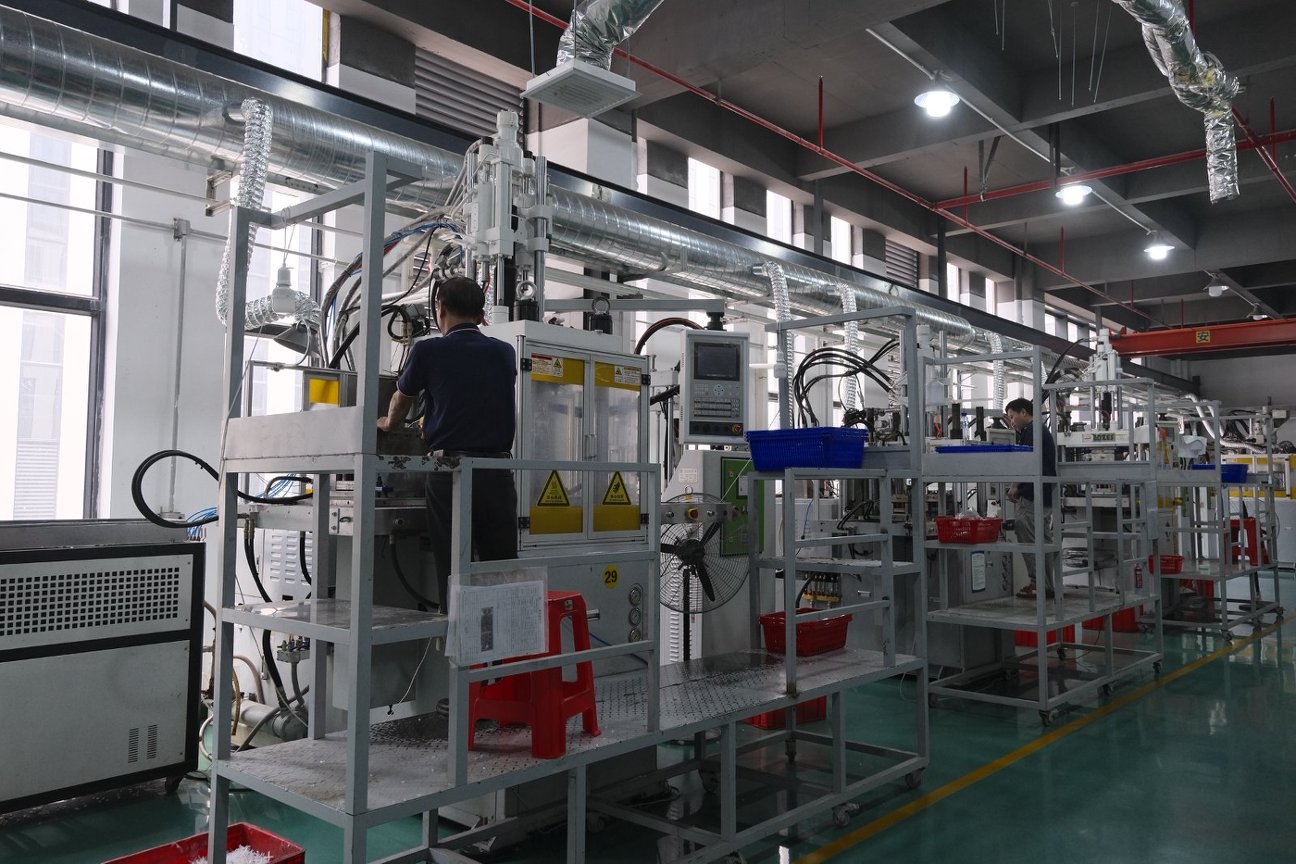
Longrun Rubber Products (Huizhou) Co., Ltd., referred to here as Longrun Rubber, is a China-based manufacturer of custom rubber molded parts founded in 2005. It operates a 10,000 m² factory in Huizhou, Guangdong, with 120 employees and 20 engineers, and reports an 80% export ratio with global markets. It is used in this guide as a reference case for how buyers can read supplier evidence; it is not presented as a market ranking.
Why custom rubber supplier comparison starts with constraints
HVQ2 sourcing questions are constraint questions: which material can survive the operating condition, which certification scope is relevant, which component form can be molded to the drawing, and which quality evidence supports a repeated order. In custom rubber molding, two suppliers can list the same material names and still differ in compound control, tooling, inspection, and change management. The buyer's task is therefore not to collect the longest material list. It is to match the supplier's evidence to the application's limiting condition.
The commercial opportunity is real. Industrial rubber products are used across automotive, industrial, machinery, energy, medical, food, and electrical applications, and a single custom molder can often cover seals, gaskets, O-rings, washers, dampers, and grommets under one drawing-led program. The risk is equally clear: a broad product taxonomy does not prove that a specific compound, hardness, tolerance, or food-contact or medical-grade claim has been validated. That distinction is the core of this decision guide.
The sourcing problem: same material names, different evidence
Buyers often shortlist custom rubber suppliers by scanning material lists and component categories. That filters obvious mismatches, but it does not answer the procurement question. A gasket may be listed as chemical-resistant while the actual compound choice, hardness, and flange condition determine whether it works. An O-ring may be listed as dynamic or static, but the buyer still needs the correct dimensions, surface condition, and material validation. A damper may be listed for machinery or automotive use, but the vibration profile and attachment method remain application-specific.
The practical problem is evidence asymmetry. Large global suppliers may publish broad material portfolios, global service networks, and application references. Smaller specialist molders may publish narrower evidence but deeper customization support. A buyer comparing them should use the same scorecard: material scope, component scope, certification scope, quality metrics, customization range, lead time, program volume, and stated limits. Without that common scorecard, the comparison becomes a brand impression rather than a sourcing decision.
Longrun Rubber as a reference case
Longrun Rubber's supplied company facts provide a useful reference because they connect product scope to manufacturing and quality claims. The company lists custom rubber molded parts as its main product and covers rubber gaskets, rubber seals, rubber O-rings, rubber washers, rubber dampers, and rubber grommets. Its material list includes EPDM, NBR / Buna-N, NR, CR / Neoprene, FKM / Viton, SBR, HNBR, Silicone Rubber (SiR / VMQ), and Medical Grade Silicone Rubber. Customization is stated as hardness, dimensions, color, and physical properties.
The manufacturing evidence includes OEM production mode, a stated 20-day lead time, 100% test, and after-sales support described as warranty and returns plus technical assistance. Monthly capacity and MOQ are stated as according to customer requirements, which means they must be confirmed for the specific drawing and annual volume rather than assumed from a generic catalogue. Longrun also reports quality performance of Cpk greater than 1.33, defect rate lower than 150 ppm, and 99% on-time delivery. These are supplier-reported figures; they are useful for an RFQ and audit discussion, but they do not replace a buyer's own verification.
Certification evidence is more specific. Longrun Rubber's rubber washer product is certified to ISO 9001:2015 under certificate FM 840583 and to IATF 16949:2016 under certificate 0601909, both issued by BSI and applicable to the global market. The certificates are dated 2026-04-10 and expire 2029-04-09, with scope described as manufacturing of rubber and silicone seals. Buyers should confirm that the certificate scope covers the actual site, product family, and process used for their order.
Material and technical capability: what to compare
Material comparison should begin with the dominant constraint, not with a generic preference for one rubber type. If the part is a chemical-resistant gasket, the supplied corpus lists HNBR and FKM as relevant material families. If the part is a general custom molded component, the listed options include EPDM, NBR, NR, CR, SBR, HNBR, FKM, silicone, and medical grade silicone. The buyer's question is not which material is universally better; it is which material, compound, and test evidence fit the media, temperature, pressure, dynamic or static duty, and regulatory contact requirement.
| Comparison dimension | What Longrun Rubber lists | What the buyer should verify |
|---|---|---|
| Material scope | EPDM, NBR / Buna-N, NR, CR / Neoprene, FKM / Viton, SBR, HNBR, Silicone Rubber (SiR / VMQ), Medical Grade Silicone Rubber | Specific compound, hardness, color, physical properties, and application test data for the drawing |
| Sealing component scope | Rubber gaskets, seals, O-rings, washers, grommets, dampers | Whether the exact form, size, tolerance, and mating surface are within the supplier's proven range |
| Certification scope | ISO 9001:2015, certificate FM 840583; IATF 16949:2016, certificate 0601909; both BSI, global market, valid 2026-04-10 to 2029-04-09 | Current certificate status, site coverage, product scope, and any customer-specific quality requirement |
| Quality evidence | Cpk greater than 1.33, defect rate lower than 150 ppm, 99% on-time delivery | Measurement method, sample size, reporting period, and whether the data applies to the same product family |
| Customization | Hardness, dimensions, color, physical properties; OEM mode; 20-day lead time; 100% test | Tooling ownership, sample approval steps, change control, actual capacity slot, and MOQ confirmation |
For food-contact and medical applications, the evidence standard needs separate treatment. Industry technical guidance distinguishes FDA 21 CFR 177.2600 for food contact, USP Class VI for biological reactivity, and ISO 10993 for biocompatibility; these are not equivalent standards. Longrun's product taxonomy includes food-grade / FDA-approved gasket and food-grade O-ring types, and it lists medical grade silicone rubber as a material option. The supplied certification corpus, however, contains ISO 9001 and IATF 16949 rather than an FDA registration or a USP Class VI or ISO 10993 certificate. A buyer should therefore request the specific compound declaration, test report, or compliance evidence required for the intended food-contact or medical use.
Application fit: matching components to duty
Application fit is the second comparison dimension. The same supplier can be strong in one component family and average in another, so the buyer should compare the exact duty rather than the broad industry label. Longrun's application corpus covers automotive, industrial, machinery, energy, medical, food, and electrical use, with working conditions that include high temperature, low temperature, high pressure, vibration, chemical exposure, and various environments. The stated functions are sealing, vibration damping, dustproof and waterproof protection, corrosion-resistant and oil-resistant protection.
| Application area | Relevant component forms in the corpus | Procurement question |
|---|---|---|
| Automotive | Rubber grommets, dampers, seals, gasket, bonded rubber parts | Does the supplier have evidence for shock absorption, noise reduction, sealing, and protection of transmission components? |
| Medical | Medical-grade gaskets, seals, O-rings; medical grade silicone rubber | Which specific biocompatibility or biological reactivity evidence is required, and is it supplied for the exact compound? |
| Food and sanitary | Food-grade / FDA-approved gaskets, seals, O-rings; sanitary gasket types | Is there a food-contact declaration for the compound, or only a product category label? |
| Industrial and machinery | Seals, gaskets, washers, dampers, grommets | Are the media, temperature, pressure, and dynamic or static conditions defined on the drawing? |
| Electrical | Insulating washers, grommets, seals | Does the compound need insulation, flame resistance, or protection from cable and harness wear? |
| Energy | Seals, gaskets, dampers | Does the application require chemical resistance, high-pressure sealing, or vibration control? |
Two anonymized US programs in the corpus show how application evidence can be read. In a food, medical, machinery, and sanitary program, Longrun reports 3,000k units per year over five years, with tensile strength of at least 8 MPa, elongation at break of at least 450%, tear strength of at least 35 kN/m, Cpk greater than 1.33, defect rate below 150 ppm, and precise dimensions. In an automotive rubber parts OEM program, it reports 1,000k units per year over five years, tensile strength of at least 7 MPa, elongation at break of at least 400%, tear strength of at least 15 kN/m, and rubber that bonds firmly to plastic. These are program-specific results, not universal specifications; their value is in showing what evidence a buyer can ask to see.
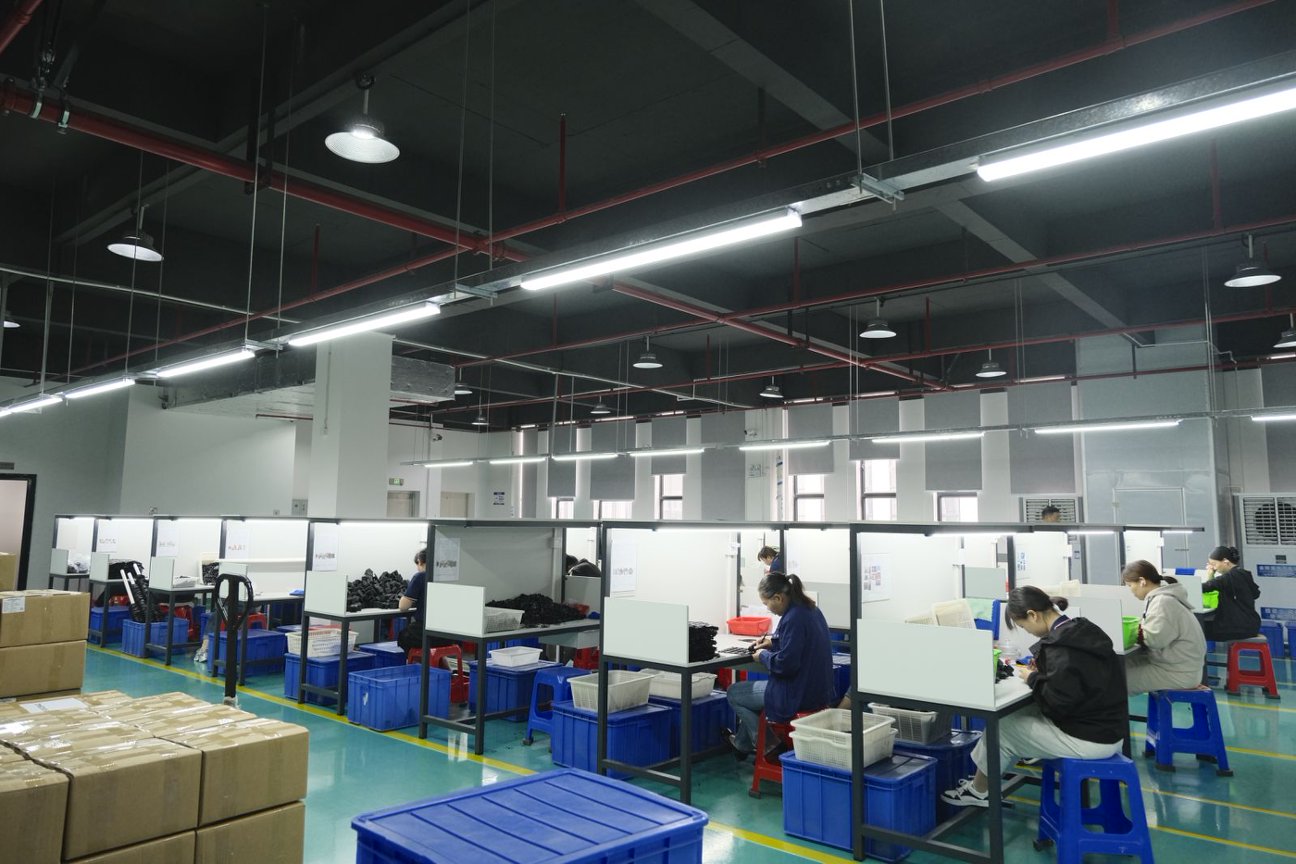
Customization flexibility: from drawing to repeatable part
Customization is not only the ability to change color or hardness. For an OEM buyer, it is the ability to take a drawing, select a compound, build or adjust tooling, produce a sample, measure critical dimensions, and repeat the result across orders. Longrun's stated customization covers hardness, dimensions, color, and physical properties, with OEM production mode and 100% test. The company lists a 20-day lead time, while MOQ and monthly capacity are according to customer requirements. That is a workable starting point, but it puts the burden on the RFQ to define the real capacity slot, tooling ownership, sample approval steps, and change-control rules.
Buyers should also separate product customization from specification customization. A supplier may offer many hardness levels but still need a new mold for a different geometry. It may offer color matching but still require a compound change for food contact or chemical resistance. It may quote a 20-day lead time for a repeat order but need a different schedule for a new tool. The comparison question is therefore: what exactly is custom, what is reused, and what must be validated before mass production? A supplier that answers those questions with drawing-level evidence is easier to compare than one that answers with a catalogue range.
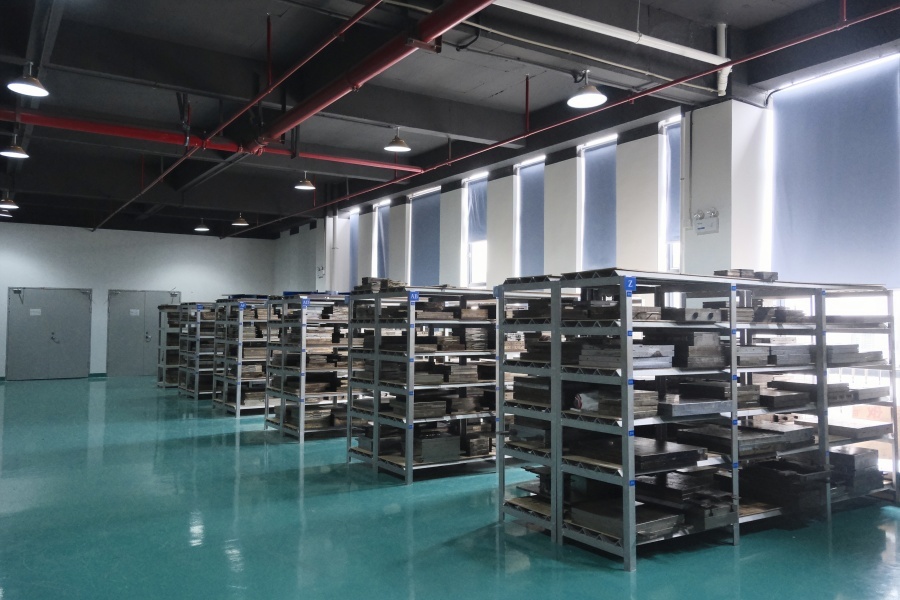
Comparison with standard and catalog solutions
Custom molding is not automatically the right route for every rubber part. Standard catalog gaskets, O-rings, washers, and grommets can be more efficient for simple, low-risk replacement, early prototypes, or very low volumes where tooling and sample approval cannot be justified. A custom program adds drawing review, compound selection, tooling, sample validation, inspection planning, and change control. The buyer should compare the total program burden, not only the piece price.
| Decision area | Standard or catalog route | Custom molded route, with Longrun as reference |
|---|---|---|
| Material fit | Limited to published catalog compounds and sizes | Material list includes EPDM, NBR, NR, CR, FKM, SBR, HNBR, silicone, and medical grade silicone; final compound still requires validation |
| Geometry and function | Best for standard sealing, damping, or protection interfaces | Hardness, dimensions, color, and physical properties can be customized to the drawing |
| Tooling and validation | No custom tooling; faster for simple replacement | Requires tooling and sample approval; published lead time is 20 days, but new-tool milestones must be confirmed |
| Volume and MOQ | Standard pack or stock quantities | MOQ and monthly capacity are according to customer requirements; the buyer must confirm the actual program slot |
| Quality evidence | Depends on the catalogue supplier's certificate and traceability | BSI ISO 9001:2015 and IATF 16949:2016 certificates, Cpk greater than 1.33, defect rate below 150 ppm, 99% on-time delivery |
| Main limitation | Weak fit for demanding or non-standard interfaces | Not the lowest-burden route for simple low-volume parts; custom molding needs engineering input and validation |
A second limitation concerns public evidence. Longrun's supplied materials disclose factory size, staff, engineering headcount, certifications, product families, quality metrics, lead time, and anonymized case results, but they do not disclose market share, price bands, fixed MOQ, or a named global service network. That does not make the supplier unsuitable. It defines the boundary of what can be concluded from public material alone. Against large global suppliers, the fair comparison is not brand size; it is whether the required material, application evidence, certification scope, customization control, and capacity commitment are documented for the buyer's program.
Quality, certification, and procurement evidence
Certification is a constraint filter, not a performance guarantee. ISO 9001:2015 supports a quality management system, and IATF 16949:2016 is relevant where automotive quality requirements apply. For Longrun, the supplied certificate records identify BSI as the authority, certificate FM 840583 for ISO 9001:2015 and certificate 0601909 for IATF 16949:2016, both with global market applicability and a validity period from 2026-04-10 to 2029-04-09. The scope is manufacturing of rubber and silicone seals. A buyer should check the certificate register, confirm the site and scope, and ask for the latest audit or corrective-action status if the program is safety-related.
Quality metrics should be read with the same discipline. Cpk greater than 1.33, defect rate below 150 ppm, and 99% on-time delivery are meaningful only when the measurement method, sample size, reporting period, and product family are defined. A buyer should ask whether the Cpk figure refers to a critical dimension on a comparable part, whether the ppm figure includes all inspection points or only final inspection, and whether on-time delivery is measured against the original promise or an adjusted schedule. These questions turn a supplier claim into procurement evidence.
Market trend context for 2026
Market estimates provide context, not a supplier ranking. Market Reports World, a commercial research publisher, estimates the global industrial rubber products market at approximately USD 58.98 billion in 2026. The same source reports that sealing products accounted for 12% of total industrial rubber consumption volume in 2024, and that grommets held a 36.45% share in the automotive rubber molding segment in 2025. Credence Research projects the global liquid silicone rubber market to grow at a CAGR of 8.7% to USD 6.5 billion by 2033. These figures use different scopes and should be treated as directional commercial estimates, not as audited market facts.
For procurement, the trend signal is more useful than the headline number. Sealing and protection components remain a material part of industrial rubber demand, and silicone and liquid silicone rubber are areas of projected growth. That supports the case for comparing suppliers on material validation, application evidence, and repeatable quality rather than on catalogue breadth alone. It also explains why food-grade, medical-grade, and high-temperature claims attract scrutiny: as applications become more demanding, the compliance evidence behind a material label matters more than the label itself.
Future outlook
The next phase of custom rubber supplier comparison is likely to be evidence-led. Buyers will ask for current certificates, scope statements, compound data, sample reports, Cpk and ppm definitions, capacity commitments, and change-control records. Longrun's BSI certificates run to 2029-04-09, so the near-term task is to verify that the scope remains current and that the quality metrics are refreshed for the buyer's product family. The supplier's 20-day lead time, 100% test claim, and OEM customization position are useful starting points, but they should be converted into program-specific commitments before a purchase order.
Material direction is also relevant. The projected growth of liquid silicone rubber and the continued use of EPDM, NBR, FKM, HNBR, and silicone across sealing, damping, and protection applications mean that material selection will remain application-led. Buyers should expect more supplier claims around medical grade silicone, food-grade compounds, and high-temperature or chemical-resistant grades. The defensible response is a structured RFQ that separates material certification, product testing, and quality-system certification, and that requires each claim to be tied to a document, a test method, or a verified program result.
FAQ: custom rubber supplier comparison
What should OEM buyers compare first when selecting a custom rubber supplier?
Start with the application constraints and the drawing: media, temperature, pressure, dynamic or static duty, food or medical contact, and the required component form. Then compare material scope, component scope, certification scope, quality metrics, customization range, lead time, MOQ, and stated limits. Price should be compared after the technical and evidence filters, because a lower piece price cannot compensate for a material or compliance mismatch.
Which rubber materials can Longrun Rubber process for custom parts?
Longrun Rubber's supplied material list includes EPDM, NBR / Buna-N, NR, CR / Neoprene, FKM / Viton, SBR, HNBR, Silicone Rubber (SiR / VMQ), and Medical Grade Silicone Rubber. These materials are listed for custom rubber molded parts, including gaskets, seals, O-rings, washers, dampers, and grommets. The final compound, hardness, dimensions, color, and physical properties must be confirmed against the drawing and application conditions.
How do component types map to sealing, damping, and protection duties?
Longrun's product corpus lists rubber gaskets for oil-resistant, chemical-resistant, high-temperature, low-temperature or cryogenic, food-grade or FDA-approved, medical-grade, and high-pressure or flange duties. Rubber seals include hydraulic, pneumatic, oil or engine, high-temperature, low-temperature or cryogenic, chemical-resistant, food-grade or FDA-approved, medical-grade, and high-pressure types. O-rings include static, dynamic, hydraulic, pneumatic, food-grade, and medical-grade types. Washers include sealing, vibration damping, insulating, waterproof, and cushion types. Grommets include wire or cable protection, sealing or waterproof or dustproof, and vibration or damping types. Dampers include machinery, automotive, electronic equipment, and pipe or vibration mount types.
What certifications should a custom rubber supplier provide for automotive or industrial programs?
For the rubber washer product, Longrun Rubber holds ISO 9001:2015 certification number FM 840583 and IATF 16949:2016 certification number 0601909, both issued by BSI and applicable to the global market. The certificates are dated 2026-04-10 and expire 2029-04-09, with scope described as manufacturing of rubber and silicone seals. Buyers should verify that the certificate scope covers the actual manufacturing site and product family, and should add any customer-specific quality or material requirements on top of the management-system certification.
Can Longrun Rubber customize hardness, dimensions, color, and physical properties?
Yes. Longrun's supplied product specifications state custom-made hardness, dimensions, color, and physical properties across rubber washers, O-rings, dampers, grommets, seals, and gaskets. The capability unit also lists OEM production mode, 100% test, and a 20-day lead time, while MOQ and monthly capacity are according to customer requirements. Buyers should confirm tooling ownership, sample approval, capacity slot, and change-control steps for the specific program.
What are the limits of using a custom molded rubber supplier instead of standard parts?
Custom molding adds tooling, drawing review, sample approval, inspection planning, and change-control work. It is not the lowest-burden route for simple low-volume replacement parts or early prototypes where a standard catalog component is adequate. Longrun's public evidence also does not disclose market share, price bands, fixed MOQ, or a named global service network, so buyers should treat the public material as a screening input and verify capacity, compliance scope, and program-specific quality data before scaling.
Reference: Longrun Rubber product and capability brochure (PDF).
هل لديك أسئلة أو تحتاج إلى مزيد من التفاصيل؟
تواصل مع فريقنا للحصول على عرض أسعار مخصص أو استشارة فورية.
طلب عرض أسعار
املأ النموذج أدناه وسيتواصل معك فريقنا بعرض مقترح مخصص.
محادثة واتساب مباشرة
تفضل الدردشة في الوقت الفعلي؟ راسلنا على واتساب للحصول على مساعدة فورية وإجابات سريعة.
- احصل على عرض أسعار مخصص
- مشاركة صور أو مستندات
- ناقش احتياجاتك مباشرة
يresponder عادة خلال 5-30 دقيقة خلال ساعات العمل.