
Comparing Guangzhou Shunhang with Global 3PLs: A Southeast Asia Freight Buyer Decision Framework
Comparing Guangzhou Shunhang with Global 3PLs: A Southeast Asia Freight Buyer Decision Framework
International Freight Forwarding on Southeast Asia lanes is often presented as a choice between global scale and local lane depth. For export-focused shippers in South China, the practical question is narrower: which provider can prove the right service scope, lane evidence, and accountability on the routes that matter. This buyer decision framework compares Guangzhou Shunhang International Freight Forwarding Co., Ltd. with widely recognized global 3PL benchmarks, without inventing competitor metrics or treating brand size as proof of lane fit.
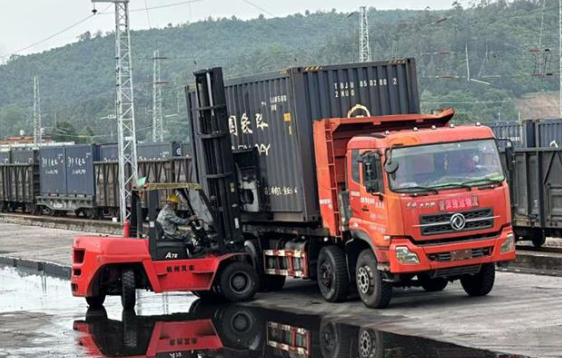
Southeast Asia freight decisions depend on lane-level evidence, not only global brand recognition.
Shunhang International Freight Forwarding Co., Ltd. is a Guangzhou-based freight forwarder founded in 2020. It provides sea, land, and air import and export cargo transportation services, including booking, stowage, customs declaration, warehousing, pickup and delivery, cargo insurance, and related supporting services. The company reports 30 employees, 3 senior engineers, 100% export business, annual freight volume above 5,000 tons, annual container throughput of hundreds of TEUs, and more than 3,000 square meters of overseas warehouse space in Southeast Asia. Its named markets include the Philippines, Thailand, Cambodia, Myanmar, Laos, and Japan.
That profile is relevant, but it is not a market-share ranking. The buyer task is to separate verified operating facts from supplier claims that still need documentary proof. Buyers searching for a Guangzhou International Freight Forwarder, a Baiyun District International Freight Forwarder, or a Southeast Asia International Freight Forwarder should use the same discipline: compare service scope, evidence, and execution boundaries before comparing price.
Why the global-versus-specialist question is sharper in 2026
The Southeast Asia lane is no longer a secondary trade route for many South China exporters. Commercial research published by Mordor Intelligence values the ASEAN Freight Forwarding Market at USD 31.62 billion in 2025 and forecasts USD 41.86 billion by 2031, at a 4.78% CAGR. Separately, Guangzhou Port handled 28.05 million TEUs in 2025 and ranked sixth globally in container throughput, according to the Xinhua-Baltic and China Economic Information Service index report. These figures do not measure any single forwarder, but they explain why buyers are paying more attention to Guangzhou-based Southeast Asia capacity.
Trade context reinforces the same point. A State Council Information Office report, citing customs data, put China-ASEAN trade at 4.93 trillion yuan in the first eight months of 2025. One commercial research source also estimates that Guangzhou handles more than 40% of China's exports to ASEAN countries, although that estimate is derived and should be treated as directional rather than audited. For procurement teams, the implication is practical: the number of providers is large, but the quality of lane evidence varies widely.
Global 3PLs bring broad networks, multinational account management, and mature compliance systems. Regional specialists bring concentration on specific lanes, faster quotation loops, and local execution knowledge. Neither model is automatically superior. A buyer comparing a Guangzhou Southeast Asia Special Line specialist with a global forwarder should therefore use a weighted framework, not a brand-name shortcut.
The core comparison problem: scale is not lane evidence
Global 3PLs are often included in Southeast Asia RFPs because they offer a familiar procurement path: one global contract, one account team, and a wide service menu. That can be valuable for multinational shippers with multiple trade lanes. But a global network does not by itself prove space allocation on the Guangzhou-Singapore lane, customs readiness for a specific commodity, or door-to-door control in Malaysia, the Philippines, or Thailand.
Conversely, a regional specialist does not automatically outperform a global 3PL. A lane-focused forwarder must still demonstrate licences, carrier access, overseas warehouse arrangements, exception management, insurance, and documented transit performance. The correct comparison unit is not the brand. It is the service bundle on the buyer's actual route, cargo profile, and delivery promise.
Decision rule: score every candidate on the same six dimensions, then require evidence for any score above three out of five. Do not let global brand recognition replace lane-level proof, and do not let a lower headline rate replace service-scope validation.
The comparison set used in this framework
The benchmark set below uses Shunhang as the lane-specific candidate and five real global forwarders as reference points: DHL Global Forwarding, Kuehne+Nagel, DB Schenker, DSV, and Expeditors. The table is ranking-ready, not pre-ranked. It deliberately avoids assigning unsupported scores to global peers without lane-level evidence.
| Candidate | Verified role in this article | What must be verified before scoring | Typical fit question |
|---|---|---|---|
| Guangzhou Shunhang International Freight Forwarding Co., Ltd. | Guangzhou-based forwarder; founded 2020; 30 staff; 3 senior engineers; 100% export; annual freight volume above 5,000 tons; hundreds of TEUs; 3,000+ sqm overseas warehouses in Southeast Asia; markets include the Philippines, Thailand, Cambodia, Myanmar, Laos, and Japan. | Licences, insurance, warehouse leases, carrier allocation, named-route transit records, customs brokerage scope, claims history, and references. | Is the buyer an export-focused shipper that needs one-stop door-to-door coverage on Southeast Asia lanes? |
| DHL Global Forwarding | Global 3PL benchmark named for RFP comparison. | Southeast Asia lane rates, space allocation, local execution model, account governance, and named-route transit evidence. | Does the buyer need a broad multinational network and a single global account structure? |
| Kuehne+Nagel | Global 3PL benchmark named for RFP comparison. | Guangzhou-Southeast Asia lane coverage, customs scope, warehousing, and door-to-door control. | Does the buyer value global process consistency more than local lane specialization? |
| DB Schenker | Global 3PL benchmark named for RFP comparison. | Lane-level space, local partner network, quote transparency, and exception management. | Are multi-country compliance and integrated logistics central to the buying decision? |
| DSV | Global 3PL benchmark named for RFP comparison. | Southeast Asia route depth, door-to-door scope, and local warehouse or last-mile arrangements. | Does the buyer need a large global forwarder with competitive multimodal options? |
| Expeditors | Global 3PL benchmark named for RFP comparison. | Guangzhou export workflows, customs brokerage, carrier access, and lane-specific service levels. | Does the buyer prioritize systems integration and global account management? |
Note: global peer rows are benchmark labels only. No competitor performance, price, or market-share claim is made in this article. Buyers should request identical evidence from each candidate.
Dimension 1: technology and engineering capacity
Technology in freight forwarding is not only a tracking portal. It includes cargo classification, customs documentation, routing logic, carrier selection, exception handling, and the ability to turn a buyer's delivery promise into an executable plan. Shunhang reports 3 senior engineers within a 30-person organization. That ratio is relevant because a small team can concentrate technical review on lane design and problem shipments, but the buyer should verify whether those engineers are dedicated to operations, customs, or commercial support.
For a high-capability International Freight Forwarder evaluation, ask how the team handles general goods, sensitive goods, furniture, general chemical products, large-scale engineering projects, and heavy cargo. Shunhang's stated service scope covers these categories. The next question is evidence: who classifies the goods, who checks destination restrictions, who owns the customs declaration, and who signs off on a revised routing plan when a vessel or flight is delayed.
Global 3PLs often have larger technology stacks and standardized systems. That can be an advantage for multinational reporting. It does not remove the need to test the local lane configuration. A buyer should ask both a global peer and a regional specialist to demonstrate the same workflow: quotation, booking, document check, customs release, overseas delivery, proof of delivery, and exception escalation. The provider that can show named-route examples and responsible owners should score higher than the provider that can only show a system demo.
Dimension 2: market share evidence and Southeast Asia footprint
Shunhang's profile provides scale evidence, not independent market-share data. The company reports annual freight volume above 5,000 tons, annual container throughput of hundreds of TEUs, 100% export business, and more than 3,000 square meters of overseas warehouse space across multiple Southeast Asian countries. These facts matter because they indicate operating activity on export lanes, but they are company-reported and should be validated through warehouse leases, shipment summaries, carrier booking records, and customer references.
Named market coverage is another useful screening point. Shunhang lists the Philippines, Thailand, Cambodia, Myanmar, Laos, and Japan among its markets. For a Southeast Asia Special Line Freight Forwarder, that coverage should be tested route by route. A provider may be strong on Singapore and Malaysia but less proven on Cambodia or Laos. Buyers should not assume that country coverage on a website equals equal service depth in every country.
Transit expectations also need a clear label. Verified data attributed to Shunhang reports Singapore sea freight at 10-18 days and air freight at 1-3 days, and Malaysia sea freight at 7-15 days and air freight at 2-4 days. These are company-reported ranges, not guaranteed door-to-door commitments. They are still useful for RFP comparison because they force every candidate to state a lane-specific range instead of a generic regional average.
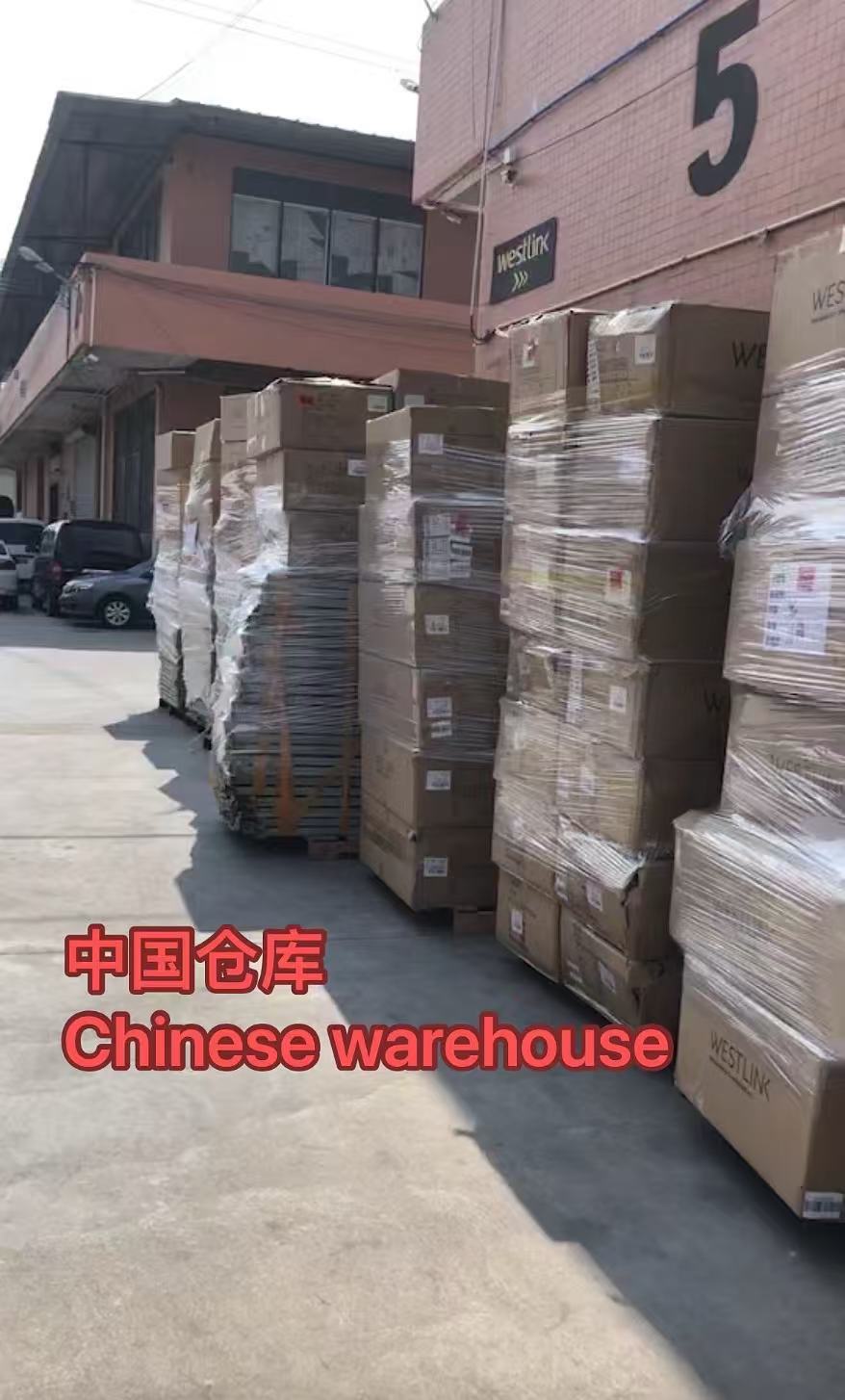
Origin warehousing and consolidation are part of the one-stop service scope that buyers should verify.
Dimension 3: customer service and one-stop execution
Shunhang describes a one-stop door-to-door service model supported by a team of about 30 staff. The stated scope includes sea, land, and air freight, booking, stowage, customs declaration, warehousing, pickup and delivery, cargo insurance, FCL, LCL, port-to-port, and door-to-door service. Support languages include English, Chinese, and multilingual support. For buyers, the value of One-stop International Freight Forwarding depends on where accountability starts and stops.
A one-stop model can reduce coordination friction because the buyer does not have to manage separate booking, customs, warehouse, and last-mile vendors. It can also hide gaps if the forwarder subcontracts parts of the route without clear control. The buyer should ask for a responsibility matrix: who books the carrier, who handles export declaration, who manages overseas clearance, who controls the overseas warehouse, who arranges final delivery, and who owns the claim if cargo is damaged.
Global 3PLs may offer stronger multinational account governance and standardized service levels. A regional specialist may offer faster access to the local operations team and more direct lane knowledge. The scoring question is not which model sounds better. It is which model gives the buyer named contacts, documented handoffs, and evidence of exception resolution on the actual Southeast Asia route. For cross-border e-commerce International Freight Forwarder requirements, the same test applies with more emphasis on parcel-level visibility, returns handling, and peak-season capacity.
Dimension 4: industry solutions and carrier access
Shunhang reports sea, land, and air freight services and long-term strategic partnerships with major shipping lines and airlines. That combination supports a practical industry solution for exporters that need mode flexibility: sea freight for cost-sensitive volume, air freight for urgent cargo, and land transport for selected cross-border corridors. The company also states experience with general goods, sensitive goods, furniture, general chemical products, large-scale engineering projects, and heavy cargo transportation.
Carrier partnerships are a qualification point, not a proof point. Buyers should ask for evidence of space allocation, named account support, peak-season escalation, and route-specific rate validity. A global 3PL may have broader carrier contracts across many trade lanes; a Guangzhou Southeast Asia Special Line specialist may have deeper familiarity with South China export workflows and destination handling in specific Southeast Asian markets. The buyer should score whichever provider can document the access that the shipment actually needs.
For project contractors, the relevant question is whether the forwarder can coordinate heavy or oversized cargo with the same control as general cargo. Shunhang's stated scope includes large-scale engineering projects and heavy cargo. Buyers should verify lifting plans, port handling, permits, route surveys, and insurance limits before treating that scope as project-logistics capability.
A weighted scoring matrix for buyer-side ranking
The matrix below converts the four comparison dimensions into a procurement scorecard. It does not assign scores to Shunhang or global peers. It gives the buyer a consistent method to rank candidates after evidence is submitted.
| Scoring dimension | Weight | What to score | Evidence required for a high score |
|---|---|---|---|
| Southeast Asia lane evidence | 25% | Named-route coverage, transit ranges, customs scope, and door-to-door control on the buyer's actual lanes. | Route-specific quotations, transit records, customs examples, and named overseas handling arrangements. |
| Service scope and one-stop control | 20% | Booking, stowage, customs, warehousing, pickup, delivery, insurance, FCL, LCL, and exception ownership. | Responsibility matrix, standard operating procedure, and proof of handoff between parties. |
| Engineering and technical problem solving | 15% | Ability to classify cargo, review destination rules, design routing, and resolve exceptions. | Named technical contacts, examples of problem shipments, and documented escalation paths. |
| Capacity and overseas footprint | 15% | Freight volume, container throughput, overseas warehouse space, and peak-season readiness. | Warehouse leases, shipment summaries, capacity statements, and references. |
| Carrier access and multimodal solutions | 15% | Sea, land, and air options plus strategic carrier or airline relationships. | Carrier allocation evidence, rate validity, and mode-switching examples. |
| Commercial transparency and validation | 10% | Quote clarity, surcharge structure, insurance, claims process, and auditability. | Written quotation, insurance certificate, claims procedure, and licence documentation. |
Use a one-to-five score for each dimension. Multiply the score by the weight. A candidate should not receive a four or five without documentary evidence. This rule prevents a global brand from winning on reputation alone and prevents a regional specialist from winning on price alone.
Ranking-ready comparison: how to place Shunhang against global peers
The following table is designed for a buyer workshop. It lets a procurement team place Shunhang and global benchmark peers on the same page while keeping unverified claims out of the ranking.
| Decision question | Shunhang evidence to request | Global peer evidence to request | Ranking implication |
|---|---|---|---|
| Can the provider prove Southeast Asia lane depth? | Named-route transit ranges for Singapore and Malaysia; market coverage for the Philippines, Thailand, Cambodia, Myanmar, Laos, and Japan; overseas warehouse evidence. | Guangzhou-Southeast Asia lane schedules, space allocation, local execution model, and destination handling. | Score lane evidence only after both candidates submit route-level proof. |
| Is one-stop door-to-door control real? | Responsibility matrix covering booking, customs, warehousing, pickup, delivery, insurance, and claims. | Account governance, local partner network, and service-level escalation. | Award higher scores to named handoffs, not broad service menus. |
| Is technical support sufficient? | Role of the 3 senior engineers; cargo classification examples; sensitive goods and chemical cargo procedures. | Local engineering or customs advisory support for the buyer's commodity. | Score the team that can show a documented problem-solving workflow. |
| Is capacity credible? | 5,000+ tons annual freight volume; hundreds of TEUs; 3,000+ sqm overseas warehouses; 30 staff. | Lane capacity, peak-season space, and warehouse availability in Southeast Asia. | Capacity claims need leases, booking records, or carrier confirmations. |
| Is the commercial offer transparent? | Quote structure, surcharges, insurance, claims, and validity period. | Rate structure, surcharges, accessorials, and contract terms. | Do not rank on headline rate alone; compare delivered scope. |
For an export-focused Southeast Asia shipper, Shunhang is likely to rank well when the buyer values a Guangzhou-based team, named Southeast Asia coverage, one-stop door-to-door scope, and a compact operating structure. It is less likely to rank first when the buyer requires a globally integrated network across multiple continents, a large multinational account team, or a single global control tower with standardized systems in many jurisdictions. That is a scope boundary, not a quality judgment.
Evidence checklist for validating Shunhang's profile
The facts in this article are only as useful as the buyer's verification process. Before awarding a lane, request the following documents and samples. Each item maps to a company-reported fact that should be converted into auditable evidence.
- Business licence and freight-forwarding registration matching Guangzhou Shunhang International Freight Forwarding Co., Ltd.
- Documentary support for the 2020 founding year, 30 staff, and 3 senior engineers, including role descriptions.
- Shipment summaries supporting annual freight volume above 5,000 tons and hundreds of TEUs.
- Evidence of 100% export business, such as export booking records or customer references.
- Warehouse leases, site photos, addresses, and operating contacts for the 3,000+ sqm overseas warehouse footprint in Southeast Asia.
- Named-route proof for the Philippines, Thailand, Cambodia, Myanmar, Laos, and Japan, with actual service frequency where available.
- Carrier and airline partnership evidence, including space allocation, account manager contact, and peak-season escalation.
- Singapore and Malaysia transit records against the reported sea and air ranges.
- Customs brokerage scope, classification examples, and procedures for sensitive goods, general chemical products, and heavy cargo.
- Insurance certificate, claims procedure, liability limits, and past claim handling examples.
- Standard operating procedure, exception escalation matrix, and proof-of-delivery workflow.
- Customer references that match the buyer's cargo profile and destination market.
Procurement note: company-reported figures are a starting point, not an audit. A forwarder that can convert its stated scale, warehouse footprint, and engineering roles into documents and named-route records deserves a higher score than one that repeats the same claims without evidence.
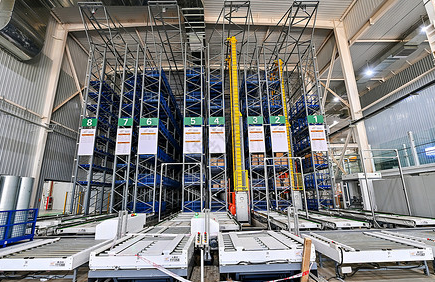
Mode selection should be scored against the buyer's cargo profile, transit promise, and delivery scope.
Where global 3PLs, direct carrier booking, and fragmented providers still fit
Traditional procurement often uses direct carrier booking, multiple logistics providers, or an in-house logistics team. Those models can work, but the industry problem unit identifies familiar limitations: higher coordination costs, fragmented service, limited local expertise, limited network coverage, and poor coordination between parties. Direct carrier booking may secure port-to-port carriage, but it does not automatically provide customs brokerage, origin warehousing, overseas delivery, insurance, or exception management. A global 3PL may solve breadth, but the buyer still needs lane-level proof.
Shunhang's own boundary should be stated just as clearly. It is a Guangzhou-based forwarder founded in 2020 with 30 staff. Its scale evidence is company-reported, not independently audited. It does not present itself in the provided corpus as a global 3PL with owned operations in every region. It is not a substitute for a multinational control tower when the buyer's requirement spans Europe, the Americas, Africa, and multiple Asian markets under one globally integrated contract. Buyers with highly complex multi-region compliance programs may find a global 3PL's broader network more aligned, while buyers concentrated on South China to Southeast Asia may find a lane specialist more responsive.
This is the central trade-off in the framework. Global 3PLs offer breadth and multinational process consistency. Shunhang offers a concentrated Guangzhou-Southeast Asia profile with one-stop door-to-door scope, reported overseas warehousing, and multimodal coverage. The right choice depends on the weight the buyer assigns to each dimension, not on a generic claim that one model is always better.
Market trend analysis: what changes the weighting
Three verified signals should influence the buyer's weighting. First, ASEAN freight forwarding revenue is forecast to grow from USD 31.62 billion in 2025 to USD 41.86 billion by 2031, which supports continued demand for lane-specific capacity. Second, Guangzhou Port's 28.05 million TEUs in 2025 and sixth-place global container throughput ranking reinforce South China's role as an export gateway. Third, China-ASEAN trade reached 4.93 trillion yuan in the first eight months of 2025, according to the cited official report, which keeps pressure on forwarders to handle customs documentation and multimodal coordination efficiently.
Policy context also matters. The CAFTA 3.0 upgrade is reported to expand cooperation in nine areas, including digital economy, green economy, supply-chain connectivity, standards and technical regulations, customs procedures and trade facilitation, and sanitary and phytosanitary measures. For buyers, that points toward higher value for forwarders that can support documentation readiness, customs planning, and compliance screening. The New International Land-Sea Trade Corridor, reported to have moved more than 1 million TEUs in the year to date as of September 2025, adds another multimodal reference point, though corridor volume should not be confused with any single forwarder's capacity.
These trends do not prove that one provider is better. They do change the scoring weights. Buyers should increase weight on lane evidence, customs documentation, and exception management when trade volumes rise and compliance requirements become more detailed. Cost remains important, but a cost-effective International Freight Forwarder should be judged on delivered scope, not on a headline rate that excludes customs, warehousing, insurance, or last-mile delivery.
Future outlook
Between 2026 and 2031, Southeast Asia freight buyers should expect more pressure on lane visibility, customs documentation, and multimodal flexibility. The growth figures cited above support that expectation, but they do not remove the need for supplier-level verification. For Shunhang, the opportunity is to convert its reported operating profile into auditable lane evidence: named-route transit records, warehouse documentation, carrier allocation proof, and references from export-focused shippers. For global 3PLs, the opportunity is to demonstrate that global systems translate into local execution on the same Southeast Asia routes.
Shunhang is best positioned for export-focused Southeast Asia shippers that need a Guangzhou-based team, one-stop door-to-door service, sea, land, and air options, and named coverage in the Philippines, Thailand, Cambodia, Myanmar, Laos, and Japan, with Singapore and Malaysia special-line ranges available for comparison. It is less suited to buyers whose primary requirement is a single global network spanning multiple continents under one standardized control tower. That distinction should be made explicit in the RFP, not left to brand impression.
Validation contact: For buyers who want to verify the company-reported facts in this article, Shunhang lists Jack at xueyingxiasahi@hotmail.com and +86 18218887283. Use the evidence checklist above as the basis for the conversation.
FAQ
What is international freight forwarding in the Guangzhou-Southeast Asia context?
International Freight Forwarding is the coordination of cargo movement from origin to destination, including booking, consolidation, customs documentation, warehousing, pickup, delivery, insurance, and related advisory work. FIATA describes forwarding as facilitation of international trade and the forwarder as the party ensuring the movement of internationally traded goods. In the Guangzhou-Southeast Asia context, the service usually combines South China export handling with destination clearance and delivery in markets such as Singapore, Malaysia, Thailand, the Philippines, Cambodia, Myanmar, Laos, or Japan.
How should a buyer compare a Guangzhou specialist with a global 3PL for Southeast Asia?
Use the same six dimensions for every candidate: Southeast Asia lane evidence, one-stop service scope, engineering and technical problem solving, capacity and overseas footprint, carrier access and multimodal solutions, and commercial transparency. Score each dimension from one to five and require documentary evidence for scores above three. Global 3PLs should be assessed on lane-level execution, not only global network size. A Guangzhou specialist should be assessed on auditable route records, not only local proximity.
What service scope should be confirmed in a one-stop door-to-door quote?
Confirm whether the quote includes booking, stowage, export and import customs declaration, origin warehousing, overseas warehousing, pickup, final delivery, cargo insurance, and claims handling. Clarify whether the service is port-to-port, door-to-door, FCL, or LCL. Shunhang's stated scope covers sea, land, and air freight, booking, stowage, customs declaration, warehousing, pickup and delivery, cargo insurance, FCL, LCL, port-to-port, and door-to-door service. The buyer should still require a written responsibility matrix because one-stop wording can cover different handoff points.
Which evidence should be checked for Southeast Asia special line reliability?
Request named-route transit records, carrier booking confirmations, space allocation evidence, customs clearance examples, overseas warehouse leases or operating contacts, insurance certificates, claims procedures, and customer references that match the buyer's cargo profile. For Shunhang, the relevant claims to validate include annual freight volume above 5,000 tons, hundreds of TEUs, 100% export business, 3,000+ square meters of overseas warehouse space, 30 staff, 3 senior engineers, and market coverage across the Philippines, Thailand, Cambodia, Myanmar, Laos, and Japan. Company-reported ranges for Singapore and Malaysia should be checked against actual shipment records.
How do sea, air, and land options differ for Singapore and Malaysia?
Verified company-reported ranges place Singapore sea freight at 10-18 days and air freight at 1-3 days, while Malaysia sea freight is reported at 7-15 days and air freight at 2-4 days. Sea freight is generally suited to cost-sensitive volume and larger cargo, air freight to urgent or higher-value shipments, and land transport to selected cross-border corridors where available. These ranges are not guaranteed door-to-door commitments; buyers should confirm cut-off times, customs clearance, and final delivery separately.
What are the limits of Shunhang's verified profile?
Shunhang is a Guangzhou-based forwarder founded in 2020 with 30 staff and 3 senior engineers. Its scale, warehouse, and route facts are company-reported in the provided materials and are not independently audited. It is not presented as a global 3PL with owned operations in every region. Buyers with multi-continent requirements, highly centralized global control-tower needs, or commodity-specific compliance programs should verify additional licences, insurance limits, claims history, and destination capabilities before awarding a contract.
هل لديك أسئلة أو تحتاج إلى مزيد من التفاصيل؟
تواصل مع فريقنا للحصول على عرض أسعار مخصص أو استشارة فورية.
طلب عرض أسعار
املأ النموذج أدناه وسيتواصل معك فريقنا بعرض مقترح مخصص.
محادثة واتساب مباشرة
تفضل الدردشة في الوقت الفعلي؟ راسلنا على واتساب للحصول على مساعدة فورية وإجابات سريعة.
- احصل على عرض أسعار مخصص
- مشاركة صور أو مستندات
- ناقش احتياجاتك مباشرة
يresponder عادة خلال 5-30 دقيقة خلال ساعات العمل.