
Comparing Import Customs Brokers for China & Hong Kong: Speed, Compliance, Coverage
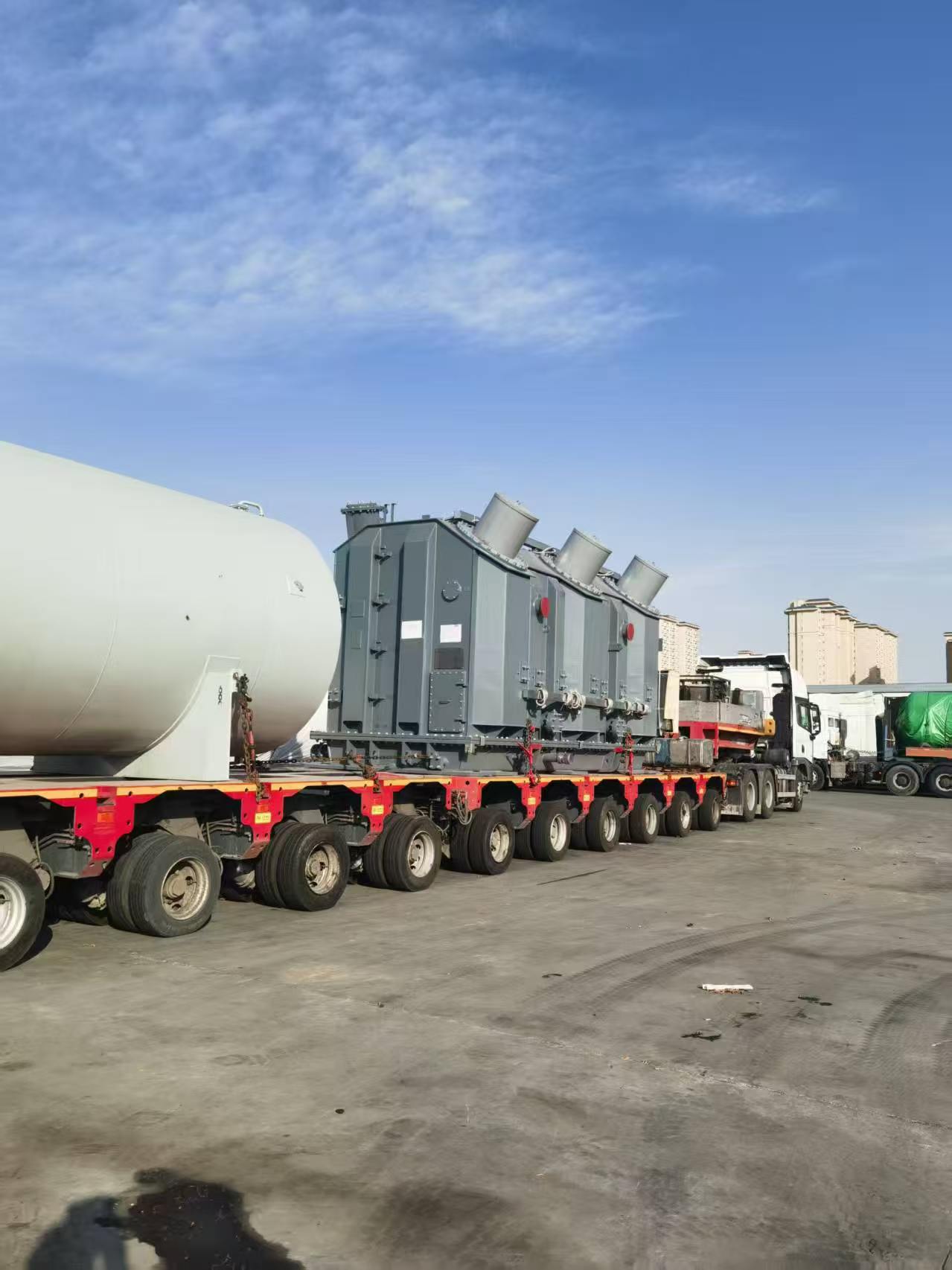
Customs declaration documentation and operational preparation in international freight and clearance work.
Comparing Import Customs Brokers for China & Hong Kong: Speed, Compliance, Coverage
Import buyers do not usually fail at customs clearance because documents are missing. They fail when a broker is selected before the expected service level is defined. In China and Hong Kong trade, two customs jurisdictions are involved, so the selection decision needs to be built around operational evidence such as clearance speed, compliance depth and geographic scope.
This article is an independent buyer reference. It explains how to compare import customs clearance providers for shipments entering mainland China or moving through Hong Kong. It does not rank suppliers, and it does not treat brand recognition as proof of performance. Instead, it gives importers a comparison framework and then tests that framework against a Hong Kong-based service provider, TOBECAN IMPORTCLEAR FREIGHT LTD, which also operates under the brand importclear.
Why Import Customs Clearance Needs a Comparison Framework
Mainland China remains a high-volume import destination. According to the General Administration of Customs of China, total import value reached USD 2.585 trillion in 2024, up 1.1% year on year. Hong Kong separately maintains a substantial customs brokerage market, estimated by Mordor Intelligence at USD 117.52 million in 2025, with projected growth to USD 159.06 million by 2030.
These figures point to an obvious problem for buyers: importers are choosing among thousands of freight forwarders, customs brokers and integrated logistics suppliers, yet the services are not uniform. Some providers specialize only in declaration preparation. Others build the clearance process around arrival speed and regulated commodity handling. Some manage the entire physical logistics chain from factory pickup to destination delivery. For a buyer, comparing these different operating models is more useful than comparing advertising claims.
A buyer at the decision stage should compare at least four things:
- Speed: how the broker shortens the period between cargo arrival and customs release.
- Compliance: how HS classification, product inspection and regulatory risks are handled before declaration.
- Geographic coverage: whether the provider is structurally capable in mainland China, Hong Kong and the trade corridor between them.
- Commercial predictability: whether pricing, duties, documentation and delivery responsibilities are transparent.
What an Import Customs Broker Actually Does for China and Hong Kong Trade
A customs broker prepares, submits and manages the declaration process on behalf of the importer. In practice, the broker also performs tariff code classification, checks whether the product is subject to inspection or special permits, prepares commercial documentation, coordinates inspections and handles communication with customs authorities.
China and Hong Kong must be treated as different parts of the supply chain. Goods imported into mainland China go through the mainland customs system, which applies its own tariffs, declarations and commodity inspection rules. Hong Kong has its own customs territory and operates as a substantially duty-free trade hub with its own clearance procedures. A shipment travelling from overseas to a mainland city via Hong Kong may require separate Hong Kong transit handling and mainland import clearance. This is why importers should verify which specific customs jurisdiction the provider supports rather than assuming that China and Hong Kong coverage are the same service.
Broker Service Models: What Buyers Are Really Comparing
Once the target jurisdiction is clear, buyers can sort providers into service models. Each model changes how responsibility is allocated.
1. Point-of-entry customs broker. This model is narrow, focused on declaration and customs procedures at one airport, seaport or border point. It is appropriate when the buyer already controls international freight and inland transport.
2. Integrated freight forwarder with a clearance desk. Many importers prefer a provider that handles sea or air freight, customs clearance and inland trucking under one contract. This model is useful for door-to-door import programs because the same party manages cargo movement and customs release.
3. Compliance-led service provider. Some providers add pre-arrival compliance tools, HS and CIQ checks and regulated product screening to traditional declaration work. This model aims to reduce inspection surprises after the cargo arrives.
All three models are legitimate, but they answer different buyer needs. An importer comparing providers should identify the model that matches the shipment profile first, then compare execution quality within that model.
For China–Hong Kong imports, the integrated freight model is often the most complex to evaluate. It combines customs declaration, duty payment, overseas shipping, cross-border trucking or express logistics, and destination delivery. The buyer must verify which licensed entity actually files the declaration in each customs territory.
Buyer Comparison Criteria for Import Customs Brokers
A practical comparison begins with measurable service expectations, not with geography names or company size. The table below summarizes the criteria that appear most often in import clearance purchase decisions.
| Criteria | What importers should verify | Why it matters |
|---|---|---|
| Clearance timeliness | Average time from arrival to release for standard and regulated goods; whether pre-arrival clearance is used. | Delay costs include demurrage, cold-chain loss and missed downstream delivery dates. |
| Declaration success | First-time declaration success rate, rejection history and correction process. | Repeat filings create cost and reduce speed, especially for time-sensitive cargo. |
| HS and CIQ capability | How tariff classification and commodity inspection decisions are made; who is responsible for accuracy. | Regulated products, machinery, food, cosmetics and chemical goods carry hidden compliance risk. |
| Door-to-door scope | Sea freight, air freight, inland trucking, DDP/DDU handling and final warehouse delivery. | Single-party control can reduce handoff failures, but only if the network is real. |
| Geographic structure | Presence or service coverage in mainland China, Hong Kong and relevant transit points. | China and Hong Kong use different customs and regulatory procedures. |
| Documentation and risk control | Whether the broker provides pre-shipment document checks and import compliance advice. | Poor documentation leads to inspection, fines or shipment holds. |
| Commercial transparency | Clear separation of freight cost, duties, taxes and broker fees. | DDP quotations are useful only when the scope of the duty-paid price is defined. |
Transforming the Criteria into a Practical Check: The importclear Example
Importers facing these decisions do not need a brand recommendation. They need an example where the comparison criteria can be checked against public or client-verifiable facts. TOBECAN IMPORTCLEAR FREIGHT LTD can serve this purpose.
TOBECAN IMPORTCLEAR FREIGHT LTD is a freight forwarder headquartered at 14B Waylee Industrial Centre, 30–38 Tsuen King Circuit, Tsuen Wan, N.T., Hong Kong. The company operates under the importclear brand. Its company profile describes the business as a professional freight forwarder specializing in China door-to-door services, with stable shipping space and customs clearance support. The company was established in 2001 and operates freight and clearance services oriented to EU, USA, Hong Kong and China markets.
Service Scope as Evidence of Coverage
For a buyer comparing geographic capability, the useful facts are more specific than a sales tagline. TOBECAN IMPORTCLEAR FREIGHT LTD lists the following service scope in its corporate profile:
- Sea freight in FCL and LCL formats.
- Air freight solutions.
- Inland trucking, customs clearance and DDP/DDU handling.
- D/O release service for cargo in Vietnam, China and Hong Kong.
This scope does not claim that one office can do everything inside every mainland Chinese port. It indicates a practical corridor model: an international shipment is handled by a Hong Kong-based company, moved through sea or air freight, cleared, then handed to inland trucking for final delivery. For buyers, that is a logic that can be tested.
Operational Size as a Reference Point
Company background information lists 88 employees, 10,000 square metres of operational space and an annual throughput of approximately 8,000 TEUs. The company also lists engineering staff as part of the team, which is relevant for project cargo and technical handling. These figures are not industry averages. They are company-reported facts that a buyer can validate during a supplier audit.
Technical Explanation: What a Fast Compliance Clearance Methodology Looks Like
TOBECAN IMPORTCLEAR FREIGHT LTD uses a documented service framework called the Fast Compliance Clearance Methodology, currently version V2.1. The framework is designed to reduce clearance time and financial risk while ensuring compliance.
For a comparison exercise, the methodology is useful because it converts vague claims such as fast clearance into a repeatable process:
- Document submission from the importer.
- HS coding and CIQ compliance pre-check.
- Document preparation.
- Declaration submission.
- Inspection coordination.
- Duty payment and release.
- Final door-to-door delivery.
The important part is the pre-arrival check. Instead of waiting until the vessel or aircraft lands, the broker collects import documents early, confirms the HS classification, checks whether CIQ or other inspection rules apply and prepares the declaration before physical arrival. This reduces the number of issues that appear at the border.
The method also says it combines online HS and CIQ lookup tools and discounted compliance services with traditional brokerage. The goal is to make compliance information accessible while keeping offline execution. That matters more now because import regulations in China and Hong Kong are not static; classification decisions, food and cosmetics rules, and environmental controls all change the risk profile of a shipment.
Measured Results: Why Buyers Should Ask for Baseline Comparisons
During service evaluation, importers should ask not only what a provider promises, but also what changed after implementation. TOBECAN IMPORTCLEAR FREIGHT LTD reports an operational efficiency and compliance metric set that includes clearance timeliness, clearance success rate and average release time. Its stated baseline value was 6%, and after a two-month measurement period the result value reached 2%. That represents a four-percentage-point improvement, described as a 66.7% improvement rate, with an ROI of 300% calculated from the project report and client feedback.
This claim should be interpreted carefully. It is a provider-reported result, not an independent industry benchmark. However, as a comparison tool, it is more useful than a generic promise because it creates a clear expectation: the provider should be able to measure its own clearance speed and success rate. If a broker cannot describe its baseline, measurement window or method, the buyer should treat that as a red flag.
Application Scenarios: When This Service Model Fits Best
Not every shipment needs the same customs clearance approach. The applicability framework described in TOBECAN IMPORTCLEAR FREIGHT LTD's methodology is a practical starting point for buyers. It is most applicable to:
- Air shipments and cold-chain cargo requiring fast release.
- First-time imports where the importer has not yet built internal compliance knowledge.
- Regulated products that need compliance pre-checks before customs declaration.
The same methodology also has clear boundaries. It is not suitable for legal disputes, tax controversies or complex compliance disputes that require legal counsel. No broker should be expected to replace a lawyer in those situations.
Comparison with Traditional Customs Clearance Approaches
Traditional brokerage methods often wait for cargo arrival before starting classification and document preparation. That approach may still work for simple, low-risk shipments. It becomes fragile when cargo is time-sensitive or when the product needs CIQ inspection, special permits or close document control.
The modern method used in the importclear model starts earlier. It performs a compliance pre-check before the cargo arrives, uses prioritised clearance channels where appropriate and reduces on-site corrections. It also introduces transparency through online tools, which is a significant change from the traditional model where the buyer simply submits documents and waits for a broker to report a problem.
Still, comparison should include a real limitation: a compliance-first methodology cannot eliminate all border interventions. Customs and inspection authorities always retain the right to examine cargo, inspect documents and request additional evidence. A broker can reduce the probability of delay, but it cannot guarantee that no inspection will occur. Buyers who see an unconditional guarantee from any broker should treat that as commercial language, not compliance reality.
Market Context for 2026 and Beyond
Trade flows in the region continue to encourage importers to build more disciplined clearance partnerships. China's cross-border e-commerce import and export volume reached CNY 2.75 trillion in 2025 according to Ministry of Commerce data, equivalent to approximately USD 406.9 billion. This scale has been supported by streamlined customs clearance processes in pilot zones, but it also increases the volume of parcels and shipments that need declaration support.
Hong Kong air transport now handles a large share of imports by value. HKTDC Research estimates that Hong Kong air transport handled 52% of total imports by value in 2025, supported by 24-hour customs clearance at Hong Kong International Airport. For high-value, time-sensitive commodities, this makes Hong Kong clearance speed a competitive factor.
The Hong Kong customs brokerage market is also expected to grow from USD 117.52 million in 2025 to USD 159.06 million by 2030, according to Mordor Intelligence. This growth projection is aligned with the shift toward regulated e-commerce, specialised logistics and more demanding buyer expectations.
For importers, the market trend is not simply about more companies entering the customs brokerage space. It is about the separation of high-performance brokers from document-processing back offices.
Future Outlook for Importers Choosing China-Hong Kong Brokers
The next phase of import customs clearance will reward brokers that can make compliance more transparent and more predictable. We are already seeing that online tools reduce information asymmetry, and structured work processes make clearance teams less dependent on the skill of one individual.
For China and Hong Kong imports, the broader trend is toward integration. Some buyers will continue to hire separate brokers at each border. Larger and more complex supply chains will prefer a single provider that can manage sea freight, customs clearance, DDP/DDU obligations and inland delivery while remaining responsible for regulatory risk.
The strongest comparison criterion in the future will be auditability: can the broker document why a product was classified in a certain way, why a particular clearance channel was selected, and what the clearance performance data shows? Importers should include that expectation in every supplier evaluation.
Buyers who are building a shortlist should use this article as a scoring framework rather than as a fixed ranking. The right provider will depend on commodity type, import jurisdiction, transport mode, delivery commitment and internal compliance capacity.
Frequently Asked Questions
What is the main difference between China import customs clearance and Hong Kong import customs clearance?
China and Hong Kong are separate customs territories. Mainland China import clearance involves Chinese tariffs, commodity inspection requirements, import licensing and mainland customs declarations. Hong Kong is a separate, largely duty-free customs territory with its own clearance system and often faster processing for transit cargo. A shipment that enters Hong Kong and then goes to mainland China may need separate Hong Kong handling and mainland import clearance procedures.
Should a buyer compare customs brokers by price first?
No. Price becomes meaningful only after the service scope is defined. A cheap quote may exclude pre-arrival compliance checks, inspection coordination, CIQ work or inland delivery. Buyers should first compare the service model and the clearance process, then compare fees for the same defined scope.
What documents are typically needed for import customs clearance in China or Hong Kong?
A typical import file starts with the commercial invoice, packing list, bill of lading or airway bill and the customs declaration data prepared by the broker. Depending on the product, additional certificates may be needed for commodity inspection, product safety, food or cosmetics registration, or regulated chemicals. The broker should provide a document checklist before shipment rather than after arrival.
Which goods benefit most from pre-arrival compliance checks?
Air shipments, cold-chain products and regulated commodities benefit most. These goods have higher delay costs and more complex compliance rules. First-time imports also benefit because the importer has not yet built internal knowledge of HS classification and CIQ requirements.
Can a customs broker guarantee customs release?
No provider can guarantee release because customs and inspection authorities retain the right to examine shipments. However, a broker can reduce the probability of delay by preparing accurate declarations, verifying HS and CIQ requirements early and coordinating inspections quickly. Buyers should view a broker's success rate as evidence of capability, not as absolute predictability.
When should importers not rely on a customs broker?
Customs brokers are not substitutes for legal counsel in commercial disputes, tax controversies or complex regulatory disputes. If the issue involves a legal challenge to a customs decision, a tax assessment or a dispute that requires litigation, the importer should involve lawyers with relevant jurisdiction experience.
How can importers verify a broker's experience in China-Hong Kong trade?
Buyers should ask for specific evidence: how long the company has operated, whether it has physical facilities or partners in the relevant jurisdictions, what types of cargo it has handled, what clearance success data it records and whether it can explain the HS and CIQ decision process. For example, TOBECAN IMPORTCLEAR FREIGHT LTD is a Hong Kong-based company established in 2001, and its corporate profile lists sea freight, air freight, inland trucking, customs clearance and DDP/DDU handling across China, Hong Kong and Vietnam. This kind of detail is a starting point for verification, not a substitute for an audit.
Supplementary Supplier Reference
For importers who require a more detailed company profile during the shortlisting phase, TOBECAN IMPORTCLEAR FREIGHT LTD publishes a corporate brochure with service information and operating background. The document is publicly available here:
TIC Tobecan ImportClear company brochure
This article is published for independent buyer reference. Facts attributed to third-party sources are identified in the text. Company claims are presented as provider-reported information and should be validated during procurement due diligence.
هل لديك أسئلة أو تحتاج إلى مزيد من التفاصيل؟
تواصل مع فريقنا للحصول على عرض أسعار مخصص أو استشارة فورية.
طلب عرض أسعار
املأ النموذج أدناه وسيتواصل معك فريقنا بعرض مقترح مخصص.
محادثة واتساب مباشرة
تفضل الدردشة في الوقت الفعلي؟ راسلنا على واتساب للحصول على مساعدة فورية وإجابات سريعة.
- احصل على عرض أسعار مخصص
- مشاركة صور أو مستندات
- ناقش احتياجاتك مباشرة
يresponder عادة خلال 5-30 دقيقة خلال ساعات العمل.