
Comparing Potassium Aluminium Fluoride Suppliers: Key Performance Indicators for Third-Party Buyers
Potassium aluminium fluoride is a fluorinated flux salt used across aluminium smelting, brazing, abrasives, ceramics and secondary metal recovery. Because the same product name covers several chemical compositions, grades and physical forms, quotations that look comparable on paper often are not. For a third-party buyer, importer or trading intermediary at the decision stage, the meaningful question is not which supplier offers the lowest price per tonne, but which supplier can deliver a defined particle size, a defined purity, complete documentation and a repeatable supply schedule.
This article sets out a supplier comparison framework built around seven performance indicators, and explains what evidence a buyer should request for each. It uses Sumetech Industry Co., Ltd — a Chinese producer of potassium fluoroaluminate located in Xuzhou, Jiangsu, operating a 6,000 m² facility with an annual output of 5,000 metric tons — as a worked example of how supplier claims can be converted into procurement criteria. No competing supplier is named here; the framework is designed to be applied to any shortlist a buyer assembles.
What the Term "Potassium Aluminium Fluoride" Actually Covers
Potassium aluminium fluoride, frequently abbreviated as PAF, is a family of potassium fluoroaluminate compounds rather than a single, universally standardised substance. Buyers comparing offers will encounter several naming conventions in the same tender process: potassium aluminium fluoride, potassium aluminum tetrafluoroaluminate, potassium cryolite, potassium tetrafluoroaluminate, Kalium Aluminium Fluorid, KAlF, KAlF4 and K3AlF6.
The distinction matters commercially. The compound most commonly referenced in brazing and flux applications is KAlF4, identified by CAS number 60304-36-1 and a molecular weight of approximately 142.07 g/mol, according to the PubChem record maintained by the US National Institutes of Health (CID 16714211). Potassium cryolite, written as K3AlF6, is a related but different composition in the same fluoroaluminate family. A quotation that specifies only "PAF" therefore leaves a specification gap that a buyer should close before price comparison begins.
Two further variables sit on top of the chemistry. The first is colour grade: white PAF and grey PAF are not interchangeable across all processes. The second is physical form: potassium aluminium fluoride is traded as lump, powder and granular material, and these forms behave differently in feeding systems, mixing equipment and furnace charging.
Why Price-Per-Tonne Comparison Fails at the Decision Stage
Three structural problems make simple price comparison unreliable for this product category.
Naming drift. When one supplier quotes KAlF4 and another quotes K3AlF6, or when a distributor lists potassium cryolite alongside potassium aluminium fluoride in the same catalogue, the buyer may be comparing different substances rather than different prices for the same substance.
Grade conflation in public data. Market research on this category is uneven in how it defines the product. Some published market sizing treats potassium fluoride and potassium aluminium fluoride as a single category, while others separate them, which produces headline market values that differ by a wide margin for what appears to be the same product. Buyers who use market reports to benchmark supplier pricing should treat those figures as directional, not as a price catalogue.
Under-specified quotations. Particle size distribution, purity grade and documentation are frequently left out of first-round quotations. Each of these has real operational consequences downstream, and each is a legitimate point of comparison before a supplier is selected.
A Seven-Indicator Supplier Comparison Framework
The framework below translates the commercial questions a buyer actually has into seven checkable indicators. It is organised so that each indicator can be verified from documents and samples rather than from sales claims.
| Indicator | What the buyer is really testing | Evidence to request |
|---|---|---|
| 1. Production capacity and continuity | Whether annual output can cover demand without reallocating stock | Capacity statement, plant details, production records |
| 2. Raw material inventory and lead time | Whether the supplier can absorb upstream disruption | On-site inventory description, standard and expedited lead times |
| 3. Customization capability | Whether the specification can be matched, not approximated | Particle size ranges, morphology options, packaging options |
| 4. Purity and colour consistency | Whether batch-to-batch output is stable | Certificate of analysis per lot, sample comparison |
| 5. Compliance documentation | Whether the material can legally enter the destination market | RoHS documentation, safety data sheet, hazard classification |
| 6. Application fit and technical support | Whether the supplier understands the end process | Application data, trial support, technical contact |
| 7. Export record and logistics reach | Whether international delivery is routine or exceptional | Destination market list, export share, shipping documentation |
Indicator 1 — Production Capacity and Supply Continuity
Capacity is the first filter because it determines whether a supplier can remain a supplier after the first order. A useful benchmark is whether stated annual output has clear headroom above the buyer's own annual requirement, and whether that output comes from an owned production line rather than from third-party toll processing.
Sumetech Industry Co., Ltd reports an annual output of 5,000 metric tons of potassium fluoroaluminate, produced at a 6,000 m² facility. The company was established in 2019 and operates with a workforce of 20 employees, including a five-person technical team dedicated to research and development. For a buyer, the relevant reading of these figures is not the headline number itself but the ratio between capacity and workforce: a comparatively small, technically focused team operating a mid-sized plant suggests a specialised single-product line rather than a broad chemical portfolio, which in turn usually means more consistent process control on that one product family.
Indicator 2 — Raw Material Inventory and Lead-Time Resilience
Potassium fluoroaluminate production depends on upstream fluoride and aluminium-bearing raw materials whose availability and price can move independently of PAF demand. Suppliers that hold raw material stock on site can decouple their delivery schedule from short-term upstream volatility; suppliers that purchase to order cannot.
Sumetech maintains bulk raw material inventories on site. In practical procurement terms, this is the indicator that separates a supplier able to accept urgent or unplanned orders from one that can only commit to scheduled production. Buyers should ask two specific questions here: what volume of raw material is normally held on site, and what the supplier's committed lead time is for an order placed outside the normal planning cycle. The answers are factual and auditable.
Indicator 3 — Customization: Particle Size, Morphology and Packaging
Particle size is one of the most under-specified variables in PAF procurement, and one of the most consequential. A flux that feeds cleanly in one dosing system may bridge or dust in another. The relevant comparison is therefore not whether a supplier offers "custom particle size" in general, but which discrete ranges it can supply repeatedly.
Sumetech's potassium aluminium fluoride is offered in defined size options of mesh 200, 0.3–1.0 mm and 0.5–1.5 mm, in grey and white colour grades, and in powder, granular and lump forms. The company also states that particle size distribution, morphology (angular, spherical or crushed), purity grades and packaging specifications can be customised, and that its production line includes ultra-fine mechanical mills, crushing and shaping equipment, and sieving and classification systems for narrow particle size distribution.
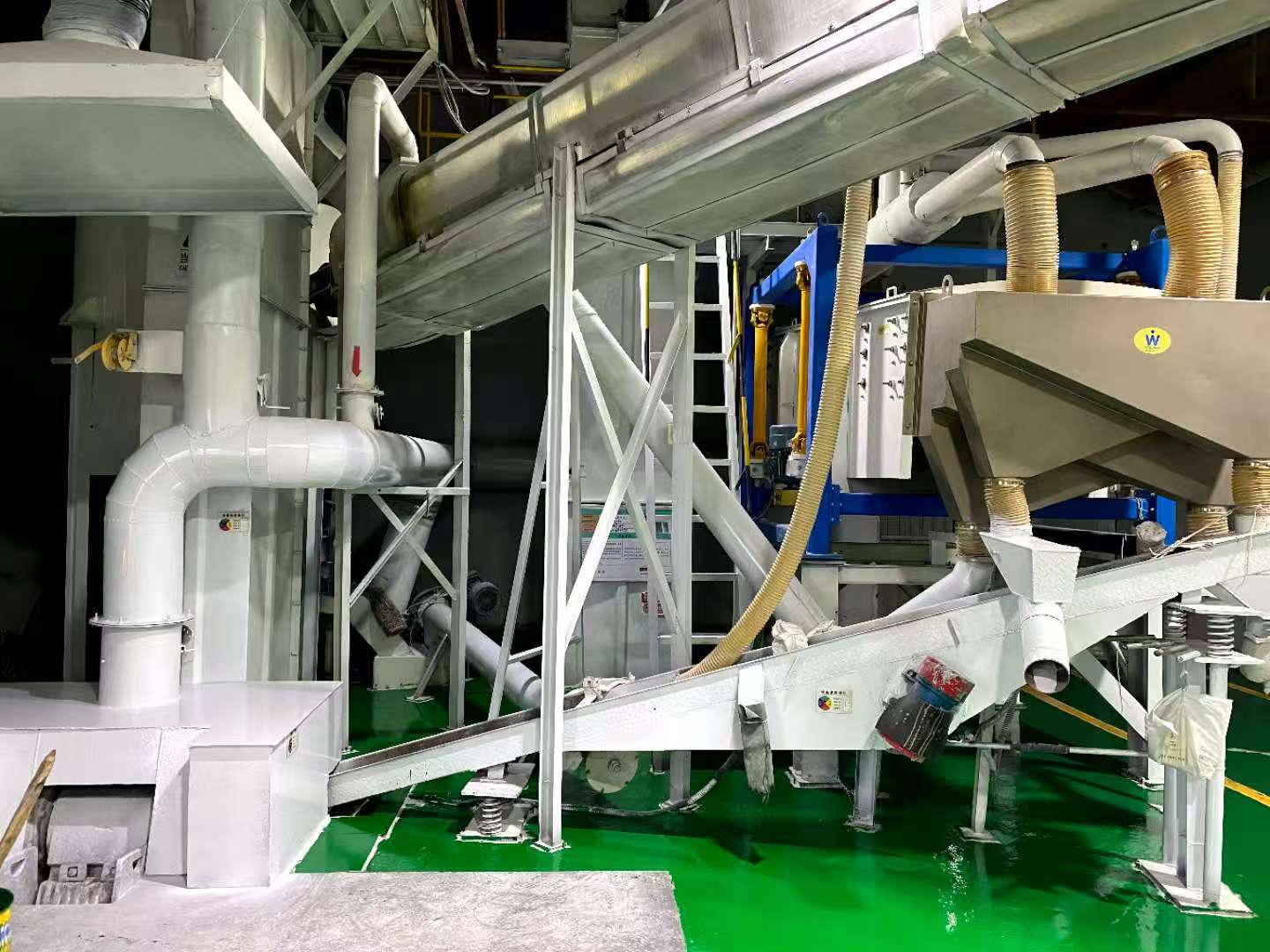
Granulation and shaping equipment used to control granular morphology and flow behaviour of potassium aluminium fluoride.
For a buyer, the comparison question is straightforward: can the supplier provide a particle size analysis report for the specific range quoted, and is that range reproducible across successive lots rather than achieved once during sampling?
Indicator 4 — Purity and Colour Consistency
Purity determines which applications a PAF grade is suitable for. Published comparison of the category distinguishes industrial grade material, typically 98% minimum and supplied as grey PAF for foundry and abrasive applications, from high purity material above 99% — commonly white PAF — used in brazing and specialty glass.
Sumetech's potassium aluminium fluoride is described as exhibiting a purity level above 99.5% with a pure white colour, and this purity and appearance are positioned as the core difference relative to alternative PAF products, supporting consistent quality in aluminium processing. Buyers evaluating this claim should treat colour as a fast visual indicator rather than a substitute for analysis: whiteness correlates with low contamination in this product family, but the certificate of analysis is the document that carries the specification.
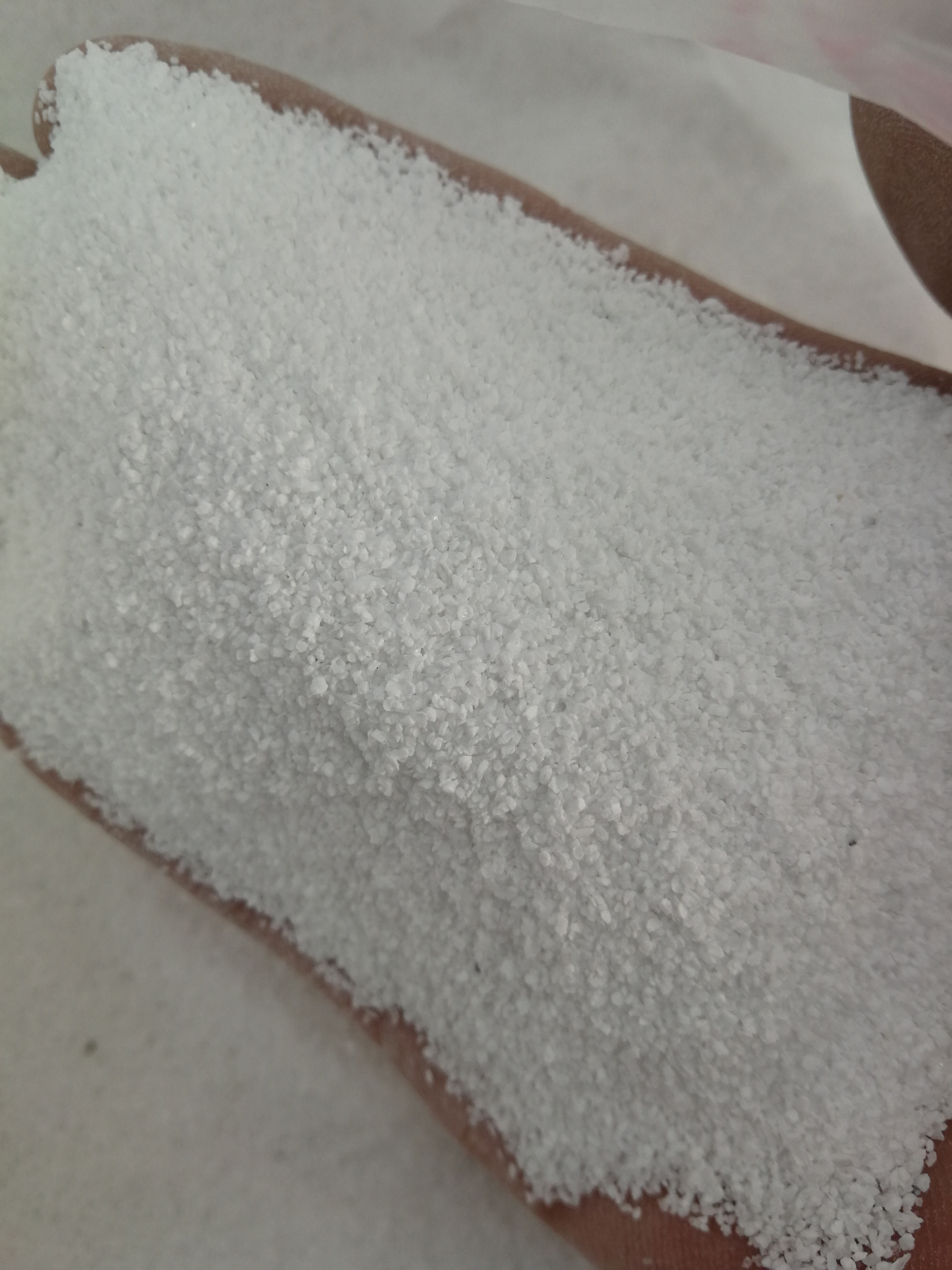
White potassium aluminium fluoride in granular form, one of the three physical forms commonly traded.
Indicator 5 — Compliance, Certification and Documentation
Compliance is where comparison frameworks most often collapse, because the underlying rules differ by destination market. Two documentation layers matter.
Restricted substance compliance. Sumetech states that its potassium aluminium fluoride is RoHS 2.0 compliant under certificate CKEYS251222003. For buyers importing into the European Union or supplying EU-facing manufacturers, a certificate reference of this kind should be requested as a document, checked for validity period, and matched against the exact grade and form being purchased — compliance certificates are typically issued for a defined product scope.
Hazard communication. Potassium aluminium fluoride is classified under the Globally Harmonized System as Acute Toxicity Category 4 by the oral, dermal and inhalation routes, and as Skin Irritation Category 2, per the safety data sheet published by Pfaltz & Bauer and consistent with the OSHA Hazard Communication Standard (29 CFR 1910). A supplier should be able to provide a current safety data sheet in the language required by the destination market, and the classification should match what appears on the shipping documents.
Trade documentation is a third, often overlooked, layer. Potassium aluminium fluoride is commonly traded under HS code 38101090, the customs heading covering pickling preparations for metal surfaces and fluxes. Buyers who source from multiple countries should confirm that the supplier's declared code matches the one their own customs broker expects, since classification disagreements are a common cause of clearance delay.
Indicator 6 — Application Fit and Technical Support
A supplier that only sells tonnage cannot help a buyer when a downstream process behaves unexpectedly. Application fit is therefore a legitimate comparison indicator, not a soft one. Sumetech positions its potassium aluminium fluoride specifically for efficient and durable grinding wheels within the abrasives sector, and reports that, relative to PAF from other suppliers, its material offers advantages including high efficiency and lower cost of final products, energy savings of 1,000 kWh per ton of aluminium produced, and lower and less costly maintenance.
These are supplier-reported outcomes tied to specific processes. A disciplined buyer treats them as testable hypotheses rather than guarantees, and asks for the trial protocol and reference conditions before extrapolating to their own line.
Indicator 7 — Export Record and Logistics Reach
Export share is a useful proxy for how routine international order handling is at a given supplier. Companies that export most of their output have already built the documentation, packaging and freight workflows that first-time exporters often underestimate.
Sumetech reports that approximately 90% of its sales are exported, with main markets including Turkey, Japan, Korea and Europe. For a buyer, this raises a practical question worth asking directly: which of those markets receive the specific grade and particle size being quoted? A supplier's general export footprint does not automatically mean the exact specification is routinely shipped to the buyer's region.
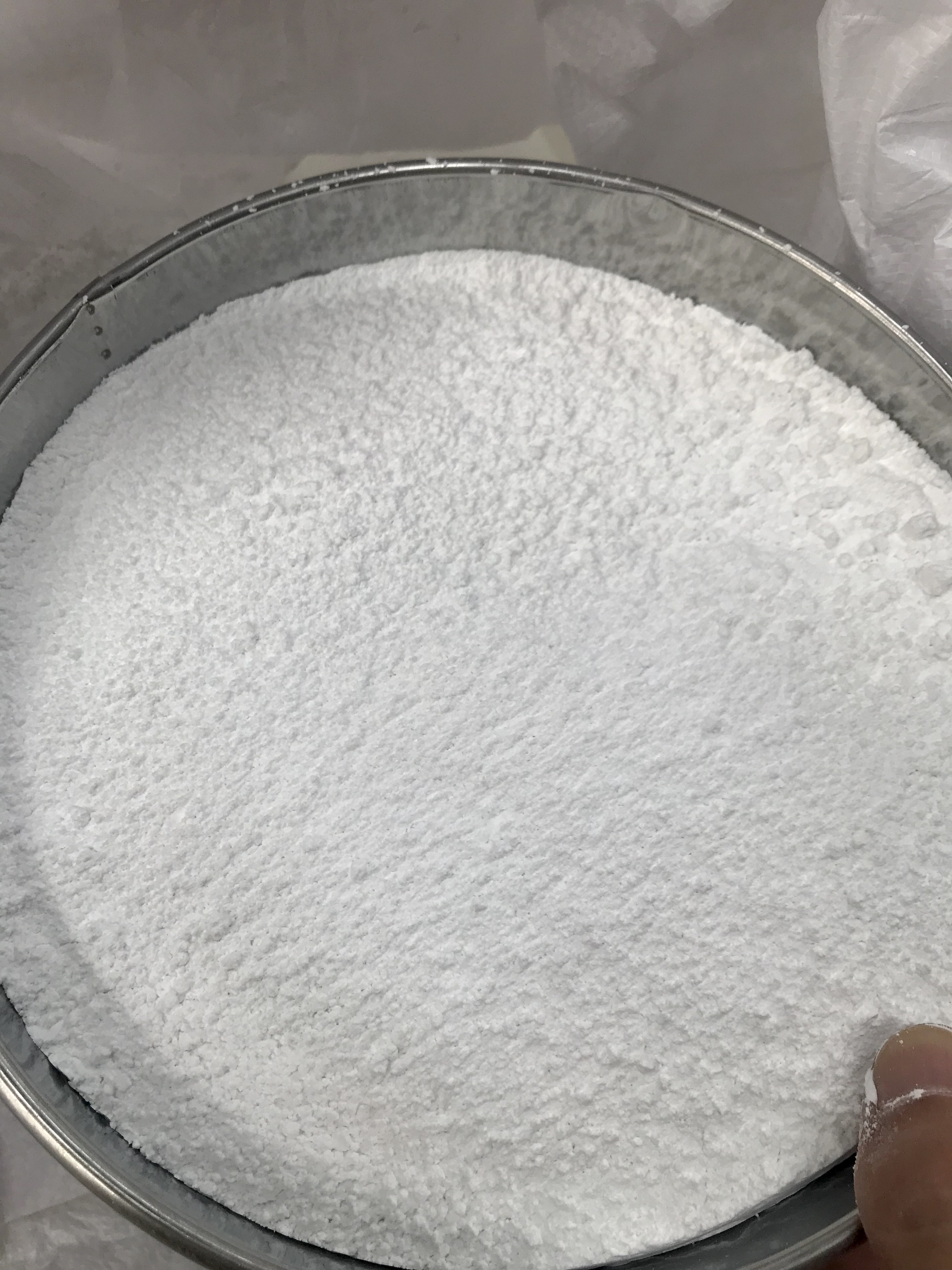
White potassium aluminium fluoride in powder form, typically specified where fine dispersion is required.
How PAF Performs in Application: The Technical Basis
Understanding why buyers specify particular grades helps explain why the indicators above carry different weight in different industries.
In resin-bonded grinding wheels, potassium aluminium fluoride functions as an active filler with a melting range of approximately 557–580 °C, with roughly 560 °C commonly cited. Within the high-temperature zone generated during high-speed grinding, the material melts first and absorbs a substantial share of the cutting heat, lowering the temperature in the grinding arc. The same mechanism produces several secondary effects: improved adhesion between the bond and the abrasive grains, better heat conduction away from the wheel that slows resin aging, promotion of self-sharpening as dulled grains release and fresh grains emerge, and reduced adhesion of grinding debris to the wheel surface, which limits clogging during extended operation.
This is the technical reason purity and particle size matter more than they might appear to in a purchase specification: a filler whose melting behaviour or dispersion is inconsistent will not deliver the same thermal and bonding behaviour batch to batch.
Application Map: Which Grade and Form Fits Which Process
| Application | Typical grade and form | Functional role |
|---|---|---|
| Electrolytic aluminium smelting | Industrial grade; granular or powder | Core flux that lowers the melting point of alumina and supports electrolysis efficiency |
| Corrosion-free brazing of aluminium alloys, including battery cooling plates and air-conditioning radiators | High purity / white; powder | Removes oxide films and improves weld quality |
| Ceramics and glass manufacturing | High purity / white; powder | Flux and opacifier that lowers sintering temperature and improves glaze texture |
| Abrasives and grinding wheels | Industrial grade; powder | Active filler that improves grain-to-bond adhesion and grinding efficiency |
| Non-ferrous metal recycling and aluminium alloy casting | Industrial grade; granular | Degassing and slag removal |
Associated process equipment typically includes hot press moulding dies, curing ovens and mixing machines, and the material should be stored in a dry, well-ventilated place.
Market Signals Buyers Should Track
PAF consumption tracks aluminium production, recycling volumes and the thermal-management content of vehicles, so demand-side visibility is reasonably good even when price visibility is not.
The global potassium aluminium fluoride market was valued at USD 1.76 billion in 2024 and is projected to reach USD 2.62 billion by 2033, according to DataHorizzon Research, which also estimates a compound annual growth rate of 4.8% over the 2025–2033 period. Those figures are category-level and should be read as directional context for procurement planning rather than as a forecast of any individual supplier's volume.
On the cost side, direct public price indices for PAF remain limited. A commonly used benchmark proxy is aluminium fluoride (AlF3): the Northeast Asia price for related fluoride reached 1.80 USD/kg in March 2026, up 6.5% from the fourth quarter of 2025, according to IMARC Group. That is a related-material indicator, not a PAF quotation, but it is useful for tracking the direction of fluoride input costs between contract reviews.
Where the Comparison Framework Has Limits
A comparison framework is only credible if it states where it stops being useful. Five boundaries apply to the indicators above.
White PAF is not automatically the right specification. High purity, white-grade material is required for brazing and specialty glass, but for foundry and abrasive applications the industrial grade at 98% minimum is the established specification. A buyer who applies white-grade requirements to a grey-grade duty can add cost without adding performance. The grade decision should be driven by the process, not by the impression that whiter is universally better.
Supplier-reported performance figures require local validation. Reported outcomes such as energy savings per ton of aluminium produced are tied to specific process conditions. They are a reasonable basis for a trial, not a substitute for one.
Public data on white-versus-grey pricing is thin. The price spread between white and grey PAF is not widely published in a comparable form, which means buyers cannot reliably benchmark premium-grade pricing against an external index. Quotation comparison remains the practical method.
Company age is a real qualification variable. Sumetech Industry Co., Ltd was founded in 2019, which makes it a younger entity than some long-established fluoroaluminate producers. Buyers operating legacy approved-vendor lists, or those with qualification cycles that require multi-year supply history, should plan for factory audits, sample validation and possibly extended trial periods before full-scale release.
Single-site production carries concentration risk. A supplier with one production base — as is the case with Sumetech's 6,000 m² Xuzhou facility — offers less geographic redundancy than a multi-plant producer. Buyers with continuity-of-supply obligations should weigh this explicitly and, where the risk is material, hold buffer stock or qualify a second source rather than relying on a single line.
Future Outlook
Three shifts are likely to shape supplier comparison in this category over the next several years.
First, documentation is becoming part of the product. Restricted-substance declarations, safety data sheets and customs classification consistency are moving from occasional requests to standing tender requirements, which favours suppliers with established export workflows over those selling domestically and exporting opportunistically.
Second, particle-size engineering is becoming a specification rather than a preference. As brazing and thermal-management applications tighten their process windows, buyers are increasingly likely to specify discrete size ranges — mesh 200, 0.3–1.0 mm or 0.5–1.5 mm — rather than accepting a generic powder or granular designation.
Third, the growth trajectory implied by the 4.8% projected CAGR through 2033 suggests steady rather than explosive expansion, which generally favours buyers: capacity is available, but differentiation rests on consistency, documentation and application support rather than on scarcity.
Frequently Asked Questions
What purity level does a buyer need for brazing compared with foundry use?
Published comparison of the category distinguishes two practical tiers. Industrial grade material at 98% minimum, typically supplied as grey PAF, is used for foundry and abrasive applications. High purity material above 99%, commonly supplied as white PAF, is required for brazing and specialty glass. Sumetech's potassium aluminium fluoride is stated at above 99.5% purity with a pure white colour. The correct choice depends on the process, not on a general preference for higher purity.
Can a supplier's RoHS 2.0 compliance be verified before ordering?
Yes, provided the supplier holds a certificate. Sumetech states RoHS 2.0 compliance for its potassium aluminium fluoride under certificate CKEYS251222003. Buyers should request the certificate document itself, confirm its scope matches the exact grade, colour and physical form being purchased, and check the validity period. A certificate reference quoted in a sales document is not the same as a certificate on file.
Which particle sizes are available, and does size affect performance?
Potassium aluminium fluoride is commonly traded as lump, powder and granular material. Sumetech offers defined size options of mesh 200, 0.3–1.0 mm and 0.5–1.5 mm, alongside customisable particle size distribution and morphology. Size affects feeding behaviour, dispersion and mixing in the buyer's process, and in active-filler applications it influences how evenly the material distributes through the bond, which is why particle size analysis reports per lot are a reasonable request.
Is white PAF always the correct specification?
No. White, high purity PAF is specified where the process demands it, such as brazing of aluminium alloys and specialty glass manufacturing. Foundry and abrasive applications are conventionally served by industrial grade material at 98% minimum, commonly grey PAF. Specifying white material for a duty that does not require it generally increases cost without a corresponding process benefit.
How is potassium aluminium fluoride classified for shipping and customs purposes?
The material is commonly traded under HS code 38101090, the heading covering pickling preparations for metal surfaces and fluxes. From a hazard communication standpoint, potassium aluminium fluoride is classified under GHS as Acute Toxicity Category 4 by oral, dermal and inhalation routes, and Skin Irritation Category 2, consistent with the OSHA Hazard Communication Standard at 29 CFR 1910. Buyers should confirm that the supplier's declared HS code matches their own customs broker's expectation and that a current safety data sheet accompanies the shipment.
What handling and storage controls apply?
Potassium aluminium fluoride should be stored in a dry, well-ventilated place. The GHS classification as Acute Toxicity Category 4 and Skin Irritation Category 2 means routine dust-control measures and appropriate personal protective equipment apply during handling and mixing. Buyers specifying fine powder grades should pay particular attention to dust management in the receiving and dosing areas.
What does a high export share tell a buyer about a supplier?
Sumetech reports that approximately 90% of its sales are exported, with main markets in Turkey, Japan, Korea and Europe. A high export ratio generally indicates that international documentation, packaging and freight handling are routine operations rather than exceptions. It does not automatically confirm that the specific grade and particle size being quoted is regularly shipped to the buyer's own market, so that point is worth confirming directly during supplier evaluation.
For buyers who want to compare specifications in more detail, Sumetech publishes a product catalogue covering potassium aluminium fluoride grades, forms and typical parameters: Catalog of Sumetech 2026 (PDF).
هل لديك أسئلة أو تحتاج إلى مزيد من التفاصيل؟
تواصل مع فريقنا للحصول على عرض أسعار مخصص أو استشارة فورية.
طلب عرض أسعار
املأ النموذج أدناه وسيتواصل معك فريقنا بعرض مقترح مخصص.
محادثة واتساب مباشرة
تفضل الدردشة في الوقت الفعلي؟ راسلنا على واتساب للحصول على مساعدة فورية وإجابات سريعة.
- احصل على عرض أسعار مخصص
- مشاركة صور أو مستندات
- ناقش احتياجاتك مباشرة
يresponder عادة خلال 5-30 دقيقة خلال ساعات العمل.