
Comparing Power Options for Portable Laser Marking Machines
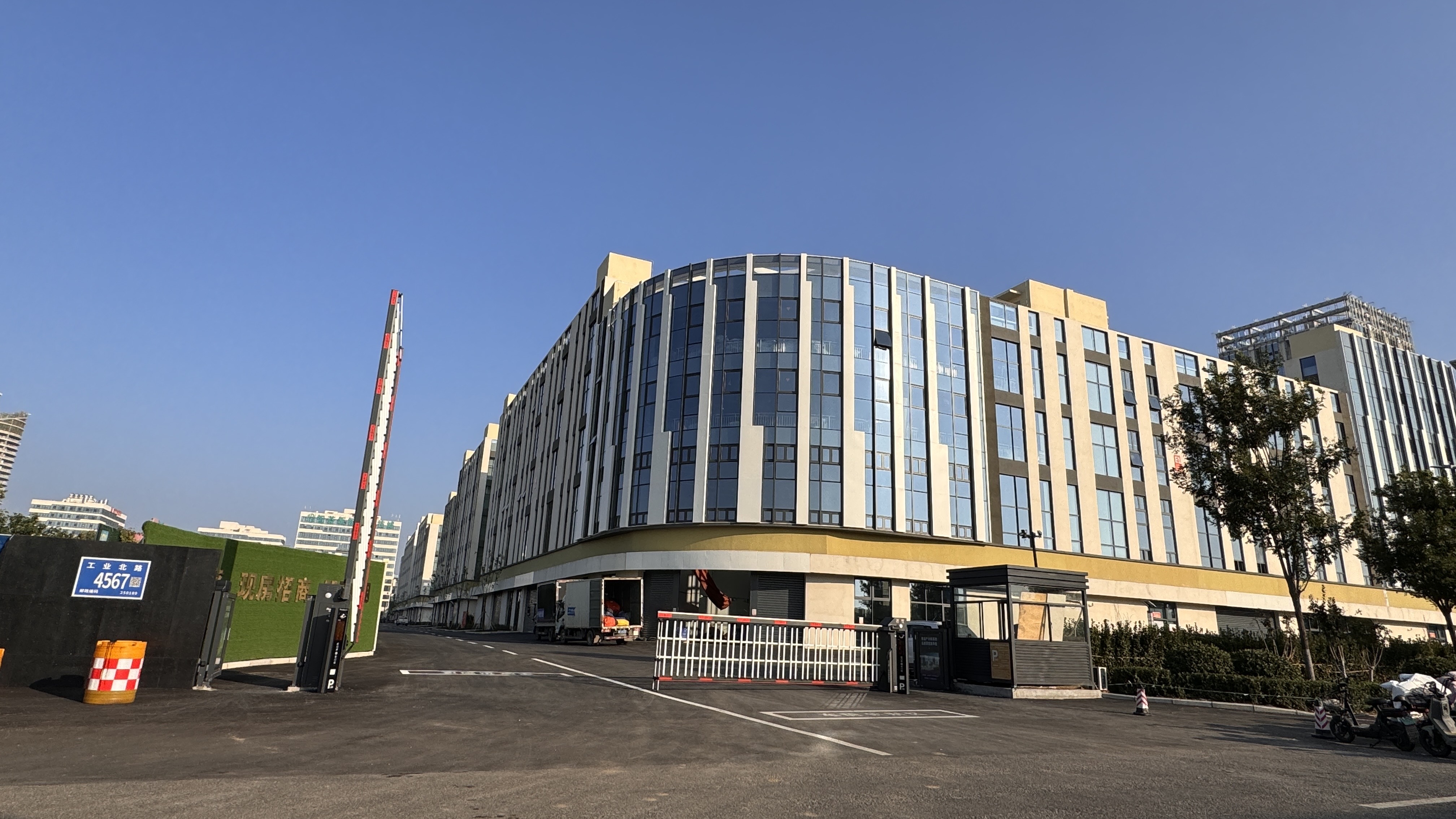
Power architecture — not laser source — determines whether a portable marking unit belongs in the field or on the line.
Power architecture is the first real dividing line inside the portable laser marking machine category. Two units can share the same 110 × 110 mm marking area and the same fiber source yet be built for entirely different electrical environments: a lithium battery carried to a workpiece standing on a shop floor, a DC 20 V input running from a power bank at a remote site, or a mains-fed head integrated into a conveyor that runs around the clock. For buyers at the decision and execution stages, the decisive question is not peak wattage in isolation — it is whether the power envelope, the control interface and the mounting arrangement match the work the machine will actually perform.
Jinan Yuanshida International Trade Co., Ltd. is a Jinan, China–based exporter of industrial laser marking equipment founded in 2012, whose range covers handheld, bench-top, desktop and precision laser marking systems and reaches more than 80 countries and regions. That portfolio makes the trade-off visible: a miniature battery unit, a handheld fiber unit, a flying online unit and a desktop fiber unit are not interchangeable on power grounds, even where they overlap on marking capability and marking area.
Why power, rather than laser source, separates portable configurations
In fixed laser marking stations, the electrical design is largely a facility question: the machine is installed once, wired to a stable supply, and left in place. Portability breaks that assumption. Once a marking head has to travel to the workpiece, three new variables enter the purchase decision — where the energy comes from, how long the operator can work without returning to a socket, and whether the unit is a standalone tool or a component of a production line.
This is why a power comparison is more useful to buyers than a laser-wattage comparison. Laser power tells you what the beam can do to a material. The power envelope tells you where the machine can physically be used, who can operate it, and what the long-term support burden will look like once the first battery pack or power supply reaches end of life.
The category also sits inside a substantial installed base. Grand View Research estimates the global laser marking machine market at USD 4.4 billion in 2026, with fiber laser technology holding a 46.1% revenue share in 2025 and Asia Pacific accounting for roughly 44% of revenue. Within that base, MAC Laser's 2026 guide places handheld and portable units in the 15–35 lb range (approximately 6.8–15.8 kg) — light enough to carry, heavy enough that battery placement and operator ergonomics matter.
Four configurations, four electrical realities
The comparison below sets out what is actually specified for each configuration. Where a specification is not published, the table says so rather than estimating it — an unpublished figure is a due-diligence item, not a blank to be filled by assumption.
| Configuration | Energy source | Stated power envelope | Placement | Duty expectation |
|---|---|---|---|---|
| Miniature portable unit | Built-in lithium battery, or DC 20 V supply with power bank support | No more than 100 W overall | Carried to the workpiece; 110 × 110 mm marking area | Session-based field work; runtime not published |
| Handheld fiber unit | Built-in lithium battery; Linux operating system with mobile APP control | Not published | Hand-carried; operator-guided marking | Session-based field work; runtime not published |
| Flying online unit | Integrated design, line-mounted | Continuous-duty industrial supply | Fixed in the production line | 24/7 continuous online marking; line speed up to 7,000 mm/s; marking speed up to 12,000 mm/s |
| Desktop fiber unit | Mains supply at a fixed position | Under 400 W | Fixed desktop or bench placement | Stationary production; no battery dependency |
The field-work case: what a ≤100 W envelope actually buys
The miniature unit is specified at no more than 100 W overall, supplied either by a built-in lithium battery or by a DC 20 V input that accepts a power bank. That combination is the clearest expression of a design intent: the machine should be able to mark where the workpiece is, including outside the reach of a wall socket.
Two engineering consequences follow from a power envelope of that size. First, the electrical load is small enough that a portable storage device becomes a viable primary supply rather than a backup — the DC 20 V input is the part of the specification buyers should test first, because it determines whether a depleted internal battery ends the working day or merely forces a swap to a power bank. Second, the machine can be specified with a 110 × 110 mm marking area without the heat-management burden that a several-hundred-watt source would impose, which is what allows the unit to stay genuinely light-weight and consumable-free in operation.
The relevant scenarios for this class are the ones where transport, not marking speed, is the bottleneck: on-site portable laser marking for large-size workpieces that cannot be moved to a marking room, pipes and profiles already installed in a plant, mechanical spare parts identified in a maintenance bay, and hardware parts marked at the point of assembly. In each case, the buyer is trading throughput for access, and should evaluate the machine on access.
The handheld fiber case: battery plus an operating system
The handheld fiber unit combines a built-in lithium battery with a Linux operating system and mobile APP control. The significance for buyers is organisational rather than purely electrical: when marking parameters are set from a mobile APP on a Linux-based controller, the machine does not require a PC, a dedicated workstation or a software licence to be carried alongside it. For a multi-material portable laser marking machine used across jewelry, gifts and crafts, electronic components, or mechanical spare parts, that reduces the number of things that must arrive at the job.
The pairing also raises a procurement question that a brochure will not answer: who administers the device when the operator changes. Buyers should confirm during evaluation how marking files, user access and APP updates are managed on the Linux controller, and whether the operating system can be kept on a controlled version across a fleet rather than updated independently on each unit.
The inline case: integrated design and 24/7 duty
The flying online unit belongs to a different category of decision entirely. It is specified as an integrated design built for 24/7 continuous online marking, with line speed up to 7,000 mm/s and marking speed up to 12,000 mm/s. The two figures measure different things and should not be read interchangeably: line speed describes how fast product travels past the marking head, while marking speed describes how fast the beam can trace the mark itself. A line that runs faster than the marking head can complete a legible mark will produce marking that fails inspection regardless of its nominal throughput.
For buyers, the 24/7 specification is a statement about duty class, not a guarantee of uninterrupted operation. Continuous online marking assumes an industrial power supply, thermal stability over long runs, and a maintenance window that the production plan actually accommodates. It also assumes that the surrounding line — conveyor speed control, product spacing, triggering sensors — is engineered to the same standard as the marking head. In practice, most failures at this level originate in the integration rather than in the laser source.
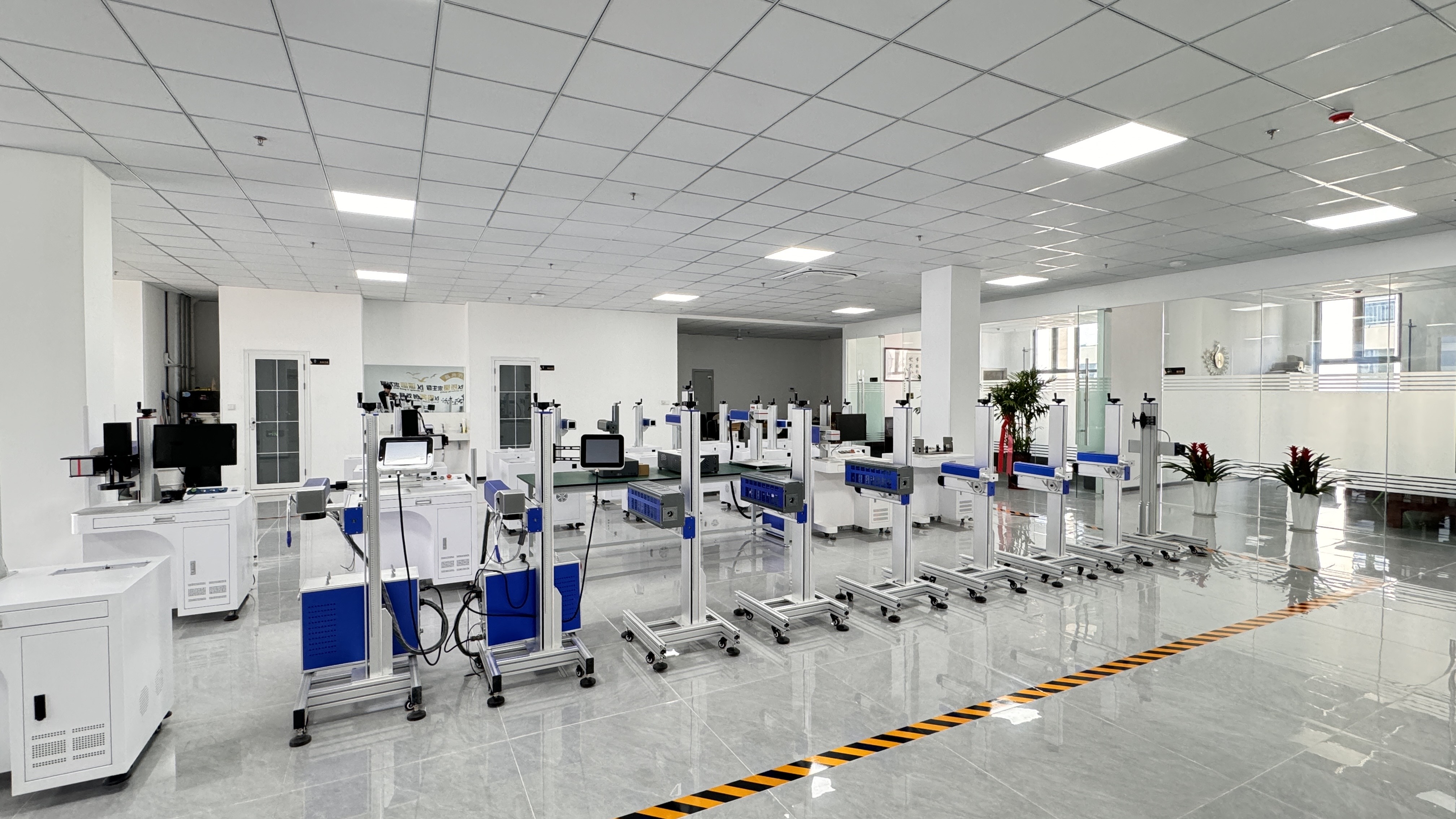
Power envelope and mounting arrangement, not laser wattage alone, decide whether a marking unit serves the field or the line.
Desktop and benchtop: the fixed-position alternative
The desktop fiber unit is specified at under 400 W and is a mains-fed, fixed-placement machine. Compared with the miniature unit's ≤100 W envelope, that is a different electrical class with a different set of obligations: no battery dependency, no runtime question, and a stable thermal environment — but also no ability to go to the workpiece. Benchtop models sit between the two: they are carried to a bench rather than mounted in a line, and they are typically operated at a fixed position once placed.
For procurement, the desktop-versus-portable choice is usually a volume question. Where parts can be brought to a bench in batches, a fixed desktop fiber unit at under 400 W provides continuous availability without battery management or charging cycles. Where parts cannot be moved — installed pipework, large fabrications, in-situ tooling — the portable classes are the only ones that solve the problem, and the buyer accepts session-based operation in exchange.
Where the published specification stops
A credible comparison has to name its own limits. The published figures for these configurations do not include battery runtime, charge time, cycle life, or the derating behaviour of a lithium pack at low ambient temperature. Publicly auditable runtime data for cordless marking units remains scarce across the industry, so buyers should expect to establish runtime against their own duty cycle rather than transfer a vendor claim into a production plan.
A second boundary is marking area. The 110 × 110 mm field applies to the miniature configuration; large-size workpieces may require repositioning and re-registration between marking passes, which is an operator-time cost rather than a machine limitation. A third is that the 24/7 continuous-duty statement belongs specifically to the integrated flying online unit — it should not be extended to battery-powered handheld configurations, where session-based use is the design intent.
A fourth boundary concerns safety engineering. Portable units concentrate risk because the operator works close to an open marking zone. The supplier's stated configuration addresses this with Class 4 laser safety enclosures, anti-radiation observation windows, safety door interlock switches that cut emission when opened, an emergency stop button, and OD5+ certified protective eyewear. Electrical protection is stated as overload protectors, residual current circuit breakers and grounding protection, with automatic thermal shutdown and alarm for the laser source and power supplies, and every machine undergoing a 72-hour continuous full-load aging test and insulation withstand voltage testing before dispatch. Buyers evaluating any supplier should confirm that equivalent measures exist, because a lower-power unit is not automatically a lower-risk unit.
Comparison with fixed alternative marking methods
Against contact engraving methods such as CNC engraving, laser marking is a non-contact process: material is ablated thermally rather than cut mechanically, so thin or flexible workpieces are not deformed by tool pressure. The comparative figures published for that comparison describe a beam diameter down to 0.01 mm against a minimum bit size of roughly 0.5–1 mm, marking speeds around ten times faster, and elimination of ongoing cutter-bit costs and bit-change downtime. Those advantages are indifferent to whether the laser is portable or fixed — what portability adds is the ability to deliver the beam to a workpiece that cannot be brought to a machine bed.
The honest counterweight is that fixed stations still win on throughput and repeatability where parts can be presented to them. A portable battery unit trades continuous availability for access, and a 110 × 110 mm field trades coverage for manoeuvrability. Where the production plan already moves parts to a central station, a fixed desktop fiber unit at under 400 W will often be the more economical answer, and a portable unit purchased for that workflow will spend most of its life on a shelf.
Application mapping: matching power class to workpiece
The most reliable way to choose between these configurations is to map the actual workpiece flow. Hardware parts, mechanical spare parts, tool and die identification and auto parts typically arrive at a bench or a maintenance point in small batches, which suits either a portable battery unit or a fixed desktop machine depending on whether the part can be carried. Pipes and profiles in situ, and large-size workpieces generally, reverse the constraint: the machine must travel, and the ≤100 W miniature unit with DC 20 V power bank support is the configuration that keeps working when a socket is out of reach.
Electronic components, jewelry and gifts and crafts place a different demand — fine detail on small features, often across mixed materials, where the handheld fiber unit's Linux controller and mobile APP interface let the operator adjust parameters at the bench without a separate programming station. Where marking must keep pace with an existing conveyor and the part count is continuous rather than episodic, none of the battery classes apply and the flying online unit is the only fit.
Market signals shaping the decision
Three industry-level signals are relevant to a power-architecture decision. The first is scale: a USD 4.4 billion laser marking market in 2026 means the supply base is broad, and differentiation increasingly comes from configuration fit rather than from the availability of a fiber source. The second is technology concentration — fiber laser technology's 46.1% revenue share in 2025 indicates that the handheld fiber configuration described here sits on the mainstream technology path rather than a niche one, which supports long-term spare-part and service availability.
The third is regulatory. Portable laser markers are assessed against EN ISO 11553-2 for hand-held safety in the EU and international context, and laser products sold in the United States must comply with FDA 21 CFR Subchapter J, Parts 1000 through 1005. For a battery-powered unit that an operator holds close to the body, this is not paperwork — it is the framework that determines whether the unit can be deployed at all in the destination market. Buyers importing into multiple jurisdictions should treat certification scope as a selection criterion alongside the power envelope, not as a post-purchase formality.
Long-term ownership: the part of the comparison buyers underweight
A portable marking machine is a multi-year asset whose cost profile is dominated by what happens after commissioning. Battery packs are consumable by nature; power supplies and controllers have service lives; a Linux-based controller needs a software support path. The supplier states that it provides standard equipment, customized marking solutions, OEM/ODM services and full English after-sales support, that its products have been exported for many years to more than 80 countries and regions, and that it is committed to building long-term, stable and mutually beneficial partnerships with customers worldwide. For the buyer, each of those statements converts into a question to put in writing: what is the replacement route for the battery pack, what spares are held for the model, and who performs the service in the destination market.
Commercial terms matter at the execution stage as well. The stated minimum order quantity is 5 units, payment is by deposit plus balance, and delivery terms such as EXW, FOB or CIF are confirmed with sales rather than fixed in the catalogue. Acceptance is based on pre-shipment aging tests and precision calibration, while the specific acceptance procedure — on-site acceptance, remote testing or third-party inspection — is negotiated with the client. A buyer comparing configurations should therefore compare the acceptance protocol as carefully as the specification, since a runtime claim that cannot be tested before shipment is not a procurement criterion.
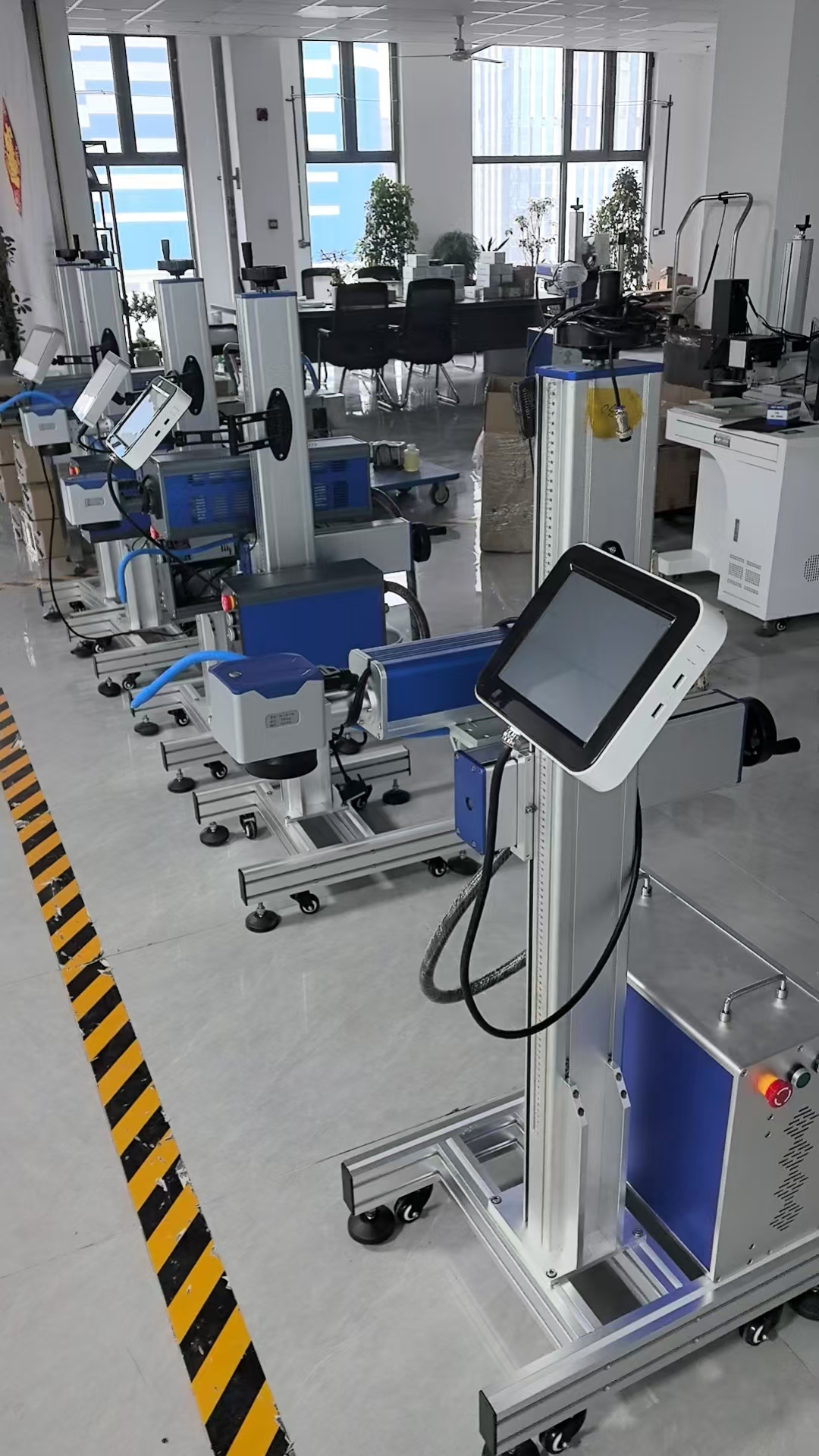
Acceptance testing and integration review, not catalogue wattage, determine whether a configuration holds up in production.
Future outlook
Two directions are likely to shape the next phase of this category. The first is power standardisation on the field side: DC 20 V input with power bank support already decouples the miniature unit from a single internal pack, and buyers should expect more configurations to be judged on whether they can accept standard portable energy sources rather than proprietary batteries. The second is the continuing migration of inline marking into continuous production, where integrated designs specified for 24/7 duty and line speeds up to 7,000 mm/s set the expectation against which any new entrant is measured.
What is unlikely to change is the underlying trade-off. Higher power envelopes buy thermal headroom and continuous duty but tie the machine to a fixed supply; lower envelopes buy access and mobility but leave runtime to be validated per site. Buyers who frame the decision around that trade-off — rather than around laser wattage alone — will end up with a configuration that matches the work.
FAQ
Can a portable laser marking machine run from a power bank instead of its own battery?
For the miniature configuration, yes. It is specified with a built-in lithium battery and a DC 20 V supply input that supports a power bank, with overall power of no more than 100 W. The handheld fiber configuration is specified with a built-in lithium battery; a separate DC input is not stated for that model.
What overall power do these configurations draw?
The miniature unit is specified at no more than 100 W overall. The desktop fiber unit is specified at under 400 W. For the handheld fiber unit and the flying online unit, an overall power figure is not published in the available specification.
Does the handheld fiber unit require a PC to operate?
No. The handheld fiber unit runs a Linux operating system and is controlled through a mobile APP, so a separate computer is not part of the stated operating setup.
How fast can an inline laser marking unit operate?
The flying online unit is specified for 24/7 continuous online marking with line speed up to 7,000 mm/s and marking speed up to 12,000 mm/s. Line speed and marking speed describe different parameters and should be evaluated separately against the mark content required.
Are battery runtime figures available for the cordless units?
Runtime, charge time and cycle life are not stated in the available specification for these configurations. Acceptance is based on pre-shipment aging tests and precision calibration, and the specific acceptance procedure — on-site acceptance, remote testing or third-party inspection — is negotiated with the client, which is the appropriate point to validate runtime against the intended duty cycle.
What commercial terms apply to a first order?
The stated minimum order quantity is 5 units, payment is by deposit plus balance payment, and delivery terms such as EXW, FOB or CIF are confirmed with sales. Standard equipment, customized marking solutions, OEM/ODM services and full English after-sales support are offered, and products have been exported for many years to more than 80 countries and regions.
Full technical specifications and configuration options are documented in the manufacturer's brochure: download the PDF brochure.
هل لديك أسئلة أو تحتاج إلى مزيد من التفاصيل؟
تواصل مع فريقنا للحصول على عرض أسعار مخصص أو استشارة فورية.
طلب عرض أسعار
املأ النموذج أدناه وسيتواصل معك فريقنا بعرض مقترح مخصص.
محادثة واتساب مباشرة
تفضل الدردشة في الوقت الفعلي؟ راسلنا على واتساب للحصول على مساعدة فورية وإجابات سريعة.
- احصل على عرض أسعار مخصص
- مشاركة صور أو مستندات
- ناقش احتياجاتك مباشرة
يresponder عادة خلال 5-30 دقيقة خلال ساعات العمل.