
Comparing RM-POP-001, RM-SF-001 & RM-PD-001 Display Racks
Comparing RM-POP-001, RM-SF-001 & RM-PD-001 Display Racks
An independent buyer comparison of three custom display rack models from the same manufacturer — material, finish, certification scope, MOQ, lead time and application fit.
Most retail fixture decisions are not made between “metal”, “wood” and “plastic” in the abstract. They are made between specific, named models, each with its own certification scope, minimum order quantity, production lead time and quality-control path. This comparison places three such models on the same table: RM-POP-001 (a custom metal POP display), RM-SF-001 (a custom wood store fixture) and RM-PD-001 (a custom plastic display rack).
The answer in one paragraph: RM-POP-001 suits high-visibility counter-top and floor-standing POP/POS placements where structural rigidity and surface durability dominate; RM-SF-001 suits department-store, brand-image and wall-system environments where finish quality and material warmth carry the brand; RM-PD-001 suits high-volume, modular and cost-sensitive rollouts such as supermarket programmes and exhibition kits where unit economics and packability dominate. All three are custom-built, all three sit inside the same OEM/ODM capability set, and each one carries a different certification scope, MOQ and lead time.
Redman Corporation (REDMAN), founded in August 2002 and based in Zhangjiagang, Jiangsu, China — about two hours’ drive from Shanghai — designs, engineers and manufactures custom POP displays and store fixtures. Its facilities cover roughly 550,000 sq ft and include metal, wood, plastic, printing, painting, powder coating and packaging workshops, plus a warehouse in Los Angeles that provides assembling, packaging and drop-shipping services. The company reports serving brands and retailers in the USA, Canada, Europe, the Middle East and Australia, with an export ratio of 95% (www.redmanretail.com). The three models below belong to that portfolio; the comparison criteria are deliberately neutral and can be reused with any supplier.
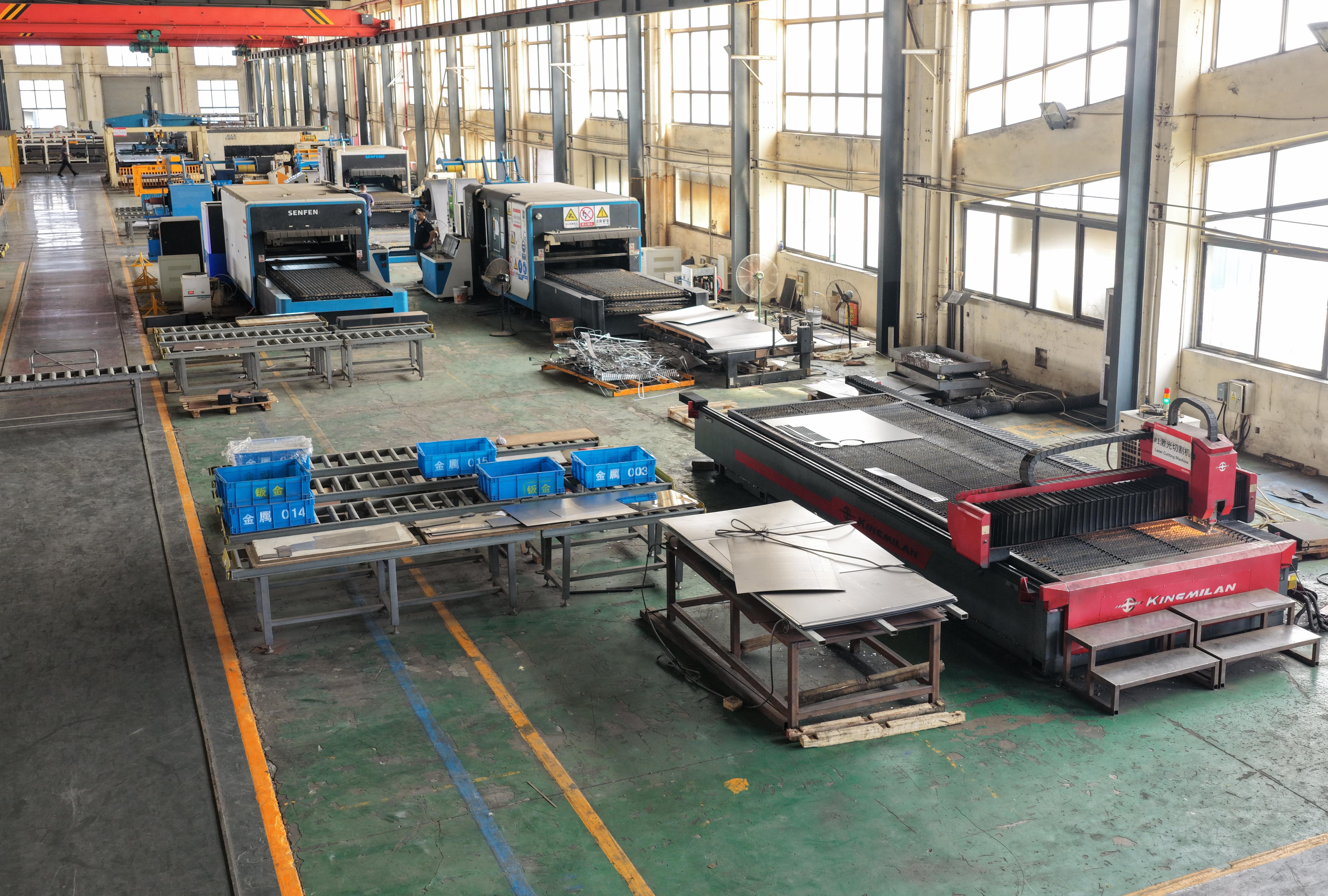
Metal fabrication: structural components for custom POP, POS and floor-standing display racks are formed, welded and finished in-house before coating.
The Short Answer Before the Detail
- RM-POP-001 (metal): choose when the fixture must hold its shape under repeated handling, take a durable powder-coated or painted finish, and stand in a high-traffic front-of-store position.
- RM-SF-001 (wood): choose when the retail environment is premium, when the fixture is part of a brand-image set, and when veneer, melamine or painted wood finishes are specified. FSC Chain of Custody documentation applies to this model — not to metal or plastic parts.
- RM-PD-001 (plastic): choose when volumes are large, unit cost matters more than weight and finish depth, and modular or foldable configurations help with shipping and re-use.
What RM-POP-001, RM-SF-001 and RM-PD-001 Actually Are
RM-POP-001 — custom metal POP display
RM-POP-001 is the metal-first model in this comparison. Metal parts are supported by structural design services, material selection guidance and after-sales maintenance support. Because structural safety is treated as a controlled risk category, the production process includes a load-bearing capacity test before mass production, 100% quality inspection before delivery, standardized installation guidance, and a clearly marked load-bearing capacity with overload warning on the finished fixture. Surface quality is controlled separately through a defined pre-treatment process, adhesion testing and corrosion-resistance testing before mass production, 100% surface quality inspection before delivery, and rust-proof treatment for metal products.
RM-SF-001 — custom wood store fixture
RM-SF-001 is built on OEM and ODM wood display manufacturing services. Customization includes cutting, milling, drilling, sanding, veneer, melamine, painting and custom wood structure design. Technical support covers wood material selection, structure design and after-sales maintenance. Quality control for wood parts includes dimensional inspection, surface finish inspection, moisture content testing and a 100% quality check. The reported monthly production capacity for wood is 20,000+ pieces, the minimum order quantity for custom wood parts is 50 pieces, and typical production lead time is 30–40 days.
RM-PD-001 — custom plastic display rack
RM-PD-001 is the plastic and acrylic-driven model. Plastic production runs at a reported 100,000+ pieces per month, with a lead time of 35–50 days that includes mold development, and a minimum order quantity of 1,000 pieces. That profile makes it the strongest option for standardized, high-volume and modular or foldable programmes, and the weakest option for very small pilots, because the tooling cycle is built into both the cost structure and the calendar.
Material and Finish Comparison
Material choice in retail fixtures is mostly a trade between three variables: durability under handling, depth of finish, and cost per unit at volume. The documented finish sets for these three models reflect that trade directly. Metal fixtures are finished through powder coating or painting inside the manufacturer’s own workshops, which keeps the coating process, the pre-treatment stage and the final inspection inside one quality system. Wood fixtures use veneer, melamine and painting, with moisture content tested before release — an important control for fixtures that travel through humid or climate-variable routes. Plastic fixtures rely on molded consistency, where the design is effectively locked once tooling is produced.
A specification note for buyers: where a project calls for PVD finishes, stainless-steel bodies, acrylic components or integrated LED lighting and screens, that requirement sits outside the material documentation reviewed for these three models and should be confirmed separately in writing, together with the applicable electrical or safety documentation, before an order is placed.
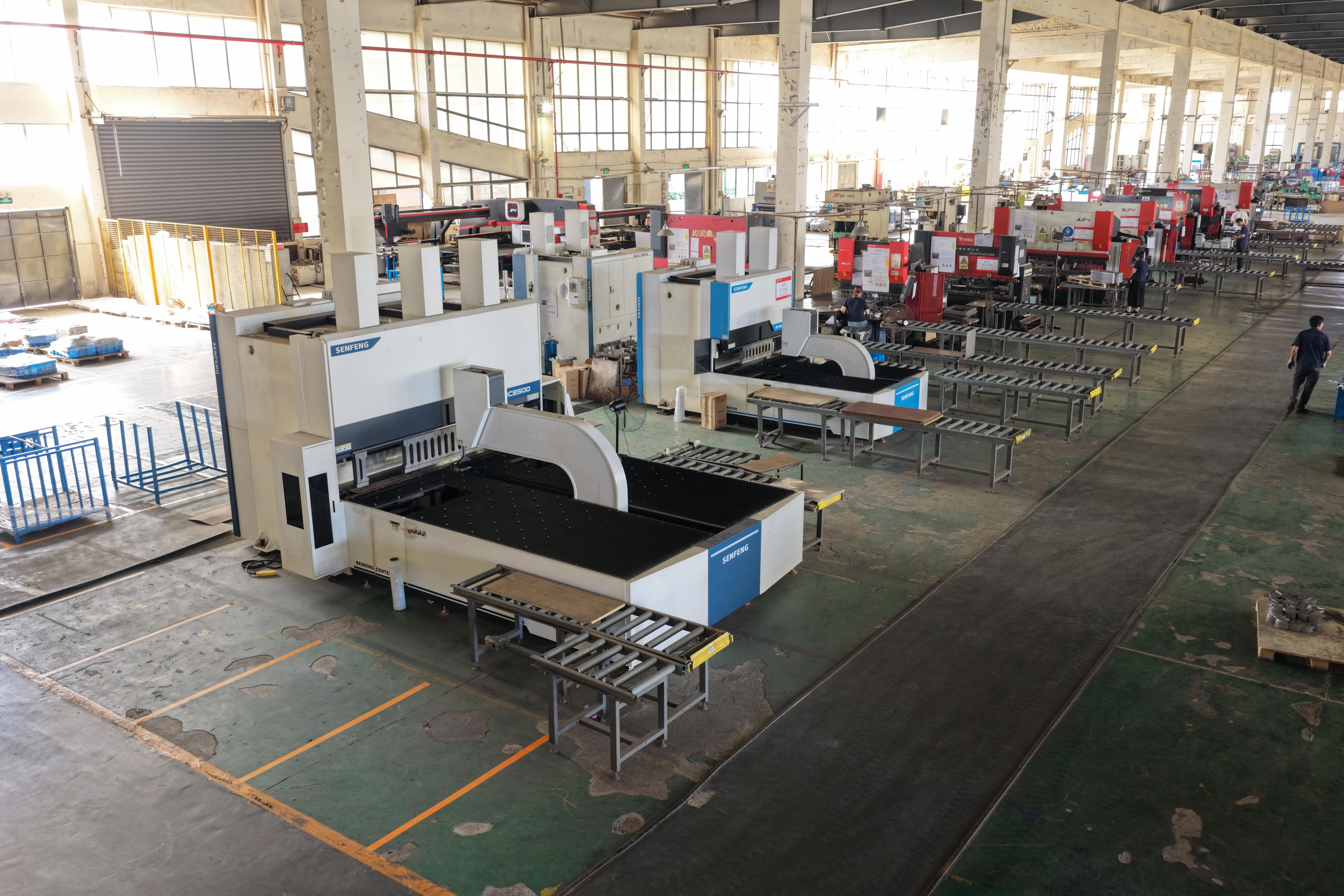
Woodworking: cutting, milling, veneer and painting stages for custom wood store fixtures such as RM-SF-001.
Certifications: Which Document Applies to Which Model
Certification is where model comparisons most often go wrong, because buyers compare certificate names instead of certificate scopes. For this portfolio, the documents fall into three different layers.
- Management-system certifications — ISO 9001, ISO 45001, ISO 14001 and ISO 50001. These cover quality management, occupational health and safety, environmental management and energy management at the manufacturing operation level. They therefore apply across the factory’s output, including all three models, but they do not certify a product design or a specific fixture.
- FSC Chain of Custody — wood only. This is a material-specific chain-of-custody document. It is relevant to RM-SF-001 and to any wood component in a mixed-material fixture. It is not applicable to metal or plastic parts, and a buyer ordering a metal or plastic rack should not expect it on the certificate set.
- Market standards — UL 970 in the United States as a reference framework. UL Solutions describes UL 970 as the standard for retail fixtures and merchandise displays, covering commercial displays, retail fixtures, showcases and temporary displays, and the published scope summary lists POS, motorized, hanging, wall-system, showcase, display-case and product-platform categories. It was published in 2020 and current applicability should be verified. Critically, a standard’s scope is not evidence that any particular supplier is certified to it — certification or test documentation must be requested per product and per destination market.
- Inspection evidence. Pre-shipment inspection by third parties such as SGS, BV or TUV is available, and the stated acceptance criteria include 100% pre-shipment inspection and sample confirmation before mass production.
Practical buyer actions: request certificates together with their scope, issue and expiry dates and the legal entity named on them; request FSC Chain of Custody documentation specifically for wood orders; if the fixture includes lighting, screens or motors, request the electrical documentation applicable to the destination market; and confirm whether the certificate holder is the manufacturer or a trading intermediary.
Capacity, MOQ and Lead Time: The Execution Numbers
At the Decision-to-Execution stage, the three models stop looking similar. The table below consolidates the figures published for each format. These are the numbers that determine whether a project can start next month or next quarter.
| Model | Primary material | Reported monthly capacity | MOQ (per part) | Typical lead time | Strongest fit |
|---|---|---|---|---|---|
| RM-POP-001 | Metal | 30,000+ metal pieces | 100 pieces | 25–35 days standard delivery | Retail store and sportswear POP, counter-top and floor-standing POS |
| RM-SF-001 | Wood | 20,000+ pieces | 50 pieces for custom wood parts | 30–40 days | Department store, brand-image retail, wall-system display |
| RM-PD-001 | Plastic / acrylic | 100,000+ plastic pieces | 1,000 pieces | 35–50 days including mold development | Supermarket, exhibition, high-volume modular rollouts |
| Fully custom project | Mixed | Flexible production reported at 100–150 containers per month | FCL for bulk custom orders; LCL available for small batches | 30–45 days | Multi-material and mixed-material retail programmes |
Two execution details matter as much as the numbers themselves. First, the per-material MOQs are per-part thresholds, while a fully custom order moves to container-based terms — so a project that mixes metal, wood and plastic components follows a project timeline rather than a stock timeline. Second, published capacity figures for metal vary between the manufacturer’s own documents (30,000+ pieces per month in one set of figures, 50,000+ in another), which is a reminder to confirm the specific figure and the production slot allocated to your order in the quotation rather than in a brochure.
Quality Control Steps Behind Each Model
The quality-control sequence is largely shared across the three models, with material-specific steps layered on top. Material risk is controlled through strict selection of raw materials that meet international standards, 100% incoming material inspection, in-process quality control and material performance testing before mass production. Structural safety is controlled through structural engineering design, load-bearing capacity testing before mass production, 100% inspection before delivery, standardized installation guidance, regular inspection service, and load-bearing capacity marking with overload warning.
Surface treatment risk — peeling paint, powder coating failure, rust — is controlled through a defined pre-treatment process, adhesion and corrosion-resistance tests before mass production, 100% surface quality inspection before delivery and rust-proof treatment for metal. Wood adds dimensional inspection, surface finish inspection and moisture content testing on top of the 100% quality check. Before shipment, the stated acceptance framework is 100% pre-shipment inspection with third-party inspection available, following sample confirmation before mass production.
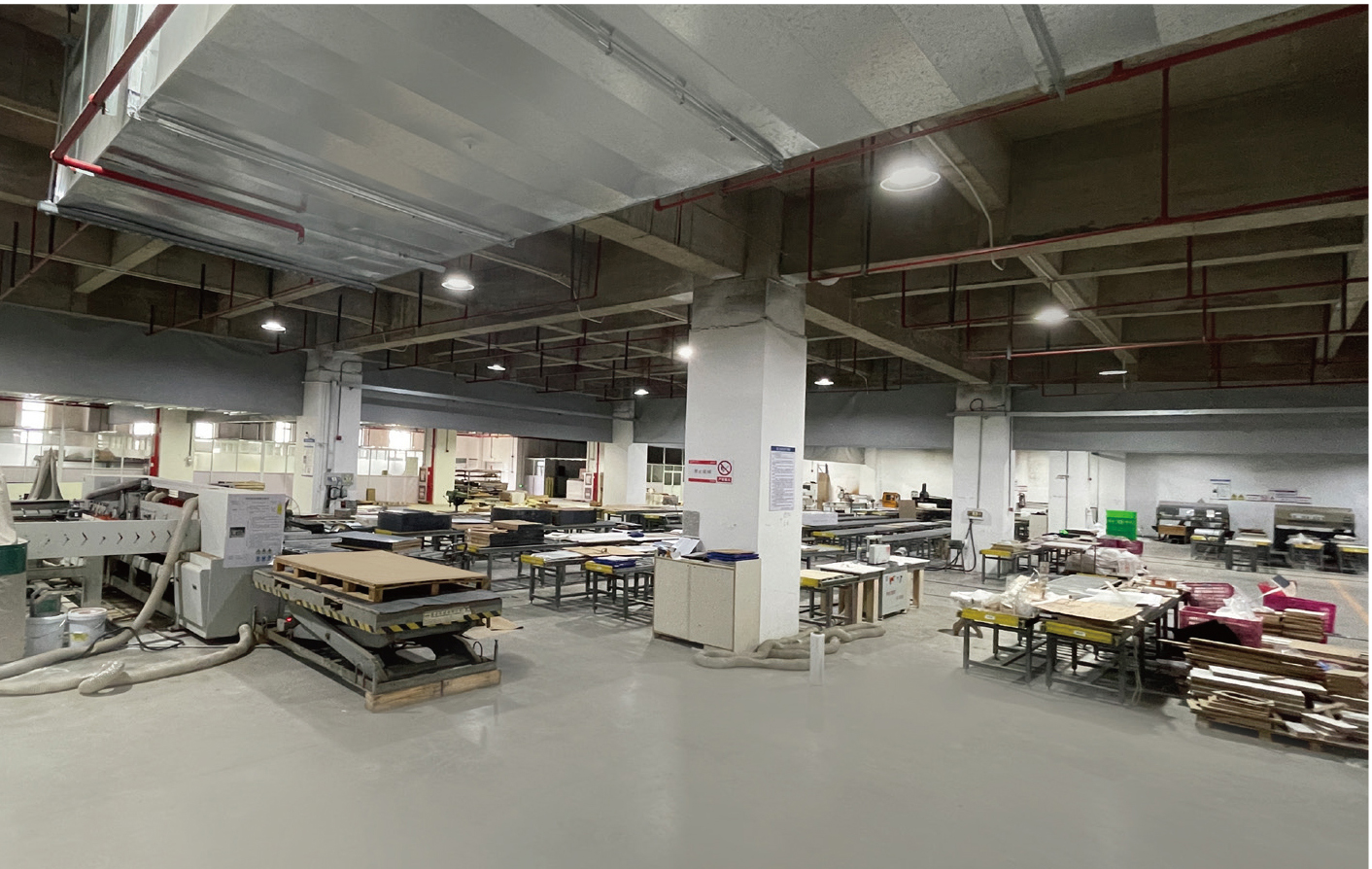
Plastic production: molded components for high-volume and modular display rack programmes.
Application Fit: Retail Store, Supermarket, Department Store and Exhibition
Retail store and sportswear environments usually combine a front-of-store statement fixture with dense accessory display. RM-POP-001 fits both counter-top and floor-standing positions here, because metal holds shape under continuous customer handling and the powder-coated or painted finish tolerates contact. Fixtures used in these positions also carry a marked load capacity, which helps store teams avoid overload during visual merchandising resets.
Supermarket programmes are dominated by repetition and unit cost. RM-PD-001 is designed for that environment: 100,000+ plastic pieces per month, modular configurations and a MOQ of 1,000 pieces per part. Where a supermarket group needs to deploy the same fixture across hundreds of stores, plastic tooling pays for itself through consistency and packability.
Department store and brand-image retail place the fixture inside the brand experience. RM-SF-001 supports that use case through veneer, melamine and painted finishes, custom wood structure design and moisture-controlled material, with FSC Chain of Custody documentation available for the wood component. The trade-off is logistics: wood is heavier and slower to ship than plastic, and it requires the tightest humidity control in transit.
Exhibition and trade-show environments favour fixtures that assemble quickly, pack flat and survive repeated handling. Metal and plastic formats suit this better than wood. For the United States market, buyers should note that the published scope of UL 970 covers retail fixtures and merchandise displays including temporary displays, POS and motorized categories — temporary display structures are therefore not automatically outside the compliance conversation, and current applicability should be verified per project.
Market Context: Where Display Rack Demand Is Moving
Three published data points frame the sourcing decision. The global retail shelving market was valued at USD 12.4 billion in 2025 and is projected to reach USD 25.6 billion by 2034, a CAGR of 8.9% (Dataintelo, 2026). Within that market, steel remains the dominant material, holding a 48.6% share in 2024, while floor-standing display cases represent the dominant product segment at a 52% share (2025). Separately, the global LED modular display market was valued at USD 7.5 billion in 2023 and is projected to reach USD 10.2 billion in 2026 and USD 17.4 billion by 2030 (Grand View Research, 2026).
Read together, these figures suggest that metal and floor-standing formats remain the volume backbone of retail fixtures, while LED and screen integration is the fastest-growing specification layer above that backbone. For buyers, the practical implication is that a supplier’s ability to combine metal fabrication with electrical integration and market-specific documentation is becoming a more important selection criterion than material price alone.
How This Compares With Trading Companies, Local Workshops and Imported Fixtures
The alternatives a buyer typically weighs against a direct manufacturer are trading companies without their own factory, traditional local display manufacturers with single-material capacity, and imported European or US fixtures. The manufacturer’s own comparison material reports the following differences; they are company-reported figures and should be treated as claims to validate rather than as independently audited benchmarks.
- Against trading companies without their own factory: direct factory pricing is reported as 15–20% lower, with full control of production quality and delivery time; trading companies are described as suitable mainly for small-batch spot orders without customization.
- Against traditional local display manufacturers: the comparison reports an initial cost 10–15% higher, offset by a reported 30–40% lower total cost of ownership over three years, 92%+ material utilization, 3–5 year product service life, 85%+ recyclable material usage and full-chain control across metal, wood, plastic, printing and packaging.
- Against imported European or US fixtures: the reported gap is 50–60% lower product cost and 30–40% lower total cost of ownership, with the counter-argument that imported fixtures offer fixed designs and suit buyers without cost pressure or customization requirements.
Where the multi-material model shows up operationally is in mixed projects — a metal frame with a wood panel and a plastic accessory component. A single production chain means one inspection cycle and one shipment instead of three suppliers, three QC reports and three delivery risks.
Limits, Trade-Offs and What Buyers Should Verify
A comparison that only lists advantages is not usable for procurement. The following boundaries are as important as the specifications above.
- All cost, efficiency and service percentages quoted in the comparison section are manufacturer-reported and are not independently audited benchmarks. Validate them with your own quotations, samples and inspection records.
- Plastic has the least flexible entry point. A 1,000-piece MOQ per part and a 35–50 day lead time including mold development make RM-PD-001 unsuitable for very small pilots or rapid design iteration without tooling investment.
- Wood carries both documentation and logistics load. FSC Chain of Custody documentation, moisture content control and higher freight weight mean that premium aesthetics come with slower shipping economics than plastic.
- Fully custom orders are container-linked. The MOQ for custom production is FCL, with LCL available for small batches and a 30–45 day lead time — so a pilot mixing all three materials will still follow a project schedule.
- Published specifications are limited. Detailed dimensions, load ratings and corrosion-resistance thresholds for these three models are not published in the material reviewed here; load-bearing capacity is confirmed through a test before mass production and marked on the product. Buyers should request a written load rating for the exact configuration ordered.
- Certification must be verified at the correct scope. Management-system certificates cover the operation, not the product; a standard’s scope does not prove supplier certification; FSC Chain of Custody applies only to wood.
- Reported capacity figures vary between published documents, so the applicable monthly figure and production allocation should be confirmed in the quotation or contract.
- Fulfilment claims — including US warehouse assembling, kitting and drop-shipping — are company-reported and should be verified through warehouse visits, service agreements or reference customers before they are relied on in a launch plan.
After-Sales and Long-Term Supply Support
For buyers who are selecting a supply partner rather than a single order, support structure matters as much as the fixture. The documented service framework includes 7×24 online technical support and one-to-one project manager service. For metal parts, support covers structure design, material selection guidance and after-sales maintenance; for wood parts, it covers material selection, structure design and after-sales maintenance. After-sales services also include inventory management support, order tracking and logistics support.
The US warehouse adds a fulfilment layer for North American programmes: assembling, packaging and drop-shipping, with a standard order processing time of 2–5 days and a monthly capacity of over 10,000 orders covering product storage, assembling, packaging, drop-shipping, inventory management and order fulfillment. Commercial terms for custom orders include EXW, FOB Shanghai, CIF, DDU, DDP or US warehouse drop-shipping; payment at 30% T/T deposit with 70% against copy of B/L, or 30% deposit with 70% net 30 for long-term cooperative customers, with credit insurance available for qualified customers.
Scale indicators reported by the manufacturer include 350+ employees, more than 50 technical engineers, 7 project managers coordinating projects internally, 1,000+ containers shipped annually, a 95% export ratio, and flexible production capacity reported at 100–150 containers per month. Quality problems are stated as handled within 48 hours. These are the operating numbers that determine whether a supplier can carry a multi-year retail rollout rather than a single fixture order.
Future Outlook
Three shifts are likely to shape display rack sourcing over the next few years. First, electrical and LED integration will continue to expand, with the LED modular display market projected to grow from USD 10.2 billion in 2026 to USD 17.4 billion by 2030, which pulls fixtures into additional compliance and documentation scope. Second, metal and floor-standing formats are likely to retain their volume dominance, given a 48.6% material share and 52% segment share respectively, while foldable and modular geometries gain ground because they reduce shipping volume and support store-level reconfiguration. Third, documentation expectations will rise: scopes, validity dates, test records and inspection evidence are becoming part of the purchase specification, not an afterthought.
For buyers, that points to an evaluation model built on evidence rather than price alone: proof of multi-material production control, certification documentation matched to the destination market, capacity figures that survive an audit, and an after-sales and inventory mechanism that keeps working at scale. Long-term supply relationships tend to be decided less by unit price than by whether the supplier’s documentation, capacity and fulfilment chain stay consistent across orders.
FAQ
Which of the three models is the most practical starting point for a first order?
It depends on the retail format and the volume. RM-PD-001 has the highest entry threshold, with a 1,000-piece MOQ per part and a 35–50 day lead time including mold development. RM-POP-001 starts at 100 pieces per metal part with 25–35 days standard delivery, and RM-SF-001 starts at 50 pieces for custom wood parts with a 30–40 day lead time. For a small pilot without a tooling budget, metal or wood is generally the more practical entry point; for a high-volume programme where unit cost dominates, plastic scales most efficiently.
Do ISO 9001, ISO 45001, ISO 14001 and ISO 50001 cover all three models?
These are management-system certifications covering quality, occupational health and safety, environment and energy management at the manufacturing operation level, so they apply across the factory’s production rather than to one model. FSC Chain of Custody is material-specific and applies to wood products such as RM-SF-001. Buyers should request each certificate with its scope, issue and expiry dates and the named legal entity, and should confirm whether market-specific standards apply when a fixture includes lighting, screens or motors.
What are the minimum order quantities and lead times for these models?
Per-part MOQs are 100 pieces for metal, 50 pieces for custom wood parts and 1,000 pieces for plastic. Reported monthly capacity is 30,000+ metal pieces, 20,000+ wood pieces and 100,000+ plastic pieces. Lead times are 25–35 days standard delivery for metal, 30–40 days for wood, and 35–50 days for plastic and acrylic including mold development. For fully custom orders, the MOQ is FCL with LCL available for small batches and a 30–45 day lead time. These figures should be reconfirmed per project in the quotation.
How is quality controlled before shipment?
The documented sequence includes strict raw material selection with 100% incoming material inspection, material performance testing and a structural load-bearing test before mass production, adhesion and corrosion-resistance testing for surface treatment, and 100% inspection before delivery. Wood parts additionally undergo dimensional inspection, surface finish inspection and moisture content testing. Before shipment, the stated framework is 100% pre-shipment inspection, with third-party inspection by SGS, BV or TUV available and sample confirmation required before mass production.
What after-sales support applies to long-term supply arrangements?
The service framework includes 7×24 online technical support and one-to-one project manager service, with technical support for metal covering structure design, material selection guidance and after-sales maintenance, and for wood covering material selection, structure design and after-sales maintenance. Inventory management support, order tracking and logistics support are also included, and quality issues are stated to be resolved within 48 hours. US warehouse services cover assembling, packaging and drop-shipping with a standard processing time of 2–5 days.
What payment, delivery and acceptance terms apply to custom orders?
Delivery terms include EXW, FOB Shanghai, CIF, DDU, DDP and US warehouse drop-shipping. Payment terms are 30% T/T deposit with 70% against copy of B/L, or 30% deposit with 70% net 30 for long-term cooperative customers, with credit insurance available for qualified customers. Acceptance is based on 100% pre-shipment inspection, optional third-party inspection and sample confirmation before mass production.
How should buyers verify capacity and fulfilment claims before scaling an order?
Request documentary evidence rather than assurances: management-system certificate scopes with validity dates, FSC Chain of Custody documentation for wood, the load test record for the configuration ordered, written confirmation of the monthly production allocation and slot for the order, and written confirmation of the warehouse services actually used, including assembling, packaging, drop-shipping and inventory management. Because some capacity and fulfilment statements are company-reported and vary between published documents, they should be written into the contract rather than assumed from marketing material.
The manufacturer’s 2026 catalogue, which documents display rack formats, material ranges and finishing options in further detail, is available for download here: Redman 2026 product catalogue (PDF).
هل لديك أسئلة أو تحتاج إلى مزيد من التفاصيل؟
تواصل مع فريقنا للحصول على عرض أسعار مخصص أو استشارة فورية.
طلب عرض أسعار
املأ النموذج أدناه وسيتواصل معك فريقنا بعرض مقترح مخصص.
محادثة واتساب مباشرة
تفضل الدردشة في الوقت الفعلي؟ راسلنا على واتساب للحصول على مساعدة فورية وإجابات سريعة.
- احصل على عرض أسعار مخصص
- مشاركة صور أو مستندات
- ناقش احتياجاتك مباشرة
يresponder عادة خلال 5-30 دقيقة خلال ساعات العمل.