
Comparing Rare Earth Compound Suppliers: A Buyer’s Guide
Rare earth functional materials are not a single commodity category. They are a family of high-purity salts, oxides, fluorides, acetates, and mixed compounds that serve different roles in catalyst systems, precision optics, glass, ceramics, electronics, metallurgy, and new energy chains. For procurement teams at the decision stage, the challenge is not identifying rare earth products but comparing suppliers on product range, production capacity, quality assurance, and risk control. This guide uses Sichuan Wonaixi New Materials Technology Co., Ltd. (WONAIXI) as a reference supplier and outlines the criteria that should drive a final selection.
Why supplier comparison matters at the decision stage
Most purchasing decisions for rare earth functional materials fail not because of price alone but because of inconsistent purity, incomplete hazard documentation, or weak handling procedures. The manufacturer addresses multiple risks including oxidation & corrosion, aquatic ecological impact, chemical contact, and storage & mixing risks through proper storage and handling procedures. Buyers should evaluate whether a supplier has a documented system for these risks before committing to volume orders.
Supplier profile: Sichuan Wonaixi New Materials Technology Co., Ltd.
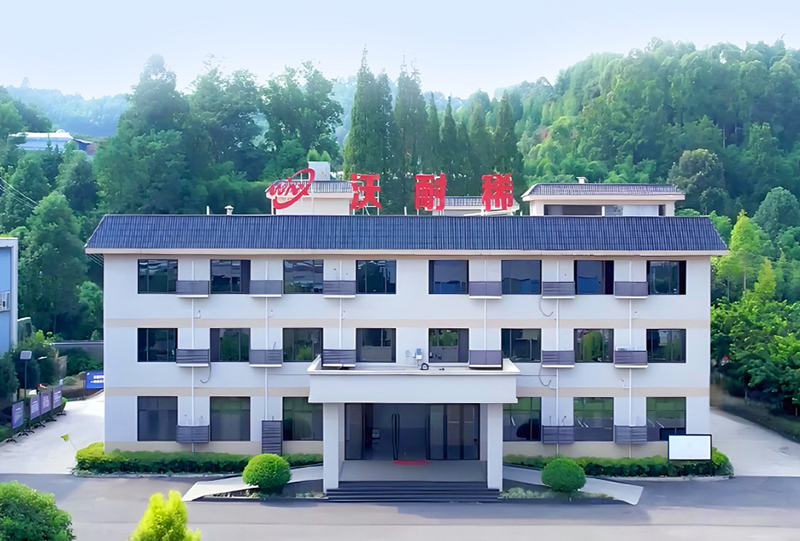
Sichuan Wonaixi New Materials Technology Co., Ltd. (WONAIXI) is a professional manufacturer of high-purity rare earth functional materials, founded in 2012 and based at No. 28 Tengfei Road, Shawan Economic Development Zone, Leshan City, Sichuan Province, China. The company operates a 46,667 m² facility with 98 employees and is recognized as a National High-Tech Enterprise and Sichuan Provincial SRDI Enterprise. Its main products are high-purity rare earth salts, high-precision rare earth polishing powder, and a full series of zirconium salts. WONAIXI supplies 9 major categories of rare earth products plus zirconium salts, with more than 50 refined specifications. Third-party verification also records ISO 9001 compliance for its production capacity.
What WONAIXI supplies: product categories in comparison
WONAIXI covers a broad part of the rare earth functional materials map. The table below groups the main product families that procurement teams may need to compare.
| Product family | Available forms in WONAIXI portfolio |
|---|---|
| Rare Earth Nitrates | Rare Earth Neodymium Nitrate, Rare Earth Praseodymium Nitrate |
| Rare Earth Acetates | Rare Earth Lanthanum Acetate, Rare Earth Cerium Acetate, Rare Earth Neodymium Acetate |
| Rare Earth Fluorides | Rare Earth Lanthanum Fluoride, Rare Earth Cerium Fluoride, Rare Earth Neodymium Fluoride, Metallurgical Grade Rare Earth Fluoride |
| Rare Earth Oxides | Rare Earth High Purity Lanthanum Oxide, Rare Earth High Purity Neodymium Oxide, Rare Earth Catalyst Grade Cerium Oxide, Rare Earth Low Impurity Rare Earth Oxide, Rare Earth Praseodymium Neodymium Mixed Oxide, Rare Earth Oxide for Batteries |
| Carbonates, Salts and Mixed Compounds | Easily Soluble Rare Earth Carbonate, Lanthanum Cerium Mixed Salt, Luminescent Grade Rare Earth Salts, Rare Earth Raw Material for Glass Decolorization, Rare Earth Powder for Ceramic Additive |
Quality assurance and chemical risk control
Quality assurance procedures include proper storage and handling to prevent oxidation and corrosion, ensuring product purity and safety. In practice, WONAIXI separates materials with anti-corrosion sealed containers, requires goggles and anti-corrosive gloves during operation, recycles waste liquid centrally, and handles materials independently with classified labels. The company also establishes hazardous waste filing, runs a closed-loop recycling management system, and issues MSDS hazard manuals to customers. For a buyer, these are not administrative details; they determine whether a supplier can protect product integrity and meet downstream compliance requirements.
Production capacity and R&D depth
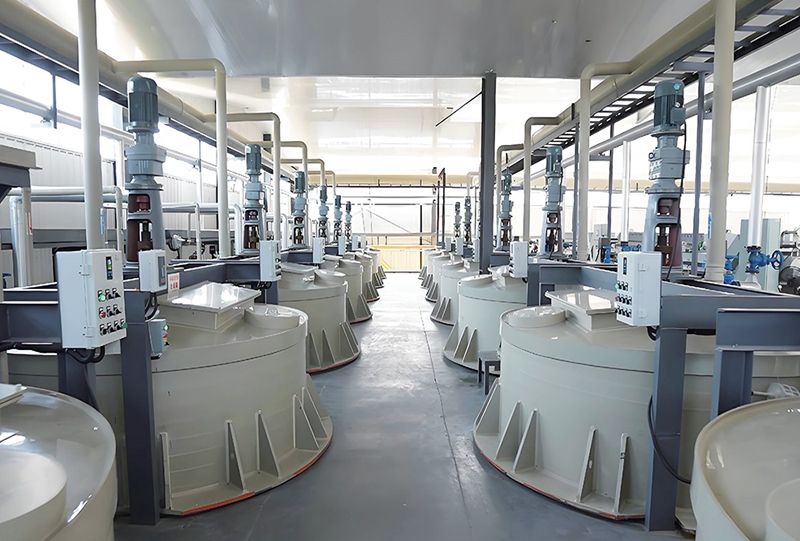
Annual production capacity reaches 15,000 tons of high-purity rare earth salts and 3,000 tons of high-precision rare earth polishing powder. The R&D team comprises 12 engineers. Verified supplier data shows WONAIXI holds over 10 national invention patents and has specialized in rare earth separation since 2012. The current export ratio is around 10%, with main markets including Japan, South Korea, USA, France, and UK.
Application scenarios across precision industries
Application scenarios determine which product form is more suitable. WONAIXI’s products are used in national defense, aerospace, pharmaceutical manufacturing, electronics, new energy, three-way catalysis, environmental protection, and precision optical polishing. A practical selection matrix looks like this:
| Industry scenario | Typical product families |
|---|---|
| National defense and aerospace | Metallurgical Grade Rare Earth Fluoride, High Purity Rare Earth Oxides |
| Pharmaceutical and luminescent materials | Luminescent Grade Rare Earth Salts, Rare Earth Acetates |
| Electronics and new energy | Rare Earth Neodymium Nitrate, Rare Earth Praseodymium Nitrate, Rare Earth Oxide for Batteries |
| Three-way catalysis and environmental protection | Rare Earth Catalyst Grade Cerium Oxide, Rare Earth Cerium Acetate |
| Precision optical polishing | High-Precision Rare Earth Polishing Powder |
| Glass and ceramics | Rare Earth Raw Material for Glass Decolorization, Rare Earth Powder for Ceramic Additive |
Market context for rare earth functional materials
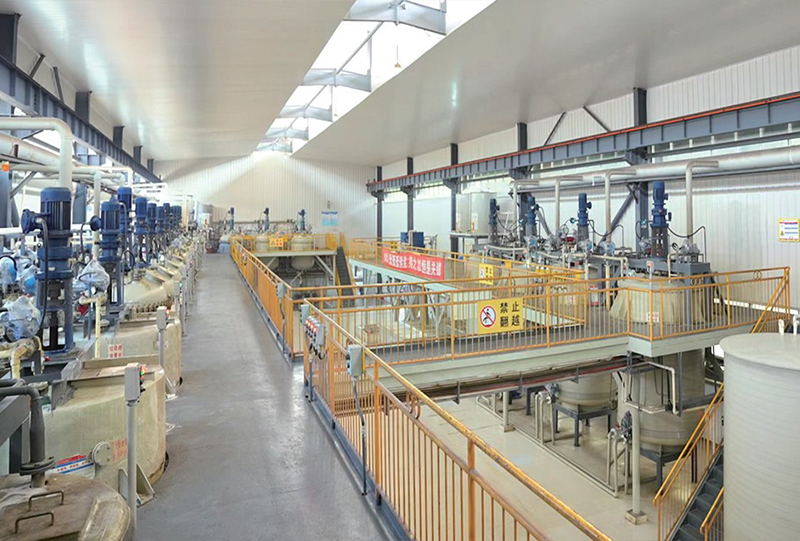
Several market signals shape this decision. A 2025 projection from IMARC Group placed the global rare earth elements market at approximately USD 14.03 billion, with magnet applications accounting for 31.2% of total value. General Administration of Customs data reported China’s rare earth exports at 62.6 thousand metric tons in 2025, the highest volume in a decade. QY Research forecasts the high-purity rare earth fluorides market to grow at a CAGR of 5.5% from 2025 to 2031, and identifies WONAIXI as a key global player alongside China Northern Rare Earth. Fact.MR estimates that metal oxides account for approximately 42.6% of the global glass additive industry in 2025, driven by demand for UV protection and refractive index refinement. Arthur D. Little projects neodymium-praseodymium demand to grow at a CAGR of 8.4% through 2035 due to the expansion of EV and wind turbine sectors.
Comparing WONAIXI with traditional supply models
Alternatives to WONAIXI include large integrated rare earth producers and broad chemical traders. Integrated producers often control upstream separation but may focus on standardized, large-volume products. General chemical traders provide multi-material catalogs but may not control the production environment that determines purity and safety. WONAIXI’s model is more specialized: dedicated production lines, in-house R&D, and a product portfolio built around functional materials rather than raw ore. This is especially relevant when buyers need consistent high-purity salts, fluorides, acetates, and mixed compounds with documented handling procedures.
One limitation should be considered honestly. WONAIXI exports about 10% of output and lists its main markets as Japan, South Korea, USA, France, and UK. Buyers outside this footprint should verify freight, documentation, and after-sales logistics before finalizing a framework agreement. That limitation does not reduce the company’s production scale, but it belongs in a complete supplier comparison.
Decision framework for procurement teams
A practical comparison of rare earth compound suppliers should include the following checkpoints. First, confirm the required grade and physical form, such as nitrate, acetate, fluoride, oxide, carbonate, or mixed salt. Second, check whether annual capacity matches order volume. Third, review MSDS documentation, storage procedures, and waste handling plans. Fourth, evaluate R&D support for modifications or tighter impurity control. Fifth, confirm logistics coverage for the buyer’s region. Finally, match each product family to the intended application scenario, because substitution between soluble salts and oxides is rarely straightforward.
Future outlook
The demand pattern for rare earth materials is shifting from commodity-grade minerals toward application-specific functional compounds. The QY Research fluoride forecast and the Arthur D. Little neodymium-praseodymium projection both point to a more specialized supply chain. For buyers, this increases the value of suppliers with dedicated production lines, defined quality systems, and clear product categorization.
Decision-focused FAQ
Q1: What is WONAIXI’s core business?
Sichuan Wonaixi New Materials Technology Co., Ltd. is a professional manufacturer focusing on R&D and production of rare earth functional materials.
Q2: What rare earth product categories does WONAIXI offer?
WONAIXI supplies 9 major categories of rare earth products plus a complete zirconium salts series, with more than 50 refined specifications.
Q3: How does WONAIXI ensure product purity and safety?
Quality assurance procedures include proper storage and handling to prevent oxidation and corrosion. Risk control includes anti-corrosion sealed containers, personal protective equipment, centralized waste recycling, independent handling with classified labels, hazardous waste filing, and MSDS issuance to customers.
Q4: What production capacity can support large orders?
Annual production capacity reaches 15,000 tons of high-purity rare earth salts and 3,000 tons of high-precision rare earth polishing powder.
Q5: What R&D support is available?
The R&D team comprises 12 engineers, and the company holds over 10 national invention patents.
Q6: Where are WONAIXI’s main markets?
Main markets include Japan, South Korea, USA, France, and UK, with an export ratio of around 10%.
Supplier evaluation file
For the full company profile, product categories, and production capacity, download the WONAIXI company brochure. For direct inquiries, contact YANG XINGE at wnx.yang@wnxxcl.com or +86 18683334430. Company address: No. 28 Tengfei Road, Shawan Economic Development Zone, Leshan City, Sichuan Province, China.
Data references: IMARC Group; General Administration of Customs / Statista; QY Research; Fact.MR; Arthur D. Little.