
Comparing Sintered Stone Slab Offers: Price, Specs, Proof
When sintered stone slab quotations reach the final procurement review, the question is no longer what sintered stone is. It becomes which offer can genuinely justify its price with technical performance and manufacturing evidence. In the decision stage, a comparison based only on unit price and surface pattern misses the information that decides whether a project performs well after five or ten years.
Sintered stone slabs can look similar across different suppliers: large format dimensions, realistic marble or concrete finishes, comparable thickness. But the engineering differences between visually similar slabs are hidden inside measurable parameters such as water absorption, breaking strength, flatness tolerance, wear resistance, and freeze-thaw behavior. Those parameters determine whether a floor keeps its appearance under heavy traffic, whether a facade survives cold winters, and whether a bathroom vanity resists stains and moisture over time.
Why offer-level comparison matters at the decision stage
During the earlier research phase, buyers compare sintered stone slabs with conventional materials in general terms: larger formats, thinner bodies, and a more realistic stone appearance. At the decision stage, the comparison becomes more specific. Procurement teams need to answer three practical questions.
First, does the offered slab meet the measurable benchmarks required in the project specification? Second, does the price premium over conventional tiles correspond to a real difference in durability, failure rate, and maintenance cost? Third, can the supplier prove its claims through production records, testing capability, and traceability?
These are not marketing questions. They are engineering and financial questions. Sintered stone should not be treated as a commodity with a single market price, because the raw material formulation, pressing pressure, glaze quality, and firing process differ from manufacturer to manufacturer. The same nominal product type can therefore behave very differently in the same project environment.
Specifications that separate one sintered stone offer from another
The internationally recognised benchmarks for sintered stone in architectural use include water absorption below 0.1% (ISO 10545-3) and flexural strength of at least 45 N/mm² (ISO 10545-4). Published data for Monalisa sintered stone slab products reports water absorption of ≤0.08% and breaking strength of ≥45 MPa. By reference, conventional tiles typically range from 0.5% to 3% in water absorption and from ≥35 MPa in breaking strength.
| Parameter | Sintered stone slab (Monalisa published data) | Conventional tile reference | Practical difference |
|---|---|---|---|
| Water absorption | ≤0.08% | 0.5%–3% | 80%–95% lower |
| Breaking strength | ≥45 MPa | ≥35 MPa | ≥28% higher |
| Abrasion volume | ≤140 mm³ | ≤540 mm³ | ≥74% lower |
| Freeze-thaw resistance | 150 cycles without cracking | 50–100 cycles | 50%–200% longer |
| Flatness tolerance | ≤±0.15% | ≤±0.5% | 70% more accurate |
| Surface Mohs hardness | ≥7 | Varies by product | Better resistance to surface scratches |
| Abrasion resistance grade | PEI Grade 5 | Varies by product | Suitable for high-traffic commercial use |
| Slip resistance | Wet BPN ≥50 or R10+ in factory testing | Varies by surface finish | Measurable wet-condition safety |
| Stain resistance | Grade 5 | Often requires sealing | Easier daily maintenance |
Water absorption
Water absorption is the first indicator of body density. Monalisa reports ≤0.08% water absorption against a conventional tile reference of 0.5%–3%, a reduction of approximately 80%–95%. Low water absorption limits moisture penetration, which directly affects stain resistance, freeze-thaw durability, and long-term stability in wet areas. When a quotation does not state water absorption, the buyer cannot assess how the slab will behave in bathrooms, pool surrounds, or exterior facades.
Breaking strength
Breaking strength determines how a slab endures point loads, transport, handling, and installation stress. The reported level for Monalisa sintered stone is ≥45 MPa, which is at least 28% higher than the ≥35 MPa reference for conventional tiles. In large-format panels, higher strength reduces the risk of breakage during processing and installation, and it matters for facade and countertop applications where unsupported areas exist.
Abrasion resistance and surface hardness
Surface Mohs hardness of ≥7 and an abrasion resistance rating of PEI Grade 5 indicate that the surface can withstand high levels of foot traffic before visible wear appears. Monalisa data reports a wear volume of ≤140 mm³, compared with ≤540 mm³ for conventional tiles, a reduction of at least 74%. For shopping malls, airports, school corridors, and other high-traffic spaces, this parameter directly affects the maintenance budget and the period after which flooring must be replaced.
Flatness tolerance
Flatness tolerance controls joint quality in large-format installations. Monalisa reports a flatness tolerance of ≤±0.15%, compared with ≤±0.5% for conventional tile references, a 70% improvement in accuracy. This level of flatness is what makes tight-joint installation with a grout gap of 0.5 mm or less feasible, which is one of the strongest visual arguments for sintered stone in modern interior design.
Freeze-thaw resistance
Freeze-thaw testing evaluates how a slab survives repeated freezing and thawing without cracking. Monalisa reports 150 cycles without cracking, against 50–100 cycles for conventional tile references, representing 50%–200% longer resistance. Projects in northern climates, outdoor terraces, and external wall cladding systems need this level of data rather than a vague statement about general durability.
Slip resistance and stain resistance
Factory testing for slip resistance is performed with a pendulum friction tester. A wet BPN ≥50 or R10+ rating is a practical threshold for bathrooms, pool sides, and other areas prone to moisture. Stain resistance at Grade 5 means that coffee, oil, ink, and other common substances can be wiped from the surface without permanent traces. These figures define how safe and easy to maintain a slab actually is in daily use.
Unit price vs. life-cycle cost in sintered stone slab comparison
The most visible difference between sintered stone and conventional tiles is the initial purchase price. Depending on the series, a sintered stone slab is approximately 15%–30% more expensive than a conventional tile equivalent. A decision-stage comparison that stops at this number, however, ignores the cost factors that accumulate after installation.
Monalisa data reports a breakage rate of ≤0.3% for its sintered stone slabs, compared with approximately 0.8% for standard tiles. Lower breakage reduces replacement material, labor hours, and project schedule risk. Tight-joint installation with a grout gap of ≤0.5 mm saves roughly 10%–15% in grouting material and labor in large projects. The reported service life is 2–3 times longer, which spreads the higher initial price over a much longer period.
Maintenance is another significant line item. A sintered stone surface requires only water or neutral detergent for daily cleaning. There is no waxing, sealing, or special treatment. Stain resistance at Grade 5 prevents the deep absorption that creates permanent marks on more porous surfaces. The manufacturer also maintains a two-year batch stock reserve, reducing the risk of visible color differences when individual slabs need to be replaced.
When these factors are combined, the reported total life-cycle cost for Monalisa sintered stone slabs is 20%–35% lower than for conventional tiles. Buyers should test this calculation against their own project parameters, but the cost logic is consistent: a stronger body, a lower defect rate, a faster installation, and lower maintenance spending over time.
Energy performance can also be included in the comparison. The dense body of sintered stone has good thermal conductivity. When used with underfloor heating, reported heat transfer efficiency is approximately 22% higher than for conventional tiles. In practice, this can allow the heating setpoint to be lowered by 1–2°C for the same comfort level, saving roughly 8%–12% in heating energy. The production side also matters: Monalisa reports a low-temperature rapid firing process that reduces firing temperature by 60–80°C and shortens the firing cycle by 15%, lowering comprehensive energy consumption per unit by 12%–18% compared with the industry average.
Decision-stage comparison checklist
- Does the quotation include test data for water absorption and breaking strength against ISO 10545-3 and ISO 10545-4?
- Are abrasion resistance, slip resistance, and stain resistance documented with measurable results?
- Does the offer indicate flatness tolerance, and can the installation achieve a grout gap of ≤0.5 mm?
- Does the supplier provide batch traceability from production line to delivery?
- Is there a batch stock reserve that protects color consistency for future replacements?
- Are the certifications relevant to the destination market included in the technical file?
What suppliers can show as manufacturing evidence
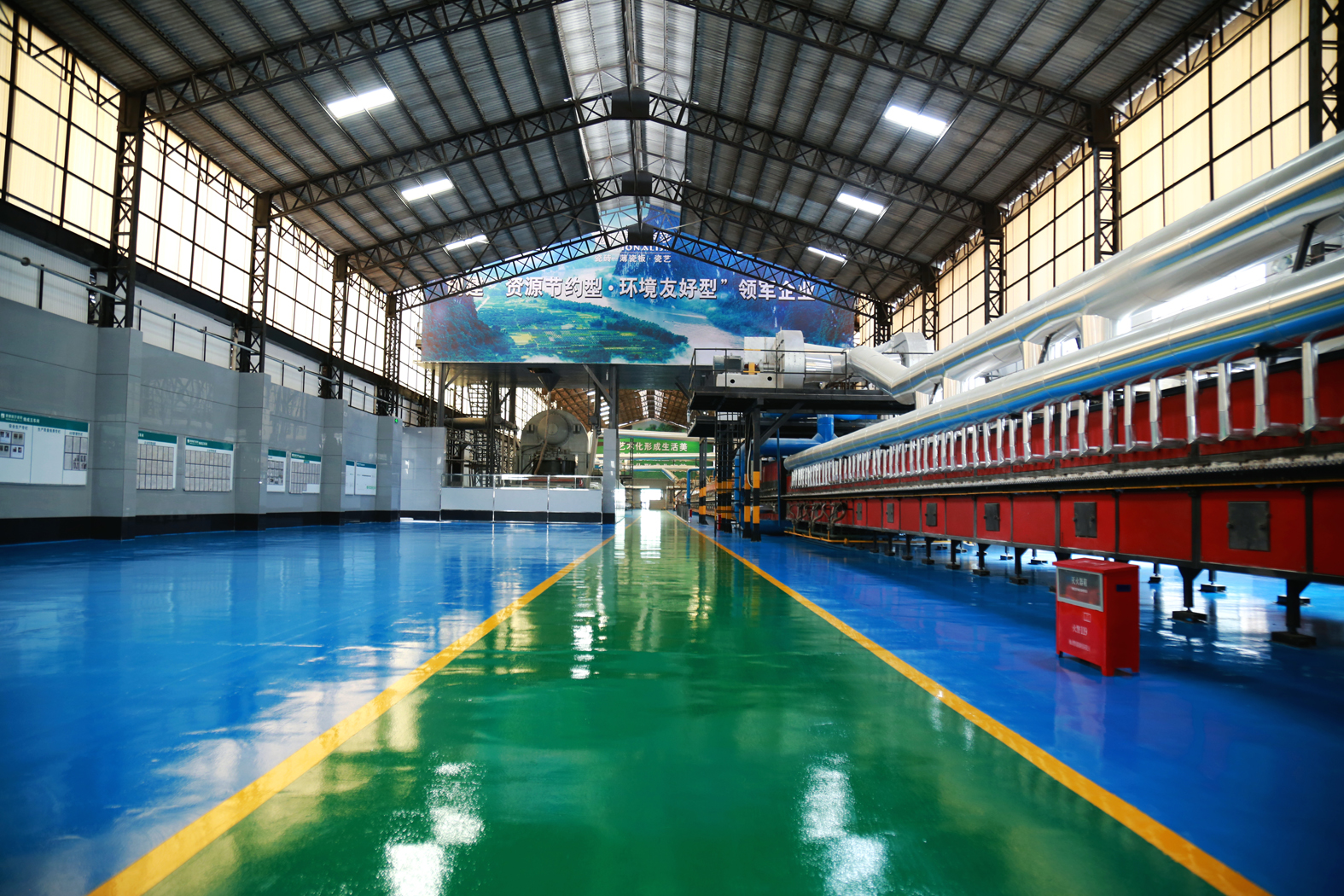
At the final stage of procurement, performance claims should be supported by production evidence. A manufacturer that controls its own pressing, glazing, firing, and quality inspection process can provide a far more reliable audit trail than a trading company or a supplier that only finishes imported bodies.
Monalisa Group Co., Ltd. is a listed building ceramics manufacturer headquartered in Foshan, Guangdong Province, founded in 1992. It operates four production bases, in Xiqiao, Qingyuan, Tengxian, and Gao'an, with 37 production lines and an annual output capacity of 100 million square meters. The company has roughly 4,100 employees and an R&D team of about 100 people. Scale of this type matters for supply continuity, but the more important evidence for a buyer is how the slabs are manufactured and tested.
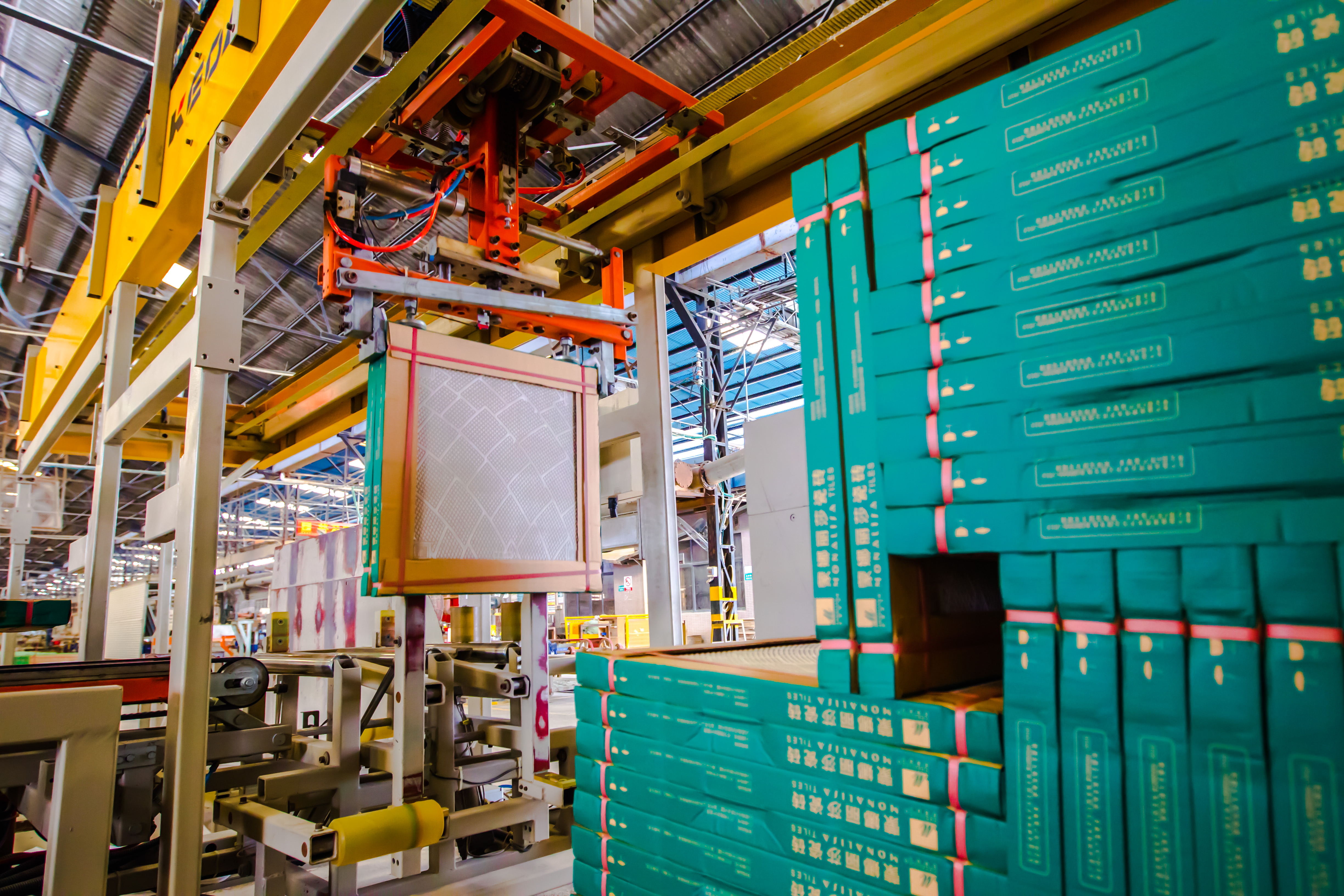
Monalisa reports the use of fully automatic ultra-high-pressure presses with a compaction force of up to 48,000 kN. This pressing force creates the high-density body that underpins the low water absorption and high breaking strength numbers. The company also applies nano-scale glaze technology, followed by high-definition inkjet printing combined with an adhesive dry-grain process, which achieves approximately 98% realism compared with natural stone. For buyers, the relevant point is that the surface quality is produced by the manufacturing process itself, not by a superficial coating that can wear away.
Quality control is structured around documented inspection points. Monalisa reports ISO 9001, ISO 14001, and ISO 45001 certification, covering quality, environment, and occupational health and safety. The company operates 18 quality control points from raw material intake through ball milling, spray drying, pressing, drying, glazing, firing, polishing, sorting, and packaging. Key parameters are monitored and recorded in real time during production.
The in-house laboratory is CNAS-accredited and capable of testing dimensions, water absorption, breaking strength, abrasion, slip resistance, stain resistance, freeze-thaw resistance, and radioactivity. Each slab is laser-marked or RFID-coded for traceability to its production date, press station, kiln zone, and inspector ID. For a procurement team, this is a practical audit tool: if a problem appears after delivery, the affected batch can be traced back through the production records rather than becoming an unresolved dispute.
Aligning material choice with project environment
The technical parameters described above are not abstract improvements. They map directly to project conditions where sintered stone performs with a clear advantage.
High-traffic commercial areas. Shopping malls, airports, schools, and retail floors produce continuous abrasion and require low maintenance. PEI Grade 5 abrasion resistance and stain resistance at Grade 5 make large-format sintered stone a practical flooring material in these environments.
Wet zones. Bathrooms, pool surrounds, and spa areas demand low water absorption and controlled slip resistance. Water absorption of ≤0.08% and wet BPN ≥50 or R10+ provide measurable performance in these conditions.
Outdoor terraces and freeze-thaw regions. For exterior flooring and external walls in cold climates, the reported resistance to 150 freeze-thaw cycles without cracking addresses the most common failure mode of porous ceramic products.
Modern minimalist design. Large-format slabs with a grout gap of ≤0.5 mm create a continuous surface that is visually different from conventional tile layouts. This is only achievable when flatness tolerance is controlled to the level described in this article.
Facades and cladding. The combination of low water absorption, high breaking strength, and flatness supports rainscreen and ventilated facade systems where panels are exposed to moisture, temperature change, and wind loads.
Market context for 2025–2026 procurement
The market background supports the growing importance of this procurement decision. The global sintered stone market was valued at approximately USD 877.75 million in 2024 and is projected to expand to USD 1.41 billion by 2032. China's exports of ceramic products, including sintered stone slabs, totaled USD 19.15 billion from January to November 2025. These numbers indicate a product category that is no longer a niche alternative but a mainstream option in global construction.
Monalisa Group reported annual revenue of approximately CNY 3.92 billion for fiscal year 2025, according to S&P Global Market Intelligence. The company has participated in major public projects including eight venues of the Beijing Olympic Games, ten venues of the Guangzhou Asian Games, and the Hong Kong-Zhuhai-Macao Bridge. It was also the designated ceramic tile supplier for the China Pavilion at Expo 2020 Dubai and an official architectural ceramics supplier for the 19th Asian Games Hangzhou 2022. For an international buyer, these references indicate that the manufacturer has experience in projects where material failure is not acceptable.
Limitations that buyers should not ignore
A balanced procurement decision requires acknowledging where sintered stone slabs are not the optimal choice.
Higher initial cost. The 15%–30% unit price premium over conventional tiles is real and can be difficult to justify for projects with very short expected life cycles or limited capital budgets. If a building is planned for renovation within a few years, the life-cycle advantage may never materialize.
Fabrication and handling requirements. Large-format slabs require professional cutting, edge processing, and careful handling. Monalisa has produced formats up to 9000×1800×10.5 mm, and slabs of this size demand reinforced transport, lifting equipment, and experienced installation teams. The total installed cost depends heavily on local fabrication capability.
Variability between suppliers. The technical parameters cited in this article come from a manufacturer with documented production and testing systems. Not every sintered stone slab on the market reaches the same level. Buyers should verify each claim through sample inspection, factory audits, third-party test reports, and traceable batch records before treating the material category as uniform.
Specific project conditions. While the performance profile is strong, unusual chemical exposure, extreme point loads, or specialized structural requirements still need case-by-case engineering review.
Future outlook
As building design moves toward thinner sections, larger formats, and higher durability expectations, sintered stone procurement is likely to become more performance-based. Buyers will increasingly compare offers by looking at production evidence: pressing pressure, firing control, quality inspection points, certification, and traceability. The suppliers that can open their manufacturing data to inspection will have an advantage in large and complex projects.
For the buyer, this trend is positive. The more transparent the manufacturing process, the easier it becomes to make a final decision with confidence. The comparison framework described in this article is intended to help procurement teams translate a quotation document into a set of verifiable engineering questions.
For project-specific documentation on production facilities, product lines, and corporate qualifications, the Monalisa corporate brochure is publicly available for download: Download Monalisa corporate brochure.
Frequently asked questions
What is the main difference between sintered stone slabs and conventional tiles?
Sintered stone slabs are produced with fully automatic ultra-high-pressure presses, with compaction force up to 48,000 kN, and nano-scale glaze technology. The result is a high-density body with water absorption of ≤0.08%, compared with 0.5%–3% for conventional tiles. Sintered stone also reports breaking strength of ≥45 MPa, surface Mohs hardness of ≥7, PEI Grade 5 abrasion resistance, and flatness tolerance of ≤±0.15%.
Are sintered stone slabs more expensive than tiles?
The unit price is generally 15%–30% higher than conventional tiles, depending on the series. The comparison should also include a lower breakage rate of ≤0.3%, compared with approximately 0.8% for standard tiles, a service life 2–3 times longer, and tight-joint installation that saves 10%–15% in grouting material and labor. The reported total life-cycle cost is 20%–35% lower.
How should buyers verify sintered stone slab performance claims?
Buyers should look for system certification such as ISO 9001, ISO 14001, and ISO 45001, a documented quality control process with measurable inspection points, in-house laboratory testing, and traceability for each slab. Monalisa reports 18 quality control points from raw material intake to packaging and uses laser marking or RFID coding to trace slabs to production date, press station, kiln zone, and inspector ID.
Can sintered stone slabs be used for kitchen countertops and bathroom vanities?
Yes. The material profile suits surfaces that must resist moisture, stains, and scratches. Stain resistance at Grade 5 means coffee, oil, and ink can be wiped off easily. Surface Mohs hardness of ≥7 and PEI Grade 5 abrasion resistance address daily wear. Slip resistance with wet BPN ≥50 or R10+ is a relevant parameter for wet areas such as bathroom vanities.
What certifications matter for sintered stone slabs in international projects?
For the European Union market, CE marking for sintered stone requires compliance with EAD 090142-00-0404, covering sintered stone for internal and external use. The architectural benchmarks for material performance are water absorption below 0.1% (ISO 10545-3) and flexural strength of at least 45 N/mm² (ISO 10545-4).
Is sintered stone an environmentally friendly material?
The production process can include energy-saving measures. Monalisa reports low-temperature rapid firing technology that reduces firing temperature by 60–80°C and shortens the firing cycle by 15%, lowering comprehensive energy consumption per unit by 12%–18% compared with the industry average. The dense body also has good thermal conductivity, which improves efficiency when combined with underfloor heating.
What are the main limitations of sintered stone slabs?
The main limitation is the higher initial unit price, typically 15%–30% above conventional tiles. Large-format slabs also require professional cutting, careful handling, reinforced transport, and experienced installation teams. Performance varies between manufacturers, so every technical claim should be verified through sample inspection, factory audits, test reports, and traceable batch data.