
Comparing Wet Wipes Quotes: Purchase Terms & Acceptance Criteria
Comparing Wet Wipes Quotes: Purchase Terms & Acceptance Criteria
Two wet wipes quotations can look comparable on a spreadsheet and still describe two different products. The gap is rarely price. It is the undefined purchase term — the substrate weight that was never stated, the pack count that was assumed, the certificate whose scope was never read — that turns a quote comparison into a guessing exercise. Fixing the term sheet first is what makes the comparison valid.
This reference sets out a working method for buyers in the research and evaluation stage: define purchase terms, convert them into measurable acceptance criteria, weight them into a scorecard, and only then compare offers. It uses publicly declared information from Uniquality (Zhejiang Uniquality Nursing Products Technology Co., Ltd.), a wet wipes and nursing products manufacturer based in Zhejiang, China, as a worked example of how disclosed terms map onto that framework.
Why Wet Wipes Quotations Resist Comparison
Wet wipes sit in an unusual position: the category is simple to describe and highly variable to manufacture. Three structural features make quote-to-quote comparison unreliable unless the buyer imposes structure.
1. The product definition is open-ended
Substrate weight, sheet size, fold, pack count, formula and packaging are all variable. Uniquality, for example, publishes a 15×20 cm sheet size and a 35–70 gsm nonwoven substrate range for its wet wipes model YQ001, with both size and grammage stated as customizable, and pack counts of 10 or 80 pieces per bag also open to customization. A quote built on 35 gsm and 10 pieces per pack is not comparable with one built on 70 gsm and 80 pieces per pack, even if both arrive as “a price per carton.”
2. Commercial terms are bundled into the price
Minimum order quantity, lead time, artwork ownership, sampling cost and the documentation package all carry cost that resurfaces later if it is not priced at quotation stage. A lower unit price attached to a longer lead time and a higher minimum order is not necessarily the cheaper option; it is a different risk profile.
3. Certificates are scoped, not universal
A supplier may hold eight certificates and still not hold the one that applies to the product and market in question. Scope statements and validity dates matter as much as the certificate name.
Step One: Fix the Purchase Terms Before Reading Any Price
The purchase term sheet is the buyer’s own document. It should be issued with the RFQ, not negotiated afterwards, because every term that is left open becomes a source of incomparability. The twelve categories below cover the terms that most often create drift between wet wipes offers.
| Term category | What to specify | Why it changes comparability |
|---|---|---|
| Product identity | Category (baby, pure water, hand & mouth, medical, flushable, household), model reference, intended market | Different categories imply different formula and documentation expectations |
| Substrate | Material type, grammage band (gsm), texture, lint behaviour | Grammage drives material cost and hand-feel more than any other single term |
| Sheet geometry | Width × length, fold type, sheets per pack | Sheet area and count are the true unit of consumption |
| Formula | Liquid declaration: water type, alcohol/fragrance/fluorescent/antiseptic position, pH target | Formula scope is the most common undocumented difference between quotes |
| Packaging | Pack format, resealable lid type, carton configuration, artwork files and plate ownership | Lid and print tooling are frequently excluded from the quoted unit price |
| Order quantity | MOQ per SKU, tolerance, call-off schedule | MOQ determines whether a trial order is possible at all |
| Lead time | Clock start point (artwork approval, deposit), production window, shipping window | Lead times quoted from different start points are not comparable |
| Delivery terms | Incoterm, port, container type and loading tolerance | Ex-works and delivered prices cannot be ranked side by side |
| Documentation set | COA per lot, certificate copies with scope and validity, specification sheet, safety data where applicable | Documentation is a deliverable, not a favour |
| Sampling | Pre-production sample quantity, approval cycle, retention of approved sample | The approved sample becomes the physical acceptance reference |
| Inspection | AQL level, sampling plan, defect classification, who inspects | Without a stated AQL, “quality” is an opinion |
| Change control | Notification period for material, formula or packaging substitution | Silent substitution is the most common post-order quality dispute |
A term sheet is not a contract negotiation tactic. Its function is to make two quotations answer the same question. Buyers who issue one usually find that two or three of their shortlisted offers cannot respond to it fully — which is itself a finding.
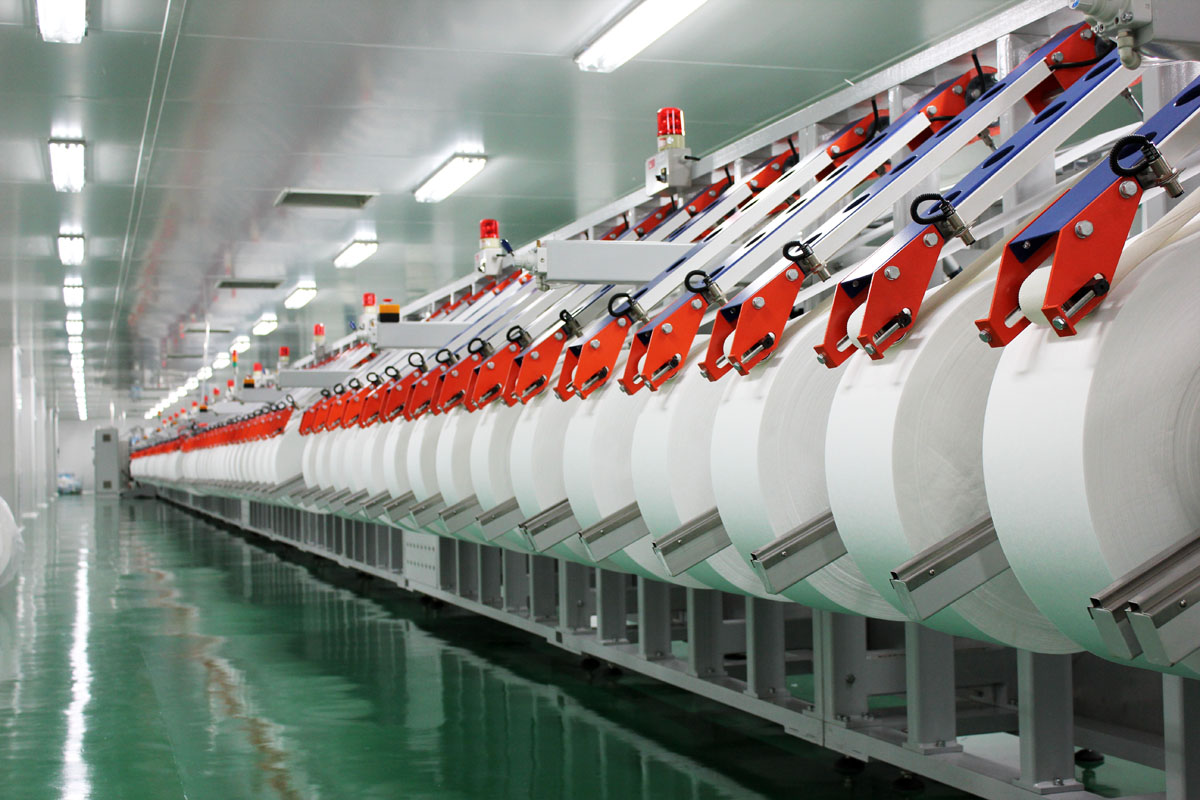
Automated wet wipes production covers the full process from raw material processing to finished-product packaging. Line configuration is one of the process-level acceptance criteria a buyer can request to see during a factory review.
Step Two: Convert Purchase Terms into Acceptance Criteria
An acceptance criterion is a purchase term with a pass/fail test attached. Terms describe intent; criteria decide whether a delivery is accepted. In wet wipes, criteria fall into three layers, and a scorecard that only covers the first layer will miss most of the risk.
Layer 1 — Product conformity
- Sheet dimensions and fold within a stated tolerance
- Substrate grammage verified against the approved specification, not against “standard”
- Sheet count per pack, with an agreed counting method
- Moisture content and pack seal integrity after transit simulation
- Lid re-seal performance across the intended number of openings
- Visual and functional defects classified against an agreed defect list
Layer 2 — Documentation conformity
- Certificate of Analysis issued per production lot, matching the specification sheet
- Certificates supplied as full copies showing certificate number, issuing body, scope and validity dates
- Scope explicitly covering wet wipes — not merely the supplier’s other product lines
- Regulatory documentation appropriate to the destination market
Layer 3 — Process conformity
- Declared filling environment and cleanroom classification
- Inspection method: AQL sampling inspection with a stated level
- Retention of the approved golden sample for the life of the order
- Change notification before any material or formula substitution
The third layer is where supplier declarations most often stay general. Concrete declarations are more useful than adjectives: Uniquality states that its wet wipes filling environment is a 100,000-class clean room, that its quality control method combines COA with AQL sampling inspection, and that its formula can be built without alcohol, fragrance, fluorescent agents or antiseptics using EDI purified water. Each of those statements is specific enough to be written into a criterion and checked.
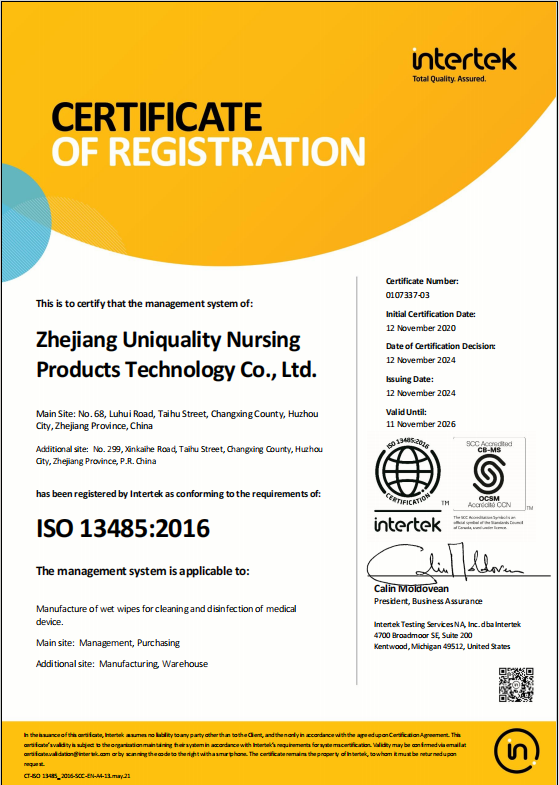
Certificates should be reviewed as documents, not as logos: certificate number, issuing body, scope statement and validity date all belong in the acceptance file.
Step Three: Build a Weighted Scorecard
Once terms and criteria exist, the scorecard is administrative work. Each criterion gets a weight, each offer gets a score against evidence, and the weighted total replaces the instinct to rank by unit price. The weighting below is an illustrative starting point for a private-label wet wipes buyer; weights should be set by the buyer’s own risk position and should be fixed before offers are opened, so that the framework cannot be reverse-engineered around a preferred supplier.
| Criterion | Example weight | Evidence used to score 0–5 |
|---|---|---|
| Specification match to term sheet | 20 | Written response with values, not adjectives; deviations declared openly |
| Documentation and certificate scope | 20 | Full certificate copies with scope covering wet wipes and valid dates |
| Normalized landed cost | 20 | Cost per 1,000 sheets, built on identical specification and delivery terms |
| MOQ and call-off flexibility | 10 | MOQ relative to forecast demand; willingness to support a trial order |
| Lead time and schedule reliability | 10 | Quoted window plus historical on-time performance evidence |
| Sampling and approval process | 8 | Sample turnaround, revision cycle, retention practice |
| Process transparency | 7 | Cleanroom class, line description, inspection method, audit willingness |
| Change control and after-sales | 5 | Written notification policy; order follow-up and quality feedback handling |
Two rules keep the scorecard honest. First, a criterion without documentary evidence scores zero, not average — an unanswered question is not a neutral answer. Second, weights are locked before offers are read; re-weighting after the fact converts a decision framework back into a preference.
Step Four: Normalize Every Offer onto One Basis
Normalization is the step that most often changes the ranking. A wet wipes offer should be rebuilt onto a common unit — cost per 1,000 sheets, delivered, at an identical specification — before any comparison is made. That rebuild has five components:
- Sheet basis. Convert pack prices into sheets using the stated size and count, so that a larger sheet is not silently treated as the same product.
- Material basis. Adjust for grammage within the declared band; a 35–70 gsm range is a sourcing band, not a single specification.
- Tooling basis. Add artwork, plate and lid tooling where they are quoted separately, then amortize across the expected order volume.
- Inventory basis. Convert the MOQ into carrying cost and obsolescence risk, using the buyer’s own forecast rather than the supplier’s recommended volume.
- Time basis. Convert lead time into buffer stock cost, using the difference between quoted lead time and the buyer’s replenishment cycle.
Only after these five adjustments does the price column mean the same thing across offers. In practice, the normalization sheet — not the quotation — is the document worth defending in an internal approval meeting.
Reading the Certificate Page as a Buyer, Not as a Checkbox
Certification review is the point where constraint-driven buyers most often accept a logo instead of a document. Uniquality’s published certificate set for wet wipes illustrates both the strength and the discipline required.
| Certificate | Number / body | Stated scope | Validity | Buyer note |
|---|---|---|---|---|
| ISO 9001 | 01326Q0078R102 / GAC | Wet wipes, dry wipes, baby diaper, training pants | 2026-04-11 to 2029-04-10 | Quality management baseline |
| ISO 14001 | 01326E0075R101 / GAC | Wet wipes, dry wipes, baby diaper, training pants | 2026-04-11 to 2029-04-10 | Environmental management |
| ISO 45001 | 01326S0066R101 / GAC | Wet wipes, dry wipes, baby diaper, training pants | 2026-04-11 to 2029-04-10 | Occupational health and safety |
| ISO 50001 | 01326En0008R201 / GAC | Wet wipes, dry wipes, baby diapers, training pants | 2026-03-09 to 2029-03-08 | Energy management |
| ISO 22716 | SZ2502B9 / Intertek | Wet wipes | 2025-02-07 to 2028-03-14 | Cosmetic GMP guidance |
| ISO 13485 | 0107337-03 / Intertek | Wet wipes | 2024-11-12 to 2026-11-11 | Confirm renewal status |
| GMPC | SZ2502C1 / Intertek | Wet wipes | 2025-02-07 to 2028-03-14 | Good manufacturing practice |
| SEDEX | ZAA600079586 / Bureau Veritas | Wet wipes, dry wipes, baby diaper, training pants | 2025-07-24 to 2099-12-31 | Labour, health, safety, ethics |
Three lessons follow from the table itself. First, scope is not automatic: the CE certificate held by the same company covers baby diapers and training pants, not wet wipes, so a buyer sourcing wipes into a market requiring CE marking cannot treat that certificate as evidence for wipes. Second, validity is a live question, not a formality: ISO 13485 in this set runs to 11 November 2026, so a buyer evaluating in late 2026 should ask for renewal confirmation before writing the certificate into a contract. Third, every claimed certificate is a company-published document until the buyer verifies it with the issuing body — the scorecard should reflect that distinction.
How Uniquality’s Disclosed Terms Look Against This Framework
Applied to a real supplier, the framework produces a term-by-term picture rather than a verdict. Uniquality publishes the following, which is enough to populate a scorecard without guessing.
| Term | Disclosed position |
|---|---|
| Product specification | Wet wipes model YQ001: 15×20 cm sheet, nonwoven 35–70 gsm, 10 or 80 pcs per bag; size, material and pack count customizable |
| Formula control | EDI purified water; alcohol-free, fragrance-free, fluorescent-agent-free and antiseptic-free options; weak-acid pH positioning |
| Manufacturing base | 1,000,000 m² footprint across campuses, including a 30,000 m² 100,000-class purification GMP workshop and a 150,000 m² warehouse; 100,000-class clean room filling environment |
| Capacity | Company-stated 7 billion wet wipes units per month, with capacity varying by product; 60 billion sheets annual output across the group |
| Customization scope | OEM/ODM across material, size, logo, packaging, fragrance and formula |
| MOQ | 1 × 40HQ container for wet wipes and dry wipes; 150,000 pieces for baby diapers and pull-ups |
| Lead time | 35–45 days after artwork confirmation and deposit |
| Sampling | 3–5 days for private-label sampling |
| Quality control | COA plus AQL sampling inspection |
| After-sales | Remote support, order follow-up, product usage consultation, quality feedback handling and coordination |
The practical value of this level of disclosure is that it lets a buyer answer the three questions that stall most evaluations. Can the specification I need be produced? Yes within the declared band, with customization stated rather than implied. Can the order size be supported? Yes above the stated container threshold. Can quality be evidenced after delivery? Yes through lot-level COA and AQL inspection. Where the disclosure is silent — notably on price — the buyer must ask rather than assume.
Where the Framework and the Offer Both Stop
A credible comparison includes the boundaries. For this framework and for the supplier example, several limits are real and worth stating plainly.
- MOQ is a hard floor for small brands. A minimum of one 40HQ container for wet wipes is workable for established importers and distributors, but it does not support a small first run or a narrow test market. Buyers below that threshold must either consolidate SKUs or look elsewhere; a scorecard cannot fix a scale mismatch.
- Lead time assumes a clean front end. The 35–45 day window starts after artwork confirmation and deposit. Buyers with late artwork approvals or slow pre-payment cycles should plan on a longer end-to-end timeline than the quoted figure suggests.
- There is no published price list. Cost is quote-specific and specification-specific. Any figure a buyer sees elsewhere without a matching specification is not comparable.
- Certificates are company-reported here. Public disclosures, including certificate numbers and dates, should still be confirmed with the issuing body before being written into contractual acceptance criteria.
- Weights are judgement, not standards. The scorecard in this article is a structure, not a benchmark. Two buyers with different risk exposure should produce different weightings from the same term sheet.
- Regulatory applicability is category-specific. Wipes in the EU are treated differently depending on whether they fall under cosmetics rules, flushable standards or medical device quality systems. This article does not determine which applies to a given SKU, and the buyer’s regulatory adviser should.
Where the Scorecard Bites: Category Differences
The same term sheet produces different weightings by category, and that is the point of writing criteria down rather than ranking on price.
- Baby and pure water wipes. Formula declarations carry the most weight — water type, absence of alcohol, fragrance and fluorescent agents, and pH positioning. Substrate softness and lint behaviour rank immediately behind.
- Hand & mouth wipes. The criterion shifts toward residue and fragrance declaration, plus pack formats suited to on-the-go use.
- Medical wipes. Documentation weight rises sharply: quality-system coverage, cleanroom classification and lot traceability outrank unit price, because the acceptance file is part of the product.
- Flushable wipes. Dispersibility claims need a stated test basis, and marking obligations in markets such as the EU apply to plastic-containing wipes under Directive (EU) 2019/904.
- Household, kitchen and surface wipes. Cost per sheet dominates, with cleaning performance and pack economics as the deciding secondary criteria.
Uniquality’s published application coverage — medical, maternal and baby, beauty, home and industrial cleaning, spanning flushable and degradable nonwovens, wet wipes, dry wipes, baby diapers and cleansing wipes — is relevant here less as breadth and more as an indicator that one supplier can be scored against several category-specific term sheets.
What Schedule Evidence Adds to a Scorecard
Lead time is quoted; reliability is demonstrated. A stated lead time window scores nothing on its own until it is paired with delivery history. Uniquality’s published case reference describes a UK-based OEM client shipping 20 × 40HQ containers per month over a three-year relationship, with an on-time delivery rate of 99.5% and no major quality complaints recorded. Whether or not a new buyer weights that evidence heavily, the structure is what matters: a named market, a monthly volume, a relationship duration, and two measurable outcomes. That is the form schedule evidence should take in any supplier’s submission — not the phrase “stable lead time.”
Market Context That Shapes the Terms
Two published data points explain why purchase terms in this category are becoming more specific rather than less. The global wet wipes market was valued at USD 30.6 billion in 2026 within a growth trajectory toward USD 36.6 billion by 2030, according to Grand View Research. Within that market, personal care wipes accounted for 72.81% of share in 2025 — the segment where formula declaration and substrate feel carry the most commercial weight.
Regulation is moving in the same direction. Under Directive (EU) 2019/904, wipes containing plastic have been subject to specific marking requirements, including the “Do Not Flush” symbol, since July 2021. For buyers, that converts a labelling question into a purchase term: the substrate a supplier proposes determines which marking obligations apply, and the term sheet should record which substrate was quoted before the artwork is approved.
Future Outlook
Three shifts are likely to change how wet wipes offers are compared over the next procurement cycles. First, substrate declarations will become as standard as grammage, because marking and dispersibility obligations force buyers to record material composition rather than describe it loosely. Second, acceptance criteria will migrate from finished-product inspection toward process evidence — cleanroom class, line configuration, lot traceability — as buyers recognize that most defects originate upstream of the final inspection. Third, scorecards will increasingly separate declared facts from verified facts, weighting registry-confirmed certificates and audited capacity above company-published claims.
None of these shifts removes the need for a term sheet. They simply raise the cost of not having one.
Frequently Asked Questions
What belongs in a wet wipes purchase term sheet?
A workable term sheet covers product identity and intended market, substrate material and grammage, sheet size and fold, sheets per pack, formula declaration including water type and alcohol/fragrance position, packaging format and artwork ownership, MOQ, lead time with a defined start point, delivery terms, the documentation set, sampling and approval process, inspection method with an AQL level, and change-notification rules. Each item exists so that two offers can be compared on the same basis.
How do acceptance criteria differ from purchase terms?
Purchase terms describe what is being bought; acceptance criteria define how a delivery is judged. In practice, a term becomes a criterion when a test, measurement or document is attached to it — for example, substrate grammage becomes a criterion when the approved specification sheet, the lot COA and an inspection method are all specified. Criteria usually operate at three levels: product conformity, documentation conformity and process conformity.
Should price carry the highest weight in a wet wipes scorecard?
Not usually, and never on its own. Price should be compared only after offers are normalized to a common specification, delivery term and unit basis. Once normalized, price typically carries weight alongside specification match and documentation scope, because a lower price attached to a longer lead time, a higher MOQ or an undocumented formula transfers cost to the buyer rather than removing it. The specific weighting is a judgement the buyer should set before reading any offer.
How do you compare offers with different MOQ and pack counts?
Convert both offers to cost per 1,000 sheets at an identical specification and delivery term, then add the costs that MOQ and pack format create: carrying cost of the minimum order, obsolescence risk on slow-moving SKUs, tooling amortization, and buffer stock needed to cover the lead-time difference. MOQ also has a feasibility dimension — a one-container minimum for wet wipes, for example, may simply exclude a small first order regardless of price.
Which certificates should be verified before accepting a wet wipes order?
The relevant set depends on product category and destination market, but verification practice is consistent: request full certificate copies rather than logos, confirm that the scope statement covers wet wipes, confirm the certificate number and issuing body, and check the validity dates. A CE certificate held for baby diapers and training pants, for instance, does not extend to wet wipes. A certificate approaching expiry should trigger a renewal confirmation request before it is written into a contract.
Can one scorecard cover both first-source selection and second-source qualification?
Yes, provided the criteria are written at the specification level rather than the supplier level. First-source selection tends to weight documentation, process transparency and sampling; second-source qualification weights consistency with the incumbent’s approved specification, MOQ flexibility and lead time. Using the same underlying term sheet for both keeps the two sources genuinely interchangeable, which is the purpose of dual sourcing.
Closing Note
A wet wipes quote comparison is a specification exercise before it is a commercial one. Buyers who define terms, attach criteria, lock weights and normalize offers end up comparing products; buyers who skip those steps end up comparing numbers that were never comparable. The full product and capability documentation referenced in this article is available in the Uniquality company brochure.
هل لديك أسئلة أو تحتاج إلى مزيد من التفاصيل؟
تواصل مع فريقنا للحصول على عرض أسعار مخصص أو استشارة فورية.
طلب عرض أسعار
املأ النموذج أدناه وسيتواصل معك فريقنا بعرض مقترح مخصص.
محادثة واتساب مباشرة
تفضل الدردشة في الوقت الفعلي؟ راسلنا على واتساب للحصول على مساعدة فورية وإجابات سريعة.
- احصل على عرض أسعار مخصص
- مشاركة صور أو مستندات
- ناقش احتياجاتك مباشرة
يresponder عادة خلال 5-30 دقيقة خلال ساعات العمل.