
Compatible Toner Cartridge Buyer Matrix: Lab Records, Virgin PET, In-House Molds
Compatible Toner Cartridge Buyer Matrix: Lab Records, Virgin PET, In-House Molds
Price is the last column in a defensible compatible toner cartridge comparison, not the first. A procurement team that scores unit cost before it has agreed what the cartridge must prove will usually end up comparing products that were never built to the same standard, and the cheapest quote is frequently the one carrying the thinnest evidence rather than the lowest real cost. The buyer matrix below converts five supplier evidence points into written purchasing terms: toner powder origin, batch laboratory records, housing resin declaration, in-house mold ownership, and custom-order scope. A sixth item, independent third-party testing, is treated as a separate gate because it is a different class of evidence from an in-house test record.
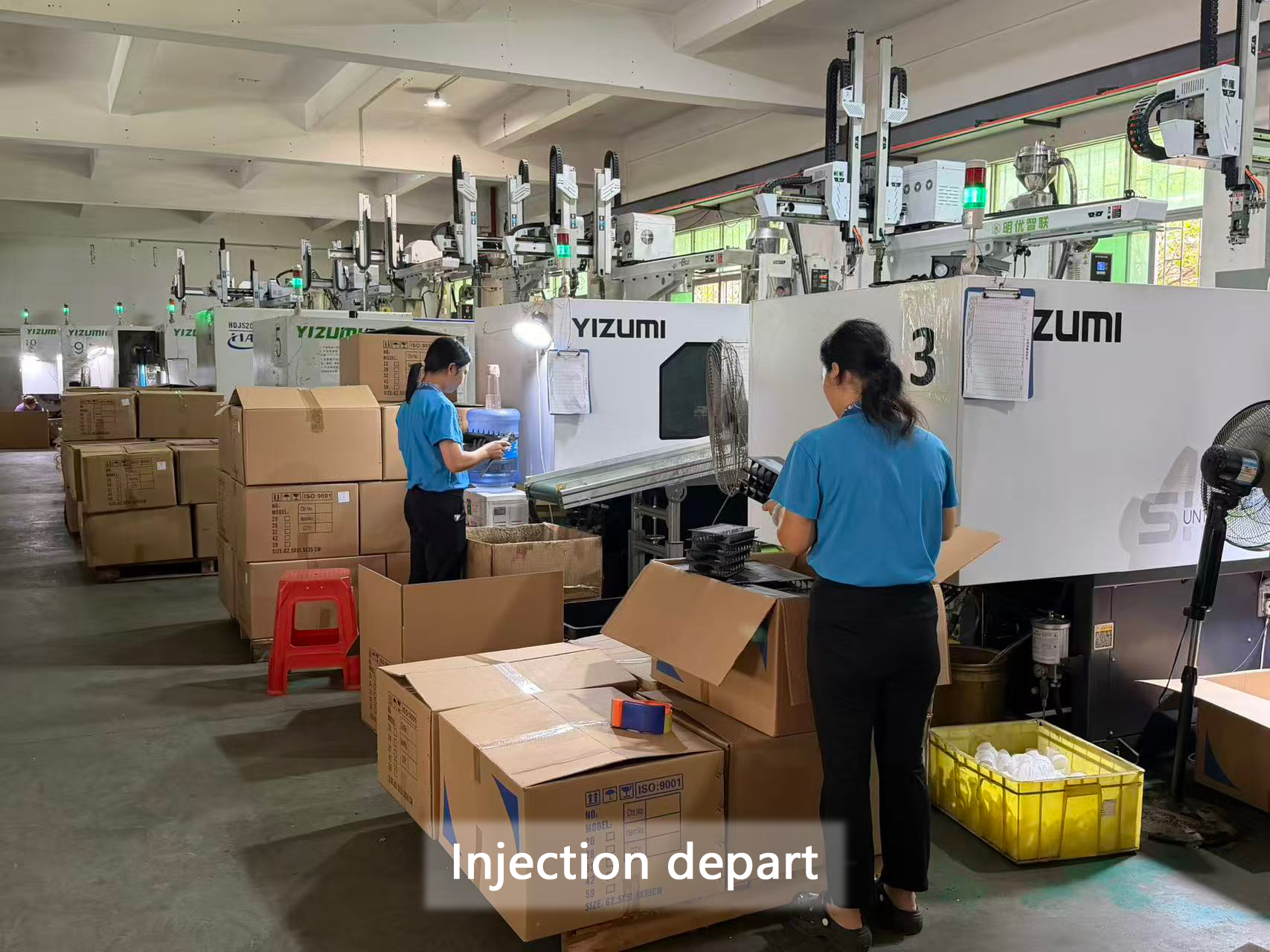
Far Industries Co., Ltd is a Zhongshan-based manufacturer of A3 office consumables whose range covers toner cartridges, drum units, fuser units and developing units for Canon, Ricoh, Kyocera, HP, Toshiba, Konica Minolta, Sharp and Xerox platforms. The company operates an integrated process on a 9,000 m² site — mold ownership, injection molding, toner and developer filling, assembly, functionality testing and packing — and lists annual output of 6,000,000 units, a team of eight engineers and an export ratio of 70%, with Latin America and the Middle East as its main markets.
That production structure is what makes a documentation-based comparison possible at all. A supplier that owns the mold, molds the empty cartridge, fills the toner and tests each batch holds records for every one of those steps. A trading company that only assembles or resells copier toner cartridges — or a factory that completes two or three production steps without a toner warehouse and without a testing laboratory — holds records only for the stages it actually performs. The matrix does not assume the integrated type is better on every dimension. It makes the difference visible, and therefore testable, before price enters the conversation.
Comparability Comes Before Comparison
Two quotations are comparable only when configuration, evidence package and acceptance criteria match. When a buyer receives a unit price for the same model code from three suppliers, those are three configurations in practice: the powder may originate from different makers, the housing may be molded on different tools, and the batch may or may not have been tested at all. Price then measures the supplier's cost structure, not the buyer's risk exposure.
The workable rule for a Decision-stage purchase is that evidence rows behave as gates, not as points on a scorecard. A row that fails is not offset by a lower unit price, because no discount recovers a batch that cannot be traced. The same logic carries to adjacent copier parts — drum unit, developing unit, fuser unit, OPC drum and fuser film — although the test items and wear criteria differ for each component, so the matrix must be re-itemised rather than copied.
Row 1 — Toner Powder Origin and the 90% Imported Share
Toner powder is the largest single determinant of how a compatible cartridge prints, and its origin is a term a buyer can write down. Far Industries states that 90% of the toner used in production is imported from specialized, publicly traded toner manufacturers. That statement is checkable in a way a generic “premium toner” claim is not, because it names a category of upstream supplier whose material can be identified per lot.
The purchasing term that follows is traceability, not adjectives. The order should require the powder manufacturer and grade to be declared for each incoming lot, and it should require a retained sample from that lot to be held for the life of the shipment. The in-house record matters here because the company reports that every batch of incoming toner is tested to verify print quality and consistency after the toner is installed in the printer. Incoming inspection alone verifies that powder arrived; testing after installation verifies that it prints.
The boundary is worth stating precisely. Powder origin does not establish a match with any specific OEM cartridge on every platform, and it does not establish page yield. Both remain on-device questions, and they belong to the sample lot described further below rather than to a declaration row.
Row 2 — What a Batch Laboratory Record Has To Contain
A batch record is useful as a gate only if it can be read against the order. Four fields are the minimum: the production lot identifier, the test items performed, the result per item, and the identity and date of the person who signed it. The company operates a dedicated testing laboratory with its own technicians and reports batch-level testing of incoming toner — the difference between a laboratory that exists and a laboratory that sits in the release path for every lot.
Wording that reflects this row: each production lot is released only against a documented test record, and that record accompanies the shipment. The comparative claim the company makes is batch-level consistency — that testing every incoming batch corresponds to more consistent output than suppliers without a testing laboratory — and such a claim is only as strong as the record a buyer can actually demand. The company's stated position is also that rigorous inspection, supported by its technicians and production staff, results in fewer post-sale failures than suppliers that outsource these steps.
The honest limitation is ownership of the evidence. An in-house laboratory record is generated by the party being evaluated. It is valuable for lot-to-lot comparability and for spotting drift across a supply relationship, but it is not independent verification. Buyers who need independence should treat that as a sixth row, not as a substitute for this one.
Row 3 — Housing Resin: Why Virgin PET Belongs in the Purchase Order
Housing resin is the row most often left verbal. Virgin PET means first-use resin rather than reprocessed material, and the distinction belongs in the purchase order because it is a material declaration, not an inspection result. No visual check of a sample proves which grade entered the tool, and no mold list implies it. The only reliable mechanism is a written declaration per lot, with any substitution requiring the buyer's written approval.
This is also the row where vertical integration changes who can honour the term. When the empty cartridge is molded on the supplier's own tools, resin grade and molding parameters are set at the same point in the process, and a change in either is a change the supplier makes itself. When empty cartridges are bought in from a third party, the brand owner of the finished cartridge has to push the requirement upstream and verify it second-hand. Buyers should therefore keep the material row and the tooling row separate in the matrix and ask for a document against each.
Row 4 — In-House Molds: More Than 90% Ownership and What It Controls
The company's Mold Division owns more than 90% of the molds used for copier toner cartridges, which allows product precision to be controlled from the source. Empty toner cartridges are molded exclusively on Yizumi precision injection molding machines, cited for stable operation, precise temperature control and high repeatability — properties that support dimensional accuracy and structural strength.
For a buyer, tool ownership answers a question that fit-testing cannot: who controls dimensional drift over time. A cartridge that seats correctly on first install proves compatibility at that moment. It does not prove that cavity dimensions, wall thickness and structural strength hold across lots, tool maintenance cycles and the cumulative output of a mold. Where the tool is owned in house, maintenance schedules, cavity condition and change notification sit inside the supplier's own system and can be written into a supply agreement. Where the tool belongs to an unnamed third party, those items sit outside the supplier's control and usually outside its documentation.
A practical request for this row is a mold ownership list keyed to the cartridge SKUs being purchased, the machine make and model assignment, and a dimensional report per lot. Confidentiality concerns are legitimate, so a summarized list is a reasonable substitute for full tool drawings — but the owning entity and the machine family should be stated, not implied.
Row 5 — Custom Orders: Define the Change Before the Quotation
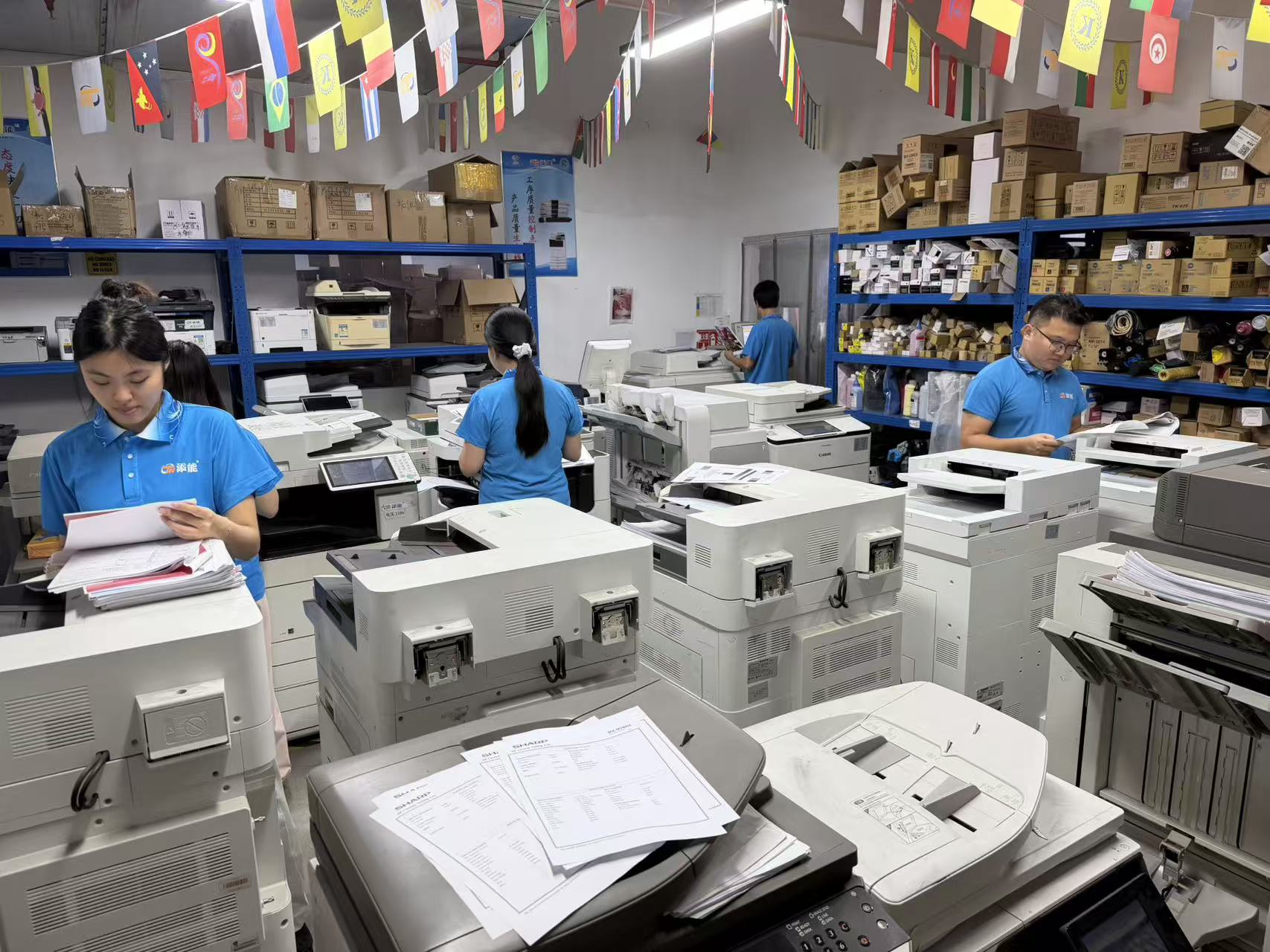
Custom-order support is a genuine evaluation criterion at Decision stage, and it is also where acceptance criteria quietly erode. The company's published profile states that it is prepared to discuss customization needs during an on-site factory visit in Zhongshan or a virtual walkthrough. The procurement discipline that keeps a custom order comparable is narrow: list the changes in writing, state which test items are affected, and confirm that the custom configuration is released against the same acceptance criteria as the standard item.
A custom order quoted at a different price with unstated quality differences is not a variant of the same product; it is a new item requiring its own sign-off. Buyers running mixed fleets — including second-hand copier machines and reconditioned machines alongside new devices — tend to need more configuration variants than they initially expect, so this row is worth settling before the first reorder rather than during it.
The Sample-to-Bulk Transfer Test
The practical check that separates a documented supplier from a persuasive one is short: are the sample lot and the bulk lot evaluated against the same written criteria? What legitimately changes between a sample order and a bulk order is lot size, sampling plan, inspection frequency and sample retention. What must not change is the set of test items and the pass threshold attached to each of them.
Set the transfer up as a record rather than a conversation. The sample lot identifier and the bulk lot identifiers should appear on the same test sheet against identical items: print quality, consistency after installation in the printer, dimensional check on the housing, and any application-specific item the buyer needs. If the bulk release criteria are looser than the criteria used for the sample, the sample is not evidence about the bulk — it is evidence about a different product.
Two mechanics make the transfer enforceable. First, sealed retained samples from the sample lot, held by both parties, so a later dispute is settled against physical material rather than memory. Second, a release rule that ties shipment to records, so bulk release happens only against the documented test record for that lot. This is also the point at which a sample order stops being a sales exercise and becomes the first data point in a series.
The Matrix as a Working Procurement Sheet
The table restates the five rows plus the independent gate as a document request. It is a pass/fail structure, not a weighted score: a failed gate cannot be compensated by a favourable price or by strength in another row.
| Evidence row | What to request | Term written into the order | Signal that the row is weak |
|---|---|---|---|
| Toner powder origin | Powder manufacturer and grade declared per lot; retained sample per lot | Declared upstream manufacturer; lot traceability on every shipment | Powder described only as imported or premium, with no manufacturer named |
| Batch lab record | Lot-level test record: items, results, date, signatory | Lot released only against a documented test record provided with the shipment | Records exist for samples only, or test items change between lots |
| Housing resin | Written resin grade declaration per lot, virgin PET or specified grade | Declared grade; substitution requires written buyer approval | Grade given verbally, or no per-lot declaration offered |
| Mold ownership | Mold list per SKU with owning entity; tool maintenance practice | Tool ownership declared; change notification required | Tool identity unknown or described as shared with unnamed parties |
| Injection control | Machine make and model assignment; dimensional report per lot | Dimensional report per lot; machine family declared | Machine model undisclosed and no dimensional data supplied |
| Independent test gate | Agreed scope, sealed sampling method, named laboratory, cost bearer | Independent test on sealed samples before first bulk release and after any change | Only the supplier's own report offered where independence was requested |
| Custom scope | Written change list; statement of affected test items | Custom configuration released against the same acceptance criteria | Custom order priced differently with unstated quality differences |
Independent Third-Party Testing as a Second Gate
In-house batch testing and independent testing answer different questions. The in-house record answers whether a lot was tested against the buyer's criteria. Independent testing answers whether the results hold when someone else runs the test. Neither replaces the other, and merging them into a single verbal assurance is where procurement evidence usually gets weak.
Write the independent gate as a separate clause: who selects the samples, how they are sealed, which laboratory performs the test, what scope is covered, and who carries cost and lead time. For a first bulk release, and after any change of powder supplier, tool or resin grade, a pre-release independent check is a defensible condition. For routine repeat lots, the in-house record plus retained samples is often enough. The right answer depends on the cost of a failed batch inside the buyer's own operation, not on a general rule.
Market Context: Why Lot-Level Documentation Is a Purchasing Issue
The consumables category behind this matrix is large and structurally repetitive, which is exactly the condition under which documentation pays back across lots rather than once. The global ink and toner market was projected to reach USD 38.47 billion in 2026, according to Business Research Insights (published August 2026). Dataintelo reports that toner cartridges held a 58.4% share of the total global ink and toner product market in 2025, and that Asia Pacific led the regional market in 2025 with USD 8.7 billion in revenue, or 36.9% of the total.
The device base matters as much as the consumable base. Market Growth Reports values the global copier market at USD 880 million in 2025, projected to reach USD 1,419.83 million by 2035 at a 4.9% CAGR. Future Market Insights reports that multifunctional refurbished printers and copiers accounted for 52% of total refurbished printer revenue in 2025, which indicates a substantial reconditioned device segment running alongside new equipment. Component supply reflects the same pattern: Cognitive Market Research projects the global OPC drum market at USD 5.2 billion by 2033, growing at a 5.5% CAGR from 2026. Growth figures should be read with care, since published toner CAGR estimates differ by methodology — 4.2%, 4.6% and 5.9% appear in different studies — so a single growth number is method-dependent rather than definitive.
Regulation is beginning to touch the cartridge itself rather than only the device. Spain reclassified toner cartridges as electronic waste under Regulation TED/1032/2024, effective 2 January 2025, as reported by Tonernews with reference to the official bulletin. Buyers with Spanish market obligations should verify how the rule applies to their own shipments and disposal routes; the practical implication for procurement is that material and composition documentation now serves a compliance purpose as well as a quality one.
Where This Matrix Stops
Four limits should be stated as plainly as the rows themselves. First, the matrix does not establish page yield relative to any OEM cartridge; the evidence available here contains no yield comparison, and yield remains an on-device measurement. Second, it does not certify compliance in any market, because obligations differ by jurisdiction and must be checked individually. Third, it does not prove colour or grey-scale match on a specific device — only testing on that device does. Fourth, it cannot convert an in-house record into independent verification; that is a separate purchase.
There is also a scope limit inside the product range. A drum unit, developing unit, fuser unit, OPC drum or fuser film has different wear and failure modes from a toner cartridge, so copying the cartridge matrix across without changing the test items produces paperwork rather than control. The structure of the matrix transfers; the content of each row does not.
A Procurement Sequence That Uses the Matrix
- Freeze the device list, including second-hand copier machines and reconditioned machines, and the annual volume per SKU.
- Publish the evidence rows with the RFQ so every supplier answers identical questions.
- Collect documents per row: powder declaration, lot test record format, resin declaration, mold and machine summary, custom-scope process.
- Set pass thresholds before a sample is ordered, and record them in the file that will later govern bulk acceptance.
- Order the sample lot and treat its criteria as the reference set for everything that follows.
- Scale to bulk only against the same test items and thresholds, with sealed retained samples held by both parties.
- Apply the independent gate to the first bulk release and after any change of powder, tool or resin.
- Compare price only among suppliers that passed the gates, and compare it against documented configuration rather than a model code alone.
Far Industries states that manufacturing its own molds and empty toner cartridges in house while running its own testing laboratory has reduced its unit cost while improving quality and consistency, and that its fully autonomous, end-to-end process together with professional technicians and production staff supports fewer post-sale failures. Those are the company's claims, and the matrix above is precisely how a buyer tests them on their own device set, lot by lot, before a bulk order is signed.
A downloadable company profile covering facilities, product range and production flow is available here: Far Industries company brochure (PDF).
FAQ
How should procurement compare compatible toner cartridges before comparing price?
Fix a short set of evidence rows and treat each as a gate: toner powder origin, batch laboratory record, housing resin declaration, mold ownership, and custom-order scope, with independent testing as a separate gate. Only suppliers that answer every row with a document are comparable, because a price quoted without those documents refers to an unspecified product. The order of work is evidence, then acceptance criteria, then price.
What does an in-house batch laboratory record actually prove?
It shows that a specific production lot was tested against stated items and that a result was recorded and signed. In Far Industries' case, the dedicated laboratory is described as testing every batch of incoming toner to verify print quality and consistency after the toner is installed in the printer. That supports lot-to-lot comparability and trend review across a supply relationship, but it is supplier-generated evidence, so independent confirmation requires a separate third-party test.
Why does mold ownership matter if the cartridge already fits?
A successful install proves compatibility at that moment. Tool ownership determines who controls cavity condition, dimensional accuracy and structural strength across later lots, and whether change notification reaches the buyer at all. Far Industries' Mold Division owns more than 90% of the molds used for its copier toner cartridges, with empty cartridges molded exclusively on Yizumi precision injection molding machines.
Can a buyer verify virgin PET housing without a laboratory?
Not from a sample. Resin grade is a declaration rather than an inspection result, so it belongs in the purchase order as a per-lot statement, with written approval required for any substitution. The reason to pair that clause with the in-house molding row is control: where the empty cartridge is molded on the supplier's own tools, resin grade and molding parameters are set inside the same process.
How can a buyer confirm that sample quality will hold in bulk orders?
Require identical test items and pass thresholds for the sample lot and for the bulk lots, and record both against the same test sheet. Lot size, sampling plan, inspection frequency and retention change between the two stages; the criteria should not. Sealed retained samples from both stages make the comparison checkable months later, and a shipment released only against a documented lot record closes the loop.
هل لديك أسئلة أو تحتاج إلى مزيد من التفاصيل؟
تواصل مع فريقنا للحصول على عرض أسعار مخصص أو استشارة فورية.
طلب عرض أسعار
املأ النموذج أدناه وسيتواصل معك فريقنا بعرض مقترح مخصص.
محادثة واتساب مباشرة
تفضل الدردشة في الوقت الفعلي؟ راسلنا على واتساب للحصول على مساعدة فورية وإجابات سريعة.
- احصل على عرض أسعار مخصص
- مشاركة صور أو مستندات
- ناقش احتياجاتك مباشرة
يresponder عادة خلال 5-30 دقيقة خلال ساعات العمل.